Article Contents:
- What is Wallpaper Molding for Walls and Why Buy It
- Molding Over Wallpaper: It Works Differently Than You Think
- Three Main Tasks Solved by Wall Molding for Wallpaper
- Architectural Rhythm - The Main Argument
- Which Wallpaper Moldings for Walls to Buy for Your Task
- For Wall Frames
- For Wall Panels
- For an accent wall
- For Separating Different Wallpapers
- For classic interiors
- For Modern Interiors
- Moldings on Paintable Wallpaper: When It's the Best Option
- Why Paintable Wallpaper Plus Molding is the Gold Standard
- Frames with Interior Painting: The Key Technique
- Panels for Repainting: Flexibility for Years
- Border Between Colors: Molding as a Rule
- What's Important to Consider Before Installing on Wallpaper
- How to Choose a Profile: Narrow, Wide, Smooth, or Decorative
- Narrow Profiles 15–30 mm: Graphics on the Wall
- Medium Profiles 30–55 mm: The Workhorse Format for Most Interiors
- Wide Profiles 55–90 mm: A Statement of Status
- Smooth profiles: architectural purity
- Decorative profiles with relief
- Comparative table for profile selection
- How to combine moldings and wallpaper without visual chaos
- Frames on wallpaper: grid logic
- Panels: height matters
- Symmetry: necessary, but not required everywhere
- Working with wallpaper patterns
- Accent wall: one focal point
- Small and large rooms: different logic
- When Decorative Molding is Needed
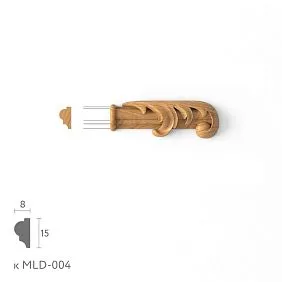
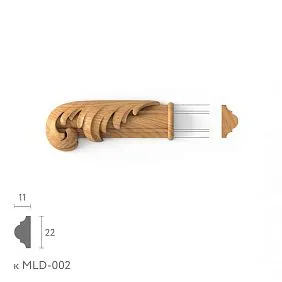
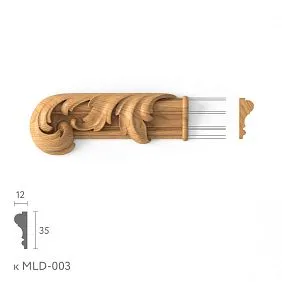
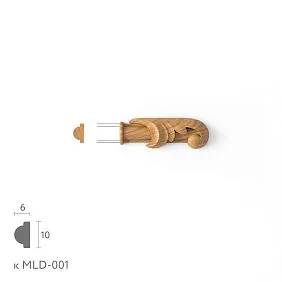
- Corner Elements: The Main Addition for Classic Style
- Center Overlays: Accent on Long Sides
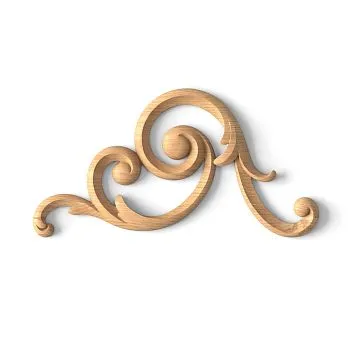
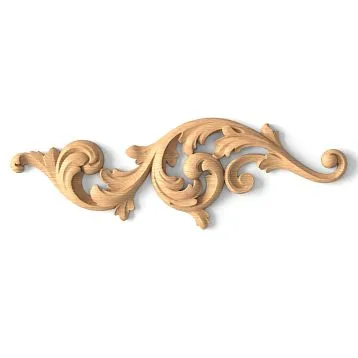
- Decorative Overlays: Second-Level Program
- Ready-Made Decorative Compositions
- What Determines the Price of Wallpaper Molding
- Material — The Main Price Factor
- Width: Direct Dependence on Material Consumption
- Relief: difference up to 10 times
- Decorative Additions: A Separate Budget Item
- Length: Minimum Purchase
- Standard or project
- Where to buy wall molding for wallpaper without mistakes
- Step 1: determine the style and format
- Step 2: calculate the footage
- Step 3: check the compatibility of accessories
- Step 4: order samples if necessary
- Step 5: choose by catalog sections
- About the Company STAVROS
- FAQ: popular questions about wall molding for wallpaper
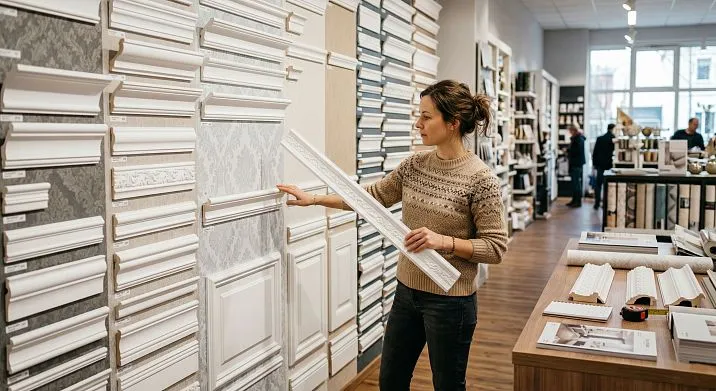
Imagine: fresh wallpaper is perfectly pasted, the wall is smooth, the color is chosen with feeling. But the interior still looks like 'after renovation' rather than 'after a designer'. Familiar feeling? It is at this moment that wall molding for wallpaper takes the stage — a subtle tool that turns a properly renovated room into a thoughtfully designed living space.
This is not a fashionable add-on. This is the architectural language spoken by a quality interior. Frames on the wall dividing color fields. A panel belt setting the rhythm of the vertical plane. A decorative contour around an accent zone. All of this is molding, correctly chosen and intelligently placed.
This article is a complete practical breakdown: which profiles to buy for wallpaper on the wall, what works for painting, how to combine moldings with wallpaper patterns and textures, when additional corners and overlays are needed. No fluff. With specifics that will help you make the right decision the first time.


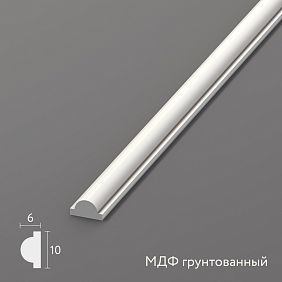


What is wall molding for wallpaper and why buy it
A wall with wallpaper is already a finished decorative surface. Adding molding on top of it seems excessive only until you see the result. Afterward, it seems impossible without it.




Molding over wallpaper: it works differently than it seems
Molding installed on a wallpapered wall serves a fundamentally different function than molding on plaster. It doesn't mask the material—it creates an architectural layer over it. The profile line on wallpaper is a boundary dividing decorative fields, setting rhythm, creating a frame.
Wall molding for wallpaper— is not a technical solution for hiding seams, but an artistic one: it turns a flat wallpapered surface into a structured, deep, architecturally rich space.
This is why moldings on wallpaper are so popular in modern interiors—from classic to Scandinavian style. It's the most accessible way to achieve an 'expensive' visual result without major renovation.
Our factory also produces:
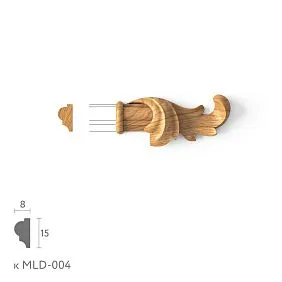
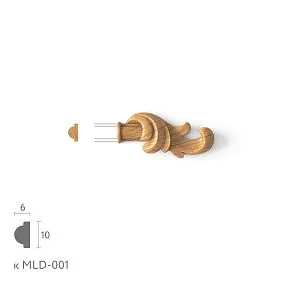
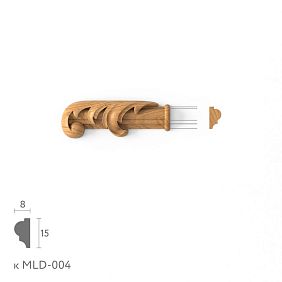
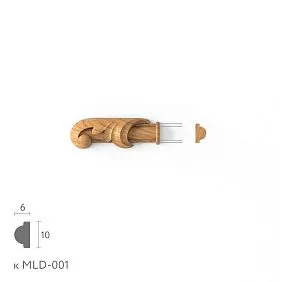
Three main tasks that wall molding for wallpaper solves
Creating frames. Rectangular molding frames on the wall are the most popular technique. Frames provide structure: the wall ceases to be a homogeneous plane and becomes an ordered architectural system. Especially effective on plain paintable wallpaper: inside the frame—one shade, outside—another.
Panel systems. A horizontal molding belt divides the wall into a lower zone (panel) and an upper zone. The lower part is painted in a saturated color, the upper part remains in the base tone. This is a classic two-color technique that works in any interior with a ceiling from 2.5 m.
Wallpaper demarcation. Where two types of wallpaper meet—patterned and plain, matte and textured, dark and light—molding provides a clear, decoratively meaningful border. Without a profile, the joint looks like an installer's mistake.
Get Consultation
Architectural rhythm — the main argument
Rhythm is what the brain unconsciously reads as 'beautiful' or 'ugly'. A space with rhythm seems thoughtful and comfortable. Without rhythm—random and unsettling. Molding frames and belts create rhythm where there is none. This is precisely why designers value them.
Which wall moldings for wallpaper to buy for your task
Six scenarios — six different approaches. Choosing a profile starts with understanding the task, not with browsing a catalog.
For frames on the wall
A frame system made of moldings is a basic and most versatile technique for walls with wallpaper. Rectangular frames are placed with a calculated step and symmetry relative to the center of the wall.
Profile for frames: smooth or shaped, 25–55 mm. Narrow — for thin graphic frames in a modern interior. Medium — for classic frame systems. Wide — for accent frames in the headboard area or TV wall.
Key proportion rule: the width of the molding should be 8–15% of the width of the inner field of the frame. A frame 40 cm wide → molding 32–60 mm. A frame 80 cm → molding 65–120 mm.
wall moldingsMade of oak and beech for frame systems — in the catalog of solid wood products.
For wall panels
A panel system requires two types of moldings: a horizontal belt (main line) and vertical posts that divide the belt into sections. Or just a horizontal belt without vertical division — this depends on the wall width and number of sections.
Profile for the horizontal belt: 35–70 mm, shaped or smooth. Belt mounting height: 80–120 cm from the floor for the lower panel or 200–220 cm for the frieze belt under the ceiling.
Important: the profile of the panel belt and vertical posts must be from the same series of one manufacturer. Different series yield different profile heights — joints become noticeable.
For an accent wall
An accent wall with molding decor is the most visually effective technique. Moldings create an architectural 'portal' on one wall, while the others remain neutral.
Profile for an accent wall: 10–15 mm wider than standard, with more pronounced relief. Contrasting colors inside and outside the frames enhances the effect. Works well on paintable wallpaper: one shade is painted inside the frames, another outside.
For detailed information on the decorative use of moldings on walls — see the articleDecorative Wall Moldings: The Art of Creating a Unique Interior.
For separating different wallpapers
A horizontal molding as a border between patterned wallpaper (below) and plain wallpaper (above) is a classic and practical solution. Profile: 30–55 mm, smooth or shaped. Installed strictly level, precisely horizontal.
When changing wallpapers vertically (two strips on one wall) — vertical molding turns this transition into an architectural solution, not an installation defect.
For a classic interior
Classic style requires a shaped profile with historical sections: ogee, torus, scotia. Width: 40–80 mm. Material: oak, beech, or paintable polyurethane with white enamel finish.
In a classic interior, wall frames are supported by decorative corner blocks (instead of a 45° joint) and, optionally, central overlays in the middle of the frame's long sides.
For a modern interior
Modern style: smooth rectangular profile 15–40 mm, MDF or polyurethane for monochrome painting. Minimal relief — maximum geometry. Frames aligned to a perfect grid. No corner blocks or overlays — only a clean 45° joint.
Moldings on paintable wallpaper: when it's the best option
Moldings on paintable wallpaper — a separate, very powerful design strategy. It delivers the most impressive results with minimal investment.
Why paintable wallpaper plus molding is the gold standard
Paintable wallpaper (non-woven with relief or texture) creates an ideal surface for molding decoration: it evens out the wall and provides a uniform tone. Molding on such a wall is like drawing with a pencil on a clean sheet.
Moldings on wallpaper for painting— is not a compromise, but a technologically thought-out technique that yields results comparable to expensive finishing systems.
Frames with interior painting: the main technique
The scheme works as follows:
-
The wall is covered with plain paintable wallpaper (base color).
-
Molding frames are mounted on the wall.
-
Inside the frames, paint of a different shade is applied—darker, more saturated, or contrasting.
-
Outside the frames, the base color remains.
Result: a two-color system with clear molding boundaries, creating depth and architectural effect. This is a technique that, in high-end interiors, is achieved by applying multiple layers of paint with careful masking. Molding makes this task elementary.
Panels for repainting: flexibility for years
Another advantage of the 'wallpaper + molding' system: the ability to repaint at any time. Wallpaper is the permanent base. Moldings are the permanent structure. Color is the variable. Want to refresh the interior—just change the paint color inside the frames. No new renovation needed.
For such systems, the best choice isMoldings for painting: primed MDF or polyurethane profiles, ready for acrylic paint application without additional preparation.
Border between colors: molding as a rule
A two-tone wall without a clear border is always a risk. Painter's tape gives a straight line but lacks architectural volume. Molding provides both: a clear line plus relief, shadow, and a three-dimensional feel.
When installing horizontal dividing molding between two colors, it's important: the profile is mounted strictly level, both colors are applied after installation — then the border is perfect.
What to consider before installing on wallpaper
Before purchase and installation:
-
Type of wallpaper. Non-woven wallpaper for painting holds molding with liquid nails or special acrylic adhesive. Thin paper wallpaper — risk of deformation. Vinyl — requires additional mechanical fastening.
-
Weight of the molding. A 50 mm wooden molding requires more reliable fastening than a polyurethane one of the same size.
-
Wall condition. If wallpaper is laid with bubbles or unevenness — molding doesn't hide but emphasizes defects.
-
Marking — first and foremost. On wallpaper, marking errors are more noticeable than on plaster.
Technology for installing molding on wallpaper without mistakes — in a separate articleMoldings for paintable wallpaper: installation technology.
How to choose a profile: narrow, wide, smooth, or decorative
Four parameters — four independent decisions. Let's examine each.
Narrow profiles 15–30 mm: graphics on the wall
Narrow molding for wallpaper is a line. It doesn't create volume — it marks a boundary. Minimal shadow, almost no relief. Visually, it's a graphic technique: a pencil drawing on a wall scale.
Application:
-
Scandinavian minimalism;
-
Japanese style;
-
modern apartments with small area;
-
complex frame grids with high frequency.
Narrow profiles are less forgiving: any error in level or spacing between frames is immediately visible. This is a demanding format.
Medium profiles 30–55 mm: the working standard for most interiors
Medium molding is a universal choice. Sufficient relief for shadow, good visual effect from a distance of 3–4 meters. Works in any style: from neoclassical to contemporary. Looks good both painted and in natural wood.
This is the format most professional designers set by default: it's a safe choice and delivers predictably good results.
Wide profiles 55–90 mm: a statement of status
Wide molding on a wall with wallpaper is an accent, not a background. Powerful shadow, high relief, strong visual presence. Appropriate:
-
with ceilings 2.8–3.0 m and higher;
-
on an accent wall as the main decorative object;
-
in a classic or neoclassical interior;
-
as frames around large mirrors, fireplaces, TV zones.
On a small wall in a compact room, wide molding 'overpowers' the space—it feels oppressive, narrows it, and creates a sense of tightness. The principle of proportionality is essential.
Smooth profiles: architectural purity
A smooth rectangular molding without ornamentation is the language of architectural rigor. Only geometry: straight lines, clear angles, minimal relief. All the work is done by the shadow from the profile, not by ornament.
Ideal for:
-
modern classic;
-
minimalism;
-
systems for monochrome painting;
-
spaces where molding should be 'unobtrusively present'.
Especially works well withMDF molding for painting: perfect surface for enamel, clean cut, geometrically precise relief.
Decorative profiles with relief
A shaped profile with a goose, a twist, a heel — this is a historical architectural vocabulary. Each cross-section has stylistic affiliation and historical logic.
Appropriate in classic, neoclassical, empire, French Provence. Requires appropriate surroundings: classic furniture, ceiling cornice moldings in the same spirit, baseboard with a similar profile.
Comparative table for profile selection
| Parameter | Narrow (15–30 mm) | Medium (30–55 mm) | Wide (55–90 mm) |
|---|---|---|---|
| Shadow and volume | Minimum | Moderate | Strong |
| Modern style | ✓✓✓ | ✓✓✓ | ✓ |
| Classic / neoclassical | ✓ | ✓✓✓ | ✓✓✓ |
| Installation requirements | High | Medium | Medium |
| For painting | ✓✓✓ | ✓✓✓ | ✓✓✓ |
| Under natural wood | ✓✓ | ✓✓✓ | ✓✓✓ |
| Small room | ✓✓✓ | ✓✓ | — |
How to combine moldings and wallpaper without visual chaos
There are interiors with moldings that look like architectural masterpieces. And there are those where moldings are applied without a system—resulting in decorative noise. What's the difference? In following a few simple rules.
Frames on wallpaper: grid logic
Frames only work as a system. A single frame on a wall looks like a mistake or an accident. Three frames with calculated spacing—like an architectural solution.
Rules for building a frame system:
-
Symmetry relative to the center of the wall. If the wall is 4 m, the center is 2 m. All frames are symmetrical relative to this point.
-
Equal spacing. The distance between frames is the same horizontally and vertically.
-
Uniform indentation from edges. Outer frames are equidistant from wall corners, ceiling, and baseboard.
-
Uniform profile. All frames are made from the same profile. No mixing.
Panels: height matters
Horizontal molding belt divides the wall into two parts. Standard solutions:
-
Belt at 80–100 cm height — classic option. Creates a lower panel painted in dark or saturated color.
-
Belt at 120–140 cm height — option for high-ceiling rooms. A 'heavier' lower zone.
-
Frieze belt 20–30 cm below ceiling — classic architectural technique creating transition between ceiling and wall.
Symmetry: necessary but not required everywhere
Strict frame symmetry — classic. Asymmetry intentionally broken while maintaining rhythm (different frame sizes with equal spacing) — modern version of molding decor.
Not allowed: random asymmetry without system. Two different spacings, frames with different offsets, misaligned horizontally — not 'modern', but 'sloppy'.
Working with wallpaper patterns
On wallpaper with large patterns, molding frames can either integrate into the pattern's rhythm (if the pattern is regular) or clash with it (risk of conflict).
The best scenario for moldings with patterned wallpaper: frames encompass entire patterns rather than cutting through them. Alternatively, moldings are installed only on solid-colored walls, while patterned walls remain without molding.
Accent wall: one focal point
An accent wall with moldings works only when the other walls are neutral. Moldings on all four walls simultaneously create overload and visual noise. One wall with a full molding program plus three neutral walls is the ideal balance.
About the principles of working withwall moldings— in the thematic article of the STAVROS cluster.
Small and large rooms: different logic
Small room (up to 15 m²): narrow profile (15–25 mm), small frames, minimal relief, monochrome scheme. Molding adds structure but doesn't 'eat up' space.
Large room (25+ m²): medium and wide profiles are appropriate. Large frames, rich color schemes, decorative corner blocks.
When molding decor is needed
A plain molding profile is good. Molding with proper decorative additions is excellent. The difference is noticeable.
Corner elements: the main addition for classic style
A standard picture frame corner is a 45° miter joint. A professional technique in modern style. In classic style, it is replaced by a corner decorative block: a square or rectangular element installed at each corner of the frame.
What this provides:
-
installation is simplified: horizontal and vertical frame elements are cut at 90°, without 45-degree miter cuts;
-
the corner block is an independent decorative detail with an ornament or rosette;
-
the frame acquires a classic architectural character.
Corner elements and decorative ornaments for moldings is a topic covered in detail in the article the art of framing: moldings, corners, and decorative ornaments.
Center overlays: accent on long sides
Central decorative overlay — a small relief element (medallion, cartouche, rosette) placed in the center of a long horizontal or vertical side of a frame.
Used in classical systems with large frames (from 60 cm in length). Adds rhythm and 'liveliness' to long molding runs.
Decorative overlays: second-level program
Overlays are the final level of the decorative program. They are used in the most saturated classical systems. On walls with paintable wallpaper, they are especially effective: the contrast between the matte molding and the relief overlay creates a pronounced play of light and shadow under side lighting.
Ready-made decorative compositions
If you don't want to design a system from scratch — STAVROS has compatible series: profile + corner blocks + central overlays, matched in scale and style. This is the fastest way to achieve the correct result.
What determines the price of wall molding for wallpaper
Honest price breakdown — without marketing fog.
Material — the main pricing factor
| Material | Orientation price | Pros for wallpaper |
|---|---|---|
| Primed polyurethane | from 120–350 rub./m | Lightweight, paintable, moisture-resistant |
| MDF | from 180–450 rub./m | Clean cut, paintable, good adhesion |
| Beech | from 380–700 rub./m | Natural texture, for tinting |
| Oak | from 650–2,000 rub./m | Durability, status, tinting |
| Carved oak | from 2,000–12,000+ RUB/m | Classic ornaments, project-grade |
Width: directly proportional to material consumption
A 60 mm molding costs 1.5–2 times more than a similar 30 mm wide profile—simply because it requires twice as much material. This is a linear relationship.
Relief: difference up to 10 times
Smooth profile: 1–2 router passes. Ornamental with historical cross-section: 3–5 passes. Carved ornament: 3D milling plus manual finishing. The cost of a carved oak profile can be 5–10 times higher than a smooth one of the same size.
Decorative extensions: a separate budget item
Corner blocks: from 200 to 3,000 rubles/piece depending on material and complexity. Center overlays: from 350 to 5,000+ rubles/piece. Set for a classic frame of four corner blocks: from 800 to 12,000 rubles.
Consider this when planning: in saturated classic systems, the cost of additions can be comparable to the cost of the profiles themselves.
Length: minimum purchase
Wooden moldings for walls with wallpaper are usually sold in linear meters. Minimum purchase — from 1 meter. Polyurethane — typically standard strips of 1–2.5 m.
Standard or project
Standard profile from catalog: minimum price, ready for shipment. Custom according to customer drawing: +30–100% to price, lead time from 2–4 weeks. For residential repair tasks, standard is sufficient in 95% of cases.
Where to buy wall molding for wallpaper without mistakes
Correct purchase is not only choosing a profile, but choosing the system as a whole.
Step 1: determine style and format
-
Modern interior, frames for painting → smooth MDF or polyurethane, 20–40 mm.
-
Classic, shaped frames → shaped profile 40–75 mm, wood or polyurethane, with corner blocks.
-
Separating two wallpapers → smooth profile 30–55 mm, single material.
-
Accent wall → profile 10–15 mm wider than standard, contrasting scheme.
Step 2: calculate the linear footage
Create a frame layout. Calculate the perimeter of each frame. Sum them up. Add 10–15% for cuts and trimming. Corner blocks: 4 pieces per frame.
Step 3: check accessory compatibility
Corner blocks — from the same series as the profile. Central overlays — proportionate to the profile in relief height.
Step 4: order samples if necessary
Wooden wallpaper moldings are worth seeing in person — to assess width, tint, surface quality. A small sample saves from major disappointments.
Step 5: choose by catalog sections
Molding installation technology on wallpaper:
→ Moldings on paintable wallpaper: error-free technology
Concept of moldings on paintable wallpaper:
→ Moldings on paintable wallpaper: a revolution in finishing
Wooden wall moldings:
→ Buy solid wood moldings
Paintable moldings 2026:
→ Paintable moldings: limitless color solution possibilities
MDF molding for painting:
→ MDF molding: elegant paintable interior
Polyurethane wall moldings:
→ Polyurethane moldings: installation speed and clean joints
Wall moldings — complete breakdown:
→ Wall moldings: interior transformation
About the company STAVROS
STAVROS — a Russian manufacturer of architectural wood decor since 2002. Full-cycle production in St. Petersburg: drying oak and beech solid wood, milling profiles, surface finishing, packaging, and shipping.
The STAVROS catalog features over 50 standard profiles of wall, ceiling, and furniture moldings: wooden from oak and beech, MDF for painting, polyurethane. Decorative additions — corner blocks, center overlays, corners, baseboards — are produced in unified stylistic series with the main profiles. This eliminates mismatches when assembling the system.
For designers, architects, and construction companies, STAVROS offers project support: footage calculation, profile selection to match the object's style, custom manufacturing from individual drawings. Retail from 1 linear meter. Fast shipment from warehouse. Delivery across all of Russia.
FAQ: popular questions about wallpaper wall molding
Which molding is best for wallpaper on the wall?
For paintable wallpaper: primed polyurethane or MDF — ready for painting without additional preparation. For wallpaper in natural color, for tinting: wooden molding from oak or beech. Smooth — for modern style, figured — for classic.
Can molding be glued over wallpaper?
Yes, under certain conditions: the wallpaper must be well-adhered (especially at the edges), the wall must be even, and special molding adhesive (acrylic or liquid nails, depending on the wallpaper type and profile weight) should be used. Non-woven wallpapers hold better than paper ones.
Which moldings are suitable for painting?
Polyurethane (factory-primed) and MDF are the best choices for acrylic enamel. Oak wood ones are only suitable for tinting or clear varnish; for white enamel, they require full priming.
Which profiles are better for wall frames?
Smooth or shaped profile 25–55 mm. Width depends on the frame size: 8–15% of the inner field width. Modern interior — smooth. Classic — shaped with corner blocks.
When are corner elements needed?
In classic and neoclassical interiors — always appropriate. They simplify installation (no need for 45° cutting) and create a decorative accent. In modern minimalism — only a 45° joint.
How to choose molding width for wallpaper?
Rule: molding width = 8–15% of the inner field width of the frame. Frame 40 cm → molding 32–60 mm. Frame 80 cm → molding 65–120 mm. For a horizontal belt — 30–70 mm depending on the room height.
What adhesive to use for molding on wallpaper?
Liquid nails (polyurethane or acrylic) or special molding mounting adhesive. For heavy wooden profiles — additional fixation with finishing nails with a countersunk head. On vinyl wallpaper — acrylic adhesive with light mechanical fastening is preferable.