Article Contents:
- Anatomy of Furniture Molding: From Function to Beauty
- Molding on Furniture Fronts: How Lines Create Architecture
- Wall Panels Made from Moldings: Timeless Classics
- Unity of Furniture and Walls: How to Create a Visual System
- Carved Decor: When Molding Becomes Art
- Wood Species for Moldings: How Material Affects the Result
- Color and Finish: How Treatment Changes Perception
- Molding Installation: How Setup Affects the Result
- Frequently Asked Questions
- How Does Furniture Molding Differ from Wall Molding?
- Can the Same Molding Be Used on Both Furniture and Walls?
- What Molding Width is Optimal for Furniture Fronts?
- How to Calculate the Amount of Molding for Wall Panels?
- Is It Necessary to Paint Moldings or Can Natural Wood Be Left?
- How to Care for Wooden Moldings?
- Can Wall Panels Be Made from Moldings Independently?
- Which Molding Profile to Choose for a Classic Interior?
- How Much Does Creating Wall Panels from Moldings Cost?
- Can Moldings Be Ordered with a Custom Profile?
- Conclusion: Texture as the Language of Interior

Flat surfaces are boring. Texture creates life.Wooden molding for furnitureIt transforms a simple cabinet into an architectural statement, and a smooth wall into a structured composition. This is not decoration for decoration's sake, but a thoughtful work with space, where every line, every protrusion, every shadow matters. When furniture fronts and wall panels are executed in a unified style, using identical profiles, repeating the rhythm—the interior gains an integrity that cannot be achieved by randomly selecting elements.
Visual perception of space is built on the alternation of planes and volumes, light and shadow.Wooden moldingsThey create this texture with minimal means—a profiled strip 40-80 mm wide forms three-dimensionality where there was a plane. On a furniture front, molding creates panels, segments the surface, creates a play of volumes. On the wall, the same profile forms panels that visually continue the logic of the furniture, connecting the furnishings with the room's architecture. The result is a space where everything is in its place, where every element works towards the common idea.


Anatomy of Furniture Molding: From Function to Beauty
What makes molding molding? The profile. A flat strip is a slat. But as soon as a router passes over its surface, creating a bead, fluting, stepped recess—the slat turns into a decorative element. Light glides over the texture, forming shadows that change throughout the day. A static surface comes to life, begins to breathe.
The depth of the profile determines the expressiveness of the molding. A shallow texture of 2-3 mm creates a delicate effect that only appears with side lighting. This is the choice for minimalist interiors where restraint is important. A medium texture of 4-6 mm is a universal solution for classic spaces where the molding should be noticeable but not dominant. A deep texture of 8-12 mm or more creates a dramatic effect, suitable for luxurious interiors with high ceilings and large-scale furniture.
The width of the molding is selected according to the size of the element it decorates. Narrow moldings of 20-40 mm are used for small details—drawers of dressers, doors of wall cabinets, thin panels. Medium moldings of 50-80 mm are for standard furniture fronts, wardrobe doors, large drawers. Wide moldings of 100-150 mm work as cornices in the upper part of tall furniture, creating large-scale frames on wall panels.
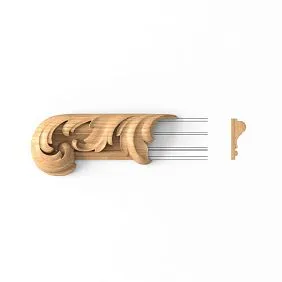
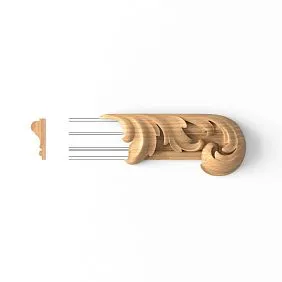
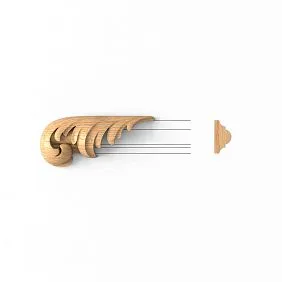
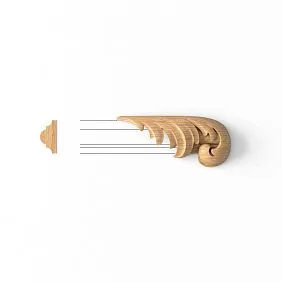
The shape of the profile can be infinitely varied. A simple rounded profile with one bead is a classic solution that works in most interiors. A stepped profile with multiple levels adds complexity, creating a more pronounced play of light. A profile with carved elements—floral ornaments, geometric motifs—turns molding into a work of decorative art, fitting for luxurious classic spaces.




Molding on Furniture Fronts: How Lines Create Architecture
A smooth cabinet door is a surface. The same door with molding forming a rectangular frame is a panel, an architectural element with centuries of history. The difference may seem small, but the visual effect is enormous. Molding structures the plane, makes it visually interesting, and creates a sense of craftsmanship and thoughtfulness.
Technical execution can vary. Overlay molding is glued onto a smooth MDF or plywood base, creating an imitation of a paneled structure. This is faster and cheaper than making a true frame-and-panel construction, but the visual result is identical. Milled relief is cut directly into the solid door—technologically more complex, but creates a monolithic surface without seams.
The geometry of the molding layout on the facade determines the style. One large rectangular frame with golden ratio proportions is a classic solution that works in traditional interiors. Several vertical narrow frames visually elongate the facade, making it taller—useful for tall cabinets. Horizontal division expands proportions, suitable for low dressers and sideboards.
Complex geometry with intersecting moldings, arched elements, and diagonal layouts creates ornamentation characteristic of Baroque and Empire styles. This requires precise calculation and flawless execution—any error in the joining angles will be glaring. Professional carpenters cut moldings at precise angles on miter saws with laser guides, ensuring perfect alignment of profiles at the joints.
Our factory also produces:


Wall panels made of moldings: a classic that never goes out of style
Wall panels—boiserie—have deep roots in European architecture. In the 17th-18th centuries, they were used to decorate palaces and mansions, creating luxurious interiors. The technique has survived centuries and remains relevant because it is based on fundamental principles of spatial perception: symmetry, rhythm, proportion.
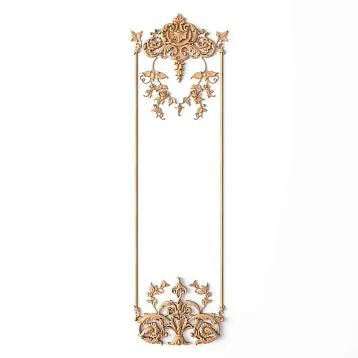
The modern interpretation of boiserie often relies on the use ofwall moldings wood, which are attached to a painted or wallpapered surface, creating a relief structure without making massive solid wood panels. This is technologically simpler, cheaper, but the visual effect is comparable to traditional solid wood panels. The moldings form rectangular frames of various sizes that structure the wall, turning it into an architectural plane.
The height of the panels determines the visual perception of the room. Panels covering one-third of the wall height create a classic division into a baseboard and main section—a traditional solution that visually expands the space, making it cozier. Panels covering two-thirds of the height are a more formal option, suitable for ceremonial rooms. Full-height wall panels with horizontal and vertical division create the most complex, expressive composition.
The proportions of individual panels follow the laws of classical architecture. Rectangles with an aspect ratio of 1:1.6 (golden ratio) are perceived as harmonious and pleasing to the eye. Square panels create a more static, balanced rhythm. Elongated vertical rectangles visually increase the height of a room, horizontal ones widen it.
Get Consultation
Unity of furniture and walls: how to create a visual system
The magic of a cohesive interior arises when furniture facades and wall panels are executed in a unified style. This does not mean they must be absolutely identical—what matters is alignment in key parameters: molding profile, wood color, scale of elements, rhythm of division.
Repeating the profile creates visual connections. If furniture facades use a molding with a specific relief—a bead of a certain diameter, a stepped structure of a specific shape—using the same profile in wall panels creates a sense that the furniture and walls were designed as a unified system. The eye catches the repeating motif, finds a pattern in it, which is perceived as order and harmony.
Color unity is no less important. IfFurniture decoris made of natural oak with an oil finish, the wall moldings should be from the same species with similar treatment. Even a slight discrepancy in tone—one element warmer, another cooler—will create visual dissonance, ruining the impression of unity. Professional designers order furniture and wall panels from the same manufacturer to guarantee material and finish consistency.
Scale correspondence ensures proportionality. If the furniture is large, massive, with wide moldings and large panels, the wall panels should be commensurate—large rectangles, expressive profiles. If the furniture is delicate, with fine details, small panels on the walls will be more harmonious. A mismatch in scale creates visual conflict—small details get lost against large ones, large ones overwhelm small ones.
Carved decor: when molding becomes art
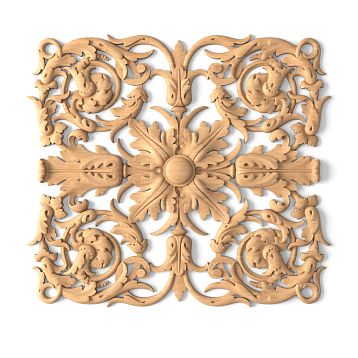
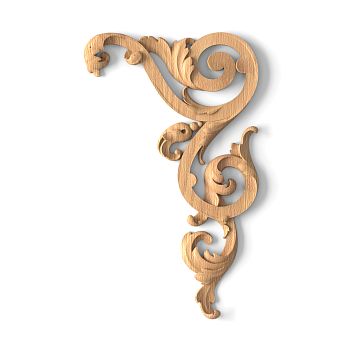
A simple profiled molding creates structure. A carved molding creates luxury. Floral ornaments, geometric patterns, stylized architectural motifs turn a functional element into a work of decorative art. This is the level at which an interior ceases to be merely beautiful and becomes exclusive, demonstrating craftsmanship and status.
The technology for creating carved moldings can vary. Machine carving on CNC machines ensures precision in repeating elements, identical parts, and acceptable cost for serial production. Hand carving creates unique, 'alive' pieces where each element differs slightly from others, bearing the marks of the master's work. Combined technology—machine roughing followed by hand finishing—combines precision and individuality.
The density of the ornament determines visual richness. A sparse ornament with large elements separated by smooth areas creates noble restraint, characteristic of English classicism. A dense ornament, where carving covers the entire surface without gaps, creates the opulence of Baroque and Rococo. The choice depends on the overall interior style and desired degree of ornamentation.
Combining carved moldings withclassic furniturerequires balance. If the furniture is already rich with carved elements—carved legs, cornices with ornaments, overlays on facades—using carved moldings on the walls can create overload. Sometimes it's better to limit walls to smooth profiled moldings, leaving carving only on the furniture. Or vice versa—focus on wall panels with carved elements, and choose more restrained furniture.
Wood species for moldings: how material affects the result
Oak is the classic choice for moldings that will be used in their natural state. Expressive grain with visible annual rings and medullary rays creates visual depth, emphasizing the material's naturalness. The hardness of oak ensures profile sharpness—crisp edges remain sharp, not rounding off with use. Oak color varies from light pale to dark brown, allowing selection of a shade to suit a specific interior.
Beech is an alternative for painted moldings. Its uniform structure without pronounced pores or grain creates a smooth surface on which paint lays perfectly even. This is important for interiors where moldings are painted white, cream, or any other opaque color. Beech also molds well when steamed, allowing for bent moldings for arched elements.
Linden (lime wood) is the material for carved moldings. Soft, uniform, without knots or stress, it is ideal for complex, detailed carving. The chisel moves through linden easily, not chipping thin elements, allowing for jewel-like details. The drawback of linden is its softness, making it vulnerable to mechanical damage. Therefore, linden carved moldings are used where there is no risk of impact or abrasion—on wall panels, in the upper parts of furniture.
Ash is close to oak in hardness but has a lighter shade and calmer texture without strong prominence. Ash moldings work in interiors that require the strength of oak but a more modern, less traditional look. They are good in neoclassical spaces where classical forms are interpreted through contemporary aesthetics.
Color and finish: how treatment changes perception
Natural wood with a transparent finish is the choice for interiors where material authenticity is important. Oil emphasizes the grain, creating a matte surface with tactile pleasantness. Varnish provides protection and sheen—from light satin to mirror gloss. Wax creates a silky, soft glow characteristic of antique furniture.
Toning changes the color of wood while preserving the visibility of its grain. Light tones—bleached oak, Scandinavian ash—create an airy feel and work well in modern interiors with abundant light. Medium tones—walnut, chestnut—are versatile and suitable for most classic styles. Dark tones—wenge, bog oak—create drama and are fitting for men's studies and libraries.
Painting with opaque enamels completely conceals the wood grain, creating a monochromatic surface. White is a classic choice for French interiors, imparting a sense of lightness and purity. Cream, ivory are warmer, softer alternatives to white. Gray is a modern alternative that works in neoclassical and Scandinavian spaces. Colored enamels—blue, green, black—are bold choices for eclectic interiors.
Patination and gilding are techniques that add a sense of history and an aged effect. Patina—a dark coating in the recesses of the relief—accentuates the profile and creates depth. Gilding with gold leaf or gold paint transforms molding into a luxurious element, appropriate for palatial interiors. These techniques require skill—poorly executed patina or gilding looks cheap and ruins the impression.
Molding Installation: How Installation Affects the Result
The quality of installation determines whether the molding becomes part of the architecture or remains a glued-on strip. The difference between professional and amateur installation is vast. Straight lines, precise joints, invisible fasteners are signs of professionalism. Wavy lines, gaps in corners, visible nails are signs of shoddy work.
Surface preparation is the first critical stage. Molding follows the line of the surface it is attached to. If the wall is wavy, the molding will be wavy. If a furniture facade is uneven, a molding frame will accentuate it. Professionals level the base surfaces before installing decorative elements—they fill walls, sand furniture facades, and check planes with a level.
Cutting moldings requires precision down to the degree. A 45° miter joint in corners creates a continuous frame where the eye glides along the profile without interruption. A deviation of even one degree creates a noticeable gap. For complex profiles, it's important not only to maintain the exact angle but also to align the relief—every bead, every groove must continue from one strip to the next without misalignment.
Fastening can vary depending on the application. On furniture facades, moldings are attached with adhesive—carpenter's PVA or polyurethane glue, which provides a strong bond without visible fasteners. On wall panels, a combined fastening method is used—adhesive plus finishing nails or screws, which hold the molding while the adhesive sets. Fastener heads are countersunk, the holes are filled and painted to match the molding color.
Frequently asked questions
How does furniture molding differ from wall molding?
Functionally and structurally, they are the same—a profiled strip made of solid wood. The difference lies in their application and sometimes in size. Furniture moldings are often more delicate, with a finer profile, designed for close inspection. Wall moldings can be larger, with pronounced relief that should be discernible from a distance.
Can the same molding be used on both furniture and walls?
Yes, it's an ideal solution for creating visual unity in an interior. Using the same profile links the furniture and the room's architecture into a cohesive system. It's only important to correctly choose the scale—the molding should be proportionate to both the furniture and the wall panels.
What width of molding is optimal for furniture facades?
For standard cabinet and dresser doors, a width of 40-70 mm is optimal. Molding that is too narrow gets lost on a large surface, while too wide molding overwhelms the proportions. For large furniture—sliding door wardrobes, tall buffets—moldings of 80-120 mm can be used.
How to calculate the amount of molding needed for wall panels?
Draw a layout of the panels on the wall, indicating the dimensions of all rectangles. Calculate the perimeter of each rectangle and sum them up. Add a 15-20% allowance for miter cuts and possible errors. Molding is sold in lengths of 2-3 meters; round the result up to the nearest whole number of lengths.
Is it necessary to paint moldings, or can natural wood be left?
The choice depends on the interior's style. Natural wood with a clear finish creates warmth, emphasizes materiality, and works in traditional classic interiors. Painted moldings are the choice for French classicism, Scandinavian style, and neoclassicism. Both options are equally valid; it's a matter of concept.
How to care for wooden moldings?
Weekly dry cleaning with a soft cloth or duster, especially if the profile is complex with recesses. Monthly wiping with a slightly damp cloth without aggressive cleaners. For oiled finishes, use wood oil care products once a year. Painted surfaces do not require special care.
Can wall panels be created from moldings independently?
Technically possible, but requires tools and skills. You need a miter saw for precise angle cuts, a level for checking verticals and horizontals, and experience working with wood. Mistakes in angles, uneven lines, visible fastening defects will ruin the result. If you're not confident, it's better to entrust it to professionals.
What molding profile to choose for a classic interior?
A simple profile with one central bead is a universal solution that works in most classic styles. For more pronounced classicism, stepped profiles with multiple levels of relief are suitable. For luxurious interiors, carved moldings with floral ornaments.
How much does it cost to create wall panels from moldings?
The cost consists of the price of the moldings (from 300 to 2000 rubles per linear meter depending on profile and wood species), wall preparation, installation, and finishing. On average, decorating one wall with an area of 15-20 m² costs 50-100 thousand rubles including materials and labor. Exclusive carved moldings increase the cost by 2-3 times.
Can moldings be ordered with a custom profile?
STAVROS produces moldings according to custom drawings, provided the production run is economically justified. Manufacturing a unique cutter for a profile costs 30-50 thousand rubles, so a custom profile makes sense for orders of 200-300 linear meters or more. For smaller volumes, choose from the existing range—there are over 50 different profiles.
Conclusion: Relief as the Language of Interior
An interior speaks through details. Smooth surfaces are silent; textured ones tell stories.Wooden molding for furnitureand wall panels made from moldings are a way to transform a functional space into an artistic statement, where every line has meaning, where light and shadow create a visual symphony.
The unity of furniture and architecture is achieved through the repetition of forms, color coordination, and adherence to proportional relationships. WhenWooden moldingson facadesclassic furniturerepeat the profileswall moldings wood, when the rhythm of the panels on a cabinet echoes the rhythm of panels on a wall — a sense of thoughtfulness, professionalism, and high-quality execution emerges.
The choice between simple profiled moldings and carved elements is determined by style and budget. Simple moldings create structure, making the interior orderly and noble.Furniture decorwith carving adds luxury, demonstrates craftsmanship, and transforms the space into something exclusive. Both approaches are legitimate; the question is which language you want to use for your interior.
STAVROS produces a full range of moldings for furniture and wall panels made from solid oak, beech, ash, and linden. The assortment includes over 50 different profiles — from simple rounded to complex carved — allowing for a solution for any style and budget. In-house production on modern equipment guarantees geometric precision, profile clarity, and dimensional stability.
All STAVROS moldings are made from carefully selected wood, dried to 8-10% moisture content, which prevents deformation after installation. Milling is performed on CNC machines, ensuring the identicality of all elements in a series — important when dozens of meters of molding are needed for a large project. Sanding is carried out in several stages, creating a surface ready for finishing.
STAVROS offers not only ready-made moldings but also comprehensive solutions for creating wall panels. The company's designers will develop a panel layout scheme considering the room's geometry and stylistic requirements. Production will manufacture all necessary elements — moldings, corner overlays, rosettes, cornices. Installation teams will perform the installation with a quality guarantee.
The ability to manufacture furniture and wall panels within a single project is a unique advantage of STAVROS. Using the same raw materials, the same processing technologies, and the same finishes guarantees a perfect match in color and texture. Cabinets, dressers, and wall panels are executed in a unified style, with repeating molding profiles, creating an interior where everything works towards a common idea.
Delivery of STAVROS products is carried out throughout Russia and CIS countries. Stock programs in Moscow and St. Petersburg allow for receiving standard items within a few days. For designers, architects, and furniture manufacturers, a loyalty program with attractive cooperation terms is available. Showrooms in both capitals provide an opportunity to see and touch samples, assess processing quality, and choose optimal solutions.
Choosing moldings andFurniture decorfrom STAVROS means choosing quality tested by time, the beauty of natural wood, and professional production. It is an investment in a space that will delight for decades, retaining value regardless of changing trends. Classic forms, created from noble materials by masters of their craft, do not become outdated — they become better with years, acquiring the patina of time and a history of use.