Article Contents:
- Furniture molding as an extension of room architecture
- Cornice for furniture and kitchen: top accent
- Door molding and door trim: framing system
- Oak and beech trim: framing openings
- Beech trim as an alternative to oak
- How to achieve a unified style: furniture, doors, walls
- Practical algorithm for selecting and ordering furniture molding and trim
- Conclusion: STAVROS company — a system of elements for a unified interior

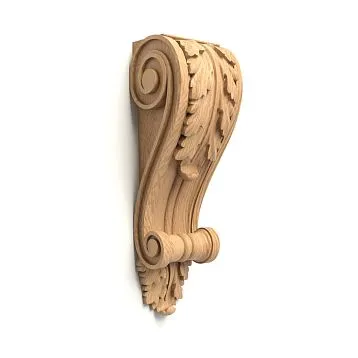
Furniture moldingThese are not just decorative strips used to decorate furniture. These are elements that link furniture with room architecture, transforming separate objects (cabinet, kitchen set, buffet) into parts of a unified composition. A room whereFurniture cornicematches the ceiling molding, whereOak casingon doors repeats the profile of the baseboard, where all wooden elements are coordinated by species, color, style — such a room looks professionally designed, expensive. A room where furniture is purchased from one place, doors from another, baseboards from a third, and all are of different species, profiles, and colors — looks random, cheap, poorly thought out.Door Trim, wooden cornices for furniture, oak door casings for purchaseThese are not three separate purchases, but elements of one system that must be planned and coordinated in advance, during the design phase, not afterward, when everything is already purchased and doesn't match.


Furniture molding as an extension of room architecture
Why should furniture cornice 'match' with room cornice and baseboard? Because the eye reads horizontal lines of interior as a system of levels. The lower level — baseboard, which frames the floor, creates a boundary between horizontal and vertical. The middle level — horizontal moldings on walls (if any), which divide the wall into sections. The upper level — ceiling molding (cornice), which frames the ceiling, creates a boundary between wall and ceiling. These three levels must be coordinated: similar profiles, one wood species, one color. Then they are read as a system, as an architectural frame of the room.
Furniture is an object within this architectural frame. If furniture has wooden elements (cornices, baseboards, panels), they must belong to the same system: same species, same color, related profile.Furniture corniceinstalled on the top of a cabinet or kitchen set — is a continuation of the room's ceiling molding, but at a lower level. If the ceiling molding is oak with a three-step profile, the furniture cornice should also be oak with a similar profile (not necessarily identical, but related — from the same family of forms). If the ceiling molding is painted white, the furniture cornice should also be white. This visual connection makes furniture part of the architecture, not an alien object.
Classic furniture (buffets, cabinets, kitchen sets in classic style) always has a cornice on top and a baseboard on the bottom. The cornice visually completes the vertical of the furniture, creating a 'roof' that covers the body. Without a cornice, a cabinet looks cut off, unfinished, like a box. With a cornice — it becomes an architectural object, with its base (baseboard), body (body), and crown (cornice). The baseboard visually 'grounds' the furniture, creating a transition from floor to body. The cornice and baseboard must match the room's baseboards: if the baseboard is 100 mm high with two rounded edges, the furniture baseboard should be similar in height and profile. This creates unity, linking furniture and room architecture.
Kitchen sets — a special case whereKitchen furniture corniceis critically important for visual completion of the composition. Upper kitchen cabinets hang on the wall, with a 20-50 cm gap (depending on ceiling height and cabinet size) between the top of the cabinets and the ceiling. This gap looks unfinished — cabinets seem cut off, hanging in the air. A cornice installed on top of the cabinets visually closes this gap, creates completion, makes the cabinets appear taller and more monumental. The cornice can be simple (flat strip 50-80 mm wide) or complex (multi-step profile 100-150 mm wide). Complex cornices are used in classic kitchens, simple ones — in neoclassical and modern styles.
Cabinets (closet, book, display) also use furniture molding: cornice on top, baseboard on bottom, panels on fronts (if fronts are framed or panelled), corner elements (if cabinet has protruding parts). All these elements must be coordinated with each other and with the room's architectural molding (baseboards, trim, moldings).Furniture molding for purchasemust be from the same manufacturer who made the architectural molding — guarantee that species, profiles, colors will match.




Cornice for furniture and kitchen: top accent
Furniture cornicecan be ready-made strips of standard profiles (catalog profiles available from molding manufacturers) or ordered custom profile (by drawing, minimum order 50-100 linear meters). Standard profiles are cheaper, available immediately, but choice is limited. Custom profiles are more expensive, made to order (2-4 weeks), but you can get exactly the profile needed for a specific project. For mass furniture production, ordering custom profile is justified (large run, development cost spread over entire run). For individual kitchen or cabinet, it's more cost-effective to take standard profile.
Buy wooden cornicesfor oak door,
Kitchen furniture cornicemust match the kitchen style. Classic kitchen: complex profile cornice (multi-step, with protruding elements), width 100-150 mm, species oak or beech, finish transparent (varnish, oil) or painted with patina (gold, silver, antiquing). Neoclassic kitchen: medium profile cornice (two-three tiers), width 80-120 mm, species beech or ash, finish paint (white, gray, bone). Modern kitchen: simple profile cornice (flat strip with bevel) or no cornice at all (minimalism), width 50-80 mm, species not critical (often MDF with wood veneer, not solid wood). For classic and neoclassic, cornice is mandatory; for modern — optional.
wooden cornices for furnituremade of solid wood have advantages over MDF or plastic: natural texture (especially oak, ash — texture acts as decoration), durability (solid wood doesn't chip or peel, lasts decades), repairability (scratched solid wood cornice can be sanded and repainted, MDF with veneer — cannot). Disadvantage of solid wood — price (2-3 times more expensive than MDF), weight (heavier, requires stronger mounting), sensitivity to humidity (solid wood may shrink or swell with humidity changes, MDF is more stable). For expensive furniture, choose solid wood; for budget — MDF.buy wooden cornice for furnituremade of solid wood makes sense for classic kitchens and cabinets, where naturalness and longevity are important.
Installing furniture cornice: surface-mounted cornice is attached to the top panel of the cabinet body with screws (from inside the cabinet, screws go upward, heads are not visible) or with glue (liquid nails, polyurethane glue). If the cornice is heavy (wide, solid oak), better to combine: glue + screws for reliability. If the cornice is light (narrow, solid pine or MDF), glue alone is sufficient. Corner joints (for corner kitchens, L-shaped cabinets) are made at 45 degrees or 90 degrees butt joint (depends on profile: complex profile better to join at 45, simple — butt joint). Cornice is painted before or after installation (painting before is easier — no risk of staining the cabinet, but must paint separately from cabinet; after installation is harder — must protect cabinet with painter's tape, but finish is monolithic, joints do not stand out).
Our factory also produces:


Door casing and door trim: framing system
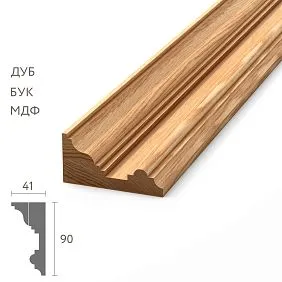
Door TrimThese elements form the door frame: casing (frame holding the door panel), trim (strip covering the gap between casing and wall), filler board (expands the casing if the wall is thicker than standard), threshold (bottom element of the door frame, optional). All these elements must be made of the same wood species, in the same color, with matching profiles — then the door looks cohesive and professional.Door moldingSold as kits (casing + trim + fillers for a specific door) or as individual elements (if replacing one element, for example, trim).
Role of door casing in framing the door frame: casing holds the door panel, creating the frame in which the panel opens and closes. Casing consists of three strips (two vertical, one horizontal — the headboard), joined at right angles. Casing width is 70-100 mm (depends on wall thickness), thickness 30-40 mm, profile with a rebate (groove into which the door panel is inserted). Trim covers the gap between casing and wall, which is inevitable (construction foam, wall irregularities). Trim creates decorative framing, separating the opening from the wall, making the door a distinct object. Trim width is 60-90 mm, thickness 10-18 mm, profile flat or with relief (bevel, rounding, groove).
for oak door,Oak casingfor oak door,Beech door casingfor beech — this rule cannot be violated in a quality interior.
Trim profile must match the baseboard profile. If the baseboard has one rounding on top and a bevel on bottom, the trim must have a similar profile (rounding + bevel). Not necessarily identical, but related — from the same family of forms. This creates visual unity: the eye glides from baseboard to trim, recognizing similar shapes, the same language of lines. If the baseboard has a complex profile (multi-step), the trim must also be complex. If the baseboard is simple (flat strip with bevel), the trim must also be simple. Mixing complex baseboard with simple trim (or vice versa) creates visual dissonance, revealing poor project planning.
Trim from oak and beech: framing openings
Get Consultation
Oak and beech casings: frame for openings
Oak casing— premium choice for interior doors made of solid oak or veneer.Oak solid casing— solid oak wood, profiled and sanded to a smooth surface, ready for staining or lacquering.natural oak casing— means the wood is not stained or painted, retains natural oak color (from light yellow to dark brown, depending on batch and grade). Natural oak is covered with transparent varnish or oil, which highlights the texture, protects against moisture, and does not drastically change color (oil darkens oak by 1-2 tones, varnish barely changes it).
Oak Door Threshold— has a width of typically 70-90 mm (for standard openings), thickness 12-18 mm, profile ranging from simple (flat strip with bevel) to complex (multi-step relief). Simple profile suits modern interiors, complex profile suits classical interiors.Oak door trimUsually has a width of 70-90 mm (for standard openings), thickness of 12-18 mm, profile ranging from simple (flat strip with bevel) to complex (multi-level relief). Simple profile suits modern interiors, complex — classic ones.Buy oak door trim— assembled as a set for one door (usually 5 strips, 2.2 meters each: two vertical for the opening, two vertical on the back side, one horizontal on top, cut into two parts for both sides).
Oak door trim for interior doors— better to buy with extra strips (one or two) — if cutting error occurs, it can be corrected.oak door casings for purchaseIt is better to order with a reserve of one or two strips — in case of cutting error, it can be reworked.
Oak skirting boards SPB— can be purchased directly from manufacturers, avoiding intermediaries. Oak is imported (from Europe, Caucasus, Central Russia), but processing in St. Petersburg is of high quality — traditions of woodworking, skilled craftsmen, modern equipment.Oak skirting board in SPB for saleCan be ordered directly from the manufacturer, avoiding intermediaries. Oak is imported (from Europe, Caucasus, Central Russia), but processing in St. Petersburg is of high quality — traditions of woodworking, skilled craftsmen, modern equipment.Oak solid casing— from St. Petersburg — guarantee of precise geometry (tolerance ±0.3 mm), smooth surface (planed or sanded), moisture content 8-12% (kiln-dried).
wooden oak casing— 1.5-2 times more expensive than beech trim, 3-4 times more expensive than pine. Price per set for one door (5 strips): pine 1500-2500 rubles, beech 2500-4000 rubles, oak 4000-7000 rubles (depends on profile, grade, processing). The extra cost for oak is justified by aesthetics (distinct texture, status), durability (oak lasts decades without losing appearance), strength (oak doesn't scratch or deform). For expensive oak doors, oak trim is chosen — material unity is more important than cost savings.
— balance of price and quality for interior doors made of beech, ash, birch — species with light, uniform texture. Beech is hard (hardness 3.8 on Brinell scale), almost matches oak, but is 30-40% cheaper. Beech texture is fine-grained, uniform, without clearly visible annual rings. Wood is light, rose-beige, calm, neutral. Beech trim is used with beech, ash, birch doors, where light natural wood without aggressive texture is important.
Beech door casing— Balance of price and quality for interior doors made of beech, ash, birch — species with light, uniform texture. Beech is hard (hardness 3.8 on Brinell), almost matches oak, but is 30-40% cheaper. Beech texture is fine-grained, uniform, without clearly visible annual rings. Wood is light, pink-beige, calm, neutral. Beech casings are used with beech, ash, birch doors, where light natural wood without aggressive texture is important.Buy beech casing— 30-40% cheaper than oak, which when finishing an entire apartment (5-7 doors) saves 5000-10000 rubles.
Beech trim is more often painted than oak. White paint on beech trim gives a clean Scandinavian style, where wood does not stand out by texture, works as a neutral background. Grey paint — modern style, graphic, restrained. Black paint — contemporary, minimalism, emphasis on form rather than material. Under transparent finish (varnish, oil), beech is also beautiful: light wood with barely noticeable texture, tactile and warm. Beech darkens under oil by 1-2 tones (from rose-beige to warm brown), adding coziness.
Installation of beech trim is identical to oak trim: 45-degree or butt joints, mounting with glue (liquid nails) or finish nails (small headless nails, 20-25 mm, almost invisible after painting). Beech trim requires the same care as oak trim: precise cutting, tight joints, no gaps. Advantage of beech — uniformity: if oak trim may have tonal variations (even within one batch, oak varies from light to dark), beech trim has more stable tone (beech is light, rose-colored, differences minimal). This simplifies selection: all trim from one batch will match in tone.
Installation of beech casings is identical to oak casings: butt joint or 45-degree miter joint, mounting with glue (liquid nails) or with finish nails (small headless nails, 20-25 mm, almost invisible after painting). Beech casings require the same care as oak ones: precise cutting, tight joints, no gaps. Advantage of beech — uniformity: if oak casings may have tonal variations (even within one batch, oak varies from light to dark), beech casings have more stable tone (beech is light, pinkish, differences are minimal). This simplifies selection: all casings from one batch are guaranteed to match in tone.
Furniture trim + crown molding + trim + baseboards — this is a system of elements that connects all wooden parts of the interior into a unified whole. Principle of unity: all elements must be made of the same wood species (or painted in one color with opaque paint, hiding texture differences), have related profiles (from the same family of forms), have similar dimensions (thicknesses should not differ by more than 5 mm). This creates visual connection, making the interior designed, professional, and expensive. Violation of unity (oak doors, pine baseboards, beech crown molding — all under transparent finish) creates chaos, randomness, cheapness.
Furniture trim + crown molding + trim + baseboards — this is a system of elements that connects all wooden parts of the interior into a unified whole. Principle of unity: all elements must be made of the same wood species (or painted in one color with opaque paint, hiding texture differences), have related profiles (from the same family of forms), have similar dimensions (thicknesses should not differ by more than 5 mm). This creates visual connection, making the interior designed, professional, and expensive. Violation of unity (oak doors, pine baseboards, beech crown molding — all under transparent finish) creates chaos, randomness, cheapness.
Example scheme for a classic kitchen: wooden kitchen set (solid oak facades, framed-panelled), oak furniture cornice (complex profile, width 120 mm, three steps), oak furniture base (height 100 mm, profile similar to cornice). Oak doors to the kitchen (solid oak, panelled), oak door casings (profile with two rounded edges, width 80 mm), oak frame. Oak floor skirting (height 100 mm, profile similar to casings — two rounded edges). Oak ceiling skirting (width 80 mm, simplified version of furniture cornice — two tiers instead of three). All covered with transparent oil, which highlights the oak texture, making it uniform in tone (oil equalizes color, removes contrasting spots). Result: the kitchen appears as a single wooden object, where furniture, doors, and architectural elements are visually connected, speaking the same language of form and material.
Example scheme for a living room in neoclassicism: painted beech doors (matte white paint, framed-panelled), painted beech door casings (white paint, simple profile — flat plank with bevel, width 70 mm). Painted beech floor skirting (white paint, height 80 mm, profile similar to casings — flat plank with bevel). Painted beech ceiling skirting (white paint, width 60 mm, simple profile — one rounded edge). Built-in wardrobes (closet wardrobes along the wall) with MDF facades, painted white, painted beech furniture cornice (white paint, width 80 mm, profile similar to ceiling skirting — one rounded edge). Everything is white, uniform, wood texture hidden under paint. Result: a bright, clean, graphic living room, where white doors and furniture blend with walls (also white or light-gray), creating a monochromatic interior where form is more important than material.
Facade and interior solutions must be coordinated if the building facade also has wooden elements. For example: a private house with larch facade battens (vertical battens on part of the facade, natural larch color under oil). Inside the house, doors made of larch (or another species, but painted to match the facade battens’ color), casings of the same species and color. Skirting boards, furniture cornices — also in matching tone. This creates a link between exterior and interior, demonstrating thoughtful project design from facade to the last detail inside. For city apartments, such a link is not relevant (building facade is common, not individual), but for private houses — a sign of high architectural class.
Practical algorithm for selecting and ordering furniture trim and casings
First step — determining the wood species as the main one for the project. If budget allows and expressive texture is desired — choose oak. If budget is limited, but you want hard wood and natural appearance — beech. If budget is minimal and everything will be painted with opaque paint — pine (texture is not visible under paint, no need to overpay for oak or beech). The chosen species must be used for all elements: doors, casings, skirting boards, furniture cornices, wall moldings. Exception: under opaque paint, you can mix species, but better not to risk (difference in wood density may become apparent over time — oak and pine age differently).
Second step — choosing profiles from one collection. Wood trim manufacturers have collections of profiles where casings, skirting boards, cornices are coordinated in shape — belong to one family. Choose everything from one collection, this guarantees visual unity. Do not take casings from one manufacturer, skirting boards from another, furniture cornices from a third — profiles will be different, incompatible, the interior will look random. One manufacturer, one collection, all elements ordered simultaneously — this guarantees compatibility.
Third step — calculating the meterage of all elements. Casings: number of doors × 5 planks at 2.2 meters per door (with allowance for cutting). Skirting boards: perimeter of all rooms + 10-15% for waste. Furniture cornices: perimeter of top of furniture (kitchen set, cabinets) + 10% for mitered corners. Ceiling skirting: perimeter of all rooms + 10-15% for waste. Add all together, get total meterage for each type of trim. Order in one batch from one manufacturer — guarantee that all elements are from the same batch of wood, tone will match.
Fourth step — coordinating color and finish. If transparent finish (lacquer, oil) is chosen, order color samples: small planks coated with the same oil or lacquer to be used in the project. Check how the texture looks, whether the tone matches across different elements (casing, skirting, cornice). If mismatched (one darker, another lighter) — adjust: use tinted oil (oil with pigment that equalizes tone), or choose another finish. If opaque paint is chosen, order everything under paint (without finish), paint all elements with one paint — guarantee uniform color.
Fifth step — checking geometry and moisture upon receipt. Casings, skirting boards, cornices must be straight (no bends, no warping), with precise dimensions (width and thickness identical along entire length, tolerance ±0.3 mm), with moisture content 8-12% (measure with moisture meter). If moisture exceeds 15%, trim will dry out after installation, creating gaps. If geometry is compromised, installation will be problematic (curved planks won’t fit properly, joints won’t be tight). Check each plank before accepting the batch, compose an act upon discovering defects, request replacement.
Sixth step — coordinating installation. If hiring installers, ensure they understand the importance of precision: casing joints at 45 degrees must be tight (no gaps), corner skirting joints must be perfect, furniture cornices must be securely fastened (won’t come loose after a year). A good installer works carefully, slowly, checks every joint, spackles minor defects, sands spackle, paints (if needed) evenly. A poor installer rushes, joints are loose, nail heads are visible, paint is uneven. Installing trim is the final stage, which can ruin quality material or improve mediocre work. Choose installers by recommendation, review portfolios, don’t chase low prices.
Conclusion: STAVROS — a system of elements for a unified interior
Furniture molding, Furniture cornice, Oak casing, Beech door casing— not separate purchases scattered over time and locations. It’s elements of a unified system that must be planned in advance, coordinated by species, profiles, colors, ordered from one manufacturer in one batch. Only this way is visual unity guaranteed, which makes the interior professional, expensive, thoughtfully designed.Door Trim, Door molding, wooden cornices for furniture— it’s about the connection between furniture, doors, and room architecture, about how each element complements another, rather than conflicting.
STAVROS produces a complete system of interior trim:Casings— of all profiles and species,Baseboards— floor and ceiling,Furniture made of oak complements the interior picture, especially if the furniture is also made of solid oak. Unity of material and finish creates a sense of completeness and stylistic coherence., Moldings, rails, layouts, Door molding— all elements are unified in collections, where profiles are coordinated, shapes belong to one family.oak door casings for purchase, buy wooden cornice for furniture, Buy wooden cornices— everything can be ordered from STAVROS in one batch, with compatibility guaranteed.
— for expensive oak doors and classic interiors.natural oak casing, wooden oak casing, Oak solid casing— for modern interiors and neoclassicism, where light wood is important. Treatment: planed (smooth surface), sanded (perfectly smooth), moisture 8-12% (kiln-dried, won’t dry out after installation).Buy beech casing— For modern interiors and neoclassicism, where light wood is important. Processing: planed (smooth surface), sanded (perfectly smooth), moisture content 8-12% (kiln-dried, will not dry out after installation).
Oak skirting boards SPB, Oak skirting board in SPB for sale— produced in St. Petersburg, traditions of wood processing, high quality. Delivery to St. Petersburg, Moscow, throughout Russia.Buy oak door trim— available from stock (standard profiles in stock) or ordered from production (custom profiles, non-standard length).Kitchen furniture cornice— ordered by meterage, cut to fit furniture dimensions, installed on-site.
Consultations for trim selection: STAVROS specialists will help prepare specifications for the entire project, select profiles from one collection, calculate meterage, coordinate species and colors. Showrooms in St. Petersburg and Moscow: samples of all profiles and species, can touch, compare, choose. For designers and architects: loyalty program, wholesale prices, 3D visualization of elements in the project. Contact: 8 (800) 555-46-75, websitestavros.ruSTAVROS — a trim system that connects furniture, doors, walls into a unified interior, where every detail is in its place, where everything is thought out, where quality is visible in the details.