












































































Article Contents:
- 1. Importance of choosing the right material for a cabinet
- 2. Main materials for cabinets
- 2.1. Laminated chipboard (MDF)
- 2.2. MDF (fine particle board)
- 2.3. Plywood
- 2.4. Solid wood
- 2.5. Metal and glass elements
- 3.1. Laminated chipboard doors
- 3.2. MDF doors
- 3.3. Frame doors
- 3.4. Solid or veneered doors
- 7.1. Wardrobes in the bedroom
- 7.2. Kitchen cabinets
- 7.3. Sliding wardrobe in the hallway
- 7.4. Office cabinets
- Example A: budget wardrobe for the bedroom
- Example B: mid-range sliding wardrobe
- Example C: luxury wardrobe
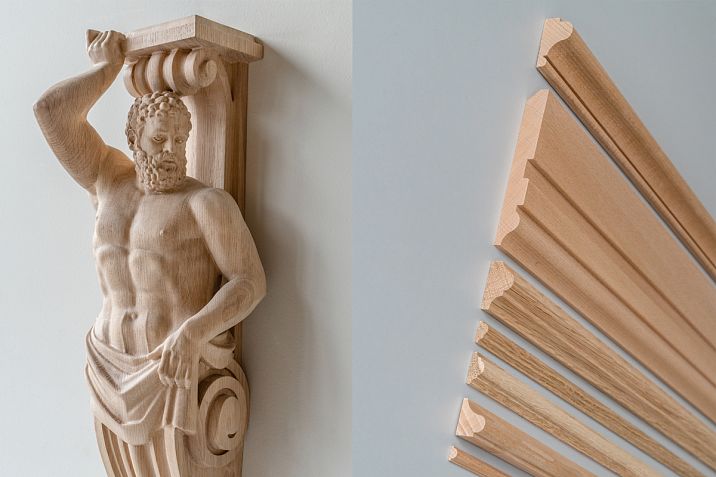
In this comprehensive article (about 2000 words), we will consider:
In this extensive article (about 2000 words), we will consider:
- Main materials for wardrobes (MDF, particleboard, solid wood, plywood, metal, glass).
- Criteria of quality and ecological safety.
- Recommendations for choosing hardware and furniture handles.
- Features for different types of wardrobes (closet, kitchen, sliding door, office).
- Tips for maintenance and extending service life.


1. Importance of choosing the right material for a wardrobe
- Strength and service life
A wardrobe constantly experiences loads (shelves under the weight of items, opening/closing doors, drawers). A weak or low-quality material may deform or break apart within a short period. - Moisture resistance and temperature conditions
If a wardrobe is placed in a room with high humidity (kitchen, unheated cottage), or near a radiator, it is important that the material does not warp and the edges do not swell. - Style and appearance
The material of the carcass and fronts determines how well the wardrobe fits into the interior (classic, loft, minimalism). An attractive texture and color can "make" the design, while dull, low-quality finishes can ruin it. - Ease of assembly and repairability
Working with low-quality panels is difficult: they may crumble at joints, have chipped edges, etc. When replacing a part or moving the wardrobe in the future, high-quality materials will help avoid problems. - Cost
Different levels of cost: solid wood and thick MDF in the premium segment, plywood and particleboard — more budget-friendly solutions. The right choice will allow you to fit within the budget.




2. Main materials for wardrobes
Our factory also produces:


2.1. Particleboard (laminate particleboard)
What it is: a board made of wood particles impregnated with resins, covered with a laminate film (melamine or laminate coating).
Advantages:
- Low price. Particleboard is one of the most affordable materials for furniture.
- Wide range of finishes: from "wood grain" and "stone" to bright solid-color and fantasy options.
- Easy maintenance: laminate coating does not absorb dirt and can be wiped with a damp cloth.
Disadvantages:
- Vulnerability of edges: may swell from moisture if poorly edge-banded.
- Limited design possibilities: not suitable for complex milling, curved shapes, etc.
- Less resistant to twisting than MDF (screws may "crack" holes upon repeated removal).
Where used: in 70–80% of cases, the carcass and shelves of a wardrobe are made specifically from 16 or 18 mm particleboard, while the fronts (doors) may be made of particleboard or another material.
Get Consultation
2.2. MDF (fine particle board)
Core: particleboard (fine-grained fibers), pressed under pressure.
Advantages:
- High density and uniform structure, screws hold better than in MDF.
- Suitable for routing: ideal for PVC film, enamel, acrylic, and decorative elements with carved details.
- Relatively good moisture resistance (with proper end sealing).
Disadvantages:
- More expensive than MDF.
- Weight: denser, thus heavier, complicates installation of large cabinets.
- Requires finishing (film, enamel, veneer) — bare MDF lacks aesthetics; it is not a 'visible' wood grain.
Used for: more often for doors and front panels, decorative elements (crowns, bases), kitchen cabinets, wardrobes. Can be used for carcasses too, but less frequently (due to cost/weight).
2.3. Plywood
Description: layers of veneer glued perpendicularly to each other for greater rigidity.
Advantages:
- High strength with less weight than solid wood.
- Ecological (with proper glue and grade compliance), suitable for eco-style.
- Excellent screw retention.
Disadvantages:
- Must be sanded and finished with varnish/paint for decorative appearance.
- In cheaper grades, voids and delamination may occur.
Used for: frames and shelves in Scandinavian and eco-style projects. In mass-produced cabinets — less frequently, but plywood can be an excellent base for DIY projects or designer solutions.
2.4. Solid Wood
What it is: solid boards (oak, beech, ash, pine, etc.), used to make cabinet parts.
Advantages:
- Naturalness and prestige.
- High durability (properly dried and treated wood lasts for decades).
- Good repairability: can be sanded, repainted, or revarnished.
Disadvantages:
- Price: significantly more expensive.
- Moisture sensitivity: may warp or crack.
- Weight: complicates transportation, installation, and puts strain on hardware.
Used for: luxury classic wardrobes, carved fronts in country, Provence, chalet, and similar styles.
2.5. Metal and Glass Elements
● Metal (aluminum, steel): commonly used in frames of sliding doors (walk-in closets), profiles, and supports. Adds 'lightness' and is characteristic of loft and high-tech styles.
● Glass: used in display doors (e.g., in living rooms), decorative sliding doors, sometimes mirrored inserts — functionally and visually expands space.
3. Cabinet door panel options
3.1. Laminated board panel
Budget
Decoration restrictions (only flat doors), but fast and cheap.
3.2. MDF Fronts
● Under PVC film, enamel, or veneer.
● Advantages: possibility of complex relief (classic), luxurious finishes (glossy acrylic, enamel).
● Price: medium to high level.
3.3. Framed Fronts
● Frame (aluminum/MDF/wood) + insert (glass, mirror, particleboard).
● Often used for sliding wardrobes, offers material combinations.
3.4. Solid Wood or Veneered Doors
● Prestige: classic cabinets with carved panels, lacquered or oiled.
● Disadvantages: high price, weight.
4. Quality and Environmental Aspects
- Emission class (E0/E1/E2). E0/E1 are safer, especially in bedrooms and children's rooms.
- Certification: check certification marks (GOST, EN, ISO). With reputable brands (Egger, Kronospan, SwissKrono), performance stability is guaranteed.
- Solid wood drying: if humidity exceeds 8–12%, the part may warp.
- Finish: smooth coating without bubbles, peeling, or stains, confirms adherence to technology.
5. Hardware and Cabinet Handles as Part of Cabinet Quality
Without reliable hinges, drawer guides, or roller systems (for sliding doors), even the best cabinet material won't save you from inconvenience and breakage. For example:
- Hinges: for hinged doors, it's important that they have soft-close mechanisms (Blum, Hettich, Hafele). This extends service life (reduces impact loads).
- Drawer guides: ball-bearing telescopic (with soft-close) are better than roller guides.
- Sliding systems: aluminum profile with quality rollers and bearings. Cheap steel profiles may squeak or jam.
- Handles: from simple brackets to designer solutions, wooden or metallic. Important: grip comfort, style match, durable finish (won't fade).
6. Comparative Characteristics: Price-Quality of Different Materials
Particleboard
○ Cheap, fast, many decorative options.
● Limited design, ends are vulnerable, requires a reliable manufacturer.
MDF
○ Capability for carving, strength, good appearance when covered with film/enamel.
● Higher price than particleboard, heavier during assembly.
Fiberboard
○ Strength, lightness, eco-oriented, suitable for DIY projects.
● – Not always suitable for classic furniture style (requires finishing).
Solid wood
○ Prestige, naturalness, durability.
● – High price, weight, sensitivity to conditions.
Veneer (on MDF / particleboard)
○ "Solid wood look" is cheaper, wide range of wood species.
● – Thin veneer layer may chip, requires careful lacquering.
7. Different types of cabinets: which materials are better
7.1. Wardrobes in the bedroom
● Environmental safety (low emission), good ventilation. Laminated board or MDF class E1/E0.
● Door panels can be MDF (film, enamel) or veneer — if a classic or premium look is required.
● Sliding doors — aluminum profile, reliable rollers.
7.2. Kitchen cabinets
● Cabinet body: Laminated board (moisture-resistant modification) or MDF. Door panels — MDF under PVC/enamel/acrylic, providing moisture and heat resistance.
● Edge banding is mandatory (ABS or 2 mm PVC) to prevent swelling.
● Handles — preferably metal, to withstand contact with steam and water.
7.3. Hall closet
● Cabinet body: usually laminated board, thickness 16 or 18 mm, "wood grain" or solid color decor.
● Sliding doors: sliding system (aluminum or steel profile), inserts of laminated board, mirrors, glass.
● Quality of rollers (smooth, quiet) is important.
7.4. Office cabinets
● Laminated board (16–25 mm), emission class E1, strict decor (gray, white, "beech").
● Mid-level hardware, snap handles. Main thing — strength, adaptation to load (folders, books).
8. Mistakes when choosing cabinet material
- Don't ask for certificates: you may receive low-quality boards with high formaldehyde levels, unpleasant odor, harmful to health.
- Savings on the edge: if the ends are not sealed, moisture and mechanical impacts will quickly cause damage, the material delaminates.
- Choosing thickness 'to the edge': too thin material (12–14 mm) may sag on shelves, better 16–18 mm.
- Incorrect hardware: heavy doors require hinges with higher load capacity; for sliding doors, a quality profile is needed. Cheap may mean squeaks, sticking, and breakage.
9. How to determine quality when inspecting a cabinet
- Appearance: no bubbles or scratches on the film, smooth edge, perfectly aligned corners.
- Smell: sharp chemical odor — sign of 'toxic' resins.
- Smoothness: run your hand over the surface; with poor lamination, unevenness or 'waves' are felt.
- Open/close doors: smooth hinge operation, no squeaks. For sliding doors — smooth movement without sticking.
- Tap on the panel: a light dull sound indicates voids or low density, while a clear and dense sound indicates quality material.
10. Material costs: guidelines
- Laminate: most affordable, price depends on brand and decor (standard 'white' is cheaper than exclusive textures).
- MDF: approximately 20–50% more expensive than laminate, but offers more design options.
- Plywood: price varies depending on grade (E, I, II) and thickness; high-grade plywood may be comparable or more expensive than mid-range laminate.
- Solid wood: most expensive (especially oak, beech, walnut). For budget options, pine or birch is used.
(General guidelines: each region, country, and manufacturer has its own pricing, so exact figures may vary.)
11. Example solutions
Example A: budget wardrobe for bedroom
● Body and fronts: 16 mm laminate, emission class E1.
● Edge: 2 mm PVC on fronts, 0.4 mm inside.
● Metal handles.
● Result: affordable option, appearance depends on chosen decor (wood grain or solid color).
Example B: mid-range sliding wardrobe
● Body: 18 mm laminate (brand Kronospan/Egger).
● Doors: aluminum frame profile, inserts of laminate or mirrors.
● Hardware: quality rollers, soft-close mechanisms.
● Handles integrated into the profile.
Example C: luxury wardrobe
● Frame: beech or birch solid wood, or high-grade plywood for internal partitions.
● Fronts: MDF with natural oak veneer, matte lacquered. Or solid oak with carved panels.
● Hardware: Blum/Hettich, soft-close mechanisms, brass or bronze-toned furniture handles.
● Decor: classical pilasters, cornice, patina.
● Result: high price, luxurious appearance, durability with proper care.
12. Care and extending service life
- Avoid direct contact with water (especially on the ends of MDF), wipe with a soft cloth.
- Maintain moderate humidity (40–60%) to prevent warping or cracking of solid wood or plywood.
- Do not overload shelves (especially if thickness is 16 mm and width exceeds 80 cm).
- Regularly check hardware: tighten screws, clean sliding rails of wardrobe cabinets from dust.
- Use protective pads under hot or wet items (especially relevant for kitchen cabinets).
13. Conclusion
Cabinet material determines how sturdy, functional, aesthetically pleasing, and durable the cabinet will be. The market offers the following options:
● MDF — budget-friendly and diverse, quite reliable with quality brands.
● MDF — stronger, allows routing and stylish fronts, but slightly more expensive.
● Plywood — eco-oriented, lightweight and strong, suitable for unique stylistic solutions.
● Solid wood — premium class, but requires significant investment and careful maintenance.
Besides the base, hardware, decor (veneer, film, acrylic, enamel), and assembly skill are important. The 'best' material is the one that best suits specific conditions (budget, style, usage intensity, humidity) and is assembled using proper techniques. Correct selection and care ensure the cabinet retains its appearance and functionality for many years, providing convenience and joy for its owners.


