Article Contents:
- The Unnoticed Revolution: How Polyurethane Changed the Furniture Industry
- Anatomy of Material: What is Furniture Polyurethane
- Decor Typology: From Classic to Avant-Garde
- Overlay Elements: The Foundation of Decoration
- Moldings and Profiles: Surface Structuring
- Legs and Supports: Where Function Meets Aesthetics
- Cornices and Plinths: Finishing Touches
- Columns and Pilasters: Volumetric Decor
- Technological Advantages: Why Manufacturers Choose Polyurethane
- Economics: Calculating Real Numbers
- Production Speed: Competitive Advantage
- Quality Stability: Predictable Results
- Finishing Versatility: Endless Options
- Design Possibilities: From Classic to Futurism
- Classic styles: baroque, rococo, empire
- Neoclassical and Modern Classic: Understated Elegance
- Modern and Art Deco: Geometry and Curves
- Minimalism and Contemporary: Decor as an Accent
- Installation Technology: Practice for Production
- Surface Preparation: The Quality Base
- Adhesive Selection: The Reliability Criterion
- Installation Technology: Step-by-Step Process
- Structural Reinforcement: When Adhesive Isn't Enough
- Finishing: From Primer to Varnish
- Priming: A Mandatory Step
- Painting: Base Color and Decorative Techniques
- Varnishing: Protection and Final Shine
- Economic Calculations for the Manufacturer
- Cost of Decorated Furniture: Detailed Calculation
- Return on Investment Calculation
- Impact on Marketing and Sales
- 2026 Trends: Where the Industry is Heading
- Customization: Furniture According to Customer's Wishes
- Eco-Trend: Naturalness and Safety
- Technologies: Digital Design and AR
- Mixing styles: eclecticism and fusion
- Case Studies: Real Success Stories
- Regional Factory: From Crisis to Growth
- Design Studio: Expanding Capabilities
- Large Holding: Segment Expansion
- Practical Recommendations for Manufacturers
- Where to Start: Step-by-Step Plan
- Common Mistakes and How to Avoid Them
- Working with Clients: How to Sell Decorated Furniture
- Frequently Asked Questions
- Does Polyurethane Decor Withstand Furniture Loads?
- Can Polyurethane Decor Be Distinguished from Wood Carving?
- How Long Does Furniture with Polyurethane Decor Last?
- Is Polyurethane Safe for Children's Furniture?
- Can Damaged Decor Be Repaired?
- What is the Minimum Order Quantity to Start Working with Decor?
- Is Special Equipment Needed?
- Can Decor Be Used on Furniture for Wet Rooms?
- How to Calculate the Required Amount of Decor per Product?
- About the Company STAVROS

The furniture industry is rapidly changing. What was considered elite and inaccessible just five years ago is now becoming standard in mass production. Carved decor, complex textures, volumetric overlay elements—all of this is no longer the prerogative of custom workshops and has entered the catalogs of large factories. The reason is simple: materials have emerged that allow creating visually rich decor without astronomical costs for manual labor.Polyurethane furniture decor— is not just an alternative to wood or plaster, but an independent technology opening new opportunities for manufacturers of all scales.
In 2026, polyurethane decor has become an integral part of conveyor furniture production. Large factories use it to create collections across different price segments, small workshops gain the ability to compete through the visual richness of products, and design studios implement the boldest ideas without the limitations of traditional materials. This is a market growing at double-digit rates, and ignoring it means voluntarily handing over customers to competitors.


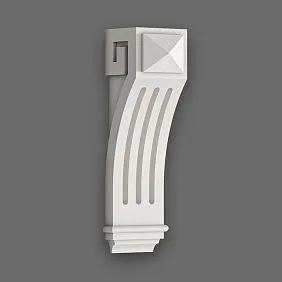
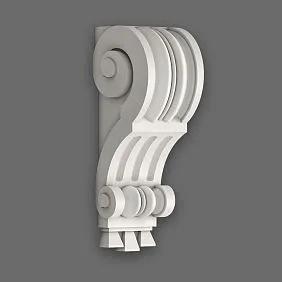

The Unnoticed Revolution: How Polyurethane Changed the Furniture Industry
Just ten years ago, beautiful carved furniture was made in one way: a wood carver spent hours or days creating each element by hand. The cost of such work made carved furniture accessible only to wealthy buyers. Mass production was limited to simple shapes, milled profiles, and uncomplicated overlays.
The emergence of cast polyurethane changed the game. The technology allowed replicating the most complex forms with a level of detail unattainable for hand carving. Baroque curls, classic rosettes, grape clusters, floral ornaments—all of this can be manufactured serially at a cost that allows selling decorated furniture in the mid-price segment.
Todaypolyurethane decor for furniture— is an industry with a turnover of billions of rubles. Catalogs contain thousands of standard element sizes: from miniature overlays the size of a coin to meter-long panels for cabinet fronts. Manufacturers have gained a tool that allows quickly creating visually expensive furniture, and buyers—access to aesthetics that was previously unattainable.
But more importantly, polyurethane didn't just make decor cheaper. It expanded design possibilities. Traditional wood carving has technological limitations: overly thin elements break, deep carving requires thick blanks, complex geometry exponentially increases labor costs. Polyurethane is free from these limitations. You can create an element of any shape, with any relief, any level of detail—the cost will depend only on size, not complexity.




Material Anatomy: What is Furniture-Grade Polyurethane
When people talk about polyurethane decor, they often mean different materials. For furniture, cast rigid polyurethane is used—a polymer obtained by mixing two components and then pouring them into molds. After polymerization, the material acquires high hardness while remaining lightweight.
The key difference between furniture-grade and interior polyurethane is density and impact resistance. Interior molding can be relatively soft, as it is used on ceilings and upper wall sections where mechanical loads are minimal. Furniture decor is constantly subjected to touches, impacts, and cleaning—it must withstand use without chipping or deformation.
ModernPolyurethane furniture decorIt is produced from compounds with a density of 300-500 kg/m³. This is several times lighter than wood, yet the material retains sufficient rigidity for use on furniture fronts, frames, and legs. The surface after casting is smooth, without pores, which is important for subsequent finishing—priming, painting, patination.
Another important property is geometric stability. Wood changes dimensions depending on humidity, which creates problems during furniture assembly: decor installed under one set of conditions can deform under others. Polyurethane practically does not react to humidity and temperature within the range of household conditions. This means furniture with polyurethane decor can be safely used in both dry, heated rooms and high-humidity environments.
Our factory also produces:
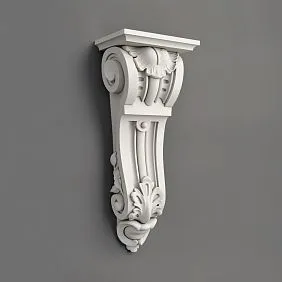


Decor Typology: From Classic to Avant-Garde
Get Consultation
Overlay Elements: The Foundation of Decoration
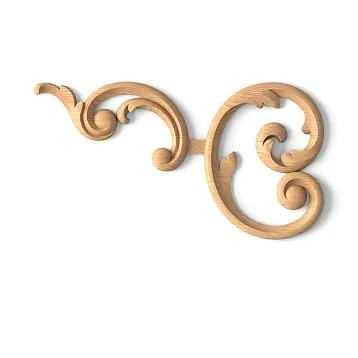
The most extensive category is overlay decorative elements. These are parts attached to a finished furniture surface, creating a three-dimensional pattern.decoration for polyurethane furnitureThis type includes hundreds of forms: rosettes, corner elements, vertical overlays, horizontal friezes, central medallions.
The size range is wide: from miniature rosettes 3-5 centimeters in diameter for decorating cabinet doors to large panels 50×70 centimeters in size for adorning wardrobes and dressers. Overlay thickness is usually 8-15 millimeters, which creates noticeable relief without making the element overly protruding.
The themes are diverse. Classic rosettes with floral ornamentation suit furniture in Baroque, Rococo, and Classicism styles. Geometric elements are for Art Nouveau and Art Deco. Minimalist overlays with simple lines are for contemporary styles. There are specialized series: nautical themes, florals, abstraction, ethnic.
For a manufacturer, it's important to understand: the same furniture carcass, decorated with different overlays, turns into completely different style products. This allows for a universal basic construction and the creation of collections for different target audiences based on it.
Moldings and Profiles: Structuring the Surface
The second important type of decor is lineal products: moldings, glazing bars, profiles. They are used to create frames on fronts, frame panels, and form multi-tiered compositions on cabinet doors.
polyurethane wall moldingsIn furniture, they work on the same principle as in interiors: they divide a large plane into sections, create rhythm, and add depth. A cabinet front divided into panels by moldings looks more expensive and interesting than a simple flat door.
The width of furniture moldings is usually 20-50 millimeters—an optimal size that is visible on furniture but doesn't overload it. The profile can be flat, relief, with a complex cross-section. The most in-demand are classic profiles: ogee, torus, fluting, egg-and-dart.
Moldings are sold by the linear meter, allowing the manufacturer to cut them to the required size. This is critically important for serial production: the same strip is used for different furniture models, simply cut to different lengths.
Legs and Supports: Where Function Meets Aesthetics
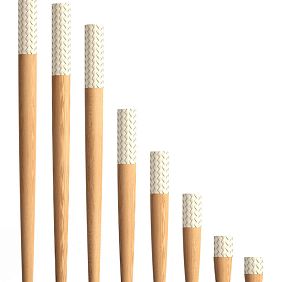
A separate category is decorative furniture legs. Traditionally, they were turned from wood on a lathe, which was one of the most labor-intensive processes. Polyurethane legs eliminate this problem.
Catalogs offer hundreds of options: from simple conical to complex balusters with fluting, collars, capitals. Height from 50 to 300 millimeters, diameter from 30 to 80 millimeters. There are ready-made legs with metal threaded inserts for attaching to the furniture carcass.
An important point: a polyurethane leg withstands loads sufficient for most furniture. A sofa, armchair, dresser, cabinet—the weight of such items is distributed across four to six legs, and polyurethane handles this task. The exception is heavy wardrobes and structures with high point loads: there, wooden or metal supports are better.
Cornices and Plinths: Finishing Touches
The upper and lower framing of case furniture—cornices and plinths—are also made from polyurethane. A cornice on top of a wardrobe creates completeness, makes the furniture visually taller and more monumental. A decorative plinth hides the supporting base, creating the illusion that the wardrobe stands on elegant legs.
Furniture cornices have a complex profile with protrusions, recesses, and decorative elements. Height is usually 50-150 millimeters, projection depth 30-80 millimeters. Installation is on the top horizontal of the carcass, often with additional internal reinforcement.
Plinths can be simple (imitating baseboards) or carved, with complex ornamentation. They are attached to the lower part of the carcass, covering the technical zone and creating an aesthetic transition between the furniture and the floor.
Columns and Pilasters: Three-Dimensional Decor
For large furniture—wardrobes, wall units, dressing rooms—vertical decorative elements are used: columns and pilasters. They are installed at carcass corners or between sections, creating architectural expressiveness.
Polyurethane columns consist of several elements: base (lower capital), shaft (usually with fluting or spiral lines), capital (upper part with decor). Height can reach two meters for full-size wardrobes. Attachment is with glue and screws to the carcass sides.
Pilasters—flat analogs of columns—are used more often, as they don't protrude far forward and don't consume space. They create a vertical rhythm on the front, making the furniture more structured.
Technological Advantages: Why Manufacturers Choose Polyurethane
Economics: Calculating the Real Numbers
For a furniture manufacturer, the main question is always the same: what is the economic feasibility? Let's calculate using a specific example.
Task: decorate a cabinet door measuring 60×80 centimeters. Option one — hand carving on wood. A moderately skilled carver will spend 4-6 hours creating the decoration. At an hourly rate of 800-1200 rubles, the labor cost alone will be 3200-7200 rubles. Plus material (wooden blank) — another 500-1000 rubles. Total: 3700-8200 rubles per door.
Option two — buy polyurethane furniture decor. A central overlay measuring 20×30 centimeters costs 300-600 rubles. Four corner elements at 100-200 rubles each — another 400-800 rubles. Framing molding (2 meters) — 200-400 rubles. Total material: 900-1800 rubles. Installation time — 30-40 minutes. Labor cost (at the same hourly rate) — 400-800 rubles. Total cost: 1300-2600 rubles.
The difference is almost threefold. And this with a comparable visual result. Moreover: polyurethane decor can be reproduced any number of times with consistent quality, whereas hand carving will always have variations from piece to piece.
For serial production, the savings are even more significant. An order for 100 doors with carving — that's months of work for several carvers. The same 100 doors with polyurethane decor — one week of work for two installers.
Production Speed: A Competitive Advantage
The modern market demands quick response. A customer is not willing to wait three months for a workshop to produce furniture. A 2-4 week timeframe — that's what is considered acceptable.
Usefurniture decoration made of polyurethane significantly accelerates production. The furniture carcass is made using standard methods — cutting, edgebanding, assembly. The decor is installed at the final stage, before painting. One craftsman can decorate 10-15 cabinet doors or 20-30 small elements (drawer fronts, cabinet fronts) per working day.
This allows accepting more orders, fulfilling them faster, and reducing costs through turnover. A manufacturer who has mastered working with polyurethane decor gains a competitive advantage in both lead times and price simultaneously.
Quality Stability: Predictability of Results
Manual labor is always variable. Even an experienced carver cannot guarantee the identity of two elements. For one-of-a-kind furniture, this is normal — slight differences add individuality. But for serial production, this is a problem: a customer who buys a bedroom set expects all elements to look the same.
Polyurethane decor is cast in molds, which guarantees absolute identity of all pieces. The thousandth rosette will look exactly like the first. This is critically important for large orders: hotel complexes, office centers, residential complexes, where dozens or hundreds of identical furniture items are needed.
Stability also applies to dimensions. Polyurethane does not shrink, swell, or warp. The dimensions of an element specified in the catalog are maintained with millimeter precision. This simplifies design and eliminates the need for adjustments during installation.
Finishing Versatility: Endless Options
Polyurethane easily accepts any finishing treatment. Moldings for Furniture can be painted any color, coated with patina, gilded, silvered, tinted to resemble valuable wood species, or coated with varnish or wax.
Basic technology: priming with acrylic primer in two coats, then painting the desired color. To create a wood effect, tinting compounds are used, applied with a brush or sponge to emphasize the relief. Patination — applying dark pigment into recesses — creates an aged effect and highlights details.
Modern technologies allow achieving a visual effect where a non-specialist cannot distinguish polyurethane from wood. A properly processed and painted overlay looks like solid wood carving, but costs dozens of times less and installs dozens of times faster.
Design Possibilities: From Classic to Futurism
Classical styles: Baroque, Rococo, Empire
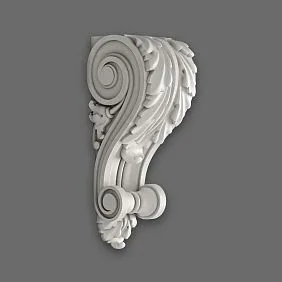
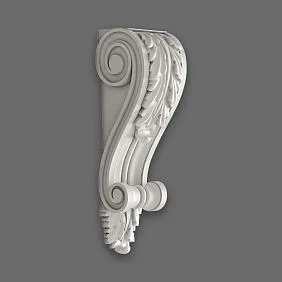
It is for classic furniture that polyurethane decor reveals its full potential. Baroque swirls, rococo shells, Empire laurel wreaths — all of this requires complex carving that costs a fortune in wood. In polyurethane, the same forms are available at a price that allows selling furniture in the mid-range and even economy segments.
Decorative polyurethane molding for furniture includes a full set of classic ornaments. Acanthus — curling leaves with complex detailing. Grapevine with clusters and tendrils. Floral rosettes with petals, stamens, buds. Cartouches — oval or shield-shaped elements with scrolls along the edges. Mascarons — stylized faces framed by decoration.
These elements allow creating furniture that is visually indistinguishable from antique or bespoke pieces. A cabinet with columns, capitals, cornice, and carved overlays on the doors looks like a work of art, yet can be manufactured serially and sold at an affordable price.
Neoclassical and Modern Classic: Restrained Elegance
The modern buyer is often not ready for Baroque opulence but wants to see nobility and sophistication in furniture. For such requests, neoclassicism exists — a style combining classical proportions with more restrained decor.
Here, simple moldings are used to create frames on facades, laconic rosettes without excessive detailing, classic legs without complex turnings. Polyurethane Items for neoclassical furniture have clear geometry, symmetry, and minimal detail.
An important technique is playing with volume without excessive carving. Wide, flat moldings create depth through geometry rather than ornamentation. Pilasters with simple fluting structure the facade without overloading it with details. Concise cornices with one or two profiles complete the composition.
Art Nouveau and Art Deco: Geometry and Curves
Early 20th-century styles—Art Nouveau and Art Deco—are back in fashion. Their characteristic features: flowing curved lines (Art Nouveau), strict geometry and symmetry (Art Deco), botanical motifs (Art Nouveau), solar and Egyptian motifs (Art Deco).
Polyurethane is ideal for realizing these styles. The fluid curves of Art Nouveau, which are difficult to carve in wood, are easily cast in molds. The geometric stepped profiles of Art Deco, requiring precise milling, come out perfectly crisp in polyurethane.
A feature of furniture in these styles is asymmetry and dynamism. Overlays are not necessarily symmetrical; they can be offset to one edge of the facade, creating a sense of movement. Decoration can be not only applied but also inlaid—in this case, the polyurethane element is recessed into a milled cavity on the facade, creating an inlay effect.
Minimalism and Contemporary: Decoration as an Accent
Modern styles require restraint, but this does not mean completely abandoning decoration. Minimalist furniture can have one or two accent elements that make it interesting without disrupting the overall conciseness.
polyurethane decor for furnitureIn modern styles, these are simple geometric shapes: rectangular frames, round or oval inserts, abstract linear elements. They can be painted in a color contrasting with the main furniture color, creating a graphic accent.
A popular technique is using relief panels on facades. A panel with a wavy or cellular relief, cast from polyurethane, is glued onto a cabinet door and painted in the overall color. This creates tactility and visual texture while preserving the minimalist aesthetic.
Mounting Technology: Practice for Production
Surface Preparation: The Foundation of Quality
The quality of decorative mounting is determined by the quality of surface preparation. Polyurethane adheres to any material—chipboard, MDF, solid wood, plywood, veneer—but the surface must be clean, dry, and degreased.
For chipboard and MDF, it is usually sufficient to wipe the mounting area with alcohol or a degreaser. The laminated surface has low adhesion, so it is recommended to lightly sand it with P180-P240 sandpaper—creating micro-roughness for the adhesive to grip.
Solid wood and veneer require checking for smoothness. If the surface has open pores (oak, ash), it is better to prime it with acrylic primer—this will fill the pores and create an even base for the adhesive.
Painted surfaces are checked for coating strength. If the paint is peeling or flaking, the mounting area needs to be cleaned down to a solid base, filled, sanded, and primed.
Adhesive Selection: The Reliability Criterion
For installingfurniture decoration made of polyurethaneSeveral types of adhesives are used. The choice depends on the size of the element, the base material, and the required setting speed.
Polymer mounting adhesives (liquid nails)—a universal solution. Suitable for most tasks, provide good bond strength, easy to apply. Setting time 10-30 minutes, full strength after 24 hours. Disadvantage—require temporary fixation of the element until set.
Contact adhesives—for large elements. Applied to both surfaces, allowed to sit for 5-10 minutes, then the elements are joined. Setting is instant, strong pressure. Advantage—no temporary fixation needed. Disadvantage—no possibility for adjustment after bonding.
Two-component polyurethane adhesives—for critical joints. Provide maximum strength, water resistance, load resistance. Used for legs, load-bearing elements, decoration used in demanding conditions.
PVA construction adhesive—for small elements on wooden surfaces. Cheap, accessible, but not suitable for plastic surfaces and high-humidity environments.
Installation technology: step-by-step process
The decorative mounting process is standardized and does not require high qualifications. This allows training any employee to perform this operation with quality.
Step one: marking. On the facade, mark the installation location of the element. For symmetrical compositions, use central axes; for multiple elements, use a template ensuring equal distances.
Step two: fitting. Place the element at the installation location, check the marking accuracy, assess how it will look.
Step three: applying adhesive. Apply adhesive to the back of the decor in dots (for small elements) or strips (for large ones). Do not apply adhesive in a solid layer — it will squeeze out when pressed.
Step four: installation. Place the element on the marked spot, press evenly over the entire area. Hold for 30-60 seconds.
Step five: fixation. For large elements, additional fixation until the adhesive sets. Use painter's tape, clamps, weights—depending on the part configuration.
Step six: removing excess adhesive. Immediately wipe away squeezed-out adhesive with a damp cloth (for water-soluble adhesives) or solvent (for polymer ones).
Step seven: drying. Full adhesive curing time according to the manufacturer's instructions, usually 12-24 hours. Do not subject the product to loads until this time.
Reinforcing the Structure: When Adhesive Is Not Enough
For critical elements—legs, load-bearing cornices, large overlays—adhesive alone may be insufficient. In these cases, combined fastening is used: adhesive plus mechanical fasteners.
Screws are driven from the back side of the furniture part through into the polyurethane element. It is important not to overtighten—polyurethane is softer than wood, and excessive tightening can compress the material. Use screws with wide heads or add washers.
Threaded inserts are used for legs. A metal threaded bushing is embedded into the polyurethane leg during manufacturing. It is attached to the furniture body with a screw or screwed into a corresponding threaded sleeve. This ensures reliable fastening and the possibility of disassembly.
Dowels are another reinforcement option. Holes are drilled into the end of the polyurethane element and at the installation site on the furniture, wooden dowels with adhesive are inserted. The element is placed onto the dowels and additionally secured with adhesive along the contact plane.
Finishing: from primer to varnish
Priming: a mandatory step
Polyurethane has a smooth, low-absorbency surface. Without primer, paint adheres poorly, may peel, or apply unevenly. Primer solves this problem by creating an adhesion layer.
Use acrylic primer for plastic or a universal primer. Apply with a brush in a thin layer, thoroughly coating all recesses of the relief. The first primer coat absorbs unevenly—this is normal. Dry according to instructions (usually 1-2 hours), then apply a second coat.
After two coats of primer, the surface becomes matte, uniform, and ready for painting. If there are minor surface defects (pits, chips), fill them with plastic filler, sand with fine abrasive after drying, and prime the defective area additionally.
Painting: base color and decorative techniques
Base painting—applying the main color. Use acrylic paints—they are odorless, dry quickly, and provide a durable coating. Furniture acrylic paints or universal interior paints are suitable for furniture.
Apply with a brush or spray gun. A brush allows thorough coverage of the relief but takes time. A spray gun is faster but requires protecting surrounding surfaces from overspray. The first coat of paint may apply unevenly—this is normal. After drying, apply a second coat.
Decorative techniques add expressiveness. Patination—after the base coat dries, apply dark paint (patina) into the recesses of the relief, wipe off excess with a cloth. Dark pigment remains only in deep areas, emphasizing the relief.
Dry brushing—a technique creating a worn effect. Take a dry brush, pick up minimal paint of a contrasting color, and lightly brush over the raised parts of the relief with tangential strokes. Creates an aged, noble wear effect.
Gilding and silvering—for luxurious furniture. Use special metallic paints or imitation gold leaf (patina). Apply to raised parts of the relief, leaving recesses in the base color. Results in a gilding effect.
Varnishing: protection and final shine
Varnish—the final finishing stage, creating a protective film and providing the desired level of shine. For furniture decor, use acrylic varnishes—they are transparent, do not yellow over time, and provide a durable coating.
The choice of shine level depends on the furniture style. Matte varnish preserves color without shine, suitable for modern styles. Semi-matte (satin) gives a slight silky sheen, a universal option. Glossy creates a mirror shine, suitable for luxurious classic styles.
Apply varnish with a soft-bristle brush or spray gun. The coat should be thin, without drips. Dry the first coat, lightly sand with fine abrasive (P400-P600) to smooth raised fibers, apply a second coat. Two to three coats of varnish provide sufficient protection and a beautiful appearance.
For furniture used in demanding conditions (kitchens, bathrooms), use polyurethane varnishes—they provide maximum resistance to moisture, cleaning agents, and abrasion.
Economic calculations for the manufacturer
Cost of decorated furniture: detailed calculation
To make a decision on implementing polyurethane decor, precise figures are needed. Consider a specific example: a bedside table measuring 50×40×60 cm with two drawers.
Basic construction (body made of laminated chipboard, drawers, hardware, assembly)—cost 2500 rubles, retail price 5000 rubles.
Decorated version of the same table: add overlay on drawer fronts (2 pieces at 150 rubles each = 300 rubles), molding around the perimeter of the top lid (1 meter = 150 rubles), four decorative legs (100 rubles each = 400 rubles). Total decor material: 850 rubles.
Decor installation time—40 minutes. At an hourly labor cost of 600 rubles—this is 400 rubles.
Consumption of primer, paint, varnish—100 rubles.
Total cost increase: 1350 rubles. New cost: 3850 rubles.
Retail price of the decorated table—9000-10000 rubles (market price for furniture with decor in the mid-range segment).
Profit from the basic table: 2500 rubles.
Profit from the decorated table: 5150-6150 rubles.
Profit growth of more than double with only a 54% increase in cost. This is the economic appeal of using polyurethane decor.
Return on investment calculation
Starting work with polyurethane decor requires investment: forming a range of decor in stock, staff training, possibly purchasing additional tools (a paint sprayer, for example).
Minimum starter set of decor for a small production: 50-70 standard sizes of elements (overlays, moldings, feet), cost about 50,000-70,000 rubles.
With a production volume of 50 furniture units per month and an average profit increase of 2500 rubles per unit, the additional profit will be 125,000 rubles per month.
Investments pay off within the first month of operation. After that — pure additional profit plus expansion of the target audience through a more expensive furniture segment.
Impact on marketing and sales
Decorated furniture has a fundamentally different visual appeal. In a showroom or catalog, it attracts attention and stands out against the background of simple cabinet furniture.
The manufacturer gets the opportunity to segment the assortment: basic models without decor for the budget segment, the same models with decor — for the mid-range segment, models with rich decor and expensive finishes — for the premium segment. At the same time, the basic design remains unchanged, only the decoration changes.
This simplifies production (fewer standard sizes of cabinets in production), logistics (universal semi-finished products in stock), reduces risks (if a model doesn't sell in the decorated version, the cabinets can be sold as basic).
Trends for 2026: where the industry is heading
Customization: furniture according to the customer's wishes
The main trend of recent years is personalization. The buyer wants not just furniture from a catalog, but the ability to influence its design. Polyurethane decor is ideal for this task.
The manufacturer offers a basic model and a catalog of decor to choose from. The customer chooses which overlays, which feet, which cornice they want to see on their furniture. Production assembles the order according to the specification, and the customer receives a unique product.
Technically, it's simple: instead of a standard set of decor on model A, we install a set chosen by the customer. The cost does not change (the cost of decor is approximately the same), and the customer gets a sense of individuality.
Some manufacturers go further: they offer an online configurator where the customer chooses the cabinet, decor, finish color, and hardware themselves. The system automatically calculates the cost and production time. This approach sharply increases customer engagement and increases the average check.
Eco-trend: naturalness and safety
The modern buyer is concerned about environmental friendliness. This also applies to furniture decor. Polyurethane in this context has advantages: it does not contain formaldehyde (unlike some board materials), does not emit volatile substances after polymerization, and is hypoallergenic.
Manufacturers of polyurethane decor are increasingly obtaining environmental certificates confirming product safety. This is an important marketing argument, especially for children's furniture and furniture for allergy sufferers.
Another aspect of the eco-trend is durability. Furniture with polyurethane decor lasts for decades without losing its appearance. This is the opposite of the philosophy of disposable consumption — the buyer makes a long-term investment in a quality item.
Technologies: digital design and AR
Advanced manufacturers are implementing digital technologies. 3D modeling allows creating accurate visualizations of future furniture with decor. The customer sees what the final product will look like even before production begins.
Augmented reality (AR) goes further: an application allows 'placing' virtual furniture in a real interior through a smartphone camera. The customer sees how a chest of drawers with decor will fit into their bedroom, whether the style, scale, and color are suitable.
These technologies reduce the percentage of refusals after manufacturing, increase customer satisfaction, and create a wow effect from the purchasing process.
Mixing styles: eclecticism and fusion
Strict stylistic boundaries are blurring. Modern interiors often combine elements from different eras and directions. This is also reflected in furniture.
Manufacturers create collections that combine, for example, a laconic modern cabinet with classic decorative elements. Or a minimalist design with one or two Art Deco accents.
Polyurethane decor allows for experimentation without risk. You can release a trial batch of furniture in a new style using existing cabinets and new decor. If it doesn't work — losses are minimal. If it hits — we quickly scale up production.
Case studies: real success stories
Regional factory: from crisis to growth
A small furniture factory in a provincial town faced a classic problem: competition with large network manufacturers who were dumping due to volume. Simple cabinet furniture did not provide competitive advantages.
Solution: transition to manufacturing furniture with decor. Implementedbuy polyurethane furniture decor, trained personnel, launched a new line — classic bedrooms and living rooms with carved decor.
Result: within six months, the share of decorated furniture in the assortment grew from zero to 40%, the average check increased by 65%, profitability rose from 12% to 23%. The factory found its niche — customers who value visual luxury but have a limited budget.
Design Studio: Expanding Capabilities
A small design workshop specialized in custom-made, one-of-a-kind furniture. Problem: carved decor was outsourced, which increased lead times and costs.
Solution: creating their own library of polyurethane decor and mastering the technology for its application. Now a designer can include any decorative element in a project, knowing it will be implemented quickly and with high quality.
Result: furniture production lead times were reduced from 8-12 weeks to 4-6 weeks. The cost decreased by 20-30% while maintaining the visual effect. The number of orders grew by 40% over the year.
Large Holding: Expanding the Segment
A large furniture holding, specializing in the mass market segment, decided to enter the mid-range and premium segments. Creating new production lines for carved furniture required huge investments.
Solution: launching lines of decorated furniture using existing capacities with polyurethane decor. Purchasing decor from specialized suppliers, training personnel at several pilot productions.
Result: over two years, the holding launched four new collections in the mid-range segment; the share of this segment in revenue grew from 5% to 25%. At the same time, capital investments amounted to less than 10% of the cost of building new specialized production.
Practical Recommendations for Manufacturers
Where to Start: A Step-by-Step Plan
First step — market and assortment analysis. Study which furniture styles are in demand in your region. Look at competitors' catalogs, assess price niches. Determine in which segment you want to work with decorated furniture.
Second step — choosing a decor supplier. Several factors are important: breadth of assortment, product quality, supply stability, price level, technical support. Order samples, assess their quality, conduct a trial installation.
Third step — forming a starter assortment of decor. Don't try to cover the entire spectrum immediately. Select 30-50 basic elements that will be used in the first models. These include overlays of different sizes, several types of moldings, a basic set of legs, corner elements.
Fourth step — personnel training. Allocate 2-3 employees who will specialize in decor installation. Train them in the technology, let them master the process on trial products.
Fifth step — developing pilot models. Take 3-5 existing furniture models, add decor to them, develop decoration schemes, calculate cost and prices.
Sixth step — launch and market testing. Manufacture a small batch (10-20 pieces), display them in the showroom, launch advertising. Collect customer feedback, assess demand.
Seventh step — scaling. If the pilot models are successful, expand the decor assortment, increase production, develop new models.
Typical mistakes and how to avoid them
First mistake: saving on decor quality. Cheap decor made from low-grade polyurethane may have unclear relief, pores, deformations. Such elements will ruin the look of the furniture. Choose proven suppliers, even if their prices are higher.
Second mistake: incorrect adhesive choice. Using unsuitable adhesive leads to decor peeling. Follow the decor supplier's recommendations for selecting adhesive compounds.
Third mistake: insufficient surface preparation. Installation on a dirty, greasy, or weak surface guarantees problems. Don't skimp on time for preparation.
Fourth mistake: rushing during painting. Applying paint to primer that hasn't dried, thick layers with drips, painting without primer — all of this yields poor results. Follow the technology.
Fifth mistake: decor not matching the furniture style. A Baroque overlay on a minimalist facade looks absurd. The decor must match the overall style of the product.
Working with Clients: How to Sell Decorated Furniture
Decorated furniture requires a different sales approach. The buyer must understand the value of the decor, see the difference between a simple and a decorated model.
In the showroom, place the basic and decorated versions of the same model side by side. The price difference becomes clear when the client sees what they are paying extra for.
Emphasize individuality. Decorated furniture is not mass-produced; it's a piece with character, emphasizing the owner's status.
Talk about the technology. Many think decor is just stickers. Explain that these are three-dimensional elements that are installed and painted by hand. This increases the perceived value.
Offer alternatives. If a client likes the model but finds the decor excessive, suggest a version with fewer elements. Flexibility is a competitive advantage.
Frequently asked questions
Can polyurethane decor withstand furniture loads?
Yes, with proper installation, the decor withstands all standard loads. Facade overlays are not subjected to mechanical impacts. Legs made of quality polyurethane support furniture weight within household load limits. For particularly heavy structures, use metal threaded inserts in the legs.
Can polyurethane decor be distinguished from wood carving?
With professional finishing — practically no. Properly painted and patinated polyurethane is visually indistinguishable from wood. There is a tactile difference — polyurethane feels cooler to the touch, but this is noticeable only upon close contact.
How long does furniture with polyurethane decor last?
Service life is determined not by the decor, but by the furniture construction. Polyurethane does not age, lose shape, or peel with proper installation. Furniture with such decor can last for decades.
Is polyurethane safe for children's furniture?
Yes, after complete polymerization, polyurethane is absolutely inert and safe. It has hygienic certificates permitting use in residential premises, including children's rooms. Does not emit harmful substances, hypoallergenic.
Can damaged decor be repaired?
Yes, minor chips and scratches are easily filled with plastic putty followed by painting. For serious damage, it's easier to replace the damaged element — it's faster and gives better results.
What is the minimum order quantity to start working with decor?
Depends on production scale. For a small workshop, 20-30 standard sizes of elements worth 30,000-40,000 rubles is sufficient. For a factory — 100-150 standard sizes worth 100,000-150,000 rubles. Decor does not spoil during storage, so it's a long-term investment.
Is special equipment needed?
Basic tools are enough: glue gun, brushes for painting, a spray gun is desirable but not mandatory. No complex equipment is required, which lowers the entry barrier.
Can decor be used on furniture for wet areas?
Yes, polyurethane is not afraid of moisture. It's important to use moisture-resistant glue and paint. Furniture with polyurethane decor serves perfectly in bathrooms, kitchens, saunas.
How to calculate the required amount of decor for a product?
First, draw a decoration scheme: where and which elements will be installed. Count the quantity of each type of element. For moldings, measure the length of all lines. Add a 10% reserve for possible defects or installation errors.
About the company STAVROS
Over 23 years of work in the decorative materials and furniture components market, the company STAVROS has evolved from a small workshop to one of the leading manufacturers and suppliers in the industry. Today, the name STAVROS is a mark of quality that furniture makers across Russia rely on.
When talking aboutpolyurethane furniture decor, professionals know: in the STAVROS catalog, you'll find a solution for any task. Over a thousand standard sizes of elements, from miniature overlays to large architectural details, from classical forms to modern minimalism — the assortment allows implementing projects of any complexity and style.
STAVROS production uses polyurethane compounds from leading European manufacturers, guaranteeing high density, clear relief, and durability of products. Each element undergoes quality control at all stages: from mold casting to final packaging. This prevents defective products from reaching the market and saves clients' time.
For furniture manufacturers, STAVROS is not just a materials supplier, but a partner in business development. The company provides technical support: consultations on decor selection for specific projects, assistance in material calculation, recommendations on installation and finishing. STAVROS specialists know all the intricacies of working with polyurethane decor and are ready to share experience.
Logistics is another competitive advantage. A proprietary warehouse in St. Petersburg ensures availability of all catalog items. Orders are assembled on the day of inquiry, delivery across Russia takes 2-7 days depending on the region. For large-scale productions, deferred payment and individual cooperation terms are possible.
STAVROS works not only with large factories but also with small workshops, private craftsmen, designers. There is no minimum order amount — you can buy one element to try or a thousand for serial production. Service and product quality are equally high for all clients.
The company's catalog features not onlyPolyurethane moldings, but also everything necessary for comprehensive furniture production equipment: overlay decor of all types and sizes, moldings and profiles, decorative legs and supports, cornices and plinths, columns and pilasters, specialized elements for different styles.
The wooden products section deserves special attention — a traditional STAVROS direction. Carved elements from solid wood, balusters, posts, handcrafted furniture legs complement the polyurethane decor line, allowing creation of combined solutions for premium projects.
The company constantly expands its assortment, tracking market trends and client requests. New items appear every quarter — these are new forms, new styles, new solutions for modern furniture. STAVROS clients are always a step ahead of competitors, having access to relevant decorative elements.
Reliability is the foundation of STAVROS's philosophy. Over 23 years of operation, the company has earned a reputation as a partner you can rely on. Stated deadlines are strictly adhered to, quality is consistently high, and service is impeccable. Hundreds of furniture manufacturers across Russia have been working with STAVROS for years, knowing they won't let them down.
Choosingpolyurethane decor for furnitureWith STAVROS, you choose world-class quality, the widest range, professional support, and a reliable partner for your business growth.
Create furniture that amazes. Work with materials that inspire. Trust professionals with 23 years of experience — trust STAVROS.