












































































Article Contents:
- Tactility and Material Psychology
- Temperature to the Touch: The Physiology of Comfort
- Texture: Smoothness vs Liveliness
- Sound: The Acoustics of Interaction
- Aesthetics and Stylistic Flexibility
- The Versatility of Metal: Myth or Reality?
- Wood as an Extension of the Furniture
- Color variety
- Ecological and health benefits
- Natural vs Industrial
- Absence of Emissions
- Biodegradability and disposal
- Durability and resistance to wear
- Mechanical strength
- Resistance to Scratches and Wear
- Moisture Resistance
- Cost and availability
- Price Range of Metal Handles
- Cost of Wooden Handles
- Price-Quality-Durability Ratio
- When Wood is the Only Right Choice
- Solid Wood Furniture
- Children's Furniture
- Eco-Friendly Interiors
- Ethnic and Natural Styles
- When Metal Wins
- Modern urban styles
- Commercial Premises with High Traffic
- Wet Areas
- Budget Projects
- Hybrid solutions: combination of materials
- Maintenance and care
- Frequently Asked Questions
- Do Wooden Handles Scratch Faster Than Metal Ones?
- Can Wooden Handles Be Installed in the Kitchen?
- Does Wood Fade in the Sun?
- How Eco-Friendly Are Wooden Handles?
- Are Wooden Handles More Expensive Than Metal Ones?
- Which Wood Species Are Best for Handles?
- Can You Paint a Wooden Handle Yourself?
- Are Wooden Handles Suitable for Loft Style?
- Where to buy quality wooden handles?
- How Are Wooden Handles Attached?
- Conclusion: Material as Philosophy

Choosing furniture hardware is not a technical question. It is a decision that defines the character of a space, its atmosphere, the tactile experience of everyone who opens a cabinet or pulls out a drawer.Furniture Handles— a small detail we touch daily, repeatedly. And in this daily interaction, the material matters. Cold metal or warm wood? Industrial sheen or natural texture? Mass production or handcrafted work?Wooden handlesand metallic ones exist in parallel on the market, but they appeal to different values, create different experiences, and serve different purposes.
Metal has dominated furniture hardware for the past decades. Chrome-plated steel, matte brass, black bronze — this is the language of modernity, minimalism, industrial chic. But the pendulum has swung. The return to natural materials, environmental awareness, and the pursuit of individuality have led to a renaissance of wooden hardware. When does wood win? Is metal always a universal solution? Let's figure it out without bias, relying on facts, experience, and an understanding of the nature of materials.


Tactility and the Psychology of Material
Humans are tactile beings. Touching a surface triggers an instant reaction, often subconscious, but influencing the overall impression of a space.




Temperature to the Touch: The Physiology of Comfort
Metal handles are cold. This is a physical fact due to metal's high thermal conductivity. When you grasp a steel or aluminum handle, it instantly draws heat away from your skin, creating a sensation of cold. On a hot summer day, this might be pleasant, but in a cool apartment in the morning or on a winter evening — it's uncomfortable.
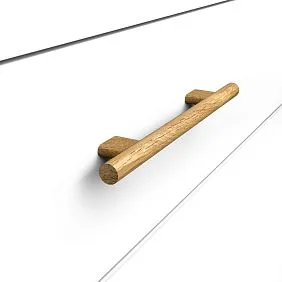
Wooden Handleis warm. Wood has low thermal conductivity; it does not draw heat from the hand but maintains a temperature close to room temperature. Touching wood is always comfortable, regardless of the season. This is especially appreciated by people with sensitive hands, the elderly, and children.
Our factory also produces:



Texture: Smoothness vs. Liveliness
Metal handles are usually perfectly smooth. Polished steel, chrome-plated surfaces, matte anodization — all create a uniform, lifeless texture. Yes, it's pleasant to the touch, but it lacks individuality, variety, that microscopic randomness characteristic of natural materials.
Wooden handles, even perfectly sanded and varnished, retain the subtle relief of wood grain. If the finish is oil-based, this texture is felt more vividly — a slight velvetiness, a barely noticeable irregularity. Each handle is unique: the pattern of growth rings, the direction of the grain, natural color variations create an individuality impossible to reproduce in metal.
Get Consultation
Sound: The Acoustics of Interaction
Opening a cabinet with a metal handle is accompanied by a characteristic sound — ringing, sharp, sometimes squeaky if the fastening is loose. Metal resonates, amplifies mechanism noises, creates acoustic harshness.
Wood absorbs sound. A wooden handle acts as a damper, softening the acoustics of opening and closing doors and drawers. In a quiet home where tranquility is valued, this is an advantage. At night, when others are sleeping, opening a cabinet with a wooden handle can be almost silent.
Aesthetics and Stylistic Flexibility
Interior design is the art of creating atmosphere through form, color, material, and light. Hardware plays the role of an accent or a neutral element, but it always influences the overall perception.
The Universality of Metal: Myth or Reality?
Metal handles are considered universal. Chrome-plated brackets suit a modern kitchen, copper knobs suit a loft, black handles suit minimalism. This is true, but with a caveat: metal is universal in urban, industrial, high-tech styles. In classic, country, eco, Scandinavian interiors, metal can look alien.
Take a classic wooden kitchen with solid oak fronts. Installing chrome-plated handles on it means destroying the stylistic integrity. The metal would signal modernity, technologicality, but the kitchen speaks of tradition, nature, craftsmanship. A visual conflict arises.
Wood as an Extension of the Furniture
Wooden handleson wooden furniture is a logical, organic solution. If the cabinet fronts are made of oak, handles from the same oak create material unity. You can play with tonal contrasts: a light front — a dark stained handle, or vice versa. But the material is unified, and this creates harmony.
For furniture made of MDF, painted white, gray, or pastel colors, a wooden handle becomes an accent, adding warmth and naturalness. A white kitchen with beech wooden handles is a classic Scandinavian solution, proven by thousands of projects.
Color diversity
Metal handles are limited to a palette of metals and finishes: chrome, nickel, brass, copper, bronze, black matte steel, gold. That's about a dozen main options.
Wood offers a practically unlimited color palette. Natural shades from light beech to dark stained oak. Staining allows for intermediate tones: honey, walnut, chocolate, wenge. Painting with enamels opens up any color in the spectrum: white, black, gray, blue, green, red — whatever the design project requires.
At the same time, wood retains its natural essence — texture, structure, warmth. A painted wooden handle remains wooden to the touch, unlike painted metal, which remains cold.
Ecological and Health Benefits
The modern consumer pays increasing attention to the eco-friendliness of materials, their impact on health, and the carbon footprint of production.
Naturalness vs. Industry
Wood is a renewable resource. Properly managed forestry ensures constant forest regeneration. The production of wooden handles does not require energy-intensive smelting processes and does not create toxic waste.
Metal is extracted from ores; the smelting and processing process is energy-intensive, creates carbon dioxide emissions, and requires chemical treatment to create coatings. Chroming and galvanization involve the use of toxic substances.
Absence of emissions
Wooden handlesSolid wood handles, coated with eco-friendly oils or water-based varnishes, are absolutely safe. They do not emit volatile organic compounds (VOCs) and do not cause allergies. This is important for homes with children, allergy sufferers, and people with chemical sensitivities.
Metal handles with low-quality coatings can release nickel compounds (an allergen for many), lead (from cheap alloys), and formaldehyde (from some types of varnishes). Of course, high-quality European hardware is certified and safe, but budget Chinese metal is a lottery.
Biodegradability and disposal
At the end of its life cycle, wood is fully biodegradable. An old wooden handle can be composted, burned without toxic emissions, or recycled into wood chips. A metal handle requires remelting for recycling, which again involves energy costs.
Durability and Wear Resistance
One common argument against wood is the opinion of its lesser durability compared to metal. How valid is this?
Mechanical strength
High-quality wooden handles made from hardwoods—oak, beech—have high mechanical strength. Oak has a Brinell hardness of about 3.7-3.9, which is comparable to some soft metals. A properly designed solid oak handle can withstand decades of intensive use.
Metal is certainly stronger in terms of fracture and bending. A steel handle is practically impossible to break under normal household use. But wood only breaks under extreme loads, which do not occur in normal furniture use.
Resistance to scratches and abrasion
Metal handles get scratched. Polished steel becomes covered with fine scratches from touches, cleaning agents, and accidental impacts. Chrome plating can peel off, exposing the base metal. Anodized aluminum becomes dull.
Wooden handles are also susceptible to scratches, but they are less noticeable due to the natural grain. A scratch on an oak handle is perceived as patina, a trace of life, not a defect. Oil coating is easily renewed—just apply a fresh layer of oil, and the handle looks like new.
Moisture Resistance
Here, metal wins over untreated wood. Stainless steel and aluminum are not afraid of water and are suitable for bathrooms and kitchen areas above the sink.
But properly treated wood is also moisture-resistant.Wooden HandleSolid wood, coated with polyurethane varnish or oil with wax, does not absorb moisture, does not swell, and does not crack. Oak, due to its tannin content, has natural resistance to rot. Wooden handles are successfully used in kitchens, even in the sink area, if the coating is high-quality.
Cost and accessibility
Price is a factor that often determines the choice. What is cheaper: wood or metal?
Price range of metal handles
Metal hardware has a huge price range. Chinese handles made of silumin alloy with chrome plating cost 50-100 rubles apiece. European handles made of stainless steel with high-quality processing cost 500-1500 rubles. Designer hardware made of handcrafted brass can cost 3000-5000 rubles and more.
Cost of wooden handles
buy wooden handlesSolid wood handles can be found in the range from 300 to 2000 rubles apiece, depending on the wood species, complexity of shape, and type of coating. A simple beech knob with oil coating costs 300-500 rubles. A carved oak pull with multi-layer varnishing costs 1500-2000 rubles.
If comparing high-quality hardware, wooden and metal handles are in the same price range. Wood is not more expensive when it comes to products from professional manufacturers.
Price-quality-durability ratio
Cheap metal handles last 2-3 years, then the coating peels off and the fastenings become loose. High-quality solid wood handles with proper care last 10-15 years or more. If recalculated for the cost of ownership, wood wins.
When wood is the only correct choice
There are situations where wooden hardware is not just preferable, but the only correct solution.
Solid wood furniture
An oak solid wood wardrobe with metal handles is a stylistic contradiction. Wood speaks of nature, tradition, craftsmanship; metal responds with industry. Only a wooden handle made from the same species or a harmonizing one (e.g., ash on oak) creates integrity.
Children's furniture
For a children's room, wooden hardware is a matter of safety and comfort. Metal is cold, can have sharp edges, and heats up in the sun. Wood is warm, pleasant to the touch, and safe.Wooden handlesSolid wood handles with rounded edges, without sharp corners, are ideal for a children's room.
Eco-friendly interiors
Homes designed according to the principles of eco-friendliness, minimizing carbon footprint, and using renewable resources require natural materials. Here, wood is a conscious choice that aligns with the owners' values.
Ethnic and Natural Styles
Country, rustic, eco, Scandinavian style, Japanese minimalism — all gravitate towards natural materials. Metal is appropriate here only in functional parts (hinges, guides), but not in decorative ones.decor for furnitureIn these styles — wood, textiles, ceramics, but not shiny metal.
When Metal Wins
To be fair, there are situations where metal hardware is preferable.
Modern Urban Styles
High-tech, loft, industrial style, minimalism with a focus on technology — here metal is organic. Chrome handles on glossy MDF fronts, black matte on concrete textures — this is the language of urbanism.
Commercial Premises with High Traffic
Offices, shops, public spaces require hardware that can withstand intensive use and vandalism. Metal is more reliable here, especially stainless steel — it's difficult to damage, easy to clean with aggressive agents.
Wet rooms
For saunas, swimming pools, industrial kitchens, where humidity is constantly high, metal (stainless steel, aluminum) is irreplaceable. Wood, even with a protective coating, will last less in such conditions.
Budget projects
If the budget is minimal, cheap metal hardware is more accessible than cheap wooden hardware. But here the question is about priorities: save now, replacing handles in a year or two, or invest a little more in quality.
Hybrid solutions: combination of materials
There are pens that combine wood and metal: a wooden overlay on a metal base, metal inserts in a wooden handle. Such solutions attempt to combine the advantages of both materials: the strength of metal and the warmth of wood.
However, combined handles are more complex to produce, more expensive, and may have durability issues at the material junction. Often it's wiser to choose one material suitable for the concept than to artificially combine incompatible ones.
Care and Maintenance
Metal handles require regular cleaning from fingerprints, dust, and grease stains. Chrome surfaces are cleaned with special products to avoid scratching. Matte finishes are less demanding but become dull without care.
Wooden handles with a varnish coating are wiped with a damp cloth and do not require special products. An oil coating needs renewal every 2-3 years — the surface is cleaned, and a fresh layer of oil is applied. This is not difficult to do yourself, and the process is even pleasant — the wood comes to life, the color deepens.
Frequently asked questions
Do wooden handles scratch faster than metal ones?
Hardwoods (oak, beech) do not scratch faster than anodized aluminum or painted steel. Polished stainless steel scratches easier than oak. The quality of the coating is more important: good varnish protects wood better than poor anodizing protects metal.
Can wooden handles be installed in the kitchen?
Yes, if they are coated with moisture-resistant varnish or oil.Wooden handlesOak handles with polyurethane coating serve in the kitchen for decades without problems.
Does wood fade in the sun?
Yes, natural wood under direct sunlight gradually changes its shade. But high-quality UV-protective coating in varnish or oil minimizes this effect. Metal can also fade — painted surfaces become dull, anodizing loses color.
How eco-friendly are wooden handles?
If the wood is from responsibly managed forests (FSC, PEFC certificates), and the coatings are water-based without toxic solvents — this is a maximally eco-friendly product. The carbon footprint of producing wooden handles is many times lower than that of metal ones.
Are wooden handles more expensive than metal ones?
In the segment of quality hardware, the prices are comparable. Cheap metal is cheaper than wood, but also lasts less. Premium metal handles are more expensive than premium wooden ones.
Which wood species are best for handles?
Oak and beech are the leaders. Hard, wear-resistant, with beautiful texture. Ash is also good. Exotic species (teak, wenge, merbau) are strong and moisture-resistant, but expensive and ecologically controversial.
Can a wooden handle be painted independently?
Yes, if you buy an unpainted handle. Process: sanding, priming, painting with enamel or stain, varnishing. But high-quality factory painting is more reliable — professional materials and technologies are used there.
Are wooden handles suitable for loft style?
Metal is more commonly used for loft, but wooden handles made of dark stained oak or painted black are also organic. They add warmth to industrial rigidity.
Where to buy quality wooden handles?
Better directly from manufacturers of solid wood furniture hardware. This guarantees the quality of material, processing, and coating. Intermediaries increase the price and do not always control quality.
How are wooden handles attached?
Standardly — with screws through the front. The kit includes screws of the required length. Installation is no more difficult than with metal handles. It's important not to overtighten the screws to avoid splitting the wood.
Conclusion: material as philosophy
The choice between wooden and metal hardware is not a technical question. It is a choice of philosophy, values, and attitude towards the material world.Furniture HandlesWooden ones speak of connection with nature, respect for tradition, and the value of the natural and unique. Metal speaks of technology, universality, and urban aesthetics.
Wood wins when warmth, tactile comfort, eco-friendliness, stylistic unity with solid wood furniture, and creating an atmosphere of coziness and natural harmony are important. Metal wins in industrial styles, commercial spaces, and extreme operating conditions.
There is no universal answer. There is an understanding of context, requirements, and values.buy wooden handlesIt is worth it for those who create a home, not just furnish an apartment. Those who value touching natural material every morning when opening a cabinet. Those who understand that furniture is not a set of functional items, but a living environment that shapes mood, well-being, and quality of life.
The company STAVROS has been creatingdecor for furnitureMade of solid oak and beech.Wooden handlesIn the STAVROS assortment — these are modern geometric shapes, classic profiles, ergonomic sizes, professional coatings. Production on high-precision CNC equipment ensures perfect repeatability in series. Thorough sanding, eco-friendly water-based varnishes and oils, quality control of each product.
In the catalog — knobs, brackets, shells, asymmetrical triangular shapes, long rails. Unpainted for self-finishing or ready-made with coating in four basic colors. Fasteners included, stock program, shipping from one piece. Choosing STAVROS, you choose the quality of solid wood, precision processing, honest manufacturer price without intermediary markups. And most importantly — you choose a material that makes the home warmer, literally and metaphorically.


