Article Contents:
- Why Hardware Matters More Than It Seems
- 2026 Trends: Where the Market is Heading
- Furniture Handles: The Point of Contact with Furniture
- Ergonomics: When Form Follows Function
- Handle Material: Wood as the Optimal Choice
- Wood Species: Oak vs. Beech
- Finishing and Coating: Protection and Beauty
- Furniture Legs: More Than Just Support
- Leg Functionality: What They Provide
- Types of Legs by Shape and Style
- Leg Height: Proportions and Functionality
- Cross-Section and Number of Legs
- Checklist for Choosing Furniture Handles for Cabinet Furniture in 2026
- Step 1: Define the interior style
- Step 2: Assess the Functional Load
- Step 3: Consider Ergonomics
- Step 4: Coordinate with the Furniture Material
- Step 5: Choose Color and Finish
- Step 6: Calculate budget
- Step 7: Check the Mounting Quality
- Checklist for Choosing Legs for Cabinet Furniture in 2026
- Step 1: Calculate the Load
- Step 2: Determine the Height
- Step 3: Choose the Shape and Style
- Step 4: Coordinate with the Handles
- Step 5: Check the Wood Quality
- Step 6: Determine the Mounting Method
- Step 7: Consider Floor Protection
- Furniture Decor: Additional Kit Elements
- Carved Inlays
- Furniture Frames and Under-Table Structures
- Cabinet Furniture Design Trends in 2026
- Large Forms
- Asymmetry
- Natural shades
- Combining materials
- Customization
- Practical Tips for Caring for Wooden Hardware
- Regular Cleaning
- Recoating
- Moisture Protection
- Ultraviolet Protection
- Frequently Asked Questions About Furniture Handles and Legs
- Can Wooden Handles Be Paired with Metal Legs?
- Which Wood Species Is Best for Kitchen Furniture?
- How Often Should Wooden Handles Be Replaced?
- Can Wooden Handles Be Painted Independently?
- What Is the Minimum Number of Legs Needed for a Dresser?
- How to Protect Wooden Legs from Pets?
- Is It Worth Using Wooden Hardware in a Children's Room?
- Can Wooden Legs Be Installed on Very Heavy Furniture?
- How to Determine the Quality of Wooden Handles When Purchasing?
- Conclusion: Creating Furniture with Soul

What makes furniture truly yours? Not the color of the fronts, not the material of the countertop, but those very details that your hands reach for, that hold the structure, that create the silhouette. Furniture handles and legs are not just fasteners and supports. They are points of contact where functionality meets aesthetics, where wood becomes an extension of the hand, where form defines the perception of the entire piece. In 2026, the approach to selecting hardware is changing: naturalness, tactility, and individuality come to the forefront. Let's explore how to correctly choose these key elements so that your case furniture gains completeness and character.


Why Hardware Matters More Than It Seems
Close your eyes and recall a favorite piece of furniture from childhood. What comes to mind first? Most likely not its size or color, but the sensation: how the cabinet door opened, what the handle felt like, how footsteps sounded on the floor nearby. Hardware creates an emotional connection with furniture. It either irritates (uncomfortable, squeaky, cold) or delights (comfortable, pleasant, reliable).
Case furniture — cabinets, dressers, nightstands, shelves — lives in constant contact with people. We open its drawers dozens of times a day, lean on it, move it. And here, qualityfurniture handlesandof furniture legsdetermines not only the lifespan but also the daily comfort of use.




Trends of 2026: Where the Market Is Heading
The furniture hardware industry is not standing still. Year after year, priorities change, new materials and forms emerge. What is relevant right now, on the threshold of 2026?
Naturalness above all. Synthetic materials are giving way to wood, metal, and stone. Consumers are tired of plastic, which quickly loses its appearance, accumulates static electricity, and looks cheap. Wooden furniture handles are once again at the peak of popularity, but now with modern shapes and finishes.
Tactility as a value. In the era of touchscreens, people miss real textures. Touching a smooth, warm wooden handle is a micro-pleasure repeated many times throughout the day. Manufacturers pay enormous attention to the quality of sanding, ergonomics of shapes, and pleasantness of tactile contact.
Individualization and customization. The mass market is saturated with standard solutions. Demand is growing for unique elements that can be adapted to a specific project. The ability to choose wood species, shape, color, and type of finish turns a standard product into a personal one.
Environmental responsibility. Buyers are interested in the origin of materials, production conditions, and recyclability. Wood from certified forests, natural oils for finishing, minimal chemicals — this is not just marketing, but a real demand of the times.
Durability over disposability. The philosophy of fast furniture is giving way to conscious consumption. People are willing to pay more for quality hardware that will last decades than to replace cheap hardware every three years.
Our factory also produces:


Furniture Handles: The Point of Contact with Furniture
The handle is the first thing your hand touches when you open a cabinet or pull out a drawer. It is the element you physically feel more often than any other interior detail. And here, three parameters are important: ergonomics, material, and design.
Get Consultation
Ergonomics: When Form Follows Function
A beautiful handle that is uncomfortable to hold is a failure. Ergonomics determine how comfortable daily furniture use will be.Wooden handlesThey differ in shape, and each has its own functional niche.
U-shaped pull handles are a classic that never goes out of style. Their advantage lies in a secure grip: the hand wraps around the entire bracket, which is important for heavy doors or frequently used drawers. The bracket length varies from compact 96 mm to an impressive 300 mm for wide fronts. A wooden bracket can have a round or rectangular cross-section, with a smooth or textured surface.
Large-diameter round knobs (40-60 mm) are a striking accent on a front. They are especially effective on solid-color surfaces, where the wood grain becomes the main visual element. The round shape is universal: it suits vertical, horizontal, or diagonal placement. Gripping such a knob is intuitive — the hand naturally wraps around the sphere.
Shell-shaped handles with smooth rounded edges embody ergonomic thoughtfulness. Their shape follows the natural curve of the palm when gripping from below, making them ideal for pull-out drawers. There are no sharp edges that could dig into the hand with intensive use.
Compact button knobs (diameter 25-40 mm) are a minimalist solution for light furniture with small doors. They require a finger grip, not the whole palm, so they are not suitable for heavy fronts. But where restraint and subtlety are needed, button knobs are indispensable.
Oval and rectangular handles are geometry in its pure form. They create a modern look, pair well with minimalist fronts without extra decoration. Horizontal orientation visually widens the front, vertical orientation elongates it.
Handle material: wood as the optimal choice
Why wood? Isn't it easier to use metal or plastic, which are cheaper to produce and low-maintenance? It's about the combination of qualities that only natural wood possesses.
Tactile comfort. Wood is warm to the touch. It doesn't get cold like metal or hot like plastic. In winter, a metal handle unpleasantly chills the palm; in summer, it can be hot from sunlight. Wood maintains a comfortable temperature, close to human body temperature. This isn't just pleasant — it creates a subconscious feeling of homey coziness.
Eco-friendliness and safety. Solid wood does not release toxins, does not contain allergens, and does not accumulate static electricity. For people with sensitive skin or allergies, this is critical. Wood breathes, regulates the microclimate, and has natural antibacterial properties.
Durability with proper treatment. Hardwoods (oak, beech) are resistant to wear and mechanical damage. Proper coating (oil, varnish) protects against moisture and dirt. A wooden handle can last for decades, acquiring a noble patina from touch.
Uniqueness of texture. Each wooden handle has an individual wood grain pattern. Even in mass production, there are no two absolutely identical items. This creates a sense of craftsmanship, contrasting with the cold uniformity of stamped products.
Wood species: oak versus beech
Two main species dominate furniture hardware production: oak and beech. Each has its own character and area of application.
Oak is the benchmark for strength and expressiveness. Its dense structure (density about 700 kg/m³) provides exceptional hardness. Oak is resistant to moisture (not absolutely, but better than most species), fungus, and mechanical damage. Oak grain is expressive, with characteristic annual rings and radial rays. The color of natural oak ranges from light golden to dark brown. Oak takes stains beautifully, accepting any shade from bleached to wenge. The only downside is the relatively high price, justified by its durability.
Beech is a more affordable alternative with its own merits. Beech wood is lighter than oak, with a fine, uniform grain. Beech density (about 650 kg/m³) is slightly lower than oak's, but still high. Beech is excellent for machining, allowing for complex shapes. It stains and tones easily, accepting any color. The natural shade of beech is light, warm, with a pinkish undertone. This makes it ideal for Scandinavian and minimalist interiors.
Finishing and coating: protection and beauty
Natural wood needs protection from moisture, dirt, and UV rays. The type of treatment determines not only the appearance but also the performance qualities of the handles.
Oil impregnation highlights the natural beauty of the wood. Oil penetrates the wood structure without creating a film on the surface. This preserves tactile naturalness — the handle remains slightly rough, warm, alive. Oil protects against moisture and dirt but requires periodic renewal (every 2-3 years). However, the renewal process is simple: cleaning, light sanding, applying a new coat.
Varnish coating creates a durable protective film. Varnish can be glossy (creates shine, emphasizes color depth) or matte (preserves the natural look but with protection). Varnished handles are more resistant to moisture and dirt, requiring minimal care. The downside is that if damaged, the varnish must be completely removed and reapplied.
Painting allows wooden handles to be adapted to any color scheme. Black wooden handles are a modern classic, creating a graphic contrast. White ones are a choice for light interiors. Brown ones emphasize naturalness. Colored ones (gray, blue, green) are for bold design solutions. Paint can be opaque (completely hiding the grain) or semi-transparent (a stain that preserves the wood pattern).
Furniture legs: more than just support
If handles are the point of contact for the hand, then legs are the point of contact for the furniture with the space. They determine the height, stability, and visual image of the item.Furniture legsWooden legs are not just a functional element, but an architectural detail in miniature.
Leg functionality: what they provide
Ventilation and hygiene. Furniture on legs is raised off the floor, ensuring air circulation underneath. This is critical for damp rooms (kitchens, bathrooms), where lack of ventilation can lead to mold growth. Raised furniture is easier to clean — you can vacuum or wipe the floor underneath.
Visual lightness. A massive chest of drawers or wardrobe standing on a plinth looks heavy, oppressive to the space. The same chest on elegant legs appears lighter, more airy. This is especially important for small rooms where every square meter counts.
Stability and load distribution. Properly selectedfurniture legsevenly distribute the weight of the structure, preventing deformation. Four supports for light items, six or more for large and heavy ones.
Protection of the floor covering. A wide base or special pads on the legs protect the floor from scratches and dents. This is important for parquet, laminate, and other sensitive coverings.
Types of legs by shape and style
Straight cylindrical legs are minimalist classics. They can be thin (20-30 mm in diameter) for lightweight furniture or massive (50-80 mm in diameter) for heavy furniture. Smooth surface, clear geometry — perfect for Scandinavian and modern interiors.
Turned legs with classic profiles follow the logic of architectural columns. Base, shaft with decorative thickenings and transitions, and a capital. This is a reference to historical styles — Baroque, Empire, Classicism. Turned legs add an aristocratic touch to furniture, creating visual complexity.
Carved legs with ornaments are the pinnacle of craftsmanship. Floral motifs, geometric patterns, figured elements — all are created either by hand or on high-precision CNC machines. Carved legs turn furniture into a work of art but require an appropriate setting.
Tapered legs — widening towards the base or, conversely, narrowing. The tapered shape creates dynamics, a sense of movement. Legs that taper downwards look elegant but require reinforcement at the point of attachment to the floor. Widening ones are more stable but visually more massive.
Bent legs — curvilinear, curved. This is the pinnacle of manufacturing complexity, requiring special wood bending or gluing technologies. Bent legs are characteristic of Art Nouveau style, Viennese chairs, and some forms of classic furniture. They add fluidity, organicity, contrasting with rigid geometry.
Cabriole legs — an S-shaped curve ending in a stylized animal paw. This is a classic element of furniture in Baroque and Rococo styles. Making such legs is the highest level of skill, requiring a carver's mastery and quality wood.
Leg height: proportions and functionality
Leg height is determined by the furniture's purpose and stylistic preferences.
Low legs (50-100 mm) create a sense of squatness and solidity. They are suitable for heavy, massive furniture where maximum stability is important. Low legs are convenient for the elderly and children — reducing the risk of tipping over.
Medium legs (100-200 mm) — a universal option for most types of case furniture. They provide sufficient height for cleaning under the furniture, create visual lightness, but do not sacrifice stability.
High legs (200-400 mm) give furniture elegance and airiness. They are characteristic of mid-century modern style and Scandinavian design. High, thin legs make furniture resemble a graphic sculpture. But they require quality fastening and are not suitable for very heavy items.
Bar heights (600-1000 mm and above) are used for specific furniture: bar tables, high cabinets, stands. This is a special category requiring reinforced structures and often — additional braces for stability.
Cross-section and number of legs
Round cross-section — a classic, ensuring even load distribution in all directions. Round legs are easier to produce (turning on a lathe), have smooth shapes without sharp edges.
Square and rectangular cross-section — a modern choice, creating clear geometry. Square legs are visually more massive than round ones of the same cross-section. Rectangular ones (e.g., 40×60 mm) allow for creating directional forms.
The number of legs is determined by the size and weight of the furniture. A small cabinet can stand on three legs (triangular base — the most stable geometrically). Standard — four legs at the corners. Long dressers, tables, cabinets require five, six, or more supports to prevent sagging.
Checklist for choosing furniture handles for case furniture in 2026
Moving on to practice. How not to make a mistake when choosing handles for your furniture? I suggest a step-by-step algorithm.
Step 1: Define the interior style
Handles should match the overall style of the room. In a classic interior, ultra-modern geometric handles are out of place, and in high-tech, carved wooden ones look strange.
Classic: choose bracket handles with smooth curves, oval or round handles made of dark wood (oak, walnut). Finish — varnish, patina, possible gilding of elements.
Scandinavian style: light wood (beech, ash), simple geometric shapes (round knobs, rectangular brackets), matte oil finish or light paint.
Minimalism: maximally laconic shapes (rectangular or round handles without decoration), neutral colors (white, gray, black, natural wood). Possibly integrated profile handles, cut into the facade itself.
Loft: dark brushed wood with pronounced texture, simple brackets, possible combinations of wood with metal (black steel, copper).
Provence: light or pastel tones (white, blue, lavender), oval or round handles, possible elements of artificial aging.
Step 2: Assess the functional load
Handles on kitchen furniture, which are used dozens of times a day, should be as durable and convenient as possible. Handles on a decorative living room cabinet, which is opened once a week, can be more delicate.
High load (kitchen, children's room, hallway): choose bracket handles made of hardwoods (oak), with reliable fastening (two screws), with moisture-resistant coating (varnish).
Medium load (bedroom, living room): any handle shapes made of oak or beech, oil or varnish finish are suitable.
Low load (decorative furniture, rarely used cabinets): you can choose delicate knobs, thin brackets, experiment with shapes.
Step 3: Consider ergonomics
Try the handle virtually: imagine your hand gripping it. Is it comfortable? Does the edge dig into your palm? Is the bracket length sufficient for a full grip?
For wide fronts (from 600 mm), choose long brackets (200-300 mm) — this makes opening a heavy door more convenient.
For narrow drawers (up to 400 mm), compact handles (96-128 mm) or knobs are suitable.
For frequently used drawers (kitchen pull-out systems), choose shell-shaped handles or brackets with a rounded cross-section — they won't chafe your hand.
Step 4: Coordinate with the furniture material
Wooden handles pair best with wooden furniture, but not necessarily from the same wood species. Contrast can be expressive: light beech handles on dark oak fronts.
Solid wood: perfect compatibility. Choose the same species for unity or a contrasting one for texture play.
Veneered panels: wooden handles will emphasize the natural look. It's advisable to match the veneer and handle species.
Painted MDF/particleboard: wooden handles will add warmth to synthetic materials. The contrast of natural wood and smooth paint can be very effective.
Glossy fronts: matte wooden handles will create an interesting texture contrast. Alternatively, choose lacquered handles with a gloss finish.
Step 5: Choose the color and finish
The handle color should either blend with the fronts (creating unity) or contrast (creating an accent).
Tone-on-tone: handles of the same shade as the furniture. This creates calmness, minimalism, and visual cleanliness.
Contrast: dark handles on light fronts or vice versa. This draws attention to the hardware, making it a decorative element.
Metal details: some wooden handles have metal inserts or bases. This can become a linking element if there are other metal details in the interior (lighting, furniture legs).
Budget option (10,000–30,000 rubles per room): polyurethane elements (ceiling rose 40–60 cm for 1,000–2,000 rubles, 10–15 inserts at 300–800 rubles each, molding frames, corner elements); white paint or wood-tone staining.
Wooden handles are more expensive than plastic ones but cheaper than exclusive designer models made of coated metal. Determine the hardware budget — typically 5-10% of the furniture cost.
Economy segment: beech handles without coating or with simple treatment. You can sand and oil them yourself.
Mid-range segment: oak or beech handles with quality lacquer coating, variety of shapes.
Premium segment: hand-carved handles, exotic wood species, complex multi-layer treatment.
Step 7: Check the mounting quality
A wooden handle must be securely attached to the front. Standard mounting is via screws passing through the door or drawer front panel.
Number of mounting points: for knobs, one screw is sufficient; for brackets — two screws (at the edges).
Screw diameter: standard is M4 or M5. Thicker screws require larger holes, which can weaken the front.
Screw material: stainless steel or brass. Regular steel can rust in damp rooms.
Screw length: should match the front thickness plus the depth of the threaded hole in the handle. Screws that are too long will protrude; too short won't provide reliability.
Checklist for choosing legs for cabinet furniture in 2026
Now let's move on to supports.furniture legsrequire no less careful an approach than handles.
Step 1: Calculate the load
The first and main question: how much will the furniture weigh together with its contents? This determines the cross-section, quantity, and material of the legs.
Light furniture (up to 30 kg — coffee tables, cabinets): thin legs with a diameter of 30-40 mm, three or four pieces are suitable.
Medium furniture (30-80 kg — dressers, small cabinets): legs with a diameter of 50-70 mm, four or six pieces.
Heavy furniture (over 80 kg — massive cabinets, tables): thick legs with a diameter of 80-100 mm, six or more supports.
Don't forget about the safety margin: legs must withstand not only the static weight of the furniture but also dynamic loads (opening heavy doors, pulling out filled drawers, possible impacts).
Step 2: Determine the height
Leg height affects functionality and aesthetics.
Low legs (5-10 cm) are used if stability is important and you don't plan to clean under the furniture. This is a choice for very heavy furniture, children's rooms, and spaces with elderly people.
Medium legs (10-20 cm) — a universal option. Enough space for cleaning, visual lightness, good stability.
High legs (20-40 cm) give furniture elegance and create a sense of airiness. Ideal for Scandinavian style and mid-century modern. But they require high-quality fastening.
Step 3: Choose the shape and style
The shape of the legs should match the style of the furniture and interior.
Classic interior: turned or carved legs made of oak, patina possible, complex profiles.
Scandinavian style: straight conical legs made of light wood, widening towards the bottom, minimal decor.
Minimalism: cylindrical or square legs, smooth, without ornaments.
Loft: massive straight legs made of dark wood with rough processing, metal inserts possible.
Retro/vintage: curved legs, mid-century style, conical shapes.
Step 4: Coordinate with handles
The ideal scenario is when legs and handles are made from the same wood species and have similar processing. This creates visual unity and ties the furniture into a set.
Same wood species: oak handles and oak legs, beech handles and beech legs.
Same processing: if handles are oiled, legs are also oiled. If handles are varnished — legs are varnished.
Same shade: when tinting, try to use the same color for handles and legs.
Exception — deliberate contrast, when, for example, handles are dark and legs are light. But this should be part of the overall design concept.
Step 5: Check the wood quality
Qualityfurniture legsare made from dense, well-dried wood without defects.
Wood moisture content: should be 8-12%. Wood that is too moist deforms when drying, wood that is too dry cracks when humidity changes.
Absence of knots: especially in areas of maximum load. Knots are weak spots where wood can split.
Uniformity of texture: sharp density fluctuations weaken the structure.
Quality of gluing: if the leg is glued (from several lamellas), seams should be invisible, glue should be waterproof and strong.
Step 6: Determine the fastening method
Legs are attached to the furniture body in various ways.
Threaded connection: a thread (usually M8 or M10) is cut at the top of the leg, which screws into a metal nut embedded in the furniture body. This is the most common and reliable fastening method.
Flange mounting: a metal plate with holes is attached to the top of the leg and screwed to the body with screws. This fastening can withstand heavy loads.
Driven fastening: the leg has a tenon that is inserted into a hole in the body and secured with glue. This is a traditional method but less reliable for heavy furniture.
Adhesive connection: the leg is glued to the body. Rarely used, only for lightweight decorative furniture.
Step 7: Consider floor protection
The bottom of the legs contacts the floor. To avoid scratching the surface, use protective elements.
Felt pads: soft, self-adhesive felt circles. They protect the floor and reduce noise when moving furniture. Disadvantage — they wear out quickly and require replacement.
Plastic pads: more durable but less aesthetic. Suitable for furniture that is not planned to be moved frequently.
Rubber pads: prevent furniture from sliding, which is important on smooth floors (tile, linoleum).
Metal tips: for furniture in commercial spaces where maximum durability is important.
Furniture decor: additional kit elements
In addition to handles and legs, there are other wooden decorative elements that turn standard cabinet furniture into a unique piece.
Carved Appliqués
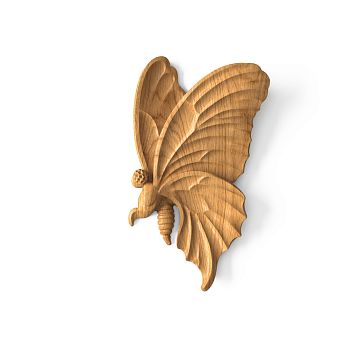
Decorative Inserts — these are carved or smooth wooden elements that are attached to facades, creating volume and visual complexity. They can be central (in the middle of the facade) or corner (at the corners of the door).
Floral ornaments: leaves, flowers, grape clusters — classics of carved decor. Such overlays turn a simple door into a work of art.
Geometric patterns: diamonds, squares, linear compositions — a modern decor option suitable for minimalist interiors.
Frame elements: create the imitation of paneled facades on flat panels. This is an economical way to give furniture a traditional look.
Furniture frames and underframes
For those creating furniture from scratch, furniture frames made of solid wood is a ready-made foundation. These are assembled structures with installed legs, to which only a tabletop, facades, and handles need to be added.
Underframes for dining tables: sturdy constructions of oak or beech, capable of supporting massive tabletops.
Bases for coffee tables: elegant frames with decorative legs.
Bases for dressers and cabinets: ready-made load-bearing structures with distributed supports.
The advantage of ready-made frames is saving time on design and assembly, guaranteeing correct proportions and load calculations.
Trends in cabinet furniture design in 2026
Where is furniture hardware design heading? What trends influence buyers' choices?
Large forms
Minimalist interiors of the 2020s gravitate towards large, expressive details. Large round handles with a diameter of 50-60 mm, massive legs — these are accents that don't get lost against the backdrop of laconic facades.
Asymmetry
Symmetry gives way to more lively, dynamic forms. Asymmetric triangular handles, legs of different heights (an intentional technique in designer furniture) — all this creates a sense of movement and disrupts staticity.
Natural Tones
The trend towards eco-friendliness is manifested in the rejection of painting. The natural color of the wood is preserved as much as possible, only slightly emphasized with transparent oil or varnish. The wood texture becomes the main decorative element.
Combining materials
Wood pairs well with metal, stone, and glass. Wooden handles with copper inserts, oak legs with brass tips—this creates visual richness without overwhelming the space.
Customization
Mass production is giving way to the demand for uniqueness. People want handles and legs that can be customized: choose the wood species, shape, size, and finish. This creates a sense of personal attention, turning a standard product into an individual one.
Practical tips for caring for wooden hardware
buy wooden handlesHandles and legs are only half the job. It's important to care for them properly so they last for decades.
Regular cleaning
Wipe wooden handles with a dry, soft cloth once a week. For legs, wiping once a month is sufficient (if they are not in a high-traffic or heavily soiled area).
For heavy soiling, use a slightly damp cloth with a drop of mild soap. Wipe dry immediately—prolonged contact with water is harmful to wood.
Recoating
Oil finishes need refreshing every 2-3 years. The process is simple: clean the surface, lightly sand with fine sandpaper (220-320 grit), remove dust, and apply a new coat of oil.
Varnish finishes are more durable, but if damaged, they require complete removal and reapplication. This is more complex and best left to a professional.
Protection from moisture
In high-humidity areas (kitchens, bathrooms), use products with moisture-resistant finishes. If water gets on a handle or leg, wipe it off immediately.
Maintain stable indoor humidity of 40-60%. Use humidifiers in winter and dehumidifiers in summer.
Protection against ultraviolet radiation
Direct sunlight changes the color of wood. Light woods darken, dark woods fade. If furniture is placed on the south side, use curtains or blinds for protection.
Frequently asked questions about furniture handles and legs
Can wooden handles be paired with metal legs?
Yes, this is a common technique in modern interiors. Wooden handles add warmth, metal legs add lightness and an industrial feel. The key is to maintain stylistic unity. For example, dark oak handles pair well with black metal legs in a loft style.
Which wood species is best for kitchen furniture?
Oak is optimal for kitchens—it is the most resistant to moisture and stains among commonly available species. Be sure to choose products with a moisture-resistant finish (varnish or oil-wax). Beech is also suitable but requires more thorough protection.
How often should wooden handles be replaced?
With proper care, wooden handles last for decades. They only need to be replaced if they are mechanically damaged or if you decide to update the furniture's design. This is one of the main advantages of quality solid wood hardware—durability.
Can wooden handles be painted yourself?
Yes, especially if you purchased unfinished handles. The process: sanding (if the surface is rough), applying primer (for opaque paints), painting in 2-3 coats with intermediate sanding, and a final varnish coat. Use water-based paints—they are less toxic and dry faster.
What is the minimum number of legs needed for a dresser?
For a standard dresser up to 80 cm wide and weighing up to 50 kg, four legs at the corners are sufficient. For wider dressers (100-120 cm), six legs are recommended: four at the corners and two in the middle of the long side. This prevents the bottom from sagging.
How to protect wooden legs from pets?
Cats and dogs may scratch wooden legs. Protection methods: special plastic or fabric covers for the lower part of the legs, deterrent sprays with citrus scents, training pets (providing scratching posts, toys). Choosing hard wood species (oak) also helps—they are harder to damage.
Is it worth using wooden hardware in a children's room?
Absolutely. Wood is an eco-friendly, hypoallergenic material. Wooden handles are safe (no sharp metal edges) and pleasant to the touch. Choose products with well-sanded surfaces, free of splinters. For children's furniture, round handles or pulls with rounded cross-sections are optimal.
Can wooden legs be installed on very heavy furniture?
Yes, but it's important to correctly calculate the number, cross-section, and wood species. For furniture weighing over 100 kg, use thick legs (80-100 mm in diameter) made of oak, with at least six legs. Ensure high-quality mounting (flange or threaded with a large thread diameter). If in doubt, consult the manufacturer.
How to determine the quality of wooden handles when purchasing?
Pay attention to several points: absence of cracks, knots, or resin pockets; geometric evenness (the handle should not be warped); quality of sanding (surface should be smooth, without snags); uniformity of finish (if the product is treated); presence of manufacturer certificates.
Conclusion: Creating Furniture with Soul
Choosing furniture hardware is not a technical task, but a creative process. Each handle, each leg carries meaning, creates mood, and shapes the character of the furniture. In 2026, we are returning to values that seemed forgotten: natural materials, quality craftsmanship, durability, and the tactile joy of touching real wood.
Furniture Handlesandfurniture legsmade from solid oak or beech are not just functional elements. They are an investment in quality of life, daily comfort, and the aesthetics of space. It is a choice in favor of tradition, craftsmanship, and respect for the material.
Case furniture with properly selected hardware gains individuality. It ceases to be a faceless industrial product and becomes part of your home, your story. Handles that are pleasant to hold, legs that create the right proportions,Decorative Insertsadding visual depth—all of this transforms a utilitarian object into an item worthy of attention and care.
For over two decades, STAVROS has specialized in manufacturing solid wood products for furniture and interiors. The assortment includesover 130 models of furniture legs and supports, 32 models of wooden handles, hundreds of optionscarved appliquésand other decorative elements. Production is equipped with modern CNC machinery, ensuring perfect geometry of the products. At the same time, traditions of working with wood are preserved, attention to the quality of each detail, and the possibility of an individual approach to each order.
By choosing STAVROS products, you receive a guarantee of quality, tested by time. Selected oak and beech wood, precision processing, variety of shapes and styles, the possibility of ordering unfinished products for your own final finishing—all of this makes STAVROS hardware the optimal choice for those who value genuine quality.
Create furniture with soul. Choose hardware that will last for decades. Trust natural materials. And may every touch of a wooden handle, every glance at elegant legs remind you of the correctness of your choice in favor of quality, beauty, and durability.