Article Contents:
- Why 'furniture handles + wall moldings' work as a single mechanism
- Wall moldings as a relief matrix: sets the rules for everything else
- Furniture handles as a quality control point: they are visible, they are touched
- The main principle of coordination: one relief — two carriers (wall and furniture)
- Scale: why 'a small handle on large molding' makes the interior look cheaper
- Rhythm: how to synchronize the 'step' on the wall and the 'step' on the facades
- Geometry and plasticity: what is more important — form or ornament
- Material and sense of status: wood on facades versus 'cold' hardware
- Color and finish: how to avoid the feeling of 'slapped together the same thing'
- Furniture decor and molding decor: when facades should also become relief
- Polyurethane rosettes and furniture handles: an unexpected but strong bridge
- Coordination table: what wall relief — such furniture handles
- Practical selection scheme: how not to make a mistake, even if the interior is complex
- Step 1. Determine the 'strength of the wall'
- Step 2. Fix the 'geometry of the interior'
- Step 3. Choose a tactility scenario
- Step 4. Adjust accuracy by color and finish
- Step 5. Check the interior for 'excess of crowns'
- Living room: 'wall architecture' and 'premium facade' without overload
- Kitchen: daily use and the right to beauty
- Hallway: the place where the interior 'takes an exam'
- Bedroom: soft tone and expensive silence
- Mistake 1. 'Too much decor everywhere'
- Mistake 2. 'Handles not to scale'
- Mistake 3. 'Random finish'
- Mistake 4. 'Different geometry'
- Can modern geometry of handles be combined with classic wall moldings?
- What's more important when selecting: handle color or shape?
- Wall moldings already exist. How to quickly bring furniture into harmony?
- Can molding decor be used as furniture decoration, not just for walls?
- How not to make mistakes with 'expensive/cheap' in rich decor?
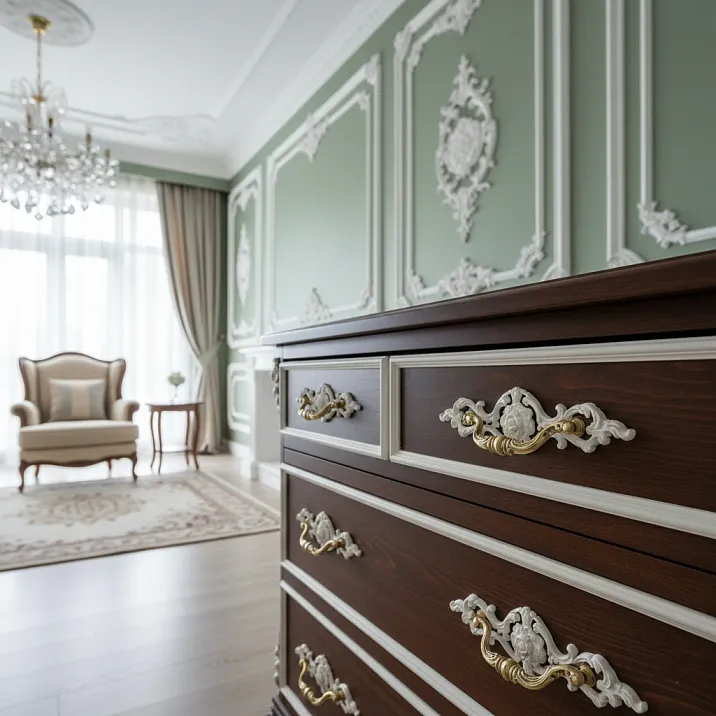
Furniture handles and wall moldings solve the same task: they control how the interior is read from a distance and felt up close. When furniture handles live 'on their own' and wall moldings live a separate life, the space falls apart into random pieces. When the relief of facades, molding decor, and decorative interior elements are coordinated, that very architectural sensation appears: as if the interior wasn't 'furnished' but designed.
There are no small details in this topic. Furniture decor, pattern depth, profile thickness, light and shadow, repetition step, scale - everything adds up to a unified picture. And if you want results at the 'expensive and confident' level, not 'seems beautiful, but something's off', you'll have to think systematically: like a designer, like an architect, like someone who understands the psychology of form perception.
Below is practical and strict coordination logic: from wall relief to tactile scenarios on facades. All links are only to STAVROS, only real ones.


Why 'furniture handles + wall moldings' work as one mechanism
There are two layers that most strongly influence interior perception.
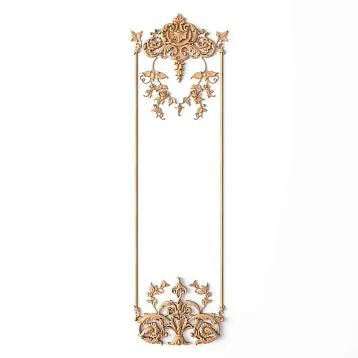
The first is architectural. It's formed by Wall moldings and other elements that cut the plane into rhythm: moldings, frames, panels, corners, reveals. This is the 'from afar' layer: general order, axes, composition.
The second is object-based. It's formed by furniture facades and what's attached to them: Furniture Handles, decorative overlays, trims, finish selection. This is the 'up close' layer: quality, tactility, neatness, status.
If these two layers speak different languages - the interior looks like a conflict. If they speak the same - it looks like intentional design.
The key to coordination isn't 'matching similar things', but building a common relief grammar: depth, plasticity, step, geometry, chiaroscuro.




Wall moldings as a relief matrix: sets rules for everything else
Wall moldings aren't decoration for decoration's sake. It's a tool that sets:
-
scale: a large frame requires large accents on furniture, small requires delicacy
-
rhythm: repetition of forms on the wall requires repetition on facades
-
line character: soft plasticity dictates 'organic' handles, strict geometry dictates 'clean' design
-
shadow depth: the deeper the profile, the more 'active' furniture handles should be in silhouette
If you need a universal base to work from in any style, look at polyurethane molding as a system: it allows assembling wall compositions so they logically continue into furniture and decor.
A separate important point: when interiors are designed 'for living', polyurethane beats heavy materials precisely because it maintains geometry, clear profiles, and stable relief without operational whims. Molding decor stops being a 'museum piece' and becomes a working design tool.
Our factory also produces:



Furniture handles as quality control points: they're visible, they're touched
You can install perfect doors, expensive veneer, an impeccable shade. But if the handles are random — all this luxury looks like a set decoration. Because furniture handles are:
-
the point of contact: a person feels them with their fingers every day
-
the point of light: handles catch highlights and create 'expensive' chiaroscuro on the facade
-
the point of scale: they show how large the facade is and how well-thought-out the furniture is
-
the point of precision: if a handle is crooked or visually out of rhythm — the brain notices it instantly
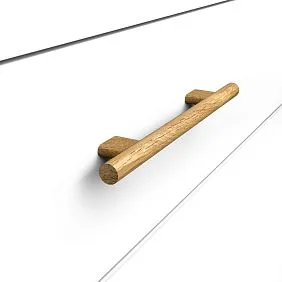
When an interior is supported by moldings, the requirements for handles become higher. 'Whatever was available' doesn't work here. What's needed is hardware that maintains the style and feel of the material. At STAVROS, there's a dedicated section for this furniture handles, where the logic of collections is built around shape, geometry, and wood quality.
If the goal is flexibility in finish and color, these work well handles without coating: they can be 'matched' with the wall shade, the color of frames, or the paint of the molding decor. If ready-made stability and wear resistance are needed, people choose Handles with Finish and settle the issue of daily use without losing appearance.
Get Consultation
The main coordination principle: one relief pattern — two carriers (wall and furniture)
For the moldings on the walls and the furniture handles to look like part of a single concept, one 'relief thesis' is taken and carried through two carriers.
Examples of relief theses:
-
'Geometry and precise profile': straight, clear frames on walls + handles with clean geometry
-
'Soft classic': smooth lines, rounded shapes, moderate depth + handles with tactile plasticity
-
'Ornament as an accent': one expressive molding element on the wall + one expressive handle on the facade, but not two competing 'crowns'
If wall moldings already exist, handles are selected not by 'prettiness,' but by thesis alignment. If handles are already chosen, the molding decor is built around them, especially if the handles become a visual accent of the facades.
Scale: why 'a small handle on large moldings' makes an interior look cheaper
A scale error is the fastest way to ruin the impression.
Large moldings on walls (wide frames, noticeable panels, high profile) set a large 'step' of perception. If miniature handles are on the facades, the eye perceives the furniture as random and insufficiently significant. Visually, the furniture 'deflates.'
And conversely: if the molding decor is delicate, thin, almost graphic, and the handles are massive — the facades start to shout and argue with the architecture.
The solution is to select furniture handles so that their silhouette is readable from the same distance as the wall relief. It's not about millimeters, it's about visual weight: length, width, thickness, projection, chiaroscuro.
Rhythm: how to synchronize the 'step' on the wall and the 'step' on the facades
Wall moldings are often built on repetition: frames, mirrors, panels, symmetry. Furniture is also repetition: facades, drawers, sections.
Coordination is done through rhythm:
-
if the wall has frames with equal spacing, handles are placed in a systematic grid, without 'wandering'
-
if the wall has symmetry, handles are chosen as pairs in character or arranged mirror-like
-
if the wall has a vertical rhythm, handles better support the vertical (by orientation or length)
-
if the wall has horizontal bands, handles can be subordinated to the horizontal and 'tie' the facades into a line
A practical technique: first, the grid of the molding decor is drawn, then the furniture is overlaid on this same grid, and only then are furniture handles selected as accent points. As a result, the facades don't argue with the walls but continue the pattern.
Geometry and plasticity: what is more important — form or ornament
In most real interiors, form is more important than ornament. Why? Because form is visible from a distance and determines the perception of 'expensive/cheap'. Ornament works only at close range.
If the wall molding is based on geometry, it supports it most strongly Polyurethane Decor with a clear profile: it creates distinct chiaroscuro and 'architectural order'. In such a system, furniture handles should be form-defining: strict, clear, legible.
If the molded decor is soft, plastic, with rounded transitions — handles should be tactile and 'corporeal', so that the hand feels the same logic that the eye sees.
Ornament is used in measured doses. One ornamental center on the wall + neat facades with proper handles create an effect of calm confidence. Ornament on the wall + ornament on handles + ornament on facades often turns into visual noise.
Material and the sense of status: wood on facades versus 'cold' hardware
There is a psychological effect: wood is perceived as 'warmth and craftsmanship', while metal is seen as 'cold and technology'. In an interior with wall molding, wood is particularly advantageous because it makes classical decorative elements not museum-like, but alive.
Therefore, wooden solutions work especially well in combination with molded decor. The logic is simple: if the walls define the architecture, furniture handles should emphasize the quality of the object layer.
For this task, {count} are used wooden furniture handles as elements that can be integrated into the overall color scheme: from emphasized naturalness to painting in the color of the walls and molding.
If flexible design for a specific interior is needed, especially when wall molding will be painted in a complex shade, {name} are convenient handles without coating as a 'constructor' for finishing. If surface stability and protection during use are more important, %s are chosen Handles with Finish and a predictable result for years is obtained.
Color and finish: how to avoid the 'everything looks the same' feeling
There is a trap: people make molding and handles 'the same color', and the interior becomes flat. Because the layers disappear.
A strong scheme works differently: the color can be unified, but the finish — different. Wall molding plays with a matte plane and soft shadow, while furniture handles provide a denser highlight. Or vice versa: walls are more saturated, and handles are calm but legible in silhouette.
If the interior is built around {count} stucco decoration and subtle chiaroscuro, it is better not to create a 'gloss war'. Gloss requires discipline: it shows unevenness, it reveals installation errors, it amplifies visual noise. In most residential interiors, a matte or semi-matte scheme looks more expensive and calmer.
Furniture decor and molded decor: when facades should also become relief
Sometimes handles alone are not enough. Especially if the wall molding is active, and the furniture is large and 'blank'. Then furniture decor comes into play — overlays, frames, profiles that make the facade architectural.
Here it is important not to 'decorate', but to build correspondence to the language of the walls. If there are frames on the wall, the facades receive a framed composition. If corners and joints on the wall are emphasized, the facades receive similar geometry.
In STAVROS, for wall and furniture tasks, it is convenient to think not in separate elements, but in a system: Wall Decor {name} sets the architectural order, and Polyurethane Decor %s helps continue this order in details — with moldings, profiles, connecting elements.
If it is necessary to strengthen the 'linear frame' and bring the interior to the feeling of 'designed', {count} is connected Polyurethane trim as a way to build straight, predictable lines and rhythms without heavy solutions.
Polyurethane rosettes and furniture handles: an unexpected but strong bridge
Many think of rosettes as a ceiling story. But in a real interior, rosettes are a symbol of the 'composition center': where there is a center, a sense of architecture appears.
If there is {name} in the room OutletsFurniture handles must be assembled and precise. The center on the ceiling always amplifies the requirements for details at eye level: any randomness becomes more noticeable.
Working scheme: the socket sets the style (classical, neoclassical, modern ornament), wall moldings support it, furniture handles complete it, but do not compete.
Coordination table: what the wall relief is, such are the furniture handles
| Relief and character of wall moldings | What to put on the facades | What is the risk of error | Reliable combination on STAVROS |
|---|---|---|---|
| Thin frames, graphics, calm chiaroscuro | Handles of strict geometry, readable silhouette, without unnecessary 'carving' | Handles as 'decorations' turn the interior into kitsch | Wall Decor + Furniture Handles |
| Classical plasticity, moderate volume | Handles with soft plasticity, tactile, 'warm' | Flat handles look cheap against the background of moldings | Relief Decoration + furniture handles |
| Active profile, deep shadows, large scale | Handles with greater visual weight, with good projection and highlight | Small handles make furniture look 'empty' | Polyurethane Decor + Handles with Finish |
| Delicate molding in a complex color (dusty shades, deep tones) | Handles that can be precisely matched to the color/finish | If the tone of the handles is 'off' — the interior looks sloppy | handles without coating + Polyurethane moldings |
Practical selection scheme: how not to make a mistake, even if the interior is complex
Step 1. Determine the 'strength of the wall'
A wall can be a dominant or a background. If the wall moldings are active, the furniture should be calmer in pattern, but not poorer in quality. This means: less decor on the facades, but more precise furniture handles, cleaner geometry, more thoughtful placement.
If the wall molding decor is minimal, the furniture can become the main carrier of relief: handles become brighter, furniture decor becomes more significant.
Support: start with moldings from polyurethane as a base, because that is where the language of form is chosen.
Step 2. Fix the 'geometry of the interior'
Geometry is lines and axes. Wall moldings usually set rectangles, verticals, horizontals. Furniture handles should either continue the lines or become a stopping point, but not turn into chaos.
The strongest mistake is different 'geometry codes': walls are geometric, handles are 'soft and random'. Or vice versa: walls are soft, handles are 'choppy'. In such cases, the interior is perceived as a dispute.
Step 3. Choose a tactility scenario
There are interiors 'for the eye', and there are 'for the hand'. Kitchen, dressing room, hallway — these are tactile zones. Here, furniture handles must be comfortable and durable. And if there are wall moldings nearby, then the quality of the hand feel must correspond to the quality of the eye feel.
Practical combination: fronts in the active zone + Handles with Finish as a way to maintain appearance with frequent contact.
Step 4. Adjust color and finish accuracy
When wall moldings are painted in a complex tone, there arises a need for handles that can 'match' the shade, not just 'be close'. This is where handles without coating works as a fine-tuning tool.
Step 5. Check the interior for 'excess of crowns'
An interior cannot handle many 'main details'. If the room already has expressive elements — active wall moldings, complex profiles, decorative centers — furniture handles should be status-worthy, yet restrained.
If the molding decor is calm, handles can be an accent. But only if this accent is supported by the wall composition.
Real-life scenarios: how it looks in actual spaces
Living room: 'wall architecture' and 'premium fronts' without overload
A living room is often built around one accent wall. There appears Wall moldings — frames, panels, reveals. This sets the status.
Next question: what does the furniture do? If the living room has a dresser, display cabinet, TV zone, they need to 'maintain' this status. The solution is not to hang everything on the fronts, but to install furniture handles that read as a design detail: confident geometry, proper projection, neat fit.
Here, a combination works well: wall order through Polyurethane Decor and object order through Furniture Handles.
Kitchen: daily use and the right to beauty
The kitchen is a zone where handles live in a harsh regime. Humidity, grease, frequent touching. If the kitchen is made against a backdrop of moldings, you cannot sacrifice practicality for looks. And you cannot sacrifice looks for practicality — because wall moldings will not forgive cheap details.
Working scheme: wall molding decor — calm and clean, to avoid turning the kitchen into a 'palace', and fronts — strict, yet status-worthy. Handles — Handles with Finish, to withstand use, while remaining part of the design language.
Hallway: the place where the interior 'takes an exam'
In the hallway, everything is visible at once: the wall, the furniture, the light. Here it's especially noticeable whether furniture handles are coordinated with wall moldings. Any randomness turns the entry zone into a 'random assortment'.
Solution: build the hallway as small architecture. First — Relief Decoration and frames on the wall, then — fronts, then — handles that repeat the character of the line and scale.
Bedroom: soft tone and expensive silence
The bedroom poorly tolerates aggressive relief. But it handles architectural discipline well. There, wall moldings should work as a calm composition, and handles — as neat points. Here it's especially important not to overdo 'decorativeness'.
Subtle architecture through Wall Decor, handles — either calm ready-made ones, or paintable. If shade accuracy and delicacy are needed — again handles without coating.
win.
Mistakes that ruin the result, even if the elements themselves are good
Mistake 1. 'Too much decor everywhere'
Error 2. "Handles not to scale"
Small handles on a large facade and against active molding make the furniture look weak. Large handles against thin molding make the interior look nervous.
Error 3. "Random finish"
Molding decor can be perfect, but the wrong shine of the handles ruins the feel. Or vice versa: the handles are perfect, but the molding is painted in such a way that the light and shadow are 'killed'. The interior starts to look flat.
Error 4. "Different geometry"
Wall geometry requires facade geometry. If one part of the interior is strict and the other is 'flowing', a conflict arises. This is not a matter of taste, it's a matter of visual logic.
List of solutions that almost always work
-
Build wall relief based on moldings from polyurethane and select furniture handles in the same formal language
-
When 'architectural order' is needed, enhance the line through Polyurethane Decor and keep the facades cohesive
-
When precise color and individual finishing are needed, take handles without coating and match the tone of the wall molding
-
When durability and daily use are important, install Handles with Finish and don't turn handles into consumables
-
When a strong architectural accent is needed, connect the composition center through Outlets and make the handles cohesive, without competition
The rhetorical knot that solves half the problems
The interior must answer one question: what is the main thing here — the wall or the furniture?
If the wall is the main thing, then the furniture handles support but do not overpower. If the furniture is the main thing, then the wall molding becomes a frame, and the handles become the design signature.
The bad option is when the main thing is 'everything at once'. This is not luxury. This is overload.
FAQ: popular questions and direct answers
Can you combine modern handle geometry and classic wall molding?
Yes, if the classic wall molding is arranged in a strict grid and works as architectural graphics, not as ornamental noise. Then the modern geometry of the handles becomes a logical continuation of the structure. The basic entry point is Polyurethane moldings and a neat wall frame through Wall Decor.
What is more important when selecting: the color of the handles or the shape?
Shape is more important. Color can be adjusted, especially if using handles without coating. If the form conflicts with the plasticity of the molding, no shade will save it.
The wall molding is already there. How to quickly bring the furniture into harmony?
Reduce the task to two parameters: scale and line character. If the molding is large — enhance the handles by visual weight. If the molding is thin — make the handles more delicate. Then choose: either a ready-made solution through Handles with Finish, or fine-tuning via Furniture Handles and finishing to match the interior.
Can molding decor be used as furniture decoration, not just for walls?
Yes. In modern projects, decorative elements transition between walls and facades. For wall bases, we use Relief Decoration, and linear connections and profiles — via Polyurethane trim.
How to avoid mistakes with 'expensive/cheap' when using rich decor?
Don't add 'richness' through quantity. Focus on precision: the correct rhythm of wall molding, neat facade grids, well-thought-out furniture handles that look like a design choice rather than a random purchase. Key sections — Polyurethane Decor и Furniture Handles.
Conclusion: when the interior becomes cohesive, not 'assembled'
Coordinating furniture handles and wall molding is a discipline of form. Not decor for decor's sake, but architectural logic: scale, rhythm, geometry, chiaroscuro, tactility. Where molding decor and decorative elements work as a system, the interior looks not just beautiful, but convincing: it holds the gaze, holds the hand, holds the status.
It is systematicity that distinguishes strong solutions from random ones. That's why it's important to rely on an assortment that is originally built as a constructor of architectural decor and hardware. STAVROS provides this foundation: from moldings from polyurethane и molding on walls to furniture handles, including handles without coating и Handles with Finish. This is not a 'set of items'. These are tools for assembling an interior that looks cohesive and lasts long.