Article Contents:
- Molding: types, shapes, relief
- Ceiling Cornices and Plinths
- Wall moldings and panels
- Rosettes, medallions, corner elements
- Stucco Materials: Gypsum vs. Polyurethane
- Stylistic coordination: from Baroque to Minimalism
- Baroque and Rococo: maximalism of relief
- Classicism and Empire: order and symmetry
- Neoclassicism: lightened classic
- Art Nouveau: smooth lines and natural forms
- Minimalism and Contemporary: absence or reduction of relief
- Scale coordination: large with large, small with small
- Large molding — large handles
- Small molding — delicate handles
- Medium scale — versatility
- Material coordination: textures and finishes
- White painted molding — universal base
- Gilded or patinated molding — luxury of details
- Wood-toned molding — rarity with potential
- Unpainted molding — base for painting
- Compositional coordination: element placement
- Vertical and horizontal axes
- Symmetry and Asymmetry
- Rhythm and intervals
- Additional furniture decor: strengthening the connection with molding
- Decorative overlays on facades
- Furniture moldings
- Rosettes for handles
- Practical coordination examples
- Bedroom in Neoclassical Style
- Living room in Baroque style
- Kitchen in Contemporary style
- Empire-style hallway
- Frequently Asked Questions
- Is it necessary to coordinate handles with molding if they are in different areas of the room?
- Can modern handles be used in an interior with classic molding?
- How to choose handles if the molding is already installed?
- How much does a set cost: molding + coordinated handles for a room?
- Can molding and handles be installed independently?
- What is more important: matching the style or matching the color of handles and molding?
- What to do if the budget is limited: molding or handles?
- Is polyurethane molding suitable for kitchens and bathrooms?
- Can polyurethane molding and handles be painted the same color?
- How to care for molding and handles?
- Conclusion: relief as the language of space

An interior lives not by planes, but by volumes. Relief is the third dimension of space, turning walls from background into texture, furniture from function into sculpture. WhenWall moldingscreates a relief structure through moldings, cornices, rosettes, panels, andFurniture Handleson the facades of chests of drawers, cabinets, and kitchens follows the same logic of volume — a rare harmony arises where walls and furniture speak the same language of forms. This is not a random coincidence of two decorative systems, but a conscious coordination where every protrusion, every recess, every line on the furniture echoes the relief of the walls, creating a unified spatial score.
Why is coordination critical? Because uncoordinated relief creates visual chaos. Imagine: walls adorned with classicstucco on wallswith carved garlands, rosettes, pilasters, and furniture equipped with flat minimalist bar handles without decoration. The walls scream 'baroque,' the furniture responds 'high-tech.' The style conflict is obvious, the space falls apart into pieces. The opposite situation: walls are smooth, without decoration, and the furniture has carved three-dimensional handles with scrolls and leaves. The handles look alien, like decorations that accidentally ended up in the wrong interior.
Coordinating the relief of furniture facades anddecorative elementson the walls requires understanding three levels: stylistic (classic requires classic, minimalism requires minimalism), scale (large wall relief requires noticeable handles, small requires delicate ones), material (plaster molding requires smooth handles, polyurethane allows variety). When these three levels align, the interior gains integrity, which is perceived not by the mind but by intuition — you simply feel that everything is in its place.


Molding: types, forms, relief
Before coordinating handles with molding, you need to understand what molding is in a modern interior.




Ceiling cornices and moldings
Ceiling cornices — horizontal moldings at the junction of the wall and ceiling, creating a frame that visually separates the ceiling from the walls. Cornice width: from 5 cm (minimalist) to 30 cm and more (classical, baroque). Relief: from a simple cove (concave rounding) to complex multi-tiered profiles with egg-and-dart ornament, beads, leaves.
Floor baseboards — similar moldings at the junction of the wall and floor, but usually lower (height 5-15 cm). Relief is simpler than ceiling ones but can include chamfers, grooves, decorative lines.
Cornices and baseboards set horizontal relief lines that structure the space. If these lines are expressive (wide, with deep relief),Furniture Handlesshould also be expressive — three-dimensional, relief, noticeable. If the cornices are minimalist (narrow, smooth), handles can be flat bars or recessed.
Our factory also produces:



Wall moldings and panels
Wall moldings — vertical and horizontal strips glued to walls to create decorative frames, panels, borders. Classic scheme: the wall is divided into rectangular sections by moldings, each section painted in its own color or covered with patterned wallpaper.
Molding width: 3-10 cm. Relief: from flat (simple strip with chamfer) to profiled (multiple steps, roundings, grooves). The more complex the molding profile, the more noticeable the wall relief.
Panels made from moldings create a geometric relief of walls — a series of vertical rectangles or squares that protrude 1-3 cm above the main plane. This relief dictates the logic of handles: if the panels are vertical, handles can be vertical bars, repeating the direction. If the panels are horizontal, handles are horizontal brackets.
Get Consultation
Rosettes, medallions, corner elements
Ceiling rosettes — round or oval decorative elements installed around a chandelier. Diameter 30-120 cm, relief ranging from simple (concentric rings) to Baroque (carved leaves, scrolls, rosettes covering the entire surface).
Wall medallions — similar elements, but smaller (diameter 10-40 cm), placed on walls as accents. Corner elements — decorative overlays at the corners of molding frames, where horizontal and vertical strips meet.
Rosettes and medallions are local bursts of relief, concentrated decor. If there are many such elements on walls or ceilings,Furniture Handlesmay have similar overlays under handles — carved rosettes, between which the handle-bracket itself is attached. This creates a dialogue of forms: round rosettes on walls — round rosettes under handles.
Stucco materials: gypsum vs. polyurethane
Traditional molding is plaster. Heavy, fragile, requires professional installation, but possesses a noble matte surface and tactile authenticity. Plaster molding is expensive (a 2-meter ceiling cornice — from 3000 rubles), installation is complex (requires reinforcement, joint puttying).
Modern alternative —Polyurethane moldingsLightweight (5-10 times lighter than plaster), durable (doesn't break), moisture-resistant (suitable for bathrooms and kitchens), inexpensive (2-meter cornice — from 800 rubles). Installation is simple: apply adhesive to the back, press against the wall, fix for 10-15 minutes. After installation, polyurethane molding is painted with acrylic paint in any color.
Polyurethane imitates plaster visually (forms are identical), but differs tactilely (plastic is warmer, softer to the touch). For coordination with handles, this is critical: if the molding is polyurethane, handles can be any — wooden, metal, plastic. If the molding is plaster, handles are better wooden or metal — materials traditionally combined with plaster in classic interiors.
Stylistic coordination: from Baroque to minimalism
The style of the molding determines the style of the handles. This is the first and main level of coordination.
Baroque and Rococo: maximalism of relief
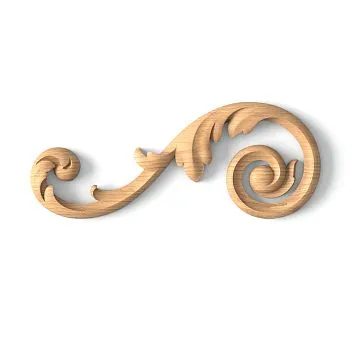
Relief DecorationBaroque is abundance: carved garlands, acanthus leaves, scrolls (volutes), cherubs (putti), fruits, flowers. The relief is deep (elements protrude 3-5 cm), dense (almost no free space between ornaments). Ceiling cornices are wide (20-30 cm), with several tiers of decor. Ceiling rosettes are large (80-120 cm diameter), overloaded with details.
Handles for a Baroque interior: carved, voluminous, with floral ornament. Oval brackets 15-20 cm long with leaf carving along the entire length. Round knobs 5-7 cm in diameter in the shape of a flower or rosette. Carved rosettes under handles 8-10 cm in diameter, between which the bracket is attached.
Handle material: wood (oak, beech) with gilding or patination (gold paint in the recesses of the carving), brass or bronze with cast ornament. Color: gold, bronze, patinated copper, less often — white with gold (like molding). Handles should be heavy, massive, to match the weight of Baroque molding.
Critical: the ornament of the handles must echo the ornament of the molding. If there are acanthus leaves on the cornices, on the handles — also acanthus leaves (may be a different size, but recognizably the same). If there are scrolls on the rosettes, on the handles — scrolls. Exact copying is not required, but thematic kinship is mandatory.
Classicism and Empire: order and symmetry
Classicism is more restrained than Baroque.Wall moldingsincludes the same elements (leaves, garlands, rosettes), but they are arranged orderly, with clear intervals, symmetrically. The relief is medium (protrusion 2-3 cm), detailing is high, but not overloaded.
Empire adds military symbolism: laurel wreaths, crossed swords, eagles, shields. The scale is larger than in Classicism, but symmetry is stricter.
Handles for Classicism and Empire: oval brackets of medium length (12-16 cm) with symmetrical ornament. Round ring handles (ring diameter 8-10 cm) with a carved rosette base. Vertical strips with fluting (vertical grooves), like on columns.
Material: wood (oak, mahogany) polished to a shine, brass polished or patinated to resemble aged bronze. Color: natural dark-toned wood (walnut, mahogany), gold, bronze, black with gold.
Coordination: the symmetry of the handles must correspond to the symmetry of the molding. If wall panels made of moldings are arranged strictly symmetrically (two panels on either side of a window, identical in size), handles on furniture should also be placed symmetrically (two identical handles on two cabinet doors).
Neoclassicism: lightened classic
Neoclassicism is classical forms, lightened for modern perception. Moldings are narrower (width 5-8 cm instead of 10-15 cm), relief is finer (protrusion 1-2 cm), ornament is more laconic (simple leaves, beads, without excess).
Handles for Neoclassicism: oval brackets 10-14 cm long with light relief (bevels, rounding, but without carving) or with minimal carving (single leaves along the edges). Round knobs 3-4 cm in diameter with a smooth surface and a small rosette base.
Material: light-colored wood (beech, ash, whitewashed oak), matte brass, satin-finished stainless steel. Color: natural light wood, white, gray, matte gold, matte chrome.
Coordination: restraint. If the molding is painted white and almost blends with the walls (monochrome), handles can also be painted white or light metal, creating a tone-on-tone effect. If the molding is highlighted with a contrasting color (dark gray moldings on light walls), handles can be contrasting (dark wood or black metal on light facades).
Art Nouveau (Art Nouveau): flowing lines and natural forms
Art Nouveau rejects the symmetry of classicism, introduces flowing asymmetrical lines, botanical motifs (winding stems, iris flowers, lilies), zoomorphic forms (dragonflies, butterflies).Wall moldingsin the Art Nouveau style — these are wavy moldings, rosettes in the shape of flowers, panels with asymmetrical framing.
Handles for Art Nouveau: curved, smooth, without right angles. The shape may resemble a plant stem, a butterfly wing, or a wave curl. Length 12-18 cm, profile varies along the length (thicker in the center, thinner at the edges).
Material: patinated brass, bronze with a greenish patina (resembling aged copper), wood with carving in the shape of stems. Color: dark bronze, green patina, medium-toned natural wood.
Coordination: asymmetry. If the molding is asymmetrical (e.g., a ceiling rosette is offset from the center, moldings form an irregular polygon), handles on furniture can be installed asymmetrically (not in the center of the facade, but to the side) — this will support the modernist logic of rejecting strict symmetry.
Minimalism and contemporary: absence or reduction of relief
Minimalism rejects molding as excess. Walls are smooth, ceilings without cornices (or cornices are minimal — a flat strip 3-5 cm wide without relief). If molding is present, it is reduced to the simplest geometric forms: a straight strip without a profile, a square rosette without ornament.
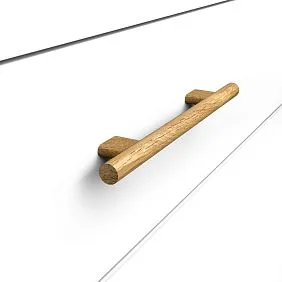
Handles for minimalism: flat strips (vertical or horizontal) 8-12 mm thick, 10-40 cm long, without decoration. Recessed handles (slots in the facade). Profile handles (L-shaped profile along the edge of the door, which fingers hook onto). Round buttons 2-3 cm in diameter, smooth, without relief.
Material: matte stainless steel, anodized aluminum, light wood (ash, bleached oak) with oil (emphasizes texture but does not add shine). Color: metallic (silver, chrome), matte black, white, natural light wood.
Coordination: the absence of relief on the walls requires the absence of relief on the handles. A flat strip on a smooth facade in front of a smooth wall — this is the consistency of minimalism. Any carving, any protruding decoration on a handle in such an interior will be a dissonance.
Scale coordination: large with large, small with small
Sizedecorative elementson the walls should correlate with the size of the handles.
Large molding — large handles
Ceiling cornice 25 cm wide, relief 4 cm, large leaves and garlands. Ceiling rosette 100 cm in diameter with baroque carving. Wall panels made of moldings 10 cm wide — all this is large-scale decor.
Handles should be proportionate: brackets 16-20 cm long, round buttons 5-7 cm in diameter, handle rosettes 8-10 cm in diameter. A small handle (96 mm bracket, 30 mm button) against the background of large molding will get lost, will look like a misunderstanding, a scale error.
The thickness of the handle is also important. If moldings protrude 3-4 cm from the wall, a handle 8-10 mm thick looks thin, weightless. A handle 15-20 mm thick is needed to create a comparable volume.
Small molding — delicate handles
Ceiling cornice 6 cm wide, relief 1 cm, simple profile without ornament. Wall moldings 4 cm wide — small, delicate decor.
Handles: brackets 10-12 cm long, round buttons 3-4 cm in diameter, strips 8-10 mm thick. A large carved handle 200 mm long in such an interior will look coarse, disproportionate to the thin molding.
Medium scale — universality
Moldings 6-8 cm wide, cornices 10-15 cm, moderate relief 2-3 cm — this is a medium scale, the most common in neoclassical and modern classical interiors.
Handles: brackets 12-16 cm long (standard center-to-center distance 128-160 mm), round buttons 3.5-4.5 cm in diameter, thickness 10-15 mm. This is a universal size that works in most interiors.
Material coordination: textures and finishes
Material and finish coatingstucco decorationinfluence the choice of handle material.
White painted molding — a universal base
Polyurethane molding painted white (RAL 9010, 9003) — the standard for most interiors. White is neutral, combines with any color of walls, furniture, textiles.
Handles for white molding: any. Wooden (light or dark), metal (gold, silver, bronze, black), painted white (tone-on-tone with the molding) or contrasting. White molding is a blank slate that allows handles to be an accent.
If unity is desired, handles are painted the same white as the molding. White handles on white furniture facades create a monochrome, where relief is the only way to highlight the handle. A relief carved handle, painted white, on a white facade is readable due to the shadows created by the relief.
Molding with gilding or patina — luxury of details
Baroque or Empire molding is often patinated: gold, bronze, or silver paint is applied to the recesses of the carving, emphasizing the relief. The main background is white or cream, details are gold.
Handles should have similar gilding or patina. Wooden handles with gold paint in the recesses of the carving. Brass or bronze handles with patina. Important: the degree of gilding on handles and molding should match. If the molding is abundantly gilded (gold on 30-40% of the surface), handles should also be abundantly gilded. If the molding has a light gold accent (5-10% of the surface), handles — with a light gold accent.
Wood-toned molding — a rarity with potential
Polyurethane molding can be stained or coated with decorative paint that imitates wood. This is rarely used (white molding is more common), but creates an interesting effect, especially if the furniture is wooden.
Wooden handles matching the tone of the stained molding — maximum unity. Oak molding (polyurethane painted to look like oak) + natural oak handles = a material illusion where the molding is perceived as carved wood, and the handles as its continuation.
Unpainted molding — a base for painting
Polyurethane molding is sold unpainted (white polyurethane without a finish). It can be painted any color with acrylic paint.
If you paint the molding the same color as the walls (e.g., walls are gray, molding is also gray), it almost blends in, creating a monochrome relief. Handles can be contrasting (black metal, dark wood) or tone-on-tone (gray painted handles).
If you paint the molding a contrasting color (dark gray molding on light walls), it becomes a graphic accent. Handles should be in the same contrasting color (dark gray or black).
Compositional coordination: arrangement of elements
Not only the shape and material of the handles should coordinate with the molding, but also the arrangement of elements in space.
Vertical and horizontal axes
IfWall moldingsforms vertical panels (moldings form tall rectangles), furniture can have vertical bar handles, supporting the vertical rhythm.
If the molding creates a horizontal division (wide panels, horizontal moldings at waist level), handles can be horizontal brackets.
Mixing: vertical molding + horizontal handles — not a mistake if there is logic. For example, vertical panels on living room walls + horizontal handles on a low dresser. The dresser is horizontal furniture (width greater than height), horizontal handles emphasize this. Panels on the wall are a vertical structure. The contrast of directions works if it is intentional.
Symmetry and asymmetry
Classical molding is symmetrical: molding panels are arranged mirror-symmetrically relative to the central axis (window, door, fireplace). Handles on classical furniture should also be symmetrical: two handles on two cabinet doors placed at equal distances from the edges, four handles on four dresser drawers aligned along a vertical axis.
Modern molding can be asymmetrical: moldings form irregular shapes, rosettes are offset from the center. Handles on modern furniture can be asymmetrical: on one door the handle is on the right, on the other — on the left; on different drawers, handles are offset differently.
Rhythm and intervals
If there is a row of identical molding panels on the wall (five panels 60 cm wide with 10 cm intervals), a rhythm with a 70 cm step is created. Furniture under this wall can repeat the rhythm: a cabinet with five doors, each 60 cm wide, with a vertical handle in the center. The rhythm of the wall continues in the rhythm of the furniture.
If the wall rhythm is frequent (narrow panels, small intervals), the handle rhythm can be less frequent (not on every door, but on every other one) — this will create contrast, variety, and prevent the space from becoming monotonous.
Additional furniture decor: strengthening the connection with the molding
decor for furniturein the form of overlays, moldings, rosettes strengthens the connection between the furniture and the molding on the walls.
Decorative overlays on facades
Carved overlays — wooden or polyurethane elements that are glued onto flat furniture facades, creating relief. Overlays can repeat molding motifs: leaves, rosettes, scrolls.
If there is a ceiling rosette with carved acanthus leaves, the cabinet facades can have overlays with the same leaves. Overlay size: 10-25 cm in length, thickness 5-15 mm (protrusion above the facade). Polyurethane overlays are lighter, cheaper, moisture-resistant (suitable for kitchens). Wooden overlays are more noble, heavier, more expensive.
Overlay placement: in the center of the facade (between the handle and the edge), at the corners (four overlays at the corners of the door), around the perimeter (overlays form a frame around the handle).
Furniture moldings
Narrow moldings (width 20-40 mm), glued onto furniture facades around the perimeter of doors and drawers, create a frame similar to wall panels made of moldings.
If walls are decorated with molding panels, furniture with moldings on the facades repeats this theme, creating a visual rhyme. Moldings on furniture can be made of wood (for wooden furniture) or polyurethane (for painted MDF furniture).
The profile of furniture moldings should echo the profile of wall moldings: if wall moldings have a bevel and a bead, furniture moldings should too. If wall moldings are flat, furniture moldings are flat.
Rosettes for handles
A rosette — a round or oval overlay that is installed between the handle and the facade, creating an additional decorative layer. Diameter 4-10 cm, thickness 5-10 mm, relief: radial rays, rosetta, leaves.
If there is a large ceiling rosette around the chandelier, small rosettes under furniture handles create a large-scale dialogue: a large rosette on the ceiling — small rosettes on the furniture. Thematic unity, scale hierarchy.
Polyurethane rosettes are painted to match the facade color or in a contrasting color (gold, bronze). Wooden rosettes remain in their natural color or are stained.
Practical examples of coordination
Let's consider specific interiors where handles and moldings are coordinated.
Bedroom in neoclassical style
Walls: molding panels 200 cm high, 80 cm wide, white moldings 6 cm wide, simple profile. Ceiling cornice white, 12 cm wide, profile with two beads. Ceiling rosette 60 cm in diameter, simple (concentric rings, no threading).
Furniture: white MDF wardrobe, four doors, height 240 cm.Furniture Handles— oval brackets 128 mm long made of matte brass (champagne color), no threading, smooth. White MDF chest of drawers, three drawers, handles — round knobs 35 mm in diameter, matte brass.
Coordination: white molding + white furniture = monochrome. Brass handles serve as an accent, introducing the warmth of metal into the coolness of white. Simple molding profile + smooth handles without threading = consistency of laconicism. The size of the handles (128 mm brackets, 35 mm knobs) is proportionate to the size of the moldings (6 cm width) — a medium scale.
Living room in Baroque style
Walls: molding panels with carved corner elements (acanthus leaves), moldings 10 cm wide, complex profile, white with gold patina in the recesses. Ceiling cornice 25 cm wide, three tiers of decoration (egg-and-dart ornament, beads, leaves), white with gold. Ceiling rosette 100 cm in diameter, Baroque carving, white with abundant gilding.
Furniture: sideboard made of solid oak, mahogany stain (red-brown), six doors, carved overlays on the doors (acanthus leaves). Handles — oval brackets 180 mm long, carved leaves along the entire length, brass with patina resembling aged bronze. Rosettes under handles 80 mm in diameter, carved rosettes, patinated brass.
Coordination: carving on molding (acanthus leaves) + carving on handles (acanthus leaves) = thematic unity. Gold on molding + bronze on handles = kinship of warm metals. Abundance of decor on walls + abundance of decor on furniture = Baroque maximalism, consistently carried throughout the space.
Kitchen in contemporary style
Walls: minimalist ceiling cornice, flat plank 5 cm wide, white. Walls smooth, without moldings or panels, painted light gray.
Furniture: kitchen set, painted matte MDF fronts, gray color (RAL 7047), 12 modules. Handles — vertical strips made of matte stainless steel, length 200 mm, cross-section 10×12 mm, no decor. Handles are recessed into the front by 5 mm (semi-recessed installation, creates minimal protrusion).
Coordination: minimalism of molding (almost absence) + minimalism of handles (flat strips) = consistency. Monochrome (gray walls, gray fronts, silver handles) = modern restraint. Absence of relief on walls + minimal relief of handles (5 mm protrusion) = flatness, graphic quality.
Hallway in Empire style
Walls: pilasters (vertical flat columns) made of polyurethane, height 250 cm, width 15 cm, with fluting (vertical grooves), capitals (top decorations) in Corinthian style (acanthus leaves). Between pilasters — molding panels. Everything white with gold accents.
Furniture: coat closet, solid oak, stained (dark brown), two doors. Handles — vertical strips 300 mm long with fluting (the same vertical grooves as on the pilasters), polished brass. Overlays on doors — carved medallions with military symbolism (laurel wreaths, crossed swords), brass.
Coordination: fluting of pilasters + fluting of handles = direct repetition of motif. Gold on molding + gold on handles = material unity. Military symbolism of overlays + Empire stylistics of pilasters = thematic kinship. Verticality of pilasters + verticality of handles = enhancement of the vertical rhythm of the space.
Frequently Asked Questions
Is it necessary to coordinate handles with molding if they are in different zones of the room?
If furniture and molding are visible simultaneously (for example, a wardrobe stands against a wall with molding), coordination is desirable. If they are in different zones (molding in the living room, furniture in the kitchen, with an arch between them), coordination is not critical but desirable for the overall stylistic integrity of the apartment.
Can modern handles be used in an interior with classical molding?
Yes, if it is a conscious eclectic approach. Classical white molding + modern furniture with minimalist handles = eclecticism, where old and new coexist. But this requires confidence in design, otherwise it looks like a mistake.
How to choose handles if the molding is already installed?
Take close-up photos of the molding, determine the style (Baroque, Classicism, Neoclassical, Art Nouveau), scale (width of moldings, depth of relief), color. Look for handles of the same style, proportionate scale, compatible color. Consultation with a designer or handle manufacturer will help.
How much does a set cost: molding + coordinated handles for a room?
Example for a 20 m² bedroom, ceiling 2.7 m, Neoclassical style. Ceiling cornice (perimeter 18 m) — 15,000 rubles (polyurethane), moldings for three wall panels (24 linear meters) — 18,000 rubles, ceiling rosette — 3,000 rubles. Total for molding: 36,000 rubles. Wardrobe (4 handles) + chest of drawers (3 handles) + nightstands (4 handles) = 11 handles at 800 rubles each = 8,800 rubles. Total amount: 44,800 rubles.
Can molding and handles be installed independently?
Polyurethane molding — yes, with basic skills (ability to miter corners, work with adhesive). Handles — yes, if the furniture has pre-drilled holes or you can drill accurately. Plaster molding and carved handles with individual fitting require a professional.
What is more important: matching the style or matching the color of handles and moldings?
Style is more important. Baroque white moldings + Baroque bronze handles (different colors, but the same style) work. Baroque moldings + minimalist white handles (same color, but different style) — conflict.
What to do if the budget is limited: moldings or handles?
If you have to choose, moldings provide a greater visual effect (cover a larger area, are always visible). Quality handles can be added later. But cheap plastic handles will ruin the impression even of luxurious moldings — it's better to temporarily keep simple medium-quality metal handles than to install obviously poor ones.
Is polyurethane molding suitable for the kitchen and bathroom?
Yes, polyurethane is moisture-resistant, does not swell, and does not mold. For the kitchen and bathroom, it is a better choice than plaster (which is afraid of moisture). Handles for the kitchen and bathroom should also be moisture-resistant: stainless steel, brass with a protective coating, wood with a varnish coating (oil is not suitable, it absorbs moisture).
Can polyurethane moldings and handles be painted the same color?
Yes. Polyurethane moldings are painted with acrylic paint, wooden handles — with the same paint (with preliminary priming). Metal handles are more difficult to paint (special metal paint is needed), but it is possible. Result: moldings and handles in the same color (e.g., both matte black) = strong visual unity.
How to care for moldings and handles?
Wipe moldings with a dry cloth or vacuum with a soft brush attachment once a month (dust accumulates in the recesses of the relief). Wipe handles with a damp cloth once a week (grease marks from hands remain on handles). If moldings and handles are painted, avoid abrasives (they scratch the paint). If wooden handles are oiled, renew the oil every 1-2 years.
Conclusion: Relief as the Language of Space
Relief is not mere decoration, but a language through which an interior tells its story.Wall moldingsIt speaks of style, era, and the owner's values. Baroque moldings speak of a love for luxury and history. Minimalist ones — of a striving for purity and modernity.Furniture HandlesFurniture handles are part of that same language, and when they are coordinated with the moldings in style, scale, and material, the space gains a coherence that is perceived not by the mind, but by feeling.
Coordination does not require astronomical budgets. Polyurethane moldings are affordable (from 300 rubles per linear meter of molding), handles from the catalog are also affordable (from 400 rubles per piece). What matters is not the amount of money spent, but understanding the principles: carved with carved, smooth with smooth, large with large, white with white or contrasting with contrasting — but consciously.
This is the path from a random set of elements to a designed space, where every detail is in its place, where the relief of the walls and the relief of the furniture echo each other, creating a three-dimensional symphony of forms.
STAVROS is a company that provides all the tools for creating a coordinated interior relief. Since 2002, STAVROS has been producingpolyurethane moldingmoldings, cornices, rosettes, pilasters, overlays) and solid wood furniture handles, offering comprehensive solutions where walls and furniture speak the same language.
The STAVROS polyurethane molding collection includes over 300 models: ceiling cornices with widths from 5 to 30 cm (price from 280 rubles per linear meter), wall moldings with widths from 2 to 15 cm (from 180 rubles per meter), ceiling rosettes with diameters from 30 to 120 cm (from 1200 to 8500 rubles), pilasters up to 250 cm high (from 3500 rubles), decorative furniture overlays with sizes from 5×10 to 40×60 cm (from 320 to 2800 rubles). All products are made of dense polyurethane (density 240-280 kg/m³), moisture-resistant, lightweight, ready for painting.
The STAVROS furniture handle collection — over 80 models made of solid oak and beech, from minimalist bars (from 420 rubles) to carved brackets with gilding (up to 4500 rubles). Style range: from Baroque to Art Nouveau, from Classicism to Contemporary. This allows you to select handles to match any molding.
Comprehensive design service: the client sends a floor plan, describes the desired style (Baroque, Neoclassical, Minimalism). STAVROS designers select moldings (molding, cornice, rosette models) and furniture handles, coordinated in style, scale, and intended color. The client receives a visualization (3D render of the room with placed moldings and furniture with selected handles), an estimate, can adjust the selection, approve, and order.
STAVROS production is equipped with 8 polyurethane casting lines (BASF technology, Germany) and 19 CNC machines for wood processing (for handles). Polyurethane is cast into silicone molds, removed, cured for 48 hours for polymerization, sanded (ends, joints), and packaged. Handles are turned and milled on CNC machines, sanded in five stages, and coated with oil or varnish.
Logistics: moldings up to 2 meters long are shipped in cardboard boxes, 2-3 meters long — in wooden crates. Handles are individually packaged in bubble wrap. Transport companies throughout Russia, delivery time 3-7 days. For Moscow and St. Petersburg — courier delivery.
STAVROS prices: simple ceiling cornice (width 8 cm) — 420 rubles/meter, complex (width 18 cm, three tiers of decoration) — 1680 rubles/meter. Simple wall molding (width 5 cm) — 280 rubles/meter, carved (width 10 cm) — 890 rubles/meter. Simple ceiling rosette (diameter 50 cm) — 2100 rubles, Baroque (diameter 80 cm) — 6800 rubles. Furniture handles: smooth brackets 128 mm — 620 rubles, carved 160 mm — 1580 rubles, smooth round knobs 35 mm — 380 rubles, carved 50 mm — 980 rubles.
By choosing STAVROS, you get a system of coordinated elements for creating a relief interior. A system wheredecorative elementswalls anddecor for furniturein the form of handles are united by a common logic of forms, scales, and styles. A system that transforms the flat into the three-dimensional, the random into the designed, chaos into harmony. And STAVROS masters this system perfectly, offering solutions for any style, any budget, any level of demand.