Article Contents:
- Interior jewelry: the philosophy of small things
- Perception paradox: what the eye sees first
- The price of the matter: how much it costs to turn ordinary into luxurious
- Hierarchy of details: what is more important
- Wooden handles: giving old furniture a second life
- Anatomy of a furniture handle: construction and materials
- Replacing handles: the easiest way to update furniture
- Handle styles: from Baroque to minimalism
- Molding as a background: creating context for furniture
- Molding frames: framing furniture groups
- Ceiling molding: the upper frame of space
- Rosettes above furniture: accent over accent
- Unity of ornament: when handles and moldings rhyme
- Classical motifs: acanthus, palmette, meander
- Color rhymes: gold on white, patina on cream
- Scale correspondences: large with large, small with small
- Practical tips: installing molding near furniture
- Work sequence: molding before or after furniture placement
- Protecting furniture during installation: film, cardboard, caution
- Mounting moldings above furniture: height and angle
- Painting molding: how not to stain furniture
- Set of handles and molding: a living room project
- Concept: neoclassicism with golden accents
- Prices: how much interior jewelry costs
- Frequently Asked Questions
- Conclusion: details decide everything

The devil is in the details. Or the angel—it depends on how carefully the small things are thought out. A huge sofa for 300 thousand rubles, an exclusive chandelier for 150 thousand, a marble floor for half a million can disappoint if the cabinets are adorned with cheap plastic handles from a store with a three-letter sign. If the walls are smooth and empty, without a hint of architectural rhythm, without moldings, frames, decorative accents. It is preciselyFurniture Handlesand molding—those details that distinguish an expensive interior from an ordinary one. Not the size of the furniture, not the price of the wallpaper, not the square meters. Jewelry-level detailing: a brass handle with patina on a buffet door, a polyurethane rosette with acanthus leaves above a chest of drawers, a molding frame on the wall with a mirror hanging inside. These elements cost pennies compared to the main furnishings, but they are what create the impression that the interior was designed by a professional with impeccable taste.Polyurethane molding decor for wallsin combination with well-thought-out furniture hardware transforms a standard apartment into a space with character, history, and style. In this article, we explore why hardware is more important than furniture, how wooden handles update classic furniture, how molding creates a background for furniture accents, how to select ornaments so that handles and moldings rhyme, and what technical nuances are important when installing molding near furniture. We dive into the world of jewelry-level interior work.


Interior jewelry: the philosophy of small things




Perception Paradox: What the Eye Sees First
Upon entering a room, a person notices not the wardrobe, but the handle on the wardrobe door. Not the dresser, but the drawer fronts on the dresser. Not the wall, but the molding frame on the wall. This is the perception paradox: the eye latches not onto large objects (they are perceived as a general view, a silhouette), but onto details—points of contrast, relief, light reflection.
The psychology of visual perception explains this simply: the brain seeks information, the unusual, that which requires attention. A large, smooth wardrobe is the background; it carries no information. A carved brass handle on the wardrobe door is an object that stands out due to its texture, color, shape. The brain focuses on it, reading the style, quality, price.
Wall moldings work similarly. A smooth painted wall is a background that does not attract the eye. Molding with a relief profile, a rosette with an ornament, a decorative overlay—these are objects that create focal points. The gaze travels from the molding to the rosette, from the rosette to the furniture handle, creating a perception route.
This is why interiors with impeccable finishes but cheap hardware look like a failure. And vice versa: interiors with simple finishes but well-thought-out hardware and moldings look expensive. The details control the impression.
Our factory also produces:



The cost of the matter: how much does it cost to turn ordinary into luxurious
Replacing standard plastic handles on a kitchen set (20 doors and drawers) with solid oak handles with brass inserts costs 15,000-25,000 rubles. This is 3-5% of the cost of the set itself (350,000-500,000 rubles), but the visual effect is colossal. A mass-market store kitchen turns into a kitchen that looks like a custom-made wooden one.
Adding moldings to the walls of a 25 m² living room (molding frames on two walls, ceiling cornice around the perimeter, two rosettes) costs 45,000-75,000 rubles for materials plus 30,000-45,000 rubles for installation. This is 75,000-120,000 rubles, or 10-15% of the cost of renovating the living room (600,000-900,000 rubles). But it is precisely these 10-15% that create the difference between an ordinary living room and a living room with character.
Total: an investment of 100,000-150,000 rubles in hardware and moldings for a three-room apartment turns standard housing into an individual space. This is 5-7% of the total renovation budget, but the effect is disproportionate to the costs.
Get Consultation
Hierarchy of Details: What Matters More
Not all details are equal. There is a hierarchy of importance.
First level — handles on main furniture:Classic Furniturein the living room (sideboard, dresser, secretary), in the bedroom (nightstands, wardrobe), in the dining room (china cabinet). These items are in plain sight, they are touched constantly. Handles on them should be the best: solid wood (oak, walnut), brass with patina, bronze. The cost of one handle is 1,200-3,500 rubles, but it is justified.
Second level — moldings on accent walls: the wall behind the sofa in the living room, the wall behind the bed headboard in the bedroom, the wall with a mirror in the hallway. These walls are in focus. Moldings on them should be expressive: wide moldings 80-120 mm, rosettes with a diameter of 60-90 cm with ornament. The cost of decorating one accent wall is 25,000-55,000 rubles.
Third level — handles on secondary furniture: kitchen, walk-in closet, bathroom. Simpler handles are acceptable here: MDF for painting, aluminum, simple brass pulls. The cost of one handle is 350-800 rubles.
Fourth level — moldings on secondary walls: corridors, storage rooms. A simple ceiling cornice 60-80 mm without additional decor is sufficient here. The cost of decoration is 8,000-15,000 rubles per room.
By distributing the budget according to the hierarchy, you get the maximum effect with limited funds.
Wooden Handles: A Second Life for Old Furniture
Anatomy of a Furniture Handle: Construction and Materials
A furniture handle consists of a body (the main part grasped by the hand or fingers) and fasteners (screws, bolts that pass through the door or drawer, securing the handle). The handle length (distance between the centers of the fastener holes) is standardized: 96 mm, 128 mm, 160 mm, 192 mm—these are the center-to-center distances for which holes are drilled in furniture.
The shape of the handle determines style and convenience. A pull (U-shaped handle) is a universal shape, comfortable for any grip, suitable for drawers and hinged doors. Pull length from 80 to 300 mm, arc height 25-50 mm. A knob (round or square overlay) is for small cabinet doors where a strong grip is not needed. Knob diameter 25-40 mm. A cup pull (concave overlay where fingers go in from below) is for drawers where pulling from bottom to top is more convenient. A ring on a rosette is a classic shape for wardrobes, sideboards, china cabinets.
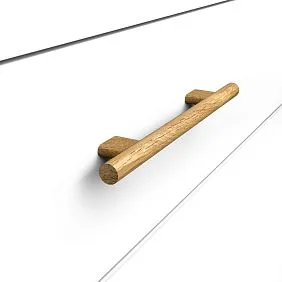
The material of the handle determines tactile sensations, visual value, durability. Solid wood (oak, beech, ash, walnut) is warm to the touch, with visible texture, tactilely pleasant. Over time, wood patinates from hands (darkens in areas of skin contact), creating an aged effect. Brass is cold to the touch, heavy, with a noble yellow shine. Over time, it develops a patina (greenish-brown coating), enhancing the vintage character. Bronze is an alloy of copper and tin, darker than brass, with a reddish tint, also patinates. Ceramic is smooth, cool, often painted (Gzhel, majolica), fragile, suitable for decorative furniture.
Replacing Handles: The Easiest Way to Update Furniture
Old furniture with a good frame but an outdated appearance gets a second life through hardware replacement. A grandmother's polished sideboard from the 1970s with square plastic handles looks hopelessly old-fashioned. Replacing the handles with carved wooden ones or brass rings on rosettes turns it into a vintage piece that fits organically into a modern interior.
The replacement process is simple: old screws are unscrewed from inside the door or drawer, the old handle is removed, the new handle is installed on the same holes (if the center-to-center distance matches) or on new holes (if the distance is different—old holes are filled, new ones are drilled). Work time: 5-10 minutes per handle.
The cost of replacing handles on a sideboard with 6 doors and 4 drawers (10 handles): oak wooden handles 1400 rub × 10 = 14,000 rub. Labor (if not doing it yourself): 3,000-5,000 rub. Total 17,000-19,000 rub. For comparison: restoring the entire sideboard (re-lacquering, repairing hardware, replacing glass) would cost 40,000-70,000 rub. Replacing only the handles provides 60-70% of the visual effect for 25-30% of the budget.
Handle Styles: From Baroque to Minimalism
Baroque handles—asymmetrical scrolls, floral motifs, abundant gilding. Material: bronze or brass with gilding, carved wood with golden patina. Shape: rings on rosettes in the form of mascaron (faces, lion heads), pulls with volutes (spiral scrolls). Suitable for antique furniture, luxurious classic interiors.
Classicist handles—symmetrical forms, antique motifs (laurel wreaths, palmettes, meanders), restrained patina. Material: brass or bronze with patina, wood stained to resemble mahogany or ebony. Shape: rings on round rosettes, straight pulls with decorative end caps. Suitable for furniture in Empire, Neoclassical style.
Modernist handles—smooth organic forms, absence of ornament, emphasis on material texture. Material: wood with preserved texture, matte brass, stainless steel. Shape: curved pulls, elongated knobs of oval cross-section. Suitable for furniture in Art Nouveau, Art Nouveau style.
Minimalist handles — geometrically correct shapes (straight brackets, square buttons), absence of decor, smooth surfaces. Material: matte steel, black metal, bleached oak. Shape: U-shaped brackets with square cross-section, integrated profile handles. Suitable for modern furniture, Scandinavian interiors, minimalism.
Molding as a background: creating context for furniture
Molding frames: framing a furniture group
Polyurethane molding on the wallThey create visual frames that organize space and frame furniture groups. In the living room, the wall behind the sofa (4 meters wide, 2.7 meters high) is divided by moldings into three vertical panels, each measuring 1.2×2.0 meters. A molding 70 mm wide is installed around the perimeter of each panel. The central panel remains empty (painted the same color as the wall, the molding creates relief). Two sconces (light fixtures) are placed symmetrically in the side panels. The sofa (2.5 meters long) stands exactly under the central panel. The composition is symmetrical and balanced.
Molding frames create context for furniture: the sofa is perceived not as a standalone piece, but as part of an architectural composition where the wall and furniture are connected. If carved wooden handles with ornamentation are installed on the doors of a sideboard standing against the same wall, the moldings on the wall rhyme with them stylistically.
Ceiling molding: the upper frame of the space
Polyurethane ceiling moldingInstalled around the perimeter of the room, it creates an upper frame that completes the space from above and connects the walls with the ceiling. A cornice 120-150 mm wide with a classic profile (cavetto, torus, dentils) is installed at the junction of the wall and ceiling. It is painted white (a classic solution) or the color of the ceiling (blends in, creates a soft transition).
Ceiling molding creates a background for tall furniture: cabinets, sideboards, shelves. If the furniture is 2.2-2.4 meters high (almost to the ceiling), the cornice on the ceiling emphasizes the vertical, creating the impression that the furniture and architecture are one. If classic handles (brass rings, carved wooden brackets) are installed on the furniture, the ceiling cornice with a classic profile rhymes with them, creating stylistic unity.
Rosettes above furniture: accent upon accent
A ceiling or wall rosette with a diameter of 60-80 cm with an ornament (acanthus leaves, roses, concentric circles) is installed on the wall above a chest of drawers, console table, or secretary desk. The rosette is painted white or gilded (for luxurious interiors). A mirror or painting hangs on the wall under the rosette. Decorative objects (vases, candlesticks, clocks) are placed on the chest of drawers. The handles on the drawers of the chest are carved wood or brass with ornamentation.
The rosette creates a compositional center that attracts the eye. The furniture under the rosette is perceived as an important element, even if the chest itself is simple. The ornament of the rosette can echo the ornament of the handles: if the handles have a floral pattern, the rosette also has a floral one (acanthus leaves). Stylistic rhyme enhances the impression of thoughtfulness.
Unity of ornament: when handles and molding rhyme
Classical motifs: acanthus, palmette, meander
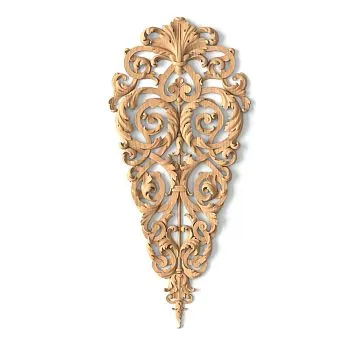
Acanthus leaf — a stylized depiction of the leaf of the Mediterranean acanthus plant, one of the most recognizable ornaments of classical architecture and decor. The shape of the leaf with deep cutouts and rounded lobes creates an expressive relief. Acanthus is used on column capitals, friezes, rosettes, and furniture handles.
If a ceiling rosette has an acanthus ornament (leaves in a circle from the center to the edges), furniture handles with acanthus leaves on rosettes or on brackets create a stylistic rhyme. A guest entering the room subconsciously reads the repetition of the motif, which creates a sense of integrity and professional approach.
Palmette — a fan-shaped ornament resembling a stylized palm leaf. Symmetrical, with clear lines, often combined with volutes (spiral scrolls). Palmette is characteristic of classicism and empire style. If wall moldings have palmettes in the corners of the frames, furniture handles with palmettes on overlays create unity.
Meander — a continuous broken line forming a pattern of right angles, a Greek ornament. Geometrically correct, rhythmic. Meander is used on friezes, moldings, and furniture overlays. Meander on a ceiling cornice and meander on furniture handles — a strict, mathematical rhyme.
Color rhymes: gold on white, patina on cream
White molding (moldings, cornices, rosettes painted white) on colored walls (beige, gray, green) creates a classic contrast. Furniture handles made of brass or bronze with gilding add a warm accent. Golden handles against a background of white molding — a contrast of warm and cool, which creates visual richness.
Alternative: molding is painted not white, but cream or ivory (warm shades of white). Furniture handles made of brass or bronze with patina (greenish-brown coating) harmonize with the warm shade of the molding. Patina on handles and a cream shade of molding — a rhyme of warm, noble tones.
For modern eclectic interiors: molding is painted a dark color (graphite, black), furniture handles made of black metal or dark wood (wenge, stained oak). Dark molding and dark handles — a monochrome rhyme, creating drama and modern elegance.
Scale correspondences: large with large, small with small
Wide moldings 100-140 mm on walls require large furniture handles: brackets 160-192 mm long, rings 60-80 mm in diameter. Scale correspondence: large molding and large hardware are perceived as parts of one system, where everything is solid and fundamental.
Narrow moldings 40-60 mm require more delicate handles: brackets 96-128 mm long, buttons 30-40 mm in diameter. Scale correspondence: small molding and small hardware create elegance and lightness, suitable for neoclassicism, Provence style.
Violating scale correspondence creates dissonance: if there are massive 120 mm moldings on the walls, but tiny 25 mm buttons on the furniture, the composition falls apart. The handles get lost against the powerful molding. Conversely: if there are thin 50 mm moldings on the walls, but huge 200 mm brackets on the furniture, the hardware is overwhelming, and the molding seems insufficient.
Practical tips: installing molding near furniture
Sequence of work: molding before or after arranging furniture
Optimal sequence: install molding before arranging large furniture. Walls are free, access to any point is easy, moldings are installed precisely according to markings, no need to move heavy cabinets.
Process: renovation is complete (walls are leveled, painted), moldings, cornices, rosettes are mounted on empty walls, painted, dry (2-3 days), then furniture is brought in and arranged according to plan. Furniture takes its place without touching the molding (a 3-5 cm gap between furniture and wall, if the molding protrudes).
Alternative scenario: furniture is already in place (moving into a finished interior, no possibility to remove furniture). Molding installation is possible but more difficult. Furniture is moved 50-70 cm away from the walls (as far as space allows), moldings are installed in accessible areas, then furniture is returned. Areas behind large furniture (where furniture cannot be moved) remain without molding — this is a compromise.
Furniture protection during installation: film, cardboard, caution.
During molding installation near furniture, contamination is inevitable: glue, paint, dust from cutting moldings, putty. Furniture protection is mandatory.
Covers made of thick polyethylene film (150-200 microns) are placed over furniture, secured with painter's tape around the perimeter. The film protects against drops of glue, paint, and dust. Cost of a 4×5 meter roll of film is 350-500 rubles, enough for 2-3 pieces of furniture.
Cardboard sheets are laid on the floor in front of the furniture, creating a work area where moldings can be cut and tools placed without fear of scratching the parquet or furniture legs. Cost of a cardboard pack (10 sheets 1×2 meters) is 800-1200 rubles.
Painter's tape is applied to the edges of furniture countertops, facades, and glass, creating a boundary up to which work can be done. After completion, the tape is removed, surfaces remain clean. Cost of a roll of painter's tape 50 mm × 50 m is 180-250 rubles.
Mounting moldings above furniture: height and angle.
A molding frame on the wall above a 90 cm high chest of drawers is installed so that the lower edge of the frame is at a height of 110-130 cm from the floor (20-40 cm above the chest). The gap allows placing items up to 30 cm high (vases, lamps) on the chest without blocking the molding.
If the chest of drawers is moved 5-10 cm away from the wall (for wiring, baseboard), the molding on the wall above it is installed so as not to overhang the chest (the lower edge of the molding should be either flush with the front edge of the chest or slightly behind). Visual logic: the molding should not appear to be falling onto the furniture.
Painting molding: how not to stain furniture.
Painting moldings with a roller or spray gun is the riskiest stage. Paint splatters fly in all directions and can land on furniture. Protection is critical.
Painter's film covers all furniture, floor, and windows. Painter's tape secures the film and seals gaps. Paint is applied with a roller (for smooth moldings) or brush (for carved moldings with deep relief). Using a spray gun near furniture is undesirable (even through film, micro-particles of paint can penetrate).
Alternative: painting moldings before installation. Moldings are painted in a workshop or separate room, dried, then installed on walls. Joints between painted moldings are filled with sealant and locally touched up with a brush. This method is safer for furniture, but joints are more noticeable (sealant after touch-up may differ in tone).
Set of handles and molding: project for a living room.
Concept: neoclassicism with golden accents.
Living room 25 m², ceiling height 2.8 meters, walls painted light gray. Furniture: gray velour sofa, two graphite armchairs, classic light oak sideboard, console table under a mirror.
Molding: 130 mm ceiling cornice with classic profile around the room perimeter (20 meters × 900 rub/m = 18000 rub). Wall molding frames behind the sofa: three panels 1.1×1.8 meters, 70 mm molding (3 panels × 5.8 m perimeter = 17.4 meters × 680 rub/m = 11832 rub). Rosette above the console table: 70 cm diameter with acanthus ornament (8500 rub). Total molding: 38332 rub materials.
Furniture handles: sideboard has 4 doors and 2 drawers (6 handles). Console table 2 drawers (2 handles). Total 8 handles. Choice: brass rings 60 mm diameter on rosettes with palmettes, patinated. Cost per handle 2400 rub × 8 = 19200 rub.
Molding installation: 18000-25000 rub. Handle replacement: 2000 rub (if not done yourself).
Total: 38332 + 19200 + 21500 (average installation) + 2000 = 81032 rub for comprehensive living room design with molding and furniture handles.
Effect: the living room acquires a neoclassical character where every detail is thought out. Molding creates an architectural background, furniture handles serve as accents that draw the eye. The golden patina on the handles rhymes with the warm light reflected off the white molding. The palmette ornament on the handles echoes the classic cornice profile. Everything is connected, everything works towards the overall impression of luxury and taste.
Prices: how much does interior jewelry cost.
Furniture handles made of solid wood: oak, beech, ash. Backplates 96-128 mm: 850-1400 rub/pc. Backplates 160-192 mm: 1200-1800 rub/pc. Knobs 30-40 mm: 650-1100 rub/pc. Rings on rosettes: 1400-2800 rub/pc (depending on carving complexity).
Furniture handles made of brass and bronze: simple backplates 96-128 mm: 1200-2000 rub/pc. Backplates with ornament: 1800-3200 rub/pc. Rings on rosettes: 2000-4500 rub/pc (patinated, with ornament). Painted ceramic knobs: 800-1600 rub/pc.
Polyurethane moldings: narrow 30-50 mm, simple profile: 350-550 rub/m. Medium 60-90 mm, classic profile: 550-850 rub/m. Wide 100-140 mm, carved profile: 850-1400 rub/m. Flexible moldings (for curved surfaces): +30-50% to the price of regular ones.
Ceiling rosettes: diameter 40-60 cm, simple ornament: 4500-7500 rub/pc. Diameter 70-90 cm, complex ornament: 7500-12000 rub/pc. Diameter 100+ cm, exclusive ornament: 12000-20000 rub/pc.
Molding installation: 600-1200 rub/m for moldings (depending on profile complexity, installation height). Rosette installation: 1500-3500 rub/pc. Molding painting: 200-400 rub/m.
Frequently asked questions
Can furniture handles be replaced independently?
Yes, it is one of the simplest operations. Tools: screwdriver or drill/driver. Time: 5-10 minutes per handle. If new handles have the same center-to-center distance as the old ones, they are replaced without modifications. If the distance is different, old holes are filled with putty, new ones are drilled.
How to choose furniture handles to match existing molding?
Look at the ornamentation of the molding. If the moldings have a floral pattern (acanthus, roses), choose handles with a floral ornament. If the moldings are geometric (meanders, dentils), the handles should also be geometric or simple. Color matching: white molding + gold handles, cream molding + patinated brass, dark molding + black metal or dark wood.
Where to install molding - before or after installing furniture?
Ideally before installing furniture (access to all walls is free, easier to work). If furniture is already in place, move it 50-70 cm away, install the molding in accessible areas, return the furniture. Protect furniture with film from glue and paint.
How much does it cost to update an interior only with handles and molding?
For a three-room apartment: replacing handles on all furniture (kitchen, living room, bedroom, hallway) - 40 handles × 1200 rubles average = 48,000 rubles. Molding in the living room and bedroom (cornices, moldings, 2 rosettes) - 80,000-120,000 rubles for materials and installation. Total 128,000-168,000 rubles. This is 8-12% of the renovation budget but creates 60-70% of the visual effect.
Which handles are suitable for modern furniture with molding in a classic style?
Eclecticism works if the handles are minimalist (matte steel, black metal, simple geometric shapes), and the molding is classic but painted in an unusual color (graphite, black, dark blue). The contrast of modern handles and classic molding in a non-classical color creates modern eclecticism.
Can polyurethane molding be used next to wooden furniture?
Not only can you, but you should. Polyurethane after painting is visually indistinguishable from plaster. The contrast between the natural wood of the furniture and the artificial polyurethane of the molding is not perceived by the eye (both are seen as quality materials). Color and stylistic matching is important.
Conclusion: Details make all the difference
An expensive interior is not the sum of expensive things. It is the thoughtfulness of every detail, where furniture handles rhyme with molding, where the ornament on a rosette echoes the carving on a buffet facade, where a ceiling cornice completes the vertical started by the baseboard. Jewelry work on an interior requires time, attention, a sense of proportion, but not necessarily a huge budget.
Furniture handles made of solid wood or brass cost 800-3500 rubles each, but turn an ordinary wardrobe into an item with character. Polyurethane molding costs 400-1200 rubles per linear meter, but creates an architectural context in which furniture reveals itself in a new way. Together, handles and molding create interiors that are not embarrassing to show, pleasant to live in, and remain relevant for decades.
Company STAVROS offers a full range of materials for jewelry work on interiors. Furniture handles made of solid oak, beech, ash, walnut - over 150 models from classic carved to modern minimalist. Backplates, knobs, ring pulls, shells, combined wood-metal handles. All handles are made from dried solid wood (moisture 8-12%), sanded, ready for installation or additional finishing (toning, painting, varnishing).
Furniture handles made of brass and bronze (through a partner network) - classic backplates, rings, knobs with ornaments (palmettes, acanthus, meanders, laurel wreaths). Finishes: polished brass, matte brass, patinated bronze, black bronze. Sizes from 32 to 256 mm center-to-center distance.
Polyurethane molding over 700 items - moldings of all widths and profiles (from 20 to 150 mm), ceiling cornices, baseboards, rosettes (diameter from 30 to 150 cm), decorative overlays, corner elements, pilasters, consoles. All products made of dense polyurethane (250-300 kg/m³), primed with white primer, ready for painting.
Design studio STAVROS develops projects for comprehensive interior design with selection of furniture handles and molding. You see a 3D visualization where handles on furniture rhyme with moldings on walls, where ornaments echo, where colors harmonize. The project includes calculation of all materials, estimate, installation recommendations.
When ordering a set (furniture handles + molding) for an amount from 50,000 rubles, STAVROS provides an 8% discount on decorative elements. For orders from 100,000 rubles - a 10% discount plus free delivery in Moscow and Moscow region. For orders from 180,000 rubles - a 12% discount plus free delivery across Russia. Savings 6,000-25,000 rubles.
STAVROS installation teams are specialists in installing molding in interiors with furniture. Protecting furniture with films, careful installation of moldings, rosettes, cornices, painting without contamination. Replacement of furniture handles (optional) with installation on existing or new holes. Work in Moscow, St. Petersburg, travel to regions, 3-year warranty.
Choosing STAVROS, you get a partner in creating interiors where every detail matters. Where furniture handles are not just hardware, but style accents. Where molding is not just decor, but architectural context. Where artificial and natural work together, creating spaces with character. Engage in interior jewelry. Create details that decide everything. With STAVROS it is accessible, beautiful, professional.