Article Contents:
- Ergonomics: when the hand knows the way on its own
- Anatomy of comfort
- Material and tactile feel
- Height and installation angle
- Durability: designed for decades
- Wood: the species decides everything
- Processing and protection
- Mounting hardware and fittings
- Visual lightness: the art of not overloading space
- Less is more principle
- Color and contrast
- Proportions and scale
- Material and light reflection
- Handle types: from classic knobs to sculptural forms
- Knobs: delicate classicism
- Hooks: universal functionality
- Rails and long profiles
- Integrated and hidden handles
- Stylistic solutions: from classic to avant-garde
- Classic style: symmetry and elegance
- Scandinavian minimalism: simplicity and functionality
- Industrial loft: rawness and character
- Provence and country: coziness and romance
- Modern high-tech: technology and minimalism
- Practical Considerations for Selection
- Compatibility with furniture type
- Frequency of use
- Safety
- Budget
- Installation and mounting: secrets of professionals
- Marking
- Drilling
- Fixation
- Adjustment and Maintenance
- Combination with Other Furniture Elements
- Connection with Supports and Legs
- Coordination with Decorative Elements
- Frequently Asked Questions
- Conclusion: Investment in Comfort and Beauty

What distinguishes quality furniture from mediocre? Not only solid wood or engineering solutions, but that very detail, which you reach for every day — hardware.Furniture Handles for CabinetsThey have long moved beyond utility and have become tools for creating mood, character of space, even philosophy of life. In 2026, the focus shifts to three key criteria: ergonomics (how the hand feels the contact), durability (how many years it will serve without losing properties), and visual lightness (ability not to overload the interior). Let’s figure out how to find the balance between these parameters and create furniture that will serve generations.


Ergonomics: When the Hand Knows the Way by Itself
Every day we perform hundreds of micro-movements, opening cabinets, pulling out drawers, retrieving clothes from wardrobes. And if the handle is uncomfortable — too thin, slippery, with sharp edges or unnatural angle — irritation accumulates. Ergonomics begins with understanding the anatomy of the human palm and biomechanics of gripping.




Anatomy of Comfort
The human hand has a natural bending radius, optimal gripping force, preferred contact zones. When gripping a handle, four fingers (index, middle, ring, pinky) and the opposing thumb are engaged. Comfortable thickness forfurniture handles— 20–35 mm in diameter for cylindrical section or equivalent area for rectangular profile. Too thin, they cut into the skin; too thick, they cannot be fully gripped.
Shape matters. Handles with smooth curves, mimicking the natural curve of the palm, reduce joint strain. Straight L-shaped handles are universal but require slightly more effort to open heavy doors. Asymmetric models, where one side is raised relative to the other, create an additional support point for the thumb — such a construction is intuitive and reduces strain on the hand.
Our factory also produces:



Material and Tactility
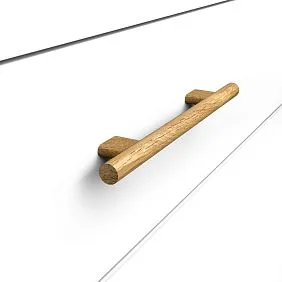
Wood — the absolute leader in tactile comfort. Unlike cold metal or synthetic plastic, wooden surfaces are pleasant to the touch year-round, do not heat up in summer and do not chill in winter.Wooden furniture handleIt has a natural microtexture that prevents slipping even with wet hands.
Surface treatment affects ergonomics no less than shape. Smooth polishing looks impressive but may be slippery. Matte oil or wax coating creates a pleasant silkiness with slight grip. Brushed wood, where soft fibers are removed and hard annual rings protrude as relief — ideal for those who appreciate pronounced texture and reliable grip.
Metal handles require thoughtful finishing: knurling, matte treatment, powder coating with fine-grained texture. Smooth chrome may be slippery and show every fingerprint, whereas matte steel or brass with satin finish is more practical and ergonomic.
Get Consultation
Height and Installation Angle
The placement of the handle on the facade directly affects usability. For cabinets with hinged doors, it is optimal to mount hardware at a height corresponding to the natural position of the lowered hand — approximately 90–120 cm from the floor for an average-height adult. Upper doors are easier to open if the handle is located in the lower third of the facade — pull down, lower doors — if in the upper third — pull up.
For chests and drawers with drawers, horizontal handles are mounted at the center or slightly above the central axis — so the drawer slides out evenly, without misalignment. Vertical handles on chests look modern but are less ergonomic: the grip is asymmetrical and requires slightly more effort.
The angle of the handle protrusion from the facade surface is also important. Too close fitting (5–10 mm) makes it difficult to insert fingers, especially on thick doors. Optimal clearance — 15–30 mm — ensures a free grip without risk of catching clothing or hitting knuckles on the surface.
Durability: Calculated for Decades
A quality furniture handle must withstand tens of thousands of opening-closing cycles without play, loosening of fasteners, wear of coating, or deformation. Durability is built into the material selection, manufacturing technology, and mounting method.
Wood: Species Decides Everything
Not every wood is suitable for hardware subjected to constant mechanical loads. Softwoods — pine, spruce, linden — quickly wear, scratch, and deform under humidity changes. Hardwoods — oak, beech, ash, walnut — serve for decades without losing shape or strength.
Oak is rightfully considered the benchmark. Density 700–800 kg/m³, high hardness by Brinell, resistance to rot and pests. Oak handles are durable under intensive use in any conditions — from humid bathrooms to hot kitchens. The texture is expressive, with large pores that can be accentuated by brushing or contrasting staining.
Ash is similar to oak in strength, but lighter and has a smoother texture. It’s an excellent choice for Scandinavian and modern interiors, where light wood without excessive ornamentation is valued. Beech is denser than oak (density up to 850 kg/m³), but more sensitive to humidity — requires quality impregnation and stable operating conditions.
Walnut is a premium choice for those who appreciate noble dark tones. Average density around 600 kg/m³, but high viscosity makes walnut resistant to scratches and cracks. The texture is fine, silky, with beautiful transitions from light sapwood to dark heartwood.
Processing and Protection
Even the hardest wood needs protective coating, especially for kitchen, bathroom, or hallway furniture. Modern technologies offer several solutions:
Oils with hard wax penetrate the wood structure, fill pores, and create a water-repellent film. Meanwhile, the natural texture and tactile feel of the wood are preserved. Oil is easy to renew — simply clean the surface, apply a new thin layer with a brush or cloth, and let it dry. Renewal frequency — every 2–3 years under intensive use.
Water-based polyurethane varnishes form a strong, flexible film that protects against moisture, scratches, and fading. Modern formulations are eco-friendly, do not yellow over time, and preserve the natural look of wood. Matte and semi-gloss varnishes look elegant and do not show fingerprints.
Thermo-treatment — a technology in which wood is heated to 180–220°C in an oxygen-free environment. As a result, the chemical structure changes: stability increases, hygroscopicity decreases, and the wood takes on a dark brown or chocolate hue. Thermowood does not require additional protection and lasts practically forever.
Fasteners and Hardware
The most beautiful handle is useless if poorly secured. The standard method — through-bolts with a diameter of 4–5 mm, which pass through the facade and screw into threaded sockets on the back of the handle. It is important to use high-quality fasteners made of stainless steel or brass — they do not rust, do not oxidize, and hold the thread for years.
For heavy-duty hinges and long handles, it is recommended to use three- or four-point fasteners instead of standard two-point ones — this prevents rotation and loosening under load. Threaded bushings (driven or screwed) strengthen the connection, especially in soft woods or thin facades.
When installing, it is important to observe the tightening torque: too loose — the handle wobbles, too tight — you may crush the wood or strip the threads. Professionals use torque wrenches; for home installation, tighten by hand until you feel resistance, then turn an additional quarter turn.
Visual Lightness: The Art of Not Overloading Space
Heavy dark furniture with large hardware can 'weigh' on the psyche, creating a sense of heaviness and confinement. Visual lightness is the ability of an object to appear airy and elegant, not overloading the interior even with imposing dimensions. Handles play a key role in this.
The Principle of Less is Better
Minimalisthandles buttons furnitureHandles with a diameter of 25–40 mm almost disappear on the facade, leaving the dominant role to the form and color of the furniture itself. They are suitable for chests with many drawers, where rhythm and order are important. Buttons can be wooden, metallic, ceramic, or glass — the key is that the size should be proportional to the scale of the furniture.
For tall cabinets and wardrobes, thin vertical hinges or integrated profiles — milled recesses along the door edge that serve as handles without protruding elements — are preferred. This solution makes furniture graphic, slender, and visually elongates the space.
Color and Contrast
Light hardware on light facades creates an effect of a single volume, where handles are barely noticeable. This works when maximum visual lightness and calm are needed. White, cream, or light gray handles on white oak or ash blend seamlessly, not fragmenting the surface into small pieces.
Contrasting solutions — black hinges on white facades, brass buttons on dark walnut — create rhythm and accents, but require moderation. Too much contrasting hardware creates visual noise, especially on furniture with many doors and drawers. It is better to use contrast sparingly: for example, bright handles only on central elements, while side elements are matched to the facade color.
Proportions and Scale
A large handle on a small drawer looks ridiculous and draws attention. Small hardware on a tall pencil case disappears and creates a sense of incompleteness. The golden ratio also applies here: the length of the hinge should be approximately one-third the width of the facade for optimal proportions.
For narrow doors 300–400 mm, hinges 96–128 mm or buttons 30–35 mm are suitable. For standard 500–700 mm — hinges 128–192 mm. For wide facades 800 mm and above, long rails 256–320 mm or even 400–600 mm can be used, which emphasize horizontal lines and make the furniture modern.
Vertical handles 300–960 mm are ideal for tall pencil cases, wardrobes, and built-in cabinets. They visually elongate the space, add architectural character, yet do not clutter — verticals are always perceived as lighter than horizontals.
Material and Light Reflection
Matte surfaces absorb light, creating a sense of mass and density. Polished and chrome finishes reflect, visually lightening the structure. For light interiors, satin metals (matte steel, brushed brass), light natural wood without staining, glass, and transparent acrylics are preferred.
Dark woods — walnut, wenge, stained oak — appear more substantial and heavy. They suit classic interiors, offices, libraries, but in small bedrooms or living rooms may create excessive massiveness. Combining light furniture bodies with dark handles (or vice versa) is a way to find a balance between character and lightness.
Types of Handles: From Classic Buttons to Sculptural Forms
Buttons: delicate classic
Furniture knob handleThe most compact type of furniture hardware, minimally protruding from the facade surface. Diameter varies from 20 to 50 mm, protrusion height — 15–40 mm. Knobs are mounted on a single central mounting, simplifying installation and replacement.
Wooden knobs come in turned (cylinder, sphere, cone, combined shapes) and carved (with ornament, relief, floral motifs). Turned knobs are universal and suitable for most styles, while carved knobs emphasize tradition and handcrafted work.
Metal knobs are made from brass, bronze, stainless steel, and aluminum. Popular models feature decorative overlays — mother-of-pearl, ceramic, glass, leather. Ceramic knobs with painted decoration transform a simple chest into a piece of applied art.
Knobs are ideal for chests, desks, bedside tables, small cabinets — anywhere delicate hardware is needed that doesn’t draw excessive attention. Their downside is smaller gripping area compared to hinges, which may be inconvenient for heavy doors or frequent opening.
Hinges: universal functionality
P-shaped and arched hinges — the most common type of furniture hardware due to their convenience and reliability.Furniture hinge handleProvides wide grip, allows opening doors or drawers with minimal effort, suitable for any style — from classic to high-tech.
Hinges vary by length (center-to-center distance): 64, 96, 128, 160, 192, 256, 320, 400 mm and more. Short ones are used on narrow facades and small drawers, long ones — on wide doors and drawer systems. Profile shape may be round, square, rectangular, oval, with bevels and chamfers.
Hinge material — wood, metal (steel, aluminum, brass, bronze), combinations of wood with metal inserts. Wooden hinges are warm and pleasant to the touch, metal ones — more rigid and industrial. Combined models unite the best of both worlds: tactile comfort of wood and visual clarity of metal.
Hinges are mounted on two fasteners, ensuring stability and preventing rotation. For long models (over 300 mm), additional central mounting points are recommended — this prevents sagging under load.
Railings and long profiles
Horizontal and vertical railings from 300 to 960 mm — a trend in modern interiors. They emphasize furniture lines, create graphic effects, and turn cabinets and chests into architectural objects. Vertical railings visually elongate space, horizontal ones — widen it.
Long handles are convenient because they allow gripping at any point, which is especially important for tall facades — no need to reach for the top or bottom edge. They distribute load evenly, reducing wear on fasteners.
Material — metal tubes, wooden profiles with rectangular or square cross-sections, composite solutions. Metal railings are lighter and stronger, wooden ones — warmer and more eco-friendly. Combined models (wooden plank on metal supports) combine the advantages of both materials.
Integrated and hidden handles
For minimalist interiors where absolute line purity is valued, use milled recesses along the top or bottom edge of the facade. Such a profile does not protrude, does not disrupt the plane, and allows opening the door by inserting fingers into the groove. It looks stylish and modern but requires precise milling and quality edge finishing.
Alternative — push-to-open systems, where a light press on the facade activates a mechanism that pushes the door several millimeters. After that, the door can be easily opened by hand. Such systems are more expensive than traditional handles, require installation of limiters and dampers, but provide ideal aesthetics of seamless facades.
Stylistic Solutions: From Classic to Avant-Garde
Classic style: symmetry and elegance
Classic furniture — cabinets with carved cornices, chests on ornatelegs for a bedside tabledesks with inlays — require appropriate hardware. Here, brass or bronze handles with patina, carved wooden models of noble woods, lion-head rings, oval overlays with engraving are appropriate.
Shape — symmetrical, proportional, often with floral or geometric ornamentation. Size — medium or large, as classic furniture is inherently bulky and small hardware would be lost. Color — warm metals (gold, brass, copper) or dark wood (walnut, mahogany, rosewood).
Classic handles emphasize solidity, status, and respect for tradition. They transform an ordinary chest into a family heirloom passed down from generation to generation.
Scandinavian minimalism: simplicity and functionality
Light wood, white surfaces, simple lines — the hallmark of Scandinavian style.Furniture HandlesHere, simplicity is maximized: thin matte steel hinges, ash or birch wooden knobs, leather hinges in natural tones.
Scandinavian philosophy values material honesty and the absence of decoration for decoration’s sake. Every element is functional, every line is thoughtfully designed. Handles should not stand out — they serve as an extension of the facade, intuitive tools for interacting with furniture.
Color — natural (light wood without staining), white, gray, sometimes black for contrast. Shape — geometrically clean, without curls or complex profiles. Size — medium or small, proportionate to minimalist furniture.
Industrial loft: brutality and character
Loft loves rough textures, visible fasteners, metal with signs of oxidation. Handles here can be heavy black brackets from thick rods, brass tubes with green patina, leather straps on metal rivets, even plumbing fittings turned into hardware.
Authenticity is important: no plastic imitation, only real metal, natural leather, untreated wood.Legs for chestsIn loft, handles are often made from metal profiles or pipes, and must support this industrial aesthetic.
Color — black, graphite, copper, bronze with patina, rust as a decorative effect. Shape — simple, functional, sometimes rough. Size — medium and large, as loft does not fear bulkiness.
Provence and country: coziness and romance
French country aesthetic implies ceramic knobs with painted designs, brass handles with botanical motifs, wooden handles with light carving. Colors — pastel, muted: lavender, mint, cream, terracotta, blue.
Such handles often become standalone ornaments for chests or wardrobes. They are chosen larger and more decorative than in minimalist styles. Harmony with textiles, ceramics, and decor is important — everything should create a sense of a warm, lived-in, beloved home.
Material — ceramic, wood, aged brass, porcelain. Shape — rounded, soft, with ornamentation. Size — medium, proportionate to traditional Provence furniture.
Modern high-tech: technology and minimalism
Chrome surfaces, glass, LED lighting, touch-opening systems — this is the world of high-tech. Handles here are either integrated (hidden profiles, push-to-open) or ultra-modern — made of polished steel, anodized aluminum, with geometrically complex shapes.
Technology can be expressed through the use of new materials: composites, carbon, titanium alloys. Built-in electronics are possible — lighting, sensors, even biometric locks integrated into the handle.
Color — chrome, matte steel, white, black, sometimes bright accents (red, blue) to emphasize technology. Shape — angular, graphic, sometimes deliberately futuristic. Size — any, but with emphasis on visual lightness.
Practical aspects of selection
Compatibility with furniture type
For wardrobes with heavy doors, strong brackets on secure fasteners are needed. For chests with many small drawers — neat buttons or short brackets. For tall cabinets — vertical rails or multiple handles on one axis. For built-in systems — integrated profiles or hidden mechanisms.
The weight of the door or drawer dictates requirements for strength. Light MDF facades 16 mm thick can handle any hardware, heavy solid wood doors 30–40 mm thick require reinforced fasteners and larger handles.
Frequency of use
A wardrobe in a guest bedroom is opened once a month — decorative ceramic knobs can be used. A chest in a child’s room, opened dozens of times a day — requires the most durable and easy-to-maintain hardware: wooden or metal brackets without small parts.
Kitchen cabinets, hallways, bathrooms — zones of intensive use, where handles are subjected to constant loads, contact with moisture, grease, household chemicals. Here, the most durable materials and coatings are needed.
Safety
Families with young children should avoid sharp corners, protruding elements, fragile materials (glass, thin ceramic). Brackets with smooth curves, wooden knobs, leather hinges — safe options. Integrated profiles completely eliminate the risk of injury or clothing snagging.
For elderly people, ease of grip is important: large, comfortable brackets are better than small knobs, contrasting handle color helps quickly locate the handle by sight, textured surface prevents slipping.
Budget
Quality wooden hardware from solid oak or ash costs 500–2000 rubles per unit depending on size and complexity. Metal brackets — 300–1500 rubles. Designer handmade models — from 3000 rubles and above.
Do not save on hardware — cheap plastic or thin-walled metal handles break quickly, lose appearance, and loosen. It is better to invest once in quality items that will last decades, rather than replacing flimsy hardware every few years.
Installation and mounting: secrets of professionals
Marking
Accuracy of marking — the key to a neat result. For multiple identical doors or drawers, a template made of thin plywood or plastic with drill holes is prepared. The template is applied to each facade, the center holes are marked with a center punch, then drilled.
For single installation, use a ruler, square, and level. Measure the width and height of the facade, find the central axis, and mark half the center-to-center distance of the handle on both sides of the center. It is important to account for the facade thickness and screw length — the screw must not hit the back wall or protrude outward.
Drilling
The drill bit diameter is chosen 0.5–1 mm larger than the screw diameter to allow free passage. For wood, use wood spiral drill bits with a centering pin — they provide a clean hole without chipping.
Drill perpendicular to the facade plane, controlling the angle with a level or square. If the drill bit drifts sideways, the handle will be misaligned. For through holes, drill from the front side until the drill bit’s pin becomes visible from the back side, then flip the facade and drill from the reverse side — this prevents chipping at the drill exit.
Fixation
Position the handle against the facade, insert screws into the holes, and tighten from the back side using a screwdriver or drill. It is important not to overtighten — especially on soft woods (pine, linden) or MDF, where material can be crushed or the thread stripped.
For heavy, long handles, use a level during fixation — place it against the handle, align horizontally or vertically, then tighten the screws. If the handle is misaligned by even one degree, it will be visibly obvious to the naked eye.
Adjustment and Maintenance
Over time, fasteners may loosen — simply tighten the screws with a screwdriver. If the thread is damaged, use screws of larger diameter, fill the hole with epoxy or a wooden plug, let it dry, then drill again.
Wooden handles should be wiped with wood oil once a year — this refreshes the finish and protects against moisture. Metal handles should be polished with a soft cloth; if necessary, use specialized care products for brass, bronze, or steel.
Combination of handles with other furniture elements
Connection with supports and legs
Furniture Legs and Supports— such an important design element as handles. Harmony between them creates visual unity. If a chest stands on wooden turnedlegs for a bedside tablemade of oak, it is logical to choose oak handles — this will visually connect the top and bottom of the furniture piece.
If the supports are metallic (chrome, black, brass), the hardware should support this theme. Contrast is possible but requires design sense: wooden handles on metal legs look natural only in certain styles (Scandi, eco, modern classic).
Coordination with decorative elements
in the interiorDecorative brackets for shelvescarvedOutlets, wooden planks on the wall, furniture handles should support the overall style. For classic interiors with rich decoration, carved or brass handles are suitable; for modern spaces — minimalist knobs.
MoldingsandWooden skirting boardsalso influence the choice of hardware. Wide profiled baseboards in classic style require corresponding handles, while narrow modern ones require minimalist solutions.
Frequently asked questions
What is the difference between a knob and a handle?
A knob is a P-shaped handle mounted on two fasteners, providing full palm grip. A handle is a more compact element, often mounted on one fastener or with a short projection, gripped by fingers. Knobs are more convenient for heavy doors, while handles are better for small drawers.
What is the most universal center-to-center distance?
128 mm — the golden middle, suitable for most cabinets and chests. Such handles are easy to find, proportionally match standard facade widths of 400–600 mm, and provide comfortable grip.
Can different handles be installed on one piece of furniture?
Yes, and this is even encouraged. For example, on a chest, top small drawers can be fitted with buttons, while bottom large drawers — with knobs. The key is to maintain material or style unity to avoid visual chaos.
How to care for wooden handles?
Wipe with a damp soft cloth, avoid abrasives and aggressive chemicals. Once a year, treat with wood oil or wax — this refreshes the finish and protects against moisture. For scratches — lightly sand with fine-grit sandpaper, then reapply oil.
What to do if the handle becomes loose?
Tighten the screws with a screwdriver. If the thread is damaged — use screws of larger diameter, fill the hole with epoxy or a wooden plug, let it dry, then drill again and reinstall the handle.
What handles are safer for a child's room?
No sharp corners or small detachable parts. Rivets with smooth curves, wooden buttons, integrated profiles. Avoid glass, fragile ceramics, protruding metal elements.
How long does a quality wooden handle last?
With proper care — decades. Oak and ash handles withstand hundreds of thousands of opening and closing cycles without deformation. The finish may require renewal every 5–10 years, but the wood itself remains strong.
Can wooden handles be painted?
Yes. First, remove the old finish with sandpaper, prime, apply paint (acrylic, alkyd, or oil-based), and protect with varnish. Or use stains and toners to change the color while preserving the wood texture.
How to choose handle colors?
Base your choice on cabinet door colors and overall interior palette. For neutral doors (white, gray, beige), any shade works. For colorful doors — neutral handles (natural wood, matte metal) or matching one interior color are preferable.
Are handles needed for push-to-open cabinet doors?
Not required, but possible as a decorative element. Some prefer duplicate handles — in case the mechanism fails, or simply out of habit.
Conclusion: Investment in comfort and beauty
Choosing furniture handles is a decision that affects daily comfort, furniture longevity, and the overall interior aesthetics. Ergonomics ensure pleasant touch, durability guarantees years of service without quality loss, visual lightness creates a sense of airiness and spaciousness. Balancing these three parameters allows you to create furniture that will delight not just one generation.
The modern market offers a vast variety of solutions — from classic wooden buttons to futuristic integrated systems.Buy cabinet handlesof high quality — means investing in details that shape the character of your home.
Company STAVROS specializes in producing furniture hardware from natural wood. The wide assortment includes classic and modern handle, bracket, and button models in various sizes and shapes. All products are made from solid oak, ash, and beech wood using modern wood processing and protection technologies. STAVROS also offers a full range offurniture legs and supports, decorative elements, balusters for staircases, allowing you to create a harmonious interior using natural materials. By consulting professionals with years of experience, you receive a guarantee of quality, durability, and aesthetic perfection for every element of your home.