Article Contents:
- Typology of furniture handles: form as meaning
- Knobs: the minimalism of the circle
- Pulls: the functional arc
- Elongated classic handles: the aristocracy of verticality
- Carved handles: sculpture on the facade
- Matching handles to furniture style: the code of compatibility
- Baroque and Rococo: carved opulence
- Classicism and Empire: symmetrical rigor
- Victorian style: eclectic abundance
- Scandinavian style and minimalism: concise function
- Handle replacement technique: renewal without major costs
- Preparation: removing old handles
- Marking new holes: precision as the foundation
- Drilling holes: neatness without chips
- Installing new handles: the finishing operation
- Coordinating handles with door handles: unity of details
- Furniture overlays: handle partners in decor
- How to fix furniture by replacing handles: transformation cases
- Case 1: 1970s dresser → Scandinavian minimalism
- Case 2: Stalin-era sideboard → neoclassicism
- Case 3: Bland sliding wardrobe → loft with character
- Company STAVROS: workshop of wooden handles and overlays
- Custom handle manufacturing from sketches
- Frequently Asked Questions About Furniture Handles

Why does a room with perfectly matched furniture, expensive fabrics, and a well-thought-out palette sometimes look bland, as if from a mass-market catalog, while another space, assembled from items of different eras, breathes individuality? The secret lies in the details—those very elements that professionals call 'points of contact' and ordinary people don't notice at all.Furniture HandlesA wooden handle is one of those points that a person touches dozens of times daily—opening a wardrobe, pulling out a dresser drawer, swinging open a sideboard door. The shape, texture, and surface temperature are registered by tactile memory, forming a subconscious attitude toward the space. A cold metal pull handle creates a sense of formality, detachment—characteristic of office and public spaces. A warm wooden knob evokes associations with home comfort, tradition, and the reliability of past generations.
Visually, a handle occupies 1-2 percent of a furniture facade's surface, yet it determines the stylistic affiliation of an item with the precision of a surgical scalpel. Install simple wooden knobs with a diameter of 30 millimeters on the doors of a white wardrobe—you get Scandinavian minimalism. Replace them with carved elongated handles with acanthus leaves—the wardrobe migrates to classicism. Install rectangular pulls made of dark oak—the interior shifts toward loft or Japanese minimalism. The same furniture, three different handles—three different styles, three different moods, three different characters of space.
Most perceive handles as utilitarian hardware, choosing based on the principle of 'just to have something' or 'whatever is cheaper.' The result is predictable—the interior looks random, lacking thoughtfulness and character. A professional designer selectsFurniture Handleshandles with the same care as the main furniture, understanding that it is the details that create integrity, turning a set of items into an ensemble, a space into a work of art. This article is a guide to conscious choice, capable of transforming the perception of your home through attention to what has always been in plain sight but remained invisible.



Furniture Handle Typology: Form as Meaning




Knobs: The Minimalism of the Circle
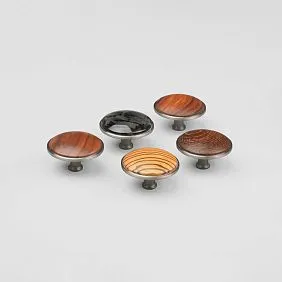
A knob is a cylindrical or spherical element with a diameter of 25-40 millimeters, protruding 20-35 millimeters from the facade, grasped with three fingers for opening. It is the most ancient form of handle, dating back to medieval chests and cabinets, where knobs were turned on a lathe from wood or bone, and later cast from brass or bronze. The geometric simplicity of the circle makes the knob universal—it fits into any style through variations in material, texture, and decoration. A smooth wooden knob made of light beech, 30 millimeters in diameter and without ornamentation, is characteristic of Scandinavian style, Shaker furniture, and minimalism. A carved knob made of dark oak with an ornament on the end is for classic, Provencal, and country styles. A knob with a metal insert in the center is for eclectic and fusion styles.
The advantage of a knob is its compactness. It protrudes minimally, doesn't snag on clothing when passing by furniture, and doesn't interfere when opening adjacent doors where pull handles might conflict. A knob is ergonomic for vertical doors on cabinets and buffets, where opening is towards oneself—three fingers grasp the knob and pull. For horizontal drawers, a knob is less convenient—grasping requires more effort, and the drawer tends to open with a jerk. Here, a pull handle, which can be pulled with the whole palm, is preferable.
The size of a knob is determined by the scale of the furniture. Small knobs, 25-30 millimeters, are suitable for delicate furniture—secretaries, dressing tables, bedside tables. Medium knobs, 35-40 millimeters, are for standard cabinets and dressers. Large knobs, 50-60 millimeters, are for massive furniture where small knobs would get lost visually and look disproportionate. The placement of the knob on the facade is also critical: centered on the door—symmetrical, traditional; offset towards the edge—more dynamic, more modern; on the lower corner of the door—characteristic of Shaker style.
Our factory also produces:



Pull Handles: The Functional Arc
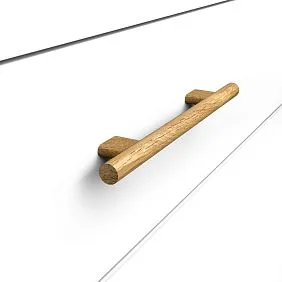
A pull handle is a U-shaped or arc-shaped element, attached to the facade at two points with a distance of 64-128-192 millimeters between centers (standard center-to-center distances, multiples of 32), which the hand grasps fully for opening. It originated in the Renaissance and reached its peak in the 18th-19th centuries in English and French furniture. A pull handle is more functional than a knob—the full palm grasp distributes force, reduces strain on the fingers, and makes opening easy and natural. This is especially critical for heavy drawers containing clothing, dishes, or books, where significant force is required.
The shape of a pull handle varies from strictly rectangular to curved and ornamented. A straight pull handle of constant cross-section, without decoration, is minimalist, modern, and suitable for loft, contemporary, and Scandinavian styles. A pull handle that thickens in the center and tapers towards the ends is more dynamic and classic. A curved pull handle—an arc, convex outward or concave inward—adds plasticity and is characteristic of Baroque, Rococo, and Art Nouveau. A carved pull handle with floral ornamentation, volutes, or mascaron heads is for historical styles where decorativeness is fundamental.
The material of a pull handle is critical for perception. A wooden pull handle made of solid oak, beech, or ash is warm to the touch, tactilely pleasant, and visually soft. A metal pull handle made of brass or bronze is cooler, harder, and more solemn. A combined pull handle—wooden with metal tips—combines the warmth of wood and the shine of metal. The choice depends on the style: wooden is organic in eco, Scandinavian, and country styles; metal is for classic, Baroque, and Empire styles; combined is for eclectic and neoclassical styles.
The center-to-center mounting distance for a pull handle is selected based on the size of the facade. 64 millimeters is the minimum, for narrow dresser drawers and small doors. 96-128 millimeters is standard for most furniture. 192-256 millimeters is for wide facades of sliding door wardrobes and buffets. A handle that is too short on a wide facade looks stunted and disproportionate. One that is too long on a narrow facade looks bulky and overloaded.
Get Consultation
Elongated Classic Handles: The Aristocracy of the Vertical
An elongated vertical handle is a rectangular, oval, or multifaceted rod, 100-200 millimeters long, 20-30 millimeters thick, attached vertically to the facade at both ends and grasped by the hand in the middle. It is characteristic of classic, neoclassical, and Empire furniture of the 18th-19th centuries. The verticality creates a visual lengthening of the facade, adding elegance and aristocracy. Elongated handles are often decorated with carving—fluting (vertical grooves), spiral grooves, or floral ornamentation along the rod. The ends are finished with capitals—expansions with carved acanthus leaves, volutes, or geometric motifs.
Elongated handles are installed on vertical doors of cabinets, buffets, and display cases, emphasizing the vertical line and creating rhythm when multiple doors are placed side by side. On horizontal drawers, an elongated handle works less well—its length conflicts with the horizontality of the facade, creating visual dissonance. Here, a horizontal pull handle or knob is preferable.
The material for elongated handles is traditionally wood, brass, bronze, sometimes in combination. Wooden elongated handles made of solid oak or walnut with carving are characteristic of English classic and American colonial style furniture. Brass handles with gilding are for French Empire and Russian palace styles. Combined wooden handles with brass capitals are for neoclassical and eclectic styles.
Carved Handles: Sculpture on the Facade
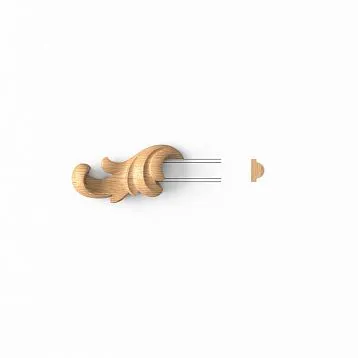
A carved handle is a three-dimensional element of complex shape, made by hand carving in wood, depicting floral motifs, animals, fantastic creatures, or geometric patterns. It represents the pinnacle of decorativeness and is characteristic of Baroque, Rococo, Gothic, and Art Nouveau styles. A carved handle is not just a functional element but a miniature sculpture, demonstrating the carver's skill and the owner's status. Production is labor-intensive—from several hours to days for a single handle—making them expensive and exclusive.
The subjects of carved handles are diverse. The acanthus leaf is a classic motif from antiquity, Renaissance, and Baroque, symbolizing vitality and immortality. Grapevines with clusters symbolize fertility and abundance, characteristic of Dionysian motifs. Animals—lion heads, eagles, dolphins—symbolize strength, power, and freedom. Mascarons—grotesque or idealized human faces—reference the ancient tradition of theatrical masks and serve an apotropaic function (warding off evil spirits). Geometric patterns—rosettes, volutes, meanders—represent abstract beauty and mathematical harmony.
Carved handles are installed on formal furniture—buffets in dining rooms, cabinets in living rooms, secretaries in studies—where the furniture is central, demonstrative, and requires appropriate decoration. On utilitarian furniture—kitchen cabinets, wardrobes in bedrooms—carved handles are excessive and create visual overload. A compromise is to use carved handles on central, visible elements of the furniture and simple knobs on side, hidden ones.
Selecting Handles to Match Furniture Style: The Code of Correspondence
Each historical furniture style has developed a characteristic type of handle, corresponding to the aesthetics, technologies, and socio-cultural context of its era. Understanding this code allows for selecting handles that organically complement the furniture, enhance the stylistic statement, and avoid anachronisms and stylistic errors.
Baroque and Rococo: Carved Opulence
Baroque (17th century) and Rococo (18th century) furniture is characterized by curvilinear forms, abundant carving, gilding, and inlay.Furniture HandlesThe corresponding handles are carved, three-dimensional, decorated with acanthus leaves, rocaille shells, volutes, and mascarons. The material is gilded bronze or brass for French furniture; carved wood with gilding for Italian and Spanish. The forms are asymmetrical, dynamic, avoiding strict geometry—a characteristic feature of Rococo, where 'whimsy' was valued above order.
Knobs are rare in Baroque—elongated vertical handles and curved pull handles, creating plasticity and movement, are preferred. A pull handle might depict a pair of symmetrical volutes, a stylized lyre, or intertwined plant tendrils. An elongated handle is designed as a column with a capital and base, covered with fluting and carving. Installing such handles on furniture of other styles creates a stylistic conflict—Baroque opulence is incompatible with minimalist simplicity or Scandinavian restraint.
Classicism and Empire: Symmetrical Strictness
Classicism (second half of the 18th century) and Empire (early 19th) returned to the ancient ideals of order, symmetry, and proportionality. Furniture is rectilinear, strict, with geometric, measured ornamentation. The corresponding handles are straight horizontal pull handles, round knobs, and elongated vertical handles with fluting. The material is patinated or gilded bronze, wood stained to resemble mahogany or ebony. Decoration is restrained—laurel wreaths, rosettes, palmettes, meanders—ancient motifs symbolizing victory, glory, and eternity.
Empire style enhances monumentality—handles are larger, more massive, and decoration includes imperial symbolism: eagles, lions, bees, oak leaf wreaths, torches. The color is contrasting—gilded bronze on dark wood creates solemnity and formality. Installing Empire handles requires corresponding furniture and interior—they get lost in modern minimalism and look pretentious in eclectic settings.
Victorian Style: Eclectic Abundance
The Victorian era (mid to late 19th century) is characterized by eclecticism—a mixture of Gothic, Renaissance, Baroque, and Eastern motifs. Furniture is massive, heavy, abundantly decorated with carving, inlay, and upholstery. Handles are diverse—carved wooden with floral motifs, brass in the shape of lion heads, ceramic with painting, combined wood-metal. There is no single canon; mixing forms and materials within a single piece of furniture is allowed.
A characteristic Victorian handle is a brass pull handle with a backplate (a decorative overlay plate) in the shape of a shield, cartouche, or leaf, to which the handle itself is attached. The backplate is decorated with engraving or chasing, creating an additional decorative layer. Such handles are mounted on secretaries, bureaus, and dressers, where demonstrating craftsmanship is important.
Scandinavian style and minimalism: concise function
Scandinavian style (20th century) rejects ornamentation in favor of functionality, purity of form, and naturalness of material. Furniture made from light woods—beech, ash, birch—with natural oil finishes, simple rectangular shapes.Furniture HandlesCorresponding—cylindrical or spherical knobs with a diameter of 25-35 millimeters without decoration, straight rectangular or round-section pulls without ornamentation. Material—light wood, sometimes painted white, gray, or pastel tones.
Minimalism takes reduction to the limit—handles are integrated into the facade, becoming invisible. A profile handle—a horizontal groove milled into the top or bottom edge of the facade, which fingers grip—is characteristic of modern kitchens and wardrobes where surface smoothness is important. An alternative is the push-to-open system, where the door opens with a push, without handles at all. This is radical minimalism, where function is hidden, and form is absolutely pure.
Replacing hardware: updating without major expense
Replacementfurniture handles—the simplest, fastest, cheapest way to update furniture, change its style, and refresh its appearance without major renovation, repainting, or restoration. The operation takes 15-30 minutes per furniture item, requires minimal tools—a Phillips or flathead screwdriver, sometimes a drill with a bit—and costs from 500 to 5000 rubles for a set of handles depending on quantity, quality, and material. The effect is disproportionate to the effort—a Soviet-era chest of drawers with peeling lacquer but with stylish wooden knobs instead of plastic ones looks an order of magnitude more respectable.
Preparation: removing old handles
Removing an old handle begins with opening the door or pulling out the drawer—the handle is unscrewed from the inside; only the decorative element is visible from the outside. From inside the facade, the thread is found—a screw or bolt passing through the facade, screwed into the body of the handle from the outside. It is unscrewed with a Phillips or flathead screwdriver counterclockwise. If the thread is rusty or seized from time, WD-40 helps, applied to the thread and left for 10-15 minutes to soften. If the handle is additionally glued (typical for old furniture where craftsmen played it safe), the glue is cut with a thin knife or blade, and the handle is carefully separated.
The removed handle is set aside—it can be useful as a template for marking new holes, especially if it is a pull with a center-to-center distance that needs to be accurately reproduced. The remaining holes in the facade are inspected—if the new handle is installed on the same holes (which is ideal, requiring no drilling), the thread diameter and screw length are checked. If the holes do not match the new handle, they are filled: wooden dowels the diameter of the hole are coated with PVA glue, driven flush, the excess is cut off with a chisel, and the area is sanded. After the glue dries (24 hours), the facade is ready for drilling new holes.
Marking new holes: precision as the foundation
Marking is critical—a deviation of 1-2 millimeters is noticeable to the eye, creating an impression of crookedness and sloppiness. For a knob installed in the center of the facade, the center is found by measuring the width and height of the facade, dividing in half, and intersecting the lines. The point is marked with a center punch—a light hammer blow on the punch creates a depression, preventing the drill bit from slipping when starting. For a pull with two mounting points, the center-to-center distance is marked—usually 64, 96, 128 millimeters. The pull is placed against the facade in the desired location, and points are marked through the mounting holes with a pencil. Symmetry is checked—the distance from each point to the edges of the facade should be the same. Both points are center-punched.
For a vertical elongated handle, marking is similar to a pull, but the distance between points is vertical—100-150 millimeters. Critical—verticality: the points must lie on a strictly vertical line, otherwise the handle will be tilted, which is unacceptable. Check with a level or by applying a long ruler.
Drilling holes: neatness without chips
Drilling is done with a drill or screwdriver with a wood drill bit diameter corresponding to the mounting screw thread—usually 3-4 millimeters for knobs, 4-5 for pulls. Drill from the front side of the facade strictly perpendicular to the surface—drill tilt creates an incorrect handle position. Drilling depth—the thickness of the facade plus 2-3 millimeters for allowance. If the facade is thick (over 20 millimeters), drilling is through—all the way through; the screw will be screwed into the handle, pressing it against the facade from the outside. If thin (10-16 millimeters, typical for drawers), drilling is partial; the screw holds the handle by friction in the wood of the facade.
To avoid wood chips on the drill exit (when drilling through), use a backing—a piece of plywood pressed against the back of the facade. The drill, passing through the facade, enters the plywood; chips form on the backing, not on the facade. An alternative—drilling from both sides: first from the front side to half the thickness, then from the back exactly into the same point (marked with a center punch through the first hole), drilling to meet. Counter-drilling eliminates chips but requires precision.
Installing new handles: finishing the operation
The new handle is placed against the facade, aligning the mounting holes with the drilled ones. From inside the facade, a screw is inserted, passes through the hole, and is screwed into the threaded socket of the handle (for knobs) or through the handle into a nut on the back side (for pulls with bolt mounting). It is tightened with a screwdriver until the handle fits snugly against the facade—without a gap, but without overtightening, which could split a wooden handle. Reliability is checked—the handle should not rotate or wobble. Aesthetics are checked—the handle is strictly centered (for a knob), strictly vertical or horizontal (for a pull, elongated handle).
The procedure is repeated for all doors and drawers of the furniture item. Important—uniformity: all handles are installed at the same height from the bottom of the facade (for vertical doors) or at the same distance from the top (for drawers). Inconsistency ruins neatness, creating an impression of carelessness. After installing all handles, the furniture is viewed from a distance—overall appearance, symmetry, rhythm. If everything is done precisely, the result is impressive—the furniture looks updated, stylish, and well-considered.
Coordinating handles with door hardware: unity of details
Stylistic integrity of the interior requires coordinating not only furniture handles among themselves but also with door handles, which are also points of tactile contact and visual markers of style. A wooden door handle on the entrance door sets the tone—if it is carved, classic, furniture handles in the hallway and then in other rooms should support this line. A laconic metal door handle requires corresponding furniture handles—simple pulls, knobs without decoration.
Literal copying is not necessary—a door handle is larger and functionally more complex (includes a latch mechanism, lock) than a furniture handle. Kinship in material, form, and style is sufficient. A door handle made of light oak, furniture handles made of the same oak—material unity, even if the forms differ. A rectangular door handle, furniture pulls of rectangular cross-section—formal kinship. Such coordination creates a subconscious sense of thoughtfulness, where details echo, forming visual rhymes.
The opposite situation—dissonance between door and furniture handles—destroys integrity. A carved Baroque door handle and minimalist rectangular furniture handles create a stylistic break, making the viewer wonder: is this intentional eclecticism or an accident? If the answer 'intentional' is not obvious, then it's an accident, which is negative.
Furniture appliqués: partners of handles in decoration
furniture appliqués—decorative carved elements attached to facades, sides, and rails of furniture to create relief, ornamentation, and visual enrichment—work in tandem with handles, enhancing the stylistic statement. A handle without appliqués can look lonely on a smooth facade, especially if it is a carved, decorative handle requiring appropriate surroundings. Appliqués create this context—carved rosettes at the corners of the facade, vertical pilasters along the edges, horizontal molding around the perimeter form a frame, within which the handle becomes the central element of the composition.
Selecting appliqués and handles is a single task. Style, carving motifs, and scale of decoration must be coordinated. A handle with acanthus leaves requires appliqués with similar leaves. A handle with geometric ornamentation—geometric appliqués. Scale is also critical—a large carved handle and small appliqués create imbalance, and vice versa.
Appliqués are installed with glue—PVA for wood, polyurethane for large elements—sometimes supplemented with small headless nails, driven and countersunk flush. After gluing, appliqués are sanded flush with the facade (if protruding), stained to match the furniture color, and coated with varnish or oil. The result—furniture whereDecorating old furnituretransformed by adding handles and appliqués, acquires a new stylistic identity and visual value without replacing the main carcass.
How to fix furniture by replacing handles: transformation case studies
Old furniture—chests of drawers, cabinets, buffets from the Soviet or post-Soviet era—is often structurally sound and functional but aesthetically outdated: heavy proportions, dark lacquer, plastic or cheap metal handles. Throwing it away is a pity, selling it is difficult, leaving it as is—dismal.how to fix furniture? Replacing handles combined with minimal cosmetic work—sanding, repainting, adding appliqués—turns a Soviet cabinet into a vintage piece worthy of a modern interior.
Case 1: 1970s Dresser → Scandinavian Minimalism
A standard dresser, made of particleboard, veneered with dark walnut, featuring four drawers with plastic bracket handles in 'antique bronze' color. Structurally sound with smooth drawer movement, but visually hopelessly outdated. Solution: remove old handles, fill the holes with putty. Sand the fronts with P120 abrasive to remove the old varnish. Paint with two coats of white water-based paint. After drying, install 30mm diameter wooden knobs made of light beech, treated with natural oil. Result: the dresser looks Scandinavian, laconic, fresh. Cost: 4 knobs at 300 rubles = 1200, paint 500, abrasive 200 = 1900 rubles. Time: 6-8 hours including paint drying.
Case 2: Stalin-era Sideboard → Neoclassicism
A 1950s sideboard, solid oak, with a glazed upper part and a solid lower part with two doors. Museum-quality construction, but the varnish has darkened, cracked, handles are lost, leaving holes. Solution: remove old varnish with stripper or scraper, sand down to clean wood with P180-P220. Stain with colored 'walnut' oil to emphasize the oak grain. Apply two coats of matte water-based varnish. Install elongated vertical wooden handles, 150mm long, with fluting made of oak, stained to match the sideboard. Add carved rosette appliqués on the door corners. Result: the sideboard looks neoclassical, noble, worthy of a dining room in a historical interior. Cost: 2 handles at 1500 = 3000, 4 appliqués at 800 = 3200, materials (stripper, oil, varnish) 2000 = 8200. Time: 3-4 days including layer drying.
Case 3: Bland Sliding Wardrobe → Loft with Character
A custom sliding wardrobe, particleboard, sliding door fronts laminated with 'sonoma oak', without handles (doors slide using profile inset handles). Functional but visually dead — typical mass-market. A radical solution is impossible (can't remove the laminate), but an additive one is possible. Vertical wooden slats made of dark oak, 40mm wide, 20mm thick, spaced 100mm apart, are attached to the fronts with glue and screws, creating a slatted structure. The profile handles are replaced with surface-mounted wooden brackets made of the same dark oak, 200mm long, rectangular cross-section, without decoration. Result: the wardrobe acquires a loft-like brutality, graphic quality, visual interest. Cost: slats 20 meters at 150 rub/m = 3000, 2 brackets at 800 = 1600, fasteners 400 = 5000. Time: 8-10 hours.
Company STAVROS: Workshop of Wooden Handles and Appliqués
STAVROS is a St. Petersburg company specializing in the production offurniture handlessolid oak, beech, ash, and walnut on its own facilities since 2003. The catalog includes over 80 models, covering all historical styles and contemporary trends: carved knobs and brackets for Baroque and Rococo, turned handles with fluting for Classicism and Empire, rectangular laconic ones for Minimalism and Scandinavian style, combined wood-metal for Eclecticism and Neoclassicism. Each model is available in several finishing options: natural oil, preserving the wood's texture and warmth; colored tinting oil (walnut, wenge, rosewood, bleached), changing the tone while preserving the grain; matte or semi-matte varnish, creating a protective coating; opaque enamel in white, black, gray for monochrome interiors.
Production technology ensures quality, durability, and eco-friendliness. Wood is sourced from trusted European suppliers with FSC certification, guaranteeing legal, sustainable origin. Chamber drying to 8-10% moisture content prevents warping and cracking during use. Lathe processing of knobs and elongated handles is performed on German-made CNC machines, ensuring profile accuracy of ±0.1 millimeters. Carved elements are made by hand by master carvers trained in traditional techniques at the St. Petersburg Academy of Arts.
Finishing — sanding with P220 abrasive, priming (for enamel), applying oil or varnish in two to three coats with intermediate drying, polishing with felt wheels — is carried out in a special workshop with controlled temperature and humidity. Products are supplied ready for installation, packaged in individual film, then in a cardboard box with soft filler.
Custom Handle Manufacturing from a Sketch
In addition to the catalog, STAVROS offers custom handle manufacturing from a client's sketch, drawing, or photograph. The company's designer develops the profile, adapts it to the technological capabilities of lathe processing or carving, and creates a 3D model for approval. After approval, a prototype is made; the client evaluates it in person and suggests adjustments to the shape, size, or finish. After final approval, a series of the required quantity is launched — from 4 pieces for a single dresser to hundreds for furnishing a hotel, restaurant, or residence.
Custom manufacturing allows for the realization of a unique design concept, creating handles with no market equivalents, perfectly matching the style, proportions, and color scheme of the interior. The cost is 50-70% higher than catalog prices due to development, but the result justifies the investment for design and representative projects. Production time for catalog handles is 5-10 working days, for custom ones — 3-5 weeks.
Frequently asked questions about furniture handles
Can handles be installed on furniture without holes?
Yes, if the furniture has smooth fronts without handles (with a push-to-open system or profile inset handles), surface-mounted handles can be installed from scratch. Mark the desired positions, drill holes for fasteners, and mount the handles. The key is marking accuracy and symmetry, ensuring all handles are at the same height and distance from the edges.
How to choose handles if the furniture style is unknown?
The style is determined by the furniture's shape, decor, and material. Straight-lined furniture with minimal decor — Classicism, Neoclassicism, Minimalism — suits conical handles, straight brackets, simple knobs. Curvilinear with carving — Baroque, Rococo — suits carved handles, curved brackets. If in doubt, STAVROS consultants can help select appropriate handles based on a photo of the furniture.
How long do wooden handles last?
Wooden handles made of solid oak, beech, ash last for decades with proper use. The oil or varnish finish protects against moisture and dirt. Oil coating is recommended to be refreshed every 3-5 years by applying a fresh coat. Varnish is more durable, requiring renewal every 10-15 years. Mechanical wear is minimal — wood is hard enough to withstand daily touches without significant wear.
What size handles to choose?
Size depends on the scale of the furniture. For small drawers and doors — knobs 25-30 millimeters, brackets with a center-to-center distance of 64 millimeters. For standard dressers and cabinets — knobs 35-40, brackets 96-128. For large furniture — knobs 50-60, brackets 192. Rule: the handle should be proportionate to the front, neither getting lost nor overwhelming it.
Can wooden and metal handles be combined?
Combination is acceptable in eclectic interiors where materials and styles are mixed. For example, wooden handles on a bedroom dresser, metal ones on kitchen cabinets — functionally justified (kitchens require easily washable materials). But in the same room, on the same piece of furniture, a combination looks random and unconsidered unless it is part of a deliberate design concept.
Furniture HandlesWooden handles are not a trifle, but a key element that creates the character of an interior through tactility, visuality, and stylistic identity. The right choice of form, material, and finish transforms utilitarian hardware into a point of connection with tradition, craftsmanship, and beauty. Replacing handles is an accessible way for everyone to transform a space, update furniture, and express individuality through attention to detail. The company STAVROS offers tools for this transformation:Furniture Handleshandles for all styles,furniture appliqués for decoration,classic furniturefurniture with thoughtful hardware, consultations ondecorating old furniture, custom manufacturing for a project. Create spaces where every touch is a pleasure, every detail is a conscious choice, every object is part of a harmonious whole, where trifles are not trifles, but what creates life.