Article Contents:
- Evolution of Furniture Handles: From Utility to Design
- Types of Furniture Handles: Shapes and Functions
- L-shaped Bracket Handle
- Knob Handle (Knob)
- Horizontal L-shaped Bracket Handle
- Inset Sink Handle (Recessed)
- Hidden Handle (Push-to-Open)
- Profile Handle (Integrated)
- Materials for Furniture Handles: From Wood to Metal
- Metal Handles
- Wooden Handles
- Ceramic and Porcelain Handles
- Glass and Crystal Handles
- Leather and textile
- Styles of Furniture Handles: From Classic to Modern
- Classic style
- Modern minimalism
- Scandinavian Style
- Industrial Style
- Vintage and Retro Styles
- Eclecticism
- Choosing Handles for Kitchens: Practicality and Style
- Materials for Kitchens
- Shapes for Kitchens
- Colors for Kitchens
- Handle Placement in Kitchens
- Choosing Handles for Cabinets: Between Functionality and Decoration
- Closet Cabinets
- Bookcases and Display Cabinets
- Buffets and sideboards
- Choosing Handles for Dressers: Details That Define Character
- Quantity and Placement
- Types of Handles for Dressers
- Materials and Styles for Bedroom Dressers
- Children's Dressers
- Sizes and Center-to-Center Distance: Technical Aspects
- Center-to-Center Distance
- Handle length and protrusion
- Front panel thickness
- Number of mounting points
- Colors and finishes: from polished chrome to matte black
- Polished chrome
- Matte chrome (satin)
- Polished brass
- Matte brass (satin)
- Patina brass/bronze
- Matte black (powder coating)
- PVD coating (black, gold, bronze)
- Anodized aluminum
- Powder coating
- Furniture handle trends for 2026
- Matte black metal
- Warm metals
- Long horizontal brackets
- Material combinations
- Minimalism and hidden handles
- Vintage and patina
- Natural materials
- Asymmetry and uniqueness
- Installing furniture handles: tips and hacks
- Marking Hole Positions
- Drilling
- Fastening
- Replacing handles
- Where to buy furniture handles: online and offline
- Specialized hardware stores
- Construction Hypermarkets
- Online Stores
- Manufacturers and workshops
- Thrift stores and antique shops
- Care for Furniture Handles
- Metal Handles
- Wooden Handles
- Ceramic and glass handles
- Conclusion: choose handles that will create your interior with STAVROS

Furniture handles are that interior detail we see and touch dozens of times a day, but rarely realize their significance. Meanwhile, properly selectedFurniture Handlescan transform standard furniture, create stylistic unity in the interior, add comfort in use. In 2026, furniture hardware is experiencing a renaissance — from minimalist L-shaped brackets to luxurious designer buttons, from classic wooden handles to technologically advanced matte metals.Buy kitchen handles— it is not just a functional solution, but an opportunity to express individuality, create the character of the space, invest in details that will delight for years. This guide will help you understand the full variety of furniture handles, understand which shapes, materials, and styles suit kitchens, cabinets, chests, how to combine functionality and aesthetics, where to buy quality hardware that will last for decades.


Evolution of furniture handles: from utility to design
The history of furniture handles spans millennia. The earliest examples were simple metal rings or hooks, allowing doors and drawers to be opened. In the Middle Ages, forged handles with ornamentation emerged, reflecting the owner's status. The Renaissance brought bronze and brass handles with botanical motifs. Baroque and Rococo created luxurious carved handles from gilded bronze. Classicism simplified forms, making them more geometric and austere.
The 19th century of industrialization made furniture handles accessible — mass production lowered prices and expanded the range. The 20th century brought modernism with its minimalist handles, concealed hardware, and functionality over decoration. The end of the 20th century — the era of IKEA and mass production — standardized handles, making them generic and anonymous.
In 2026, there is a return to the value of details.Furniture HandlesThey are once again the focus of designers and owners. Demand is growing for unique, handmade, designer handles. People are willing to invest in quality hardware that will last decades and create individuality in interiors.
light-colored woods. Industrial style uses matte black metal. Eclecticism mixes different styles, creating unique combinations.Wooden handlesFrom light breeds. Industrial style uses matte black metal. Eclecticism mixes different styles, creating unique combinations.




Types of furniture handles: shapes and functions
Furniture handles differ by shape, size, mounting method, and functionality. Understanding types helps choose the optimal option for specific furniture and tasks.
Our factory also produces:


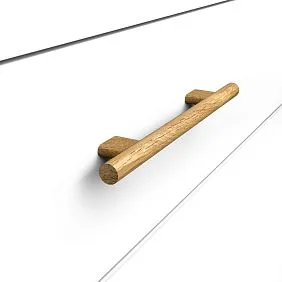

Handle-hook (L-shaped)
Furniture hinge handleThe most common and universal type. The L-shaped form allows comfortably gripping the handle with the whole palm, applying force to open heavy doors or drawers. Hooks vary in length (from 64 mm to 400 mm and more), profile thickness, and cross-section shape (round, square, rectangular, decorative).
Advantages of hooks: ease of use, secure mounting, universal application (kitchens, cabinets, chests), wide range of designs. Disadvantages: protrude from the surface (can catch clothing), require sufficient space for installation.
Hooks are suitable for kitchen fronts, wardrobe cabinets, chests, and drawers — anywhere a reliable and convenient handle for frequent use is needed. Hook length is chosen proportionally to the front size: for narrow drawers (40-60 cm width) — hooks 96-128 mm, for medium fronts (60-90 cm) — 160-192 mm, for wide doors (over 90 cm) — 256-320 mm and more.
Get Consultation
Handle-button (knob)
Furniture knob handleA compact type, not protruding far from the surface. Knobs come in round, oval, square, multi-faceted, and decorative shapes. Diameter from 20 to 60 mm, protrusion height from 20 to 40 mm.
Advantages of knobs: compactness, variety of designs, suitable for small fronts, create a classic or vintage style. Disadvantages: less convenient for heavy doors (grip with fingers, not the whole palm), may require more force to open.
Knobs are ideal for small drawers in chests, bathroom cabinets, children’s furniture, and vintage interiors. They add decorative appeal, creating focal points, especially if knobs are contrasting in color or material.
Horizontal handle-hook
A horizontal hook — an elongated handle running along the entire front or a significant part of it. Length can reach 1000 mm and more. Creates a modern minimalist look, emphasizing horizontal lines.
Advantages: modern design, convenience (can open from any point), visually expands the front. Disadvantages: expensive (long handles cost more than short ones), require precise installation, protrude from the surface.
Horizontal hooks are popular in modern kitchens, minimalist wardrobes, and office furniture. They create graphic effects, emphasize geometry, and support the concept of clean lines.
Handle-recessed (inset)
The recessed handle is embedded into the front, creating a recess into which fingers can grip. Does not protrude from the surface, creates a minimalist look, popular in modern interiors.
Advantages: does not protrude (cannot catch), minimalist design, suitable for narrow spaces. Disadvantages: requires routing the front (cannot install on ready-made furniture without modification), less convenient for heavy doors, harder to clean (dust accumulates in the recess).
Recessed handles are used in modern kitchens, wardrobes, and office furniture, where minimalism and clean lines are a priority.
Hidden handle (push-to-open)
Hidden hardware has no visible handle. The door or drawer opens by pressing — the push-to-open mechanism pushes the front out. Or the tip-on system is used, where a light press partially opens the door, after which it can be fully opened.
Advantages: absolute minimalism, smooth fronts without protrusions, modern design. Disadvantages: mechanisms may fail, require precise adjustment, not suitable for humid environments (mechanisms are sensitive to moisture), difficult to understand where exactly to press (require small recesses or markings).
Hidden handles are popular in high-tech interiors, minimalist kitchens, where the aesthetics of smooth surfaces are more important than utility.
Handle-profile (integrated)
The handle-profile is not a separate part, but a part of the facade structure. The top or side edge of the facade has a protrusion or recess that serves as a handle. It creates unity, modernity, and technological sophistication.
Advantages: integration (the handle is not a separate element), modern design, ease of gripping with the entire palm. Disadvantages: requires special facade manufacturing, cannot be replaced or modified without replacing the entire facade, limited design options.
Integrated handles are used in premium modern kitchens and designer furniture, where conceptual unity is important.
Materials for furniture handles: from wood to metal
The material of the handle affects tactile sensations, durability, style, and price. Each material has its own characteristics, advantages, and disadvantages.
Metal handles
Metal is the most common material for furniture handles. Different metals and their alloys create various effects.
Stainless steel — strong, durable, resistant to corrosion, scratches, and moisture. Ideal for kitchens and bathrooms.Matte furniture handlesStainless steel creates a modern, restrained look. Polished steel gives a mirror-like shine, while matte steel offers elegant restraint.
Brass — a noble golden-colored metal that patinas beautifully. Brass handles create a warm classic or vintage style. Polished brass shines like gold, matte brass has a restrained noble appearance, and patinated brass creates a vintage effect.
Bronze — an alloy of copper with other metals, with a warm brown-golden hue. Bronze handles create a classic or vintage style, especially with patina. More expensive than brass but nobler.
Aluminum — a lightweight metal that is easy to process, paint, and anodize. Aluminum handles can be any color — black, white, or colored. Lighter than steel but less strong.
Zinc alloy — an inexpensive material that easily casts into complex shapes. Can be coated with various finishes — chrome, nickel, paint. Less durable than steel or brass, but significantly cheaper.
Black matte metal — trend of 2026. BlackMatte furniture handlescreates graphic contrast and modernity. Black finish can be powder-coated, PVD (physical vapor deposition, very durable), or anodized.
Wooden handles
Wooden furniture handlecreates warmth, naturalness, and tactile pleasure. Wood feels pleasant to the touch, does not chill hands in winter, ages beautifully, acquiring patina.
Wood species vary in color, texture, and hardness. Oak — hard, strong, with pronounced texture, dark brown or light (depending on staining). Ash — light, with contrasting texture, strong. Walnut — dark brown with reddish tint, noble. Beech — pinkish, dense, uniform. Birch — light, inexpensive, easily stains.
Wood treatment affects appearance and durability. Oil penetrates wood, highlights texture, creates a matte surface pleasant to the touch. Wax creates a silk-like surface, protecting wood. Lacquer creates a protective film, can be matte, satin, or glossy. Stain changes color while preserving texture.
Wood + metal combinations combine the warmth of wood and the strength of metal. A wooden handle with metal ends or inserts creates an interesting contrast of textures and temperatures.buy wooden handlesWith metal accents — an excellent solution for eclectic or neoclassical interiors.
Styles of wooden handles: minimalist cylindrical or rectangular, carved with ornaments (classic, Provence), turned with decorative elements, with patina and aging effect (vintage).
Ceramic and porcelain handles
Ceramic knob handles create a classic, Provence, or shabby chic style. They are smooth and cool to the touch, can be painted, solid color, or patterned.
Advantages: decorative appeal, variety of designs, resistant to moisture, easy to clean. Disadvantages: fragile (can break on impact), cool to the touch, more expensive than mass-produced metal handles.
Ceramic handles are ideal for vintage furniture, Provence-style kitchens, children's furniture (vibrant painted knobs), bathrooms.
Glass and crystal handles
Glass handles create shine, light play, luxury. Crystal handles with facets refract light, creating rainbow reflections.
Advantages: decorative appeal, shine, luxury, variety of shapes and colors (transparent, colored, with effects). Disadvantages: fragile, expensive, cool to the touch, require frequent cleaning (fingerprints are visible).
Glass handles are used for chests in bedrooms, dressing tables, decorative furniture, where luxury and shine are important.
Leather and textile
Leather handles create softness, tactile pleasure, originality. These are loop handles made of leather straps, leather-covered rivets, leather knobs.
Advantages: softness, originality, warmth to the touch, suitable for Scandinavian and industrial styles. Disadvantages: less durable (leather wears out), require maintenance, more expensive than mass-market options.
Leather handles are used in designer furniture, Scandinavian interiors, eclectic spaces.
Furniture handle styles: from classic to modern
The handle style should match the furniture and interior style. Dissonance creates visual discomfort, harmony — cohesion.
Classic style
Classic handles — carved shapes, floral ornaments, noble materials. Brass or bronze with patina,Wooden handleswith engraving, ceramic knobs with painted decoration.
Shapes: loop handles with curved ends, oval knobs, drop-shaped handles, faucet-shaped handles with decoration. Often symmetrical, with clear proportions, evoking historical styles — Empire, Baroque, Classicism.
Modern minimalism
Minimalist handles are concise, geometric, functional. Straight lines, simple shapes, no decoration. Materials:Matte metal, stainless steel, black metal, aluminum.
Shapes: straight D-shaped loops with square cross-section, cylindrical handles, flat profiles, hidden handles. Often long (200–400 mm), emphasizing horizontality.
Scandinavian style
Scandinavian handles combine minimalism with the warmth of natural materials.Wooden handlesMade from light-colored woods (ash, birch, whitewashed oak), simple shapes, leather loops.
Shapes: cylindrical wooden handles, leather strap loops, simple metal loops with wooden inserts. Functionality and naturalness are more important than decorative appeal.
Industrial style
Industrial handles are rough, technological, often made of black metal. Matte or slightly textured finish, simple geometric shapes, sometimes with an aged effect.
Shapes: tubular handles, square black metal loops, leather loops on metal rivets, handles made from plumbing pipes (DIY option).
Vintage and retro styles
Vintage handles create a sense of history, nostalgia. Brass or bronze with patina,Wooden handleswith an aged effect, ceramic painted knobs.
Shapes: varied, depending on the era — handles from the 1920s–30s (Art Deco geometry), 1950s–60s (streamlined shapes, bright colors), 1970s (brass, wood, macramé).
Eclecticism
Eclectic interiors mix different styles, and handles can vary on different furniture pieces. The key is to have a unifying thread (color, material, scale) tying them together.
You can use different vintage handles on one dresser, unified by a common patina. Or combine wooden and metal handles if they have similar proportions and stylistic harmony.
Choosing handles for the kitchen: practicality and style
The kitchen is a space with high load on furniture.Furniture Handles for CabinetsKitchen handles must be strong, comfortable, and resistant to moisture, grease, and frequent cleaning.
Materials for the kitchen
Stainless steel — ideal choice. Doesn’t rust, doesn’t fear moisture, easy to clean, durable.Matte handlesStainless steel hides fingerprints better than polished surfaces.
Aluminum with powder coating — lightweight, durable, available in any color. Black matte aluminum handles — trend for modern kitchens in 2026.
Brass and bronze — suitable for classic kitchens. Require periodic cleaning from oxidation and grease. Patinated handles hide dirt better than polished ones.
Wood — requires protective coating (lacquer or wax-based oil).Wooden handles for the kitchenCreate warmth but require more care. Lacquered wooden handles are more practical than oil-based ones.
Ceramic — suitable for Provence or country-style kitchens. Easy to clean, moisture-resistant, but fragile.
Kitchen handles
Hooks — the most practical option for kitchens. Convenient to open even with wet or greasy hands, reliable mounting withstands frequent use. Length 128–192 mm is optimal for standard kitchen fronts.
Knobs — suitable for small drawers (for cutlery, spices). Less convenient for large cabinet doors.
Inset handles — popular in minimalist kitchens. Do not protrude, easy to clean (no protruding parts where dirt can accumulate). But require cabinet front routing.
Long horizontal hooks — trend for modern kitchens. A hook 300–600 mm long runs along the entire front, creating a graphic and convenient look.
Colors for the kitchen
Matte black — universal, stylish, hides fingerprints. Suitable for white, gray, or wooden fronts.
Stainless steel (matte or polished) — classic for modern kitchens. Coordinates well with stainless steel appliances.
Brass or gold — for classic or glamorous kitchens. Creates luxury and warmth.
White or gray — for Scandinavian or minimalist kitchens. Handles blend in with or contrast against fronts.
Colored — bright handles (blue, green, red) create accents, suitable for eclectic or retro kitchens.
Handle placement on the kitchen
On upper cabinets, handles are often mounted at the bottom (pulling down from the lower edge of the door is more convenient). On lower cabinets — at the top (pulling up from the upper edge of the door is more convenient).
On drawers, handles are mounted vertically at the center, horizontally — centered or slightly offset from center (two handles on wide drawers).
Symmetry is important — all handles should be at the same height and same distance from cabinet edges. This creates visual order.
Choosing handles for cabinets: between functionality and decor
Furniture Handles for CabinetsDiffer depending on cabinet type — wardrobe, bookcase, display case, buffet.
Wardrobe cabinets
Functionality — priority. Handles must be comfortable, durable, withstand frequent opening. Hooks 160–256 mm long are optimal — easy to grip with the whole palm, reliable mounting.
Materials: metal (stainless steel, aluminum, brass), wood (with protective coating). Avoid fragile materials (glass, ceramic) — wardrobe cabinets experience high load.
Style: depends on the bedroom interior. Minimalist black hooks for modern interiors. Brass or wooden — for classic. Leather hinges — for Scandinavian.
Bookcases and display cases
Decorativeness is more important than functionality — bookcases are opened less frequently. You can use elegant knobs, carved handles, glass or ceramic.
Materials: brass or bronze with patina for classic libraries, glass or crystal for display cabinets with tableware, wood with carving for study rooms.
Style: often classic or vintage. Carved brass handles, ceramic knobs with painted decoration,Wooden handleswith patina create the feeling of a library or study with history.
Buffets and sideboards
Combination of functionality and decorativeness. Upper doors (often with glass) may have decorative knobs. Lower doors and drawers — functional handles.
Materials: brass, bronze, wood, ceramic — depending on the buffet style. For classic buffets — carved brass handles. For vintage — ceramic knobs or patinated bronze.
Completeness: buffets often have handles from one set — handles for drawers and knobs for doors, executed in one style and material.
Choosing handles for chests of drawers: details that create character
A chest of drawers is a piece of furniture where handles are especially noticeable. Many drawers create a repeating pattern of handles, which becomes a decorative element.
Quantity and placement
One drawer — one or two handles? Narrow drawers (up to 60 cm) usually have one handle centered. Wide (over 60 cm) — two handles, symmetrically placed from the center.
Vertical alignment — all handles must be strictly aligned vertically (one above the other), creating visual order.
Horizontal alignment — at the same distance from the top edge of the drawer front (usually centered vertically).
Types of handles for chests of drawers
Knobs — classic choice for chests of drawers. Create a point pattern, decorative. Size 30-40 mm is optimal — large enough to grip comfortably, but not bulky.
Small handles (64-96 mm) — for modern chests of drawers. More functional than knobs, but retain elegance.
Long handles (128-192 mm) — for wide drawers of modern chests of drawers. Create horizontal lines, modernity.
Combination — upper small drawers with knobs, lower large drawers with handles. Creates variety while maintaining stylistic unity.
Materials and styles for bedroom chests of drawers
Classic bedrooms: brass or bronze handles with patina,Wooden handleswith engraving, ceramic knobs with painted decoration.
Modern bedrooms: matte metal handles (black, gray, steel), minimalist knobs, leather hinges.
Scandinavian bedrooms:Wooden handlesfrom light woods, simple forms, leather hinges, white or gray metal handles.
Vintage bedrooms: handles with patina (brass, bronze, wood), ceramic painted knobs, glass handles.
Children's chests of drawers
Safety — priority. Avoid handles with sharp edges, fragile (glass), too small (child may not grip).
Vibrancy: colorful ceramic knobs, brightly colored wooden handles create joy, playfulness.
Durability: secure mounting, strong materials — children often pull handles, hang on them.
Size: knobs 35-45 mm or handles 96-128 mm — comfortable size for a child’s hand.
Sizes and center-to-center spacing: technical aspects
When selecting handles, it is important to understand technical parameters — dimensions, center-to-center distance, mounting method.
Center-to-center distance
For handle brackets, the main parameter is the center-to-center distance (distance between mounting hole centers). Standard values: 32, 64, 96, 128, 160, 192, 256, 320, 416, 512 mm. Non-standard: 76, 144, 224 mm, etc.
Important: the new handle must have the same center-to-center distance as the old one (if replacing), otherwise you will need to drill new holes or use adapters.
For knobs, center-to-center distance does not apply — this is single-point mounting.
Handle length and projection
Handle length — total length from edge to edge. Usually 50–70 mm longer than center-to-center distance (for a 128 mm center-to-center bracket, length is about 180–200 mm).
Projection (projection) — how far the handle protrudes from the facade. Usually 25–40 mm. A larger projection is easier to grip, but increases the risk of snagging clothing. A smaller projection is more compact, but may be less convenient.
Facade thickness
The length of the mounting screw depends on the facade thickness. Standard facades are 16–19 mm. Heavy facades may be 22–25 mm. Ensure the screw is long enough, but not too long (should not protrude from the back, interfering with the contents of the drawer).
Number of mounting points
Single-point (knobs) — one screw in the center. Easier to install, but less reliable for heavy doors.
Two-point (brackets) — two screws spaced apart. More reliable, withstands greater loads.
Multi-point — long handles (over 300 mm) may have 3–4 mounting points for added reliability.
Colors and finishes: from polished chrome to matte black
The finish of the handle affects appearance, tactile feel, durability, and maintenance.
Polished chrome
Mirror-like shine, cool silver color. Pros: bright, reflects light, visually expands space. Cons: fingerprints and scratches are visible, requires frequent cleaning. Suitable for glamorous, classic, and art deco interiors.
Matte chrome (satin)
Subdued shine, soft silver color. Pros: fingerprints and scratches are less visible, elegant look. Cons: may darken from oxidation. Universal, suitable for most styles.
Polished brass
Bright golden shine, warm color. Pros: luxury, warmth, classic look. Cons: requires regular polishing (oxidizes, darkens), fingerprints are visible. Suitable for classic, glamorous, and art deco interiors.
Matte brass (satin)
Muted golden color, soft shine. Pros: elegance, less visible fingerprints and oxidation. Cons: more expensive than regular brass. Suitable for neoclassical and eclectic styles.
Patina brass
Golden-brown with greenish or brown discoloration. Pros: vintage look, elegance, hides dirt. Cons: not everyone likes the uneven color. Suitable for vintage, classic, and eclectic interiors.
Matte black (powder coating)
Deep black without shine. Pros: stylish, modern, universal, hides fingerprints. Cons: may scratch (depends on coating quality). Trend for 2026, suitable for modern, industrial, and Scandinavian interiors.
PVD coating (black, gold, bronze)
Physical vapor deposition — very durable coating. Pros: wear-resistant, resistant to scratches and corrosion, long-lasting. Cons: expensive. Premium choice for kitchens and bathrooms.
Anodized aluminum
Colored coating on aluminum (black, gray, gold, colored). Pros: durable, does not peel, lightweight. Cons: limited shape options (aluminum is softer than steel). Suitable for modern interiors.
Powder coating
Any colors — white, gray, colored. Pros: variety of colors, matte surface, affordable price. Cons: may scratch or peel (depends on quality). Suitable for eclectic, retro, Scandinavian interiors.
Furniture handle trends for 2026
Furniture handle design is evolving. Here are the main trends for 2026:
Matte black metal
BlackMatte handlesdominate modern interiors. They are graphic, universal, create contrast on light facades, elegance on dark ones.
Warm metals
Brass, bronze, copper — warm metals are making a comeback, often with matte or patinated finishes. They add warmth, elegance, vintage charm.
Long horizontal handles
Handles 300–600 mm long, running along the entire facade, create graphic appeal and modernity. They emphasize horizontal lines and simplify design.
Material combinations
Wood + metal, leather + metal, stone + metal — combinations create richness of textures and individuality.Wooden handles with metal insertscombine warmth and durability.
Minimalism and hidden handles
The pursuit of clean surfaces continues. Built-in handles, hidden push-to-open systems, integrated profiles create minimalist facades.
Vintage and patina
Return to items with history. Handles with patina, aged effect, vintage shapes create character, individuality, and rejection of mass production.
Natural materials
Wooden handlesleather hinges, ceramic knobs — natural materials create tactile pleasure, eco-friendliness, and connection to nature.
Asymmetry and uniqueness
Abandoning identical handles on all facades. Eclectic approach — different handles unified by a common style — create individuality.
Installing furniture handles: tips and hacks
Installing handles seems simple, but there are nuances that ensure a neat result.
Drill hole marking
Accuracy is critical — poorly installed handles ruin the furniture’s appearance. Use a template for marking (often included with handles) or make your own from cardboard.
Symmetry — on two-door cabinets, handles must be mirror-symmetrical. On multi-drawer units — strictly along the vertical axis.
Height — determine the optimal height for each facade type and stick to it.
Drilling
Drill bit diameter — usually 4–5 mm for handle mounting screws. Check the handle instructions.
Carefully drill from the front side of the facade slowly to avoid chipping. On the back side, place a wooden backing to prevent material cracking.
Depth — drill to a depth sufficient for the screw, but not through (if the facade is thin).
Fastening
Screws — use screws supplied with handles. If others are needed (thicker facade), purchase quality ones.
Do not overtighten — tighten screws until snug, but not excessively, to avoid damaging the threads or facade.
Washers — sometimes useful for load distribution, especially on thin facades.
Handle Replacement
When replacing handles on existing furniture:
Same center-to-center distance — the new handle must have the same center-to-center distance to use existing holes.
Larger size — if the new handle is larger than the old one, it may cover old holes and wear marks.
Adapters — if the center-to-center distance does not match, use adapter plates that cover old holes.
Where to buy furniture handles: online and offline
Buy kitchen handlesAvailable in various places, each has its own advantages and disadvantages.
Specialized hardware stores
Pros: wide selection, expert consultation, opportunity to feel and assess quality. Cons: often more expensive than online stores, location-limited.
Construction hypermarkets
Pros: accessibility (many branches), can purchase immediately when buying furniture/materials. Cons: limited selection (mostly mass-produced models), average prices.
Online stores
Pros: huge variety, often cheaper than offline, convenience (home delivery), ability to compare prices. Cons: cannot touch (tactile feel is important for handles), risk of photo vs. reality mismatch, return difficulties.
Manufacturers and workshops
STAVROS offersWooden handles made by handPros: uniqueness, quality, possibility to order custom sizes and designs. Cons: more expensive than mass-market options, longer production time.
Thrift stores and antique shops
For vintage handles. Pros: uniqueness, authenticity, character. Cons: limited selection, often requires restoration, hard to find matching sets.
Care for furniture handles
Proper care extends the life of handles and preserves their beauty.
Metal handles
Regular cleaning — wipe with a damp cloth, then dry. Remove grease, dirt, fingerprints.
Polishing — periodically polish brass and chrome with special agents to restore shine.
Avoid abrasives — do not use abrasive sponges or powders — they scratch the finish.
Moisture protection — wipe water, especially from brass (it oxidizes).
Wooden handles
Dry cleaning — wipe with dry or slightly damp cloth. Avoid excess water (wood may swell).
Coating refresh — every 1-2 years, refresh with oil or wax. Clean the handle, apply a thin layer, wipe off excess.
Avoid chemicals — aggressive cleaners will damage wood and finish.
Ceramic and glass handles
Gentle cleaning — wipe with a damp cloth and mild detergent. Avoid impacts (fragile).
Mounting — periodically check screw tightness (ceramic may crack from over-tightening or loosen over time).
Conclusion: choose handles that will enhance your interior with STAVROS
Furniture Handles— these are not just functional hardware, but jewelry details that create the character of the interior, add comfort, express individuality. From minimalistbracketsto luxurious designerbuttons, from classicwooden handlesto technologicalmatte metallic— the choice is vast, and the right decision will transform your furniture.
Company STAVROS specializes in manufacturingwooden furniture handlesof premium quality. We use solid oak, walnut, ash, beech — species that are visually stunning, tactilely pleasant, and durable. Eachhandleis handmade by our craftsmen, meticulously processed with attention to detail, and undergoes quality control.
Wooden handlesSTAVROS are available in various styles — minimalist cylindrical for modern interiors, carved with ornaments for classic, precisely shaped with decorative elements for neoclassic, with patina and aging effect for vintage. We offer combined wooden + brass handles, uniting the warmth of nature and the nobility of metal.
buy wooden handlesHandles from STAVROS mean investing in quality that will last for decades. Wood does not lose its beauty over time — on the contrary, it develops patina and becomes more noble. Our handles are coated with natural oil or wax, preserving tactile sensation, or lacquer for maximum protection in kitchens.
We offer custom manufacturing according to your sketches and dimensions. Needhandles for cabinetshandles of a certain style? Want uniquedrawers handleswith carving? Looking forkitchen handlesmade of light wood with protective coating? We will create them, bringing your idea to life in wood.
In the STAVROS catalog you will findfurniture handle-skobs, buttons, combined variants of various sizes, shapes, styles. We offer standard center-to-center distances (96, 128, 160, 192 mm) and can manufacture non-standard ones for your project.
Buy kitchen handlesfrom STAVROS can be delivered throughout Russia. We carefully package each item, ensuring its safety during transport. We offer consultation on selection, assistance in determining required sizes and styles, and recommendations for installation and care.
Create an interior where every detail matters. Where touching afurniture handle— is a tactile pleasure, where quality is felt in every element, where individuality is expressed through details. Choose quality, choose naturalness, choose STAVROS — and your furniture will acquire a character that will delight you and your loved ones for years.