Article Contents:
- Furniture Legs as an Architectural Element: History and Evolution
- Classification of Furniture Legs: Typology of Forms and Purposes
- By Purpose: From Tables to Cabinets
- By Profile Shape: Geometry and Stylistics
- By Height: From Miniature to Monumental
- By Construction: Solid and Laminated
- Wood Species for Furniture Legs: Character and Purpose
- Oak: the standard of strength and nobility
- Beech: Density and Versatility
- Ash: Contrast and Modernity
- Walnut: Luxury and Exclusivity
- Exotic Species: Exclusivity and Expression
- Styles of Furniture Legs: From Classic to Modern
- Classic Styles: From Baroque to Empire
- Historical Styles of the 19th Century: Eclecticism and Romanticism
- 20th Century Modernism: Function and Form
- Contemporary Styles: Minimalism and Neoclassicism
- Technical Aspects of Choosing Furniture Legs
- Load Calculation and Number of Supports
- Methods of Attaching Legs to the Body
- Leg Protection and Height Adjustment
- Where to Buy Furniture Legs: Supplier Selection Strategy
- Construction Warehouses: Mass Production Without Quality
- Chinese Marketplaces: A Quality Lottery
- Private Carpentry Workshops: Individuality and Unpredictability
- Specialized Manufacturers: Systematic Approach and Guarantees
- Furniture Leg Trends 2026
- The Return of Massive Forms
- Combined Materials: Wood and Metal
- Colored Legs: From Pastel to Graphite
- Environmental Awareness: FSC Certification
- Hand Carving: The Return of Craftsmanship
- Why STAVROS is the Choice of Professionals

A furniture leg is more than just a utilitarian component supporting the weight of a structure. It is a key style-defining element that determines the character of the entire piece, its belonging to an era, an aesthetic direction, and a price category. The shape, height, profile, carving, and wood species determine whether a sofa will look airy and modern or massive and classic, whether a table will become an elegant accent or a solid centerpiece of a dining area, and whether a chest of drawers will acquire lightness or solidity. In 2026, as the furniture industry experiences another wave of returning to natural materials and artisanal craftsmanship, the question "wooden legs where to buy" sounds not like a routine task of searching for components, but as a strategic choice among hundreds of models, dozens of styles, and numerous manufacturers with varying levels of quality and service.
The market for furniture legs has undergone a fundamental transformation in recent years. If previously the assortment was limited to a few standard models made of pine at construction warehouses, today professional furniture makers and designers have access to thousands of options: from miniature, elegant legs 50 millimeters high for coffee tables to monumental supports 700 millimeters high for consoles and bar counters, from simple cylindrical forms for minimalist furniture to richly ornamented carved legs for classic suites. This is why queries for "where to buy furniture hardware", including high-quality wooden legs, are increasingly heard from professionals who understand: in furniture, there are no small details, and it is often the legs that become the element that turns a good piece into an outstanding one, a standard piece into an author's piece, a mass-produced piece into an exclusive one.


The Furniture Leg as an Architectural Element: History and Evolution
The furniture leg has a centuries-old history, traceable from ancient Egyptian thrones with legs shaped like animal paws to the minimalist metal supports of the Bauhaus. Each era created its canonical forms: the turned baluster-like legs of the Renaissance with their complex profiles, the curved cabriole legs of Rococo imitating the curve of a swan's neck, the straight conical legs of the Empire style reflecting the geometric rigor of the Napoleonic era, the bent legs of Art Nouveau with their flowing plant forms. In the 20th century, industrialization standardized forms, making the leg technological and mass-produced. The 21st century restores the leg's status as a decorative element, where artisanal craftsmanship meets precision processing technologies.
A modern solid wood furniture leg is the product of a complex production cycle where the wood undergoes many stages of transformation. Raw material selection excludes blanks with unacceptable defects: through knots, cracks, rot, blue stain, wormholes. Chamber drying brings the moisture content to 8–10%, which is the gold standard for interior products: at this moisture content, the wood is stable, does not shrink, crack, or warp. Mechanical processing includes rough turning to give a basic shape, precision finish turning to form the final profile, milling of decorative elements, hand carving for exclusive models, and multi-stage sanding to achieve tactile perfection.
Finishing determines the appearance and protective properties of the leg. Unpainted legs retain the natural color and texture of the wood, giving the furniture maker or designer complete freedom in choosing the final finish for a specific project. Tinted legs are stained with pigmented stains or oils, allowing for any shade—from light Scandinavian to dark wenge—while keeping the wood grain visible. Legs painted with enamel are coated with opaque paints that hide the grain, which is relevant for colored furniture in modern and neoclassical interiors. Patinated legs undergo artificial aging, where recesses are darkened and protruding parts retain a natural or lightened tone, creating the effect of antique furniture.




Classification of Furniture Legs: Typology of Forms and Purposes
The variety of furniture legs is so great that it requires systematization according to several criteria simultaneously.
Our factory also produces:


By Purpose: From Tables to Cabinets
Legs for tables— the most extensive category, including supports for coffee tables 150–400 millimeters high, dining tables 710–750 millimeters high, console tables 750–900 millimeters high, bar counters 1050–1100 millimeters high. Table legs must provide maximum stability with minimal visual weight: a table is perceived as light when the legs are thin and elegant, but the structure must withstand significant loads without wobbling or deformation.
Legs for upholstered furniture—sofas, armchairs, benches, ottomans—have a specific feature: they lift the furniture 50–150 millimeters off the floor, providing ventilation for the filling and making cleaning under the furniture easier. Low legs create an effect of squatness, visual weightiness, which is relevant for massive sofas in classic interiors. High legs add lightness, airiness to the furniture, visually free up space, which is valued in modern minimalist interiors and Scandinavian style.
Legs for case furniture—cabinets, chests of drawers, sideboards, buffets—serve not so much a structural as a decorative function. Case furniture is stable enough on its own due to the massiveness of the construction, and legs add elegance to it, visually separate the massive case from the floor, and create a sense of lightness. Carved legs on classic chests of drawers and buffets turn utilitarian furniture into decorative objects worthy of being displayed.
Get Consultation
By Profile Shape: Geometry and Stylistics
Straight cylindrical legs—the most concise form, ideal for minimalist furniture where geometric purity without visual noise is important. Diameter varies from 20 to 100 millimeters depending on the size of the furniture and loads. The cylinder can be perfectly even along its entire height or have a slight taper towards the bottom, which adds dynamics and visual stability.
Conical legs taper from the upper cross-section to the lower one, creating a sense of lightness and upward aspiration. The conical shape is a canon of mid-20th century Scandinavian design, experiencing another wave of popularity today. The angle of taper determines visual perception: a slight taper creates elegance, a strong taper adds drama.
Turned legs with profiled elements—this is the classic of furniture craftsmanship, where the alternation of thickenings and narrowings, curves and beads, balusters and balls creates visual complexity and decorativeness. Turned profiles can be simple with two or three elements for restrained classicism and complex with a dozen elements for Baroque opulence. Each era developed its canonical profiles for turned legs: Renaissance balusters, Baroque twisted columns, Rococo with asymmetrical curves, Classicism with clear geometry of flutes.
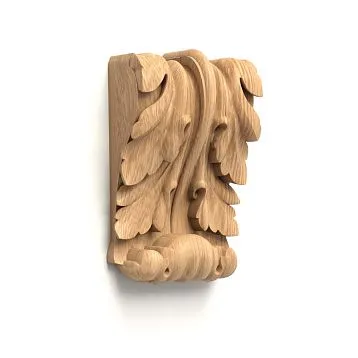
Carved legs with ornamental carving—the highest manifestation of furniture art, where wood turns into sculpture. Carving can be plant-based with acanthus leaves, grapevines, floral rosettes, or zoomorphic with images of lion paws, griffins, chimeras. Carved legs are made using a combined method: the basic shape is turned on a machine, decorative elements are carved by hand by a master carver, making each leg unique.
Square and rectangular legs with clear edges create graphic quality, geometric rigor, relevant in modern and loft interiors. The square cross-section can be constant along the entire height or taper towards the bottom. Edges can be sharp for emphasized geometricity or rounded for tactile comfort and safety.
Curved cabriole legs with an S-shaped curve—the hallmark of Rococo and Neo-Rococo, where dynamics, movement, and visual lightness despite massiveness are important. A curved leg creates the illusion that the furniture is about to move, is in a balance between stability and movement.
By Height: From Miniature to Monumental
Low legs 50–100 millimeters are used for minimal lifting of furniture off the floor, creating an effect of stability and solidity. Such legs are characteristic of wide low sofas in mid-century modern style, Japanese low tables, and massive case furniture.
Medium legs 150–400 millimeters—the most common range for coffee tables, armchairs, benches, and low chests of drawers. This height provides a balance between visual lightness and stability, allows for cleaning under the furniture, but does not create the feeling that the furniture is floating above the floor.
High legs 500–750 millimeters are used for dining and writing tables, high consoles, and bar stools. The height is determined by ergonomics: for comfortable sitting on a standard chair with a seat height of 450 millimeters, a tabletop at a height of 720–750 millimeters is required, which is achieved with legs about 710 millimeters, taking into account the thickness of the tabletop.
Monumental legs 800–2100 millimeters—these are supports for bar counters, columns for consoles, and decorative pillars. Such legs become full-fledged architectural elements organizing the vertical of space. High legs are often equipped with capitals and bases, referencing classical architectural orders.
By Construction: Solid and Laminated
Solid legs are turned from a single piece of wood, which guarantees maximum strength, no risk of delamination, and a uniform grain along the entire height. The disadvantage of solid legs is limitations in size and shape, dependence on the quality of the original blank, and the possibility of cracking if there are internal stresses in the wood.
Laminated legs are assembled from several lamellas glued along the length or width. Lamination allows creating legs of great height from short blanks, compensating for internal stresses in the wood, and selecting grain and color. The quality of lamination is critical: waterproof polyurethane or melamine adhesives are used, ensuring joint strength exceeding the strength of the wood itself. Lamination can be for transparent finishes, where lamellas are carefully matched by color and grain so that seams are minimally noticeable, and for opaque painting, where the aesthetics of seams are not critical.
Wood Species for Furniture Legs: Character and Purpose
Choosing a wood species is not a technical but an emotional and stylistic question that defines the character of furniture.
Oak: The Standard of Strength and Elegance
Oak is the king among furniture woods, a symbol of durability, reliability, and status.Oak legsThey possess exceptional hardness and strength: oak's density of 650–750 kilograms per cubic meter ensures the highest load-bearing capacity. Oak is resistant to mechanical damage, unafraid of moisture due to its high tannin content, and only becomes stronger and more beautiful over the years, acquiring a noble patina.
Oak's texture is expressive: large annual rings create a contrasting pattern, especially noticeable in radial cuts. Oak's color palette ranges from light honey in young wood to dark brown in mature wood. Toning allows for any shade: from bleached Scandinavian to almost black bog oak, imitating wood that has lain in water for centuries.
Oak legs are ideal for heavy, solid furniture: dining tables made from slabs, monumental cabinets, substantial beds. Oak emphasizes status, respectability, and connection to tradition. In classic interiors, oak carved legs with patination create the atmosphere of a family estate. In modern lofts, rough-brushed oak legs add brutality and authenticity.
Beech: Density and Versatility
Beech is a noble European species with a uniform fine-pored structure and high density of 650–680 kilograms per cubic meter. In strength, beech is not inferior to oak, but visually appears softer, warmer, and cozier due to its pinkish hue and fine-pored texture.Beech legsThey are excellently processed: beech is easily turned, milled, holds the finest carving details, and allows for the creation of the most complex profiles.
Beech's natural color is light pink with a slight peach tint, adding warmth to a space and creating a cozy atmosphere. Toning beech yields any shade: from light ash to dark walnut. Enamel painting on beech looks perfect due to its fine-pored structure: the paint lays evenly without revealing the texture, creating a smooth, flawless surface.
Beech legs are versatile in style: they work equally well in classic interiors due to their ability to hold intricate carvings, and in modern ones due to the possibility of creating clear geometric shapes. Beech is the optimal choice for serial furniture production thanks to the combination of high quality and reasonable price.
Ash: Contrast and Modernity
Ash is a species with a pronounced contrasting texture, where light and dark fibers create a dynamic pattern. Ash's density of 650–700 kilograms per cubic meter ensures high strength and elasticity. Ash is resistant to impact loads, not prone to cracking, bends well, allowing for the creation of curved legs for designer furniture.
Ash's light natural tone is ideal for modern minimalist and Scandinavian interiors, where conciseness, purity, and light are valued. The contrasting texture adds visual activity, making ash legs expressive even with simple geometry. Toning ash emphasizes the texture's contrast, creating striking patterns.
Walnut: Luxury and Exclusivity
Walnut is a premium species with a rich chocolate hue, noble texture, and medium density of 600–650 kilograms per cubic meter. Walnut processes excellently, holds the finest carving details, and polishes to a mirror shine. Walnut legs look expensive, status-worthy, and respectable, ideal for exclusive designer furniture, classic studies, and libraries, where an atmosphere of solidity and taste is important.
Walnut's color palette ranges from light brown to dark chocolate with purple and reddish hues. Walnut's texture is whimsical: wavy lines, burls, and swirls create unique patterns, turning each leg into a one-of-a-kind piece.
Exotic Species: Exclusivity and Expression
For exclusive projects, exotic species are used: mahogany with a reddish-brown hue and luxurious texture, teak with high natural oil content and exceptional moisture resistance, wenge with an almost black color and contrasting veins, rosewood with purple-brown tones and complex texture. Exotic legs turn furniture into a status object, demonstrating the owner's exclusivity and financial capabilities.
Styles of Furniture Legs: From Classic to Modern
The shape of a leg is one of the main markers of a piece of furniture's stylistic affiliation.
Classical styles: from Baroque to Empire
Baroque legs are about opulence, dynamism, and sculptural quality. Curved cabrioles with carved acanthus leaves, volutes, rocailles, ending in lion's paws or scrolls. A Baroque leg is a miniature sculpture, where every element is meticulously crafted, polished, often gilded or patinated. Baroque knows no restraint: the leg must demonstrate wealth, craftsmanship, and status.
Rococo inherited opulence from Baroque but added playfulness, lightness, and asymmetry. Rococo legs are curved even more strongly, the carving became finer and more elegant, and plant and shell motifs appeared. Rococo is aristocratic frivolity, where furniture must not only be comfortable but also entertain the eye with the elegance of its forms.
Classicism rejected Baroque excess in favor of geometric clarity and antique motifs. Classicism legs are straight or slightly tapered, decorated with fluting (vertical grooves), topped with Ionic or Corinthian order capitals. Classicism is noble restraint, where beauty is achieved not by an abundance of decoration but by the perfection of proportions.
Empire enhanced the monumentality of Classicism, adding military symbolism and Egyptian motifs. Empire legs are massive, often in the form of herms (human figures), griffins, sphinxes, columns with bronze overlays. Empire is imperial grandeur, where furniture must demonstrate power and victory.
Historical Styles of the 19th Century: Eclecticism and Romanticism
The 19th century mixed all previous styles into an eclectic cocktail. The Victorian era combined Gothic pointed forms, Renaissance balusters, and Baroque carving. Biedermeier created cozy bourgeois classicism with simple tapered legs made from light woods. Art Nouveau at the end of the century rejected historical quotes, creating flowing plant forms where the leg resembles a stem bending under the weight of a flower-like tabletop.
Modernism of the 20th Century: Function and Form
Bauhaus and Functionalism of the 1920s–30s radically simplified furniture, abandoning decoration in favor of pure geometry and material honesty. Modernist legs are straight cylinders or cones, often metal, where engineering logic is important, not ornamentation.
Mid-century modern of the 1950s–60s restored wood's status as a noble material, creating iconic forms: tapered legs of Scandinavian chairs and tables, curved legs of Eames chairs, turned legs of Danish chests of drawers. Mid-century is a balance between the functionality of modernism and the warm organic quality of wood.
Contemporary Styles: Minimalism and Neoclassicism
Modern minimalism employs concise geometric forms: straight cylinders, square prisms, light cones without decoration. A minimalist leg should be as inconspicuous as possible, dissolving, not drawing attention, allowing the tabletop or seat to dominate.
21st-century Neoclassicism revives classical forms but interprets them in a contemporary language: proportions are preserved, but detailing is simplified, carving becomes more concise, patina more restrained. A neoclassical leg is recognizably classical but does not look like a museum piece, existing organically in a modern context.
Scandinavian style cultivates light wood, simple conical forms, and an absence of superfluous decoration. Scandinavian legs represent functional beauty, where form follows function, and the natural wood grain serves as ornamentation.
Loft and industrial styles use rough-hewn wooden legs with emphasized texture, often combined with metal. A loft leg demonstrates material honesty, rejects polishing in favor of matte oil finishes, and retains knots and cracks as marks of authenticity.
Technical aspects of choosing furniture legs
Beyond aesthetics, the choice of legs is determined by technical parameters.
Load calculation and number of supports
Each leg has an allowable load, depending on wood species, cross-section, height, and construction. An oak leg with a 60-millimeter diameter can withstand a static vertical load of about 150–200 kilograms. For a dining table with a tabletop weight of 40 kilograms and a maximum load from dishes and elbow pressure of 100 kilograms, four legs are required with a total load-bearing capacity of at least 200 kilograms with a twofold safety factor, i.e., 400 kilograms, which is achieved by four legs of 100 kilograms each.
The number of legs is determined by the size and shape of the furniture. A rectangular table up to 1800 millimeters long stands stably on four corner legs. A long table of 2400+ millimeters requires additional central supports or massive under-table structures. A round table with a diameter of up to 1200 millimeters is stable on three or four legs; larger round tables require a central column support or six peripheral legs.
Methods of attaching legs to the body
Attaching a leg to furniture is a critical joint that determines the strength and durability of the structure. Dowel joinery uses wooden cylindrical dowels inserted into holes in the leg and the table's apron, glued with wood glue. Dowel joinery is strong but non-demountable: disassembly destroys the dowels.
Threaded connection with a metal insert uses a threaded bushing screwed into the leg, into which a bolt passing through the apron is screwed. A threaded connection is demountable, allowing for repeated assembly and disassembly, which is relevant for transportable furniture. The drawback is the risk of thread loosening over time, requiring periodic tightening.
Angular attachment using metal brackets, screwed to the leg and apron with self-tapping screws. A simple and reliable solution for case furniture where the aesthetics of the fastener are hidden inside the structure.
Leg protection and height adjustment
The lower part of the leg, in contact with the floor, is subjected to maximum loads and wear. Protective caps made of plastic, felt, or rubber prevent scratches on the floor covering, reduce noise when moving furniture, and compensate for minor floor irregularities. Metal caps are used for heavy furniture and commercial spaces with high traffic.
Adjustable supports with threaded screws allow leveling furniture on uneven floors, compensating for variations of up to 20–30 millimeters. Adjustable supports are critical for kitchen tables and work surfaces where perfect horizontality is important.
Where to buy furniture legs: supplier selection strategy
The market offers many channels for purchasing furniture legs, but not all of them provide the necessary quality, assortment, or service.
Construction warehouses: mass quantity without quality
Construction hypermarkets and warehouses offer a limited assortment of cheap legs made of pine or birch. Processing quality is low: the wood is under-dried with a moisture content of 15–20%, guaranteeing deformation after a few months of use. Processing is rough: tool marks, chips, burrs. Geometry is approximate: cross-section varies along the length, the axis is curved. For construction needs, such legs may be acceptable, but for producing quality furniture, they are categorically unsuitable.
Chinese marketplaces: a quality lottery
Online platforms offer cheap legs from China. It is impossible to determine wood quality, processing accuracy, or moisture content from a photo. Often, material arrives with defects: knots, cracks, warping, non-compliance with stated dimensions. The wood may not be the claimed species: ash instead of oak, birch instead of beech. Returns are problematic, delivery times stretch for months. The risk of saving turns into losses of time, money, and reputation.
Private carpentry workshops: individuality and unpredictability
Local carpenters can make legs according to an individual sketch, which is attractive for exclusive projects. But risks arise here: lack of guarantees, missed deadlines, dependence of quality on a specific craftsman, inability to replicate exactly the same legs if additional purchase is needed. For one-off author's pieces, this is acceptable; for serial production, it is not.
Specialized manufacturers: systematicity and guarantees
The optimal strategy is purchasing from a specialized manufacturer of furniture components with its own production facilities, years of experience, reputation, a systematized catalog, and technical support. This is precisely the approach implemented by the STAVROS architectural decor center.
wooden legs where to buywith a guarantee of wood quality, geometry, processing, with the ability to select compatible elements from the same wood species and finish, with technical support at all stages? From a manufacturer that controls the entire cycle from purchasing quality wood to the final packaging of the finished product.
STAVROS is 23 years in the market of wooden decor and furniture components, its own full-cycle Russian production, over 130 models of furniture legs of various styles, sizes, purposes, a reputation as a reliable partner among leading furniture factories, interior designers, and architects.
The advantages of purchasing from STAVROS are obvious to professionals. Full quality control at all stages: oak and beech wood undergoes kiln drying to a moisture content of 8–10%, guaranteeing geometric stability. Production takes place in a controlled microclimate at a temperature of 20–24°C and humidity of at least 40%, eliminating deformation during processing. Processing is performed on precision lathes and milling machines, ensuring perfect profile repeatability from batch to batch. Carved elements undergo additional manual finishing by master carvers, giving the products artistic expressiveness.
Systematic assortment means all products are designed with stylistic compatibility in mind.where to buy furniture hardware— legs, handles, overlays, cornices — so that they match in wood species, finish, carving style, forming complete sets? From a manufacturer that offers not a random set of disparate items, but thoughtful collections where each element complements the others.
Two quality levels — Standard and Prestige — allow choosing the optimal price-to-requirement ratio. Standard — high quality at a reasonable price for mass production, allowing for small healthy knots, minor color variations, which do not affect strength or durability. Prestige — premium quality with selection of top-category wood, perfect processing, uniform color, which is critical for exclusive author's furniture and prestigious interiors.
A large warehouse program ensures shipment of popular models from a single piece without waiting for production, which is critical for furniture makers working with custom orders. Custom manufacturing allows for legs of non-standard sizes, unique profiles, and exclusive carvings based on customer drawings. Finishing services include tinting in any shade according to RAL or NCS samples, varnishing with matte or glossy compounds, patination, and gilding, enabling the acquisition of legs ready for installation without additional processing.
Delivery across Russia and the CIS is organized so that even clients from remote regions receive products intact thanks to professional packaging: each leg is individually protected with shrink film, batches are placed in cardboard boxes with cushioning inserts, and large orders are palletized and wrapped in stretch film.
Technical support includes consultations on model selection for specific furniture types, calculation of the required number of supports considering loads, recommendations on fastening methods, and selection of accompanying hardware—inserts, corner brackets, dowels. STAVROS design engineers help design table or sofa structures, calculate optimal leg placement, and select cross-section and height considering ergonomics and aesthetics.
Furniture Leg Trends 2026
The Return of Massive Forms
After a decade of minimalist thin legs dominating, the pendulum has swung towards massiveness. Thick cylindrical legs with diameters of 80–100 millimeters and square supports with cross-sections of 70×70 millimeters create visual weight, solidity, and reliability. Massive legs are the antithesis of lightness and airiness, a manifesto of stability in an unstable world.
Combined Materials: Wood and Metal
The combination of wooden leg bodies with metal elements is relevant: brass tips, bronze rings, black steel caps. The combination of materials creates interesting tactile and visual contrasts, uniting the warmth of wood with the technological nature of metal, tradition with modernity.
Colored Legs: From Pastels to Graphite
Painted legs in saturated colors—from pastel mint and powder shades to deep emerald and graphite—turn a utilitarian element into a decorative accent. A colored leg can support the color scheme of an interior, create contrast with a neutral furniture body, or add playfulness to classic forms.
Environmental Awareness: FSC Certification
Demand is growing for wood with FSC certification, guaranteeing legal origin from sustainably managed forests. Environmentally conscious manufacturers and customers choose suppliers who can confirm the legality of the wood and avoid exotic species from threatened forests.
Hand Carving: The Return of Craftsmanship
Against the backdrop of mass production, the value of handcrafted work is growing. Carved legs with authorial carving, where each element is hand-carved by a master, become a sign of exclusivity, willingness to pay for uniqueness, and respect for craftsmanship. Hand carving turns a leg into a miniature sculpture, a collectible object.
Why STAVROS is the choice of professionals
When you ask yourself the questionwooden legs where to buyand want to receive not just components, but a guarantee of quality, supply stability, technical support, and professional service—the choice is obvious. STAVROS is an architectural decor center with a 23-year history, combining its own full-cycle Russian production, over 130 models of furniture legs of all styles and purposes, a culture of impeccable quality control, and a reputation earned through decades of honest work.
The company works exclusively with premium species—oak and beech from environmentally clean regions, undergoing strict incoming control. Chamber drying using optimal regimes brings moisture content to 8–10% without over-drying. Production is carried out on professional woodworking equipment, guaranteeing profile repeatability with accuracy to tenths of a millimeter. Final sanding gives the surface tactile perfection: STAVROS legs are pleasant to hold, impeccably smooth, without burrs or roughness.
Working with STAVROS is not just purchasing components, but a partnership where the manufacturer is interested in the success of your project and is ready to support at all stages: from furniture concept development to consultations on installation and finishing. In a world where the market is flooded with low-quality components of dubious origin, STAVROS remains an island of professionalism, wherewooden legsare created with respect for the material, for craftsmanship, for the client, with the understanding that furniture is made for decades and every detail must serve impeccably.