Article Contents:
- Why Choosing Furniture Legs Is More Important Than It Seems
- Materials: Titan Battle or Alliance of Possibilities
- Wood: classic, proven over centuries
- Metal: strength and modernity
- Plastic: The Underrated Fighter
- Acrylic: Transparent Elegance
- Types of Construction: From Simplicity to Complexity
- Straight Legs: Minimalism and Reliability
- Conical Legs: Elegance in Every Degree
- Turned Legs: Turning as Art
- Cabriole: Curve as Philosophy
- Platform Legs: Wide Base for Big Ambitions
- How to Properly Calculate Load
- Height: Every Centimeter Matters
- Methods of fastening: reliability above all
- Mounting with screws
- Mounting with bolts
- Mounting on Plate or Flange
- Insert mounting
- Floor protection: the small detail that saves parquet
- Styling: When Legs Are the Accent
- Classic: Carving, Turning, Nobility
- Modern: Curves and Asymmetry
- Loft: Metal, Simplicity, Brutality
- Scandi: Light Wood and Minimalism
- High-Tech: Chrome, Glass, Futurism
- How to Properly Place Legs
- Restoration and Replacement: Give Furniture a Second Life
- Care for Supports: Extending Lifespan
- Where to buy quality legs
- DIY Installation: Step-by-Step Guide
- Additional Elements: Not Just Legs
- Trends 2025: What’s Currently In Style
- Frequently Asked Questions
- Conclusion: a choice that matters

It may seem simple, but these unassuming details determine the stability, longevity, and even the aesthetics of the entire structure.Furniture supportThese are not just mounting elements, but the true foundation of your interior, working for you every second, distributing load, protecting the floor, and creating visual harmony.


Why choosing furniture legs is more important than it seems
Imagine: you bought a luxurious solid wood countertop, spent time selecting the perfect shade, but after half a year the table starts wobbling, and dents appear on the parquet. Is the countertop to blame? No. The problem lies in incorrectly chosen legs.Legs for tablesThey must match not only the style but also the weight of the structure, type of flooring, and usage conditions.
The modern market offers hundreds of options — from minimalist metal legs to intricately carved wooden masterpieces, from budget plastic solutions to exclusive acrylic models. How not to get lost in this variety? Let's examine it step by step.




Materials: battle of titans or alliance of possibilities
Our factory also produces:


Wood: classic, tested over centuries
Furniture legsMade from solid wood — this is a choice for those who value naturalness, warmth, and aristocracy. Oak, beech, ash — each species has its own character. Oak legs can withstand up to 300 kilograms per point, providing phenomenal load-bearing capacity. Beech legs are slightly softer, yet easier to process and paint.
WoodenLegs for chairsThey perfectly match classic interiors, country, Provence, and Scandinavian styles. They create a sense of coziness, add acoustic softness (wood slightly dampens sound), and look great both painted and in natural finish. However, wood requires careful handling: humidity, temperature fluctuations, mechanical damage — all of this can shorten its lifespan. Quality kiln-drying to 8–10% moisture and protective coating solve this problem.
If you value the aesthetics of carving, elegant curves, and the possibility of self-restoration,Buy furniture legsMade from wood — a sensible solution. Moreover, such legs easily fit into any concept — from strict minimalism to baroque luxury.
Get Consultation
Metal: strength and modernity
MetallicFurniture SupportsMade from metal — favorites of industrial, loft, and high-tech interiors. Steel, aluminum, brass — each metal has its advantages. Steel legs can withstand colossal loads — up to 500 kilograms and more, making them ideal for heavy tables, industrial furniture, and objects used under heavy loads.
Aluminum legs are lighter, yet strong and corrosion-resistant. They require minimal maintenance and can be powder-coated in any color. Chrome models look futuristic, matte ones — restrained and elegant, and patinated ones — as if they’ve weathered decades.
table legMade from metal ensures maximum stability even for tall furniture — bar stools, consoles, chests. Wide base and proper geometry guarantee the structure won’t tip over. Moreover, metal combines beautifully with other materials — glass, stone, wood — creating interesting visual contrasts.
Plastic: underestimated fighter
When it comes to plastic legs, many frown. Unnecessarily. ModernBuy legs for furnitureMade from high-strength ABS plastic or polypropylene can withstand up to 100 kilograms per leg, while remaining lightweight, moisture-resistant, and chemically resistant.
Plastic legs — a choice for office furniture, light shelves, chairs, stools, and compact tables. They don’t scratch the floor, don’t make noise when moved, and cost significantly less than alternatives. Moreover, technical polymers can mimic wood or metal textures, allowing for budget-friendly yet aesthetically pleasing solutions.
Of course, plastic has limitations: it’s unsuitable for heavy furniture, may lose color saturation over time under UV exposure, and requires additional stabilizers for stability. But for certain tasks — it’s an excellent option.
Acrylic: transparent elegance
AcrylicChair legsMade from acrylic — this is a find for those who want to visually lighten the space. Transparent legs create a floating effect, making furniture appear almost weightless. They fit perfectly into minimalist and modern interiors, adding a touch of futurism.
However, acrylic is a fussy material. It scratches, requires careful maintenance, and does not withstand high loads (usually up to 100 kilograms per leg). Yet visually — it’s a masterpiece.
Types of constructions: from simplicity to complexity
Straight legs: minimalism and reliability
Straight cylindrical or squarebuy furniture legs and supportsStraight legs — this is the genre’s classic. No frills, just function. Such models suit modern interiors where clean lines and absence of unnecessary details matter. They are installed vertically, ensuring maximum stability and even load distribution.
Conical legs: elegance in every degree
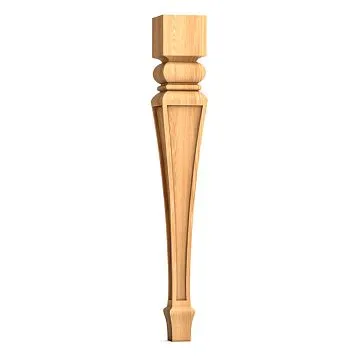
ConicalBuy chair legsConical legs — these are legs that narrow toward the bottom. They add dynamism, visually lighten and refine furniture. Popular in Scandinavian and retro interiors, they pair beautifully with soft furniture and compact tables.
Important nuance: the steeper the cone, the smaller the contact area. This means you must carefully calculate the load and avoid point pressure on the floor.
Turned (spindle) legs: carving as art
TurnedBuy chair legsTurned legs — this is true decorative spectacle. Grooves, balusters, twisted elements, carved patterns — all of this transforms an ordinary leg into a work of art. Such legs are characteristic of classic, Victorian, and baroque interiors.
However, behind the beauty lies complexity: turned elements require high precision in manufacturing, otherwise the furniture will be unstable. Moreover, carving collects dust and requires regular maintenance.
Cabriole: curve as philosophy
Buy chair legsCabriole — this is an S-shaped curve resembling an animal's leg. Classic of French furniture art, symbol of Rococo and Baroque. Such legs make furniture incredibly elegant, but require masterful craftsmanship and quality material.
Legs on a platform: wide base for big ambitions
Furniture Support MoscowOn a platform — these are massive bases that distribute weight over a large area. Ideal for heavy tables, cabinets, sofas. They provide unmatched stability and protect the floor from damage.
How to correctly calculate load
This is, perhaps, the most important question. An error in calculations may lead to deformation, cracks, and even structural failure. The formula is simple: divide the total weight of the furniture and its contents by the number of legs, and add a safety margin of 30–50%.
For example, for a dining table weighing 50 kilograms with four legs, the calculation looks like this: 50 kg / 4 = 12.5 kg per leg. Add safety margin: 12.5 × 1.5 = 18.75 kg. But don’t forget about dynamic load! If people lean on the table or place heavy dishes, the load increases dramatically. Therefore, for tables, it’s better to choose legs designed to withstand at least 50–70 kilograms each.
For sofas and beds, consider the weight of people, cushions, and mattresses. A three-seater sofa should support 300–400 kilograms total. If there are four legs, each should support at least 100 kilograms.
buy furniture legWith safety margin — this is an investment in longevity and safety.
Height: every centimeter matters
heightfurniture legHeight determines ergonomics and comfort. For a dining table, the standard is 72–75 centimeters from floor to tabletop. Subtract the thickness of the tabletop (usually 2–5 centimeters) to get the required leg height — 67–73 centimeters.
For a work desk, height may vary depending on the user’s height. The ideal formula: when seated, elbows should form a 90-degree angle, and wrists should rest on the tabletop without strain. This is usually 70–76 centimeters for adults.
Coffee tables are lower — 40–50 centimeters — to make it easy to pick up a cup while sitting on a sofa. Bar-height tables — 100–110 centimeters — require high stools or barstools.
Adjustablefurniture legs— a true solution for uneven floors. They compensate for height differences, prevent wobbling, and prevent structural loosening.
Methods of fastening: reliability above all
Mounting with screws
The most common method for woodenLegs for a stool to buyMounting plate is secured to the furniture base with screws. Important: drill pilot holes with a small drill bit to avoid splitting the wood. Screws should be tightened evenly, without overdoing it, otherwise the wood may crack.
Mounting with a bolt
buy legsLegs with a threaded rod — means getting a removable structure. A threaded hole is drilled into the furniture base, into which the leg is screwed. This method is convenient for transport and repair, but requires precision: the thread must be perfectly straight, otherwise the leg will be crooked.
For additional fixation, wood glue can be used, but then removability is lost.
Mounting on a plate or flange
Metal legs are often mounted via a flange — a flat plate with bolt or screw holes. This method ensures maximum strength and even load distribution. The flange can be round, square, or rectangular — the choice depends on the furniture design.
Insert mounting
Legs for coffee tablesSometimes installed in special sockets — recesses in the furniture base. The method is simple but less reliable: under heavy loads, the leg may pop out. Used in light constructions — chairs, stools, decorative tables.
Floor protection: small details that save parquet
Even idealfurniture legLegs can damage the floor surface if protection is not provided. Narrow legs concentrate weight on a small area, leaving dents on linoleum, parquet, or laminate. Solution — felt pads, silicone caps, rubber feet.
Felt is ideal for parquet and laminate: it is soft, doesn’t scratch, slightly absorbs shock, and mutes sound. Silicone is suitable for tiles and stone: it doesn’t slip and leaves no marks. Rubber is a universal option, but over time may leave dark marks on light floors.
For heavy furniture, it’s better to choose legs with a wide base or platform — they distribute weight over a larger area and minimize the risk of damage.
Stylistics: when legs are an accent
Classic: carving, turning, elegance
Classic interiors require appropriate legs.buy wooden balusters for the staircase— these are not only elements of staircases, but also a beautiful base for furniture legs. Turned, carved, with elegant curves and grooves, they turn an ordinary chair or table into a work of art.
Solid oak or beech wood legs, finished with varnish or patina, create a sense of luxury and tradition. They pair beautifully with fabric upholstery, bronze hardware, marble, and glass.
Modern: curves and asymmetry
Modern features smooth lines, natural forms, and the absence of angles.Moldings decorationS-shaped curves, plant stem imitations, asymmetrical forms — all of this is characteristic of this style.
Legs can be wooden, metal, or combined — the main thing is that they should look organic and natural.
Loft: metal, simplicity, brutality
Loft does not tolerate excess.Buy legsMade of black metal, with matte or rusted finish, straight or slightly angled — this is the ideal of industrial style. The simpler, the better. No carving, no ornaments — only function.
Metal legs are often combined with rough wood, concrete, brick, creating contrasting and expressive compositions.
Scandi: light wood and minimalism
Scandinavian style — comfort, naturalness, restraint.Table legsMade of light wood (beech, ash, pine), conical or straight shape, without excess — this is the hallmark of Scandi. They create a sense of lightness, do not overload space, and fit perfectly into minimalist interiors.
High-tech: chrome, glass, futurism
High-tech — shine, technology, innovation. ChromeBuy furniture legs for a 200-room hotel project — this is not an ordinary deal, but a partnership requiring a special approach.With a mirror surface, transparent acrylic legs, metal structures with lighting — all of this creates a futuristic atmosphere.
It is important that legs are perfectly smooth, without scratches or defects — in high-tech, every detail is visible.
How to properly place legs
The placement of legs affects the stability and appearance of furniture. The standard rule for rectangular and square tables — at the corners, with a small offset from the edge (usually 5–10 centimeters). This ensures symmetry and prevents tipping.
For round tables, legs are placed evenly around the circumference, usually three or four. It is important that the distance between them is equal, otherwise the table will be unstable.
For long tables (over 200 centimeters), it is recommended to add a central leg to prevent the tabletop from sagging under weight.
Legs for chestsUsually placed at the corners, but for heavy structures, additional legs can be added in the center.
Restoration and replacement: give furniture a second life
Old furniture does not always require disposal. Sometimes it is enough to replacelegs for furniture to buyand the item regains new life. This is especially relevant for vintage items: Soviet tables, chairs, chests often have sturdy frames but legs that have lost their appearance.
Replacing legs is a simple process, but requires attention. You need to accurately measure the old fittings, select new legs by height and style, carefully dismantle the old ones and install the new ones. If there are traces of old fittings left on the furniture, they can be spackled, sanded, and painted.
Restoration is not only economical, but also an opportunity to create a unique interior item that will reflect your taste and individuality.
Care for legs: extending their life
Woodenbuy furniture legs in MoscowRequire regular care. Wipe them with a damp cloth, avoid aggressive chemicals. Once a year, renew the protective coating — varnish or oil. If scratches appear, they can be sanded with fine sandpaper and repainted.
Metal legs are less fussy, but chrome may dull. Use special polishes to restore shine. Remove rust immediately, otherwise it will spread.
Plastic legs can simply be wiped with a soapy solution. Avoid abrasives to avoid scratching the surface.
Check fittings every six months. If self-tapping screws or bolts have loosened, tighten them. If the threads have stripped, replace the fittings.
Where to buy quality legs
The market for furniture hardware is huge, but quality varies. Chinese legs are cheap but often suffer from inaccurate dimensions and fragility. European ones are expensive but reliable. Russian manufacturers offer a balance of price and quality.
When choosing, pay attention to:
-
Material: natural wood is preferable to MDF, steel — plastic.
-
Processing: smooth surface, absence of chips, even threading.
-
Fasteners: the kit must include all necessary elements — screws, bolts, washers.
-
Warranties: serious manufacturers provide a warranty of at least one year.
Buy from verified suppliers, read reviews, compare prices. Don't hesitate to ask sellers questions — professionals are always ready to help.
Do-it-yourself installation: step-by-step instruction
InstallFurniture Supportsby yourself is no more difficult than assembling a constructor. You will need: a tape measure, pencil, drill, drill bits, screwdriver, level.
Step 1. Preparation
Turn the furniture upside down. Clean the surface of dust and dirt. If there were old supports, dismantle them.
Step 2. Marking
Measure and mark the locations for the legs. Use a tape measure and level to ensure all points are symmetrical and on the same line. For round tables, it’s convenient to use a compass or string to mark equal distances.
Step 3. Drilling guide holes
If attaching with screws, drill thin guide holes at marked points. The drill bit diameter should be slightly smaller than the screw diameter. This prevents splitting the wood.
If attaching with a bolt, drill a hole of the required diameter and depth. You can apply wood glue for additional fixation.
Step 4. Installing legs
Align the leg with the marking and secure with screws or screw into the thread. Tighten evenly, without tilting. Check that the leg stands strictly vertically.
Step 5. Final check
Turn the furniture over and place it on the floor. Check its stability. If the furniture wobbles, one of the legs is installed unevenly or has a different length. Use adjustment elements or shims to level it.
Done! You’ve just given your furniture a new life.
Additional elements: not only legs
Furniture structures are often supplemented with other elements that enhance functionality and decor.buy wooden table base— this is a frame that connects legs and serves as a base for the tabletop. It increases the rigidity of the structure and allows creating large tables without a central support.
Decorative brackets for shelves— perform the same function as legs, but are mounted to the wall. They support shelves, tabletops, consoles, adding visual lightness and relieving the floor.
— everything must correspond to the chosen era.— appliqués, outlets, moldings — are often used for decorating furniture, including legs. They give the item a finished look and luxury.
Wooden baluster— not only stair railings, but also an excellent base for making furniture supports. Precision shape, variety of profiles, paintability — all this makes balusters a universal material for creative experiments.
Trends 2025: what’s currently in style
Furniture fashion, like any other, is subject to trends. In 2025, the following directions are relevant:
-
Ecological: natural wood, minimal processing, natural textures.
-
Minimalism: simple shapes, absence of decoration, functionality.
-
Bold colors: black, dark blue, emerald legs become an interior accent.
-
Combined materials: wood + metal, acrylic + chrome, stone + steel.
-
Adjustable structures: ability to change height and tilt.
Follow trends, but don’t forget your own taste and comfort. Fashion passes, but comfort remains.
Frequently asked questions
How to choose the height of legs for a table?
Subtract the thickness of the tabletop from the desired overall table height. For dining tables, this is usually 67–73 cm, for work tables — 65–75, for coffee tables — 35–45.
What material is better for heavy furniture?
Steel or solid oak. Both materials withstand loads of 200–300 kg per support.
Can legs be installed on old furniture?
Yes, if the base is sturdy and undamaged. It’s important to correctly select fasteners and accurately mark the positions.
How to protect parquet from scratches?
Use felt pads or silicone caps. They soften contact and prevent damage.
Are adjustable legs needed?
If the floor is uneven or there’s a risk that the furniture will wobble, adjustable legs are an excellent solution. They allow compensation for height differences up to 2–3 cm.
How often should fasteners be checked?
At least every six months, especially for furniture that is frequently moved or subjected to heavy loads.
Can wooden legs be painted?
Yes, but first you need to sand the surface, apply primer, and only then paint or varnish. This ensures even coverage and durability.
Conclusion: a choice that matters
Furniture Legs and Supports— it’s not just hardware, but the foundation on which the entire interior rests. The right choice ensures stability, longevity, safety, and aesthetics. The wrong one leads to premature wear, floor damage, and disappointment.
Remember: quality legs serve for decades, are passed down through generations, and become part of your family’s history. Saving on hardware is saving on comfort.
Company STAVROS offers a wide rangeBuy legs for furnitureMade from solid oak, beech, and ash. Each item undergoes strict quality control, kiln drying, and precise processing. Dimensional deviation does not exceed 0.5 mm, ensuring ideal load distribution and longevity. The catalog features legs for tables, chairs, sofas, cabinets, side tables — any type of furniture will find its ideal support. STAVROS — it’s the traditions of cabinetmaking craftsmanship, modern technologies, and care for every detail of your interior.