Article Contents:
- Selection and Preparation of Wood Raw Material: Foundation of Quality
- Logging Stage: Science of Selection
- Primary Processing: Transforming Logs into Rough Sawn Lumber
- Wood Drying: Critical Stabilization Stage
- Kiln Drying: Controlled Process
- Conditioning: Final Stabilization
- Design Development: Where Beauty is Born
- Conceptual Stage: From Idea to Form
- 3D Modeling: Virtual Realization
- Engineering Development: Engineering Realization of the Idea
- Strength Calculations: Mathematics of Reliability
- Ergonomic Requirements: User Comfort
- Production Technology Preparation: Bridge Between Project and Implementation
- Development of Technological Cards
- Preparation of Fixtures and Tools
- Roughing Operations: Transforming Raw Material into Components
- Cutting Sheet Materials
- Processing Solid Wood
- Mechanical processing: forming structural elements
- Drilling Operations
- Milling Operations
- Edge Banding Processes: Protection and Aesthetics
- Finishing Technologies
- Edge finishing
- Assembly Technologies: Joining Parts into a Whole
- Preparation for Assembly
- Assembly Operations
- Finishing Processes: Beauty and Protection of the Surface
- Surface Preparation
- Application of coatings
- Drying and curing
- Quality Control: Guarantee of Perfection
- Incoming material inspection
- Operational Control
- Final Quality Control of Finished Products
- Logistics and Packaging: Preservation During Delivery
- Warehousing
- Packaging Technologies
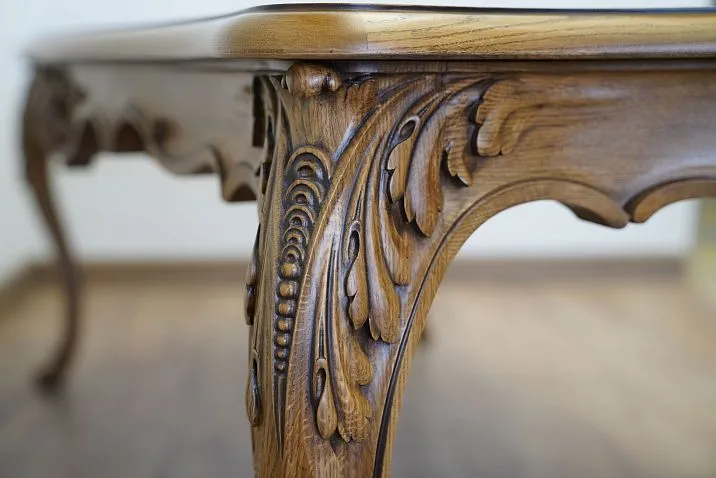
Understanding how furniture is made how furniture is madereveals a wonderful world where advanced technologies combine with centuries-old craftsmanship traditions, and scientific calculations intertwine with artistic vision.
The furniture industry is a complex multi-level system combining the forestry industry, chemical industry, machinery, and design arts. Modern enterprises resemble high-tech laboratories, where each process is controlled by computers, and product quality reaches unprecedented heights.


Selection and preparation of timber raw material: the foundation of quality
The journey of each piece of furniture begins in the forest, where specialists select trees based on numerous factors. The age of the wood, growing conditions, fiber structure — all of this affects the future characteristics of the finished product.




Logging stage: the science of selection
Professional timber buyers possess a unique ability to "read" wood as an open book. They assess the density of annual rings, presence of defects, direction of fibers, and many other parameters invisible to an untrained eye.
The time of felling critically affects the quality of timber. Winter logging is preferable, as during this period sap movement is minimal, reducing the likelihood of cracking and deformation during drying.
The geography of growth determines the structural characteristics of wood. Northern forests yield denser, more durable wood due to slow growth in harsh climatic conditions.
Our factory also produces:


Primary processing: transforming logs into lumber
Modern sawmills use laser scanning technology to scan logs for optimal cutting. Computer programs calculate the most efficient way to saw each log, maximizing the yield of quality timber.
Lumber sorting occurs based on multiple criteria: dimensions, surface quality, presence of knots and cracks. Each category of wood is intended for specific furniture components.
Batch marking ensures traceability of material throughout all production stages. Modern systems use RFID tags and barcodes for precise tracking of each board.
Get Consultation
Wood drying: critical stabilization stage
Drying is one of the most technologically complex processes in wood processing. The quality of drying determines the dimensional stability of finished furniture and the absence of deformation during use.
Kiln drying: controlled process
Modern drying kilns are high-tech installations with computer control. Sensors continuously monitor temperature, air humidity, and moisture content of the wood.
Drying regimes are individually developed for each wood species and thickness of blanks. Too rapid drying causes cracking, while slow drying leads to economic losses.
Moisture gradient within the wood is controlled by special algorithms that adjust process parameters in real time.
Conditioning: final stabilization
After primary drying, wood undergoes conditioning — equalizing moisture content throughout the entire volume of the blank. This process may take several days but ensures material stability.
Control of residual stresses is performed by cutting test samples. Deformation of the sample indicates the degree of internal stresses in the wood.
Final moisture control is performed using electronic moisture meters with accuracy to 0.1%. Standard moisture level for furniture production is 8-10%.
Design development: where beauty is born
Modern furniture design is a synthesis of artistic vision, ergonomic requirements, and technological capabilities. The process of creating a new model may take months of intensive work by a whole team of specialists.
Conceptual stage: from idea to form
Designers study trends in architecture, fashion industry, and art, finding inspiration in the most unexpected places. Analysis of consumer preferences and lifestyle of the target audience forms the technical specification.
Sketching remains the primary tool for creative exploration. Quick sketches allow fixing multiple variations and identifying the most promising directions.
Mood boards and collages help determine the color palette, textures, and overall style of the future product. These visual tools facilitate communication within the design team.
3D Modeling: Virtual Embodiment
Modern 3D modeling programs allow creating a photorealistic image of future furniture even before the first prototype is manufactured. This saves time and resources during the development stage.
Virtual reality allows you to 'walk around' the future product, evaluate its proportions, and assess its interaction with the surrounding space.
Parametric modeling automatically adapts the design to various sizes and configurations, which is especially important for modular systems.
Engineering Development: Engineering Embodiment of the Idea
Transforming a designer's concept into a functional structure requires deep engineering knowledge. Each element must withstand calculated loads and ensure comfortable operation.
Strength Calculations: Mathematics of Reliability
Modern finite element analysis programs allow simulating the behavior of a structure under various loads. Virtual tests reveal weak spots even during the design stage.
Safety factors for furniture significantly exceed calculated loads. A dining table must withstand not only the weight of dishes but also possible extreme impacts.
Fatigue tests simulate long-term furniture use. The computer 'opens and closes' doors thousands of times, revealing potential failure points.
Ergonomic Requirements: User Comfort
Anthropometric data of various population groups are considered during furniture design. Table height, seat depth, rounding radii — all dimensions are scientifically justified.
Prototype testing with focus groups reveals characteristics of human interaction with furniture that cannot be predicted theoretically.
Universal design considers the needs of people with disabilities, making furniture accessible to all user categories.
Production Technology Preparation: Bridge Between Project and Implementation
Transitioning from drawings to actual production requires detailed planning of each operation. Technologists determine the processing sequence, select equipment and tools, and calculate operation times.
Development of technological cards
Each furniture part undergoes dozens of operations from blank to final finish. Technological cards describe each step, specifying equipment, processing modes, and quality control checkpoints.
Optimizing processing routes allows reducing production time and lowering cost. Modern planning systems consider equipment loading and minimize downtime.
Standardizing operations ensures precise production planning and control of plan execution. Every second of working time is accounted for and analyzed.
Preparation of fixtures and tools
Special fixtures ensure precision and repeatability of operations. Fixtures for drilling, milling, and assembly are developed for specific products.
The tool inventory of a modern furniture plant includes thousands of cutting and measuring tools. The sharpening and condition control system of tools affects product quality.
Automated tool-changing systems on CNC machines allow performing complex operations without operator involvement, increasing productivity and processing accuracy.
Blanking Operations: Transforming Raw Materials into Components
Initial mechanical operations determine the accuracy of all subsequent stages. Modern equipment ensures tolerances in fractions of a millimeter.
Cutting sheet materials
Computer-controlled format-cutting machines optimize material usage. Cutting programs consider fiber direction, defect placement, and minimize waste.
Edgebanding saws prevent chipping on the front surfaces of laminated panels. The edge quality after cutting affects all subsequent operations.
Marking systems using laser engraving or inkjet printing ensure traceability at all production stages.
Massive timber processing
Four-sided planers process all surfaces of a beam in one pass, ensuring ideal workpiece geometry. Processing accuracy reaches ±0.05 mm.
Miter saws with laser marking guarantee dimensional accuracy of parts. Automatic workpiece feeding eliminates human error.
Quality control at each stage includes measuring dimensions, checking geometry, and visual inspection of surfaces.
Mechanical processing: forming structural elements
At this stage, parts acquire their final shape. Drilling holes, milling slots, edge profiling — each operation is performed with the highest precision.
Drilling operations
Multi-spindle drilling machines simultaneously drill dozens of holes with positioning accuracy of ±0.02 mm. Program-controlled operation ensures repeatability of results.
Fixture drilling machines are specialized for drilling holes for furniture hardware. Special fixtures ensure alignment of holes in mating parts.
Diameter and depth of holes are automatically controlled. Defective parts are rejected by the vision system.
Milling operations
CNC machining centers perform complex 3D processing of parts. Multi-axis machines process parts of complex shapes in a single setup.
Tool change occurs automatically according to the program. Tool magazines contain dozens of different cutters for various operations.
Measuring probes automatically control dimensions of machined surfaces and adjust the machining program.
Edge banding processes: protection and aesthetics
Edge processing of panel materials performs a dual function: protects internal layers from moisture and gives the product a finished appearance.
Edge banding technologies
Edge banding machines apply adhesive melt, press the tape, and trim excesses automatically. Processing speed reaches 20 meters per minute.
Control of adhesive temperature is critical for joint quality. Automatic systems maintain optimal temperature with accuracy ±2°C.
Different types of edge banding materials require different processing modes. PVC, ABS, veneer, plastic — each material has its own characteristics.
Final edge finishing
Milling the edge after banding creates various profiles: rounded edges, chamfers, decorative grooves. This not only improves appearance but also ensures safe use.
Edge polishing to mirror finish is performed by special units. Polishing quality affects the perception of the entire product.
Edge banding quality control includes checking adhesion strength, absence of bubbles, and color uniformity.
Assembly technologies: joining parts into a whole
Assembly is the final production stage, where individual parts become finished furniture. Assembly quality determines the product’s durability and functionality.
Preparation for assembly
Part assembly is performed by automated warehouse management systems. Barcodes and RFID tags eliminate assembly errors.
Pre-fitting parts identifies potential defects before assembly begins. This saves time and prevents finished product defects.
Fastener preparation includes sorting by type and size. Automatic dispensers deliver the exact quantity of fasteners for each item.
Assembly operations
Modern assembly lines are equipped with pneumatic and electric tools with torque control. This ensures uniform connections.
Robotic systems perform standard assembly operations with high precision and speed. Humans monitor the process and perform complex operations.
Geometric measurements of products are performed by measuring complexes. Laser scanners check compliance with dimensional requirements.
Finishing processes: beauty and protection of surfaces
Final finishing not only gives furniture an attractive appearance, but also protects against external influences, extending the lifespan of the products.
Surface preparation
Sanding is the foundation of quality finishing. Wide-belt sanders process flat surfaces, while special machines handle profiled parts.
The sequence of abrasives from coarse to fine ensures a perfectly smooth surface. Final sanding is performed with grit 220-320.
Dust removal is critically important for coating quality. Special systems remove microscopic particles using static and aerodynamic methods.
Coating application
Automatic painting lines ensure uniform coating and minimal material loss. Spray robots operate with precision unattainable by humans.
Electrostatic spraying increases paint transfer efficiency by 90% or more. Charged paint particles are attracted to the grounded product.
Multi-layer coating includes primer, base coat, and finish coat. Each layer has its own function and requires specific application conditions.
Drying and curing
UV drying allows obtaining a finished coating in seconds. Ultraviolet radiation instantly polymerizes special formulations.
Convection drying chambers ensure uniform heating of products. Precise temperature control prevents deformation and coating defects.
Infrared drying combines speed with energy efficiency. Infrared emitters penetrate the coating thickness, ensuring uniform curing.
Quality Control: Guarantee of Perfection
The quality system permeates all production stages, from raw material receipt to finished product shipment. Multi-level control ensures compliance with the highest standards.
Incoming material inspection
Laboratory wood testing includes determining moisture content, density, and strength characteristics. Each material batch undergoes mandatory certification.
Geometric parameters of panel materials are controlled by automatic measuring systems. Deviations from the standard are not permitted.
Chemical analysis of adhesives, paints, and other materials guarantees their compliance with environmental requirements and technical specifications.
Operational Control
Dimensional control of parts is performed at every processing stage. Statistical methods allow identifying trends in accuracy changes.
Surface quality inspection includes visual examination and instrumental methods. Defects are classified by criticality level.
Automatic control systems are integrated into production equipment. Defective parts are automatically rejected.
Final inspection of finished products
Functional tests check mechanism operation, connection strength, and ergonomic compliance.
External inspection of finished products is performed by specially trained inspectors. Each product must conform to standard samples.
Packaging control ensures product integrity during transport. Packaging quality affects consumer perception of the product.
Logistics and packaging: preservation during delivery
Modern furniture production logistics is a complex system ensuring timely delivery of products in perfect condition.
Warehouse management
Automated warehouses use robotic storage and retrieval systems. This minimizes damage and speeds up order processing.
Climate control in warehouses maintains optimal storage conditions for furniture. Temperature and humidity affect the stability of wood materials.
Real-time tracking systems monitor the movement of each product from production to delivery to the customer.
Packaging technologies
Individual packaging is developed for each type of product. Protective materials prevent damage during transportation.
Eco-friendly packaging materials replace traditional synthetic materials. Biodegradable films and cardboard from recycled materials are becoming the standard.
Packaging optimization reduces transportation costs and environmental impact. Compact packaging allows more products to be placed in a vehicle.
Furniture production under modern conditions is a high-tech process combining traditional craftsmanship with innovative solutions. Each stage is carefully planned and controlled, ensuring consistently high quality of finished products.
Understanding the complexity of production processes helps consumers better assess furniture quality and make informed choices. Behind each interior item lies the labor of dozens of specialists and complex technological processes.
The future of the furniture industry is linked to further automation, development of eco-friendly technologies, and product personalization. Digital technologies open new opportunities for creating unique furniture tailored to individual customer needs.
Innovations in materials and production technologies continuously expand the boundaries of what is possible. Composite materials, 3D printing, artificial intelligence — all of this is already changing the appearance of the furniture industry today.
Environmental aspects are becoming increasingly important. Use of renewable resources, waste minimization, energy efficiency — priorities of modern production.
For many years, STAVROS has been a reliable partner for furniture manufacturers, providing high-quality materials for wood finishing. Our long-standing experience and deep understanding of production processes enable us to offer solutions that enhance the quality of finished products and optimize technological processes. We are proud that our materials are used by the best companies in the industry, helping to create furniture that delights with beauty and serves for many years.