












































































Article Contents:
- Market Analysis: Foundation for Successful Launch
- Target Audience Segmentation
- Competitive Environment and Positioning
- Business Models: Choosing the Optimal Strategy
- Full Production Cycle
- Contract Manufacturing and Outsourcing
- Specialized Niches
- Technological Aspects: Foundation of Competitiveness
- Basic Production Equipment
- Innovative technologies
- Production management systems
- Financial Planning: The Mathematics of Success
- Investment Structure
- Operational Economics
- Sources of Financing
- Marketing and Sales: Building a Customer Base
- Positioning and Branding
- Sales channels
- Digital marketing
- Quality Management: Guarantee of Reputation
- Raw Material and Supply Control
- International Standards and Certification
- Post-Sales Service
- Logistics and Distribution: Efficient Delivery
- Warehouse logistics
- Transportation
- Sales Geography
- Human Resources: Team of Professionals
- Key Positions
- Training and Development
- Motivation and Retention
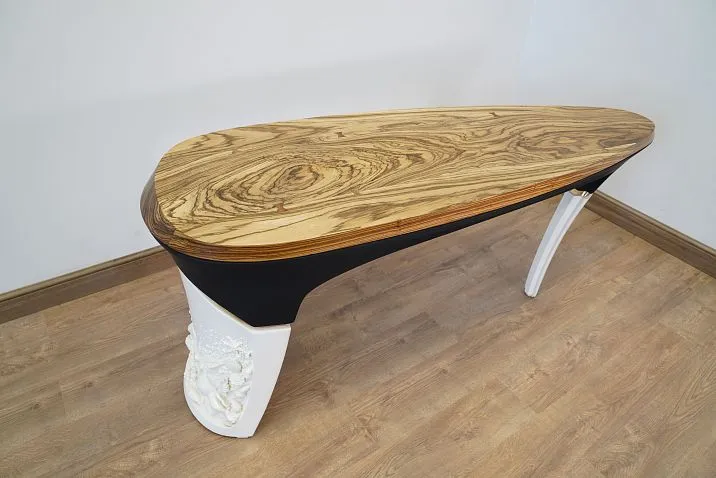
The furniture industry represents one of the most stable and promising sectors of the economy, where creative potential combines with solid financial opportunities. Considering furniture production as a businessmodern entrepreneurs discover an industry with steady demand, broad opportunities for innovation, and attractive prospects for scaling. This market is characterized by constant demand for interior updates, growth in construction activity, and rising living standards.
A successful furniture business requires a deep understanding of market mechanisms, technological processes, and consumer preferences. The modern furniture industry has moved far beyond traditional carpentry workshops — it is a high-tech sector utilizing advanced equipment, innovative materials, and complex logistical schemes. Properly organized production can ensure stable profitability ranging from 15% to 40%, depending on the segment and management efficiency.


Market Analysis: The Foundation of a Successful Start
The furniture market demonstrates remarkable resilience to economic fluctuations, as the need for furniture relates to basic human needs. The volume of the Russian furniture market exceeds 200 billion rubles per year, with domestic producers accounting for about 80%, creating favorable conditions for local production.




Target Audience Segmentation
The corporate segment includes office furniture, equipment for educational institutions, medical centers, and the hospitality industry. This market is characterized by large orders, long decision cycles, and high requirements for quality and functionality.
Private consumers form the largest segment, including furniture for homes, cottages, and children's rooms. Here, design, price-to-quality ratio, and customization options are important. Consumer behavior is strongly influenced by seasonality, fashion trends, and economic conditions.
The premium segment targets affluent clients who value exclusivity, use of expensive materials, and original designer solutions. Here, maximum markups are possible, but exceptional execution quality is required.
Our factory also produces:


Competitive Environment and Positioning
Large furniture chains dominate the mass segment, leveraging scale advantages and extensive distribution. Small and medium-sized manufacturers can successfully compete by focusing on niche segments, product customization, and superior service.
Imported products occupy about 20% of the market, concentrated in the premium segment. Domestic manufacturers have advantages such as the absence of customs duties, faster delivery, and the ability to quickly respond to changes in demand.
Regional market characteristics create additional opportunities for local manufacturers. Knowledge of local preferences, climatic conditions, and regional economic specifics can become a significant competitive advantage.
Get Consultation
Business Models: Choosing the Optimal Strategy
The modern furniture industry offers numerous business models, each with its own advantages and resource requirements. Choosing the right model determines the success of the entire enterprise.
Full Production Cycle
Integrated production controls all stages from raw material procurement to finished product sales. This ensures maximum profitability and quality control, but requires significant investments in equipment, personnel, and storage facilities.
Advantages include full control over quality, flexibility in changing product assortment, and the ability to quickly respond to market changes. Main risks are associated with high fixed costs and the complexity of managing a multi-stage process.
Capital investments in full-cycle production start at 50 million rubles for small enterprises and can reach hundreds of millions for large factories.
Contract Manufacturing and Outsourcing
The contract manufacturing model allows focusing on design, marketing, and sales, while outsourcing production to third-party contractors. This reduces capital expenditures and operational risks, but decreases control over the process.
Franchise models provide a ready-made business model with established processes, brand, and support. Initial investments typically amount to 5-15 million rubles, but limit creative freedom and long-term autonomy.
Cooperative models unite several manufacturers to jointly use expensive equipment and resources. This is especially effective in the early stages of business development.
Specialized Niches
Custom-made furniture represents a high-margin segment emphasizing individuality and quality. Average check may be 2-3 times higher than standard products, but requires highly skilled personnel and flexible production processes.
Antique furniture restoration is a highly specialized niche with high added value and limited competition. Requires unique skills and knowledge, but ensures a stable customer base.
Eco-friendly furniture is gaining popularity among conscious consumers. Use of natural materials and eco-friendly technologies can justify premium pricing and create a loyal audience.
Technological Aspects: Foundation of Competitiveness
Modern furniture production is unthinkable without advanced technologies. Investments in equipment and automation determine productivity, product quality, and cost.
Basic Production Equipment
CNC cutting machines ensure precise cutting and minimize waste. Modern models can process sheets up to 4000×2000 mm with accuracy ±0.1 mm. Quality equipment costs start at 3 million rubles.
Edge banding lines automate the application of edge material. Modern machine productivity reaches 25 meters per minute, allowing processing up to 300 parts per shift.
Drilling and fastening centers perform precise drilling for hardware. Multi-spindle CNC machines can simultaneously process several parts, significantly increasing productivity.
Innovative technologies
Laser cutting ensures perfect edge quality and enables creation of complex geometric shapes. The technology is especially effective for decorative elements and small batches of exclusive products.
3D printing revolutionizes the production of prototypes and small-batch hardware. Modern printers can work with wood composites, creating parts indistinguishable from traditionally manufactured ones.
Automation of assembly processes increases accuracy and speed of assembly. Industrial robots can handle heavy components and perform monotonous operations with high precision.
Production management systems
ERP systems integrate all business processes from production planning to finished goods accounting. Modern solutions allow tracking every part from raw material to delivery to the customer.
Warehouse management systems optimize storage of materials and finished goods. RFID technologies ensure automatic tracking of goods movement and minimize errors.
Production planning based on artificial intelligence optimizes equipment loading and minimizes downtime. Machine learning algorithms analyze historical data and predict optimal production plans.
Financial Planning: The Mathematics of Success
The furniture business requires significant initial investments and sound financial planning. Understanding cost structures and revenue sources is critically important for successful business development.
Investment Structure
Production equipment accounts for 40-60% of total investments. For small-scale production, the minimum equipment package costs 15-25 million rubles. Medium-sized enterprises require investments of 50-100 million rubles.
Production facilities must meet specific requirements: ceiling height of at least 4 meters, robust electrical systems, ventilation and dust removal systems. Rent for suitable premises is 200-500 rubles per square meter per month.
Working capital must cover material purchases for 2-3 months of operation, payroll, and current expenses. Typically, this amounts to 30-40% of initial investment.
Operational Economics
Product cost includes materials (40-50%), wages (20-25%), equipment depreciation (10-15%), and other expenses (15-25%). Optimizing each component affects overall profitability.
Pricing must consider not only cost but also market positioning, competitive environment, and perceived product value. Markup in the furniture industry is typically 100-300% depending on the segment.
The break-even point for typical furniture production is reached at 60-70% capacity utilization. This means the need for a stable order portfolio and an effective sales system.
Sources of Financing
Bank financing remains the primary source of funding for furniture enterprises. Interest rates on investment loans range from 8-15% annually depending on the borrower's financial condition and collateral.
Government support includes preferential loans for small and medium businesses, subsidies for equipment purchase, tax benefits for residents of industrial parks. Support can reach up to 50% of investment amount.
Equipment leasing allows starting production with minimal initial investment. Lease payments typically amount to 3-8% of equipment cost per month for a contract term of 3-7 years.
Marketing and Sales: Building a Customer Base
The success of a furniture business largely depends on the effectiveness of its marketing strategy and sales system. The modern market requires an omnichannel approach and deep understanding of consumer behavior.
Positioning and Branding
Unique Selling Proposition must clearly answer the question: why should the customer choose your furniture? This could be exceptional quality, innovative design, eco-friendliness, price-to-quality ratio, or personalized service.
Brand visual identity includes logo, color scheme, typography, and brand style. Professionally developed branding increases perceived product value and market recognition.
Reputation marketing is built on customer reviews, completed project portfolios, and professional awards. In the furniture industry, recommendations play a particularly important role in purchase decisions.
Sales Channels
Own showrooms provide maximum control over product presentation and customer service. However, they require significant investments in rent, interior design, and staff. Opening a showroom costs 5-15 million rubles.
A distributor network allows rapid scaling of sales with minimal investment. It is important to carefully select partners and provide them with training and support. Distributor margins are typically 30-50% of retail price.
Online sales are becoming an increasingly important channel. Having an own e-commerce store, presence on marketplaces and social networks expands audience reach and reduces customer acquisition costs.
Digital marketing
Search engine marketing includes website optimization for search engines and contextual advertising. In the furniture niche, cost per click can reach 100-500 rubles depending on query competitiveness.
Content marketing is built on creating useful content: trend reviews, furniture selection tips, interior design ideas. High-quality content attracts organic traffic and enhances brand expertise.
Social networks are especially effective for showcasing finished interiors and engaging with the audience. Instagram and Pinterest are ideal for visual content, while Facebook is suited for targeted advertising.
Quality Management: Guarantee of Reputation
Product quality is the foundation of long-term success in the furniture industry. The quality management system must cover all stages, from raw material receipt to after-sales service.
Raw Material and Material Control
Incoming material inspection includes checking geometric dimensions, wood moisture content, and surface quality of panel materials. Even minor deviations can lead to production issues and finished product defects.
Supplier certification ensures consistent quality of incoming materials. Long-term partnerships with verified suppliers reduce risks and allow for more favorable supply terms.
Material storage must preserve their properties. Wood materials require controlled humidity and temperature, while metal hardware requires corrosion protection.
Production Control
Operational control includes checking part dimensions, surface finish quality, and assembly accuracy. Statistical control methods help identify trends and prevent defects.
Equipment calibration must be performed regularly to maintain processing accuracy. Tool wear affects product quality and must be monitored.
Employee training in basic quality control principles improves overall product quality. Each employee must understand their role in ensuring quality and be accountable for results.
After-sales service
Warranty service includes rectifying defects caused by the manufacturer. Clear warranty obligations increase customer trust and product competitiveness.
The service department must be prepared to promptly respond to customer inquiries. Complaint response time should not exceed 24 hours, and defect resolution time should be 5-7 working days.
Customer feedback is a valuable source of information for improving products and processes. Regular surveys and analysis of complaints help identify weaknesses and development areas.
Logistics and Distribution: Efficient Delivery
Logistics in the furniture business is particularly important due to the bulkiness of products and requirements for protection during transport. Efficient logistics can become a significant competitive advantage.
Warehouse Logistics
Warehouse design must consider the specifics of furniture products: item height, protection from damage, and ease of loading/unloading operations. Warehouse building height should be at least 8-10 meters.
Storage systems include various types of racks for different product categories. Large items are stored on floor racks, while small parts are stored in grid structures.
Inventory management requires balancing product availability with minimizing storage costs. Optimal inventory turnover for furniture production is 6-8 times per year.
Transportation
Specialized transport is equipped with cargo securing systems and damage protection. Delivery cost may range from 5-15% of product value depending on distance and size.
Packaging solutions must protect against mechanical damage, moisture, and contamination. Modern packaging materials significantly reduce damage rates during transport.
Logistics partners can ensure more efficient delivery, especially to remote regions. Outsourcing logistics allows focusing on core activities and reducing operational costs.
Sales Geography
Regional expansion requires analyzing local market characteristics, competitive environment, and logistics capabilities. Opening regional warehouses reduces delivery costs and order fulfillment time.
Export opportunities open access to broader markets but require compliance with international quality standards and product certification.
E-commerce expands sales geography without requiring physical presence. However, it requires solving issues related to large item delivery and returns.
Human Resources: Team of Professionals
Success in furniture production critically depends on personnel qualifications. The industry requires a blend of traditional craftsmanship skills and modern technological knowledge.
Key Positions
Technologists and designers develop new products and optimize production processes. Their qualifications directly affect product quality and production efficiency. Leading specialists' salaries range from 80,000 to 150,000 rubles per month.
CNC machine operators must combine technical knowledge with practical skills. Training a high-level operator may take 6-12 months. Average salary is 50-80 thousand rubles.
Furniture assemblers perform final operations, the quality of which determines the appearance of the finished product. Experienced assemblers can increase productivity by 2-3 times compared to novices.
Training and Development
Corporate training programs should cover both technical aspects of production and issues of quality and safety. Investments in training pay off through increased productivity and reduced defects.
Employee certification confirms qualifications and increases motivation. Internal competency assessment systems help identify training needs and plan career development.
Internships at leading industry enterprises allow adopting best practices and modern technologies. Exchanging experience with colleagues from other companies enriches knowledge and broadens perspectives.
Motivation and Retention
Motivation systems must take into account the specifics of production activities. Bonuses for quality, productivity, and absence of defects encourage responsible work attitudes.
Social programs include medical insurance, corporate meals, sports events. A friendly corporate culture reduces staff turnover and increases loyalty.
Career prospects are especially important for retaining young specialists. Clear professional growth trajectories motivate long-term work with the company.
The furniture industry offers unique opportunities to build a profitable and sustainable business. The combination of stable demand, innovation opportunities, and creative realization makes this industry attractive to entrepreneurs of various scales.
Success in the furniture business requires a comprehensive approach: from technological equipment of production to building an effective sales system. Each element of the business system must work in harmony, ensuring high product quality and customer satisfaction.
Investments in modern technologies and employee training pay off through increased productivity, reduced costs, and improved product quality. Automating production processes allows competing with major market players.
Developing a furniture business requires continuous monitoring of market trends and readiness to adapt. Changes in consumer preferences, emergence of new materials and technologies create both opportunities and challenges.
Ecological trends open new niches for manufacturers willing to invest in sustainable technologies and materials. Growing consumer environmental awareness creates demand for responsibly produced furniture.
Digitalization of business processes has become a necessary condition for competitiveness. Implementing modern management systems allows optimizing operations and improving efficiency across all company departments.
For many years, STAVROS has been a reliable partner for furniture manufacturers, providing high-quality materials for finishing and protecting wood. Our deep experience in the furniture industry and understanding of manufacturers' needs enable us to offer comprehensive solutions for any task. From startups to large enterprises — we help create products of the highest quality that win consumer recognition and ensure commercial success. Partnership with STAVROS is an investment in quality, reliability, and long-term development of your furniture business.


