Article Contents:
- Weight as a Determining Factor
- Dynamic Loads and Safety Factor
- Load Distribution Among Supports
- Furniture Dimensions and Support Geometry
- Cross-Section Shape and Support Material
- Usage Scenario: Household, Office, Public Furniture
- Types of Loads: Compression, Bending, Shear, Torsion
- Adjustable Legs: Compensating for Uneven Surfaces
- Number of Supports: Minimum and Optimum
- Frame Structures and Base Supports
- Support Attachment to Base
- Floor Protection and Noise Reduction
- Aesthetic Compatibility of Supports and Furniture
- Specifics of Supports for Different Types of Furniture
- Material Science: Wood for Supports
- Metal Supports: Advantages and Limitations
- Combined Solutions
- Testing and Certification
- Restoration and Replacement of Supports
- DIY Support Fabrication
- Economic aspects of selection
- Trends and innovations
- Frequently Asked Questions
- Conclusion
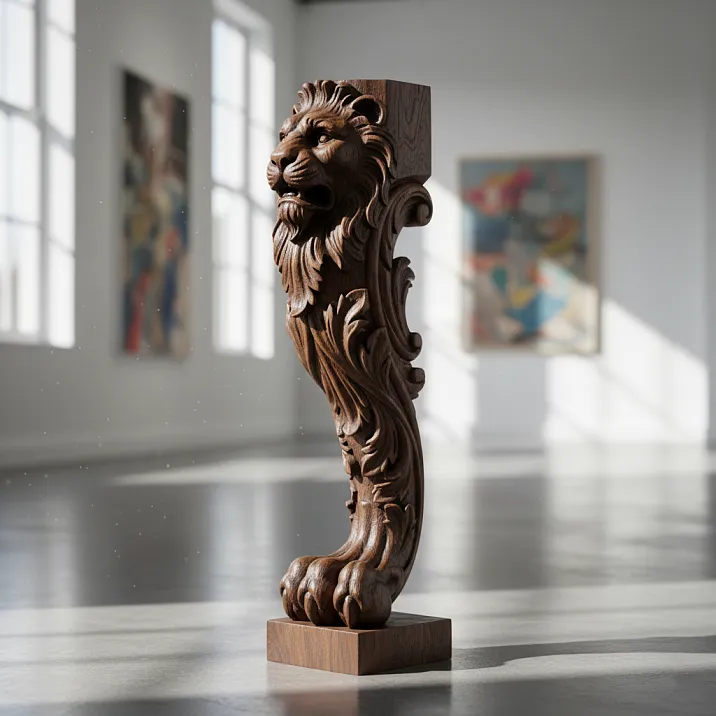
Choosingfurniture support— this is not primarily an aesthetic issue, but an engineering calculation task, where an error leads to structural failure, injuries, and financial losses. Properly selectedbuy furniture leg— which must be considered in light of real operating conditions — is the foundation of the entire product’s reliability. The weight of the item, its dimensions, and usage scenario determine the type of support, material, number of contact points, and method of attachment. Ignoring these parameters leads to deformations, loosening, and sudden failures. A professional approach requires understanding the physics of processes, knowledge of materials, and the ability to calculate safety margins.




Weight as a Determining Factor
The weight of furniture consists of two components: the weight of the structure itself and the useful load. An empty bookcase made of MDF weighs seventy to ninety kilograms, but when filled with volumes, it can reach three hundred to four hundred kilograms. A solid oak dining table weighs fifty kilograms on its own, but during a meal, dishes, plates, and drinks add another thirty to forty kilograms. A sofa carries people whose combined weight may exceed two hundred kilograms.
Calculation begins with determining the maximum load — the state when the furniture is used to its full capacity.Furniture legs— must withstand peak values, not average ones. A desk may be empty most of the time, but when a monitor, computer tower, books, and a desk lamp are placed on it, the load increases sharply. Planning is done for the worst-case scenario.
Constant load acts continuously throughout the furniture’s service life. This includes the weight of the structure itself plus the weight of items that remain in place. A kitchen cabinet with dishes experiences constant load — plates, pots, and jars are not removed and remain for years.Furniture Supports— operate under static compression mode, the material slowly deforms, and creep occurs. Wood under constant pressure compacts, and connections gradually weaken.




Dynamic Loads and Safety Factor
Static load is only part of the picture. Real furniture use involves dynamic impacts that create instantaneous overloads. A person sits on a chair not smoothly, but with acceleration — an impact load arises, exceeding their weight by two to three times. A child jumps on a sofa — the impulse force may reach five times the body’s mass. A cabinet door opens abruptly — a torque is created, attempting to overturn the structure.
— must withstand one hundred fifty to two hundred kilograms. In public spaces — cafes, offices, hotels — the safety factor increases to two and a half to three, because the load is less predictable, and users are less careful.furniture legsFurniture must withstand 150-200 kilograms. In public spaces — cafes, offices, hotels — the coefficient increases to 2.5-3, because the load is less predictable and users are less careful.
Dynamic forces arise not only from direct impacts. Vibration from a running washing machine on a countertop gradually loosens connections. Repeated opening and closing of a dresser drawer creates alternating loads — alternating tension and compression. Each cycle introduces microscopic damage that accumulates, leading to fatigue failure.Legs for tablesare calculated not only based on weight but also on the nature of use.
Our factory also produces:


Load distribution among legs
Seems logical: if a table weighs eighty kilograms and has four legs, each leg carries twenty kilograms. Reality is more complex. Load distribution is uneven due to multiple factors. Floors are rarely perfectly level — a two- to three-millimeter difference causes one leg to not touch the surface, redistributing its load to the others. The weight of contents is rarely symmetrical — books are on one shelf, the other is empty. A person sits on one side of the table — the nearest legsTable legsare loaded more heavily.
Engineering practice accounts for unevenness through a formula for calculating maximum load per support. Total load is divided not by the actual number of supports, but by the number minus one. For a four-legged table, the divisor is three; for a six-legged cabinet, it is five. This provides a reserve in case one support point detaches. The resulting value is multiplied by a safety factor — and the result gives the required load-bearing capacity for eachfurniture leg.
Example calculation: a cabinet weighing three hundred kilograms (one hundred kilograms for its own weight, two hundred kilograms for contents) is installed on six supports. Safety factor — 1.5. Calculation: three hundred divided by five (six minus one), resulting in sixty kilograms, multiplied by 1.5 — ninety kilograms. Eachfurniture legmust withstand at least ninety kilograms, but it is wiser to choose supports with a load capacity of one hundred to one hundred twenty kilograms for additional reserve.
Get Consultation
Furniture Dimensions and Support Geometry
The size of an item determines not only the number of supports but also their placement, height, and cross-sectional shape. A compact half-meter by half-meter cabinet is stable on four legs placed at the corners. A two-meter by one-meter dining table requires six or eight supports; otherwise, the tabletop will sag under load. A tall, narrow base cabinet requires a wide baseof furniture legsto prevent tipping.
Center of gravity — a critical parameter for stability. If the projection of the center of gravity extends beyond the area of the support contour, the furniture will tip over. A tall bookcase on a narrow base is dangerous — opening the top door or pulling out the top drawer shifts the center of gravity, and the structure collapses forward.Buy furniture legsFor such furniture, a wide base placement is required, or use a pedestal to increase the base area.
Low, sturdychair legsmake the structure more stable, but less convenient for cleaning under the furniture. Tall, slender legs create a visual lightness but require larger cross-sections or stronger materials. For bar stools 70–80 cm high, leg stiffness is critically important — a long, thin leg acts as a cantilever, easily bending under lateral loads.
Cross-sectional shape and support material
Circular, square, rectangular cross-section — the choice is not random. Mechanics of rigid bodies dictate: resistance to bending is proportional to the section’s moment of inertia, which depends on shape and dimensions. A circular section 40 mm in diameter made of beech withstands a certain load. A square 40x40 mm section of the same beech — slightly more when properly oriented. A rectangular 30x50 mm section, oriented with the longer side in the direction of primary load — even more effective.
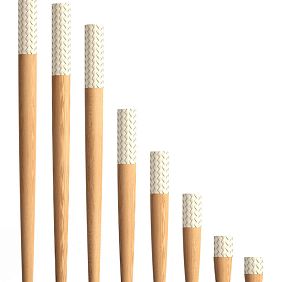
Chair legsare traditionally made circular — this is technologically convenient for turning, providing equal strength in all directions.Table legsOften have square or rectangular cross-sections, especially in modern styles. Profiled supports with variable cross-sections — thicker at the top, tapering toward the bottom — optimize material distribution, increasing strength where maximum forces act.
Material determines load-bearing capacity at given dimensions. Beech with density 700 kg/m³ withstands greater load than pine with density 500 kg/m³ at the same cross-section. Beech is hard and elastic, ideal forlegs of chairssubjected to dynamic loads. Metal supports with smaller diameter carry the same load — steel is vastly stronger than wood, allowing for slender, elegant structures.
Usage scenario: household, office, public furniture
A kitchen table in a family of three is used differently than a table in a restaurant with one hundred seats. A home dresser is opened five to ten times a day, while an office filing cabinet is used hundreds of times. A living room chair is used carefully, while a reception chair in a government office endures rough handling. Usage scenario determines requirements for strength, durability, and reliability of connections.
Household furniture is designed for moderate load and careful handling.Buy legs for furnitureMade from solid pine or birch for a home table — an acceptable solution. A safety factor of 1.5 is sufficient. Service life is designed for ten to fifteen years with proper use. Repairability is desirable but not critical — if something breaks, it can be replaced.
Office furniture operates under intensive use. An office desk supports the weight of computer equipment, documents, and the elbow pressure of an employee for eight hours a day.buy furniture legs and supportsFor offices, stronger materials are required — safety factor of two, materials from hardwoods or metal. Connections are reinforced with metal fasteners. Adjustable height is provided to compensate for floor unevenness.
Public furniture — cafes, hotels, waiting rooms — is subjected to extreme loads. Users do not care about preservation, rock back on chairs, drag furniture across the floor, drop heavy objects on it.Legs for a table to buy in MoscowFor a restaurant, this means choosing the most robust — oak, beech, ash, or steel frames. Safety factor of 2.5–3. All connections are duplicated, using clamps, metal angles, and reinforcing plates.
Types of loads: compression, bending, shear, torsion
table legIt operates under complex stress. Vertical load creates axial compression — the material resists the force attempting to shorten it. If the support is installed strictly vertically, the load is transmitted along the axis, which is the most favorable operating mode. The material works under compression, where its strength is maximal.
Lateral forces cause bending. When a person leans on the edge of a table, a horizontal force arises, attempting to tilt the support. A long, slender leg bends, inducing tensile stresses on one side and compressive stresses on the other. Bending is more dangerous than compression — the strength under bending is lower, and the risk of failure is higher.Buy chair legsShort and thick — a way to minimize bending deformations.
Shear forces arise at connection joints. The tenonfurniture leginserts into the mortise of the leg, and the load attempts to shear the tenon. The bolt securing the support to the tabletop works under shear — the force tries to displace parts relative to each other. Calculating connections for shear requires considering the contact area, shear strength of the material, and presence of additional fastening elements.
Torsional moment acts under asymmetric loading. A corner cabinet with a heavy door opening outward creates torsion on the supports. A circular cross-section resists torsion less effectively than polygonal or profiled sections. For structures subjected to torsion, frame solutions are used, where supports are connected by rigid elements — legs, stretchers, diagonal braces.
Adjustable legs: compensation for unevenness
Perfectly flat floors do not exist. Even a new screed has a tolerance of two millimeters per two meters of length. Old wooden floors, tiles laid unevenly, warped parquet — all of this creates irregularities causing furniture to rock. If one of the four supports does not touch the floor, the load is distributed among three, each overloaded by thirty-three percent.
AdjustableFurniture SupportsAdjustable supports solve this problem. The screw mechanism allows adjusting the height of each support by ten to twenty millimeters — this is sufficient to compensate for most irregularities. The foot is screwed in or out until the furniture stands level, without rocking. Checking with a level confirms the horizontal alignment of the tabletop or seat.
The adjustable support structure includes a threaded part — a bolt with external threads screwed into the body of the leg with internal threads, or a nut secured in the furniture base. The material of the foot — plastic for lightweight furniture, metal for heavy furniture.Buy legsAdjustable supports mean ensuring stability on any surface, extending the service life of the structure, and preventing loosening of connections due to uneven loading.
Number of supports: minimum and optimum
Three points of support provide static determinacy — the structure stands stably on any uneven surface, and all three supports always touch the floor. However, load distribution is uneven; the center of gravity must lie within the triangle formed by the supports. A three-legged table is exotic, found in designer furniture, but requires precise geometric calculation.
Four supports — a classic solution for tables, chairs, and side tables. The load is distributed among four points, each carrying approximately a quarter of the weight. The problem — sensitivity to floor irregularities, possibility of rocking if one leg lifts off.buy furniture legs in MoscowAdjustable supports or using elastic feet — methods of compensation.
Six or more supports are used for large furniture. A long sliding wardrobe, a heavy chest, a tall shelf reaching the ceiling require multi-point support.Wall moldingLarge furniture and heavy furniture with multiple supports create a classic interior, where each element is designed to last for centuries. The distance between supports is determined by the base stiffness — if the cabinet base is 16 mm thick, the support spacing should not exceed 50–60 cm; otherwise, the base will sag.
Frame structures and base supports
For large tables, individual legs are insufficient. Frame solutions are used —buy wooden table basewhich unites the supports into a spatial frame. Four legs are connected by legs around the perimeter, forming a rigid structure. Legs work under tension-compression, take lateral loads, and prevent loosening.
Diagonal braces — cross or X-shaped elements between legs — significantly increase stiffness. They function as struts in a truss structure, transforming a deformable parallelogram into an unchangeable triangle.Railings and balusters for wooden staircasesThe same principle is used — vertical elements are connected by horizontal rails and diagonal ties, creating a strong system.
Central support — an alternative to perimeter frame. A round or square table on a single massive leg with a wide base is convenient because it does not obstruct seated legs. However, such a construction requires a large base mass or attachment to the floor to prevent tipping.Base for Dining TablesDesigned with a central support, the structure is calculated for tipping moment — the calculation shows whether the structure will withstand a person leaning on the edge.
Support attachment to base
The method of attachmentfurniture supportsdetermines the reliability of the entire structure. The tenon joint — a traditional carpentry method — involves the tenon at the end of the leg fitting into a mortise or socket in the leg or tabletop. PVA or polyurethane glue securely fastens the joint. Strength depends on the glued area, precision of fit, and quality of glue. The tenon must fit tightly, without gaps, to the full depth of the socket.
Threaded fastening uses metal elements. A bolt with threads at the end of the leg is screwed into a threaded bushing secured in the tabletop or base. This allows furniture to be disassembled — convenient for transportation and storage.Buy a pedestalOn threaded connections, it means being able to disassemble and reassemble the table during relocation.
Metal angles and plates reinforce connections. A steel angle bolted to the leg and leg doubles the glue joint, taking part of the load. For heavy furniture, this is a mandatory element.Buy table baseWith reinforced joints — guarantee of longevity. Hidden fasteners — euro joints, confirmers, eccentric bolts — ensure strength while remaining invisible from the outside.
Floor protection and noise reduction
Unprotected legs will scratch the floor with every move — within a year, the floor will be riddled with scratches.Countertop substructureUnprotected leg ends will scratch the floor with every move — within a year, the floor will be riddled with scratches.
Protective pads not only protect the floor, but also make moving furniture silent.
Noise from moving furniture is annoying. The squeak of a chair on the floor in an apartment building is audible to neighbors below. Wool pads not only protect the floor but also make moving furniture silent.buy legs for a tableInstall protective pads immediately — it’s good etiquette, a consideration for the comfort of others and the preservation of the floor covering.
Aesthetic compatibility of legs and furniture
Technical correctness in choosing legs does not negate the need for stylistic harmony. A classic solid oak table with carved top requires matching legs — turned, with balusters, panels, possibly carved details.legs for a table to buyA geometric profile for such a table — a stylistic error that destroys the overall image.
Modern minimalist furniture pairs with sleek legs. Straight metal legs with square cross-sections, simple cylindrical wooden legs without ornamentation, conical legs with smooth tapering — all are the language of modernity.buy classic style furnitureInstalling chrome legs on it — means creating an eclectic style that may be interesting but requires a refined sense of proportion.
Legs are often finished in white, and the legs themselves are white, creating a light and airy interior.Furniture for bedrooms in classic styleLeg specifications for different types of furniture
Specifications of supports for different types of furniture
Chairs experience special loads. A person sits down with acceleration — impact load. They rock — alternating forces. They stand up, leaning on the back — overturning moment.Buy chair legsLegs must be made of hardwood, with secure joints, possibly with reinforcing braces. Rear legs are often longer, serving as an extension of the backrest, forming a unified structure.
Tables primarily work under compression, but require rigidity to prevent the tabletop from sagging. A dining table on four legs must have a connection between them — aprons around the perimeter. A workbench supporting heavy equipment requires strong legs with increased cross-section.legs for kitchen table to buyIt means choosing a balance between strength and comfort — the legs of seated users should not hit the aprons.
Cabinets and chests rest on a base rail or individual legs. A base rail distributes the load evenly around the perimeter, but makes cleaning under the furniture difficult. Individual legs —Legs for chests— lift the body, provide ventilation, and make cleaning easier. For heavy cabinets, use six to eight legs arranged so that the bottom does not sag under the weight of the contents.
Wood science: wood for legs
The wood species determines the strength, durability, and appearance of the legs. Oak — the standard of reliability. Density of 700–800 kg per cubic meter, high hardness, wear resistance.wooden balustersOak legs serve for decades without losing shape. The texture is expressive, with large growth rings. Color ranges from light yellow to dark brown depending on the finishing method.
Beech — dense, uniform, and easy to work with. Density is close to oak, but the texture is fine, without a sharp grain. Ideal for turned elements —Wooden balusters— beech legs turn out smooth with clear profile details. Color is light, pinkish or yellowish. The drawback — hygroscopic nature, requiring careful protection from moisture.
Ash — elastic, tough, and works well under bending. Used for elements subjected to dynamic loads.Balusters for staircaseAsh legs withstand impacts and vibrations. Texture resembles oak but is lighter. Ash processing is more difficult due to the twisted grain, but the result is worth the effort.
Spruce and birch — budget options. Soft, easy to process, and affordable.wooden corniceSpruce legs — a classic solution for cottages or country homes. For furniture legs, these species are less preferred — lower strength and worse wear resistance. Used for light furniture under small loads.
Metal legs: advantages and limitations
Steel is ten to fifteen times stronger than wood at equal cross-section. This allows making legs thin, elegant, almost weightless in appearance. A steel tube with a 25 mm diameter withstands a load that would require a 50 mm diameter wooden leg. Metallicfurniture legscreates a sense of lightness, airiness, modernity.
Structural steel is used for frames of tables, chairs, shelves. Rectangular or square profile tubes are welded into a frame and painted with powder coating. The result is a strong, durable structure.Ceiling cornicemetallic legs withstand the weight of heavy drapes, do not sag, and serve for decades.
Stainless steel and chrome are materials for premium-class furniture. Shiny surface, corrosion resistance, hygiene. Used in kitchen, medical, and office furniture. The drawback is high cost. Chrome-plated legs require regular care to maintain shine — fingerprints, dust, water splashes leave marks.
Aluminum is lightweight, does not rust, and is easy to process. But its strength is lower than steel, requiring larger cross-sections. Aluminum legs are used for lightweight portable furniture — folding tables, chairs, ladders. Anodized coating protects the surface and gives a noble matte finish.
Combined Solutions
Combining materials expands design and construction possibilities. A wooden tabletop on a metal frame — classic industrial style. Metal provides strength and rigidity, while wood offers warmth and tactile comfort.Countertop substructuremade of steel with wooden braces combines the advantages of both materials.
Wooden legs with metal reinforcements — a traditional solution for sturdy furniture. A steel rod inside a wooden leg increases load-bearing capacity and prevents bending. Outside — the beauty of natural wood, inside — the strength of metal.Legs for coffee tableswith such a construction, thin and elegant, yet withstand significant loads.
Polymer materials — plastic, polyurethane — are used in budget furniture.— everything must correspond to the chosen era.Made of polyurethane, they are light, inexpensive, and moisture-resistant. Plastic legs for lightweight furniture — garden chairs, children's tables — cheap and practical. But load-bearing capacity is limited, making them unsuitable for serious furniture.
Testing and Certification
Serious furniture manufacturers conduct strength tests on legs. Samples are installed in a testing machine and loaded until failure. Maximum load, failure characteristics, and deformations are recorded. Results are compared with calculated values, and design adjustments are made.
Cyclic tests simulate long-term use. A chair is loaded and unloaded thousands of times, simulating sitting and standing. Connections are checked for loosening, material wear, and residual deformations.Buy polyurethane wall moldingsand furniture legs from manufacturers conducting tests — guarantee of quality and longevity.
Certification confirms compliance with safety standards. GOST, European EN standards, and American ANSI/BIFMA set requirements for furniture strength, stability, and safety. Certified products have passed inspection, meet standards, and are safe for users. This is especially important for children's and public furniture, where requirements are stricter.
Restoration and replacement of legs
Old furniture often requires leg replacement. Wood has dried out, cracked, and joints have loosened.Buy chair legsReplacing with new legs — a method to restore furniture functionality and extend its service life. Restoring furniture preserves the item's historical, emotional, and sometimes material value.
Selecting legs for restoration requires attention. Measure the dimensions of old legs, determine the wood species, profile shape, and mounting method.legs for furniture to buyLegs should be as similar as possible to the original, or order custom-made legs based on a sample. Antique furniture requires historically accurate restoration, where new parts are indistinguishable from old ones.
Structural reinforcement during restoration is a sensible practice. If the original furniture was not strong enough, connections can be reinforced with metal brackets, additional braces can be added, or stronger wood species can be used for legs. Historical accuracy yields to practical necessity — furniture must serve, not stand as a museum exhibit.
DIY leg fabrication
Craftsmen often make furniture legs themselves. This requires equipment — a lathe for round legs, a milling machine for decorative profiles, a hacksaw, plane, and chisels for handwork.Wooden boards in interiorAnd furniture parts can be made yourself if you have the skill and patience.
Material selection is critical. Wood must be dry — moisture content no higher than 10–12%. Wet wood will dry out after fabrication, deform, and crack. The blank must be free of knots, cracks, and rot. Grain direction — along the length of the future leg — ensures maximum strength.
Processing requires precision. Dimensions must be accurate to the millimeter; otherwise, legs will be uneven in length, and furniture will wobble. The profile is symmetrical about the axis, and parts are identical. Final finishing — sanding, staining, and varnishing — completes the process. The result — unique legs, handmade, carrying a piece of the craftsman’s soul.
Economic aspects of selection
Pricefurniture legsCost varies widely. Simple cylindrical legs from pine cost hundreds of rubles each. Hand-carved oak legs — thousands. Chrome-plated metal — intermediate option. Project budget determines the choice, but cutting corners on legs is shortsighted — they are the foundation of furniture reliability.
Mass production is cheaper than custom-made.picture frames are used not only for framing but also as standalone decorative elements — for creating wall panels, decorating ceilings, embellishing furniture, forming niches and portals.And mass-produced furniture parts are affordable, with many options. Custom orders are more expensive but allow you to get exactly what you need — unique dimensions, rare wood species, special profiles.
Price-to-quality ratio is the key criterion. Cheap legs made of softwood last three to five years. Expensive ones made of hardwood last twenty to thirty. When calculated per year of use, the difference is not significant.Molding Moscowand quality furniture hardware — an investment in durability and comfort.
Trends and Innovations
Modern furniture design experiments with leg shapes. Asymmetric, slanted, V-shaped, curved — designers seek new expressive solutions.Molding priceand the cost of non-standard furniture parts is higher, but the result — a unique piece that attracts attention.
Smart furniture with built-in electronics requires new approaches. Legs with integrated sockets, USB ports, lighting. Height is adjusted by an electric drive — a transformable table, adjustable from coffee table to work height.furniture legno longer remains a passive element, becoming a functional node.
Eco-friendly materials are gaining popularity. Bamboo grows quickly, is renewable, and durable. Recycled wood, cellulose-based composites, bioplastics. Consumers demand sustainable development, and manufacturers respond with new materials and technologies.Buy Baroque furniturecan also be made from eco-friendly materials — tradition and modernity are compatible.
Frequently asked questions
How to calculate the required load-bearing capacity of a furniture leg?
Add the furniture's own weight and maximum useful load. Multiply the sum by a safety factor of 1.5 to 2. Divide the result by the number of legs minus one. The resulting value is the required load-bearing capacity per leg. Example: a cabinet weighing 100 kg, contents 150 kg, safety factor 1.5, six legs. Calculation: 250 multiplied by 1.5 equals 375, divided by 5 equals 75 kg per leg.
Why can't you simply divide the total weight by the number of legs?
Because the load is distributed unevenly. Floor irregularities, asymmetric load placement, dynamic impacts cause one or several legs to bear more load than others. Dividing by the number minus one accounts for the possibility of one leg detaching and redistributing the load among the remaining legs.
What safety factor should be used?
For household furniture in domestic settings, a factor of 1.5 is sufficient. For office furniture — 2. For public spaces — 2.5 to 3. For children's furniture and structures subject to impact loads — not less than 2. The higher the risk of unpredictable impacts, the greater the safety factor.
How do static and dynamic loads differ?
Static load acts constantly, without sudden changes — the weight of books on a shelf, a computer on a desk. Dynamic load arises during movement, impacts, or vibrations — a person sitting down on a chair, jumping on a sofa, or quickly opening a heavy door. Dynamic loads briefly exceed static loads by several times and require a safety factor.
How to choose leg material for heavy furniture?
For heavy furniture, use hardwoods — oak, beech, ash — or metal legs. Softwoods — pine, linden — cannot withstand prolonged loads and will deform. Metal is stronger than wood and allows for thinner legs with high load-bearing capacity. The choice depends on interior style and budget.
How many legs are needed for a large cabinet?
The number of legs depends on the cabinet's length and base stiffness. If the base is 16 mm thick MDF, the distance between legs should not exceed 50–60 cm. For a 2-meter cabinet, at least four legs are needed, preferably five to six. For a 3-meter cabinet — six to eight legs.
Is it necessary to use adjustable legs?
Not necessary, but desirable, especially on uneven floors. Adjustable legs allow setting furniture precisely horizontally, eliminating wobbling and evenly distributing load. An alternative — elastic pads compensating for minor irregularities. For heavy furniture, adjustment is preferable.
Can wooden legs be replaced with metal ones?
Technically possible if the mounting method allows it. But stylistic compatibility must be considered — metal legs on classic wooden furniture create a dissonance. Also, the load-bearing capacity of new legs must match the load. Metal legs are thinner, which changes the furniture's appearance.
Conclusion
Choosingfurniture supportThis is a complex task where technical calculations, understanding of operating conditions, aesthetic sense, and economic feasibility merge into a single solution. You cannot choose a leg based solely on appearance while ignoring loads. You cannot rely solely on calculations while forgetting about beauty. Furniture must be strong, reliable, and long-lasting — and at the same time, pleasing to the eye, harmonizing with the interior, and matching the designer's vision.
of various styles, sizes, profiles — from classic turned to modern geometric.Furniture Legs and Supportsare available.balusters for staircases, table bases for tables, decorative elements, MoldingsandBaseboardsquality furniture leg to buythat you can confidently rely on — this is the foundation of long-lasting furniture, serving for decades while maintaining strength, beauty, and functionality.that you can confidently rely on — this is the foundation of long-lasting furniture, serving for decades while maintaining strength, beauty, and functionality.