Article Contents:
- Why Table Support Stiffness Is Not Just a Parameter
- The Anatomy of Stability: How a Table Frame Works
- Calculating Load on Supports: An Engineering Perspective
- Diagonal Braces: The Hidden Strength of the Structure
- Stringers and Aprons: The Connecting Element
- Materials and Their Impact on Stiffness
- Practical Recommendations for Choosing Supports
- Assembly and Installation: Details That Determine the Result
- Aesthetics and Functionality: Where Is the Balance?
- Durability: How to Make a Table Last for Centuries
- Innovations and Traditions: A Modern Approach
- Special Cases: Non-Standard Solutions
- Psychology of Space: How Supports Affect Perception
- FAQ: Answers to Popular Questions
- Conclusion

The table wobbles. The tabletop sags under the weight of books. The structure creaks with the slightest movement. Familiar? The problem isn't in the quality of the wood or the beauty of the shape — it's in the engineering solution, invisible to the eye but felt every day.table legThis is not just four legs under the tabletop. It is a complex system of load distribution, where each element plays its part in the symphony of stability and longevity.
In a world where furniture is often perceived as a decorative object, we forget its primary function — to serve. To serve for years, decades, bearing weight, impacts, displacements, dynamic loads. And for this, knowledge is required. Knowledge of how to calculate the stiffness of a structure, how to properly place diagonal braces, how to chooseFurniture Supportsto ensure the table doesn't just stand, but serves as a support for everything that happens on it.


Why Table Support Stiffness Is Not Just a Parameter
Stiffness. The word sounds dry, technical. But behind it lies the essence of what distinguishes a quality table from an average one. Stiffness is the ability of a structure to resist deformation. Not breaking under load — that's strength. But specifically, maintaining shape, not bending, not sagging — that's stiffness.
Imagine: you are working at the table, resting your elbows on the edge. If the structure is not stiff enough, the tabletop slightly sags,Table legsthe joints begin to shift, the frame deforms. Millimeters? Yes. But these millimeters accumulate, connections loosen, glued joints break. Within a year or two, such a table will start creaking. Within five — it will require serious repair.
Stiffness depends on many factors. Material — hardwood behaves differently than pine. Cross-section of elements —Furniture Legs and Supportslarger diameter elements provide greater stability. Construction scheme — how elements are connected to each other, whether there are additional braces, how forces are distributed. An engineer designing a table must consider all this. And anyone choosing or creating furniture for themselves should at least understand the basic principles.
Insufficient stiffness leads to a series of problems. The first — aesthetic: a sagging tabletop, uneven gaps, visible deformations. The second — functional: it is uncomfortable to work at a wobbly table, it creaks, you cannot place precision instruments or fragile items on it. The third — structural: deformations destroy connections, wood cracks, metal elements loosen. The fourth — durability: a table with insufficient stiffness will last many times less than it should.




The Anatomy of Stability: How a Table Frame Works
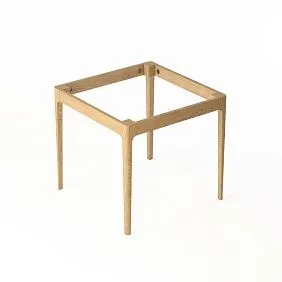
The table frame — it is its skeleton. As bones form a unified system in the human body, where each performs its role, so in a table, structural elements work together. Vertical supports — these areTable legswhich bear the main vertical load. They work under compression. The thicker the support, the greater the load it can withstand without losing stability.
But vertical supports alone are insufficient. Four pillars, even very strong ones, do not form a rigid structure. They may shift relative to each other, forming a parallelogram instead of a rectangle. To prevent this, horizontal connections — stringers — are required. Stringers connect supports at different levels and transform four separate elements into a single spatial frame.
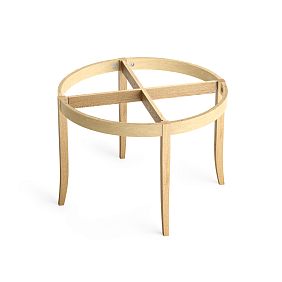
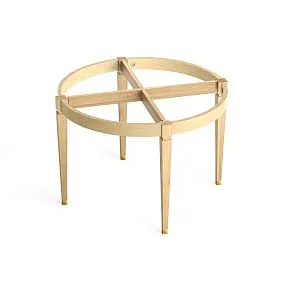
the base for a tableThis is a complex system including supports, rails, diagonal braces, and mounting nodes to the tabletop. Properly designedwooden base for the tableensures even load distribution from the tabletop to all supports, prevents lateral displacement and twisting of the structure.
There are various structural schemes. The classic four-support scheme with rails around the perimeter. A central support scheme, where the load from the tabletop is transferred to a massive central post or a system of several verticals. Cantilever schemes, where the tabletop rests on only one side. X-shaped and A-shapedcountertop supports, where diagonal elements form a spatial truss.
Each scheme has its advantages and limitations. The four-support scheme ensures maximum stability and even load distribution, but requires more material and occupies space under the table. A central support frees up under-table space, but requires a massive base to prevent tipping. X-shaped schemes are efficient in material usage and have high rigidity, but impose ergonomic limitations.
Our factory also produces:


Load calculation on supports: an engineering perspective
How much should it withstandFurniture support? This is not a trivial question. Underestimating the load leads to structural failure, while overestimating it results in excessive material use and a heavier product. A professional approach requires calculation.
The first step is to determine the total load on the table. Add the mass of the structure itself (top, frame, all elements) and the mass of the useful load — what will be placed on the table. For a desk, this includes a computer, monitor, books, documents, possibly a printer. For a dining table — dishes, food, cutlery. For a workshop workbench — tools, materials, equipment.
Suppose the mass of the tabletop and frame is forty kilograms. The useful load is sixty kilograms. The total load is one hundred kilograms. Now, it needs to be distributed among the supports. If there are four supports, it seems each should bear twenty-five kilograms. But this is an error.
The load is distributed unevenly. When you lean on the edge of the table, the load on the nearest supports increases, while the load on the distant ones decreases. When a heavy object is placed not at the center of the tabletop but closer to one corner, the corresponding support bears more load. To account for this, use an unevenness coefficient.
The practical formula looks like this: the maximum load on one support equals the total load divided by the number of supports minus one, multiplied by the safety factor. In our example: one hundred kilograms divided by three (four supports minus one), giving thirty-three kilograms, multiplied by the safety factor of 1.5 — resulting in fifty kilograms. This means that eachfurniture legmust withstand at least fifty kilograms, preferably with a safety margin, say seventy.
Why do we divide by the number of supports minus one? Because in real operating conditions, there may be a situation where one of the supports does not touch the floor — an uneven surface, structural deformation. In this case, the load is distributed only among three supports, and it increases. The engineering approach takes such scenarios into account.
For long tables or those with heavy tabletops, six or more supports may be required.buy legs for a tableof the required cross-section and strength — a task requiring understanding of these calculations. The choicefurniture supportsdepends not only on aesthetics but also on engineering necessity.
Get Consultation
Diagonal braces: the hidden strength of the structure
Now — about something often overlooked but playing a critical role in the structure's rigidity. Diagonal braces. Imagine a frame made of four planks connected at the corners. If the corners have simple hinges, the frame easily deforms into a parallelogram. To fix the shape, you can add a fifth plank — diagonally. Now the frame becomes rigid.
The same principle applies to table construction. Rails connecting the supports form a rectangular frame. But if the connections are not absolutely rigid (which they rarely are in furniture), the frame can shift. A diagonal brace running from one corner to the opposite corner blocks this possibility.
Diagonal braces can be of different types. Flat diagonal — a board or beam connecting two opposite corners of the frame formed by rails. It is installed in the plane of the frame and is especially effective for wide tables. Spatial diagonal — an element connecting the upper corner of one support to the lower corner of the opposite support. Such connections create a three-dimensional truss, significantly increasing the structure's rigidity.
X-shaped constructions, where two diagonal beams intersect at the center — this is classic engineering thinking. They provide maximum rigidity with minimal material usage.Base for Dining TablesWith X-shaped elements, it is not only functionally but also visually expressive — constructive logic becomes part of the design.
Where to place diagonal braces? It depends on the construction. If the table has rails on all four sides, the diagonal can be placed in the plane of the lower rails. If the table is long and narrow, diagonals can run in the plane of each long side. IfPedestalhas a complex shape, diagonal elements are integrated into the overall force distribution scheme.
It is important to understand: diagonal braces work under tension or compression, not bending. This means they can be relatively thin — they do not need a large section moment of inertia. It is sufficient for the material to withstand axial load. A wooden beam with a 3x4 cm cross-section, working as a diagonal brace, can provide rigidity for a 2-meter-long table.
Rails and aprons: the connecting element
Rails — horizontal elements connectingfurniture legs, — this is the foundation of rigidity for any framed structure. Without rails, a table is simply four posts with a board on top. With rails — it becomes a unified system capable of bearing loads and maintaining its shape for years.
Stringers can be located at different levels. Upper stringers, situated directly under the tabletop, serve to secure the tabletop and transfer its load to the supports. They work under bending when the tabletop experiences uneven loading. Middle stringers, located at half or one-third of the heightof furniture supportsadditionally reinforce the structure. Lower stringers, or aprons, are close to the floor and provide maximum rigidity, also serving as support for the legs of a seated person.
The cross-section of the stringer matters. The higher the height of the cross-section (vertical dimension), the greater the rigidity of the stringer under bending. A stringer ten centimeters high and two centimeters thick will be much stiffer than a stringer two centimeters high and ten centimeters thick, even with equal cross-sectional area. This is because the moment of inertia of the cross-section depends on the cube of the height.
The method of attaching stringers to supports is critically important. A dowel joint — a classic of joinery — provides high strength and rigidity if executed properly. The dowel fits into the socket, the parts are glued, and the connection becomes practically monolithic. A metal fastener connection — angles, plates, screws — is easier to implement but less rigid. Combined methods, where a dowel joint is reinforced with additional fasteners, yield the best results.
The placement of stringers affects not only strength but also ergonomics. Stringers placed too low do not interfere with legs but are less effective in providing rigidity. Stringers located at forty to fifty centimeters from the floor are most effective structurally, but may interfere with free leg placement under the table. Therefore, in dining tables, a compromise solution is often used: side stringers at a comfortable height, while longitudinal stringers are either absent or placed very low.
buy furniture legs and supports— this is only part of the task. It is important to properly integrate them into the structure, ensuring secure connections with the stringers and tabletop.
Materials and Their Effect on Rigidity
Wood is a living material. Oak, beech, ash, pine — each species has its own mechanical properties. The modulus of elasticity indicates how resistant the material is to deformation. The higher the modulus of elasticity, the less an element deflects under load.
Oak and beech have a high modulus of elasticity. [Balusters made of wood] (https://www.stavros.ru/products/izdeli/ya-iz-massiva/komplektuyushchie-i-elementy-dlya-lestnits/balyasiny-dlya-lestnits/vid_izdeliya_balyasina/) andfurniture legsfrom these species are strong and rigid. Pine is softer, its modulus of elasticity is lower, so to achieve the same rigidity, elements with larger cross-sections are required. This does not mean pine is inferior — it is lighter, more affordable, and easier to work with. Simply account for its properties during design.
Wood moisture content is critically important. Green wood is less strong and more prone to deformation. As it dries, it warps, cracks, and changes dimensions. Quality furniture is made from wood dried to eight to twelve percent moisture content. Only in this case does the structure maintain stability.
The direction of the grain also plays a role. Wood is strong and rigid along the grain. Across the grain — significantly weaker. ThereforeLegs for tablesare manufactured so that the grain runs along the axis of the support. Stringers are also oriented according to the grain direction — so that they work in the most robust direction.
Composite materials — plywood, MDF, particleboard — have their own characteristics. Plywood has high strength due to the cross-oriented layers of veneer. It is stable, does not warp, and is suitable for making stringers and frame elements. MDF and particleboard are less strong but more technologically versatile — complex-shaped parts can be made from them. However, for heavily loaded elements, such asLegs for countertopsmassive wood is preferable.
Metal elements are sometimes integrated into wooden structures to increase rigidity. Steel pipes or profiles can be used as supports, aluminum profiles — as stringers or diagonal braces. Metal has significantly higher modulus of elasticity than wood, so metal elements with smaller cross-sections provide the same rigidity.
Practical Recommendations for Choosing Supports
How to choosefurniture legfor a specific table? Start by defining requirements. What will be the load? What are the tabletop dimensions? What interior style? What are the usage conditions?
for a light coffee table that will carry a load of ten to twenty kilograms,Legs for coffee tablessmall cross-section — diameter three to four centimeters. For a dining table designed to carry a load up to one hundred kilograms, supports with a diameter of six to eight centimeters or square cross-section seven by seven, eight by eight centimeters will be required.
The height of the supports is determined by the type of table. For a dining table, the standard tabletop height is seventy-five centimeters. If the tabletop has a thickness of three centimeters, and there is a stringer ten centimeters high between the tabletop and the support, thenlegs for kitchen table to buymust be sixty-two centimeters high. For a desk, the height may vary depending on user preference — from seventy to seventy-eight centimeters.
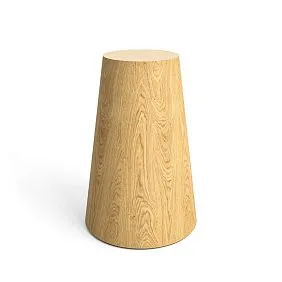
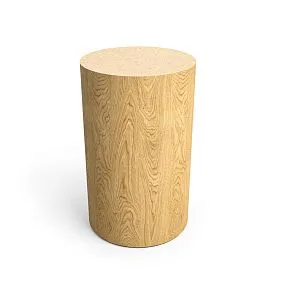
Cylindricalfurniture legshave equal strength in all directions. Square or rectangular supports have different rigidity in different planes — this must be considered when orienting them. Conical supports, tapering toward the bottom, are elegant but require a larger cross-section at the top to ensure sufficient strength.
The presence of height-adjustable elements at the bottom of the supports — an important detail. They allow compensating for floor irregularities and ensure table stability even on an imperfectly level surface.buy furniture legs in MoscowTables with adjustable elements — a sensible solution for any table.
For a classic interior, polishedchair legswith decorative profiles, possibly with carved elements. For modern interiors — minimalist design, straight lines, clean forms. For loft style — rough, bulky supports, possibly retaining wood grain texture and imperfections, or metallic elements.
buy legscan be purchased ready-made or custom-made. Ready-made supports — speed and standard quality. Custom-made — the opportunity to get exactly what is needed, taking into account all requirements regarding size, shape, material, and finish.Buy furniture supportsshould be from reputable manufacturers who control wood quality, follow drying and finishing technology, and guarantee precise dimensions.
Assembly and Installation: Details Determining the Result
Even the most qualitybuy furniture legsis not enough — they must be installed correctly. Installing supports and assembling the frame — stages requiring attention and care.
First rule — accurate marking. Supports must be placed strictly at the corners of a rectangle or according to the plan. Even a few millimeters deviation will cause the table to wobble, resting on only three legs instead of four. Use measuring tools — tape measure, square, level. Check diagonals — they must be equal.
Second rule — quality of connections. If using a dowel joint, the dowels must fit snugly into the sockets. Gaps are unacceptable — they lead to structural loosening. Glue — only high-quality wood glue. Applied evenly, parts are pressed tightly and secured until the glue fully dries.
If using metal fasteners, it is important to choose the correct type and size. Screws must be long enough to securely enter the wood, but not so long that they protrude from the other side. Holes for screws are pre-drilled — this prevents wood cracking. Brackets and plates are selected based on load — heavy tables require reinforced versions.
Third rule — assembly sequence. First, the frame is assembled — supports are connected to rails, forming a rigid frame. Geometry is checked, and adjustments are made if necessary. Then diagonal braces are installed, if provided by the design. Only after the frame is fully assembled and checked is the tabletop attached.
Tabletop mounting also has nuances. Wood is a living material that changes dimensions with humidity fluctuations. Therefore, rigidly attaching the tabletop to the frame may cause cracking or warping. Special fasteners are used, allowing the tabletop to slightly shift in the plane parallel to the grain, while securely fixing it perpendicular to the grain.
Aesthetics and Functionality: Where the Balance Lies
Furniture is not only an engineering structure, but also an object existing in interior space. It should be not only strong and rigid, but also beautiful, harmonious, matching the style and atmosphere of the room. How to find the balance between functionality and aesthetics?
Let’s start with the fact that constructive logic can be aesthetically expressive. Diagonal braces, rails, and tables — all these are elements that should not be hidden.Chair legsInstead, emphasizing their role in the structure can create a visually interesting piece. X-shapedBuy table baseis not a compromise, but a design solution where engineering efficiency becomes part of the artistic image.
Proportions matter. HeavyLegs for chestssupports or table tops may appear heavy if the tabletop is thin and light. Conversely, overly thin supports under a heavy tabletop create an impression of instability, even if the structure is correctly calculated. Harmony is achieved when the visual weight of elements corresponds to their actual function.
Wood finish affects perception. Light tones visually lighten the structure, dark tones — add weight. Glossy surfaces add elegance, matte — warmth and naturalness. Wood texture and grain — all these are elements that can be used to create a specific mood.
Decorative elements — carving, inlays, decorative profiles — enrich the design, but should not contradict constructive logic.Wooden wall decorandBuy decorative elementsfor furniture can be used, but they must be applied thoughtfully, so that they emphasize rather than hide the essence of the structure.
Longevity: How to Make a Table Last for Centuries
A good table serves not years — decades. Some furniture items outlive generations, becoming family heirlooms. What determines such longevity?
First, material quality. The wood must be properly dried, free of hidden defects, cracks, rot, or pest damage.wooden planks on the wall, Moldings, balusters— for all such items, as well as for furniture supports, the quality of the raw material is critically important.
Second, correct construction. Rigid frame, reliable connections, thoughtful load distribution — all of which we discussed above. The structure must withstand not only static loads, but also dynamic ones — impacts, vibrations, repeated cycles of loading and unloading.
Third, quality finish. Protective coating — varnish, oil, wax — protects wood from moisture, dirt, and mechanical damage. It must be applied correctly, following technology, in multiple layers with intermediate sanding.
Fourth, proper use. Wood does not like sharp changes in humidity and temperature. The table should not be placed directly next to a radiator or under direct sunlight. Regular dust cleaning and periodic renewal of protective coating extend the service life.
And finally, repairability. Good furniture is designed so that worn or damaged parts can be replaced without destroying the entire structure. Ifbuy a chair legYou can replace the broken leg separately, restoring the functionality of the chair or table.
Innovation and Tradition: A Modern Approach
Furniture-making is one of the oldest crafts. For millennia, masters have refined woodworking techniques, creating structures that withstand the test of time. Many principles discovered centuries ago remain relevant today. Dowel joints, aprons, diagonal braces — all of this has been proven over centuries.
But the modern world brings new approaches. Computer modeling allows calculating stresses and deformations in a structure even before prototyping. You can virtually test a table under various loads, identify weak spots, optimize the shape and cross-sections of elements. What was once learned through trial and error can now be calculated in advance.
New materials expand possibilities. Adhesives based on polyurethane or epoxy resins create joints stronger than wood itself. Composite materials combine lightness with strength. Metal elements are integrated into wooden structures, providing additional rigidity without increasing mass.
Processing technologies become more precise. CNC machines cut parts with accuracy down to tenths of a millimeter, ensuring perfect fit. Automated painting lines create uniform, high-quality protective coatings.
But the most important thing is understanding. Understanding how a structure works, what forces act upon it, how materials react to load. An engineering approach based on knowledge of mechanics and materials science allows creating furniture that is not only beautiful but also functional, durable, and reliable.
wall molding, decorative rose outlets, Wooden cornices— all these decorative elements, as well as functional onesFurniture Handles, require the same approach: a combination of traditional craftsmanship and modern knowledge.
Special Cases: Non-standard Solutions
Not all tables fit standard schemes. Sometimes non-standard solutions are required, and here engineering thinking must work especially intensively.
Long tables — three, four, five meters — require additional intermediate supports. Two supports at the ends are insufficient — the tabletop will sag in the center. At least one central support is needed, preferably two or more, depending on the length and mass of the tabletop.
Console tables, where the tabletop is mounted to the wall and lacks front supports, require especially strong wall mounting. In this case, the load creates a significant bending moment on the mounting elements. It is necessary to use strong brackets securely fastened to the wall, preferably to load-bearing structures.Decorative brackets for shelvescan serve not only as aesthetic elements but also as part of the load-bearing structure.
Tables with adjustable height — a solution for modern offices and home workspaces. Adjustment mechanisms must ensure structural rigidity in any position. This requires thoughtful design of guide rails, locking elements, and load distribution.
Folding and transformable tables — another category of non-standard solutions. Folding mechanisms must be reliable, and the structure in the unfolded state must be no less rigid than a standard table. Additional supports that extend during unfolding, additional aprons strengthening the frame — all these are elements requiring careful design.
Psychology of Space: How Legs Affect Perception
Table legs — these are not only functional elements, but also components that shape our perception of space. Heavy, massiveTable legscreate a sense of solidity and stability, but visually occupy space. Thin, elegant legs lighten the structure, making it airy, but may subconsciously evoke a sense of instability.
The placement of legs affects ergonomics. Legs at the corners of the tabletop — a traditional solution — but they may interfere if many people sit at the table. Central legs or legs shifted toward the center free up space at the edges, allowing comfortable seating.
Visual connection of legs with the floor and tabletop creates a sense of structural integrity. If legs appear too thin or too massive relative to the tabletop, a dissonance arises. Harmony is achieved through proportions, through visual correspondence of weight and function.
The color and texture of legs can either emphasize their presence or make them less noticeable. Legs of the same color and material as the tabletop create a sense of unity. Contrasting legs — for example, metal under a wooden tabletop — accentuate the structural scheme, making it part of the design.
FAQ: Answers to popular questions
How to calculate how many legs a table needs?
The minimum number of legs for stability is three, but for even load distribution, four are usually used. For long tables (over two meters), six or more legs are recommended. Calculation depends on table length, tabletop thickness, and expected load. General rule: the distance between legs should not exceed 120 cm, otherwise the tabletop may sag.
What diameter of legs is needed for a dining table?
For a standard four-person dining table with a load up to 100 kg, legs with a diameter of 6–8 cm or square cross-section 7x7 cm, 8x8 cm are suitable. For larger tables for 8–10 people, a diameter of 8–10 cm or more is recommended.
Is it necessary to use diagonal braces?
If connections between legs and aprons are done properly (dowel joints with glue), diagonal braces are not always necessary for small tables. However, for tables longer than 80 cm, for structures with non-rigid connections, and for tables subjected to significant lateral loads, diagonal braces are strongly recommended.
Can metal supports be used instead of wooden ones?
Yes, metal supports have high strength and can be significantly thinner than wooden ones while maintaining the same load-bearing capacity. However, material compatibility must be considered — the methods for attaching metal supports to a wooden countertop differ from those for wooden supports. Aesthetic harmony is also important — metal and wood must complement each other in design.
How to reinforce a wobbly table?
If the table wobbles, the cause is usually loose joints or insufficient frame rigidity. The first step is to tighten all fasteners. If screws or bolts are used, they must be tightened. If glued joints have loosened, disassemble the structure, clean the surfaces, and re-glue. Additionally, you can install diagonal braces or reinforcing brackets.
What distance should be between the aprons and the floor?
For dining tables, lower aprons are positioned at a height of five to ten centimeters from the floor — they serve as footrests, allowing you to rest your feet on them. For writing tables, aprons are often placed at a height of forty to fifty centimeters — this is optimal for structural rigidity. Upper aprons are located directly beneath the tabletop.
Does the wood species affect the table's rigidity?
Yes, significantly. Hardwoods (oak, beech, ash) have a higher modulus of elasticity and deform less under load. Softwoods (pine, spruce) require larger cross-sections of elements to achieve the same rigidity. However, with proper calculation and design, you can create a rigid table from any wood species.
How to attach the tabletop to the frame?
The tabletop should not be rigidly screwed to the frame with ordinary screws along the entire perimeter — wood expands and contracts with changes in humidity, and rigid fastening may cause cracking. Use either special Z-shaped fasteners, or fastening through oval holes, or fastening only along the short side (parallel to the tabletop grain), allowing it to expand freely in the transverse direction.
Conclusion
A table is more than just furniture — it is a space where life unfolds. We work, eat, converse, and create at the table. For the table to serve us faithfully, it must be designed and manufactured with an understanding of mechanical laws, material properties, and construction principles.
table legThe apron is a key structural element, determining the rigidity, stability, and longevity of the table. Load calculations, proper force distribution, use of diagonal braces, and quality joints — all these are components of an engineering approach that transforms a set of wooden parts into a reliable, functional structure.
But engineering does not exist separately from aesthetics. The beauty of form, harmony of proportions, expressiveness of material — these are what make furniture not only functional but also visually pleasing, creating the mood of the space. The best furniture is that where constructive logic and artistic form form a unified whole.
STAVROS has been crafting solid wood furniture for many years, where traditional craftsmanship combines with modern technologies.Furniture legs, Aprons, Balusters for staircase, Wooden Skirting Boards, Crown Molding, decorative elementsEach item is designed with both aesthetic and structural requirements in mind. High-quality wood, proper drying, precise processing, and thoughtful construction — all of this guarantees durability and reliability.
STAVROS offers hundreds of options forlegs for chairsand tables of various shapes, sizes, and styles — from classic turned legs to modern minimalist forms. From miniaturelegs for stoolsto massive supports for large dining tables. Each item can be purchased ready-made or ordered to custom dimensions and drawings.
— everything needed to create a harmonious, stylish, high-quality interior.polyurethane molding, Moldings, Decorative Inserts, Carved Elements, staircase componentsCreating furniture is an art requiring knowledge, experience, and attention to detail. If you value quality, durability, and the beauty of natural materials — welcome to the world of STAVROS, where every item is crafted with love for wood and respect for craftsmanship traditions.
Creating furniture is an art that requires knowledge, experience, and attention to detail. If you value quality, durability, and the beauty of natural materials — welcome to the world of STAVROS, where every piece is crafted with love for wood and respect for craftsmanship traditions.