Article Contents:
- The Philosophy of Detail: Why Hardware is More Than Just Function
- Types of Furniture Hardware: From Handles to Decorative Overlays
- Furniture Handles: The Main Accent of the Facade
- Decorative Overlays: Volume and Ornament
- Hinges: Function and Decorativeness
- Furniture Legs: Support and Sculpturality
- Hardware Materials: Wood, Metal, Combinations
- Wood: Warmth and Naturalness
- Metal: Strength and Variety of Finishes
- Combinations: Wood + Metal
- The Role of Hardware in Shaping Style: Classic
- Baroque: opulence and theatricality
- Classicism: Symmetry and Restraint
- Empire: Monumentality and Imperial Symbolism
- Modernism: Organic Forms and Asymmetry
- The Role of Hardware in Shaping Style: Modernity
- Minimalism: Less is More
- Scandinavian Style: Functionality and Naturalness
- Loft: industrial brutality
- Eco-Style: Nature in the Interior
- Rules for Selecting Hardware: A Practical Guide
- Rule of Style Unity
- Rule of Scale
- Rule of Material Correspondence
- Rule of Composition
- Rule of Color Harmony
- How Hardware Transforms Basic Furniture into Designer Furniture
- Hardware Installation: The Technical Side
- Replacing handles
- Appliqué installation
- Caring for Wooden Hardware
- Trends 2026: What's Relevant in Furniture Hardware
- The Return of Natural Materials
- Minimalism with Character
- Customization of mass-produced furniture
- Mixing Styles
- Black hardware
- Frequently Asked Questions
- Can wooden handles be installed on kitchen furniture?
- How to choose hardware for existing furniture?
- What center-to-center distance to choose for brackets?
- Why is wooden hardware better than metal?
- Can wooden hardware be painted?
- How to install overlays without visible fasteners?
- Where to buy quality wooden hardware?
- How to combine hardware of different styles?
- What hardware is suitable for children's furniture?
- Should all hardware be replaced at once or gradually?
- Conclusion: hardware is the final touch that becomes the first impression

Furniture is silent, but it speaks. It speaks through the shape of the body, the color of the wood, the line of the facade. But there are details that deliver the final word—and that is furniture hardware and decor. The handle you touch every day, the overlay that catches light and turns a flat door into a three-dimensional composition, the hinge—hidden or deliberately decorative—all of this is the language through which an object communicates its character, style affiliation, and value.
Why does one chest of drawers look bland, while another—like a piece of design art? Why do two identical dressers made from the same wood species evoke completely different emotions? The secret lies in the details. Properly selectedFurniture Handlescan transform basic furniture into exclusive pieces, turn an ordinary cabinet into a central element of the interior, and fill the space with style. In this article, we will explore how hardware works, what selection rules exist for classic and contemporary styles, and how furniture decor becomes the key to creating a unique atmosphere.


The philosophy of detail: why hardware is not just a function
Furniture without hardware is functionally incomplete. A cabinet without a handle cannot be opened, a door without a hinge cannot be closed. But if it were only about functionality, all handles would be the same—simple, convenient, cheap. However, we choose. We choose shape, material, size, style. Why?
Because hardware is the point of contact between a person and an object. The handle is the first thing you touch when opening a door. It is a tactile experience: the warmth of wood, the coolness of metal, the texture of carving. It is a visual accent: the handle stands out against the facade, attracts the eye, organizes the composition. It is a meaningful message: a carved wooden handle speaks of classic style, a minimalist bracket—of modernity, a bronze handle with patina—of vintage.
Furniture decorworks differently—it does not carry a direct function but creates character. A carved overlay on a dresser facade does not open the drawer, but it turns furniture from a functional item into an art object. Decor adds volume, texture, history. It says: this furniture is not accidental, it is thoughtful, infused with taste, knowledge of style, and respect for craftsmanship.
The modern industry offers mass-produced furniture—identical, functional, affordable. But it is precisely hardware and decor that allow it to be individualized, given uniqueness, turning a standard cabinet into a designer piece. Replacing standard handles with wooden carved ones, adding overlays to facades, installing decorative hinges—and the furniture gains a face, character, soul.




Types of furniture hardware: from handles to decorative overlays
Our factory also produces:



Furniture handles: the main accent of the facade
The handle is the first thing you notice on a furniture facade. It organizes visual rhythm (especially when there are several handles, as on a dresser with five drawers), creates symmetry or asymmetry, sets the scale.
Button handles are the most compact type. A small element protruding from the facade by 15-40 mm, with a diameter of 20-50 mm. Buttons are good for miniature furniture (bedside tables, small dressers), where large handles would visually overload the facade.Furniture Handlesin the form of wooden buttons create a warm, cozy aesthetic, suitable for Scandinavian style, eco-interiors, minimalism.
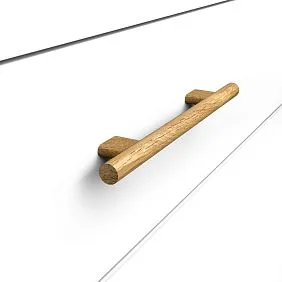
Bracket handles are horizontal arc-shaped elements with two mounting points. Length varies from 64 to 320 mm (distance between mounting holes). Brackets are ergonomic: they are convenient to grasp with the whole palm, which is important for heavy doors and drawers. Wooden brackets, especially from oak or beech, add naturalness, connection with nature, and tactile pleasure to furniture.
Carved handles are decorative elements where the opening function combines with artistic carving. These can be plant motifs (leaves, grape clusters, flowers), geometric patterns, animal figures. Carved handles are characteristic ofclassic furniturewhere every detail carries a decorative load. They turn simple drawer opening into touching art.
Integrated handles are hidden elements built into the facade (recesses, milled grooves, facade edges with a chamfer). They do not protrude, creating a smooth minimalist surface. Integrated handles are suitable for modern furniture, where conciseness and absence of visual noise are valued.
Get Consultation
Decorative overlays: volume and ornament
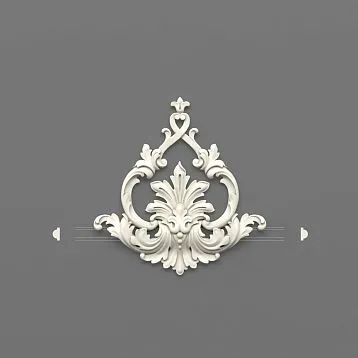
Appliqués are flat or three-dimensional elements that are attached to furniture fronts, serving no functional load but creating a decorative effect. These are carved panels with ornaments, rosettes, corner elements, and central compositions.
Furniture decorin the form of appliqués transforms a flat front into a structured, volumetric, complex one. A central appliqué with acanthus leaves on a cabinet door turns it from a utilitarian object into a Baroque piece. Corner appliqués create a frame that borders the front, making it complete. Modular appliqués (elements that connect to each other) allow for creating compositions of any complexity and size.
Appliqués are used not only on case furniture (cabinets, dressers, buffets) but also on doors, wall panels, and bed headboards. They unify the style, linking furniture and interior architecture with a single decorative language.
Hinges: Function and Decorativeness
Hinges ensure the opening of doors. Standard hinges are concealed—they are not visible from the outside, hidden inside the case. But there are decorative hinges that are intentionally displayed, becoming part of the design.
Decorative hinges are characteristic of furniture in country, rustic, Provence, and Gothic styles. These can be forged elements with scrolls, antique-style hinges with patina, bronze hinges with ornaments. They add historicity, authenticity, and visual massiveness to furniture.
For classic furniture, hinges are usually concealed—decoration is concentrated on the front (handles, appliqués), and mechanisms should not distract. For furniture in ethnic and vintage styles, decorative hinges, on the contrary, emphasize the style and enhance the character.
Furniture Legs: Support and Sculpturality
Legs are support elements, but in classic and designer furniture, they become decorative. Carved legs (cabrioles, balusters, turned legs with fluting, animal paw legs) turn furniture into a sculptural object.
Solid Wood Itemswith carved legs look more noble, massive, and expensive. Legs visually lighten furniture (lifting it above the floor, creating airiness) or, conversely, add monumentality (thick carved legs with ornaments). The choice of leg shape is critical for style: straight tapered legs—Classicism, curved cabrioles—Baroque and Rococo, turned cylindrical legs—Empire and Neoclassicism.
Hardware Materials: Wood, Metal, Combinations
Wood: Warmth and Naturalness
Wooden hardware is a tactile pleasure, naturalness, a connection with nature. Wood is warm to the touch (unlike metal), pleasant in texture, visually soft.Furniture Handlesmade of wood are ideal for solid wood furniture, where material honesty is important—the entire product is made from one material, without compromises.
Oak is a hard wood with expressive texture, suitable for furniture in country, rustic, and Scandinavian styles. Oak handles are brutal, reliable, and durable. Beech is a lighter and more uniform wood, versatile, suitable for any style. Beech is easily painted, patinated, and stained, allowing handles to be adapted to any furniture color.
Wooden hardware is eco-friendly, safe for health, and does not cause allergies. Wood acquires a patina over time—darkening and changing texture, which adds history to furniture, making it alive and authentic.
Metal: Strength and Variety of Finishes
Metal hardware is stronger than wooden, more durable, and more varied in finishes. Metal can be polished (mirror shine), matte, patinated (artificially aged), painted, or with galvanic coating (chrome, gold, bronze, copper).
Bronze hardware with patina is ideal for classic furniture, creating a sense of antiquity, nobility, and connection with palace aesthetics. Chrome-plated hardware is for modern styles (minimalism, high-tech), where shine, coldness, and technological feel are valued. Black matte hardware is for industrial styles (loft), where the emphasis is on brutality, simplicity, and functionality.
Metal hardware is practical: it does not scratch, does not wear out, is easy to clean, and withstands intensive use. For kitchen sets, where furniture is opened dozens of times a day, metal is preferable to wood.
Combinations: Wood + Metal
Combined hardware combines the warmth of wood and the strength of metal. These can be handles with a wooden part (grip) and metal fasteners, or appliqués with wooden carving on a metal base. Combinations expand stylistic possibilities, add texture variety, and create visual interest.
The Role of Hardware in Style Formation: Classicism
Classic Furnitureis a system of rules, canons, proportions, where every detail matters. Hardware in classicism is not just a functional element but a carrier of style, a marker of an era, a sign of belonging to a certain cultural tradition.
Baroque: opulence and theatricality
Baroque furniture is an abundance of carving, gilding, and curvilinear forms. Hardware here is large, decorative, and dominant. Carved handles with acanthus leaves, mascaron (faces), putti (cherubs), volutes (scrolls). Appliqués are volumetric, deep (relief 15-40 mm), covering a significant part of the front.
Furniture decorin Baroque style turns furniture into sculpture. A central appliqué on a cabinet door can occupy 60-80% of the area, becoming the main visual accent. Corner appliqués not only frame the front but intertwine, creating a composition where it is difficult to separate decoration from structure.
Handles in Baroque are often gilded or patinated to resemble bronze. Wooden handles are painted in golden, copper shades, imitating metal but retaining the warmth of wood. Hinges in Baroque can be decorative, with carved appliqués on the joints, turning a functional element into an ornament.
Classicism: Symmetry and Restraint
Classicism opposes Baroque: instead of opulence—strictness, instead of chaos—order, instead of theatricality—rationality. Hardware in classicism is symmetrical, geometric, and restrained.
Handles are oval, cylindrical, with clearly defined forms. Carving is minimal—possible fluting, relief rings, but without plant scrolls and figurative elements. Color—natural wood (oak, walnut, mahogany) or black patina, emphasizing the form.
Classicism overlays are framed: geometric frames bordering the facade, rosettes in centers and corners, meanders (Greek patterns) on borders. Relief depth is medium (5-15 mm), ornament is graphic, clear, legible from a distance.Solid Wood Itemsin the classicism style demonstrate respect for the material, absence of excess, harmony of proportions.
Empire: monumentality and imperial symbolism
Empire is the style of the Napoleonic Empire, combining classicism with militaristic symbolism. Hardware in Empire style is large, massive, with eagles, laurel wreaths, lions, military trophies (swords, shields, torches).
Handles in the form of rings held by lion heads (mascarons). Overlays with bas-reliefs: profiles of emperors, goddess Victoria, heraldic symbols. Metal hardware in Empire style is often gilded or made to resemble bronze, creating a contrast with dark wood (mahogany, ebony).
Empire furniture requires a corresponding interior — high ceilings, monumental spaces, where large hardware does not look excessive. In small spaces, Empire risks turning into a parody, overloading the space.
Modern: organic forms and asymmetry
Art Nouveau (Art Nouveau) rejects classical canons, introduces smooth, flowing lines, asymmetry, plant motifs (irises, lilies, stems). Hardware in Art Nouveau becomes sculptural, where the handle is not a separate element, but a continuation of the facade form.
Carved handles in the form of stylized plants, where fingers grasp a stem or leaf. Overlays with intertwined branches, flowers, insects (dragonflies, butterflies), creating an organic, natural composition. Metal hardware in Art Nouveau is often painted green, blue, golden colors, imitating patina on bronze.
Art Nouveau is capricious: it requires precise correspondence of all interior elements to the style. Modernist hardware on classical furniture looks absurd, as does classicist hardware on modernist furniture. The style must be total, encompassing everything — from furniture to lamps and door handles.
The role of hardware in shaping style: modernity
Modern styles (minimalism, Scandinavian, loft, eco) have different requirements for hardware than classic ones. Here, functionality, conciseness, honesty of materials, and absence of excessive decor are valued.
Minimalism: less is more
Minimalist furniture strives for the disappearance of hardware. Ideal minimalism is furniture without visible handles, where doors open with a push (push-to-open systems), and facades are absolutely smooth. But a complete refusal of handles is not always convenient, so minimalism uses integrated handles (grooves, recesses) or miniature buttons barely protruding from the facade.
If handles are still present, they are maximally simple: straight horizontal brackets without decor, round buttons from a solid-color material, metal handles with a matte finish. Color — black, white, gray, chrome. Overlays are absent in minimalism — decor contradicts the style's ideology.
Furniture Handlesmade of wood are possible in minimalism, but in an extremely concise form: cylindrical rods, oval buttons without threading, horizontal planks with natural wood texture. Wood adds warmth to a cold minimalist interior without violating conciseness.
Scandinavian style: functionality and naturalness
Scandinavian style combines minimalism with coziness, conciseness with warmth. Hardware here is functional but not cold, simple but not primitive. Wooden handles from light species (birch, ash, pine) are a characteristic element of Scandinavian furniture.
Handle shapes are simple: oval, cylindrical, semicircular. Surface is smooth, with visible wood texture, sometimes painted white or gray, but with texture preserved. Overlays are not used, but thin relief lines creating a geometric pattern on facades are possible.
Scandinavian furniture values honesty of material: if wood, then without imitations, if metal, then without gilding.Solid Wood Itemsare ideal for Scandinavian style — they are natural, durable, eco-friendly, carry warmth and connection with nature.
Loft: Industrial Brutality
Loft — the style of former industrial premises converted into residential ones. Hardware here is brutal, functional, often with industrial aesthetics. Metal handles under black steel, rough brackets, visible screws, decorative hinges with rivets.
Wooden hardware in loft is possible, but from roughly processed wood: unpainted handles with visible knots, textured surface, traces of processing. Overlays are rarely used, but metal plates with rivets imitating industrial reinforcements are possible.
Loft is not afraid of imperfections: scratches, wear, unevenness — these are not defects, but part of the aesthetics. Hardware can be used, vintage, found at flea markets, which adds authenticity and history to the interior.
Eco-style: nature in the interior
Eco-style returns nature to the home: natural materials, plants, natural colors. Hardware here is wooden, from untreated or minimally processed species. Handles from branches, bark, roots, preserving the natural shape of the tree.
Furniture decorin eco-style — is carving imitating natural forms: leaves, flowers, animals, but not in baroque lushness, but in a natural, organic manner. Overlays can be asymmetrical, repeating the shape of a knot, the twist of a trunk, the texture of bark.
Eco-style values the uniqueness of each element: two handles can be dissimilar because they are carved from different branches. This is not a flaw, but an advantage — each detail is individual, unique, carries the history of a specific tree.
Rules for selecting hardware: a practical guide
How to choose hardware so that it not only fits but enhances the style of the furniture? Here are the key rules:
Rule of style unity
Hardware should match the style of the furniture and interior. Baroque carved handles on a minimalist dresser are a stylistic disaster. Simple cylindrical knobs on a classic sideboard are an underestimation of potential. The style of the hardware, furniture, and interior must be coordinated.
If the furniture is classic, the hardware should be classic: carved handles, decorative plates, elements with ornaments. If the furniture is modern, the hardware should be laconic: simple shapes, minimal decoration, functionality first.
Rule of Scale
The size of the hardware must correspond to the size of the furniture. A large handle on a small door looks grotesque. A miniature knob on a huge wardrobe door gets lost and fails to perform its visual function.
For small items (bedside tables, narrow dressers) — knobs with a diameter of 20-35 mm or short pulls 64-96 mm. For medium furniture (dressers, sideboards) — pulls 128-160 mm or large knobs 40-50 mm. For large items (wardrobes, closets) — long pulls 192-320 mm or large carved handles.
Rule of Material Harmony
The material of the hardware should harmonize with the material of the furniture. Wooden hardware is natural on solid wood furniture. Metal hardware is more universal, suitable for any materials (wood, MDF, laminate), but on solid wood furniture, wood is preferable — it creates material unity.
If the furniture is dark (oak, walnut, wenge), the hardware can be contrasting (light wood, metal) or matching (dark wood, black metal). If the furniture is light (birch, ash, whitewashed pine), hardware made of light wood creates a monochrome look, metal — contrast.
Rule of Composition
Hardware should create a visual composition on the facade. If the facade has several drawers, handles are placed along a vertical axis (one above the other), creating rhythm. If the facade is wide (a two-door wardrobe), handles are placed symmetrically relative to the center.
Plates work on the same principle: a central plate is placed on the axis of symmetry, corner ones — in the corners, creating a frame. Chaotic placement of hardware destroys the composition, making the facade visually cluttered.
Rule of Color Harmony
The color of the hardware should harmonize with the color of the furniture. Wooden hardware can be:
-
Matching the furniture (oak handle on an oak facade) — creates solidity, unity
-
Contrasting (light handle on a dark facade) — creates an accent, highlights the hardware
-
Painted to match the furniture (beech handle painted to match an oak facade) — creates color unity with material diversity
Metal hardware can be:
-
Chrome-plated (cold shine) — for modern styles
-
Bronze/copper (warm shine) — for classic styles
-
Black matte — universal, suitable for any styles
-
Gilded — for Baroque, Empire, luxurious interiors
How hardware transforms basic furniture into designer furniture
Experiment: take two identical dressers from IKEA. Leave the standard plastic handles on the first one. On the second, replace them with carved oak wooden handles. Add decorative plates with floral ornaments to the central drawers. Paint the facades a noble gray color, patinate the handles.
Result: the first dresser remains typical, recognizably mass-produced. The second — turns into a designer piece that can be passed off as antique or custom-made. The difference is only in the hardware and decor. The construction, dimensions, and functionality are identical.
This is the principle of hardware: it adds value without changing functionality. It allows for the individualization of mass-produced items, turning the standard into the unique.Furniture HandlesWooden handles, carved plates, decorative hinges — customization tools available to everyone.
Interior designers actively use this technique: they buy basic furniture from mass-market retailers (cheap, functional), then transform it with hardware, paint, and decor. The cost remains affordable, the result — individual, stylish, visually expensive.
Installing hardware: the technical side
Replacing hardware does not require professional skills — anyone with basic tools (screwdriver, drill, drill bit, ruler, pencil) can do it.
Handle Replacement
Old handles are removed: unscrew the screws from inside the drawer/door, remove the handle. New handles are installed through the same holes if the center-to-center distance matches (for pulls) or the hole diameter fits (for knobs).
If the new handles have a different center-to-center distance, new holes are needed. Mark the handle position with a pencil (use a paper template for accuracy), drill holes 5-8 mm in diameter (depends on the screw diameter). Install the handle, tighten the screws from the inside.
Tip: if the old holes do not match the new ones, fill them with wood putty, sand, paint — they will become invisible.
Appliqué Installation
Overlays are attached with glue (carpenter's PVA, contact adhesive, liquid nails) or with screws. Glue attachment is cleaner — no visible fasteners. Screw attachment is more reliable, especially for large, heavy overlays.
Clean the facade from dust, degrease it. Mark the overlay position with a pencil (use a level for verticality/horizontality). Apply glue to the back of the overlay, press it to the facade, secure with a clamp or weight for 12-24 hours (glue curing time).
For screw attachment: drill holes in the overlay and facade, screw in the screws. Use screws without heads (finish nails) or sink the heads into recessed threads where they are invisible. After installation, the overlay can be painted together with the facade, creating color unity.
Care for wooden hardware
Wooden hardware requires minimal care, but it extends its service life and preserves its appearance.
Regular cleaning: wipe with a dry or slightly damp soft cloth to remove dust and dirt. Do not use aggressive cleaning agents (solvents, abrasives) — they damage the finish.
Moisture protection: wooden hardware is afraid of prolonged contact with water. In kitchens and bathrooms, use handles with a protective coating (varnish, oil-wax) that forms a water-repellent barrier.
Finish renewal: every 2-3 years, treat wooden hardware with wood oil or wax. This nourishes the wood, restores the protective layer, and refreshes the color.
Repairing damage: if the handle is scratched, sand the damaged area with fine sandpaper, apply oil or varnish. Deep chips are filled with wood putty, then painted to match.
Trends 2026: what's relevant in furniture hardware
Return of natural materials
The trend towards eco-friendliness, naturalness, and rejection of plastic makes wooden hardware in demand. Consumers choose wood for its warmth, tactile qualities, and environmental safety.Solid Wood Items— it's an investment in durability, nature, health.
Minimalism with Character
Modern minimalism is moving away from sterile coldness, adding warmth through materials. Wooden handles in minimalist shapes (cylinders, ovals, straight bars) combine conciseness with coziness. This is minimalism that doesn't repel but invites.
Customization of mass-produced furniture
The DIY (do it yourself) and customization trend continues. People buy basic furniture, then personalize it with hardware, painting, and decor. It's economical, creative, and allows creating unique interiors without designer budgets.
Style mixing
Strict adherence to one style is becoming a thing of the past. Modern interiors mix classic and contemporary, vintage and minimalism. Hardware here is a balancing tool: classic carved handles on modern furniture, minimalist pulls on a vintage dresser. The main thing is a sense of proportion, compositional logic.
Black hardware
Black matte hardware (metal or painted wood) is becoming a universal classic. It suits any style (from classic to loft), combines with any furniture colors (light, dark, bright), creates an elegant contrast, adds graphic quality.
Frequently asked questions
Can wooden handles be installed on kitchen furniture?
Yes, but choose handles with a protective coating (varnish, oil-wax) that is resistant to moisture and grease. Kitchen hardware is used intensively, comes into contact with water, and cleaning agents. A quality coating protects the wood and extends its service life. Regularly wipe handles from grease stains.
How to choose hardware to match existing furniture?
Determine the furniture style (classic, contemporary, vintage). Choose hardware in the same style. Consider the furniture color: hardware can be matching or contrasting. Measure the center-to-center distance of the old handles (for pulls) or the hole diameter (for knobs), so the new hardware fits without additional holes.
What center-to-center distance to choose for pulls?
Standard sizes: 64, 96, 128, 160, 192, 224, 320 mm. For small drawers (width up to 40 cm) — 64-96 mm. For medium (40-60 cm) — 128-160 mm. For wide (60-100 cm) — 192-320 mm. Visually, the handle should occupy 30-50% of the facade width.
What makes wooden hardware better than metal?
Wood is warm to the touch, pleasant tactilely, eco-friendly, natural. It creates a cozy atmosphere, suits solid wood furniture, ages beautifully (patina adds nobility). Metal is stronger, more durable, more varied in finishes, but colder, less tactilely pleasant.
Can wooden hardware be painted?
Yes, wood can be easily stained with wood stains, painted, or patinated. Before painting, sand the surface with fine sandpaper (grit 220-320) and clean it from dust. Apply a wood stain (for tinting while preserving the texture) or paint (for a solid coverage). After drying, coat with varnish or oil for protection.
How to install overlays without visible fasteners?
Use adhesive mounting. High-quality wood glue (PVA class D3/D4) or contact adhesive will provide reliable fixation without screws. For heavy overlays, combine glue and headless finish nails, which are driven into recesses in the carving where they are not noticeable.
Where to buy quality wooden hardware?
Turn to specialized manufacturers working with solid wood. Avoid Chinese mass-market products — they often use low-grade wood and poor processing. Check wood certificates, manufacturer warranties, and customer reviews.
How to combine hardware of different styles?
Mixing styles requires a sense of proportion. The rule: one style dominates (60-70% of elements), the second complements (30-40%). For example, modern furniture with predominantly minimalist hardware, but with a few classic carved handles on key pieces (dresser, sideboard). Or classic furniture with traditional hardware, but with the addition of black matte handles on several fronts for a modern accent.
What hardware is suitable for children's furniture?
For children's rooms, choose hardware without sharp corners, safe, and eco-friendly. Wooden handles are ideal: they are warm, do not cause injury upon impact, and contain no toxic coatings. Shapes — rounded knobs, oval pulls. Avoid small elements that a child could tear off and swallow.
Is it necessary to change all hardware at once or can it be done gradually?
It can be done gradually if stylistic unity is maintained. Start with key furniture pieces (dresser in the living room, sideboard in the kitchen), then move to secondary ones. The main thing is that the hardware should be from the same collection or style so that the interior looks cohesive, not chaotic.
Conclusion: hardware is the final touch that becomes the first impression
We open a cabinet by touching the handle. We see furniture by noticing the hardware. This detail, seemingly insignificant, forms the first impression, sets the tone, creates character.Furniture hardware and decor— is the language in which an object speaks of its style, quality, and value.
Properly chosen hardware transforms furniture. A basic dresser turns into a designer piece. A standard wardrobe gains individuality. A simple cabinet begins to tell a story — classic, modern, vintage, eco. It all depends on the choice of handles, overlays, hinges, legs.
Solid Wood ItemsFurniture with wooden hardware creates material unity, honesty, and naturalness. Wood is warm, tactilely pleasant, and eco-friendly. It ages beautifully, acquiring a patina that does not spoil but ennobles. Wooden hardware is an investment in durability, coziness, and connection with nature.
Classic FurnitureClassic furniture requires classic hardware — carved handles, decorative overlays, elements with ornaments. Modern furniture requires laconic hardware — simple forms, minimal decor, functionality. But boundaries are blurring: modern classic combines traditional forms with restrained decor, and modern style adds warmth through natural materials.
Trends for 2026 confirm: natural materials are returning, minimalism is becoming warmer, customization of mass-market furniture is growing, and mixing styles is becoming normalized. Hardware is the tool for these transformations. It is accessible, easy to install, and radically changes the perception of furniture.
Company STAVROS createsFurniture HandlesandDecorative InsertsSTAVROS hardware is made from premium-grade solid oak and beech. Over two decades of experience, in-house production, modern equipment, and meticulous quality control — all this ensures products of European level. The STAVROS range includes 32 handle models and over 400 decorative overlay models, covering all styles from Baroque to minimalism.
Every STAVROS product is manufactured using 3D milling followed by manual finishing, sanding, and final treatment. The wood is dried to a moisture content of 8-10%, eliminating deformation and cracking. Finished products can be purchased unfinished (for self-finishing) or with factory coating (oil, wax, varnish, patination).
STAVROS produces not only hardware but also comprehensive solutions for furniture: carved and turned legs, cornices, pilasters, balusters, moldings. This allows creating furniture in a unified style where each element is connected to others by a common aesthetic. The company works with both private clients and furniture factories, designers, architects, offering ready-made products or custom solutions for individual projects.
Choosing STAVROS hardware, you get quality tested by time, style based on knowledge of traditions, and functionality confirmed by operation. Wooden hardware from STAVROS is not a detail, but a key to creating an interior that will delight for decades, be passed on to future generations, and preserved as a family heirloom.
Furniture begins with construction but is completed by details. Hardware is the final touch that becomes the first impression. Do not skimp on details. Invest in quality, style, craftsmanship. Because it is the details that turn furniture from a functional item into an object that is loved, valued, and remembered.