Article Contents:
- Genealogy of the Style: Where Provence Came From
- Provence Region: Geography as Inspiration
- From Village to Bourgeoisie: Refinement of Country Style
- Modern Provence: Adaptation to Urban Life
- Provence Color Palette: Warm Pastels
- Base Tones: White, Beige, Gray
- Accent Colors: Natural Palette
- Provence Furniture: Forms and Materials
- Material: Solid Wood as the Foundation
- Forms: Simplicity Without Primitivism
- Finish: Patina as a Testament to Time
- Interior Decor: Details Create Atmosphere
- Carved Overlays: Floral Motifs
- Moldings and Cornices: Architectural Framing
- Hardware: Function as Decoration
- Textiles: Softness and Pattern
- Materials: Linen, Cotton, Chintz
- Patterns: Flowers, Check, Stripe
- Lace and Embroidery: Handicraft as Value
- Lighting: Soft Diffused Light
- Chandeliers: Wrought Iron, Ceramic, with Lampshades
- Wall Sconces: Cozy Local Lighting
- Table Lamps: Function and Decor
- Frequently Asked Questions About Provence Style
- Is Provence Suitable for a Small Apartment?
- Can Provence Be Combined with Modern Elements?
- How to Care for Patinated Furniture?
- What Are Common Mistakes When Creating a Provence Style?
- How much does it cost to furnish a room in Provence style?
- Conclusion: The French Dream by STAVROS

Close your eyes and imagine: lavender fields of southern France, bathed in July sun. Whitewashed walls of old houses, draped with grapevines. Wooden shutters, faded by time to a soft gray-blue. The scent of freshly baked bread, mingled with the aroma of roses from the garden. This is the essence of Provence, a style born in the villages of the French Mediterranean, where simplicity does not contradict elegance, where the marks of time are valued as a patina of nobility.Provence Furnituretransports this atmosphere into the modern home, where light tones create airiness, patinated surfaces tell stories, floral motifs bring the garden inside, and forms, devoid of pomp, breathe the honesty of rural craftsmanship.
Why has Provence conquered the world, extending far beyond the borders of southern France? Because it responds to the fatigue from urban hustle, sterile minimalism, and the artificiality of plastic and chrome. Provence is a return to the organic, the handmade, to the warmth of natural wood, linen textiles, ceramics.Light furnituremade of solid wood in the spirit of Provence creates visual lightness, expands space, fills it with light even on cloudy days when it's raining outside, and inside there is a warm, cozy environment inviting you to stay home with a book and a cup of tea.




Genealogy of the Style: Where Provence Came From
Before talking about specific furniture pieces, it's important to understand the roots of the style, its philosophy, its evolution from 18th-century peasant houses to modern interpretations.




Provence Province: Geography as Inspiration
Provence is a historical province in southeastern France, between the Mediterranean Sea and the Alps. The climate is mild, Mediterranean—hot dry summers, mild winters. The landscapes are contrasting—lavender fields, vineyards, olive groves, rocky hills, azure sea. The light is bright, southern, sharply outlining shadows. Architecture was shaped by the climate—thick walls of local stone protecting from heat, small windows with wooden shutters, tiled roofs.
Interiors of Provençal houses from the 17th-19th centuries were utilitarian—peasants, artisans, small traders could not afford the luxury of urban mansions. Furniture was made by local carpenters from available wood—walnut, oak, cherry, pine. Forms were simple, functional, without excess. Finishing was minimal—sometimes carving with plant motifs reflecting the surrounding nature.
The color palette was determined by available materials. Walls were whitewashed with lime—cheap, reflects heat, protects from insects. Wood was painted with simple pigments—ochre, umber, cobalt blue, green from copper compounds. Textiles were woven from linen, cotton—natural beige, gray tones or dyed with plant dyes—lavender gave gray-violet, saffron—yellow, madder—red.
Our factory also produces:


From Village to Bourgeoisie: Refinement of Country
The 19th century brought the urban bourgeoisie to Provence, seeking rural idyll. Doctors, lawyers, merchants bought old farms, restored, refined them. Village furniture was preserved but refined—carving was added, hardware became more elegant, proportions more graceful. The Provençal style transformed from purely utilitarian to consciously aesthetic.
The 20th century, especially the second half, canonized Provence as a style. Designers, decorators created an idealized version of the country interior—lighter, cleaner, more graceful than historical originals. Furniture was specially produced with aging effects—patination, brushing, artificial wear created the illusion of a century-old history. Provence became a product you could buy ready-made, without waiting for time to leave its mark.
Get Consultation
Modern Provence: Adaptation to Urban Life
Today, Provence adapts to urban apartments, country houses, hotels, restaurants all over the world. The essence remains—light tones, natural materials, simple forms, floral motifs—but the execution varies. Pure Provence—as close as possible to historical examples. Provence-mix—combining Provençal elements with modern ones. Provençal accents—individual pieces in an otherwise styled interior.
An urban apartment rarely allows full immersion in the style—layouts are modern, ceiling heights lower than in old houses. But a separate room—a bedroom, kitchen—can become a Provençal island, whereinterior decorationmade of solid wood with carved floral motifs, light furniture with patina, linen textiles create the atmosphere of a French village.
Provence Color Palette: Warm Pastels
Color is a key element of the Provençal style. The palette is specific, recognizable, creates the mood instantly.
Base Tones: White, Beige, Gray
White—the foundation of Provence. But not cold snow-white, but warm, creamy, milky, ivory. Whitewashed walls of old houses were never perfectly white—lime with added ochre gave a cream shade. White furniture in Provence is also warm—adding a drop of ochre, yellow, beige to the paint creates softness.
Beige—the color of raw linen, bleached wood, sandstone. From light cream to dark brownish-beige. Beige creates warmth, neutrality, against which bright accents sound brighter. Furniture made of light oak, ash without tinting is naturally beige.
Gray—the color of faded shutters, old tiles, lavender, dusty roads. Warm gray with added beige or cool gray-blue. Gray in Provence is not gloomy but elegant, creates contrast with white, frames bright accents.
Accent Colors: Natural Palette
Lavender—the hallmark of Provence. Gray-violet, muted, like blooming lavender fields in July. Lavender is used in doses—textiles, ceramics, a painted chair. Excess turns Provence into a caricature.
Blue—the color of the Mediterranean sky and sea. From pale sky-blue to saturated azure. Blue shutters, cabinet doors, ceramic dishes. The combination of blue with white is a Provence classic.
Yellow—sunny, warm, from pale lemon to deep ochre. The color of sunflowers, wheat fields, sunlit walls. Yellow adds joy, optimism, compensates for lack of sun in northern latitudes.
Green — olive, mint, sage. Muted shades of Provence greenery — olive groves, vineyards, Mediterranean herbs. Green is calming, creates a connection with nature, and pairs well with wood.
Terracotta — the color of clay tiles, ceramic pots, earth. A warm reddish-brown. Terracotta tile flooring is a Provence tradition. Terracotta accents — pots, vases, tableware.
Provence furniture: forms and materials
Furniture is the heart of a Provençal interior. Forms, materials, and finishes create the style's recognizability.
Material: solid wood as the foundation
Solid Wood Items— a mandatory condition for authentic Provence. Chipboard, MDF with film coating are unacceptable — artificiality contradicts the style's philosophy. Solid oak, ash, pine, walnut have a living texture, breathe, and acquire a patina over time.
Pine — the traditional wood of Provence. Soft, easy to work with, affordable. Pine takes paint and patination well. The texture is expressive — annual rings and knots add character. Pine furniture is light in color, visually light, and democratically priced.
Oak — a noble, hard wood. Oak furniture is stronger, more durable, and more prestigious than pine. Light oak is ideal for Provence — a natural beige-golden tone with an expressive texture. Oak can be bleached to create a silvery-gray shade or lightly tinted to emphasize the grain.
Ash — a light wood with a contrasting grain. Ash furniture is fresh, modern, and fits well into Provençal interiors where one wants to avoid the heaviness of dark wood. Ash is strong, elastic, and lasts for decades.
Walnut — used less frequently, for more expensive, elegant versions of Provence. Walnut wood of a noble chocolate shade creates contrast with light walls and adds visual depth.
Forms: simplicity without primitivism
Provençal furniture is not pompous like Baroque, not geometric like Art Nouveau, not minimalist like Scandinavian style. The forms are simple but not primitive — proportions are well-considered, details are elegant.
Chest of drawers — a classic piece of Provençal bedroom furniture. Rectangular body, three to four rows of drawers, curved cabriole legs or straight tapered ones. Drawer fronts are frame-and-panel or smooth. The top sometimes has a gallery — a low carved railing along the edges. Height 800-900 millimeters, width 900-1200 millimeters.
Buffet — a tall cabinet for tableware, characteristic of the kitchen or dining room. The lower part has solid doors and drawers, the upper part has glazed doors to display ceramic tableware. Height 1800-2200 millimeters. The cornice is carved, sometimes with a pediment.
Dining table — a massive tabletop made of wide planks on turned or straight legs. Shape rectangular or oval. The tabletop retains the natural wood color, the base can be painted white, blue, gray. Size from 1400×800 millimeters for a small kitchen to 2000×1000 millimeters for a dining room.
Bed — a high headboard, frame-and-panel or with soft upholstery. Frame made of solid wood, often painted. The footboard is low or absent. Sleeping height 500-600 millimeters — higher than modern standards, creating a sense of importance.
Chair — straight or curved legs, a back with vertical slats or a frame. Seat is hard wood or soft with upholstery made of linen, cotton with floral print. Painted white, gray, blue, or natural wood.
Finish: patina as a testament to time
New furniture looks new — uniform color, smooth surfaces, sharp edges. Old furniture bears the marks of time — paint worn away in areas of frequent contact, wood darkened in some areas and faded in others, edges rounded from touch. Patina — the sum of these changes — gives furniture history, character, soul.
Patination — the artificial creation of an aging effect on new furniture. The process is multi-stage. Furniture is painted with a base color — white, gray, blue. After drying, a second layer of a contrasting color is applied — dark brown, gray, green. The second layer is partially sanded off with sandpaper in areas of natural wear — corners, edges, centers of doors. The base color shows through, creating the illusion of years of use.
Brushing — mechanical treatment of wood with a metal brush, removing soft fibers and exposing hard annual rings. Creates a relief texture that emphasizes the wood grain. Brushed wood is stained — dark stain penetrates the recesses, light stain remains on the ridges. Contrast is enhanced.
Craquelure — a network of fine cracks on a painted surface, imitating the cracking of old paint. Achieved by applying a special craquelure varnish between layers of paint. As it dries, the varnish cracks, pulling the top layer of paint with it. The lower layer of contrasting color shows through the cracks.
Distressing — local removal of paint down to the wood in areas where furniture naturally wears. Corners of tabletops, edges of doors, centers of drawers, chair legs. Distressing is created with sandpaper, steel wool, a hard sponge. The result — the feeling that the furniture has been used for decades.
Interior decor: details create atmosphere
Furniture decor— carved overlays, moldings, rosettes, cornices — completes the Provençal interior, adding volume, detailing, and a handmade feel.
Carved overlays: floral motifs
Carving in Provence is not Baroque opulence, but delicate detailing. Motifs are botanical — roses, lilies, grapes, olive branches, wheat ears. Carving is bas-relief or medium-relief — depth 5-15 millimeters, sufficient to create volume without visual overload.
Overlays with roses adorn the fronts of chests of drawers, cabinet doors, bed headboards. The rose — a symbol of love, beauty, French gardens. A carved rose with petals, leaves, buds creates a romantic accent. Overlay size from 100×100 to 200×300 millimeters.
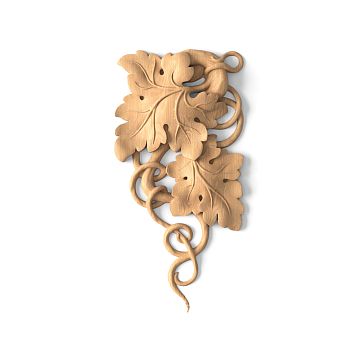
Overlays with grape clusters are appropriate in the dining room, kitchen, wine cellar. Grapes — a symbol of abundance, joy, southern sun. Clusters with leaves, tendrils create a dynamic composition. Finish natural wood or patinated.
Rosettes — round overlays with floral ornamentation — decorate the centers of doors, beam ends, furniture fronts. Diameter 60-150 millimeters. A rosette creates a focal point, attracts the eye, completes the composition.
Moldings and Cornices: Architectural Framing
Moldings on the walls of a Provençal interior create frames and divide planes. The molding profile is simple—bead, ogee, chamfer—without Baroque complexity. Width is 30-60 millimeters. Moldings are painted white, creating a contrast with colored walls, or in the same tone as the walls, creating relief.
The ceiling cornice completes the wall composition. The profile is classical but restrained. Width is 60-100 millimeters, projection is 40-70 millimeters. The cornice is painted white, creating a clear boundary between the wall and ceiling.
The baseboard, 80-120 millimeters high, conceals the joint between the wall and floor. The profile coordinates with the cornice. The baseboard can be wooden to match the floor or painted white to match the cornice.
Frames made of moldings on the walls form panels. Inside the frames—wallpaper with a floral pattern or paint in a contrasting tone. Frame size is 600×800 or 800×1000 millimeters. The composition is symmetrical.
Hardware: Function as Decoration
Furniture handles in Provence style are ceramic, brass, porcelain. Ceramic knob handles with painting—flowers, geometry, monograms. Diameter 30-40 millimeters. Painting is done by hand or with a stencil. Colors—blue, lavender, yellow, green.
Brass handles—bail pulls, knobs, escutcheons. Brass is patinated, with an aged effect. Not polished and shiny, but matte, with a greenish or brownish patina. The shape is simple, without Baroque curls.
Porcelain handles—white, cream, with floral painting. Shape is round, oval, mushroom-like. Porcelain is cool to the touch, smooth, pleasant. Handles are attached with a single screw.
Door hinges—open, visible, brass or black iron. Not concealed modern ones, but traditional piano or butt hinges. Hinges become a decorative element, emphasizing the handcrafted nature of the furniture.
Textiles: Softness and Pattern
Textiles are essential in Provence style—curtains, tablecloths, napkins, upholstery, pillows. Materials are natural, patterns are floral or geometric.
Materials: Linen, Cotton, Chintz
Linen—the king of Provençal textiles. Natural beige-gray or bleached white. Texture is slightly rough, uneven—a sign of naturalness. Linen is durable, becomes softer and more beautiful with age. Linen curtains, tablecloths, chair covers, bed linen.
Cotton—softer than linen, more affordable, more varied in patterns. Cotton fabrics with small floral prints—roses, lavender, daisies. Chintz—thin cotton with a printed pattern—a Provençal tradition. Chintz curtains, napkins, aprons.
Blended fabrics—linen with cotton—combine the strength of linen and the softness of cotton. Coloring is durable, patterns are varied. Practical, easy to wash, do not wrinkle much.
Patterns: Flowers, Check, Stripe
Floral print—the hallmark of Provence. Small roses, lavender, wildflowers on white, beige, blue backgrounds. Pattern is printed or embroidered. Floral curtains, tablecloths, pillows create romance, femininity.
Vichy check—small check, usually two-color: white with red, blue, green, yellow. Check size 5-10 millimeters. Checked napkins, towels, tablecloths—classic rustic Provence.
Stripe—wide or narrow, contrasting or tonal. Striped pillowcases, curtains, chair upholstery. Stripe creates rhythm, structures the space.
Solid-color textiles—white, beige, blue, lavender linen or cotton. Used as a background for floral or checked accents. Solid-color curtains made of coarse linen create neutrality, allowing furniture and decor to dominate.
Lace and Embroidery: Handicraft as a Value
Lace elements—ruffles on curtains, tablecloths, pillows—add femininity, detailing. Lace is cotton, white or cream. Ruffle width 50-100 millimeters. Lace is machine-made or hand-made—hand-made is more valuable, more unique.
Embroidery—monograms on bed linen, floral motifs on napkins, decorative borders on towels. Embroidery in satin stitch, cross-stitch. Traditional colors—white on white, blue, red, yellow. Embroidery creates a sense of handcraftedness, homey warmth.
Lighting: Soft Diffused Light
Provençal lighting avoids harshness, bright spots, cold light. Preference is given to soft, diffused light with a warm color temperature.
Chandeliers: Wrought Iron, Ceramic, with Shades
Wrought iron chandelier—metal frame with scrolls, painted white, cream, black. Shades made of frosted glass, ceramic. Shape is candelabra—3-6 arms, pointing up or down. Diameter 500-800 millimeters for living room, 400-600 for bedroom.
Ceramic chandelier—base and shades made of ceramic with painting. Floral motifs, geometry. Ceramic is glazed, glossy or matte. Colors—white, blue, yellow, green.
Chandelier with fabric shades—frame metal or wooden, shades made of linen, cotton. Shades are solid-color or with a small floral print. Light, passing through the fabric, becomes soft, diffused, warm.
Wall sconces: cozy local lighting
Sconces with forged elements are mounted on the sides of mirrors, at the head of beds, in hallways. The bracket is curved, the shade is directed upward or downward. The shade is made of frosted glass, ceramic, or fabric.
Sconces with fabric shades create soft local lighting. The shade is conical, cylindrical. The fabric is linen, cotton, plain or patterned. Colors are pastel.
Table lamps: function and decor
A lamp on a bedside table, writing desk — a functional light source and a decorative object. The base is painted ceramic, turned wood, forged metal. The shade is fabric, creating soft light.
Lamp with a ceramic base in the shape of a vase, jug. Floral or geometric painting. The shade is conical or drum-shaped, made of linen, cotton.
Frequently asked questions about the Provence style
Is Provence suitable for a small apartment?
Yes, the light color palette of Provence visually expands the space. White walls, light furniture, lightweight textiles create an airy feel even in small rooms. It's important to avoid clutter in decor — a few key items are enough.
Can Provence be combined with modern elements?
Yes, modern Provence often mixes traditional and contemporary elements. Provencal furniture is combined with minimalist kitchen appliances, modern lighting fixtures, simple forms. Balance is important — dominance of either Provence or modernity.
How to care for patinated furniture?
Patinated surfaces are wiped with a soft dry or slightly damp cloth. Avoid aggressive detergents, solvents — they can damage the patina. Periodically — once a year — treat with furniture wax to preserve the finish.
What are common mistakes when creating Provence?
Excess decor turns Provence into bad taste. Using artificial materials — plastic, synthetics — contradicts the style. Too bright, saturated colors disrupt the pastel harmony. Modern household appliances left in plain sight break the atmosphere.
How much does it cost to furnish a room in Provence style?
A 15-square-meter bedroom with solid pine furniture, simple finishes, textiles — 300,000-500,000 rubles. A living room with oak furniture, quality decor, a chandelier — 600,000-1,000,000 rubles. Custom furniture, hand carving, exclusive textiles — from 1,500,000 rubles.
Conclusion: the French dream by STAVROS
Provence is not just an interior style, but a philosophy of life that values simple joys, natural beauty, the passage of time. Light tones create lightness, patina tells stories, floral motifs bring the garden indoors, unadorned forms breathe honesty. Furniture and decor made of solid wood with a light patina turn the space into a refuge from urban bustle, where every morning is greeted by soft light through linen curtains, where dinner takes place at a table with lavender napkins, where sleep comes in a bed under a carved headboard.
The company STAVROS has been creating furniture and interior decor that embodies the spirit of Provence for over twenty years. Understanding the style not as a set of clichés, but as a holistic philosophy allows creating products where tradition meets modern quality, where patina is applied by hand by craftsmen who know the secrets of French cabinetmakers, where every detail is thought out to create an authentic atmosphere.
The STAVROS catalog features furniture in the spirit of Provence — chests of drawers made of light oak with frame-and-panel fronts and patinated finishes, buffets with glazed doors, dining tables with massive tops, beds with carved headboards. Each piece is made from solid wood, painted with eco-friendly paints, hand-patinated, acquiring the character of an antique item.
STAVROS interior decor — carved overlays with floral motifs, rosettes, moldings, cornices made of solid wood. Overlays with roses, grapes, olive branches adorn furniture, doors, walls. Moldings create frames, divide space. Everything is painted, patinated, acquiring the nobility of time.
STAVROS hardware for Provencal interiors — ceramic handles with painting, patinated brass brackets, porcelain knobs. Each handle is selected individually, matching the color of the furniture, the style of the interior.
Individual design of Provencal interiors is a specialization of STAVROS. Designers study the space, understand the client's tastes, offer concepts from delicate Provencal accents to full immersion in the style. They develop layouts, select furniture, decor, textiles, create visualizations.
Production at the STAVROS factory in St. Petersburg combines modern technology and manual labor. Milling centers cut parts with precision, carpenters assemble furniture, finishers apply paint in layers, hand-patinate, creating the effect of a hundred-year history. Quality control is multi-stage — each product is checked, approved before shipment.
Installation is performed by STAVROS specialists. Furniture is installed, moldings are attached to walls, decor is mounted on furniture. Final retouching, fitting, polishing ensure a perfect result.
STAVROS works with clients throughout Russia and abroad. Consultations, assistance in selection, project support, warranty, service. Possibility to order additional elements, change finishes, adapt to specific dimensions.
STAVROS showrooms in Moscow and St. Petersburg display samples of Provence furniture, decor, hardware. Visit, see the patinated surfaces, touch the solid wood, appreciate the quality of carving, compare shades. Get a consultation, discuss your project, start the journey to creating a Provencal interior.
Choosing STAVROS means choosing the quality of solid wood, the handiwork of craftsmen, an understanding of style, and the responsibility of the manufacturer. Create spaces where French country romance fills the home with light, warmth, the beauty of natural materials, where patina on furniture tells stories, where floral motifs bring joy, where every day begins with the feeling that outside the window are the lavender fields of Provence, bathed in southern sun.