












































































Article Contents:
- Historical Context: From Revolution to Empire
- French Revolution: Breaking with the Past
- Napoleon: From Consul to Emperor
- Egyptian Campaign: Exoticism as Inspiration
- Characteristics of the Empire Style: Anatomy of Grandeur
- Monumentality of Forms: Mass as an Expression of Power
- Symmetry: Order as a Principle
- Military Motifs: Triumph as a Theme
- Egyptian Motifs: Exoticism of Antiquity
- Gilding: The Brilliance of Empire
- Empire Furniture: Typology and Characteristics
- Armchairs and Chairs: The Throne as an Archetype
- Tables: Monumentality and Function
- Chests of Drawers and Cabinets: Storage as Architecture
- Adaptation of Empire Style in Modernity: Grandeur Without Heaviness
- Neo-Empire: Reinterpretation of the Classics
- Empire Accents: Measured Grandeur
- Empire Style in Public Interiors: Representativeness as a Function
- Frequently Asked Questions about the Empire Style
- How does Empire differ from Baroque?
- Is Empire style suitable for an apartment?
- What colors are characteristic of the Empire style?
- How much does Empire furniture cost?
- How to care for gilding?
- Conclusion: The Empire of Style from STAVROS

Imagine a palace hall where every object radiates power and solemnity. A massive mahogany table adorned with gilded eagles. An armchair with armrests shaped like sphinxes. A mirror in a frame with laurel wreaths and crossed swords. This is Empire style — a style born in the era of Napoleon, when France sought to surpass the splendor of the Roman Empire by creating its own aesthetic of power.Empire furnitureembodies imperial grandeur through monumental forms, strict symmetry, military trophies and Egyptian motifs, abundant gilding, turning every piece into a monument of triumph. But today, Empire style is not a museum relic, but a living style adapting to modern interiors, whereClassic Furniturepreserves imperial proportions, softening decorative excess in favor of elegance.
Why does Empire style continue to stir emotions two centuries after the fall of Napoleon's empire? Because power, grandeur, triumph—these are archetypes that never lose relevance. A person who has achieved success wants surroundings that reflect their accomplishments. Empire style provides this environment—furniture that is not merely functional but representative, demonstrating status by its very presence.interior decorationin the spirit of Empire style—carved eagles, wreaths, columns, lyres—transforms an ordinary room into a ceremonial space, where every meeting gains significance, every decision carries the weight of a historical moment.


Historical context: from revolution to empire
To understand Empire style, one must know the era that gave birth to it. A style does not emerge in a vacuum—it is a response to the political, social, and cultural challenges of its time.




French Revolution: a break with the past
1789—the storming of the Bastille, the beginning of the French Revolution. The monarchy is overthrown, the aristocracy partly guillotined, partly emigrated. The luxury of Rococo—the style of royal palaces—is declared a relic of feudalism. The revolution demands a new aesthetic reflecting republican ideals.
Revolutionary classicism turns to antiquity—Athens, Rome—as models of republican virtues. Furniture becomes simplified, loses Rococo curls, gains severity and straight lines. Decoration is minimized—revolution is no time for excess. Materials are democratized—local oak and walnut replace exotic mahogany.
But revolutionary asceticism is short-lived. The Thermidorian Reaction of 1794 brings weariness of terror and a desire for pleasure. The Directory (1795-1799) revives luxury, but in new forms—not monarchical, but republican. Antiquity remains the standard, but is interpreted more freely.
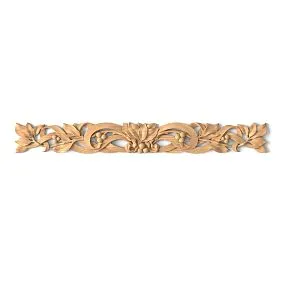
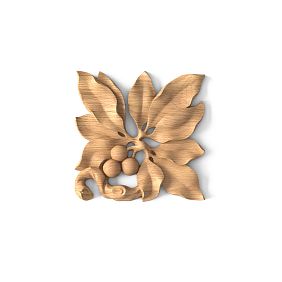
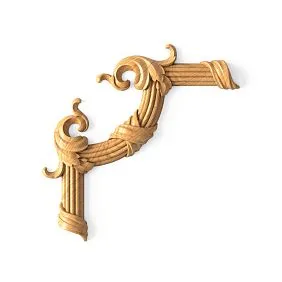
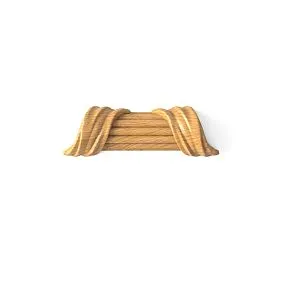
Our factory also produces:

Napoleon: from consul to emperor
1799—a coup d'état, Napoleon Bonaparte becomes First Consul. France is tired of chaos, craving order, stability, and grandeur. Napoleon provides this, transforming the republic into an empire. 1804—coronation, Napoleon proclaims himself Emperor of the French.
An empire requires an imperial style. Revolutionary classicism is too modest for an imperial court. Luxury is needed, but not the frivolous lightness of Rococo—rather, solemn, monumental luxury that emphasizes the power of the state. Thus, Empire style is born—from the French 'empire'.
Napoleon understands the power of symbols. He creates a visual language for the empire—the eagle as a heraldic symbol replacing the royal fleur-de-lis; the letter N in wreaths; bees as a sign of industriousness; laurel wreaths as a sign of victory. These symbols permeate all spheres—architecture, furniture, textiles, porcelain, clothing.
Get Consultation
Egyptian campaign: exoticism as inspiration
1798-1801—Napoleon's Egyptian campaign. The military campaign is a failure, but culturally significant. Scholars accompanying the army study Egyptian antiquities, bring back sketches, descriptions, artifacts. Europe discovers Egypt.
Egyptian motifs capture the imagination. Sphinxes, obelisks, hieroglyphs, pyramids, lotuses—all these permeate the decor. Egypt is perceived as the most ancient empire, a predecessor to Rome, a source of wisdom and power. Egyptian elements in Empire style are not mere exoticism, but a symbolic connection of Napoleon's empire to civilizations millennia old.
Sphinxes become table legs, armrests of chairs, decorations for fireplaces. Obelisks inspire the shape of clocks, lamps. Hieroglyphs are stylized into ornaments. Egyptian colors—black, gold, turquoise—enrich the Empire palette.
Signs of Empire style: the anatomy of grandeur
Empire style is instantly recognizable—a combination of characteristic features creates a unique image.
Monumentality of forms: mass as an expression of strength
Empire furniture is massive, heavy, substantial. Tables, chests of drawers, cabinets have significant volumes, thick table tops, wide cornices. This is not the light, elegant furniture of Rococo, but monumental objects asserting presence.
Massiveness is achieved not only by size but also by proportions. A tabletop thickness of 50-80 millimeters creates visual weight. A wide plinth on a chest of drawers—a massive base on which the body rests. Columns at the corners of cabinets—architectural elements turning furniture into small-scale architecture.
Materials support monumentality. Mahogany, walnut, Karelian birch—heavy, dense woods. Marble tabletops weighing tens of kilograms. Bronze mounts, gilding add not only physical but visual mass.
Monumentality is not accidental—it is an ideological statement. The empire is eternal, unshakable, powerful. Furniture surrounding the emperor and his entourage must embody this unshakability. Light, mobile furniture contradicts imperial aesthetics.
Symmetry: order as a principle
Symmetry is a fundamental principle of Empire style. Every piece of furniture is symmetrical about a central axis. A chest of drawers—identical rows of drawers left and right of center. A chair—identical armrests. A table—legs placed mirror-like.
Interior composition is also symmetrical. Two chairs on either side of a table. A pair of columns framing an entrance. Lamps arranged in pairs. Asymmetry was perceived as chaos, incompatible with imperial order.
Symmetry dates back to antiquity—Greek temples, Roman basilicas are strictly symmetrical. Empire style, seeing itself as the heir to Rome, follows this principle. Symmetry also expresses the rationalism of the era—mathematical order, clarity, predictability.
Military motifs: triumph as a theme
Empire style is the style of military victories. Napoleon conquers Europe, each campaign a triumph. Furniture and decor record these triumphs through symbolism.
Eagles are the imperial bird, a symbol of Jupiter, Rome, strength, and dominion. Eagles crown chair backs, adorn table legs, and are depicted on appliqués. An eagle with outstretched wings is a sign of power over the world.
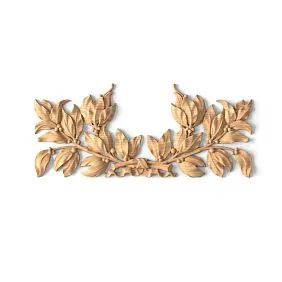
Laurel wreaths are an ancient symbol of victory. Roman generals were crowned with laurels after a triumph. Napoleon revives the tradition. Laurel wreaths frame mirrors, appliqués, and carvings on furniture.
Crossed swords, spears, shields, helmets, armor—all military paraphernalia find a place in the decor. Trophies—flags, drums, cannons—are stylized in carvings.Furniture decorEmpire style transforms furniture into a monument to military glory.
Fasces—bundles of rods with an axe—are an ancient Roman symbol of magisterial power. Napoleon borrows the symbol, emphasizing continuity with Rome. Fasces adorn table legs, chair backs, and furniture appliqués.
Egyptian motifs: the exoticism of antiquity
Egyptian elements add exoticism, mystique, and a connection to the most ancient civilization.
Sphinxes—fantastical creatures with the body of a lion and the head of a human (sometimes a pharaoh). Sphinxes become table legs, armrests of chairs, and clock decorations. Gilded bronze sphinxes with stone-inlaid eyes create an air of mystery.
Obelisks—tall, narrow, four-sided pyramids—inspire the shape of clocks, lamps, and furniture legs. The pyramidal form symbolizes upward aspiration, stability, and eternity.
Lotus—the Egyptian flower, a symbol of rebirth. Stylized lotuses adorn column capitals, carved appliqués, and ornaments. The lotus form—unfolding petals—is elegant and recognizable.
Hieroglyphs are stylized into decorative motifs, often without understanding their meaning—pure exoticism. Egyptian color—a combination of gold, black, turquoise, and red—enriches the Empire style's color palette.
Gilding: the brilliance of empire
Gold—the metal of emperors, a symbol of wealth, power, and divinity. Empire style uses gilding abundantly.
Bronze appliqués on furniture are gilded. Applied ornaments—wreaths, palmettes, rosettes, figures—shine with gold against a dark mahogany background. The contrast is maximal—black-brown wood and bright gold.
Furniture can be entirely gilded—a wooden frame is covered with gesso (chalk primer), then with gold leaf. Carving, when gilded, turns into golden sculpture.
Gilding is not only decorative but also symbolic. Gold does not tarnish, does not rust, is eternal—as an empire should be eternal. The gleam of gold dazzles, overwhelms, and inspires awe of power.
The gilding technique is a complex, multi-stage process. Gold leaf—the thinnest sheets, fractions of a micron thick—is applied to an adhesive base, smoothed, and polished. Master gilders are a rare profession requiring years of training.
Empire furniture: typology and characteristics
Each type of furniture in the Empire style has specific features that distinguish it from other styles.
Armchairs and chairs: the throne as archetype
The Empire armchair is a small throne. High, straight back, massive armrests, strict lines. The back is often rectangular, crowned with a carved crest—a palmette, eagle, or wreath. The back height of 900-1100 millimeters creates an imposing presence.
Armrests are sculptural elements. Forms—sphinxes, griffins, swans, lions. An armrest in the shape of a sphinx—the head and chest of the sphinx form a support for the arm, the body transitions into the front leg of the armchair. Material—carved gilded wood or bronze.
Armchair legs are straight, slightly tapering downward, often fluted (with vertical grooves). Front legs can be in the shape of animal paws—lion, eagle. Rear legs are straight, angled backward for stability.
Upholstery—silk, velvet, leather. Colors—saturated: burgundy, emerald, blue, gold. Upholstery often features embroidery—imperial eagles, wreaths, monograms. Upholstery nails are gilded, with decorative heads.
The Empire chair is a simplified version of the armchair. The back is straight, sometimes curved in the upper part. Legs are straight or sabre-shaped—curved backward. The seat upholstery, the back can be carved or upholstered.
Tables: monumentality and function
The Empire dining table—a massive tabletop on powerful supports. Shape—round, oval, rectangular. The diameter of a round table is 1400-1800 millimeters, seating 6-8 persons. The tabletop is made of solid mahogany 50-80 millimeters thick or marble.
Table supports—a central column on a tripod or four legs at the corners. Central support—a massive column 200-300 millimeters in diameter, fluted, with a carved capital. Tripod—three curved legs diverging from the column, ending in paws—lion, eagle.
Four legs at the corners—straight, massive, often in the form of columns, caryatids, herms (pillars with heads). Legs are connected by a stretcher—a horizontal bar strengthening the structure, sometimes decorated with carving.
Writing desk—a ceremonial piece for the study. Shape—rectangular tabletop with a leather insert for writing. Pedestals at the edges with drawers. The tabletop has a gallery—a low carved railing along the edges. Decoration—bronze appliqués with military or Egyptian themes.
Console table — a narrow table placed against a wall. Shape — rectangular tabletop on two front legs, the back part is attached to the wall. The tabletop is marble, the legs are carved and gilded. The console is installed in formal halls, lobbies, and serves for vases, sculptures, clocks.
Chests of drawers and cabinets: storage as architecture
Empire chest of drawers — an architectural structure in miniature. Rectangular body, three to four rows of drawers, massive marble or wood tabletop. Height 900-1100 millimeters, width 1200-1600 millimeters.
Drawer fronts — smooth, veneered with mahogany with symmetrical grain. The central drawer is often emphasized — wider than the others, with particularly rich overlay. Overlays — gilded bronze, with wreaths, palmettes, figures.
Chest of drawers legs — short, massive, in the shape of paws, columns, cubes. Sometimes legs are absent — the chest stands on a plinth, emphasizing massiveness. The plinth can be carved, with recesses, cornices.
Tabletop — marble slab 30-50 millimeters thick. Marble — white, gray, colored. The edges of the tabletop are profiled — rounded, polished. The marble tabletop adds luxury, practicality — marble is resistant to moisture, dirt.
Empire cabinet — monumental, architectural. Height 2200-2600 millimeters, width 1400-1800 millimeters. The body is rectangular, two-door. Doors with panels framed by moldings. The crowning cornice is massive, carved, with a pediment.
Columns at the corners of the cabinet — an architectural element turning furniture into a portico. Columns diameter 80-120 millimeters, fluted, with capitals — Doric, Ionic, Corinthian. Columns can be applied or inlaid.
Adaptation of Empire style in modernity: grandeur without heaviness
Pure historical Empire style in a modern interior is rare — requires huge spaces, high ceilings, appropriate surroundings. But Empire elements are adapted, softened, integrated into modern life.
Neo-Empire: rethinking classicism
Modern interpretation of Empire style retains key features — symmetry, monumentality of proportions, imperial motifs — but simplifies decor, softens massiveness, adapts to smaller spaces.
Neo-Empire furniture uses the same forms — straight lines, columns, strict proportions — but reduces scale. Chest of drawers height 850 millimeters instead of 1100, width 1000 instead of 1600. Tabletop 40 millimeters instead of 80. Proportions preserved, but absolute dimensions smaller.
Decor is simplified. Instead of abundant bronze overlays — one or two key details. Instead of total gilding — accent gilding on individual elements. Carving more delicate, relief lower. Imperial symbols preserved, but dosed.
Materials are also being adapted. Mahogany is rare and expensive—it is being replaced by oak stained in dark tones. Bronze overlays are being replaced with brass or alloy ones, which are cheaper and lighter. Marble countertops are being replaced with porcelain stoneware that imitates marble.
Empire accents: dosed grandeur
Instead of a full Empire interior — individual items creating accents. Empire mirror in a frame with eagles and wreaths in a neutral interior. A pair of columns framing the entrance. Console table with Egyptian motifs in the lobby.
Such accents introduce solemnity, representativeness without overload. Modern minimalism or neoclassicism serve as a background on which the Empire item dominates, attracts attention.
Empire motifs in textiles — curtains with gold embroidery of eagles, pillows with imperial monograms, carpet with symmetrical pattern. Textiles cheaper than furniture, easily changed, allows experimenting with style.
Empire in public interiors: representativeness as function
Public spaces — reception areas, conference halls, restaurants, hotels — often use Empire to create representativeness. A client entering an office decorated in Empire subconsciously perceives the company as solid, successful, influential.
A restaurant with Empire elements — columns, gilded mirrors, monumental furniture — creates an atmosphere of solemnity suitable for business lunches, celebrations. Prices in such a restaurant may be higher — the interior justifies premium positioning.
A hotel using Empire in the lobby, conference halls, luxury suites positions itself as luxurious, prestigious. Guests feel significant, surrounded by imperial splendor.
Frequently asked questions about Empire style
How does Empire differ from Baroque?
Baroque — opulence, movement, asymmetry, emotionality. Empire — strictness, static nature, symmetry, rationality.baroque furnitureBaroque abounds with scrolls, carving, curved lines. Empire — straight lines, geometry, antique motifs. Baroque — theatricality, Empire — monumentality.
Is Empire suitable for an apartment?
Pure Empire requires high ceilings from 3.5 meters, large areas. In a standard apartment, full Empire will overload the space. But Empire accents, Neo-Empire are possible. One room — study, living room — can be decorated with Empire elements.
What colors are characteristic of Empire?
Main colors — white with gold, mahogany with gold, black with gold. Accent colors — burgundy, emerald, cobalt blue, gold. Egyptian motifs add turquoise, ochre. Pastel, delicate tones are avoided — Empire style does not know half-tones.
How much does Empire-style furniture cost?
Solid wood furniture with bronze overlays, gilding, carving — premium segment. Chest of drawers — from 250,000 rubles, table — from 300,000, armchair — from 150,000. Neo-Empire with simplified decor, imitation materials — from 100,000 for a chest of drawers. Antique Empire from the 19th century — museum prices, millions for authentic pieces.
How to care for gilding?
Wipe gilded surfaces with a soft, dry cloth. Avoid wet cleaning — water can penetrate under the gold, causing peeling. Do not use abrasives, solvents. Once a year, treat with a special gilding compound that restores shine.
Conclusion: The Empire of Style by STAVROS
Empire — a style that embodied the imperial ambitions of an era when Napoleon sought to conquer the world. Monumentality of forms, strict symmetry, military trophies, Egyptian sphinxes, abundant gilding created a visual language of power, triumph, and grandeur. Two centuries later, Empire remains relevant for those who value solemnity, representativeness, and connection with the great empires of the past. Modern adaptation — Neo-Empire, Empire accents — allows bringing imperial grandeur into interiors where pure historical style is impossible, preserving the spirit while softening the form.
The company STAVROS has been creating furniture and interior decor embodying the spirit of Empire for over twenty years. Understanding historical prototypes, mastery of traditional carving, gilding, and solid wood techniques allows creating museum-quality pieces capable of taking their place in the most demanding interiors.
The STAVROS catalog features classic furniture including Empire elements — solid oak chests of drawers with symmetrical fronts, adorned with carved overlays featuring wreaths, palmettes. Tables on monumental supports with capitals. Armchairs with high backs, carved armrests. Mirrors in frames with imperial motifs.
STAVROS interior decor — carved overlays with eagles, wreaths, military trophies, Egyptian motifs. Columns with fluting and Corinthian capitals. Cornices with geometric ornaments. Pilasters transforming a wall into an architectural object. Everything is made from solid wood, coated with gilding or patina, acquiring nobility.
Furniture decor — bronze and brass overlays, handles, keyhole surrounds. Overlays with Empire motifs — lyres, torches, meanders, palmettes. Handles shaped like lion heads, rings in mouths. Everything is patinated, gilded, creating contrast with dark wood.
Individual design of Empire interiors — a specialization of STAVROS. Designers analyze the space, understand the tasks — full Empire or accents, historical or Neo-Empire. They develop concepts, layouts, select furniture, decor, color solutions. Create visualizations allowing to see the result.
Production at the STAVROS factory combines modern technology and manual labor. Milling centers cut parts with precision, carvers create ornaments by hand where individuality is required. Gilders apply gold leaf using traditional technology. Quality control ensures compliance with standards.
Installation is performed by STAVROS specialists. Furniture is installed, decor is attached to walls, ceilings. Columns are mounted, capitals are fitted. Final retouching, polishing of gilding, symmetry checks ensure a perfect result.
STAVROS works with clients across Russia and abroad — private clients creating representative home interiors, companies furnishing offices, hotels, restaurants. Consultations, design, production, installation, warranty, service.
STAVROS showrooms in Moscow and St. Petersburg showcase samples of Empire furniture and decor. Visit, see the monumental proportions, touch the gilded carving, appreciate the quality of solid wood. Compare historical Empire and Neo-Empire, choose an approach. Get a consultation, discuss your project, begin the journey to creating an interior where imperial grandeur finds modern embodiment.
Choosing STAVROS means choosing solid wood quality, mastery of historical stylistics, the handwork of master carvers and gilders, understanding Empire not as a set of clichés but as a holistic philosophy of grandeur. Create spaces where symmetry expresses order, where monumentality of forms affirms immutability, where gold shines as a symbol of triumph, where every item is a monument to achievements, where ancient columns and Egyptian sphinxes remind of the great empires of the past, inspiring the creation of your own empire of success.


