Article Contents:
- What is neoclassicism: philosophy of style
- Simplified forms of classicism
- Neutral colors: rejection of gaudiness
- Modern materials: combinations and technologies
- Furniture in neoclassicism: key pieces
- Console table: horizontal accent in hallway and living room
- Chest of drawers: vertical storage
- Dining table: centerpiece of the dining room
- Chairs: balance of form and comfort
- Bed: the centerpiece of the bedroom
- Interior decor in neoclassicism: moderation as a principle
- Wall moldings: panels and frames
- Cornices and baseboards: spatial boundaries
- Furniture decor: overlays and carvings
- Ceilings: restraint instead of opulence
- Neoclassical color palette: light and neutrality
- White: purity and space
- Gray: Modern Elegance
- Beige and cream: warmth and softness
- Accent colors: local bursts
- How STAVROS adapts furniture for neoclassicism
- Moderate decor: from opulence to conciseness
- Concise lines: purity of form
- Color solutions: white, gray, natural oak
- Custom design: furniture for specific interiors
- Frequently Asked Questions
- What's the difference between classicism and neoclassicism?
- Can neoclassicism be mixed with modern furniture?
- What furniture color to choose for neoclassicism: white or gray?
- Is carving necessary on neoclassical furniture?
- Can dark furniture be used in neoclassicism?
- Which moldings to use: wooden or polyurethane?
- How to care for white furniture?
- How much does STAVROS furniture for neoclassicism cost?
- Which styles pair with neoclassicism?
- How to add personality to a neoclassical interior?
- Conclusion: neoclassicism as a bridge

Is classic outdated? Is modern minimalism cold? Between these poles lies the territory of compromise — neoclassicism. A style that takes from classicism its form, proportions, and nobility of materials, but discards excess, pompousness, and heaviness. Neoclassicism maintains respect for tradition but speaks the language of modernity: concisely, restrainedly, functionally.
Neoclassical furniture— is not simplified classicism (which sounds like impoverishment), but reinterpreted. It is classicism adapted for apartments with ceiling heights of 2.7 meters, not 4. For families without servants, where furniture must be practical, not just ceremonial. For people who appreciate beauty but do not want to live in a museum. Neoclassicism is a living style where you can place a cup on a console tabletop without fear of ruining a relic, where you can sit in an armchair in jeans, not just in a tuxedo.
Interior decor in neoclassicism plays a subtle role. It is present — moldings on walls, cornices under the ceiling, carved elements on furniture — but restrainedly. The decor does not shout, dominate, or demand attention. It creates structure, background, an architectural foundation upon which life unfolds, not a performance.


What is neoclassicism: the philosophy of the style
Neoclassicism arises in moments when classicism seems excessive, and modernism insufficient. The first wave of neoclassicism occurred in the late 18th century (a reaction to Baroque and Rococo), the second in the early 20th century (a reaction to Art Nouveau), and the third now (a reaction to minimalism and loft).




Simplified forms of classicism
Classical furniture operates with complex forms: carved legs with cabrioles, acanthus leaves, volutes; facades with multi-level carving, cartouches, garlands; chair backs are openwork, permeated with ornament. This complexity creates luxury but requires space, high ceilings, large areas. In a standard apartment (living room area 18-25 square meters, ceiling height 2.7 meters), classical furniture overwhelms, overloads, makes the room cramped.
Neoclassical furniture simplifies forms while retaining recognizability. Legs remain turned but without excessive carving — balusters are smooth, with minimal transitions. Facades retain panels (frame trims), but the panels are flat or slightly convex, without deep carving. Chair backs are straight or slightly curved, without openwork. The silhouette is classical, the detailing is minimalist.
Result: furniture that reads as classical (proportions, symmetry, materials) but does not overload the space. A neoclassical console is perceived as lighter than a Baroque one, although both are wooden, both have legs, both have drawers. The difference is in the amount of decor: Baroque is carved from top to bottom, neoclassical is carved selectively (carving on the capitals of the legs, the rest is smooth).
Our factory also produces:


Neutral colors: rejection of garishness
Classicism loves color: gilding, patination, colored enamels (red, green, blue lacquer on wood), colored upholstery (burgundy, emerald, sapphire). Color creates solemnity, formality, richness. But color requires attention; it is active, it dominates, it tires.
Neoclassicism chooses neutrality: white, gray, beige, cream, light tones of natural wood (bleached oak, light ash).Light furniturecreates visual lightness, expands space, reflects light, makes the interior airy. White neoclassical furniture in a living room with white walls and a light floor creates a monochrome where form is more important than color, where proportions are read more clearly.
Neutrality does not mean boredom. White has dozens of shades: pure white (cold, graphic), cream (warm, homely), ivory (noble, with a yellowish tint), grayish-white (modern, urban). Gray from light gray (almost white) to dark gray (graphite, anthracite). Beige from sandy to taupe (gray-beige, greige).
Color accents in neoclassicism are introduced through textiles (pillows, curtains), decor (vases, paintings), plants. Furniture and walls are the neutral base; accents are the movable, replaceable superstructure.
Get Consultation
Modern materials: combinations and technologies
Classicism insists on solid wood, bronze, marble, natural leather, silk. These are traditional, expensive, durable materials, but limiting. Solid wood is heavy, marble is cold and fragile, bronze tarnishes, silk is easily soiled.
Neoclassicism is open to modern materials, combining traditional and new. The wooden frame of furniture is combined with metal legs (brass, stainless steel, black metal). A console tabletop made of solid oak is combined with a facade made of painted MDF (visually indistinguishable, but MDF is cheaper, lighter). Upholstery of an armchair made of high-tech fabric (with Teflon coating, repelling dirt and water) instead of silk or velvet.
Processing technologies are modern: CNC milling (creating perfectly precise carving, impossible by hand), laser cutting (for thin openwork elements), polymer coatings (more wear-resistant than traditional varnishes). Neoclassicism does not imitate antiquity, does not create artificial distressing. Neoclassicism is new, clean, impeccably processed.
Result: furniture that looks classical but functions modernly. It is easy to clean (not afraid of water, cleaning agents), it is wear-resistant (coatings do not wear off for years), it is practical (withstands everyday use, not just ceremonial).
Furniture in neoclassicism: key items
Classic FurnitureFurniture, adapted for neoclassicism, retains typology: consoles, chests of drawers, tables, chairs, beds, wardrobes. But each item is reinterpreted: simpler in form, more neutral in color, more functional.
Console: hallway and living room horizontal line
In neoclassicism, the console remains a narrow wall-mounted table (depth 30-40 cm, height 75-85 cm, length 100-150 cm), but with minimal decoration. A classic console features carved legs (cabriole, balusters), a carved apron (horizontal frame under the tabletop), and a carved cornice (top molding of the tabletop). A neoclassical console has turned but smooth legs (balusters without carving, with simple turnings), a smooth apron or one with minimal paneling, and a tabletop without a cornice (simply a slab of wood or marble).
Color of a neoclassical console: white (painted solid wood, matte enamel), gray (painted or natural wood with gray stain), light wood (oak, ash without stain or with light stain). Drawer hardware: minimalist (thin, matte bracket handles—brass, chrome, black metal) or integrated (concealed profile handles, recesses in the facade).
In a neoclassical hallway, the console stands under a mirror (in a simple frame or frameless), with minimal decor above it (one lamp or vase, not a composition of ten items). In the living room, the console stands against a wall between windows or behind a sofa, serving to place lamps, books, decorative objects.
Chest of drawers: vertical storage
A chest of drawers in neoclassicism is a rectangular cabinet with 3-5 drawers, height 90-120 cm, width 80-120 cm, depth 40-50 cm. A classic chest of drawers is adorned with carved appliqués, moldings, paw feet, and bronze handles with ornamentation. A neoclassical chest of drawers is laconic: smooth facades or with simple paneling, straight or slightly tapered legs, minimalist handles.
The top of the chest of drawers is used to place a mirror (in the bedroom), a TV (in the living room), or decor. The color of a neoclassical chest of drawers coordinates with other furniture in the room: a white chest of drawers with a white bed in the bedroom, a gray one with a gray sofa in the living room.
Material: solid wood (oak, beech) with paint or stain, MDF with enamel (visually indistinguishable from solid wood, cheaper). Internal drawer walls: plywood or MDF, drawer bottoms: plywood (stronger than fiberboard). Drawer slides: telescopic (full extension, smooth, with soft-close).
Dining table: the center of the dining room
A dining table in neoclassicism retains the classic shape (rectangular, oval, round) but simplifies the decoration. A classic table has carved legs (balusters, cabriole), a carved apron, and an inlaid tabletop. A neoclassical table has smooth turned legs or straight square legs, a smooth or absent apron, and a smooth tabletop (solid wood, veneer, marble, glass).
Table size is determined by seating capacity: 180x90 cm for 6 people, 200x100 cm for 8, 240x100 cm for 10. An extendable table (with additional leaves) increases by 40-60 cm, adding 2-4 seats.
Table color: tabletop in natural wood (light oak, walnut), painted wood (white, gray), marble (white, beige, black), glass (clear, tinted). Legs matching the tabletop color or contrasting (white tabletop—black legs, wooden tabletop—metal legs).
Chairs: balance of form and comfort
Chairs in neoclassicism have a classic silhouette (curved or straight back with a slight incline, turned or straight legs, upholstered soft seat or hard wooden seat) but minimal decoration. The back is not carved but smooth or with a simple profile. The legs are not cabriole but straight or slightly tapered.
Seat upholstery: solid color (white, gray, beige, black), modern fabric (burlap, velvet, faux leather), without patterns (in classicism, upholstery often features ornamentation, stripes, flowers). Upholstery color is neutral or contrasts with the table: white chairs with gray upholstery for a wooden table, black chairs with beige upholstery for a white table.
The number of chairs corresponds to the table: 6 chairs for a table seating 6. Sometimes end seats are occupied by armchairs (with armrests), with chairs for the rest. Armchairs are then slightly more massive, taller, and stand out.
Bed: center of the bedroom
A bed in neoclassicism retains a high headboard (120-150 cm) but simplifies its form. A classic headboard is carved (tufted, relief panels, carved frames). A neoclassical headboard is upholstered fabric (button tufting is acceptable but not required, can be smooth upholstery), with minimal decoration.
Bed frame is wooden (solid oak, beech), painted (white, gray, beige) or stained (light wood). Legs are low (10-15 cm) or absent (the bed stands on a plinth). A footboard (lower bed back) in neoclassicism is often absent (the bed has only a headboard), making it visually lighter and more contemporary.
Bed size: double 160x200 cm (standard), 180x200 cm (king size), 200x200 cm (for spacious bedrooms). Single 90x200 cm, queen 120x200 cm (for children's rooms, guest rooms).
Interior decor in neoclassicism: moderation as a principle
interior decorationDecor is present in neoclassicism, but in measured doses. Not walls entirely covered with moldings (as in Baroque), not ceilings with rosettes and coffers in every square meter. Decor is local, accentual, creating structure rather than filling all space.
Wall moldings: panels and frames
Moldings (applied strips with a profile) in neoclassicism create panels, frames, and borders on walls. Classic scheme: the lower part of the wall (height 100-120 cm) is framed by moldings forming vertical panels, the upper part is smooth. Neoclassical scheme simplifies: one large panel in the center of the wall (size 100x150 cm or 120x180 cm), the rest of the wall is smooth.
Molding profile in neoclassicism is simple: rectangular with a bevel, semicircular (bead), ogee. Complex multi-step profiles with carving, characteristic of Baroque, are avoided. Molding width 30-60 mm (in classicism 50-100 mm).
Molding color: white (on white or light walls, creating relief without color contrast), matching wall color (the molding blends with the wall, barely noticeable, only readable in side light), contrasting (gray molding on a white wall, black on light gray).
Molding placement: symmetrical (panels identical, arranged on a grid), along axes (centered on the wall, centered between windows). Chaotic placement, characteristic of modern eclectic interiors, is not used in neoclassicism—neoclassicism values order, symmetry, predictability.
Cornices and baseboards: boundaries of space
Cornice (molding under the ceiling) is present in neoclassicism but not dominant. Cornice width 80-120 mm (in classicism 100-200 mm), profile simple (one or two steps, without carving). The cornice visually separates the wall from the ceiling, creates completeness, but does not overwhelm with height (like massive Baroque cornices).
Baseboard (molding at the floor) height 80-120 mm (in classicism 100-150 mm). Baseboard color: matching floor color (blends, visually continues the floor), matching wall color (blends with the wall), white (contrasts with a dark floor or dark walls, creates a clear boundary).
Cornice and baseboard are coordinated in profile and color: both white, both with the same profile (e.g., ogee), creating visual unity. In classicism, the cornice is more complex than the baseboard (cornice multi-step, baseboard simple); in neoclassicism, both are simple, almost identical.
Furniture Decor: Overlays and Carving
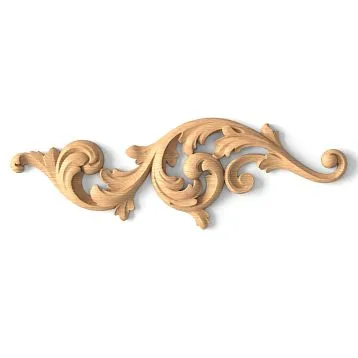
Furniture decorIn neoclassicism, it is minimal. Classical furniture is abundantly decorated with carved overlays (rosettes, cartouches, garlands, acanthus leaves) on facades, legs, and cornices. Neoclassical furniture features overlays sparingly: a small rosette in the center of a drawer front, a carved capital at the top of a leg, a thin molding along the perimeter of a door.
Carving is restrained: geometric motifs (straight flutes, beads, cords), simplified plant motifs (stylized leaves, ribbons), no lavish Baroque compositions. Carving is shallow (3-5 mm relief), perceived more as texture than as three-dimensional sculpture.
Patination (darkening of carving recesses) is used sparingly in neoclassicism. If the furniture is white, the patina may be gold or silver, but light, barely noticeable, creating a soft sheen rather than a contrasting highlight. If the furniture is gray, the patina may be graphite (dark gray), emphasizing the relief without being ostentatious.
Ceilings: Restraint Instead of Opulence
Ceilings in neoclassicism are most often smooth and white, without decoration. Classical ceilings are adorned with rosettes (round stucco elements in the center from which a chandelier hangs), coffers (recessed sections framed by moldings), and painting. A neoclassical ceiling at most has a simple cornice along the perimeter and a small rosette (30-50 cm in diameter) in the center, if the chandelier is heavy and requires a visual base.
Coffers are rare in neoclassicism, used only in rooms with high ceilings (from 3 meters), and even then simplified: rectangular recesses without carving, framed by thin moldings. Painting is absent in neoclassicism — that is Baroque or Rococo.
Ceiling color: white (universal, visually raises), light gray (modern, softer than white), matching the wall color (if the walls are light, the ceiling can be the same color, creating unity). Dark ceilings are unacceptable in neoclassicism (visually oppressive, contradicts the lightness of the style).
Neoclassical Color Palette: Light and Neutrality
Color in neoclassicism plays a background role. Not an accent, not a dominant, but a base upon which form, proportions, and light are built.
White: Purity and Space
White is the main color of neoclassicism. White walls, white furniture, white moldings create a monochrome where form is read without color interference. White reflects light (makes a room brighter, especially with insufficient natural light), visually expands space (a white room appears larger than an identical dark one), and creates a sense of purity, freshness, and modernity.
White is not uniform. Pure white (cool, with a barely noticeable blue undertone) is more modern, graphic, suitable for urban interiors. Cream (warm white with a yellow undertone) is homier, cozier, suitable for living rooms (bedrooms, living rooms). Ivory (white with a slight yellow tint, close to beige) is more noble, classic, associated with marble and antique interiors.
White requires texture, otherwise the interior becomes sterile. Texture is created by materials (wood with visible grain, painted white; textured fabrics — linen, burlap, bouclé), relief (moldings, panels creating play of light and shadow), layering (white furniture against white walls, but different shades of white creating a barely noticeable contrast).
Gray: modern elegance
Gray is the second most popular color in neoclassicism. Gray is more neutral than white (less prone to showing marks, more practical), more modern than beige, more elegant than black. Gray furniture in neoclassicism is a compromise between traditional wooden and radically white. Gray retains nobility but adds urbanity and graphic quality.
Shades of gray: light gray (almost white, with a light haze), medium gray (neutral, neither light nor dark), dark gray (graphite, anthracite, almost black). Warm gray (greige — grey + beige, gray-beige) is softer, cozier. Cool gray (with a blue undertone) is stricter, more modern.
Gray requires color accents, otherwise the interior becomes monotonous, dull. Accents are introduced through textiles (yellow, blue, green cushions on a gray sofa), plants (live greenery against gray walls), metal (brass light fixtures, hardware creating a warm sheen against a gray background).
Beige and Cream: Warmth and Softness
Beige is a classic neutral color, warmer than gray, homier than white. Beige furniture in neoclassicism creates a soft base on which accents are well read. Beige pairs with any colors: white (lighter than beige), brown (darker than beige), gray (next to beige creates a soft contrast), colored (blue, green, pink against a beige background).
Shades of beige: sandy (warm, yellowish), ivory (cooler than sandy, closer to white), taupe (gray-beige, modern), camel (saturated beige, with a brown undertone). Cream is light beige, almost white, but warmer.
Beige and cream do not require additional warming with color (like gray), they are already warm. But they require texture, otherwise they become flat. Beige furniture made of solid wood (with visible grain) is more interesting than smooth painted beige. Beige walls with moldings (creating relief) are livelier than smooth beige ones.
Accent Colors: Local Flashes
Neoclassicism is neutral in its base (white, gray, beige) but allows for color accents. Accents are local, not dominant: cushions on a sofa, curtains, a rug, a vase, a painting. Furniture and walls remain neutral, color is introduced through changeable elements.
Accent colors: navy blue (elegant, classic), emerald (noble, saturated), mustard (warm, modern), terracotta (earthy, cozy), dusty pink (delicate, feminine). Avoid bright pure colors (red, orange, bright yellow) — they are too active, conflict with the neutral restraint of neoclassicism.
Metallic accents: brass (golden, warm, noble), chrome (silvery, cool, modern), black metal (graphite, matte, graphic). Metal is introduced through light fixtures, furniture hardware, mirror frames, table legs. Metal should not dominate (not gilded chandeliers like in Baroque), but accent (thin legs, small handles).
How STAVROS Adapts Furniture to Neoclassicism
STAVROS company furniture is initially created in a classical style — made of solid wood, with carving, traditional forms. But this same furniture is easily adapted to neoclassicism through changes in finish, simplification of decor, and color choice.
Moderate Decor: From Opulence to Laconicism
A basic classical STAVROS console may have carved baluster legs, a carved apron, and carved overlays on drawer fronts. This is full classic, Baroque, luxury. For neoclassicism, the same console is produced with simplification: the legs remain turned (the baluster shape is preserved) but without carving (smooth), the apron is smooth (without carved overlays), the drawer fronts have simple paneling (frame molding, but without carved rosettes in the center).
A client can order STAVROS furniture with any degree of decorativeness: from full classic (maximum carving, overlays, patination) to minimal neoclassicism (smooth surfaces, turned but not carved legs, minimal overlays). STAVROS production is flexible, adapts to wishes, and manufactures furniture according to individual projects.
Carved STAVROS elements (overlays, rosettes, cartouches, garlands) from the catalog can be used selectively: not all at once (as in Baroque), but one or two elements per furniture piece (creating an accent, not filling). For example, a console with one carved rosette in the center of the central drawer front, with the other drawers being smooth. This creates balance: there is carving (a nod to classicism), but it does not dominate (corresponding to neoclassicism).
Concise lines: purity of form
Neoclassicism values purity of lines and the absence of visual noise. STAVROS furniture inherently has correct proportions, symmetry, and classical forms—this is the base. For neoclassicism, this base remains, but excessive details are removed.
A classic STAVROS table may have a carved apron (the frame under the tabletop, decorated with carved overlays). For neoclassicism, the apron is removed entirely (a table without an apron, with legs attached directly to the tabletop) or remains smooth (without overlays). The result: a table with the same tabletop, the same legs, but visually lighter and more contemporary.
A classic STAVROS chest of drawers may have protruding cornices (top and bottom rails protruding 5-10 cm beyond the body, creating an architectural feel). For neoclassicism, cornices are simplified (protruding 2-3 cm, barely noticeable) or removed (the chest is rectangular, without protrusions). The lines become cleaner, the form more concise.
Color solutions: white, gray, natural oak
STAVROS offers furniture in any color from the RAL palette (a standard palette including thousands of shades) plus patination (gold, silver, graphite) of any intensity. For neoclassicism, popular choices are:
-
Matte white (pure white or cream) without patina or with light gold patina (barely noticeable, creating a soft glow in the recesses of the carving). White STAVROS furniture made of solid oak is painted with professional enamels (Italian Sirca, Sayerlack), creating a perfectly smooth matte surface resistant to wear and moisture.
-
Gray (light gray, medium gray, graphite) without patina or with graphite patina (dark gray, creating tonal contrast). Gray STAVROS furniture is more contemporary than white but retains the nobility of wood (the wood grain is visible through a thin layer of enamel or gray tint).
-
Natural oak (light, without tinting or with light tinting that emphasizes the grain). Natural wood furniture is warmer than painted furniture, creating a connection with nature and organic feel. Finish: oil-wax (matte, pleasant to the touch, eco-friendly) or varnish (matte, more resistant to moisture).
The client chooses the color and finish when ordering; STAVROS manufactures the furniture in the selected execution. This allows adapting the same model to different styles: full classic (dark wood with gold patina), neoclassicism (white or gray without patina), contemporary style (natural light wood).
Custom design: furniture for a specific interior
STAVROS is not limited to the catalog of ready-made models. The company executes custom projects: the client describes their wishes (size, style, color, level of decorativeness), STAVROS designers create a 3D visualization, coordinate with the client, and manufacture the furniture according to the approved project.
For a neoclassical interior, this is critical because neoclassicism requires balance and individual adjustment. Too much decor results in classicism; too little results in minimalism. A golden mean is needed, determined based on the specific room: its size, ceiling height, lighting, and surrounding environment.
STAVROS offers a comprehensive solution: not just furniture, but also interior decor (moldings, cornices, baseboards, rosettes) made of wood or polyurethane, coordinated in style with the furniture. The client receives a unified ensemble: furniture + wall decor, all maintained in the same style, color palette, and level of decorativeness.
Frequently asked questions
What is the difference between classicism and neoclassicism?
Classicism: complex forms, abundant decor (carving, gilding), dark saturated colors, large sizes, requires spacious rooms. Neoclassicism: simplified forms, moderate decor, light neutral colors, compact sizes, suitable for standard apartments.
Can neoclassicism be mixed with contemporary furniture?
Yes, neoclassicism pairs well with contemporary furniture due to shared restraint and neutral colors. A neoclassical console next to a contemporary minimalist sofa does not conflict if the colors are coordinated (both white or both gray).
Which furniture color to choose for neoclassicism: white or gray?
White is more universal, lighter, visually expands space, suitable for small rooms. Gray is more contemporary, practical (less prone to showing dirt), suitable for spacious rooms where white may seem cold.
Is carving necessary on furniture in neoclassicism?
Not mandatory, but permissible in minimal quantities. A small carved rosette, carved capitals on legs—are acceptable. Abundant carving on all surfaces is already classicism, not neoclassicism.
Can dark furniture be used in neoclassicism?
Not typical. Neoclassicism prefers light furniture (white, gray, light wood). Dark furniture (wenge, stained oak) shifts towards classicism, makes the interior heavier, less contemporary. But a single dark accent (e.g., a dark dining table with light chairs) is possible.
Which moldings to use: wooden or polyurethane?
For furniture—wooden (made of solid wood, coordinated with the furniture). For walls—polyurethane (lighter, cheaper, moisture-resistant, easy to install). STAVROS polyurethane moldings imitate wood or plaster stucco, visually indistinguishable after painting.
How to care for white furniture?
White painted furniture (enamel) is easily cleaned with a damp cloth and mild detergent. Avoid abrasives (they scratch the finish). White furniture with a matte finish is more practical than glossy (glossy shows fingerprints and streaks).
How much does STAVROS furniture for neoclassicism cost?
Price depends on size, complexity, material, and finish. A console made of solid oak, painted white, with minimal decor, measuring 120x40x80 cm — from 50,000 rubles. A dining table 200x100 cm — from 80,000 rubles. The exact price will be provided by the manager after discussing the project.
What styles pair well with neoclassicism?
Scandinavian (shared love for light colors, natural materials, minimalism), contemporary (laconicism, functionality), Art Deco (geometric shapes, elegance, use of metals). Do not pair with: loft (too brutal), country (too rustic), Baroque (too ornate).
How to add individuality to a neoclassical interior?
Through accents: colorful textiles, original paintings, unusual lighting fixtures, collectible items (vases, sculptures). The base (furniture, walls) remains neutral; individuality is introduced through details that can be changed and updated.
Conclusion: neoclassicism as a bridge
Neoclassicism is a bridge between the past and the present. It does not reject classicism (like modernism), nor does it copy it literally (like retro). It takes the best: nobility of materials, proportionality of forms, symmetry, respect for tradition. And combines it with the contemporary: functionality, practicality, restraint in decor, neutrality of color.
Neoclassical furniture— is not simplified classicism (which sounds like a loss), but adapted, modernized, alive. It is furniture you can live with, not just admire. Which you can use daily without fear of damaging. Which creates beauty but does not require sacrifices (space, light, comfort).
interior decoration— in neoclassicism plays the role of an architectural foundation, a structure that supports the composition. Moldings create panels, frames, boundaries, turning flat walls into three-dimensional ones. Cornices separate walls from the ceiling, creating completeness.Furniture decor— carved elements, overlays — are introduced in a targeted manner, creating accents without overloading.
Company STAVROS createsclassic furniture, which easily adapts to neoclassicism. Solid wood (oak, beech), traditional forms (consoles, chests of drawers, tables, chairs, beds), handcrafted work (carving, turning, mortise and tenon assembly) — this is the base, tested over centuries. Modernity is layered onto this base: simplification of decor (minimal carving, smooth surfaces), neutral colors (white, gray, light wood), contemporary finishes (matte enamels, wear-resistant varnishes).
STAVROS production is equipped with machinery that allows creating furniture of any complexity: 19 CNC machines for precise milling, manual finishing areas for final sanding, climate-controlled painting booths for flawless painting. This enables the production of furniture where classical forms combine with modern processing quality: perfectly smooth surfaces, precise fitting of parts, wear-resistant coating.
STAVROS offers not only ready-made furniture from the catalog but also custom design. The client describes their wishes (style, size, color, level of decorativeness), STAVROS designers create a 3D visualization of the future furniture, coordinate every detail with the client, and produce according to the approved project. This allows creating furniture that perfectly fits a specific interior, taking into account room dimensions, ceiling height, and existing furnishings.
STAVROS interior decor — moldings, cornices, baseboards, rosettes, panels — made of solid wood or polyurethane, is coordinated with the furniture in style and color. The client receives a comprehensive solution: furniture + wall decor + consultations on arrangement and pairing. Everything is maintained in a unified style, creating a cohesive ensemble, not a collection of random items.
Neoclassicism is a style for those who value tradition but live in the present. Who want beauty but are not willing to sacrifice functionality. Who love symmetry, order, classical proportions, but do not want pomp, excess, heaviness. Neoclassicism is balance, the golden mean, a territory of compromise where the past and present coexist peacefully.
Create a neoclassical interior not because it's trendy, but because it matches your temperament: respect for the past, but not conservatism; openness to the new, but not denial of traditions. Choose furniture not the cheapest (saving on material is immediately visible), not the most expensive (excess decor is not always justified), but the most suitable — in style, proportions, quality.
Neoclassicism does not age because it does not chase trends. It is based on timeless principles: proportion, symmetry, quality of materials, honesty of execution. In ten years, a neoclassical interior will not look outdated (like trendy styles that lose relevance in 3-5 years). It will look classical, timeless, dignified. Because neoclassicism is not a fashion, it is the architecture of life, where tradition and modernity find a common language.