












































































Article Contents:
- The Soul of the Apennines in Russian Interiors
- Historical Heritage in a Modern Interpretation
- Philosophy of Comfort in the Italian Way
- Characteristic Features of Italian Style in the Living Room
- Materials: Symphony of Naturalness
- Color Palette: From Softness to Passion
- Forms and Proportions: Mathematics of Beauty
- Key Elements of Italian Living Room
- Sofas: Center of the Family Universe
- Chairs: Personal Islands of Luxury
- Coffee Tables: Functional Sculpture
- Storage Systems: Beauty in Organization
- Stylistic Directions of Italian Furniture
- Classic style: Eternal elegance
- Modern classicism: traditions in a new interpretation
- Italian Minimalism: Beauty of Simplicity
- Materials and production technologies
- Wood: From Selection to Final Finish
- Upholstery Materials: Quality, Time-Tested
- Hardware: the invisible foundation of quality
- Layout of the Living Room in Italian Style
- Principles of zoning
- Organization of Movement
- Lighting Scenarios
- Color Solutions and Decor
- Basic Color Schemes
- Textile furnishings
- Decorative elements
- Practical tips on selection and placement
- Choosing Furniture Based on Room Size
- Combining Different Stylistic Elements
- Maintenance and care
- Italian Furniture in Russian Realities
- Adaptation to Climatic Conditions
- Features of Transportation and Delivery
- Service Maintenance
- Investment Value of Italian Furniture
- Long-term perspective
- Inheritance
- Trends in Style Development
- Ecological sustainability and development
- Technology integration
- Personalization and customization
- Conclusion
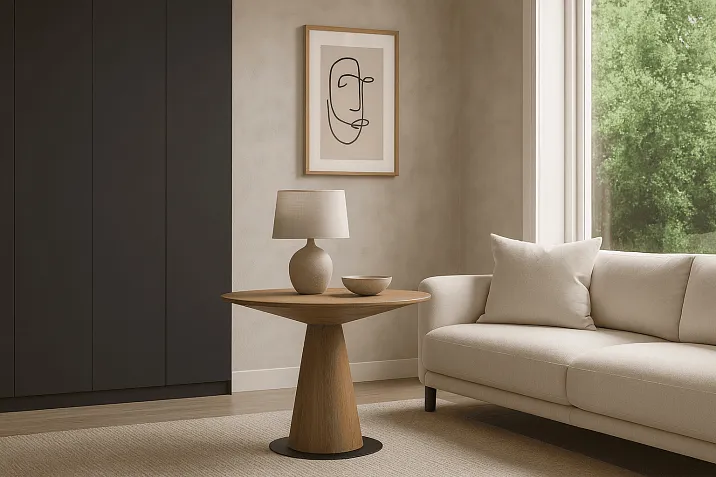
What makes a home truly special? Not room sizes, not expensive finishing materials, but that invisible aura of comfort and beauty that envelops everyone entering. And if there is a style capable of creating such magic, then it is, without a doubt, living room furniture in Italian style — the art of transforming ordinary space into an oasis of elegance and warmth.
Imagine: soft evening light glides over noble wooden facades, highlights the graceful curves of chairs, plays golden glimmers on carved elements. This is not just interior design — it is poetry embodied in wood and fabric, a symphony of forms and textures that makes time slow down.


The soul of the Apennines in Russian interiors
What lies behind the magic of Italian style? It is not a random combination of beautiful objects, but a deeply considered philosophy of life, where every detail carries meaning, and every line tells a story. Italian furniture for the living room — it reflects the multi-century culture of a people who know how to appreciate beauty in everyday life.




Historical heritage in a modern interpretation
The origins of Italian furniture art are lost in the depths of centuries. Even Renaissance masters understood: furniture must not only be functional, but also capable of inspiring. The Florentine artisans of the 15th century created pieces that today adorn museums around the world, but their philosophy lives in every modern item.
Modern Italian-style furniture carefully preserves these traditions, adapting them to the needs of our time. Here, classical golden-section proportions combine with innovative materials, ancient carving techniques — with modern surface finishing technologies.
Our factory also produces:


Philosophy of comfort in the Italian way
Italians understand comfort not as luxury, but as a natural state of harmony between a person and space. Every item Italian living room furniture is created with an understanding of how people live, communicate, and rest.
This is evident in the thoughtful ergonomics of sofas, where each cushion is positioned at the optimal angle, the height of coffee tables designed for ease of use, and the distances between items that create a sense of spaciousness even in compact rooms.
Get Consultation
Characteristic features of Italian style in the living room
Materials: symphony of naturalness
The foundation of Italian style is the cult of natural materials. Wood here is not merely a construction material, but a living substance with its own character and history. Classic Italian furniture uses noble species: walnut, oak, cherry, each bringing its own unique shades and textures.
Marble in Italian interiors is not mere ostentation, but a tribute to the eternal beauty of nature. Carrara marble countertops become works of art, where each vein is a stroke of nature’s artist.
Leather in Italian furniture possesses a special quality — it becomes more beautiful with time, acquiring a noble patina of age. This is not chance, but the result of special tanning technologies passed down from master to master across generations.
Color palette: from delicacy to passion
The Italian color palette reflects the nature of the Apennine peninsula. Warm ochre tones of Tuscany’s hills, deep blue tones of the Mediterranean Sea, golden glimmers of sunlight on ancient stones — all of this is reflected in elite Italian furniture.
Yet Italian style is not afraid of bold accents. The rich red of Venetian velvet, emerald green of Sicilian gardens, royal purple of Roman palaces — these colors are used sparingly, like precious gems set in neutral tones.
Forms and proportions: mathematics of beauty
Italian masters intuitively follow the laws of the golden section, creating items whose proportions seem ideal. This is not chance — behind each line lies centuries of experience of generations of craftsmen who understood the secrets of visual harmony.
Soft, flowing lines dominate Italian furniture. Here, sharp angles or abrupt transitions are rarely found — everything flows like a melody, creating a sense of calm and tranquility.
Key elements of the Italian living room
Sofas: center of the family universe
A sofa in an Italian living room is not just furniture — it is an altar of family communication. Beautiful Italian furniture for the living room always makes the sofa the main focal point of the space, around which the entire composition is arranged.
Italian sofas are distinguished by their exceptional seating depth — here you can not only sit, but literally sink into comfort. Armrests are often wide, transforming into additional tables for a cup of coffee or a book.
The upholstery of Italian sofas is a separate art. Natural leather undergoes special treatment, making it soft as silk yet incredibly durable. Fabrics are chosen with great care — these may be exclusive materials from leading European manufacturers, created specifically for the furniture industry.
Chairs: personal islands of luxury
Italian chairs are sculptural artworks that happened to be functional. Each chair has its own individuality, its own character, expressed in the shape of the backrest, the curve of the armrests, the texture of the upholstery.
Italian recliners occupy a special place. Here, transformation mechanisms are hidden so skillfully that the chair retains the elegance of its lines in any position. Adjustment systems are so smooth and silent that the process of changing position becomes a meditative ritual.
Coffee tables: functional sculpture
A coffee table in an Italian living room is not just a stand for a cup of coffee — it is a central compositional element that unites all items into a cohesive whole. Italian Classic Furniture offers tables that are true works of art.
Marble tops with carved wooden bases, glass surfaces on elegant metal supports, massive wooden structures with inlays — each option carries its own aesthetic load and functional purpose.
Storage systems: beauty in organization
Italian storage systems for the living room combine practicality with aesthetic appeal. Here, every shelf, every drawer is thought out not only from a functional standpoint but also from a visual perspective.
Display cabinets with backlighting transform ordinary books and souvenirs into exhibits of a private museum. Secretaries and chests with inlays become interior decorations, even when not used for their intended purpose.
Stylistic directions of Italian furniture
Classic style: eternal elegance
classic Italian living room furniture — is an embodiment of timeless beauty. Here, every detail speaks of a rich history and cultural traditions. Carved elements, gilding, noble fabrics create an atmosphere of palace luxury adapted for modern life.
The characteristic of classic Italian style is the ability to be luxurious without becoming ostentatious. Gold accents are used delicately, carving does not overload the form but highlights its natural beauty.
Modern classicism: traditions in a new interpretation
Modern Italian classicism is an evolution of traditional style, adapted to the realities of the 21st century. Here, noble proportions and quality materials are preserved, but decorative elements are simplified, making the furniture more versatile.
This style is ideal for those who appreciate quality and beauty but prefer a more restrained expression of luxury. Italian premium furniture This style easily fits into various interior concepts.
Italian minimalism: beauty of simplicity
Italian minimalism is not ascetic simplicity, but refined elegance. Here, every line has meaning, every surface is carefully thought out. The absence of decorative elements is compensated by impeccable material quality and perfect proportions.
Furniture in the style of Italian minimalism often becomes a sculptural object that decorates space with its presence, requiring no additional accessories.
Materials and production technologies
Wood: from selection to final finishing
Production Italian furniture made of solid wood begins with careful selection of raw materials. Italian masters prefer wood grown under specific climatic conditions, with a certain density of annual rings and moisture content.
The wood drying process may take up to two years. Special chamber installations allow controlling each stage, ensuring even moisture removal without cracks or deformations.
Surface finishing is a true art. Italian masters use up to 15 different lacquer and dye compositions to achieve the desired shade and texture. Each layer is applied by hand and carefully sanded before the next one.
Upholstery materials: quality tested over time
Leather for Italian furniture undergoes special processing, including up to 20 different stages. Only eco-friendly dyes and stains are used, which not only impart the desired color to the leather but also protect it from external influences.
Upholstery fabrics are often produced exclusively for specific furniture collections. These may be natural silk from Como, linen from Tuscany, wool from Abruzzo — each material carries a piece of Italian culture and tradition.
Hardware: the invisible foundation of quality
Italian furniture hardware This is an example of engineering precision and aesthetic perfection. Hinges, guides, and transformation mechanisms are designed for intensive use and must maintain smooth operation for decades.
Special attention is paid to hardware finishes. Multi-layer nickel plating and chrome plating not only protect metal from corrosion but also give it a noble luster that harmonizes with the overall aesthetic of the item.
Living room layout in Italian style
Zoning principles
An Italian living room is always a multifunctional space where zones for relaxation, socializing, and work seamlessly blend into one another. living room furniture in Italian style allows creating clear zoning without using partitions.
The central zone is usually organized around a sofa and coffee table, creating a natural focal point for family interaction. Peripheral zones may include a reading nook with a chair and floor lamp, a workspace with a secretary, and a display area for collections with showcases.
Movement organization
Italian designers pay special attention to movement trajectories in the living room. Furniture is arranged to create natural pathways of movement that do not disrupt the visual integrity of the space.
The key principle is creating 'air corridors' between furniture groups, allowing easy movement around the room without disturbing resting zones or creating a sense of crowding.
Lighting scenarios
Lighting in an Italian living room is based on a multi-layered principle. Ambient light provides basic illumination, accent lighting highlights key pieces of furniture and decor, and intimate lighting creates a cozy atmosphere for evening relaxation.
Special attention is paid to natural lighting. Italian designers strive to maximize daylight, arranging furniture so that sunlight accentuates the beauty of materials and creates play of light and shadow on surfaces.
Color solutions and decor
Basic color schemes
An Italian living room is built on a warm color palette, where natural tones of wood, stone, and leather dominate. Base colors are typically various shades of beige, brown, and gold, creating a sense of warmth and coziness.
Cool tones are used to create contrasts and accents. Deep blue, emerald green, noble burgundy may appear in upholstery, decorative cushions, and artworks.
Textile decoration
Textiles in an Italian living room are not just functional elements but an important part of the artistic concept. Silk curtains with hand embroidery, hand-knotted merino wool rugs, velvet decorative cushions — each element is carefully selected for texture, color, and style.
Special attention is paid to combining different textures. Smooth leather of a sofa may contrast with the rough surface of linen curtains, shiny silk cushions — with the matte surface of woolen rugs.
Decorative elements
Decor in an Italian living room is never random. Each item is part of an overall composition that tells a story and creates a specific mood. These may include family photos in antique frames, a collection of vintage books, or works of modern art.
Special attention is given to items related to Italian culture — reproductions of Renaissance frescoes, handcrafted ceramics, wrought iron candlesticks, mirrors in carved frames.
Practical tips for choosing and placing furniture
Choosing furniture by room size
When choosing Italian-made furniture For a living room, it is important to consider not only aesthetic preferences but also the room's dimensions. Italian furniture often has imposing sizes, so it is crucial to properly calculate proportions.
For small living rooms, Italian minimalist furniture with clean lines and minimal decoration is suitable. In spacious rooms, one can afford more substantial pieces with rich decorative detailing.
Combining different stylistic elements
A modern approach to creating an Italian living room allows combining different stylistic directions. A classic sofa may coexist with a contemporary coffee table, an antique chest of drawers — with a piece of avant-garde art.
The key to successful combination is unity of materials and color palette. Items of different styles should be united by common elements — wood species, upholstery type, metallic accents.
corner trim
Italian furniture requires special care to preserve its beauty for decades. Wooden surfaces require regular treatment with special compounds that nourish the wood and protect against external influences.
Leather upholstery requires periodic cleaning and conditioning with special agents that maintain material elasticity and prevent cracking. Textile upholstery should be protected from direct sunlight and regularly cleaned using professional methods.
Italian furniture in Russian realities
Adaptation to climatic conditions
The Russian climate, with its sharp fluctuations in temperature and humidity, imposes special requirements on furniture. Buy Italian furniture For Russian conditions, this means selecting items that have undergone special adaptation.
This includes additional wood treatment with compounds preventing cracking at low humidity in winter, use of special adhesives and varnishes resistant to temperature fluctuations, and adaptation of transformation mechanisms to intensive use.
Features of Transportation and Delivery
Italian furniture often has complex construction and delicate finishes, requiring a special approach to transportation. Professional Italian furniture stores organize delivery using special equipment and packaging materials.
Assembly of Italian furniture should be performed by qualified specialists who understand the features of construction and have experience working with expensive materials. Incorrect assembly can not only damage the appearance of the item but also harm the mechanisms.
Service Maintenance
Quality Italian furniture lasts for decades, but this requires professional servicing. This includes regular diagnostics of mechanisms, replacement of worn parts, and restoration of finishes.
Italian furniture showroom Usually provides warranty and post-warranty service, including dispatch of specialists to the customer's home for diagnostics and repairs. This is especially important for transformable furniture with complex mechanisms.
Investment Value of Italian Furniture
Long-term perspective
Expensive Italian furniture — it is not just a purchase, but a long-term investment. Quality items from renowned manufacturers not only retain their functionality for decades but can also increase in value, especially antique and limited editions.
History knows many examples when Italian furniture from the mid-20th century today costs several times more than its original price. Items by masters such as Gio Ponti, Ettore Sottsass, and Gaetano Pesce have become collector’s items.
Inheritance
Italian furniture is traditionally passed down from generation to generation, becoming family heirlooms. Quality items not only retain their functionality but also gain additional value as carriers of family history.
Modern manufacturers create furniture with an understanding of this tradition, using materials and technologies that allow items to become more beautiful with age.
Trends in Style Development
Ecological sustainability
The modern Italian furniture industry actively develops ecological technologies. Only certified materials from renewable sources are used, waste-free production cycles are implemented, and programs for recycling old furniture are developed.
Premium Italian furniture is increasingly receiving ecological certifications confirming its safety for humans and the environment. This is especially important for furniture intended for use in children's rooms and bedrooms.
Integration of Technologies
Modern Italian furniture actively integrates new technologies while preserving its classic aesthetics. Built-in lighting systems, wireless device charging, climate control — all of this appears in Italian furniture but remains practically invisible.
“Smart” storage systems with automatic opening, sofas with programmable massage systems, tables with adjustable height — these technologies are developing. At the same time, technologies do not disrupt classic aesthetics but complement them.
Personalization and Customization
Modern consumers increasingly value uniqueness and individuality. Italian manufacturers respond to this demand by offering wide customization options — from material and color selection to creating fully individual projects.
3D modeling technologies are developing, allowing customers to see future furniture in their interiors even before production begins. This reduces risks and enables achieving an ideal result.
World Italian-style living room furniture — it is not just a commercial segment, but an entire universe of beauty, quality, and traditions. Here, every item tells a story of craftsmanship passed down from generation to generation, and every detail reflects a love for the beautiful, which is an essential part of Italian culture.
Choosing Italian furniture for your living room is choosing not only quality and beauty, but also a special philosophy of life, where every day should be filled with aesthetic experiences. This is an investment in your own well-being, in creating a space that will delight and inspire for many years.
Conclusion
Creating a living room in the Italian style — it is a journey into the world of sophistication and elegance, where every detail matters and every item tells a story. This is not just room decor, but the creation of a special atmosphere that transforms your home into an oasis of beauty and comfort.
The modern market offers a wide range of Italian living room furniture — from classic models preserving centuries-old traditions to avant-garde solutions defining tomorrow’s trends. The key is understanding that Italian furniture is not just functional items, but works of art capable of transforming any space.
The quality of Italian furniture has been tested by time and recognized worldwide. It is the result of a unique combination of traditional craftsmanship with innovative technologies, artistic talent with engineering precision, love for beauty with an understanding of modern practical needs.
As a leading representative of Italian furniture culture in Russia, STAVROS offers not just furniture sales, but comprehensive solutions for creating Italian interiors. STAVROS’s own production creates items that do not merely match, but often surpass the best Italian examples, combining authentic Italian design with an understanding of Russian needs and climatic characteristics. STAVROS’s masters, inspired by the best traditions of Italian furniture art, create pieces that will become the pride of any home and delight their owners for generations.


