Article Contents:
- When the Sky Becomes a Reason for Reflection
- Basics of Composition: Why the Ceiling Requires Strategy
- Ceiling as the Architect’s Canvas
- Psychology of Ceiling Perception
- Proportions and Dimensions: The Mathematics of Beauty
- Calculating Ceiling Area
- Ceiling Height — Key Parameter
- Material Selection: When Wood Loses to Polyurethane
- Tradition vs. Practicality
- Combined approach
- Socket Composition: From Center to Edges
- Central Socket as an Anchor
- Corner Sockets: Harmony or Distraction?
- When Sockets Are Actually Needed
- Cornice as a Structural Framework for Composition
- Role of the Ceiling Cornice
- Choosing Cornice Profile
- Cornice Material
- Avoiding Overload: The "More-Less" Principle
- The Three-Element Rule
- Breathing in Composition
- Color in Ceiling Composition
- White as Standard, but Not as Mandatory
- Playing with Light
- Practical Mistakes to Avoid
- Error One: Incompatibility with Interior Style
- Error Two: Incorrect Proportions
- Error Three: Lack of a Plan
- Error Four: Ignoring Room Architecture
- Error 5: Choosing low-quality materials
- Step-by-step guide: from idea to implementation
- Stage One: Measurements and Calculations
- Stage 2: Selection of elements
- Stage 3: Marking
- Stage 4: Installation
- Stage 5: Finishing
- When a molded ceiling works: examples of successful compositions
- Classic minimalism
- Traditional classic
- Modern hybrid
- Integration of molded ceiling with the rest of the interior
- Coordination with wooden wall decor
- Coordination with chandelier
- Alignment with wall height
- Rare types of ceilings: special cases
- Vaulted ceilings
- Multi-level ceilings
- Sloped ceilings
- Facts about molded ceilings that will surprise you
- Answers to popular questions
- Final recommendations from a practitioner
- Conclusion: choosing materials and craftsmen


When the sky becomes a reason for reflection
What role does the ceiling play in modern interiors? Many think it’s merely functional — just a roof over our heads. That’s a mistake. In practice, the ceiling is the stage where an entire architectural spectacle unfolds. And a molded ceiling is the main role in this spectacle, where every element matters and every mistake is immediately visible.
When you look up and see a beautifully arranged composition of cornices, moldings, and rosettes, it’s not by chance. It’s the result of deep understanding of space, proportions, and that delicate balance that separates craftsmanship from amateurism. A molded ceiling can be either a triumph of design or a nightmare of overloading. The difference between them lies not in the money spent or the complexity of materials, but in the intelligence of the composition.
This article is not just a description — it’s a real guide that will help you avoid typical mistakes and create a ceiling that will delight you for decades, rather than cause discomfort every time you look up.




Basics of composition: why the ceiling requires strategy
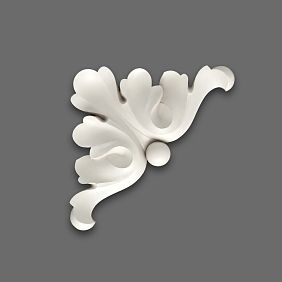
Our factory also produces:


Ceiling as the architect’s canvas
When a master begins work on a molded ceiling, he does not think about how many rosettes he can fit in — he thinks about how these rosettes will interact with the space.Plaster ceilingIt’s not merely covering imperfections or adding decorations. It’s rewriting the geometry of the room, transforming a simple box into a work of art.
Let’s start simple: what is a ceiling composition? It’s a system of interaction between elements, where each component works in harmony with the others. The central rosette for the chandelier is the anchor of the entire system. From it, visual energy radiates.decorative rose outletsAround the chandelier is the first level of the frame. Then come ceiling moldings, creating the perimeter. And finally, corner elements that tie everything together.
But here's the trap: every element added to the ceiling changes the visual weight of the space. Too much — and the ceiling starts to "press down," creating a feeling of confinement. Too little — and the ceiling looks empty, unfinished. Balance — that's the main skill.
Get Consultation
Psychology of ceiling perception
The human eye is structured so that when viewing a detailed ceiling, the brain first processes the information as a whole, then moves to the details. If this information is logically organized — there is a sense of harmony, order, classic taste. If the information is chaotic — there is unease.
Imagine: you enter a room, look up, and see a ceiling decorated with two large rosettes, four medium-sized, and eight small elements arranged randomly. What would you feel? Chaos. Now imagine: one central rosette, a smooth cornice around the perimeter, and — harmony. Why? Because the second option follows the rules of symmetry and scale.
Proportions and sizes: the mathematics of beauty
Before purchasing
Before Purchasing— everything must correspond to the chosen era.You need to perform calculations. Yes, calculations are boring, but they prevent mistakes. Start with the basic formula: the ceiling area determines how much decorative volume you can afford.
For a room of 15-20 square meters, it is optimal to use one central rosette (diameter 60-80 cm) and a cornice around the perimeter (width 10-15 cm). This creates visual comfort. If you add a smaller rosette in each corner — you’ll get a good result. But if you try to cover the entire ceiling with rosettes and moldings, you’ll end up with something tasteless.
For large spaces (30-50 square meters), you can afford a larger central rosette, several auxiliary elements, and a more complex cornice. But even here, the rule remains: no more than three main "focal points" on the ceiling.
Ceiling height — key parameter
Standard ceiling height of 2.7 meters requires a delicate approach. Here, we cannot afford massive elements.Ceiling corniceIt should be medium-sized — 8-12 cm. The rosette — 50-70 cm. Anything larger will "press down."
When ceilings are 3 meters and higher — here imagination can soar. You can use larger elements, multi-layer compositions.wooden corniceorMoldings made of polyurethaneThey can be more expressive, creating depth and play of shadows.
Low ceilings (2.5 meters and below) require minimalism. It’s better to completely avoid rosettes, limiting yourself to a thin cornice. Or use a very thin rosette, almost invisible. The point: don’t overload an already cramped space.
Material selection: when wood loses to polyurethane
Tradition versus practicality
Historically, plaster ceilings were made of plaster. Then came wood —Wooden cornices— considered a symbol of status and taste. Today, polyurethane has emerged, and it has overturned the notion of how a plaster ceiling should look.
Buy polyurethane wall moldings— means obtaining a material that requires no constant maintenance, is not afraid of moisture, does not deform over time. And most importantly — it looks exactly like wood or plaster, but costs less and lasts longer.
For ceilings, this moment is critical. Unlike walls, where molding is at eye level and minor imperfections can be tolerated, ceilings are viewed from afar. And if wood starts to warp after a few years, plaster cracks, polyurethane remains ideal.
Combined approach
Professionals often use a combination of materials. For example, a central rosette made ofpolyurethane moldingand the cornice — made of wood, which harmonizes with other wooden elements in the house. This creates texture and interest in the ceiling.
Rosette composition: from center to edges
Central rosette as an anchor
The rosette under the chandelier — this is the heart of the ceiling. Its size, shape, profile set the tone for the entire design.decorative rose outletsThey can be simple (round, smooth) or complex (with relief carving, ornament, openwork).
Rule one: the central rose must be at least twice as large as the peripheral ones. If the chandelier requires a rose with a diameter of 80 centimeters, then the corner roses must be no more than 40 centimeters. This preserves visual hierarchy.
Rule two: the style of the central rose sets the style for all other elements. If you choose a classic rose with baroque scrolls, then the cornice and corner elements must be within the same stylistic range. If the central rose is modern and geometric, everything else must be modern.
Corner roses: harmony or distraction?
Many make a mistake by placing corner roses. They think: 'If it's beautiful in the center, it will be beautiful in the corners too.' It doesn't work. Corner roses are seen from a completely different angle, under different lighting. They must be lighter, less intrusive, than the central rose.
Here's a good approach: if the central rose has deep relief, the corner roses should be almost flat, with minimal relief. This creates 'breathing space' in the composition. If the central rose is simple, the corner roses can be slightly more decorative, but not significantly so.
When corner roses are actually needed
A common mistake is placing a rose in every corner 'by habit'. Are they really needed there? Ask yourself: does a person standing in the center of the room look toward the upper corner? No. They see the corner peripherally, with peripheral vision. Therefore, the element there should not be overly expressive.
It's better not to install corner roses at all than to install them incorrectly. An elegant ceiling with one central rose and a beautiful cornice always looks better than a ceiling cluttered with roses.
Cornice as the compositional framework
Role of the ceiling cornice
Ceiling corniceIt is not just decoration, but a structural element of the composition. It creates a 'frame' for the ceiling, distinguishing it from the wall, visually softening the transition. Without a cornice, the ceiling appears unstable, as if it might fall at any moment.
The cornice performs several functions. First, it hides the joints between the ceiling and the wall, which are often uneven. Second, it visually 'separates' the ceiling, making it an independent object. Third, if the ceiling is low, a properly chosen cornice can visually lift it (thanks to its profile and shadow).
Choosing the cornice profile
The cornice profile is its cross-section, shape. It can be simple (semi-circular) or complex (with multiple protrusions and recesses). The choice of profile depends on the interior style and room size.
For minimalism — a simple, almost unnoticed cornice. For classic — medium complexity, with a clearly defined profile. For baroque or empire — complex, with many details.
Cornice width is a separate topic. On standard 2.7-meter ceilings, the optimal width is 10–15 centimeters. This is enough to be noticeable, but not so much that it feels oppressive. On high ceilings, it can be increased to 20–25 centimeters.
Material of the cornice
wooden corniceIt has a unique charm of natural wood. But it requires maintenance and may warp.Moldings made of polyurethaneIt is more practical, durable, and looks no worse. For ceilings where durability is critical, polyurethane is the best choice.
Avoid overloading: the 'more-less' principle
Rule of three elements
There is a time-tested rule in design: there should be no more than three main focal points in a composition. For a ceiling, this means:
-
One element: central rose with cornice around the perimeter. The minimum that looks complete.
-
Two elements: central rose, cornice, plus elements in corners or along walls.
-
Three elements: central rose, cornice, corner roses/elements, plus possible auxiliary moldings for connection.
More than three main focal points — and the ceiling starts to look like a decorated Christmas tree, not a harmonious space.
Breathing in the composition
Professional designers talk about 'breathing' in the composition. This means that in ceiling decoration, there should be both filled areas (with molding elements) and empty, calm areas. These empty areas give the eye a rest, making the composition more noble.
Imagine a ceiling completely filled with roses and moldings. The eye doesn't know where to stop. Imagine a ceiling where elements are arranged thoughtfully, with spaces — that's class.
Color in the ceiling composition
White as standard, but not as mandatory
Traditionally, molded ceilings are painted white or light tones. This is understandable: white visually raises the ceiling. But modern design offers alternatives.
The ceiling can be one to two tones darker than the walls. This creates depth and makes the room more interesting. Or, conversely, the ceiling can be painted the same color as the walls — this creates a sense of continuity and wholeness.
If usingwooden corniceor wooden elements, they can be painted in a contrasting color, creating an architectural accent.
Play with light
Lighting is a key factor.Plaster ceilingIt looks luxurious under good lighting. Under poor lighting, it may appear gloomy. Use recessed lights aimed at the moldings. Light hitting at an angle highlights the relief, creating a play of shadows.
Practical mistakes to avoid
First mistake: style mismatch
You buy a baroque-style rose, but the furniture in the room is minimalism. Result — visual dissonance. The ceiling and interior must speak the same language.
Second mistake: incorrect proportions
The central rose is too small, corner roses too large. Or vice versa. This disrupts visual hierarchy. Check proportions during the design phase.
Third mistake: lack of a plan
You start installation without a clear plan, improvising on the fly. Result — elements are placed chaotically. Always make a preliminary plan, marking the location of elements.
Fourth mistake: ignoring the room’s architecture
If the room has a supporting column, niches, or other features, they must be considered when designing the molded ceiling. Moldings should work with the architecture, not against it.
Fifth mistake: choosing low-quality materials
You can buy ready-made stucco matching the Baroque style. Calculate the quantity: linear meters of cornices and moldings, number of rosettes, pilasters, consoles, corner elements. Add a ten to fifteen percent allowance for trimming.Must be from reputable manufacturers. Cheap polyurethane may deform over time, have incorrect geometry, and look cheap. Invest in quality.
Step-by-step guide: from idea to implementation
First stage: measurements and calculations
Measure the ceiling, determine its area and height. Calculate optimal sizes of elements. Draw a plan on paper or in computer software.
Second stage: selecting elements
Choose the central rose, cornice, additional elements. RecommendedBuy polyurethane wall moldingsand elements from the same catalog — this guarantees stylistic unity.
Third stage: marking
Mark mounting points on the ceiling. Use a level to ensure the rose is aligned properly with the chandelier and room.
Fourth stage: installation
installing polyurethane moldingIs carried out using special adhesive. The rose is installed first, then the cornice around the perimeter, then additional elements.
Fifth stage: finishing
After the adhesive dries, you can proceed with painting. Use quality paint that will highlight the relief of the molding elements.
When is a molded ceiling effective: examples of successful compositions
Classic minimalism
One central rosette (60 cm), ceiling cornice (10 cm). Everything else - maximum simplicity. Effect: the ceiling looks noble, does not overload the space. Suitable for modern apartments, offices.
Traditional classic
Central rosette (80 cm), cornice (15 cm), small rosettes in corners (40 cm). Effect: rich appearance, but not tasteless. Suitable for classic-style homes, living rooms, bedrooms.
Modern hybrid
Central rosette with a modern geometric profile, simple cornice,Moldings made of polyurethanewith clean lines. Effect: current, stylish. Suitable for loft interiors, modern living spaces.
Integration of molded ceiling with the rest of the interior
Connection withwooden wall decor
If the room usesWooden wall decorpanels, moldings, brackets - the ceiling must harmonize with these elements. Material, color, style must be coordinated.
Coordination with chandelier
The chandelier and rosette should be of the same 'height'. If the chandelier is large, the rosette should be of corresponding size. If the chandelier is compact, a huge rosette will look out of place.
Matching ceiling height with wall height
If walls are decorated with moldings at a certain height, the ceiling cornice should visually continue this line. This creates a unified architectural solution.
Rare types of ceilings: special cases
Vaulted ceilings
On a vaulted ceiling, molded decoration requires a special approach. Elements should follow the curvature of the vault, creating a sense of unity rather than discord.
Multi-level ceilings
When the ceiling has different levels, each level may be decorated with separate rosettes or elements, but they must be unified by a single style and color.
Sloped ceilings
In attics or garages, the ceiling may be sloped. Molded decoration here requires a more creative approach, as traditional horizontal elements are not suitable.
Facts about molded ceilings that will surprise you
-
In the Renaissance era, molded ceilings were created exclusively by hand; each rosette was a unique work of art, and work on a single room could take months.
-
Gypsum molding can absorb moisture, so historically, on kitchens and bathrooms, wooden or later polyurethane molding was used.
-
The most expensive molded ceilings are found in palaces and museums - they are adorned with gold and precious stones, but the basic composition principle remains the same.
-
Modern polyurethane molding can look indistinguishable from natural molding, but weighs ten times less, making installation easier.
-
In the Soviet era, molded ceilings were considered a bourgeois relic, so in Stalin-era homes, rosettes were often covered with plaster, but some have survived to this day.
Answers to Popular Questions
Q: How much does a molded ceiling cost?
A: It depends on the material and complexity. A simple polyurethane composition costs 5-15 thousand rubles. Wooden or gypsum - more expensive, from 20 thousand. Plus labor costs.
How long does a molded ceiling last?
Polyurethane molding lasts practically forever. Wooden - 20-30 years with proper care. Gypsum - also long-lasting, but requires careful handling.
Can a molded ceiling be removed and relocated?
It's tricky. If it's glued, you can try, but it's risky. It's better to consider a molded ceiling as a permanent solution.
What style of molded ceiling is universal?
Classic minimalism - one rose and cornice. Suitable for any interior, always looks appropriate.
Is a specialist needed for installation?
For a simple cornice, you can handle it yourself. For complex compositions, it's better to hire a professional.
How to care for a molded ceiling?
Regular wiping with a damp cloth. Avoid aggressive cleaning agents. Polyurethane requires no additional care, wood needs periodic re-coating.
Can a molded ceiling look good in a modern interior?
Of course. The key is to choose a modern profile and minimal elements. A modern molded ceiling is characterized by simplicity and clean lines.
Final recommendations from the practitioner
Creating a molded ceiling is an art of balance. Too much decoration - and the space suffocates. Too little - and the ceiling looks empty. Finding this golden mean is a task requiring taste, knowledge, and experience.
Remember: beauty lies in simplicity. The most impressive molded ceilings often look almost empty, because each element is in its place, playing its part in the overall symphony.
Conclusion: choosing materials and craftsmen
Conclusion: Selection of Materials and Craftsmen
When you decide to decorate your ceiling with molding, you face a choice: material, style, complexity, craftsman. This is a comprehensive solution that requires careful consideration.
For material:decorative polyurethane elementsoffer the best balance of price, quality, and durability. If you prefer natural materials,Wooden cornicesis an excellent choice, though it requires more attention.
For style:Ceiling cornicemust match the overall design of your space. A classic interior requires a classic cornice, a modern one - simple and minimalist.
For implementation: experienced craftsmen know all the nuances of installation and composition. But if you decide to do it yourself, follow the principles described in this article.
STAVROS offers a full range ofmolding to buy- from simple ceiling moldings to complex decorative elements. The company's team understands that every ceiling is unique, and each room has its own characteristics. Therefore, they offer consultations and help you choose the optimal solution for your space.
Online store for polyurethane ornamentationSTAVROS is not just a catalog of products, but a partner in creating your ideal interior. Here you will find everything you need for a molded ceiling: roses, cornices, moldings, decorative elements. Quality is guaranteed, prices are competitive, service is professional.
Your ceiling deserves to be more than just a roof over your head - it should be a work of art that will delight you every day.