Article Contents:
- Why 2026 is the Era of Polyurethane, Not Plaster
- Weight: When Beauty Kills Floor Slabs
- Moisture: The Silent Killer of Plaster
- Installation: Two Crews vs. One Person
- Price: When Affordable Doesn't Mean Cheap
- Durability: Who Will Outlast the Renovation
- Anatomy of a Modern Perimeter: System Elements
- Ceiling Cornice: The Crown of the Space
- Corner Elements: Solving Joints
- Ceiling Rosettes: Focal Point
- Additional Moldings: Creating Levels
- Profile Selection: How Not to Make a Mistake with Scale
- Ceiling Height Dictates Cornice Width
- Room Area and Decorative Density
- Profile Relief: From Minimalism to Baroque
- System Approach: How Elements Work Together
- Unity of Profile and Ornament
- Proportionality of Sizes
- Color Harmony
- Installation of Polyurethane Perimeter: Step-by-Step Technology
- Step 1: Surface Preparation
- Stage 2: Marking and Calculation
- Stage 3: Corner Cutting
- Stage 4: Applying Adhesive
- Stage 5: Element Installation
- Stage 6: Additional Fixation (If Necessary)
- Stage 7: Sealing Joints
- Stage 8: Priming and Painting
- Lighting Integration: When Decor Emits Light
- Cornices with a Niche for Lighting
- Choosing LED strip
- Connection and control
- Style Solutions: From Classic to Futurism
- Classicism: Symmetry and Proportions
- Neoclassical: Lightweight elegance
- Art Deco: Geometric Luxury
- Minimalism: Presence Without Dominance
- Modernity 2026: Hybrid Forms
- Frequently Asked Questions About Polyurethane Ceiling Molding
- Conclusion: Ceiling as a Work of Art

The ceiling remains the last untouched space in most apartments. The walls are painted, the furniture is arranged, the textiles are selected — but above, there's still the same white emptiness. Meanwhile, the ceiling occupies an area equal to the floor, yet for some reason, it is ignored as a design object. The year 2026 changes the priorities: the ceiling transforms from a background into the main statement of the interior. And the tool for this transformation becomesPolyurethane ceiling molding— a material that debunked the myth that luxury requires sacrifice. Let's figure out how to create an architectural perimeter that looks like a sculptor's creation but is installed like a construction set and lasts for decades without any fuss.
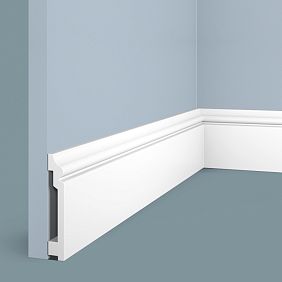
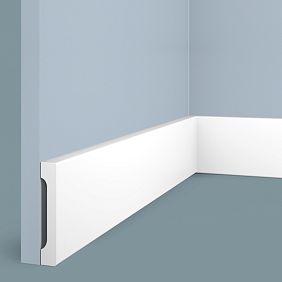
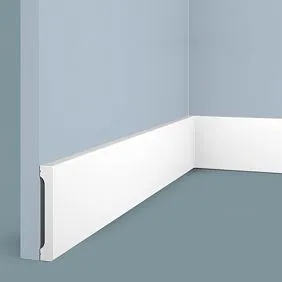
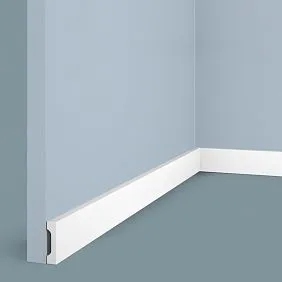
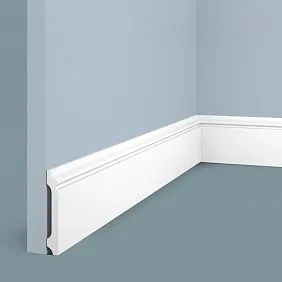

Why 2026 is the Era of Polyurethane, Not Plaster
Plaster ruled the world of decorative molding for three centuries. Palaces, mansions, theaters — everywhere there was pristine plaster luxury. But the historical material comes at a price that modern interiors are not willing to pay.




Weight: When Beauty Kills Floor Slabs
A plaster ceiling cornice 15 cm wide and 2 meters long weighs 12-18 kilograms. A room perimeter of 20 meters means 120-180 kg on the ceiling. Not every floor slab can withstand this without reinforcement. In old buildings, in panel houses with hollow-core slabs — this is a risk.
Ceiling molding skirting boardmade of polyurethane of the same size weighs 600-900 grams per two-meter segment. A perimeter of 20 meters — only 6-9 kg. That's 20 times lighter! Installation with adhesive, without anchors, without risk to the structure, without hiring a team of installers.
Our factory also produces:


Moisture: The Silent Killer of Plaster
Plaster is hygroscopic. It absorbs moisture from the air, swells, loses its shape, and becomes covered with mold. In a kitchen with poor ventilation, in a bathroom, in a room with unstable heating, plaster molding lasts 3-5 years, then requires replacement.
Polyurethane is completely moisture-resistant. The water absorption rate is less than 0.1% — the material does not absorb, swell, or deform. In bathrooms, saunas, swimming pools, kitchens — everywhere plaster capitulates, polyurethane serves for decades unchanged.
Get Consultation
Installation: Two Teams vs. One Person
Plaster molding is installed by specialists. Anchors, dowels, plaster mortar for joints, reinforcement of heavy elements, joint plastering, sanding, priming are needed. The process takes days, requires experience, and is expensive.
Polyurethane elements are installed with adhesive in hours. The technology is accessible to a hobbyist with minimal experience: marking, cutting with a miter box, applying adhesive, pressing to the surface. Joints are filled with acrylic sealant, final painting — and it's done. One person can finish a room's perimeter over a weekend.
Price: When Affordable Doesn't Mean Cheap
Plaster molding costs 2-4 times more per linear meter than polyurethane. Plus the cost of installation (1.5-2 times more expensive than the material). Plus risks: fragility during transportation, possibility of defects, need for additional purchases if short.
Polyurethane is cheaper in material, installation is simpler (can be done yourself), transportation is safer (doesn't break), leftovers are usable (doesn't crumble). The final cost of a polyurethane perimeter is 3-5 times lower than plaster with an identical visual result.
Durability: Who Will Outlast the Renovation
Plaster under ideal conditions lasts for centuries — proof is 18th-century palaces. But modern apartments do not provide ideal conditions: humidity fluctuations, building settlement, vibrations from traffic. Plaster cracks, chips, requires restoration after 10-15 years.
Polyurethane is elastic, absorbs vibrations, compensates for minor base movements. Does not crack from building settlement, does not chip from impacts, does not crumble over time. Service life of 30-50 years without loss of appearance and strength. When changing the interior, it is easily removed and reinstalled.
Anatomy of a Modern Perimeter: System Elements
Ceiling molding— is not just one cornice around the perimeter. It is a system of elements creating an architectural composition.
Ceiling Cornice: The Crown of the Space
The main element running along the perimeter at the junction of the wall and ceiling. Hides corner irregularities, creates a visual finish, adds height to the room. Width varies from 5 cm (minimalist coves) to 25 cm (massive classical cornices).
The cornice profile defines the style. A simple concave cove — neutral, suits any interior. A stepped profile with multiple levels — classicism, neoclassicism. A cornice with floral ornamentation — baroque, empire. Geometric relief — art deco, modern classic.
Cornices for hidden lighting have a technical shelf on the back side where an LED strip is placed. Light is directed onto the ceiling or wall, creating a floating ceiling effect, contour lighting, soft evening light. This is a 2026 trend — decor integrated with lighting.
Corner Elements: Solving Joints
In room corners, cornices join at a 45-degree angle. They can be cut with a miter box, but accuracy depends on skill. It's easier to use ready-made corner elements — special decorative inserts covering the joint. They not only simplify installation but also add emphasis to the corners.
Corner elements come in simple (repeating the cornice profile, simply covering the joint) and decorative (featuring additional ornamentation, rosettes, scrolls). The second option turns corners into compositional accents.
Ceiling rosettes: the focal point
A rosette is placed in the center of the ceiling under the chandelier. This is not a functional necessity but an aesthetic accent. The rosette sets the scale for the entire composition, becoming a visual anchor.
The rosette diameter is selected based on the chandelier size and ceiling area. A chandelier with a diameter of 60 cm requires an 80-100 cm rosette. A ceiling area of 20 sq.m is optimal with a 60-80 cm rosette. A 40 sq.m ceiling — a 100-120 cm rosette or a composition of several elements.
The rosette style should harmonize with the cornice. If the cornice has a floral ornament, the rosette should too. A geometric cornice — a geometric rosette. A laconic cornice — either a simple rosette or its absence (a minimalist approach).
Additional moldings: creating levels
In addition to the main cornice, additional moldings can be placed on the ceiling, creating coffers, frames, and geometric compositions. The ceiling is divided into zones, gaining volume and structure.
A coffered ceiling — squares or rectangles formed by intersecting moldings. Inside each coffer — a rosette or decorative overlay. A classic technique that visually raises the ceiling, adding monumentality.
A frame composition — molding forms a rectangular or oval frame in the center of the ceiling, inside which is a different color, texture, or stretch fabric. Creates an accent zone, emphasizes the center of the room.
Profile selection: how not to make a mistake with scale
Beauty turns into absurdity if the scale of the elements does not correspond to the volume of the room.
Ceiling height dictates cornice width
Ceiling 2.4-2.5 meters — maximum cornice width 8-10 cm. A wider one will visually lower the ceiling even further, creating a feeling of a pressing lid.
Ceiling 2.6-2.8 meters — optimal width 10-14 cm. This is the golden mean for most typical apartments. The cornice is noticeable, creates completeness, but does not overload.
Ceiling 2.9-3.3 meters — you can use 14-18 cm. The height allows for massive decor without the risk of visual compression.
Ceiling above 3.5 meters — width 18-25 cm. A narrow cornice will get lost at such heights and will look stunted.
Room area and decor density
A small room of 10-12 sq.m does not tolerate an abundance of decor. A laconic cornice around the perimeter, possibly a small rosette (40-50 cm) — is enough. More — overload, the space will turn into a jewelry box.
A medium room of 15-25 sq.m — a medium-width cornice, a standard-size rosette (60-80 cm), possibly additional corner elements. A balance of decorativeness and airiness.
A large room of 30-50 sq.m — a wide cornice, a large rosette (100-120 cm) or several medium ones, additional moldings creating coffers or frames are possible. The scale must correspond to the volume.
Profile relief: from minimalism to baroque
A flat profile with a barely noticeable relief (depth 2-5 mm) suits modern interiors, minimalism, Scandinavian style. The decor is present but does not shout about itself.
Medium relief (5-12 mm) — a classic option for neoclassicism, modern classic, American style. Expressive enough to create a play of light and shadow, but not excessive.
Deep relief (12-25 mm) — baroque, empire, luxurious classic. Multi-level flutes, floral ornaments, scrolls. Such decor dominates, becomes the main hero of the interior.
A systematic approach: how elements work together
polyurethane molded decoris effective when the elements harmonize with each other and with the overall interior concept.
Unity of profile and ornament
If the ceiling cornice has a floral ornament (acanthus leaves, laurel wreaths, grape vines), the rosette should have a similar motif. Corner elements continue the theme. Stylistic unity is created.
A geometric cornice (steps, rectangular protrusions, faceted shapes) combines with geometric rosettes (circles, squares, polygons, radial symmetry without vegetation).
Mixing ornament styles — a floral cornice and a geometric rosette — creates dissonance. An exception is deliberate eclecticism, where contrast is part of the concept.
Proportionality of sizes
A narrow cornice (6-8 cm) and a huge ceiling rosette (120 cm) in a medium-sized room create a visual imbalance. The rosette overwhelms the cornice, and the composition falls apart.
A wide, massive cornice (20 cm) and a tiny rosette (40 cm) present the opposite problem. The rosette gets lost and cannot serve as a focal point.
Rule: The width of the cornice and the diameter of the rosette should be comparable in scale. For a 10-12 cm cornice, use a 60-80 cm rosette. For a 16-18 cm cornice, use a 90-110 cm rosette.
Color Harmony
Traditionally, allCeiling moldingmolding is painted white, regardless of the color of the ceiling and walls. This is a classic approach that always works.
A modern approach allows painting the molding to match the ceiling color (monochrome) or in a contrasting color. For a gray ceiling: white molding (classic contrast) or gray molding one shade darker (monochrome). For a dark ceiling (graphite, black, dark blue): white or gold molding (dramatic contrast).
The rosette can be an accent piece—painted a different color than the cornice. A white cornice with a gold rosette conveys solemnity and luxury. However, this technique requires supporting gold elements elsewhere in the interior (mirror frames, furniture legs, light fixtures).
Installing a polyurethane perimeter: Step-by-step technology
Theory is useless without practice. Let's break down the process from start to finish.
Stage 1: Surface preparation
The ceiling and the upper part of the walls (the area where the cornice will be attached) must be clean, dry, and degreased. Dust, grease stains, and traces of old paint reduce the adhesive's bond.
If the surface is painted with oil-based paint or varnished—sand it with P80-P120 sandpaper to create roughness. For acrylic paint, water-based paint, or plaster—simply wipe with a damp cloth and let dry.
Irregularities at the wall-ceiling junction are not critical—the cornice will hide them. But if the deviation is more than 2 cm—level it with filler, otherwise the cornice will have gaps.
Step 2: Marking and Calculation
Measure the room's perimeter. Divide by the standard element length (usually 2 meters). Round up—this gives the number of segments. Add 10% for cutting—final quantity to purchase.
Example: A room 4×5 meters, perimeter 18 meters. Divide by 2 meters: 18÷2=9 segments. Add 10%: 9+1=10 segments. Order 10 pieces of 2 meters each (total 20 meters of material).
Mark the line for the cornice's lower edge on the wall. Use a laser level or water level—the line must be perfectly horizontal. The offset from the ceiling depends on the cornice width: for a 10 cm cornice, offset 10 cm; for 15 cm, offset 15 cm.
Step 3: Cutting Corners
Cut corners at 45 degrees using a miter box. Place the cornice in the miter box in the same orientation it will be mounted (with the side facing the ceiling up). Use a fine-toothed saw (for metal or specifically for polyurethane), with smooth, pressure-free strokes.
If the room corners are not exactly 90 degrees (a common issue in old houses)—use an adjustable miter box or cut corners after test-fitting, adjusting manually.
Alternative—use ready-made corner elements. Cornices join them without 45-degree cuts, simply butted together. The corner element covers the joint decoratively and functionally.
Step 4: applying adhesive
Use special mounting adhesive for polyurethane (Orac Decofix, Quelyd Mastik, Moment Montazh). Apply adhesive in a zigzag pattern across the entire back of the element. Don't skimp—it's better to have excess squeeze out than not enough.
If the cornice is wide (over 12 cm) and heavy—also apply adhesive to the wall and ceiling in the contact area. Double application enhances fixation.
Do not apply adhesive to all elements in advance—it begins to set in 10-15 minutes. Apply directly before mounting each segment.
Step 5: Installing Elements
Start from the least noticeable corner (usually opposite the entrance). Place the element against the wall and ceiling, aligning the lower edge with the marking. Press evenly along the entire length for 5-10 seconds.
Immediately wipe away any squeezed-out adhesive with a damp sponge. If the adhesive dries—it will have to be removed mechanically, risking damage to the element.
Butt the next element tightly against the first. The joint should be tight, without gaps. If a gap forms—fill it with white acrylic sealant, smooth with a wet finger.
Continue around the perimeter until complete closure. The last element is cut precisely to fit the remaining distance.
Step 6: Additional Fixation (if necessary)
Light cornices (up to 10 cm wide) are held by adhesive only. Heavy ones (over 15 cm) may require temporary support until the adhesive fully cures (24 hours). Use painter's tape, supporting strips, or careful small nails (driven into the wall under the cornice, later removed, holes filled).
Do not use screws through the cornice itself — the holes will be visible. If fastening is necessary — do it through the wall under the cornice, and then cover the screw heads with putty and paint.
Step 7: Sealing joints
All joints (corner, end) are filled with acrylic sealant. Squeeze the sealant from the tube into the seam, smooth it with a wet finger or rubber spatula. Remove excess immediately with a damp sponge.
Acrylic sealant (not silicone!) can be painted, unlike silicone. After painting, the joints become invisible.
Step 8: Priming and painting
24 hours after installation (full adhesive curing), prime all moldings with acrylic primer. Apply primer with a brush or roller, one coat, drying according to instructions (usually 2-4 hours).
Painting — with water-based or acrylic paint, matte or semi-matte. Gloss on moldings looks cheap. Two to three thin coats are better than one thick one. Minimum 4 hours drying between coats.
If you plan patination, gilding, decorative effects — do them after the base coat on a dry surface.
Lighting integration: when decor emits light
Trend for 2026 —ceiling decorations, integrated with lighting. The decor not only adorns but also glows, creating an atmosphere.
Cornices with a niche for lighting
Special profiles have a technical shelf on the back side. After installing the cornice, an LED strip is placed in the niche and connected to a 12V or 24V power supply.
Light directed upward onto the ceiling — creates a floating ceiling effect. The ceiling glows around the perimeter, the center is slightly darker, creating the illusion that the ceiling does not touch the walls, floating on a light cushion. Visually, the ceiling rises by 10-15 cm.
Light directed downward onto the wall — contour lighting, accentuating the wall texture, creating intimacy. Used in bedrooms, studies, restaurants.
Bidirectional lighting — LED strip in two rows, one shines upward, the second downward. Maximum decorative effect, the cornice is surrounded by a light halo. Requires a powerful power supply.
Choosing LED strip
Color temperature: 2700-3000K (warm white) creates coziness, suitable for bedrooms, living rooms. 4000-4500K (neutral white) — universal, for any rooms. 5000-6500K (cool white) — modernity, minimalism, office spaces.
Brightness: 8-12 W per meter for soft ambient lighting. 14-18 W per meter for bright lighting capable of serving as the main evening illumination.
RGB strip allows changing the lighting color (red, green, blue, all shades in between). This is a playful, theatrical effect, not suitable for everyone. For classic interiors, static white color is better.
Connection and control
Power supply is selected based on the total power of the strip. Strip 10 W/m, length 20 meters — total power 200 W. Power supply needed at least 240 W (20% reserve). The power supply is hidden in a niche, behind furniture, in a technical area.
Dimmer (brightness regulator) allows changing light intensity from 0 to 100%. Full brightness in the evening, dimmed for a nightlight at night. The dimmer is placed between the power supply and the strip.
Control via remote or smartphone (via Wi-Fi controller) — modern convenience. Change brightness, color (if RGB), turn on/off without getting up from the sofa. Controller cost 2000-5000 rubles.
Style solutions: from classic to futurism
Polyurethane is universal — it imitates any historical style and creates modern forms.
Classicism: symmetry and proportions
Cornices with Ionic or Corinthian motifs (volutes, acanthus leaves), strict proportions, symmetrical placement. A rosette in the center of the ceiling is mandatory, its diameter corresponds to the scale of the room.
Color — white. Light patina (beige, grayish) is acceptable for a noble antique effect. Accent gilding on capital details, center of the rosette.
Neoclassical: Lightened Elegance
Simplified classical forms. Cornices with barely hinted flutes, stylized rosettes. Proportions are classical, but ornamentation is more restrained.
Color is more varied — from white to cream, gray, even black (bold solution). Gilding is minimal or absent.
Art Deco: geometric luxury
Faceted profiles, stepped forms, geometric ornaments (zigzags, concentric circles, radial compositions). Rosettes with radial symmetry, stylized corner elements.
Contrasting color palette: black and white, gold with black, silver with graphite. Metallic paints to enhance style.
Minimalism: presence without dominance
Concave covings with minimal relief, absence of ornaments, simplest geometric shapes. Ceiling medallion either absent or simplest (smooth circle).
Color matching the ceiling — monochrome. Molding is perceived only through relief and play of light. Effect of structuredness without decorativeness.
Modernity 2026: hybrid forms
Combination of classical elements with modern lighting. Traditional cornice, but with integrated LED niche. Ceiling medallion of classical shape, but painted in an unexpected color (deep blue, emerald, burgundy).
Asymmetrical compositions — cornice only on one or two walls, not around the entire perimeter. Ceiling medallion offset from center. This is a violation of canons, but a conscious one, creating dynamics.
Frequently asked questions about polyurethane ceiling molding
Can polyurethane molding be glued to a stretch ceiling?
Not directly onto the fabric itself. But you can create a drywall box around the perimeter, mount the cornice onto it, and stretch the fabric inside. Or use special cornice-caps for stretch ceilings that are attached to the wall below the ceiling level.
How long does the adhesive dry before painting?
Mounting adhesive sets in 24 hours. Painting can be done one day after installation. Full adhesive polymerization takes 72 hours, but this does not interfere with painting.
Can polyurethane molding be used in a bathroom?
Yes, the material is completely moisture-resistant. In bathrooms, saunas, swimming pools — everywhere without problems. The only condition is that the adhesive must also be moisture-resistant (polyurethane or acrylic mounting adhesive).
How to care for moldings?
Wipe with a dry or slightly damp cloth as dust accumulates (usually every 2-3 months). Do not use abrasives, solvents. If the surface is painted with acrylic paint — you can wipe with a damp sponge and mild detergent.
Can molding be repainted a different color?
Yes, any number of times. The surface is sanded with fine sandpaper (P220-P280), degreased, primed, and painted with a new color. The process is identical to initial painting.
How much does it cost to decorate the perimeter of a 20 sq.m room?
Perimeter approximately 18 meters. Medium-width cornice (10-12 cm) costs 300-600 rubles/meter. Total material 5,400-10,800 rubles. Adhesive, sealant, primer, paint — another 2,000-3,000 rubles. If you install it yourself — that's the full cost. If hiring a craftsman — add 3,000-6,000 rubles for labor.
How does polyurethane differ from polystyrene foam (polystyrene)?
Polyurethane is denser (300 kg/m³ vs. 25-50 kg/m³), stronger, relief detailing is sharper. Polystyrene foam is cheaper but conveys fine details worse, is more fragile. For high-end interiors — polyurethane, for budget — polystyrene.
Conclusion: ceiling as a work of art
The ceiling is the last untouched canvas in the interior. In 2026, ignoring it means missing a third of the visual impact of the space. Polyurethane molding transforms the ceiling from a technical surface into an architectural statement.
Advantages of modern materials have eliminated the barriers that previously made molded decor a privilege of palaces. The lightness of polyurethane allows installation without reinforcing floor structures. Moisture resistance opens up use in any rooms. Ease of installation makes the process accessible to amateurs. Price turns luxury into an affordable solution.
But the main thing is creative freedom. You are not limited by historical styles. Classic, neoclassical, art deco, minimalism, hybrid modern forms — polyurethane embodies any idea. Integration with LED lighting adds a dimension of light, turning static decor into a dynamic light installation.
The company STAVROS has specialized in polyurethane molding for ceilings and walls for two decades. The assortment includes hundreds of cornice profiles — from concise 5-centimeter covings to monumental 25-centimeter multi-level profiles with floral ornaments. Dozens of ceiling medallion models with diameters from 20 to 120 cm, styles from strict classic to baroque luxury.
All STAVROS products are made from high-density polyurethane (300-350 kg/m³) from European and South Korean manufacturers. Pressure casting technology ensures filigree detailing — every leaf, fluting, curl is reproduced with photographic accuracy. Elements are supplied primed with white acrylic primer, ready for installation or painting.
A special direction — cornices for hidden lighting. Special profiles with a technical niche for LED strips, creating effects of floating ceilings, contour lighting, light accents. STAVROS offers a comprehensive solution: cornice plus matched LED strip, power supply, dimmer. You get a ready-made system, not a set of incompatible components.
For those who value exclusivity, STAVROS offers custom element manufacturing based on individual sketches. You can order a cornice of any profile, a medallion with a unique ornament, corner elements of authorial design. The technology allows implementing any idea — from exact copies of historical samples to futuristic forms.
The company provides full project support. Professional consultants will help select elements by style, scale, budget. Free calculation of required materials eliminates errors. Detailed instructions for installation, painting, lighting integration will give confidence in self-installation.
The stock program allows shipping popular profiles on the day of request. Exclusive elements and custom-order products are manufactured in 3-6 weeks. Delivery is organized across Russia and CIS with cargo safety guarantee — multi-layer packaging protecting from impacts and deformation.
STAVROS warranty on all products — 2 years. If an element has a manufacturing defect (cracks, deformations, coating peeling) — free replacement. Technical support is available at all stages: from selection to operation.
By turning to STAVROS, you get not just materials, but a partner in creating a ceiling that will cease to be a background and become a work of art. European-level quality, variety of choice, professional support, respect for your project — that's what distinguishes the company's work.
Your ceiling can become a fifth wall, telling its own story. The tools for this are accessible, the technologies are simple, the result is impressive. 2026 is the time when the ceiling gets a voice.