Article Contents:
- History of Molding: From Palaces to Urban Apartments
- Polyurethane vs. Plaster: An Honest Comparison
- Molding Elements: Complete Architectural Dictionary
- Moldings
- Ceiling Rosettes
- Cornices and Covings
- Capitals
- Friezes
- Overlay Panels and Medallions
- Pilasters and Half Columns
- Interior Styles and Molding: Where Each Works
- Classic and neoclassic
- Neoclassicism and Modern Classicism
- Provence and Country Style
- Art Deco
- Minimalism and Scandinavian style
- Loft and Industrial Style
- STAVROS Molding Catalog: What's in the Assortment
- Molding Decor: Overlays and Panels
- Moldings and trim
- Ceiling Rosettes
- Cornices and Baseboards
- Corbels and capitals
- Decorative Grilles
- How to Choose Molding Correctly: Step-by-Step Algorithm
- Polyurethane Molding Installation: From A to Z
- Tools and Materials
- Surface Preparation
- Marking
- Cutting and fitting
- Adhesive Application and Fixation
- Finishing
- Molding in Different Rooms: Application Specifics
- Living Room
- Bedroom
- Entrance Hall and Foyer
- Kitchen
- Bathroom
- Facade
- Polyurethane Molding Prices: What Affects the Cost
- Molding and Lighting: How to Properly Combine Them
- Polyurethane Molding Care: Simple and Quick
- Molding as an Investment in Property Value
- FAQ: Answers to Popular Questions About Polyurethane Molding
- STAVROS: When There's a Manufacturer Behind the Detail

There are spaces you enter—and freeze. The ceiling lives. The walls breathe. Every cornice, every swirl of the rosette above the chandelier speaks of a place created with soul. Behind this feeling standsMoldings—one of humanity's oldest architectural languages, which in the 21st century has found new life thanks to modern materials. And the name of this material is polyurethane.
Today, polyurethane molding is not a compromise or a replacement for the 'real thing.' It's evolution. It's lighter, stronger, cheaper to install, not afraid of moisture, and doesn't crack from temperature fluctuations. Yet, in visual effect—no concessions whatsoever. If you're faced with the task of creating an interior with character or transforming a house facade, this article will give you a complete understanding of what you're working with, what molding elements exist, and how to choose, combine, and install them.


History of molding: from palaces to city apartments
Molding appeared long before the world invented polyurethane. The first decorative reliefs on walls and ceilings are found in the buildings of Ancient Egypt and ancient Greece. The Greeks used terracotta and limestone mortar to create friezes with plant motifs - acanthus, laurel, grapevine. The Romans adopted the tradition, complicated the ornament, and spread it throughout Europe.
The Renaissance made molding a mandatory attribute of palace halls. Baroque brought it to the limit of expressiveness: heavy garlands, putti, mascaron, scrolls, and shells turned the ceilings of Italian and French palaces into real sculptural canvases. Classicism cooled this splendor - and molding became strict, proportionate, and geometrically precise.
For a long time, all this decor was made by hand from plaster. A master molder was an important and respected figure - almost like a sculptor. But in the 20th century, everything changed. First, industrial gypsum molded products appeared, then polystyrene foam, and at the end of the century - polyurethane. It was this material that mademoldingaccessible to everyone - without losing beauty and without the need to hire a team of craftsmen for several weeks.




Polyurethane vs. plaster: an honest comparison
The question arises in everyone's mind when they first face the choice: take plaster or polyurethane? Let's break it down honestly, without marketing clichés.
Weight. Plaster molding is heavy. A large cornice or rosette made of plaster can weigh several kilograms - and this creates a load on the floor, requires reliable fastening, anchor dowels, and often a metal frame. A polyurethane analogue of the same size weighs 5–8 times less. Installation on ordinary polyurethane glue - without a drill, without dowels, without additional fasteners.
Fragility. Plaster breaks. This is not an assumption - it's the physics of the material's crystalline structure. Any impact - and the corner of the cornice falls off, the rosette cracks. Polyurethane is elastic: it bends but does not break. It can be dropped, hit by a stepladder, slightly filed - it will withstand.
Moisture resistance. Plaster absorbs moisture. In bathrooms, kitchens, rooms with humidity fluctuations, it swells, darkens, delaminates, and eventually falls off. Polyurethane is waterproof - it can be installed even in rooms with constant high humidity.
Workability. Plaster is difficult to cut precisely - it crumbles, requires special tools. Polyurethane is cut with an ordinary utility knife or hacksaw. Joints and corner connections are adjusted quickly and accurately.
Installation cost. Plaster molding is installed by professionals. Polyurethane molding - by anyone with basic repair skills. The difference in installation cost per apartment can amount to tens of thousands of rubles.
Appearance. Here - a draw. High-quality polyurethane molding is visually indistinguishable from plaster. Both materials accept paint perfectly, both give a clear relief, both look equally expressive in the interior.
The conclusion is clear: for the vast majority of tasks, polyurethaneMoldingsis preferable to plaster. The exception is the restoration of historical objects, where, according to the requirements of preservation authorities, it is necessary to use original materials.
Our factory also produces:


Molding elements: a complete architectural dictionary
The world of decorative architectural plasticity is rich and diverse. Before flipping through the molding catalog, it is important to understand what a particular product is called and what it is intended for.
Get Consultation
Moldings are linear profiles used to create framed compositions, zone walls, and frame openings. They come in various widths (from 20 to 150 mm) and relief complexity — from smooth to richly decorated.
Moldingare profile strips with a decorative cross-section that are attached along walls, ceilings, or furniture panels. Their main function is zoning and framing. Molding divides the wall into visual 'fields,' decorates the transition from wall to ceiling, highlights the panel or niche area.
By profile, moldings are: flat (rectangular cross-section), convex (with a semicircular or ovoid relief), complex-profile (several levels of relief in one element). Width - from 10 to 150 mm and more. The length of a standard strip is 2 meters. Moldings are cut to the required size and connected at any angle using a miter box.
In the interior, moldings are used to create 'panel' wall decoration - a classic technique where the lower third of the wall is visually highlighted with frame inserts. This is one of the most accessible and effective ways to give an ordinary room a palace look.
Ceiling rosettes
A ceiling rosette is a round decorative element that is installed around the chandelier suspension point. The function is decorative: to hide the point where the electrical cable exits the ceiling and create a visual accent above the light source.
The diameter of rosettes varies from 200 to 900 mm and more. The ornament - from simple concentric rings to complex floral-plant or geometric compositions. The rule for choosing the size: the diameter of the rosette should be at least 1/3 of the diameter of the chandelier - then the proportion looks harmonious.
Polyurethane rosettes are installed with ceiling glue in 15–20 minutes. No special experience is required.
Cornices and coving
A cornice is a profile element that decorates the corner between the wall and the ceiling. This is one of the most important elements in the interior decor system: a correctly chosen cornice 'completes' the room, hides irregularities in the ceiling-wall joint, and visually raises the ceiling.
Coving is a simplified, small version of a cornice with a simple smooth profile. If a cornice is the ceremonial uniform of the interior, then coving is a business suit: neat, restrained, appropriate everywhere.
The height of polyurethane cornices is from 30 to 250 mm and more. The profile can be straight (with one step), slanted (crown cornice with several levels), with ornament (acanthus, beads, egg-and-dart, meander).
Capitals
A capital is the decorative crowning element of a column or pilaster. It is one of the most recognizable features of molding in the architectural lexicon. The Ionic capital with its characteristic volutes, the Doric—strict and concise, the Corinthian—opulent, with acanthus leaves—each type carries the cultural code of a specific era.
In modern interiorsCapitalsare used on decorative columns and half-columns that delineate zones in open floor plans, frame doorways, and separate the living room from the dining area. Polyurethane capitals, in turn, weigh many times less than their plaster and stone prototypes, which simplifies installation to the utmost.
Friezes
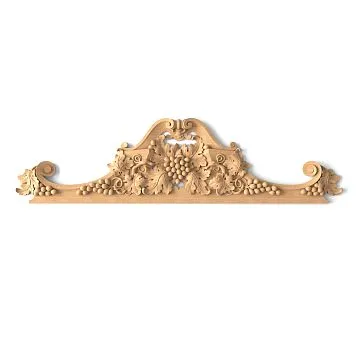
A frieze is a horizontal band of decorative relief located between the cornice and the main plane of the wall. In classical architecture, the frieze is part of the entablature, the middle zone between the cornice above and the architrave below. In interiors, a frieze can be a continuous ornament (running wave, meander, laurel wreath) or discrete—composed of separate medallions and cartouches.
A frieze sets the rhythm for a space. It unites all the walls of a room into a single visual statement. A correctly chosen frieze can radically change the character of a room—transforming a boring rectangle into a space with history.
Overlay Panels and Medallions
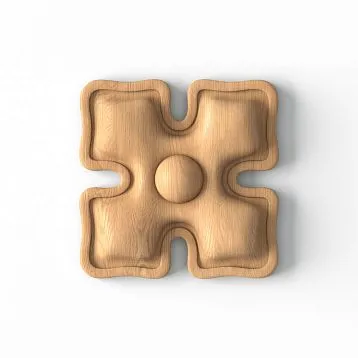
Decorative overlays are flat or three-dimensional elements that are attached directly to a wall or ceiling, not forming a linear structure. These can include: corner overlays for framing, central medallions for accentuating niches or fireplace portals, cartouches (ornamental shaped frames), wall rosettes.
— everything must correspond to the chosen era.in the form of overlay panels work especially well in a 'paneled' wall finishing system: moldings form a frame, inside which colored paint or fabric is placed, and corner overlays mask the joints.
Pilasters and half-columns
A pilaster is a flat vertical projection on a wall that imitates a column. It consists of a base (lower part), a shaft, and a capital. Pilasters give a wall architectural structure, divide it into vertical 'fields,' and create a sense of monumentality.
A half-column is a three-dimensional variant: a round shaft protruding from the wall by half its diameter. Together with the capital and base, a half-column creates a pronounced classical image, suitable for halls, living rooms, fireplace halls, and grand corridors.
Interior Styles and Molding: Where What Works
Molding is a material that can speak different languages. Depending on the chosen style and specific decorative elements, the result can be diametrically opposite.
Classicism and neoclassicism
This is the native element of molding. Rich cornices with acanthus, multi-level ornamental ceiling rosettes, moldings with an 'egg-and-dart' profile, Corinthian or Ionic order capitals—all of this works in a classical interior like a well-tuned orchestra. Color—white or ivory, sometimes with gilding on the ornament. Wall surfaces—warm tones: ochre, terracotta, dark green, cobalt blue.
Neoclassicism and modern classicism
Here, molding works in a more restrained mode. Cornice—yes, but without excessive ornamentation. Moldings—yes, but thin, with minimal relief. Rosette—laconic, without curls. Color—uniform with the ceiling, no gilding. The effect—nobility without pomp, structure without heaviness.
Provence and country
Molding in a Provençal interior features floral motifs, smooth curves, thin coving, and small wall medallions with plant ornamentation. Color—aged white, soft gray, dusty blue. Such molding does not dominate—it creates coziness, like the smell of fresh baking: unobtrusive but irresistible.
Art Deco
The style of the 1920s–30s with its cult of geometry and luxury. Molding in Art Deco features strict geometric friezes, zigzags and stepped moldings, medallions with radiant patterns. Colors—contrasting: black-and-white, gold on black, silver on dark blue.
Minimalism and Scandinavian style
Molding here is—at first glance—an unexpected guest. But a thin coving matching the ceiling, a barely noticeable molding dividing the wall into horizontal zones—this is a technique that gives a space structure without visual noise. A Scandinavian interior with molding is a delicate play with shadow and relief, perceived almost on a subconscious level.
Loft and industrial style
Here, molding works as an intentional contrast. Rough concrete plus an elegant rosette above an Edison bulb lamp—this is a provocation that works. A dark color of molding (anthracite, bronze, matte black) on a light ceiling creates a graphic effect, uncharacteristic of classic white molding but very organic in a loft.
STAVROS Molding Catalog: What's in the Assortment
moldings catalogfrom STAVROS is a complete system of decorative elements covering all tasks of interior and facade design. Let's examine the key categories.
Molded Decor: Overlays and Panels
The NPU and CPU series of overlay decorative elements are products made of high-density expanded polyurethane with precisely reproduced relief details. The assortment includes: small corner overlays from 530 rubles, shaped panels and cartouches from 1,190 rubles, large decorative compositions costing up to 50,150 rubles.
Designation in the article number: NPU—lightweight expanded polyurethane, CPU—a denser material of increased hardness, recommended for facade application and areas with high mechanical load. The L and R indices in the name (NPU-273L / NPU-273R) denote mirror execution—left and right, which allows for creating symmetrical compositions.
Moldings and Trim
Moldings made of polyurethanein the STAVROS catalog are presented in a wide range of profiles—from minimalist straight slats to complex multi-level cornices. This is the basic tool for paneled wall finishing and ceiling perimeter design. Sold individually and by linear meter.
Ceiling Rosettes
The assortment of rosettes covers products of different diameters and styles. There are strict geometric options for modern interiors, and rich classical ones with acanthus and scrolls—for classicism and Baroque. Installation—adhesive plus a screw through the center (hidden under the lighting fixture).
Cornices and Baseboards
Ceiling cornices—from light coving to heavy crown cornices with multi-level profiles. Polyurethane baseboards—for finishing the lower perimeter of walls, with profiles from 40 to 120 mm in height. Suitable for all types of floor coverings.
Brackets and capitals
Decorative brackets—elements imitating supporting consoles under cornices, balcony slabs, and canopies. In interiors—a decorative function, creating a sense of architectural massiveness. Capitals for decorative columns—in several order variants.
Decorative Grilles
Polyurethane decorative grilles — for decorating niches, false windows, ventilation openings. They create a rhythmic geometric pattern and simultaneously serve the practical function of masking technical elements.
How to choose molding correctly: a step-by-step algorithm
Choosing decorative elements is a task that requires a systematic approach. Let's break it down step by step so you don't make mistakes that cost dearly.
Step one: determine the style. Before opening the catalog, ask yourself: in what style is the room decorated or will be decorated? Classic, Provence, minimalism, loft — everything depends on the answer: profile, ornament, size, color.
Step two: assess the proportions of the room. Ceiling height is the key parameter. With ceilings of 2.5–2.7 m, the cornice should be modest — 50–80 mm. With a height of 3 m and above — you can use cornices of 100–150 mm and full-fledged rosettes. Massive molding in a low room feels oppressive and visually reduces the space.
Step three: make a list of elements. Perimeter cornice — how many linear meters? How many rosettes? Are wall moldings needed? Are columns or pilasters planned? Make a list with measurements — this will protect you from the situation of 'bought too little' or 'bought too much'.
Step four: choose a compatible system. All elements in the room should belong to one stylistic system. A Baroque rosette and a minimalist flat cornice in the same space will create a visual conflict. Ideally — one line from one manufacturer, designed as a system.
Step five: order with a reserve. For joints, for corner cuts, for possible defects during installation — add 10–15% to the estimated linear footage. Buying molding from the same batch later is not always possible.
Installation of polyurethane molding: from A to Z
Installation is the main advantage of polyurethane over all other materials. Let's examine the process in detail.
Tools and materials
For installation you will need: glue for polyurethane products (special acrylic or mounting glue recommended by the manufacturer), a miter box or fine-toothed saw for cutting corners, pencil and level for marking, painter's tape for fixing during glue drying, finishing putty and acrylic paint for final finishing.
Surface preparation
The surface must be clean, degreased, and relatively even. There's no point in hiding serious irregularities with molding — they will still show through in the gaps between the decor and the wall. Priming the surface improves glue adhesion.
Marking
The cornice line along the ceiling perimeter is the first and main line. Use a laser level or water level to guarantee horizontality. An error of a few millimeters on a short section becomes a noticeable error of 1–2 cm on a long wall.
Cutting and fitting
Straight sections are cut simply — at 90°. Corner connections require a 45° cut in a miter box. An inside corner and an outside corner are cut differently — don't mix them up. Before applying glue, dry-fit the element, check the fit. A gap of more than 2 mm at the joint is a signal to adjust more precisely.
Applying glue and fixing
Glue is applied to the back side of the element in a zigzag pattern. Press the product to the surface, secure with painter's tape. Full setting time is 24 hours. During this period, do not subject the element to loads.
Final finishing
Fill the joints between elements and between the molding and the surface with acrylic putty, sand with P180 sandpaper, prime, and paint in 2 coats. With correctly performed installation, the seams become absolutely invisible.
Molding in different rooms: application specifics
Living Room
The main room of the house deserves the main attention. A full-fledged perimeter cornice, a chandelier rosette, moldings forming a 'panel' effect on the walls — this is the classic set for a formal living room. Ceiling height 2.7 m? Choose an 80–100 mm cornice and a rosette with a diameter of 500–600 mm. Ceilings 3 m and above — you can afford a rich multi-level cornice of 150 mm and a rosette of 700–800 mm.
Bedroom
The bedroom is a space for rest, and molding here should create a calm, soft image. A simple cornice with a smooth profile, thin moldings on the wall above the bed headboard, a small rosette above the light fixture. Nothing heavy, nothing oppressive. White molding on light walls — light and airy.
Hallway and hall
In the hallway, molding works as the 'first chord' — it creates the first impression of the interior. Decorative pilasters at the entrance, a cornice with a clear profile, moldings forming a 'frame' for a mirror or coat rack look impressive here.
Kitchen
In the kitchen, moisture resistance is important. Polyurethane molding is one of the few decorative options that withstands kitchen conditions without deformation and darkening. A light cove along the ceiling perimeter, thin moldings on the backsplash between cabinets — minimum decor, maximum effect.
Bathroom
An even more aggressive environment than the kitchen: constant moisture, temperature fluctuations, sometimes direct water splashes. Polyurethane withstands all this without consequences. A small cornice in the bathroom creates an unexpected but very expressive effect — the room 'spreads its shoulders' and ceases to be just a utility room.
Facade
On the facade, polyurethane molding is used for decorating window casings, cornices, pediments, corner pilasters. Material of the CPU class (dense polyurethane) withstands outdoor conditions: frost down to −50°C, heating up to +80°C, ultraviolet radiation, precipitation. FacadeMoldings is painted with facade paints resistant to fading.
Prices for polyurethane molding: what affects the cost
The price range for polyurethane molding is wide. In the STAVROS catalog, it starts from 530 rubles for a small overlay and goes up to 50,000+ rubles for large decorative panels and complex cartouches. What forms the price?
Size and volume. The larger the product, the more material, the higher the price. A small corner overlay and a large decorative panel are different weight categories in terms of production cost.
Relief complexity. A simple profile requires a simple shape. A multi-level ornament with fine details (acanthus leaves, beads, volutes) requires an expensive mold and precise production control.
Material density. NPU (foamed) is cheaper than CPU (dense). CPU is more expensive but stronger and recommended for facades and high-traffic areas.
Order volume. For bulk orders (for developers, design studios, construction companies), the price per unit decreases.
General principle: polyurethane molding compared to gypsum analogues costs comparably or less — while installation is significantly cheaper. The final cost of decorating a room with polyurethane molding is lower than with gypsum, with the same visual result.
Molding and lighting: how to make them work together
One of the most powerful techniques for working with molding is hidden lighting. The volumetric relief of a cornice creates a natural pocket into which an LED strip is inserted. Light directed upward softly diffuses across the ceiling, creating a 'glowing ceiling' effect without a visible source.
This technique works with ceiling heights from 2.7 m — with lower heights, the light 'dome' will appear flattened. For lighting, neutral white light (3500–4000 K) is used in living rooms and bedrooms, warm light (2700–3000 K) — in bedrooms and relaxation areas.
Focused accent lighting, directed at a decorative panel or cartouche on the wall, works like gallery lighting — it emphasizes the relief, creates a dramatic play of shadows. This turns an ordinary wall with molding into a work of art.
Caring for polyurethane molding: simple and quick
Polyurethane does not require complex care. Every few months, wipe the surface with a soft dry or slightly damp cloth. To remove stubborn stains, use a mild detergent without abrasives or solvents.
If the molding is painted, refresh the paint as needed — every 5–7 years under normal operating conditions. Before painting, the surface does not need to be sanded from scratch — a light sanding with P220 sandpaper is sufficient to improve adhesion.
In case of mechanical damage (chip, dent), small defects are repaired with acrylic putty. Serious damage — it is better to replace the element entirely: thanks to standard SKUs in the STAVROS catalog, finding an exact match is not difficult.
Molding as an investment in property value
This is not a metaphor. This is the reality of the real estate market. Apartments and houses with high-quality decorative finishes, including molding, sell faster and for more money. According to realtors, a 'classic' interior with molding in good condition increases the appraised value of a property by 5–15% compared to standard finishes.
The reason is simple: molding is a signal. A signal that the owner invested not only money, but also attention, taste, and the intention to create a space, not just 'do a renovation.' The buyer perceives this on an intuitive level — and is willing to pay for the feeling.
FAQ: answers to popular questions about polyurethane molding
How does polyurethane molding differ from polystyrene molding?
Polyurethane is denser, heavier, and stronger than polystyrene (foam). It holds its shape better, reproduces fine relief more clearly, and does not crumble when cut. Polystyrene is cheaper but significantly inferior in quality and durability.
Can polyurethane molding be installed independently?
Yes. This is one of the key arguments in favor of polyurethane. Light weight, easy cutting with a saw, installation with adhesive — all of this is accessible to a person without professional skills. The main things are precise marking and the right adhesive.
Can polyurethane molding be painted?
Yes. Polyurethane accepts water-based, acrylic, and alkyd paints well. Preliminary priming improves adhesion. Any tinting is possible.
How long does polyurethane molding last?
With proper installation and normal operating conditions — decades. Manufacturers provide a 10–15 year warranty, but the actual service life is significantly longer.
Can polyurethane molding be used in a bathroom?
Yes. Polyurethane is waterproof and does not deform in high humidity. This is one of its key advantages over gypsum.
How to properly join moldings at corners?
Use a miter box. For an inside corner — cut at 45° inward, for an outside corner — cut at 45° outward. After installation, the joint is puttied and painted — the seam becomes invisible.
Can polyurethane molding be used on facades?
Yes, for facade applications, products made of dense polyurethane (CPU) are used. They are resistant to frost, ultraviolet light, and precipitation. They are painted with facade paints.
What to do if molding has detached from the ceiling?
Clean the back surface of old adhesive, apply a new layer of special acrylic adhesive, press, and secure with painter's tape for 24 hours. In areas with vibration, additionally secure with a screw through the body of the element.
How to choose the right cornice size for your ceiling height?
Approximate proportion: cornice height in mm ≈ ceiling height in cm × 3. For example, with a 270 cm ceiling — cornice 70–80 mm. With a 320 cm ceiling — cornice 90–100 mm. This is a recommendation, not a strict rule: interior style may require deviations.
Where can I view the STAVROS molding catalog?
The full catalog is available on the website in the section Polyurethane moldings. There you'll find prices, item numbers, product photos, and the option to place an order with delivery across Russia.
STAVROS: when there's a manufacturer behind the detail
Concluding this discussion about decorative molding, it's impossible not to mention those who stand behind the quality of the products we've been discussing throughout the article.
STAVROS is a Russian manufacturer of decorative products made from polyurethane and solid wood. The company works directly with production, without intermediaries, which allows offering competitive prices while maintaining a high level of quality for each product. STAVROS's range includes a complete system of decorative elements: cornices, moldings, rosettes, overlays, brackets, capitals, grilles, friezes, and much more. All products undergo quality control, have clear item numbers for accurate reordering, and are compatible within the line in terms of style and profile.
STAVROS works with both private customers and professional market participants — designers, architects, construction and finishing companies, developers. Wholesale supplies are possible, as well as consultations on selecting elements for specific projects and delivery across Russia.
Choosing STAVROS means you're not just getting molding — you're getting a system where every element is thoughtfully designed, every item number remains consistent from batch to batch, and specialist support is available at all stages: from selection to installation. This is true quality — when a beautiful detail is backed by a responsible manufacturer.