Article Contents:
- Visual geometry: top and bottom as a frame of space
- Upper horizontal: ceiling skirting as a boundary
- Lower horizontal: furniture on legs
- Proportion of top and bottom
- Coordination principles: from visual weight to scale
- Principle 1: Visual weight of top and bottom should be proportionate
- Principle 2: Leg height and skirting width can be inversely related
- Principle 3: Style dictates proportions
- Specific recommendations for leg height for different ceiling skirting widths
- Narrow ceiling skirting 50-80 mm
- Medium ceiling skirting 100-130 mm
- Wide ceiling skirting 150-200 mm
- Very wide ceiling skirting 200-300 mm
- Additional factors: profile, color, lighting
- Ceiling skirting profile
- Color and contrast
- Lighting: how light affects perception
- Considering ceiling height: the decisive factor
- Low ceilings 2.4-2.6 m
- Medium ceilings 2.7-2.9 m
- High ceilings 3.0-3.5 m and above
- Types of furniture and features of leg selection
- Sofas and armchairs: the center of the living room
- Chests of drawers, wardrobes, sideboards: case furniture
- Tables: dining, coffee, console
- Beds: bedroom furniture
- Material and finish: coordinating textures
- Polyurethane on top, wood below
- Polyurethane on top and below
- Tree at the top and bottom
- Mistakes that destroy harmony
- Mistake 1: Mechanical adherence to numbers without considering style
- Mistake 2: Ignoring ceiling height
- Mistake 3: Mismatch in leg heights of different furniture pieces
- Mistake 4: Contrasting elements without support
- Mistake 5: Too much decor
- Practical selection algorithm
- Frequently Asked Questions
- Can very high legs (30 cm and above) be used with a wide ceiling cornice?
- Should furniture leg heights be coordinated across different rooms?
- What to do if the ceiling cornice is already installed, but furniture is still being selected?
- Is it possible to do without a ceiling baseboard altogether?
- Does floor color affect the choice of leg height?
- What to do if there are cornices of different widths in one room (e.g., on different ceiling levels)?
- Can legs of different heights be mixed to create dynamism?
- How to care for high furniture legs?
- Should leg height be coordinated with the height of the floor baseboard?
- Can furniture without visible legs (on a plinth) be used with a narrow ceiling cornice?
- Conclusion: the art of invisible connections by STAVROS

Why do some interiors look finished, cohesive, professional, while others—despite expensive furniture and quality renovation—seem incomplete? Often it's about proportions that aren't noticeable at first glance. In how the top and bottom of a room relate. In the dialogue between ceiling decor and grounded furniture. Polyurethane molding on the ceiling creates a visual boundary from above, while furniture legs determine how much the furniture is raised above the floor. These two horizontals—upper and lower—form a frame within which all other space exists.
The question seems non-trivial: how is heightof furniture legsrelated to the width of the ceiling baseboard? It would seem one element is at the top, another at the bottom, with meters of wall between them. But it's precisely this invisible connection that creates a sense of harmony or, conversely, imbalance. Today we'll explore how professional designers select the height of furniture supports depending on the size and character of ceiling decor, so that the space works as a unified whole.
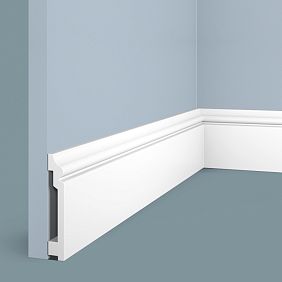
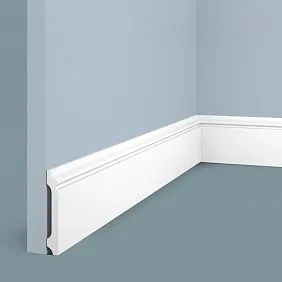

Visual geometry: top and bottom as the frame of space
Let's start with the basics of perception. The human eye is designed to first read the boundaries of space. Floor, ceiling, walls—this is the primary frame. But details refine this frame, creating additional horizontals that divide the space into zones.




Upper horizontal: ceiling baseboard as a boundary
Ceiling baseboard molding is not just a decorative trim. It's an architectural element that visually separates the wall from the ceiling, creates a transition, a finish. A wide ceiling baseboard—150-250 mm—creates a powerful horizontal that visually lowers the ceiling, makes the room more intimate, but also more architectural, structured. A narrow baseboard—50-80 mm—is delicate, almost unnoticeable, keeps the ceiling at its height, creates a sense of spaciousness.
Polyurethane moldingsin the form of a ceiling cornice has another important parameter—profile, depth of relief. A simple rectangular cornice reads as a graphic line. A figured one, with coves, fillets, carved elements—as a three-dimensional strip that casts shadows, creates play of light. The more complex the profile, the more significant the element, the more attention it attracts.
Our factory also produces:


Lower horizontal: furniture on legs
Now look down. Furniture can stand on a plinth—then it visually merges with the floor, becomes its extension. Or on legs—then a gap, air, another horizontal appears between the furniture body and the floor, at a height of 10-30 cm from the floor. This horizontal is read by the eye as a boundary, as a line that separates the furniture from the floor.
High thinfurniture legscreate a sense of lightness, of floating. The furniture seems to detach from the floor, doesn't weigh down, leaves air for the space. Low, massive furniture supports – groundedness, solidity, connection to the floor. Different leg heights create different sensations – and this sensation should align with what's happening up top, near the ceiling.
Get Consultation
Proportion of top and bottom
Imagine: you have a massive 200 mm wide cornice with rich relief under the ceiling. It creates a powerful upper boundary, visually heavy, architectural. And the furniture stands on tall, thin legs 25-30 cm high. The bottom is light, the top is heavy – a visual imbalance arises, a feeling that the ceiling is too massive for such airy furniture. The space falls apart into two unconnected parts.
Or the opposite: a narrow, minimalist 60 mm ceiling skirting board, and the furniture is massive, on low, squat legs 8-10 cm high or even on a plinth. Top light, bottom heavy – imbalance again, just in the other direction. The furniture weighs down, and the ceiling doesn't hold, doesn't complete the composition.
Principles of coordination: from visual weight to scale
So how to coordinate correctly? There are several proven principles that designers use.
Principle 1: The visual weight of the top and bottom should be proportionate
If the ceiling decor is massive – the furniture shouldn't be too airy. If the ceiling decor is delicate – the furniture can be light. This doesn't mean an exact match is needed, but the overall visual weight should be within the same weight category.
Massive ceiling skirting board (150-250 mm) + furniture on medium or low legs (10-18 cm) = balance of massiveness, classic solidity.
Narrow ceiling skirting board (50-80 mm) + furniture on high legs (20-30 cm) = balance of lightness, modern airiness.
Medium ceiling skirting board (100-130 mm) + furniture on medium legs (15-20 cm) = universal balance, suits most interiors.
Principle 2: Leg height and skirting board width can be inversely related
This is an interesting point. The wider and more massiveCeiling skirtingthe ceiling element is, the lower the furniture can be. Why? Because a massive ceiling element visually lowers the room's height, creates a sense of intimacy. Tall furniture on thin legs in such a space will look out of place – it strives upward, while the ceiling is already lowered by the decor. It's better to ground the furniture as well, create a shared atmosphere of solidity, coziness, protection.
And conversely: a narrow, delicate ceiling skirting board doesn't steal height, leaves verticality to the space. Furniture on high legs is appropriate here – it will enhance the feeling of height, lightness, spaciousness. Low, squat furniture in such an interior will look somewhat heavy, outdated.
Principle 3: Style dictates proportions
Classical styles – Baroque, Rococo, Empire, Neoclassical – love massive ceiling cornices. This is part of the canon, part of the architectural logic. In such interiors, furniture is usually on medium or low legs – 10-18 cm, often carved, decorative. The overall composition: a powerful top, a solid bottom, and between them – walls with decor, panels, moldings.
Modern styles – Scandinavian, Minimalism, Contemporary – prefer narrow ceiling skirting boards or do without them altogether (hidden cornice, shadow gap). Furniture on high, thin legs – this is the aesthetic of these styles. Everything is aimed at visual lightness, air, space.
Eclecticism and fusion allow mixing: you can take a classical cornice but make the furniture modern on high legs. This creates interesting tension, a dialogue of eras. But this should be a conscious decision, not an accident.
Specific recommendations for leg height for different ceiling skirting board widths
Now let's translate the principles into specific numbers. These are not rigid rules, but guidelines that can be adapted to a specific interior.
Narrow ceiling skirting board 50-80 mm
This is a minimalist option that hardly affects the perception of ceiling height. Such a skirting board is often used in modern interiors, in rooms with low ceilings where it's important to preserve every centimeter of visual height.
Recommended furniture leg height: 20-30 cm, thin, graceful.
This height will create a maximum sense of lightness and spaciousness. The furniture will float above the floor, the gaze will slide underneath it, seeing the continuous plane of the floor. The top is delicate, the bottom is too – the space reads as unified, not overloaded with horizontals.
Leg material: light wood (beech, ash, birch), metal (chrome-plated, matte black), combined options.
Styles: Scandinavian, Minimalism, Contemporary, loft with modern furniture.
Medium ceiling skirting board 100-130 mm
This is a universal option that suits most interiors. Such a skirting board is noticeable enough to create an architectural frame but doesn't overload the space. It works in both classical and modern interiors, depending on the profile and finish.
Recommended furniture leg height: 15-22 cm, medium thickness.
This is the golden mean. The furniture is not too squat, but doesn't float either. It is stable, yet not massive. This leg height pairs well with a medium-width cornice — neither the top nor the bottom dominates, the space is balanced.
Leg material: any wood (oak, beech, walnut), which can be painted, patinated, or left natural depending on the style.
Styles: neoclassical, transitional styles, eclectic, modern classic.
Wide ceiling skirting board 150-200 mm
This is the cornice for classic interiors. It creates a powerful upper horizontal line, visually lowers the ceiling, but gives the room architectural quality and monumentality. Such a cornice requires appropriate furniture.
Recommended furniture leg height: 10-18 cm, medium or significant thickness, possibly carved, decorative.
Low or mediumfurniture legsare appropriate here. They create a sense of solidity, reliability, classic quality. The furniture doesn't try to lift off the floor; it stands confidently, perhaps even slightly massive — and this harmonizes with the massive top.
Leg material: precious wood (oak, walnut, mahogany), with carving, patina, gilding.
Styles: classicism, baroque, empire, English classic, American traditionalism.
Very wide ceiling skirting board 200-300 mm
This is a cornice for high rooms from 3 meters, for formal interiors, for rooms with high historical ceilings. Such a cornice dominates, creates a powerful architectural frame, and visually significantly lowers the ceiling.
Recommended furniture leg height: 8-15 cm, massive, possibly on a plinth.
In such an interior, tall furniture on thin legs will look alien. Solidity, massiveness, weightiness are needed. Furniture can be without visible legs at all — on a plinth, on hidden supports. Or on low decorative legs that rather suggest than actually lift it.
Leg material: dark-toned wood, carved, with rich decoration, possibly with gilded elements.
Styles: palace classicism, baroque, rococo.
Additional factors: profile, color, lighting
Height and width are not the only parameters. There are other factors that influence the perception of the connection between top and bottom.
Ceiling skirting board profile
A simple rectangular skirting board (ceiling molding) reads as a graphic line, even if it's quite wide. It doesn't create shadows or attract special attention. Such a skirting board is visually lighter than a figured one of the same width.
FiguredPolyurethane trimwith coves, ogees, beads, carved elements — this is a three-dimensional strip that casts shadows, creates a play of light and volume. Even at a width of 100 mm, such a cornice can look more significant than a smooth 150 mm one.
Accordingly, for a figured cornice, it's better to choose furniture on lower or medium legs, possibly also with decorative elements. For a simple rectangular one, you can more boldly use tall, thin legs.
Color and Contrast
If the ceiling skirting board is painted the same color as the ceiling (or walls), it visually blends in, becomes less noticeable. Even a wide cornice in the ceiling color works more delicately than a contrasting one.
A contrasting skirting board — white on a colored ceiling, dark on a light one — creates a sharp, visually weightier horizontal line. For a contrasting cornice, it's worth choosing furniture on lower legs to balance the visual activity of the top.
Iffurniture legscontrast with the furniture body (dark legs on a light body or vice versa), they become more noticeable, creating an additional horizontal line. This needs to be considered — contrasting legs are visually weightier than legs matching the body color.
Lighting: how light affects perception
Hidden lighting behind the ceiling skirting board (between the cornice and ceiling) visually increases the room's height, makes the cornice lighter, floating. In such an interior, you can use furniture on higher legs — the effect of lightness is supported both from above and below.
Bottom lighting — an LED strip under furniture on legs — creates a floating effect for the furniture, enhancing the sense of airiness. If the interior has both top lighting (behind the cornice) and bottom lighting (under the furniture), a beautiful symmetry of glow arises; the top and bottom are visually connected by light horizontals.
Side natural or artificial lighting reveals relief. A figured cornice casts shadows under side light, becoming more three-dimensional. So do carved furniture legs. This enhances the decorativeness of both the top and bottom — it's important not to overdo it so the space doesn't become overloaded with details.
Accounting for ceiling height: the decisive factor
All of the above works in the context of ceiling height. The same combination of cornice and legs will look different in a room with a 2.5-meter ceiling and a 3.5-meter ceiling.
Low ceilings 2.4-2.6 m
Here, every centimeter of visual height is worth its weight in gold. The ceiling skirting board is best made narrow — 50-80 mm, with a simple profile, preferably in the color of the ceiling. Furniture — on high legs 20-30 cm, thin. This will maximally expand the boundaries, create air, and prevent the ceiling from feeling oppressive.
If you still want a more noticeable cornice (100-120 mm), compensate: install hidden lighting behind it, paint it a light color, use a simple profile. And definitely use high legs on the furniture.
Medium ceilings 2.7-2.9 m
This is the standard for modern housing. Here you can balance: a medium-width cornice of 100-130 mm, furniture on legs 15-22 cm. A universal solution that suits most styles. You can play with the cornice profile, with leg decor, create nuances, but the general logic is a middle ground between lightness and solidity.
High ceilings 3.0-3.5 m and above
Here there is room for creativity. You can use wide, massive cornices 150-250 mm with a rich profile — they won't steal height but will create architectural character. Furniture can be on medium or low legs — it's not critical, there is enough height.
An interesting option: in a very high room, you can use a wide cornice and furniture on high legs — this creates a feeling of airy monumentality, where both the top and bottom are significant, but there is a lot of space between them.
Types of furniture and features of leg selection
Different types of furniture interact with space differently. Let's consider the main types.
Sofas and armchairs: the center of the living room
Sofas and armchairs are upholstered furniture, usually large, occupying a significant part of the floor. The height of the legs here is especially important because there is a lot of space under the sofa, and it is either noticeable (if the legs are high) or not (if they are low).
With a narrow ceiling skirting board (50-80 mm), a sofa on legs 20-25 cm looks modern, light, and doesn't overload the space. With a wide cornice (150-200 mm), such a sofa may look inappropriately light — it's better to choose a model on legs 12-18 cm or even on hidden supports, with a skirt to the floor.
Chests of drawers, wardrobes, sideboards: case furniture
Case furniture usually stands against walls, and its silhouette is read against the wall. The height of the legs here affects the visual massiveness. A wardrobe on low legs or on a plinth looks monolithic, heavy. A wardrobe on visible legs 15-20 cm — lighter, more elegant.
With a massive ceiling cornice, case furniture can be on low legs or a plinth — this creates classic monumentality. With a narrow cornice — on medium or high legs, for overall lightness.
Tables: dining, coffee, console
Tables are furniture where the legs are visible; they are part of the design. The height of table legs is functionally limited (dining table — 72-75 cm total height), but their thickness, shape, and decor can vary.
Thin, elegant table legs pair well with a narrow ceiling skirting board — overall lightness. Massive turned or carved legs — with a wide cornice, overall solidity.
Coffee tables are a separate story. They are low (40-50 cm), and the height of their legs (usually 10-20 cm) affects lightness. With a narrow cornice, a coffee table on thin, high legs is better. With a wide one — you can use low, massive ones.
Beds: bedroom furniture
A bed is a large item that largely determines the style of the bedroom. The height of the bed base (distance from the floor to the mattress) is usually 40-60 cm, of which 10-30 cm are for the legs, the rest is the frame.
A bed on high legs (20-30 cm of visible supports) looks modern; you can clean under it, store things. This suits a narrow ceiling skirting board. A bed on low legs or even on a podium — this is classic, solidity, suits a wide cornice.
Material and finish: coordinating textures
Not only size but also material and texture play a role in coordinating the top and bottom.
Polyurethane on top, wood on the bottom
This is the most common combination.Polyurethane moldingsPolyurethane on the ceiling — practical, inexpensive, easy to install. Wooden furniture legs — warm, natural, durable.furniture legs— traditional, beautiful, tactilely pleasant.
To prevent materials from clashing, their finish must be coordinated. If a polyurethane cornice is painted matte white, wooden legs can also be painted matte white — material unity will be achieved through color. If the cornice has a patina, the legs should also have a patina. Gilding, silvering — similarly.
Polyurethane at the top and bottom
Yes, there are decorative polyurethane elements for furniture as well. This is less traditional but practical. You can select polyurethane overlays, moldings for furniture trim that will be stylistically coordinated with the ceiling cornice.
True, the legs themselves are usually still wooden or metal — polyurethane supports do not exist (insufficient strength). But the decor on the furniture body can be polyurethane, and then the material unity with the ceiling will be complete.
Wood at the top and bottom
Premium option: wooden cornices, wooden wall panels, wooden furniture with wooden legs. Complete material unity. Such interiors are custom-made, expensive, but the result is absolute harmony.
Here it is important to coordinate the wood species and finish. If the cornice is oak with a dark stain, the furniture legs should also be oak with the same stain. If the cornice is beech, light, with oil finish — the legs similarly.
Mistakes that destroy harmony
Even knowing the principles, one can make mistakes. Here are common missteps.
Mistake 1: Mechanical adherence to numbers without considering style
You read that for a 150 mm cornice, legs of 12-18 cm are needed, and you chose exactly that. But your cornice is simple and modern, while the furniture is on carved classic legs. The numbers match, but the styles conflict. Solution: coordinate not only dimensions but also aesthetics.
Mistake 2: Ignoring ceiling height
A wide 200 mm cornice and furniture on low 10 cm legs — in a room with a 2.5-meter ceiling. Result: the space is visually compressed both at the top and bottom, creating a feeling of a low, oppressive room. Solution: in low rooms, either use a narrow cornice, or high legs, or both.
Mistake 3: Mismatch in the height of legs on different furniture pieces
Sofa on 25 cm legs, armchairs on 12 cm legs, coffee table on 18 cm legs, dresser on a plinth. No unified rhythm, no coordination of the lower horizontal line. Solution: bring the leg heights to a common denominator at least within one zone (e.g., the seating area).
Mistake 4: Contrasting elements without support
You chose a contrasting white cornice on a dark ceiling (it became very noticeable) and dark furniture legs on a light body (they are also noticeable). But there are no other contrasts, and these two elements seem random. Solution: if creating contrasts, support them — add white moldings on the walls, dark baseboards at the bottom, so the contrast becomes a system.
Mistake 5: Too much decor
Richly profiled wide cornice, carved furniture legs with abundant decor, plus wall moldings, plus decorative overlays on furniture. Visual overload, nowhere for the eye to rest. Solution: choose 1-2 main decorative elements (e.g., cornice and legs), and simplify the rest.
Practical selection algorithm
How to apply all this in practice? Here is a step-by-step algorithm.
Step 1: Measure the ceiling height
This is the foundation. Record the exact height from floor to ceiling in centimeters.
Step 2: Determine the width of the ceiling baseboard
If the baseboard already exists — measure it. If only planning — decide on the width based on ceiling height and style.
Step 3: Assess the profile and complexity of the cornice
Simple rectangular or shaped? Smooth or with relief? This affects visual weight.
Step 4: Determine the interior style
Classic, contemporary, eclectic? The style dictates the general logic of proportions.
Step 5: Select leg height using the correspondence table
Use the recommendations from the section above as a starting point. Adjust based on ceiling height and style.
Step 6: Coordinate material and finish
If the cornice is painted polyurethane, paint the wooden legs the same color or finish them so they visually align.
Step 7: Check for rhythm unity
All furniture in the area should have legs of approximately the same height (a difference of 3-5 cm is acceptable, but no more).
Step 8: Visually evaluate the result
Once everything is installed, view it from a distance, from different points in the room. Is the connection between top and bottom clear? Is there balance? Adjust if necessary.
Frequently asked questions
Can very high legs (30 cm and above) be used with a wide ceiling cornice?
Yes, but it's risky. It will create a contrast between a massive top and a light bottom. If you want high legs with a wide cornice, compensate: make the cornice light-colored, add hidden lighting behind it, use a simple profile. This will reduce the visual weight of the cornice and lessen the imbalance.
Is it necessary to coordinate the height of furniture legs in different rooms?
Not necessarily. Different rooms can have different ceiling cornice heights, different styles, different furniture. But if the rooms are open to each other (open space), it's worth creating a visual connection—at least a common range of leg heights (e.g., all within 18-25 cm).
What to do if the ceiling cornice is already installed, and furniture is only being selected now?
Great! Start from the cornice. Measure its width, assess its profile, color. Select furniture considering these parameters. Carry a photo of the cornice when choosing furniture, show it to consultants—this will help select harmonious legs.
Is it possible to do without a ceiling cornice altogether?
Yes. Modern interiors often use a hidden cornice (a shadow gap between the wall and ceiling) or do without a cornice altogether. In such cases, the upper boundary is the ceiling itself, without additional horizontals. It's better to choose furniture with high legs for overall lightness and modernity.
Does floor color affect the choice of leg height?
Yes, indirectly. A dark floor is visually heavier than a light one. With a dark floor, furniture on high legs looks more contrasting, more noticeable—the dark floor is visible underneath, creating a clear boundary. With a light floor, high legs are less contrasting, and the furniture appears lighter. Consider this in the overall composition.
What to do if there are cornices of different widths in one room (e.g., on different ceiling levels)?
Focus on the cornice that visually dominates—usually the wider one or the one positioned lower. Select leg height to match it. The second cornice will play a supporting role.
Can legs of different heights be mixed to create dynamism?
Yes, but carefully. Different leg heights within one zone usually creates chaos, not dynamism. But you can use different heights in different zones: low legs in the lounge area, high legs in the dining area. This is zoning through proportions.
How to care for high furniture legs?
High legs are exposed and collect dust. Wipe them regularly with a damp cloth. If the legs are painted, use gentle, non-abrasive products. If they are natural wood with oil finish, periodically refresh the oil coating.
Is it necessary to coordinate leg height with baseboard height?
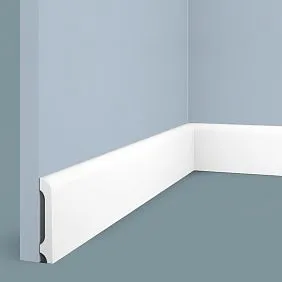
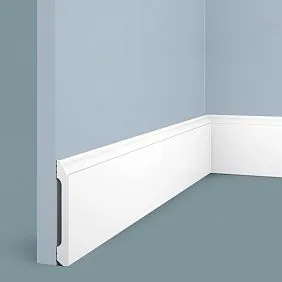
Yes, this is also a factor. A high baseboard (100-120 mm) creates an additional horizontal line at the bottom. If furniture legs are close in height to the baseboard, a visual rhyme occurs. If legs are significantly higher than the baseboard (e.g., baseboard 80 mm, legs 250 mm), it creates an effect of lightness, floating.
Can furniture without visible legs (on a plinth) be used with a narrow ceiling cornice?
Yes, but it will create visual heaviness at the bottom with a light top. If you want furniture on a plinth with a narrow cornice, compensate in other ways: use light-colored furniture, glossy fronts (they are visually lighter than matte ones), minimal decor. This will reduce the visual weight of the bottom.
Conclusion: The Art of Invisible Connections by STAVROS
Interior harmony is built from many invisible connections. The connection between ceiling decor and furniture legs is one of them. It doesn't stand out, but it's precisely what creates a sense of completeness, thoughtfulness, and professionalism. When the top and bottom are coordinated in visual weight, scale, and style—the space works as a unified whole. When they're not coordinated—discomfort arises, even if it's hard to explain exactly why.
Understanding the principles of coordination provides a tool for consciously managing perception. Want to create an airy modern interior — use narrow ceiling skirting boards and furniture on high legs. Want classical solidity — choose wide cornices and furniture on medium or low supports. Want eclecticism — play with contrasts, but consciously, supporting them with other elements.
For over 20 years, the STAVROS company has been creating elements that shape the harmony of interiors — and understands these subtle connections like no one else. The assortment includesPolyurethane moldingsfor ceilings, walls, and facades: cornices, moldings, skirting boards, rosettes, brackets, pilasters. Over 1500 models in various styles and sizes. From minimalist narrow cornices 50 mm wide to monumental Baroque ones 250 mm and wider. From simple rectangular profiles to richly decorated ones with fillets, cavettos, and carved elements.
Simultaneously, STAVROS produceswooden furniture legs— over 130 models made from solid oak and beech. Height from 50 mm to 900 mm, shape from simple conical to complex carved balusters. Turned, milled, hand-carved. For tables, chairs, sofas, beds, chests of drawers, cabinets. Any height, any style, any finish: natural wood with oil, painting in any RAL color, patination, gilding, silvering.
Crucially, all STAVROS elements — both ceiling cornices and furniture legs — are stylistically coordinated. You can choose a classic cornice from the 'Classic' collection andfurniture legsfrom the same collection — and be confident that they will resonate in spirit, era, and proportions. Or take a minimalist cornice and modern, laconic legs — and achieve a harmonious contemporary interior.
The quality of STAVROS products is time-tested.Polyurethane moldingsis made from high-density material resistant to moisture, temperature fluctuations, and ultraviolet light. Clear relief, smooth edges, perfect geometry. Lightweight (5-7 times lighter than plaster), easy installation — adheres with ordinary polyurethane glue, cuts with a saw.
Woodenfurniture legs— made from selected solid wood, dried to 8-12% moisture content, without knots or defects. Strength, reliability, durability. Ability to withstand significant loads without deformation. Perfect surface treatment — smooth, without tears, ready for any finishing coating.
STAVROS offers not just products, but comprehensive interior solutions. Experienced consultants will help selectCeiling Skirtingand furniture legs so that they harmonize with each other, match the ceiling height, and suit the style. Option to order custom sizes, individual manufacturing based on sketches. Patination and gilding service — you receive ready-made elements, professionally processed, only installation remains.
STAVROS production is equipped with modern equipment: high-precision molds for polyurethane, CNC machines for wood, turning and milling centers, drying chambers. Yet, manual quality control at every stage, possibility of individual carving, and attention to detail are maintained. This combination of technology and craftsmanship yields consistently high results.
Delivery to Moscow, St. Petersburg, all of Russia, and CIS countries. Own logistics, careful packaging, integrity guarantee. We work with both retail customers and designers, architects, construction companies. Flexible pricing policy, volume discounts.
Create interiors whereCeiling decorationand furniture speak the same language. Where the height of legs is not random but selected considering the width of the cornice, ceiling height, and style of the space. Where top and bottom are connected by invisible yet strong threads of harmony. With STAVROS, this is not just theory — it's practice, verified by thousands of completed projects. It's an opportunity to create an interior where every detail is in its place, where beauty is not superficial but deep, structured, thought through to the millimeter.