Article Contents:
- What is Polyurethane Facade Molding and How It Outperforms Traditional Materials
- Frost Resistance of Facade Molding: How Polyurethane Withstands Russian Winters
- Range of Polyurethane Facade Molding: From Cornices to Pilasters
- Cornices: Finishing the Facade and Protecting Walls
- Window Casings and Frames: Accents of Facade Composition
- Pilasters and Half-columns: Vertical Accents
- Rustication and Corner Elements: Imitation of Stone Masonry
- Pediments and decorative finials
- Corbels and Brackets: Illusion of Structural Logic
- Facade Molding Installation Technology: From Preparation to Finish
- Foundation preparation: foundation of reliability
- Marking: Accuracy Saves Time and Nerves
- Cutting Elements: Precision of Angles
- Adhesive Compounds: The Basis of Fastening
- Installing Elements: Pressing and Fixing
- Mechanical Fastening: Insurance for Large Elements
- Joint sealing: protection against moisture
- Painting Polyurethane Facade Molding: Protection and Aesthetics
- Choosing Paint for Facade Decor
- Surface Preparation Before Painting
- Painting Technology
- Color Solutions for Facade Decor
- Frequently Asked Questions About Polyurethane Facade Molding
- How Long Does Polyurethane Facade Molding Last?
- Can Decor Be Installed at Subzero Temperatures?
- Does Polyurethane Decor Require Painting?
- Can the Decor Withstand Hurricane Winds?
- Is polyurethane flammable?
- Can Polyurethane Products Be Purchased in Non-Standard Sizes?
- Does Polyurethane Look Different from Plaster or Concrete?
- Does the Decor Need Winter Protection?
- How to Care for Facade Molding?
- STAVROS Company: Your Partner in Creating Outstanding Facades

The facade is the face of a building. It determines the first impression, sets the character of the architecture, and either attracts the eye or remains unnoticed among a series of nondescript structures. Polyurethane facade molding allows you to transform an ordinary house into an architectural work of art without resorting to heavy concrete castings, fragile plaster, or exorbitantly expensive natural stone. Modern polyurethane products combine the expressiveness of classical molding, production efficiency, and outstanding durability in the Russian climate—from humid coastal regions to the frosty Urals and Siberia.
Why are more and more architects, builders, and private clients choosing polyurethane for exterior decoration today? The answer lies in the unique combination of material properties: it is not afraid of moisture, frost, or heat, installs quickly and without special equipment, can be painted any color, and lasts for decades without losing its shape or relief. At the same time, polyurethane decorative molding is affordable, environmentally safe, and opens up limitless possibilities for stylistic experiments—from strict classicism to modern minimalism.
This article is a comprehensive guide to polyurethane facade molding. We will analyze the physical properties of the material, its frost resistance and UV stability, installation technology from substrate preparation to final joint sealing, as well as painting and protection methods that extend the life of the decoration by decades. You will learn how to choose the right adhesive, avoid common installation mistakes, and create an architectural ensemble that will please the eye and maintain a flawless appearance in any weather conditions.
What is polyurethane facade molding and how does it surpass traditional materials
Polyurethane is a synthetic polymer obtained from the chemical reaction of polyols with isocyanates. By varying the composition and additives, manufacturers create materials with radically different characteristics: from soft elastic foams to hard, almost stone-like plastics. Polyurethane facade molding is made from rigid, high-density polyurethane (350–500 kg/m³), which combines strength, dimensional stability, and resistance to external influences.
Traditionally, concrete, plaster, and natural stone were used for facade decoration. Each of these materials has significant drawbacks. Concrete is heavy (density 2200–2400 kg/m³), creates enormous loads on walls, requires reinforced fastening and special equipment for installation. Moreover, concrete is porous, absorbs moisture, which freezes and destroys the structure—after 10–15 years, concrete elements become covered with a network of cracks and begin to crumble.
Plaster is even more finicky. It is hygroscopic—actively absorbs moisture from the air, softens at relative humidity above 60%, and partially dissolves when wet. The frost resistance of plaster is extremely low: after just 5–10 freeze-thaw cycles, degradation begins. For use on facades, plaster requires multi-layer protection (primer, hydrophobization, several layers of paint), but even this does not guarantee durability—the service life of plaster decoration outdoors rarely exceeds 10–12 years.
Natural stone is eternal and noble, but its cost makes its use affordable only for select projects. Stone carving is a labor-intensive process requiring highly skilled craftsmen. The price of stone decoration is 10–20 times higher than polyurethane, and its weight is comparable to concrete, creating problems with installation and structural load.
Polyurethane molding is free from all these drawbacks. It is 5–7 times lighter than concrete, practically does not absorb water (water absorption less than 1% by mass), withstands hundreds of freeze-thaw cycles without changing properties, is resistant to ultraviolet light and temperature fluctuations from −60°C to +80°C. At the same time, the cost of polyurethane decoration is 2–4 times lower than concrete and dozens of times lower than stone. Installation is carried out by 2–3 people without special equipment, which further reduces overall costs.
Polyurethane products are manufactured by casting into high-precision molds, allowing the reproduction of the finest relief details—down to the texture of wood fibers or the graininess of stone. Modern 3D modeling and CNC milling technologies enable the creation of molds of any complexity, from simple geometric profiles to the most intricate Baroque compositions with volutes, cartouches, and floral ornaments.




Frost resistance of facade molding: how polyurethane withstands Russian winters
For Russia with its continental climate, the frost resistance of facade materials is a matter of decoration survival, not just comfort. Winter temperatures in the central region regularly drop to −25…−30°C, in Siberia and the Urals—to −40…−50°C. Spring and autumn thaws create freeze-thaw cycles, where water in the material's pores freezes, expands, and creates internal stresses, then thaws, allowing new portions of moisture to penetrate deeper. It is these cycles that destroy concrete and plaster in just a few years.
Polyurethane is fundamentally different in structure. The material has a closed-cell structure—the pores are isolated from each other, do not form through channels. This makes polyurethane practically impermeable to water. Even during prolonged immersion in water, water absorption does not exceed 0.5–1% by mass, and the water remains on the surface and in the near-surface layer, not penetrating into the material's thickness.
Low water absorption is the key to frost resistance. If there is practically no water in the material, there is nothing to freeze. Polyurethane molding undergoes testing according to GOST 10060.2 methodology, involving cyclic freezing to −55°C and thawing in water at +20°C. High-quality facade polyurethanes withstand 300–500 or more such cycles without loss of strength, cracking, or changes in geometry. For comparison: concrete grade F100 withstands 100 cycles, F200—200 cycles, which is 2–3 times less.
The temperature stability of polyurethane is ensured by the features of its polymer structure. Unlike rigid crystalline materials (concrete, stone), polyurethane retains some elasticity even at low temperatures. This means the material can compensate for thermal stresses without cracking. At −40°C, polyurethane becomes stiffer but not brittle—it can still withstand impact loads without destruction.
The coefficient of linear thermal expansion of polyurethane is approximately 60–80×10⁻⁶ 1/°C, which is close to the indicators of many building materials. This means that with a temperature difference of 50°C (e.g., from +25°C in summer to −25°C in winter), a 2-meter-long element will change its length by 6–8 mm. Proper installation technology with elastic sealants easily compensates for such deformations.
UV stability is another crucial factor for durability. Solar radiation, especially the ultraviolet part of the spectrum, destroys many polymers. Under UV exposure, photodegradation occurs—the breaking of polymer chains, leading to yellowing, cracking, and surface flaking. Modern facade polyurethanes contain UV stabilizers—special additives that absorb ultraviolet light and dissipate its energy as heat, preventing polymer degradation. High-quality polyurethane facade molding retains whiteness and strength even on southern facades under intense solar radiation for 30–50 years.
Additional protection is provided by painting with facade paints containing pigments and fillers that reflect UV radiation. Light colors (white, cream, light gray) are most effective, as they reflect up to 80–90% of solar radiation, minimizing heating and photodegradation.
Our factory also produces:


Assortment of polyurethane facade molding: from cornices to pilasters
Polyurethane decorative molding for facades is represented by dozens of element types, each solving a specific architectural task. Understanding the functions and features of each type allows for creating harmonious, balanced compositions that highlight the building's strengths and conceal its flaws.
Get Consultation
Cornices: finishing the facade and protecting walls
A facade cornice is a horizontal element located at the boundary of the wall and roof or dividing the facade into tiers. It performs two functions: aesthetic (creates a visual finish, emphasizes horizontals) and practical (protects the upper part of the wall from water running off the roof).
Cornices vary in profile: from simple smooth ones to complex ones decorated with modillions (consoles), dentils (teeth), meanders, floral ornaments. The choice of profile is determined by the building's style. Classical order cornices correspond to ancient proportions, Baroque ones are lush and dramatic, modern minimalist ones are strict and laconic.
Cornice widths vary from 15–20 cm for small houses to 50–80 cm for multi-story buildings. Wide cornices create a powerful horizontal line, visually lower the building, making it more stable. Narrow cornices are delicate, do not overload the facade, and are suitable for concise modern solutions.
Polyurethane cornices are produced in standard 2-meter lengths, simplifying transportation and installation. Joints between elements are made at a 45° angle or with a straight cut, sealed, and become practically invisible after painting.
Window casings and surrounds: accents of the facade composition
Windows are natural focal points of a facade. Framing them with casings turns functional openings into decorative accents. Polyurethane casings reproduce traditional forms: from simple rectangular frames to complex compositions with side pilasters, keystones, and crowning pediments.
Casings are assembled from separate elements: vertical posts, horizontal lintels, corner elements, finishing pediments. The modular system allows adapting the decoration to windows of various sizes while maintaining a unified style.
Pediments—small protruding canopies above windows—can be straight, triangular (gabled), or segmental (semicircular). They are not only decorative but also functional: they protect the upper part of the window from direct rain, extending the service life of frames and jamb finishes.
Keystones—decorative elements in the center of the window's upper lintel—imitate the keystone of arched masonry. They create a visual center of the composition, attract attention, and enhance architectural expressiveness.
Pilasters and half-columns: vertical accents
Pilasters are vertical elements that simulate flat columns embedded into the wall. They divide the facade vertically, create rhythm, and emphasize the building's height. A pilaster consists of three parts: the base (lower expanded part), the shaft (main body), and the capital (upper decorative finish).
Half-columns differ from pilasters in their semicircular shaft cross-section—they are more voluminous, protrude from the wall by half their diameter, and create a powerful play of light and shadow. Half-columns are perceived as more solemn, monumental elements.
Polyurethane pilasters and half-columns follow classical order systems: Doric, Ionic, Corinthian, Composite, and Tuscan. Each order has characteristic proportions and capital decoration. Doric—strict, masculine, with a simple cushion-shaped capital. Ionic—elegant, with characteristic volutes (scrolls). Corinthian—the richest, adorned with acanthus leaves and small volutes.
The height of pilasters can reach 3–4 meters, requiring a composite structure: the shaft is made of several sections joined vertically. Joints are placed in inconspicuous locations or masked with ornamental bands.
Rustication and corner elements: imitation of stone masonry
Rusticated corners are a classic technique of architectural decoration, giving the building monumentality and nobility. Rustication is a rectangular block protruding from the wall plane by 2–5 cm, imitating hewn stone.
Rustication is placed vertically along the building's corners with a certain rhythm: uniform in height (regular rustication) or alternating (large-small-large). The texture of rustication can be smooth (polished stone) or relief: bumpy (wild stone), faceted (diamond rustication), with beveled edges.
Polyurethane rustication is installed on corners individually or as whole corner elements that wrap around the building corner from two sides. The second option simplifies installation and ensures perfect joint alignment.
Pediments and decorative finishes
A pediment is a triangular or semicircular finish above a window, door, portal, or entire facade. It creates architectural hierarchy, highlights main elements, and gives the building solemnity.
Triangular pediments are associated with ancient temples and classical palaces. Semicircular (segmental) pediments are characteristic of Baroque and Renaissance. Broken pediments (with a break at the apex, often filled with sculpture or a coat of arms) are typical of Classicism and Empire style.
The tympanum—the field inside the pediment—can be smooth or decorated with relief, ornamentation, or inscriptions. The decoration of the tympanum creates a visual focal point of the composition, attracting attention.
Corbels and brackets: the illusion of structural logic
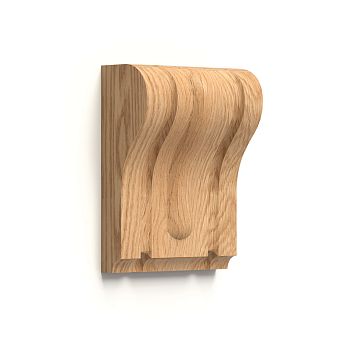
Corbels are protruding elements that visually support cornices, balconies, and bay windows. Historically, corbels were actual structural elements bearing loads. Modern polyurethane corbels are decorative but create a convincing illusion of material function.
The shape of corbels varies from simple brackets to complex sculptural compositions: volutes, scrolls, mascaron, and plant motifs. Size is proportional to the building's scale: from compact 20×30 cm for residential houses to monumental 60×80 cm for public buildings.
Installation technology for facade molding: from preparation to finish
Quality installation is key to the durability and aesthetics of facade decor. Even the best polyurethane facade molding can peel, crack, or deform if installation technology is violated. Let's examine the process step by step.
Foundation preparation: foundation of reliability
Polyurethane decor is installed on a prepared substrate. The substrate must be strong, dry, and clean. Weak, crumbling plaster, peeling paint, dust, dirt, biological contaminants (mold, algae)—all reduce adhesive bond strength and can lead to decor detachment.
Preparation includes several stages. First, the surface is cleaned of contaminants. Mechanical cleaning (brushes, scrapers), high-pressure washing (100–150 bar), and if necessary, treatment with biocidal agents against mold and algae are used. It is important to remove not only visible dirt but also loosely adhering particles that may detach with the decor.
The next stage is removing weak layers of old finish. Tapping the facade with a hammer reveals areas with detached plaster—they sound hollow. Such areas are removed down to a solid substrate, then repaired with plaster compounds compatible with the main wall material.
Cracks and chips are filled with repair compounds. For concrete and brick walls, cement-polymer repair mixtures are used; for aerated concrete and foam block walls, specialized lightweight plasters are used. It is important that the repair compound has an adhesion strength to the substrate of at least 0.5 MPa.
After repair, rough unevenness is leveled. Polyurethane decor is flexible and can compensate for minor irregularities (up to 3–5 mm), but significant deviations require leveling. A wavy wall will cause the cornice or trim to follow its curves, which looks unprofessional.
The final stage of preparation is priming. Deep-penetrating facade primers are used, which strengthen the surface layer of the substrate, bind residual dust, equalize absorbency, and improve adhesive bond. Primer is applied with a roller or brush in one or two coats, each coat must dry completely (usually 4–6 hours).
Layout: accuracy saves time and nerves
Before installation, detailed layout of all decor elements' positions is performed. Layout is applied using measuring tools: laser or water level, tape measure, plumb line, square, and string lines.
For horizontal elements (cornices, bands), horizontality is critical. A laser level or water level is used, ensuring perfect horizontality around the entire building perimeter. Deviation from horizontality even by 1–2 cm over the facade length is noticeable to the eye and perceived as a gross error.
Vertical elements (pilasters, architraves) are marked using a plumb line or laser level in vertical mode. Not only the verticality of an individual element is important, but also the symmetry of the entire composition. Distances from corners, windows, and other reference points are checked from both sides and must be strictly identical.
For complex compositions with many elements, a modular grid method is used: the facade is mentally divided into equal parts, and all elements are aligned to the lines of this grid. This guarantees visual order even with asymmetric placement.
Layout is applied with a chalk line (provides a clear straight line), pencil, or marker. Marks should be clearly visible but not leave indelible traces. Before starting installation, the layout is checked twice—correcting an error after gluing elements is extremely difficult.
Cutting elements: precision of angles
Cutting is required for creating window frames, joining cornices at building corners, and fitting elements to length. Polyurethane cuts easily, but precision is important, especially when cutting at an angle for joining.
Corner joints of cornices and architraves are made at a 45° angle. Even a deviation of 1–2° creates a noticeable gap in the joint. For precise cutting, the following are used:
-
Miter saw (electric miter box) — the optimal tool, provides a perfectly straight cut at the specified angle.
-
Manual miter box with a backsaw — a budget option, requires skill but yields acceptable results with careful work.
-
Jigsaw — for rough length trimming, the cut is less precise.
Before cutting, the element is precisely marked, taking into account the cutting direction. For external corners (cornice wraps around the building corner from the outside) and internal corners (cornice enters the corner), the cutting directions differ — this must be considered to avoid ruining the element.
After cutting, the ends are sanded with fine sandpaper, and burrs are removed. The fitting quality is checked 'dry' — elements are placed without glue; the joint should be tight, without gaps.
Adhesive compounds: the foundation of fastening
Polyurethane moldings are attached to the facade with specialized adhesives resistant to atmospheric influences, temperature fluctuations, and UV radiation. The choice of adhesive is critical — an unsuitable composition will not provide durable fastening.
Polyurethane adhesives — the optimal choice for facade decor. These are one-component compounds that cure under the action of air moisture. Advantages: excellent adhesion to most substrates (concrete, brick, plaster, insulation), high elasticity after curing (compensates for thermal deformations), absolute water resistance, durability. Setting time — 15–30 minutes, full polymerization — 24 hours.
Polymer-cement adhesives — two-component compositions based on cement with polymer additives (redispersible powders, latexes). Cheaper than polyurethane, have good adhesion but are less elastic. Suitable for lightweight elements of simple shape. Setting time — 30–60 minutes, full strength gain — 7–14 days.
MS-polymer adhesives — modern compositions based on modified silane polymers. Combine the advantages of polyurethane (elasticity, adhesion) and acrylic (absence of isocyanates, safety) adhesives. More expensive than polyurethane, but optimal for projects with increased environmental requirements.
Adhesive is applied to the back side of the decorative element. The application method depends on the element size. For narrow profiles (width up to 10 cm), adhesive is applied in a serpentine pattern along the entire length. For wide elements (cornices 20–50 cm wide), adhesive is applied in several serpentine lines or in dots with a 5–10 cm spacing.
Adhesive layer thickness — 3–5 mm. Too thin a layer will not provide reliable contact; too thick will squeeze out when pressed, creating contamination. The amount of adhesive is determined empirically on the first element.
Installation of elements: pressing and fixation
The element with applied adhesive is placed against the wall according to the markings. It is important to position it correctly immediately — shifting after pressing is not allowed, as it disrupts the adhesive layer structure. The element is pressed against the wall with uniform force along its entire length. For long cornices and belts, this is done by two people: one holds one end, the other holds the other, both press simultaneously.
When pressed, adhesive partially squeezes out from under the element. Excess is immediately removed with a damp cloth or spatula. It is important not to smear adhesive on the decorative surface — polyurethane adhesives are difficult to wash off after curing.
To fix the element during adhesive setting, temporary fastenings are used:
-
Painter's tape — attached to the element and wall, prevents slipping. Suitable for lightweight elements on vertical and inclined surfaces.
-
Wooden props — for long horizontal cornices. A board is propped against the ground and the cornice, providing support.
-
Temporary dowels — for heavy elements. A thin drill bit, plastic dowel, and screw are driven through the decor into the wall in an inconspicuous location (in a relief recess). After the adhesive sets, the dowel is removed, and the hole is filled with repair compound.
Fixation time depends on the adhesive type and air temperature. At +20°C, polyurethane adhesives set in 20–30 minutes, but full load can only be applied after 24 hours. At temperatures below +10°C, setting time increases; at +5°C and below, standard adhesives do not work — specialized frost-resistant compositions are required.
Mechanical fastening: insurance for large elements
Lightweight and small elements (architraves, rustications, overlays) hold securely with adhesive. But large and heavy elements (wide cornices, long pilasters) are additionally fixed with mechanical fasteners — dowels or anchors.
Mechanical fastening is performed after initial adhesive setting (after 2–4 hours). A hole is drilled through the element into the wall, a plastic or metal dowel is installed, and a screw with a wide flat head or a special facade nail dowel is screwed in.
Fastening points are located in inconspicuous places: in relief recesses, under protruding parts, on ends. After installing the fastener, the heads are recessed 2–3 mm below the surface, the indentations are filled with acrylic putty or sealant, then sanded and painted to match the decor color.
Mechanical fastening spacing — 50–80 cm for cornices wider than 30 cm, 80–120 cm for narrower ones. For pilasters, 2–3 fastening points along the height are sufficient.
Mechanical fastening is mandatory for elements subject to wind loads. Wide cornices, protruding 30–50 cm from the wall, act like sails — in hurricane winds, the tearing force can reach hundreds of kilograms. A combination of adhesive (distributes load, seals the joint) and mechanical fasteners (local fixation) ensures maximum reliability.
Joint sealing: protection against moisture
After installing all elements, joint sealing is performed. Even with perfect trimming, micro-gaps remain in joints between elements and between decor and wall. Water can penetrate through them, which, when freezing, creates tearing forces, and during cyclic wetting-drying promotes biological damage (mold, algae).
For sealing, facade sealants are used — acrylic or polyurethane compositions that retain elasticity after curing and are resistant to atmospheric influences.
Acrylic sealants are aqueous dispersions of acrylic polymers. Advantages: odorless, easy to apply, can be painted with facade paints, relatively inexpensive. Disadvantages: less elastic than polyurethane, over time (after 5–7 years) they may crack under large joint deformations. Suitable for joints with low mobility.
Polyurethane sealants are compositions based on polyurethane oligomers. Advantages: high elasticity (compensate for deformations up to 25–50% of the joint width), excellent adhesion without primer, absolute water resistance, durability of 15–25 years. Disadvantages: strong odor during application, higher price. Optimal for joints with high mobility (cornice corner joints, expansion joints).
MS-polymer sealants are a modern alternative combining the advantages of acrylic and polyurethane. No isocyanates, odorless, high elasticity, paintable. More expensive than both types.
Sealant is applied using a caulking gun. The tube nozzle is cut at a 45° angle; the hole diameter should be slightly smaller than the joint width. The sealant is applied in a continuous line, filling the joint to its full depth. Immediately after application, the joint is shaped: excess is removed, and the surface is smoothed with a wet spatula or finger (pre-moistened with soapy water to prevent the sealant from sticking).
Special attention should be paid to horizontal planes: the tops of cornices, sandriks, and canopies. Water accumulation is possible here. Sealing these areas should be particularly thorough. Additionally, the upper planes can be coated with a hydrophobic compound that creates a water-repellent barrier.
Painting polyurethane facade molding: protection and aesthetics
Polyurethane decor can be used without painting—the material is resistant to external influences. However, painting is recommended for several reasons: additional UV protection, the ability to create a desired color scheme, protection from dirt (a painted surface is easier to clean), and unifying the appearance (hiding joints and minor defects).
Choosing paint for facade decor
For painting polyurethane molding, facade paints designed for exterior use are employed. Main types:
Acrylic facade paints are aqueous dispersions of acrylic polymers with pigments and fillers. Advantages: vapor-permeable (the wall 'breathes'), elastic (cover microcracks up to 0.2–0.3 mm), resistant to washing and atmospheric influences, wide color range, relatively inexpensive. Service life: 7–10 years. The optimal choice for most projects.
Silicone paints are dispersions of silicone resins. Advantages: very high vapor permeability, hydrophobicity (water rolls off without absorption), self-cleaning (dirt washes away with rain), elasticity, UV stability. Service life is 10–15 years. Disadvantages: high price, limited color selection. Suitable for humid regions, objects near water bodies.
Siloxane paints are hybrid compositions combining acrylic and silicone components. Optimal balance of properties and price. Service life: 10–12 years.
Polymer (latex) paints are latex dispersions. Advantages: high wear resistance, washable, elastic. Disadvantages: lower vapor permeability (may create a vapor barrier). Used less frequently, mainly for plinths and lower parts of facades subject to mechanical impact.
All the listed paint types are suitable for polyurethane. It is important that the paint is compatible with the substrate (polyurethane) and does not contain aggressive solvents that degrade the polymer. Modern water-based paints are safe in this regard.
Surface preparation before painting
Polyurethane decor requires preparation before painting. The surface must be clean, dry, and degreased.
Cleaning is done with a soft brush or cloth to remove dust, dirt, and cobwebs. If the decor has been stored for a long time or installed in dusty conditions, it is recommended to wash it with water and a mild detergent, then rinse with clean water and allow it to dry completely.
Degreasing is necessary if there are traces of glue, sealant, or oils on the surface. Use mineral spirits or specialized degreasers. Apply the degreaser to a cloth, wipe the surface, then rinse with clean water.
Priming improves paint adhesion, evens out absorbency, and reduces paint consumption. For polyurethane, acrylic primers for non-absorbent substrates are used. The primer is applied with a brush or roller in one coat; drying time is 2–4 hours.
For elements with complex shapes and deep relief, use a brush to prime all recesses. For smooth elements, a short-nap roller is suitable.
Painting Technology
Painting is done in 2–3 coats. The first coat is the base; it may apply unevenly, especially over primer. This is normal. Its purpose is to create a foundation for subsequent coats.
Paint is applied with a brush, roller, or spray. A brush is a universal tool suitable for any element, allowing deep recesses in the relief to be painted. Disadvantages: slow, high paint consumption, possible brush marks (a high-quality brush with soft, resilient bristles is needed).
A roller is faster than a brush and suitable for smooth or lightly profiled elements. For relief elements, use a velour or foam roller with a short nap, capable of partially penetrating recesses. For complex reliefs, combine a roller with a brush: main surfaces with a roller, recesses with a brush.
A spray gun (sprayer) is the fastest method, providing the most even coating. Disadvantages: requires protection of surrounding surfaces from overspray, requires skill, higher paint consumption due to losses from misting. Used for large volumes or critical projects.
The first coat of paint dries in 4–6 hours (depending on temperature and humidity). After drying, inspect for missed spots, drips, and unevenness. Missed spots are touched up with a brush.
The second coat is applied 6–12 hours after the first. It creates an even, opaque coating. The application technique is the same as for the first coat.
If after the second coat there are still translucent areas or uneven tone, apply a third coat. Usually, two coats are sufficient when using high-quality facade paint with good coverage.
Color solutions for facade decor
The choice of decor color is determined by the overall facade concept. There are several classic approaches.
Contrast solution — the decor is painted in a color contrasting with the main facade. Classic: white decor on colored walls (beige, yellow, terracotta, gray, blue). This solution maximally emphasizes architectural graphics, making the decor noticeable and expressive.
The reverse option is also possible: dark decor on a light facade. Graphite, anthracite, or dark brown decor on white or light gray walls creates a modern, urban look.
Monochromatic solution — the decor and facade are painted in one color or in close shades of the same color. The relief is perceived through the play of light and shadow, not color contrast. This solution is more restrained, elegant, and works in modern and neoclassical interiors.
Material imitation — the decor is painted to resemble natural stone, wood, or metal. Textured paints or multi-layer painting with patination are used to imitate stone. To imitate bronze, copper, or patinated metal, metallic paints are used followed by patination with green or brown shades.
Accent coloring — most of the decor is painted in the main color, while individual elements (capitals, keystones, consoles) are painted in an accent color. This creates additional detailing and emphasizes the importance of specific elements.
Light colors (white, cream, light gray, light beige) — a classic choice for decor. They reflect sunlight, minimize heating and thermal deformation, do not fade, and visually lighten the building.
Dark colors (graphite, anthracite, dark brown, dark blue) are more demanding. They absorb sunlight, heat up significantly (up to +60...+70°C on southern facades), which creates substantial thermal deformation. For dark colors, the elasticity of the paint and high-quality sealing of joints are especially important.
Frequently Asked Questions about Polyurethane Facade Molding
How long does polyurethane facade molding last?
With proper installation and periodic maintenance (repainting every 10–15 years), polyurethane decor lasts 30–50 years without loss of strength or decorative appeal. The material does not rot, rust, deteriorate from frost, or become brittle from sun exposure.
Can decor be installed at sub-zero temperatures?
Most adhesives work at temperatures not lower than +5°C. For winter installation, specialized frost-resistant adhesives are available that retain their properties down to −10...−15°C. Installation at lower temperatures is not recommended — the adhesive does not achieve the required strength.
Is painting polyurethane decor required?
Not mandatory, but recommended. Painting provides additional UV protection, allows for the desired color scheme, and protects against dirt. Unpainted decor may slightly yellow from sun exposure over time (5–10 years).
Can the decor withstand hurricane-force winds?
Yes, with proper installation. A combination of adhesive and mechanical fasteners (for large elements) ensures reliable fixation. The calculated wind load is up to 100–150 kg/m². Cases of decor detachment are rare and are related to gross violations of installation technology (weak substrate, insufficient adhesive, lack of mechanical fasteners for heavy elements).
Does polyurethane burn?
Facade polyurethane belongs to flammability class G1-G2 (low-flammable, difficult to ignite). When exposed to fire, it chars, forming a protective layer and does not support combustion. Smoke toxicity does not exceed that of wood. For facilities with increased fire safety requirements, compositions with special flame retardants are used.
Can polyurethane products be purchased in non-standard sizes?
Yes, many manufacturers offer custom-made elements according to individual sizes and sketches. This is more expensive than standard products (requires mold production) but allows for the realization of unique architectural solutions. The production time for non-standard elements is 2–6 weeks.
Does polyurethane differ in appearance from plaster or concrete?
With high-quality execution and painting — no. Polyurethane accurately reproduces the texture of any material. Painted decor is visually indistinguishable from plaster, concrete, or stone. It can only be distinguished upon close inspection (light weight, characteristic sound when tapped).
Does the decor need winter protection?
No, high-quality facade polyurethane does not require protection. The material easily withstands any winter conditions. The only recommendation is to periodically knock off ice and icicles from horizontal surfaces (canopies, tops of cornices) to reduce static load.
How to care for facade molding?
Minimal care: wash with water under pressure every 1–2 years (removes dust, dirt, biological contaminants). For mechanical damage (chips, scratches) — local restoration: cleaning, priming, touch-up painting. Every 10–15 years — complete repainting to renew the protective coating and refresh the appearance.
STAVROS Company: Your Partner in Creating Outstanding Facades
When it comes to facade decor that must last for decades while maintaining a flawless appearance in any climatic conditions, the choice of supplier and partner becomes a critically important decision. STAVROS Company is a recognized leader in the production and supply of polyurethane, wood, and MDF products for creating perfect facades and interiors.
STAVROS uses exclusively high-quality European raw materials for the production of facade molding. Material density of 400–500 kg/m³ ensures an optimal combination of strength, shape stability, and moderate weight. Next-generation UV stabilizers protect against solar radiation, and modifying additives increase frost resistance to 400 cycles or more. Each product undergoes multi-stage quality control before shipment to the customer.
The company's assortment includes thousands of items: cornices of various widths and profiles, trims for any openings, pilasters and half-columns of all classical orders, rustications and corner elements, consoles and brackets, pediments and pediment hoods, decorative overlays and panels. Elements for all architectural styles are available — from ancient classics and Baroque to modern minimalism and high-tech.
Professional designers and architects at STAVROS will develop a facade design concept, taking into account the architectural style of the building, surrounding development, regional climatic features, and customer wishes. 3D visualization allows you to see the result before work begins, make adjustments, and choose the optimal solution. Calculation of required materials, selection of components, development of installation diagrams, recommendations for choosing adhesives and paints — all of this is handled by the company's specialists.
STAVROS installation teams are professionals with many years of experience installing facade decor of any complexity. Adherence to technology at every stage, attention to the smallest details, and responsibility for the result. Installation is performed with a quality guarantee — if problems arise (detachment, cracks, deformations), the company will fix them at its own expense within the warranty obligations.
Cooperation with STAVROS does not end after installation is complete. The company provides a warranty on materials (5 years) and on work performed (3 years). Consultations on decor care, maintenance and repainting recommendations, assistance with local restoration if needed. If after several years you need to purchase additional elements (for example, to decorate an extension or reconstruct part of the facade), STAVROS will provide exactly the same products from the same collection, ensuring stylistic and color unity.
Choosing STAVROS means choosing quality tested by time, reliability confirmed by thousands of completed projects, and professionalism based on years of experience and deep knowledge. This is a company that turns architectural visions into reality, creating facades that amaze, inspire, and last for decades. Polyurethane facade molding from STAVROS is an investment in the beauty, durability, and architectural perfection of your home.