Article Contents:
- Why catalog interiors fail to evoke emotions
- The trap of ready-made solutions
- The emotional emptiness of templates
- Starting point: who you are and what your space should be
- First question: what do you feel in an ideal space?
- Second question: what memories and dreams live within you?
- Third question: how do you live in the space?
- Space analysis: what the architecture dictates
- Ceiling height: vertical drama or horizontal calm
- Room area and proportions: scale of decor
- Windows and doors: compositional anchors
- Developing your own language: from emotion to form
- Choosing a basic rhythm: symmetry or freedom
- Density of decor: richness or airiness
- Scale of elements: monumentality or delicacy
- Author's techniques: how to make a composition unique
- Technique 1: Breaking height conventions
- Technique 2: Incomplete frames and fragmentation
- Technique 3: Layering and overlays
- Technique 4: Color inversion
- Technique 5: Integration with other materials
- Technique 6: Scale distortions
- Working with color: painting as a tool of meaning
- Monochrome: the power of unity
- Contrast: the drama of opposites
- Polychromy: multicolored complexity
- Patina and aging effects
- Practical algorithm: from idea to implementation
- Step 1: Emotion moodboard
- Step 2: Sketch on the Wall
- Step 3: Element Selection
- Step 4: Color Samples
- Step 5: Phased Installation
- Step 6: Final Touches and Living in the Space
- Common Mistakes in Forming a Personal Style
- Frequently Asked Questions About Creating a Personal Style
- Conclusion: Interior as a Self-Portrait

You scroll through your feed of interior design projects—one palace of luxury gives way to another. Golden rosettes, snow-white moldings, symmetrical compositions—everything is beautiful, professional, but surprisingly impersonal. As if one space has been replicated a hundred times, changing only the square footage and window placement. Where is the personality? Where is the owner's story? Where is that very character that turns an apartment into a home, and a home into a reflection of the soul? The problem is not instucco in the interioras such. The problem is in the mindless copying of ready-made solutions, in the fear of deviating from canons, in suppressed individuality. Let's figure out how to use decor consciously, creating a space that speaks in your own voice.



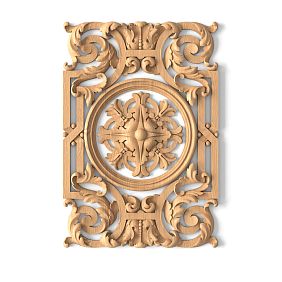
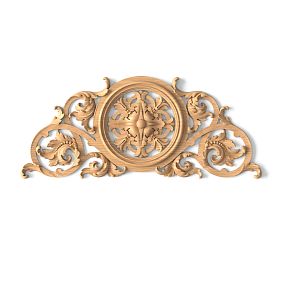


Why Catalog Interiors Fail to Evoke Emotions
Open any catalog from a manufacturer of decorative plasterwork. You'll see flawless photographs: classic living rooms with cornices and rosettes, elegant bedrooms with molding frames, grand halls with pilasters. Everything is precise, harmonious, beautiful. And absolutely lifeless.




The Trap of the Ready-Made Solution
Manufacturers create standard compositions designed for the broadest possible audience. It's a compromise between different tastes, styles, and concepts. The result is acceptable to everyone—but perfect for no one. Such an interior is like a mass-produced suit: it fits okay, but doesn't accentuate the figure's individuality.
You copy a molding placement scheme from a catalog—and get a correct, but alien composition. It doesn't account for the proportions of your specific room, doesn't reflect your lifestyle, doesn't resonate with your memories and dreams. It's a beautiful cover without content.
Our factory also produces:


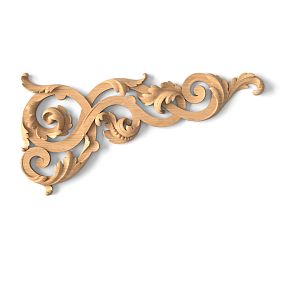
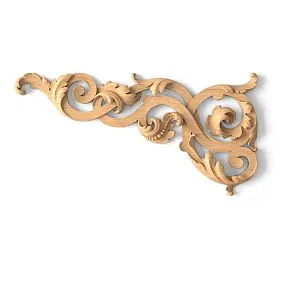


The Emotional Void of Templates
An interior built from a catalog is technically flawless. But when you enter such a space, you feel nothing. No excitement, admiration, recognition. It's beautiful, like a museum hall—and just as cold. Because behind the decor there is no story, no meaning, no soul.
Wall moldingshould tell a story about you. The placement of elements, the choice of ornaments, color solutions, asymmetry or strict geometry—all of this is the language with which the space speaks to you and your guests. A catalog solution is Esperanto: an artificial language in which no one thinks or feels.
Get Consultation
The Starting Point: Who You Are and What Your Space Should Be
Before flipping through catalogs, ask yourself uncomfortable questions. The answers will determine the direction.
First question: What do you feel in an ideal space?
Forget about styles and trends for a minute. Close your eyes. Imagine a room where you feel absolutely comfortable. What is it like? Bright or intimate? Spacious or cozy? Symmetrical or picturesquely chaotic? Luxurious or restrained? Theatrical or intimate?
These feelings are the foundation. If you're comfortable in a space with high ceilings, an abundance of air, and light—wide cornices, pilasters that emphasize verticals, minimal small decor. If you need a cocoon, a protective nest—low ceiling moldings that create intimacy, an abundance of decorative elements that form coziness.
Are you an extrovert who loves hosting guests? The space should be theatrical, with bright accents, symmetrical compositions that draw the eye. An introvert who values solitude? The decor works to create seclusion—asymmetrical compositions, calm lines, an absence of drama.
Second question: What memories and dreams live within you?
An interior can be nostalgia or a manifesto for the future. Remember places that evoked strong emotions. An old estate with patinated plasterwork? A modern gallery with minimalist forms? An Italian villa with terracotta hues and botanical ornaments? A Parisian apartment with high ceilings and plaster rosettes?
These images are not a call to copy. They are emotional markers suggesting a direction. Nostalgia for an estate doesn't require an exact reproduction of an 18th-century noble mansion. A few elements are enough—aged patina on moldings, asymmetrical placement of decor, warm cream tones—to evoke the same emotion.
Third question: How do you live in the space?
Lifestyle dictates functionality, which influences decor. Do you have children and pets? The lower third of the walls is a risk zone. Placing fragile plaster bas-reliefs there is to doom them to destruction. But the upper part and ceiling are free for any fantasies.
Do you work from home, spending 10 hours a day in your office? The space shouldn't be tiring. Complex Baroque ornaments, an abundance of small details, contrasting color combinations create visual tension. Better to use restrained lines, rhythmic repeating elements, a calm palette.
Do you collect art, books, travel artifacts? Decor should not compete with the collection.wall with moldingcreates neutral frames within which objects are placed. Moldings work like a mat — they emphasize without stealing attention.
Space analysis: what the architecture dictates
Your home is not a blank slate. It has its given: ceiling height, room area, window placement, room shape. These parameters do not limit — they guide.
Ceiling height: vertical drama or horizontal calm
Ceilings of 3.5 meters and above are both a gift and a curse. The spaciousness is impressive but can be overwhelming, creating a sense of emptiness. The task of decor is to structure the height without killing it.
Horizontal divisions of the wall at 100-120 cm from the floor (plinth zone), 220-250 cm (frieze zone under the ceiling) divide the vertical into manageable fragments. Wide ceiling cornices (150-200 mm) visually lower the ceiling by that width, making the space cozier without physically reducing it.
Vertical elements — narrow pilasters, vertical overlays, elongated panels — enhance the upward aspiration. If you are comfortable with cathedral monumentality — use verticals. If it feels oppressive — avoid them.
Low ceilings of 2.4-2.7 meters require the opposite strategy. No wide cornices — they will visually lower the ceiling even further. Narrow covings 40-60 mm wide, placed right under the ceiling, create a smooth transition without eating up height.
Vertical moldings running the full height of the wall elongate the space. Horizontal divisions are contraindicated — they emphasize the low height. A ceiling color 2-3 shades lighter than the walls visually lifts it.
Room area and proportions: the scale of decor
A small room of 12-15 sq.m cannot handle Baroque opulence. Large rosettes, wide moldings, an abundance of decorative overlays will create a sense of clutter. Minimalism works here: thin moldings, one or two laconic compositions, air between elements.
A large space of 40-60 sq.m requires large-scale decor. Narrow moldings will get lost, small rosettes will go unnoticed. Wide profiles (100-150 mm), large decorative elements, multiple compositions creating rhythm are needed.
A long, narrow room (e.g., 3x6 meters) creates a corridor-like feeling. The task is to visually widen it. Horizontal moldings along the long walls will worsen the problem. However, vertical divisions on the long walls and horizontal frames on the end walls will balance the proportions.
A square room is universal — any compositions work. But it's easy to slip into monotony. Asymmetry, an accent wall, uneven distribution of decor enliven the space.
Windows and doors: compositional anchors
Openings are natural focal points. Decor should interact with them, not ignore them.
A floor-to-ceiling window is an architectural dominant. Framing it with moldings emphasizes its significance. A wide casing (80-120 mm) creates a frame, turning the view from the window into a living painting. Above the window — a horizontal overlay or a pediment (decorative cornice) — a classic technique that enhances solemnity.
A small window in a large wall can be visually enlarged by creating a molding frame around it that extends beyond the physical boundaries of the opening. Or, conversely, leave it modest, shifting the compositional center to another wall.
Doors placed on the axis of symmetry — decor mirrors relative to them. Doors are offset — an asymmetrical composition compensates for the imbalance. Ignoring door placement dooms the composition to visual conflict.
Forming your own language: from emotion to form
Now that your feelings and the space's constraints are clear, creativity begins — translating abstract emotions into concrete forms.
Choosing a base rhythm: symmetry or freedom
Symmetry is the language of order, stability, control. It calms, structures, creates a sense of reliability. If these qualities are important to you — build the composition symmetrically. Central axis, mirror reflection of elements, equal intervals.
Asymmetry is the language of spontaneity, movement, individuality. It intrigues, surprises, provokes emotions. If liveliness and avoiding clichés are important to you — break symmetry consciously. Not chaotically, but by creating dynamic balance.
You can combine: a symmetrical base with asymmetrical details. Molding frames are placed symmetrically, but inside them — asymmetrical placement of decorative overlays. Or vice versa: an asymmetrical structure, but the elements themselves are symmetrical.
Density of decor: richness or air
Baroque loves excess. Every centimeter is filled with ornament, decor, details. It's a celebration, theater, luxury. If your emotion is generosity, abundance, drama — use high density.
Minimalism values emptiness. Decor is present, but pinpoint, leaving space to breathe. It's meditation, restraint, focus on the essential. If your emotion is clarity, calm, concentration — use low density.
Classical balance — moderate density. Decor structures the space, creates rhythm, but does not overload. This is the golden mean, suitable for most.
Scale of elements: monumentality or jewelry-like detail
Large elements — wide cornices, large rosettes, massive panels — create monumentality. The space is perceived as majestic, significant. Suitable for public areas (living rooms, halls), formal interiors.
Small elements—narrow moldings, small overlays, thin frames—create a sense of jewelry-like detail and intimacy. The space feels personal and intimate. Suitable for private areas (bedrooms, studies) and refined interiors.
Contrast of scales — a large dominant element (large ceiling rosette) combined with small details (thin wall moldings). Creates hierarchy, directs the gaze, adds complexity.
Author's techniques: how to make a composition unique
Even using standard catalog elements, you can create something original. It's all about how you combine and arrange them.
Technique 1: Breaking height conventions
Traditionally, moldings are placed 90-100 cm from the floor (baseboard zone) and near the ceiling. But what if you raise the baseboard line to 150 cm? Or lower it to 50 cm? Or abandon horizontal divisions altogether, using only vertical ones?
designer moldingsDon't submit to dogmas. Experiment with heights, seek proportions that resonate with your perception. Perhaps your ideal composition breaks all the rules — and that's precisely why it's perfect for you.
Technique 2: Incomplete frames and fragmentation
A traditional molding frame is a closed rectangle. But what if you make it unclosed? Three sides are present, the fourth is absent. Or the frame corners extend beyond the wall, creating an illusion of the composition continuing beyond physical boundaries.
Fragmented elements — a molding breaks off mid-wall, creating intrigue. A rosette is divided into parts placed at intervals. This is a modern technique that disrupts the integrity of classical form but creates new tension.
Technique 3: Multi-layering and overlays
Tradition — flat composition, elements don't intersect. But what if you create layers? A wide molding as the base. Over it, slightly offset, a narrow molding of a different profile. Creates depth, volume, a kinetic effect when the viewing angle changes.
Decorative overlays are placed not inside frames, but on the moldings themselves, crossing boundaries. Rosettes overlap each other, creating a complex multi-layered ornament. This is a Baroque principle taken to contemporary maximalism.
Technique 4: Color inversion
Tradition — white plasterwork on painted walls. Inversion — dark plasterwork on light walls. Or plasterwork painted the same tone as the wall, readable only through relief and light play.
Gradient coloring — plasterwork changes color along the wall height: dark at the bottom, lightening toward the ceiling. Or individual composition elements are painted in different shades, creating polyphony.
Patination and gilding are applied not to all plasterwork, but locally — highlighting individual ornament details, corners, central elements. This creates an aged effect, as if the decor has been renewed over centuries.
Technique 5: Integration with other materials
Plasterwork combines with wooden panels — polyurethane moldings frame solid wood inserts. Or vice versa — wooden slats form the structure, polyurethane overlays add decorativeness.
Mirror inserts within plaster frames create reflection play, visually expand the space. Textile panels, leather, metal overlays — any material framed by plasterwork becomes an art object.
Lighting is integrated into plasterwork — LED strips hidden behind moldings create contour lighting. Rosettes with transparent inserts are backlit, turning into light objects.
Technique 6: Scale distortions
Traditional proportionality — molding width corresponds to wall size. Distortion — hypertrophied wide molding (200-300 mm) on a small wall. Or conversely — microscopic elements on a vast plane.
Such techniques create a surreal effect, disrupt habitual scale perception. Not for everyone, but for the bold — a way to declare unconventional thinking.
Working with color: painting as a tool of meaning
The color of plasterwork is no less important than its form. It can enhance or ruin a composition, create a mood or kill it.
Monochrome: the power of unity
Walls and plasterwork painted the same color — the composition is readable only through relief. This creates elegant restraint, subtlety. The decor is present but doesn't shout. Works in contemporary interiors where subtlety is valued.
The shade of the molding is 1-2 tones lighter or darker than the walls — a barely noticeable contrast that creates volume without aggression. During the day in natural light, the difference is almost imperceptible; in the evening under artificial light, it becomes apparent.
Contrast: the drama of opposites
White molding on dark walls (graphite, black, deep blue, emerald) — a classic that always works. Clear graphics, expressiveness, aristocracy. Suitable for formal spaces, studies, living rooms.
Dark molding on light walls — a rare but effective solution. Creates modernity, unconventionality, boldness. Requires confidence in the choice — a mistake will be obvious.
Polychromy: multi-colored complexity
Different elements of the composition are painted in different colors. Moldings are white, overlays are gold, the background is blue. Or moldings repeat the wall color, while overlays are contrasting. This is a Baroque, maximalist approach, creating festivity, theatricality.
Gradients and transitions — the molding is painted with a smooth transition from one color to another. Technically complex, but creates a unique artistic effect.
Patina and aging effects
Aged molding tells a story. It seems to have lived through centuries, remembering different eras. The patination technique — applying dark glaze into the recesses of the relief, light wear on the protruding parts — creates an effect of noble antiquity.
Gilding and silvering add luxury. You can cover the entire element (ostentatiously), only the details of the ornament (elegantly), or create an effect of peeling gilding (vintage).
Practical algorithm: from idea to implementation
Theory inspires, but a sequence of actions is needed.
Step 1: Moodboard of emotions
Collect visual images that evoke the desired emotions. These can be not only interiors but also paintings, nature photographs, architecture, fashion, art. Analyze what exactly catches you: lines, colors, textures, proportions.
Do not copy images entirely — extract emotional codes. Are you moved by an ancient fresco? Perhaps it's the muted shades, fragmented composition, asymmetry. Reproduce these principles with modern materials.
Step 2: Sketch on the wall
Do not design the composition abstractly, on paper or in a program. Come to the empty room with painter's tape. Apply strips of tape, modeling the arrangement of moldings. Look from different points, adjust, seek balance.
This is cheap, fast, reversible. In an hour of experimentation, you will understand more about the space than in a week of drawing plans. Tape does not lie — it shows real proportions that are distorted on a drawing.
Step 3: Selection of elements
Now that the composition scheme is clear, select specific elements from the catalog. The width of moldings, profile, style of ornamental decorative overlays. Do not look for exactly the same as in references — look for those that match the spirit.
Manufacturers' catalogs are huge. Do not fixate on one collection — combine elements from different series if they harmonize. The main thing is the overall scale and stylistic compatibility.
Step 4: Color samples
Paint test pieces of molding in different color options. Attach them to the wall at different times of the day — morning, afternoon, evening. Color changes depending on lighting. What looked magnificent in the store may disappoint in your space.
Do not trust digital visualizations. Screens lie, the brain fills in. Only real material on a real wall in real light gives the truth.
Step 5: Phased installation
Do not install the entire composition in one day. Install key elements — main moldings, central overlays. Live with them for a week. You may want to adjust something — remove an element, add, shift.
This is not indecision, but mindfulness. Haste leads to regrets. Molding installation is reversible, but removal is labor-intensive. It is better to move slower but confidently.
Step 6: Final touches and living in the space
After completing installation and painting, do not rush to arrange furniture and decor. Spend a few days in the space, observe how perception changes. Perhaps some areas require additional accents, others — on the contrary, are overloaded.
Interior is a living organism. It evolves with you. What seemed perfect at the project stage may require adjustments in reality. Be ready for changes — this is not a planning failure, but a natural process.
Common mistakes when forming an author's style
The path to uniqueness is full of temptations to turn back to the template or slide into chaos.
Mistake 1: Eclecticism for the sake of eclecticism
Mixing elements from different styles can create uniqueness, but can also turn the interior into a hodgepodge. A Baroque rosette, minimalist moldings, Art Deco overlays — three languages that don't hear each other.
Solution: choose a dominant language, use the others as accents. Or find a common denominator — for example, the geometry of lines, the scale of elements, the color palette.
Mistake 2: Ignoring function for the sake of form
A beautiful composition that gets in the way of living is a failure. Moldings at head level for tall people, overlays that snag clothing, rosettes that collect dust in hard-to-reach places.
Solution: check functionality before installation. Model usage scenarios for the space.
Mistake 3: Following fashion instead of intuition
Colored cornices, asymmetrical compositions, industrial elements are in fashion now. In three years, the fashion will change. If you chose a trend, not your own emotion — the interior will become outdated along with the trend.
Solution: check your choice with the question 'Do I like this, or is it fashionable?'. If it's the latter — refuse.
Mistake 4: Overloading with uniqueness
Every element is custom, every detail is special — and the result is visual noise. Uniqueness works against a background of simplicity. If everything is shouting, nothing can be heard.
Solution: choose 1-2 truly unique elements (a custom molding composition, an unusual color palette), the rest — a neutral background that supports the accents.
Popular questions about creating a signature style
Is it possible to create a unique interior with standard elements from a catalog?
Absolutely. Uniqueness lies not in exotic materials, but in the way they are combined. Even the most mass-produced moldings, placed unconventionally, painted unusually, combined boldly, create a signature style.
How to understand if a composition turned out unique and not chaotic?
A unique composition has internal logic. You can explain why an element is placed here, why this scale, this color was chosen. A chaotic composition is random — 'just liked it', 'looked beautiful in the catalog'.
Do you need a designer's education to create a signature interior?
No. You need sensitivity to space, a willingness to experiment, and a lack of fear of making mistakes. A design education provides tools and theory, but does not guarantee an emotional hit. An ordinary person who listens to themselves can create a more personal interior than a professional working by formulas.
How not to overdo it with originality?
Focus on comfort, not on shock value. If a solution causes discomfort, tension — it is excessive. Uniqueness should delight you daily, not tire you.
What to do if the result does not meet expectations?
Live with it for a month. Often the first impression is deceptive — the unfamiliar is perceived as wrong. If after a month the discomfort remains — adjust. Moldings can be repainted, elements can be removed and rearranged.
Is it possible to gradually form a style, not doing everything at once?
That's exactly how it should be done. Gradual formation gives time for reflection, adaptation, and adjustment. Did one wall — understood if the concept works. Continued or changed direction.
Conclusion: interior as a self-portrait
Moldings in an interior are not decoration, but a language. You can speak it with someone else's words, repeating catalog phrases. Or you can form your own dialect, in which every element carries your meaning, tells your story, reflects your personality.
Manufacturers' catalogs are not instructions, but dictionaries. They offer words (moldings, cornices, rosettes, overlays), but you form the phrases. And these phrases can be clichéd — or they can become the poetry of space.
Forming your own style requires the courage to abandon the safety of ready-made solutions. It requires time for searching, experiments, mistakes. But the result — a space that cannot be confused with any other, that is recognized as yours — is worth any effort.
For over two decades, STAVROS has been helping create unique interiors where molding becomes a tool for self-expression. The assortment features hundreds of decorative elements: moldings of various profiles and styles, ceiling cornices, wall panels, rosettes, decorative overlays, pilasters, columns. All products are made from high-quality polyurethane with a density of 250-350 kg/m³, ensuring precision detailing, durability, and ease of installation.
STAVROS does not dictate ready-made compositions. The company's catalog is a palette of possibilities from which you select elements to create your own artistic statement. Professional consultants assist not by imposing templates, but with technical aspects: profile compatibility, material quantity calculations, and recommendations for installation and painting. However, you determine the concept, composition, and meaningful content.
For those seeking absolute uniqueness, STAVROS offers a custom decorative manufacturing service based on individual sketches. You can order elements of any shape, size, with unique ornamentation. The casting technology allows reproduction of any details—from classical motifs to avant-garde forms, from microscopic fineness to monumental scale.
The company provides full-cycle project support: from consultation at the concept stage to organizing delivery and providing installation recommendations. The stock program allows shipping popular items on the day of request. Exclusive elements are manufactured within 3-6 weeks.
Choosing STAVROS means not just acquiring materials, but gaining a partner in creating a space that speaks with your voice. European-level quality, variety of choice, technical support, and respect for your individuality—this is what distinguishes the company's work.
Your interior is your self-portrait. Write it honestly, boldly, thoughtfully. And letmolding in interiorbecome the brush with which you create this masterpiece.