Article Contents:
- Why it's important to buy decor in one place
- Ceiling moldings: classic that never goes out of style
- Types of Ceiling Moldings
- Materials: polyurethane, plaster, or wood?
- How to choose moldings to match the interior style?
- Wooden cornice: natural beauty in every detail
- Advantages of wooden cornices
- Wood species for cornices
- Applications of Wooden Crown Mouldings
- Furniture handles: the small detail that changes everything
- Types of furniture handles
- How to choose handles for different types of furniture?
- Handles as a furniture decor element
- Furniture decor: turning ordinary into unique
- Decorative appliqués
- Furniture moldings
- Carved elements
- Furniture Legs and Supports
- Moldings store: criteria for choosing a reliable supplier
- Assortment — breadth of choice
- Product quality
- Availability of technical documentation and drawings
- Consultations and support
- Delivery and return conditions
- Prices and special offers
- Comprehensive approach: why it's beneficial
- Style Unity
- Time-saving
- Favorable conditions
- Simplified logistics
- Unified warranty
- How to properly choose elements for your project
- Determine the style
- Consider the scale of the room
- Think through the color scheme
- Calculate the amount of material
- Don't forget about installation
- Trends in decor: what's relevant today
- Return of classic
- Eclecticism and Mixing Styles
- Natural materials
- Minimalism with Accents
- Hidden Lighting
- Frequently asked questions about decor
- How does polyurethane stucco differ from gypsum?
- Can you paint molding and cornices?
- How to choose the size of a ceiling cornice?
- Wooden or metal furniture handles — which is better?
- Can You Install Moldings Yourself?
- How to care for molding and decorative elements?
- Where to buy quality decor at a reasonable price?
- How long does delivery of decorative elements take?
- Conclusion: create interiors with STAVROS

When it comes to creating a truly finished interior that delights the eye and pleases the soul, details matter. Not just walls, ceilings, and furniture — but how they are decorated, what accents are placed, what little things give the space individuality. That is why professional designers never overlook ceiling molding, cornices, and furniture hardware. These elements can transform even the most modest interior, turning it into a model of style and sophistication.
But what to do if dozens of different details are required to realize a design concept: from Ceiling moldings to elegant cabinet handles? Search for each item in different stores, compare quality, wait for separate deliveries? This takes time, energy, and nerves. Fortunately, there is a solution — specialized online stores where you can order all the necessary decorative elements in one place. Let's figure out why this is so important and how to choose a reliable supplier correctly.


Why it's important to buy decor in one place
Imagine a situation: you've started a renovation or interior update. You have a list of twenty, thirty, or even fifty items. You need ceiling cornices, decorative moldings, ceiling medallions for chandeliers, baseboards, furniture overlays, handles for doors and cabinets. If you buy all this from different sellers, a lot of problems arise.
First, it's a colossal waste of time. You go from site to site, study the assortment, compare prices, read reviews. Second, differences in quality. One supplier offers molding decor made of quality polyurethane, another — from cheap foam. The third sells Wooden cornices, but the selection is limited. Third, logistics becomes a nightmare: multiple deliveries, different deadlines, the likelihood of damage during transportation increases.
It's a completely different matter — when everything can be purchased in one place. You save time, get a guarantee of uniform quality for all elements, arrange one delivery. Moreover, with a comprehensive purchase, many stores offer discounts. This is not only more profitable but also more logical from the standpoint of creating a harmonious interior: all details will match each other in style, texture, and color palette.




Ceiling molding: a classic that never goes out of style
Ceiling molding is the element that instantly turns an ordinary room into a hall with character. It can visually increase the height of a room, add volume, hide technical flaws, and create an atmosphere of luxury. But what exactly is included in the concept of 'ceiling molding'?
Our factory also produces:



Types of ceiling molding
There are several main categories of decorative elements for ceilings. Each of them performs its own function and has application features.
Ceiling cornices are profile strips that are mounted at the junction of the wall and ceiling. They not only mask unevenness and gaps but also serve as a base for hidden lighting, creating a 'floating' ceiling effect. polystyrene ceiling cornices are especially popular due to easy installation and affordable price.
Moldings are narrow decorative strips used for framing areas, creating panels on the ceiling or walls. With their help, you can zone space and add graphic quality to the interior.
Ceiling medallions are round or oval elements installed in the center of the ceiling under a chandelier. They give the light fixture a finished look, making it more expressive.
Coffers and domes are volumetric elements that create multi-level compositions on the ceiling. This is the choice for those who want to achieve a truly impressive effect.
Get Consultation
Materials: polyurethane, plaster, or wood?
The choice of material for molding is a matter of not only aesthetics but also practicality. Traditional plaster molding is beautiful but heavy and fragile. It requires professional installation and does not tolerate moisture well. Relief Decoration made of polyurethane is a modern alternative that combines the aesthetics of classic with practicality. Polyurethane elements are lightweight, durable, not afraid of moisture, easy to install, and can be painted any color.
Wooden molding is the choice for connoisseurs of natural materials. It has a unique texture, warmth, and nobility. However, wood requires special care and is not suitable for rooms with high humidity.
How to choose molding to match the interior style?
If your interior is in a classic style, Baroque, or Empire, choose lush, richly decorated elements with curls, rosettes, and complex ornaments. For neoclassical or modern classic, more restrained, concise forms with clear lines are suitable. Scandinavian and minimalist styles require simple geometric cornices without excess.
It's important to remember: molding must correspond to the scale of the room. In small rooms, massive cornices will look bulky, and in spacious halls, thin moldings will simply get lost.
Wooden cornice: natural beauty in every detail
When discussing cornices, wooden products deserve special mention. This is a distinct category of decor that merits attention due to its uniqueness and aesthetic value.
Advantages of wooden cornices
wooden cornice— is not merely a functional element; it is a work of art. Wood possesses a unique texture, a living pattern of grain, and a noble hue. Each piece is unique, as nature does not produce two absolutely identical trees.
Wood creates a special atmosphere in a room: coziness, warmth, and a connection with nature. It is environmentally friendly, safe for health, and does not emit harmful substances. Moreover, wooden cornices are durable: with proper care, they last for decades without losing their appearance.
From a design perspective, wood is versatile. It fits organically into classic interiors, adds charm to Scandinavian spaces, and creates the desired atmosphere in eco-style or country settings. Wooden cornices can be painted, stained, or varnished to achieve the desired shade and effect.
Wood species for crowns
The choice of wood species depends on requirements for strength, appearance, and budget. Oak is a classic, symbolizing reliability and nobility. Oak cornices feature a pronounced texture, a dark noble hue, and exceptional strength. This is a choice for respectable interiors.
Beech is a lighter and softer species, yet sufficiently strong. Beech cornices have a warm honey hue, are easy to work with, and are suitable for creating carved elements.
Pine is a budget-friendly option that nevertheless offers a pleasant appearance and ease of processing. Pine cornices are often used for painting.
Ash, walnut, birch — each species has its own characteristics, and the choice depends on specific tasks and preferences.
Application of Wooden Cornices
Wooden cornices are used not only for decorating the junction of wall and ceiling. They are excellent for framing doorways, creating decorative wall panels, and adorning fireplaces and niches. In furniture production, wooden cornices are used to decorate cabinets, dressers, and sideboards, giving the furniture a finished, elegant look.
Furniture handles: a small detail that changes everything
It might seem that nothing could be more insignificant than a furniture handle? However, it is precisely these small details that can radically change the perception of furniture and the entire interior as a whole. Replacing handles on a wardrobe or dresser is the simplest and most budget-friendly way to update furniture, give it a fresh look, or completely change its style.
Types of furniture handles
Furniture HandlesThey differ in shape, material, mounting method, and style. By construction, they are divided into pulls (U-shaped handles with two mounting points), knobs (round or square handles with one mounting point), and recessed handles (flush-mounted into the facade, popular in modern minimalist kitchens).
By material, handles can be metal (brass, bronze, stainless steel, aluminum), wooden, ceramic, glass, leather, and combined. Metal handles are the most popular due to their durability and design variety. Brass and bronze handles with patina are ideal for classic interiors. Chrome-plated and steel ones are for modern styles.
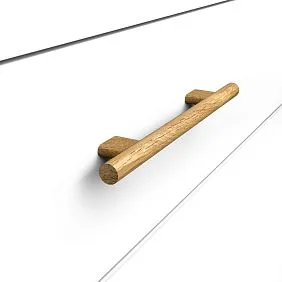
Wooden handles create a sense of warmth and coziness, perfectly complementing natural wood furniture. Ceramic handles are often decorated with painting and are characteristic of Provence, country, and shabby chic styles.
How to choose handles for different types of furniture?
For kitchen furniture, practicality is important: handles should be comfortable, easy to clean from dirt, and resistant to moisture and temperature fluctuations. The best choice is metal pull handles with reliable mounting.
For bedroom furniture, more decorative options can be chosen: carved wooden handles, ceramic knobs with painting, bronze handles with ornamentation. Here, aesthetics are more important than practicality.
For the living room, elegant handles that emphasize the interior style are suitable: classic bronze for traditional interiors, chrome-plated for high-tech, leather for loft.
Children's furniture requires safe handles, without sharp corners, preferably bright and interesting in design.
Handles as an element of furniture decor
Handles are not only functional hardware but also a way to personalize furniture, to make it unique. You can select handles in a unified style for all furniture in a room, creating a harmonious ensemble. Or, conversely, use contrasting handles to emphasize a particular piece.
An interesting solution is the use of vintage or antique handles. They add history and character to furniture, making the interior more individual.decor for furnitureDIY in the form of handles allows for a creative approach and the creation of a truly authorial interior.
Furniture decor: turning the ordinary into unique
Besides handles, there are many other elements that allow for decorating furniture, giving it individuality and style. These include overlays, moldings, carved elements, corners, and legs.
Decorative appliqués
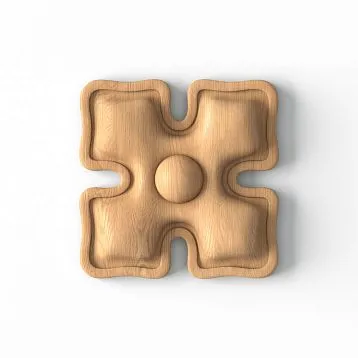
Overlays are three-dimensional decorative elements that are glued onto furniture facades, creating a relief pattern. They can be wooden, polyurethane, or plaster. Using overlays, you can transform a simple smooth cabinet facade into a work of art by adding carved patterns, floral ornaments, or geometric compositions.
Decor for cabinetsin the form of overlays is especially popular when restoring old furniture or creating furniture in a classic style. Overlays are easily mounted with glue, after which they can be painted to match the main furniture or, conversely, highlighted with a contrasting color.
Furniture moldings
Moldings for furniture are narrow decorative strips used for framing facades, creating borders, and visually dividing surfaces. They give furniture structure, graphic quality, and make it more expressive.
Moldings can be simple, in the form of flat strips, or profiled with relief. They are used to create panels on facades, frame mirrors and glass inserts, and decorate furniture sides and cornices.
Carved elements
Carved decor is the pinnacle of furniture art. Carved elements give furniture luxury, uniqueness, and artistic value. These can include floral patterns, flower compositions, geometric designs, and shaped elements.
Carved details are used to decorate bed headboards, cabinet doors, dresser pediments, table and chair legs. They transform ordinary furniture into items of antique value, creating an atmosphere of palace luxury or cozy classicism.
Furniture legs and supports
Legs are an important element that influences the overall perception of furniture. Carved wooden legs with curves and ornaments are characteristic of classic furniture. Straight tapered legs are for neoclassicism. Curved cabriole legs are for Baroque and Rococo.
Replacing standard legs with decorative ones can completely change the character of furniture, making it more elegant, lightweight, or conversely, massive and respectable.
Molding store: criteria for choosing a reliable supplier
So, you've decided what you need: ceiling molding, cornices, furniture handles, decorative elements. But where to buy all this? How to choose a store that offers quality products, reasonable prices, and good service?
Assortment — breadth of choice
The first thing to pay attention to is the assortment. A good decor store should offer not only molding but also a full range of related products: cornices of various types and materials, moldings, baseboards, rosettes, columns, pilasters,furniture hardwaredecorative overlays and carved elements.
The wider the assortment, the more opportunities you have to realize design ideas. You can select elements from one collection, which guarantees their compatibility in style and texture.
Product quality
Quality is the key criterion. Molding should be made from quality materials: dense polyurethane that does not deform, crumble, and has clear relief. Wooden products should be made from well-dried wood, without cracks, knots, or other defects.
Pay attention to the manufacturer. European brands are traditionally known for high quality but are more expensive. Russian manufacturers today offer decent products at more affordable prices, not inferior to imported counterparts.
Availability of technical documentation and drawings
A professional store provides not only beautiful photos but also detailed technical specifications: dimensions, weight, material, installation method. The availability of drawings and catalogs in PDF format is a sign of a serious approach.
This is especially important if you are placing an order for a large project or working with a designer or architect. Accurate parameters allow you to correctly calculate the amount of material, plan installation, and avoid mistakes.
Consultations and support
A good store doesn't just sell products but also helps with selection, provides consultations, and offers solutions. Experienced managers should understand the assortment, know the specifics of applying different elements, and be able to recommend the optimal option for a specific task.
The availability of professional support is especially valuable if you are not a specialist in design or construction. A consultant will help you decide on material choice, advise on how to correctly calculate quantities, and explain installation features.
Delivery and return conditions
Decorative elements are fragile goods requiring careful transportation. Pay attention to how the store organizes delivery: whether there is special packaging, cargo insurance, and the possibility of delivery to regions.
Return conditions are also important. Even with careful selection, an element may not fit in size or shade. The possibility of exchange or return is a sign of a customer-oriented store that values its reputation.
Prices and special offers
Price is an important but not the only factor. Too low prices should raise suspicion: it may indicate low quality or counterfeit. An adequate price reflects the cost of quality materials, professional production, and reliable service.
Pay attention to promotions, special offers, and discounts on comprehensive orders. Many stores offer favorable conditions for regular customers, designers, and construction companies.
Comprehensive approach: why it's beneficial
Returning to the idea of purchasing all decorative elements in one place, I want to emphasize once again the advantages of this approach.
Style Unity
When you choose molding, cornices, furniture handles, and other decor from one store's assortment, especially if the elements belong to the same collection, you get a guarantee of stylistic unity. Everything will harmonize in color, texture, and design. This is especially important for classic interiors where every detail matters.
Time saving
Instead of spending hours searching for needed elements on different websites, you simply open one store's catalog and find everything you need. This saves a tremendous amount of time that can be spent on more important things.
Favorable Terms
Bulk purchases often mean discounts. Stores are interested in large orders and are ready to offer favorable terms. Additionally, one delivery is always cheaper than several.
Simplified Logistics
One order, one delivery, one point of contact with the supplier — this significantly simplifies the process. You know when the shipment will arrive, how it will be packaged, and who to contact in case of questions.
Unified Warranty
All purchased items have a unified warranty from a single supplier. This simplifies interaction in case of returns, exchanges, or warranty service.
How to Properly Choose Elements for Your Project
For a successful decor purchase and a pleasing result, it's important to approach the selection of elements thoughtfully and systematically.
Define the Style
Before starting to choose specific elements, clearly define the style of your interior. Is it classic, neoclassical, baroque, Provence, Scandinavian, modern minimalism? Each style dictates its own rules in decor selection.
For classic interiors, rich moldings with floral ornaments, columns, pilasters, carved wooden elements, bronze or brass handles are characteristic. For minimalism — simple geometric shapes, absence of excessive decor, concise metal handles.
Consider the Scale of the Room
The size of decorative elements should correspond to the size of the room. In small rooms with low ceilings, massive cornices and lush moldings will look out of place, visually reducing the space. For such rooms, choose thin, delicate elements in light shades.
In spacious halls with high ceilings, on the contrary, small decor will get lost. Here, wide cornices, large rosettes, and voluminous moldings are appropriate.
Think Through the Color Palette
Decorative elements can match the color of the walls and ceiling, blending in and creating a monochrome, elegant composition. Or, conversely, be contrasting, attracting attention and becoming interior accents.
White molding on a white ceiling is a classic option that always looks noble. Gilded molding on light walls is a choice for luxurious interiors. Dark wooden molding on a light background is a contrasting, expressive solution.
Calculate the Amount of Material
To avoid a situation where there is not enough material or, conversely, too much leftover, it's important to correctly calculate the required amount. For cornices and baseboards, measure the perimeter of the room, add 10% for cutting and possible errors.
For moldings planned to decorate walls or ceilings, draw a layout diagram and calculate the total length. For furniture handles, count the number of doors and drawers.
If you are unsure about the calculations, contact the store consultants — they will help determine the required amount based on your data.
Don't Forget About Installation
When choosing elements, consider how they will be installed. Some types of molding require special adhesive, others require additional mechanical fastening. Wooden cornices are heavier than polyurethane ones and require more reliable fasteners.
If you plan to install them yourself, choose elements that are easy to install: polyurethane molding with adhesive, furniture handles with simple screw fastening. For complex elements, it's better to involve professionals.
Trends in Decor: What's Relevant Today
The world of interior design is constantly evolving, new trends emerge, and classic solutions are reinterpreted. What's relevant in decor today?
The Return of Classic
Classic interiors with moldings, cornices, and columns are again at the peak of popularity. However, modern classic is not a copy of historical interiors, but their reinterpretation. Elements become more concise, restrained, without excessive opulence. The color palette is light, neutral.
Eclecticism and mixing styles
Today, it's fashionable to mix elements of different styles, creating unique, authorial interiors. Classic molding can coexist with modern furniture, wooden cornices with metal loft-style lighting. The main thing is a sense of proportion and harmony.
Natural materials
The trend towards eco-friendliness and naturalness leads to the growing popularity of wooden decor. Carved wooden elements, solid wood cornices, wooden furniture handles — all this creates a sense of connection with nature, coziness, and warmth.
Minimalism with accents
Minimalist interiors don't completely abandon decor, but use it very sparingly. One expressive element—an unusual furniture handle, contrasting molding, an elegant cornice—can become the highlight of the entire space.
Hidden lighting
Ceiling cornices with hidden LED lighting are one of the main trends in recent years. Such lighting creates a floating ceiling effect, visually increases the height of the room, and adds lightness and airiness to the space.
Frequently Asked Questions about Decor
How does polyurethane molding differ from gypsum molding?
Polyurethane molding is lighter, easier to install, moisture-resistant, and cheaper. Plaster molding is heavier, more fragile, requires professional installation, but has a special, noble texture. For most projects, polyurethane is the optimal choice.
Can molding and cornices be painted?
Yes, most types of molding and cornices can be painted with water-based or acrylic paints. This allows you to choose the perfect shade for your interior or create a patina or gilding effect.
How to choose the size of a ceiling cornice?
The size of the cornice depends on the ceiling height and room area. For standard apartments with ceilings of 2.5–2.7 m, cornices with a width of 5–8 cm are suitable. For high ceilings from 3 m, wider cornices of 10–15 cm can be chosen.
Wooden or metal furniture handles—which is better?
It depends on the interior style and type of furniture. For classic wooden furniture, wooden or bronze handles are better suited. For a modern kitchen—chrome-plated or matte metal handles. It's important to consider practicality: for the kitchen, metal is better as it's easier to clean.
Can plasterwork be installed independently?
Yes, especially when it comes to polyurethane elements. They are lightweight and mounted with special adhesive. It's important to properly prepare the surface, carefully measure and cut the elements, and neatly join the corners. For complex compositions, it's better to involve specialists.
How to care for molding and decorative elements?
Polyurethane molding doesn't require special care—just periodically wipe off dust with a dry or slightly damp cloth. Wooden elements need more delicate care: they shouldn't get wet; it's better to use special wood care products.
Where to buy quality decor at a reasonable price?
The best option is specialized online stores with a wide range, where you can buy all the necessary elements in one place. It's important to choose trusted suppliers with a good reputation, quality products, and professional service.
How long does delivery of decorative elements take?
Delivery times depend on the region and product availability in stock. Usually, delivery to Moscow and St. Petersburg takes 1–3 days, to other regions—5–14 days. Some stores offer express delivery for an additional fee.
Conclusion: Create Interiors with STAVROS
Creating a harmonious, stylish, meticulously thought-out interior is a task that requires attention to detail.Ceiling Molding, Wooden cornices, Furniture Handlesand other decorative elements are those 'little things' that turn an ordinary space into a true design masterpiece.
By choosing a reliable supplier that offers a full range of decorative elements in one place, you save time and money, get a quality guarantee, and stylistic unity. The company STAVROS has specialized in the production and supply of high-quality interior decor for over twenty years. The STAVROS range includes thousands of items: from classic ceiling molding and carved wooden cornices to elegant furniture hardware and decorative overlays.
STAVROS works with both private clients and professionals—designers, architects, construction companies. In-house production guarantees stable product quality, and a wide stock program ensures fast order shipment. The team of experienced STAVROS consultants is always ready to help with selection, provide professional recommendations, and calculate the required amount of material.
By contactingthe STAVROS catalog, you get not just decorative elements, but a comprehensive solution for creating the interior of your dreams. Quality materials, a rich selection, professional service, convenient delivery—all this makes STAVROS a reliable partner in implementing any design projects.
Create beautiful interiors, enjoy the harmony and beauty of every detail. With STAVROS, it's simple, profitable, and reliable.