Article Contents:
- What You're Buying: Structure and Working Principle of Slatted Panels
- Which Material to Buy: MDF vs. Solid Oak
- When to Buy MDF Slatted Panels
- When to Buy Solid Oak Slatted Panels
- Which Slat Profile to Buy
- Buy Slatted Panels: Dimensions, Gaps, Module Parameters
- How to Calculate Quantity Before Purchase
- Buy Slatted Panels for Specific Rooms
- Buy Slatted Panels for the Living Room
- Buy Slatted Panels for the Bedroom
- Buy Slatted Panels for the Hallway
- Buy Slatted Panels for the Bathroom
- Buy Slatted Panels for the Nursery
- Buy Slatted Panels for Restaurants, Hotels, Offices
- Buy Slatted Panels with Lighting: What to Know Before Ordering
- Buy Slatted Panels for Partitions and Furniture Fronts
- What to Buy with Slatted Panels: Essential Kit
- Buy Slatted Panels for Interior Styles: What to Choose for Each Style
- Mistakes When Buying Slatted Panels: What to Consider Before Placing an Order
- Tips for First-Time Slatted Panel Buyers
- FAQ: Answers to Common Buyer Questions
- Buy Slatted Panels from Manufacturer STAVROS

If you are planning tobuy slatted panels— it means you've already made one of the best interior design decisions in recent years. Slatted walls have long ceased to be a privilege of expensive designer projects: today, they are an affordable, technologically advanced, and impressive way to transform any space—from a city apartment to a restaurant hall. The question is not 'to buy or not,' but 'how to buy correctly': choose the right material, accurately calculate the quantity, avoid mistakes with tinting, not forget the accessories, and get something that will work in the interior 10 years later just as well as on the day of installation. This is exactly what this guide is about. Read from start to finish: by the end, you'll have complete clarity on every purchase parameter.
What You're Buying: Structure and Working Principle of Slatted Panels
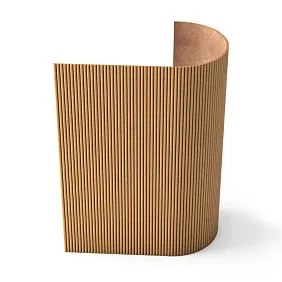
Before placing an order, it's important to understand exactly what you're purchasing. A slatted panel is a modular structure made of parallel wooden battens of the same cross-section, fixed at equal intervals on a backing. The backing comes in two types: a rigid MDF board—for straight flat surfaces, and a fabric base made of polyester or fiberglass—for curved surfaces, columns, arches, and rounded corners. This is not just a set ofwooden boards on the wallpurchased individually and manually nailed: a modular panel is a ready-made engineered system with precise spacing, gaps, and profiles, which installs quickly and delivers a predictable, professional result. When you buy slatted panels as a modular system, you save 50–70% of installation time compared to individually nailing battens—and achieve an absolutely even, geometrically precise pattern without the need for master woodworking skills.
A slatted surface transforms space not only visually but also acoustically. Battens with gaps scatter sound waves, reducing reverberation—this is why buying slatted wall panels for a meeting room, restaurant, or home theater means getting not just decor but also acoustic comfort. When installed on a frame with mineral wool behind it, the reduction in reverberation time reaches 30–50%—a noticeable result even in small spaces. This is not theory: it's a commercial standard that has long become practice in residential interiors.




Which material to buy: MDF vs. solid oak
Our factory also produces:
When to buy MDF slatted panels
MDF slatted panels are the number one choice for those who prioritize color accuracy, order scalability, and budget predictability. MDF with a density of 750–850 kg/m³ is a homogeneous engineered material without knots or resin pockets, milled to perfect smoothness, and accepts any paint coating without variations. When you buy MDF slatted panels for painting, you gain the ability to precisely match any shade from the RAL or NCS system. White battens RAL 9010, anthracite RAL 7016, graphite RAL 7024—whatever tone the design concept specifies, MDF will reproduce it without deviation. Buying white MDF slatted panels for painting for a monochrome interior is an absolute leader in requests among those decorating living rooms, bedrooms, and hallways in Scandinavian style, Japandi, or modern classic. Matte enamel is the optimal finish for living spaces: it doesn't glare, hides minor scratches, and looks modern. Satin finish is for commercial spaces with regular wet cleaning. An important nuance for bathrooms and steam areas: buy only moisture-resistant MDF labeled HMR—standard MDF swells and peels under systematic steam exposure within a few months.
Get Consultation
When to buy solid oak slatted panels
Buying solid oak slatted panels means choosing a living material with a natural wood grain pattern in each batten. No printed texture on MDF can replicate this: the oak surface is warm, tactile, with chromatic variation from plank to plank. Oak density is 700–750 kg/m³, mechanical strength is high, oil-wax coating can be restored locally without dismantling—service life is 20–30 years. Buying slatted panels in Scandinavian Japandi gray tinted oak—an ashy, cool tone for minimalist interiors. Honey cognac—a warm amber for classic and organic aesthetics. Buying slatted panels in dark wenge anthracite oak—for loft, restaurant, VIP meeting rooms. Buying slatted panels in tinted oak—an important rule: always order a physical sample before a large order. Monitors distort tint colors: what appears as 'Scandinavian gray' on screen may turn out to be 'cool brown' on a physical batten—these create different impressions in real space.
Before purchasing oak slatted panels, ensure the finish coating is specified in the specification: oil, wax, or varnish. Oil and wax are the preferred choice: they penetrate the wood structure, create a hydrophobic layer, and can be restored locally. Varnish is more decoratively saturated but requires professional repair if damaged.
Which batten profile to buy
The cross-sectional profile of a batten is a parameter most buyers ignore and later regret. It's not just cosmetic: the profile determines how a slatted wall interacts with light—and thus, what visual character it creates.
Semi-circular profile—buying slatted panels with a semi-circular profile means getting a smooth light gradient from a light peak to dark edges on each batten. Multiplied across the entire surface, this effect creates a lively, shimmering wall with constantly changing play of light and shadow. Spotlights at a sharp 30–45° angle—maximum effect. This is the most popular profile for residential interiors, living rooms, bedrooms, restaurants—where warmth and volume are needed. Acoustically, the semi-circular profile scatters sound waves better than rectangular: it lacks a flat face parallel to the sound, which creates directional reflection.
Rectangular profile—strict, architecturally precise. With side lighting, it creates pronounced shadows with sharp edges—not a soft gradient, but contrasting stripes. Buying slatted panels with a rectangular profile is the right choice for minimalism, high-tech, and strict loft, where disciplined geometry without softness is needed.
Trapezoidal profile—a compromise: a wide base ensures adhesive joint strength, a narrowed front face creates moderate relief with pronounced shadows.
Buy slatted panels: dimensions, gap, module parameters
Standard size of a rigid module on an MDF backing: width 300 or 600 mm, length 1200, 2400, or 2700 mm. For most residential spaces with a 2.7 m ceiling—a 600×2700 mm or 600×2400 mm module with an extension. If your ceiling is non-standard—check with the manufacturer about ordering custom lengths.
Bat width 20 mm—thin, delicate, 'lace-like' pattern for small walls, children's rooms, niches. Width 25 mm—universal size for residential interiors. Width 30 mm—a more substantial pattern for spacious living rooms and commercial spaces. Width 40 mm—monumental scale for large architectural projects.
Gap 5 mm—dense, closed pattern, wood dominates visually. Gap 8 mm—universal balance, the best-selling option. Gap 10 mm—airy, light; here, the wall color behind the panels becomes part of the decorative concept—it must be chosen as carefully as the battens themselves. Optimal gap-to-bat width ratio is 25–40%: bat 20 mm / gap 5 mm—25%; bat 25 mm / gap 8 mm—32%; bat 30 mm / gap 10 mm—33%.
How to calculate quantity before purchase
This is one of the most frequent questions—and one of the most common sources of errors. The calculation algorithm is simple but requires attention.
First: measure the length and height of each wall you plan to clad. Second: subtract the area of windows and doors from the total area. Third: multiply the resulting 'net' area by a factor of 1.10–1.12—this is a 10–12% allowance for trimming, end cuts, and possible manufacturing defects during cutting. Fourth: divide the final area by the area of one module. The result is the number of modules to order. Fifth: for the panels, immediately calculate the linear footage ofskirting boardsaround the perimeter,cornicefor the top edge andmoldingfor joints—without these elements, a slatted wall looks unfinished.
Calculation example. Wall 4×2.7 m = 10.8 m². Two windows 0.9×1.5 m = 2.7 m². Net area: 10.8 − 2.7 = 8.1 m². With a 12% allowance: 8.1 × 1.12 = 9.07 m²—round up to the nearest whole number of modules. That's the entire calculation. Save leftover panels after installation—they'll be needed for local replacement if damaged years later.
Buy slatted panels for specific rooms
Buy slatted panels for the living room
Living room—the main application space. Buying slatted panels for the living room accent wall behind the sofa—a classic: a slatted background turns furniture arrangement into a complete architectural scene. Buying slatted panels for the TV zone—a TV in a slatted surface stops being a 'black spot' and becomes part of a unified panel. For living rooms with ceilings below 3 m, choose vertical batten orientation—it visually raises the ceiling. For spacious living rooms with high ceilings, horizontal battens on the lower half of the wall create a sense of intimacy and coziness. For a slatted wall in the living room, be sure to buywooden skirting board purchasein the same tone as the battens andwooden cornicefor top framing.
Buy slatted panels for the bedroom
Buying slatted panels for the bedroom headboard—one of the most effective and practical techniques. A slatted wall behind the bed replaces a separate headboard, creating an 'architectural cocoon.' Warm honey-toned oak with oil—psychologically relaxing, creates natural warmth. Add warm LED strip lighting behind the battens at headboard level before installing panels—get intimate night lighting without a separate lamp. In a bedroom with slatted panels, a unified material narrative is especially important: buywooden stripin the same tone for framing mirrors and doorways.
Buy slatted panels for hallway
The hallway is the space of first impression. Buying slatted panels for the hallway and installing them on the main wall signals to guests: people with taste live here. For narrow corridors, choose horizontal orientation — buying horizontal slatted panels for a narrow corridor expands the space visually. Dark tones — wenge, anthracite, dark walnut — create 'depth' that small hallways lack.wooden baseboardin the same tone as the slatted panels completes the vertical line from ceiling to floor.
Buy slatted panels for bathroom
Buying slatted panels for the bathroom is a viable scenario only when choosing the right material. For MDF panels — moisture-resistant MDF of HMR grade is mandatory: standard MDF will swell under systematic steam exposure. For oak slats — only oil-wax hydrophobic coating and only in areas without direct contact with water. Adhesive — polyurethane waterproof class D4. Vapor barrier behind panels — mandatory. Under these conditions, a slatted wooden wall in the bathroom lasts 10–15 years without deformation or mold.
Buy slatted panels for children's room
Buying formaldehyde-free eco-friendly slatted panels for a children's room is a fundamental requirement of parents. Oak without toxic binders, oil coating without volatile organic compounds, absence of static electricity that attracts dust — all these properties make wooden slatted panels the optimal choice for children's rooms. Light tones — clear varnish or oil without tinting — create a neutral natural background that doesn't overload the children's space.
Buy slatted panels for restaurant, hotel, office
Buying slatted panels for a restaurant in bulk is a typical commercial order. Dark oak tones, directional spotlights, semi-circular slat profile — this triumvirate creates a restaurant atmosphere that guests remember and want to return to. Slatted cladding reduces hall reverberation, making table conversations comfortable at full capacity. Buying slatted panels for hotel reception — the zone where guests decide on the establishment's level within the first 7 seconds: natural material conveys care and quality. Buying slatted panels for office meeting rooms anthracite dark oak — standard for VIP meeting rooms in legal and investment companies: acoustic comfort and visual weight of the material work simultaneously.
Buy slatted panels with lighting: what you need to know before ordering
Buying slatted panels with LED lighting is not a separate SKU, but a combination of slatted panels and properly organized frame mounting. The algorithm is as follows: mount a frame of guides on the wall, attach LED strip to the guides (warm white 2700–3000K — for living spaces, neutral 4000K — for offices), run the cable in hidden grooves of the frame to the connection point — and only then mount the panels. The cable is completely hidden, light emerges diffusely from the depth of the slatted structure. Buying slatted panels with lighting for a home theater — rear and side walls — is a classic scheme for acoustic and light treatment of space, creating a cinematic atmosphere without expensive specialized systems.
Buy slatted panels for partitions and furniture fronts
Buying slatted panels for a partition — functional zoning without solid walls. A slatted partition lets light through, preserves air in the space, but clearly marks zone boundaries. In open layouts — an indispensable tool: separating kitchen from living room, work zone from relaxation zone — subtly and visually rich. For the upper framing of the partition, buybuy wooden cornice, for the lower —with a classic profile creates a sense of solidity, reliability.: a unified ensemble of natural materials gives professional completeness.
Buying slatted panels for a wardrobe furniture front — a slatted front visually lightens a massive structure, turning a wardrobe from 'furniture' into an architectural element. Flexible panels wrap around rounded fronts; rigid ones are ideal for straight sliding door fronts. Buying slatted panels for a kitchen island — the front part of the island in dark oak becomes the object around which the entire kitchen concept is built.
What to buy together with slatted panels: mandatory set
This is one of the most important sections of the guide. A slatted wall without finishing elements is like a painting without a frame: technically ready, but visually incomplete. Professional results require a complete set.
wooden skirting board purchase— lower trim of the slatted wall, covers the panel end at the floor, creates a horizontal 'plinth'. In the same tone as the slats — oak of the same tone or MDF in the same RAL. Without it, the lower edge of the slatted surface looks unfinished.
wooden cornice— upper trim, covers the panel end at the ceiling. Symmetrical counterpart to the baseboard. In classic interiors — profiled cornice from solid oak of the same tone as the slats. In minimalist ones — simple rectangular molding.
buy MDF skirting board— alternative to wooden baseboard for those who chose MDF panels for painting: MDF baseboard in the same RAL — monochrome, perfectly coordinated lower trim.— is a horizontal element that frames the room at the bottom of the walls where the wall meets the floor. Skirting boards perform several functions: they hide the technological gap between the wall and floor covering (necessary for thermal expansion), protect the lower part of the wall from mechanical damage, create visual completion, and may conceal wiring.— universal solution for Scandinavian and minimalist concepts.
MDF Crown— ceiling trim for MDF concepts for painting: same RAL enamel, same tone — flawless monochrome wall from floor to ceiling.
Wooden corner bracket— indispensable for treating external corners of slatted surfaces: where two slatted walls meet at 90°, the corner profile covers module ends and creates a clean transition.
Ceiling baseboard wooden— for classic interiors where slatted walls combine with stucco decor and profiled ceilings.
solid wood trim pieces— additional decorative slats, molding, trims for horizontal wall division, creating niches and decorative frames around slatted surfaces.
Rule of unified material language: buy baseboard, cornice, corner and trim from the same batch and same manufacturer as the slatted panels. Only this guarantees complete matching of tint tone or paint color. Two different batches of oak from different suppliers are two different tones, noticeable in real space.
Buy slatted panels for interior styles: what to choose for each style
Scandinavian style — buy slatted panels light oak clear oil, 8 mm gap, width 20–25 mm. Natural calm rhythm, zero excess.Baseboard MDFwhite matching the walls — monochrome base.
Japandi — buy slatted panels tinted oak cold gray or light neutral, tighter gap 5–6 mm, strict tone uniformity, no natural 'excesses'.
Wabi-sabi — purchase oak slat panels without tinting or with minimal tinting; oil finish highlights the 'liveliness' and irregularity of the grain.Wooden plankwith a pronounced natural texture — fundamentally important.
Loft — purchase MDF slat panels in anthracite RAL 7016 or graphite RAL 7024, 10 mm gap, width 30–40 mm. Combines with concrete floors, metal decor, industrial lighting.
Neoclassicism — purchase white paintable MDF slat panels, semi-circular profile, 6–8 mm gap, combined withwooden corniceandwooden baseboard: a dialogue between classical architecture and modern rhythm.
Organic design — purchase flexible fabric-backed slat panels made of natural oak for curved surfaces; natural tones without tinting; combines witha ceiling made of wooden slatsfor complete immersion in wooden aesthetics.
Mistakes when purchasing slat panels: what to consider before placing an order
Knowing these mistakes will save you money and nerves.
Ordering without a surplus. The most common mistake is calculating exactly in m² and purchasing without surplus. On a real site, there are always corner cuts, end cuts at the ceiling and floor, non-standard areas. A 10–12% surplus is not generosity but a necessity.
Purchasing standard MDF for bathrooms. After 3–6 months — swelling, coating delamination, geometric deformation. Only moisture-resistant HMR MDF or oak with oil-wax finish.
Choosing oak tint based on screen display. Calibrated monitors are rare. The seller's monitor, your monitor, and the actual oak are three different colors. Request a physical sample before ordering.
Purchasing only panels without accessories. Without skirting, cornice, and moldings, a slat wall looks unfinished. Plus — if buying accessories later from another supplier, the tone won't match.
Ignoring the slat profile. A rectangular profile under warm diffused lighting looks 'harsh'. A semi-circular profile under the same lighting looks 'warm'. Choose the profile considering the type of lighting in the room.
Purchasing without clarifying ceiling height. Standard 2400 mm modules won't suffice for a 2700 mm ceiling — an extension or 2700 mm module is needed. Clarify before ordering.
Purchasing from a middleman with an unknown batch. Two different batches of the same tint from one manufacturer may differ in shade. Purchase the entire volume simultaneously directly from the manufacturer.
Incorrect area calculation. Wall area ≠ slat covering area. Subtract windows, doors, built-in niches — and only then multiply by the surplus coefficient.
Tips for first-time buyers of slat panels
Always start with a visit to a showroom or ordering a sample — see the material in the actual light of your space, not in photos. Choose a manufacturer, not a reseller: with a manufacturer, the batch is uniform, samples match the product, non-standard sizes are real, not 'we'll clarify'. Purchase slat panels, accessories, and installation materials simultaneously — this eliminates batch mismatches and saves delivery time.DIY Batten Panels— possible with adhesive installation on a flat wall but requires precise marking, quality adhesive, and patience. For frame installation with acoustic absorption, for curved surfaces, and commercial projects — hire a professional installer. Always purchase with a 10–12% surplus — and keep the remainder after installation for local replacement in a few years.
FAQ: answers to common customer questions
How to choose slat panels before purchase? Determine: material (MDF or oak), slat profile, slat width and gap, tone or color. Then — installation type (adhesive or frame). Request a tint sample, calculate area with a 10–12% surplus, include skirting, cornice, and moldings in the order.
What's better to buy — MDF or oak? MDF — for precise color matching to RAL/NCS, monochrome concepts, large volume at a reasonable price. Oak — for natural aesthetics, tactile quality, durability of 20–30 years, commercial projects with high load.
Where to buy slat panels with delivery across Russia? Directly from the manufacturer with delivery via transport companies. This eliminates middleman markups and guarantees batch uniformity.
How much do slat panels cost? Cost depends on material, module size, and order volume. The larger the volume — the better the price. Check with the manufacturer for the current price list for the selected item.
Can I buy slat panels in non-standard sizes? Yes — from manufacturers with their own production. Non-standard length, module width, and slat profile are produced according to specific technical requirements.
What to buy for bathrooms? Only moisture-resistant HMR MDF or oak with oil-wax finish. Adhesive — polyurethane D4. Vapor barrier behind panels — mandatory.
Buying slat panels wholesale: are there conditions for design studios? Yes — manufacturers have professional programs for designers and studios: volume discounts, priority production queue, personal manager.
How to calculate quantity when purchasing? 'Clean' wall area × 1.12 ÷ area of one module = number of modules. Round up.
Buying slatted panels with lighting: what else is needed? LED strip, power supply, cable, frame made of guides. The strip is mounted on the frame before installing the panels.
What to buy together with slatted panels? Baseboard in matching color, cornice in matching color, corner for external corners, moldings for joints — all from the same batch and the same manufacturer. Plus adhesive (polyurethane or contact) and finishing nails or clips.
Buy slatted panels from manufacturer STAVROS
buy slatted panelsBuying from the manufacturer is not just more cost-effective. It guarantees batch uniformity, product conformity to samples, real possibility of custom sizes, and professional support from calculation to delivery.
STAVROS is a Russian manufacturer of wooden interior products with 24 years of experience. Own production, own quality control at every stage, full catalog of wooden products for creating a cohesive interior ensemble:
— buy slatted panels— rigid on MDF backing and flexible on fabric base, semi-circular and rectangular profiles, oak and MDF, custom tinting or RAL/NCS
— Buy wooden skirting board— for DIY installation of slatted decor piece by piece
— wooden planks on the wall— full range of slatted trim
— wooden skirting board purchase— bottom trim matching slatted panels
— buy MDF skirting board— for MDF concepts intended for painting
— buy wooden cornice— top trim, symmetrical counterpart to baseboard
— wooden cornice— profiled cornice made of solid wood for classic interiors
— Wooden corner bracket— for external corners of slatted surfaces
— solid wood trim pieces— moldings, cornices, decorative slats for horizontal division and niche decoration
— — is a horizontal element that frames the room at the bottom of the walls where the wall meets the floor. Skirting boards perform several functions: they hide the technological gap between the wall and floor covering (necessary for thermal expansion), protect the lower part of the wall from mechanical damage, create visual completion, and may conceal wiring.— special article on choosing and installing MDF baseboard
— wooden baseboard— detailed guide to wooden baseboards
— A ceiling made of wooden planks— article on slatted ceiling decor
One manufacturer — one material — one tone — complete ensemble. This is exactly what ensures that 'finished' interior quality that everyone feels but few can put into words. Delivery across Russia. Wholesale terms for design studios. Custom sizes available. Physical tint samples — upon request.