Article Contents:
- What's behind the query 'buy slatted panels for interior wall decoration'
- Slat material: the key decision when purchasing
- MDF for painting: color and geometry precision
- Solid oak: natural texture as meaning
- Material Comparison Table
- Structural types of slatted panels for interior decoration
- Rigid panels on MDF backing
- Flexible panels on fabric base
- Acoustic panels with filling
- Slat profile: three geometries and three different atmospheres
- Rectangular profile
- Semicircular profile
- Trapezoidal profile
- Slat spacing in interior decoration: rhythm controls scale
- Slat orientation: a free architectural tool
- Color solutions when purchasing slatted panels for interior finishing
- Monochrome system
- Tonal Accent
- Saturated color accent
- Two-Color System
- Oak tints: natural palette
- What to buy together with slatted panels for interior finishing: complete system
- Moldings and cornices: architectural horizontals
- Floor skirting: natural lower boundary
- Extension slat: organic completion of non-standard areas
- Decorative overlays for classic systems
- Furniture fronts and handles
- Elements for stairs
- Eight styles for which slatted panels in interior finishing are the main tool
- Scandinavian Style
- Japandi
- Minimalism
- Organic Modern
- Modern classicism
- Loft with a warm accent
- Restaurant and commercial space
- Country house and attic
- How to correctly calculate the quantity when purchasing
- Lighting: buy and integrate in advance
- Nine typical mistakes when buying slatted panels for interior finishing
- Buyer's checklist: questions for the manufacturer
- About the Company STAVROS
- FAQ: Answers to Popular Questions

The interior begins with the wall. Not with furniture, not with lighting, not with textiles — it is the wall that sets the tone, character, and scale of the space. And when a person decides to buy slatted panels for interior wall finishing, it is not just a purchase of building material. It is a decision that will determine the atmosphere of the room for many years to come. The textured surface with the rhythm of wooden or painted slats is an architectural statement that cannot be taken back.
That is why such a purchase cannot be approached impulsively. The market for slatted panels for interior wall finishing is saturated — there are many offers, quality varies drastically, and price is far from always a reliable guide. Knowing exactly what you are buying, by what criteria to assess quality, how to build a finishing system, and what mistakes to avoid — this is not superfluous knowledge. It is a condition for a good result.
This article is written for those who approach the choice seriously. Here is everything you need to know before placing an order.
What's behind the query 'buy slatted panels for interior wall finishing'
When a person formulates this exact query, they have already gone through a certain journey. They have seen slatted surfaces in interiors they like. They understood that this solution is not accidental, but a conscious design choice. And now they face a practical question: where and how to buy correctly.
But this query hides a trap. 'Slatted panels for interior wall finishing' is not one product. Behind these words lie several fundamentally different structural types, two fundamentally different materials for the slats, three profile options, a wide range of spacing and orientation—and each of these parameters affects the final result.
Therefore, before talking about where to buy, it's necessary to figure out what exactly to buy. This is the first and most important step.




Material of the slats: the key decision when buying
Our factory also produces:
MDF for painting: color and geometry precision
MDF with a density of 750–850 kg/m³ is a pressed wood fiberboard with a homogeneous structure. No natural variations: complete predictability of shape, geometry, surface. Accepts any color from the RAL catalog (over 200 shades) or NCS. Can be repainted without dismantling after several years—if the concept changes, the surface is updated.
MDF is chosen for:
-
monochrome solutions 'wall matching the panel color';
-
corporate and office spaces with precise brand colors;
-
minimalism, where a perfectly flat surface without natural variability is needed;
-
accent tonal solutions with saturated RAL colors.
A critically important parameter when purchasing: MDF density. Below 700 kg/m³ is a loose material with swelling ends, poor fastening, and deformation due to humidity fluctuations. Saving 20–25% on price turns into a problem within 6–12 months.
Get Consultation
Solid oak: natural texture as the essence
Oak with a density of 700–750 kg/m³ is a hardwood with a rich grain pattern, tactile open pores, and long service life with proper care. Each slat is unique—natural variation is not a defect but an asset. The surface of oak battens lives and changes with the lighting.
Oak is chosen for:
-
Scandinavian style, Japandi, organic modern;
-
spaces where natural material is a conscious choice, not a compromise;
-
interiors where the tactile quality of the surface is as important as the visual image;
-
country houses, apartments with high ceilings, restaurants with atmosphere.
A key parameter when purchasing solid wood: wood moisture content. The norm is 8–10%. Slats from unseasoned wood will warp and deform after installation as they adjust to the room's humidity. This is irreparable after installation. Ask the manufacturer: are there climate-controlled drying chambers?
Material comparison table
| Parameter | MDF for painting | Solid oak |
|---|---|---|
| Color freedom | Any RAL/NCS | Tinting, natural shade |
| Natural texture | No | Yes, unique |
| Tactile | Homogeneous | Living, open pore |
| Repainting | Yes, without dismantling | No |
| Durability | High under normal humidity | Very high with care |
| Application | Office, minimalism, corporate | Residential, restaurant, Scandinavian style |
Structural types of slatted panels for interior finishing
Before buyingslatted panels for interior wall finishing, you need to understand which structural type suits your task. An error at this stage is the most costly possible.
Rigid panels on MDF backing
Slats are fixed to a rigid MDF base with factory precision. Standard module format: 0.6 × 2.4 m. The backing ensures stable flat geometry, precise spacing, and ease of installation — using adhesive or frame methods.
This solution is for 90% of applications: straight walls, partitions, accent planes, ceilings. The rigidity of the backing is an advantage: it maintains geometry regardless of minor substrate irregularities.
Critical parameter: factory step accuracy of slats — no more than 0.5 mm. With an unstable step, joints between modules are visible under any lighting. This is irreparable after installation. Demand this parameter when ordering.
Flexible panels on a fabric base
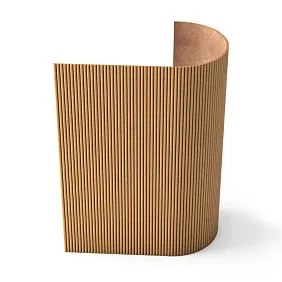
Slats on a fabric mesh base with the ability to bend to a radius from 100–150 mm. Slats are rigid — flexibility is provided only by the base. The only professional solution for curved surfaces: columns, arched slopes, rounded corners, radius partitions.
A rigid panel on a curved surface — not allowed. This will destroy the structure during installation. If your project includes at least one curve — flexible panels are mandatory for these sections.
Acoustic panels with filling
Construction with a technical gap filled with acoustic material. Slats mechanically scatter sound, filling absorbs in the gap. For meeting rooms, conference halls, restaurant spaces with high noise levels.
Slat profile: three geometries and three different atmospheres
Profile — the cross-section of the slat — determines how light interacts with the surface. This is an architectural, not purely aesthetic, decision.
Rectangular profile
Sharp straight edges. Clear, contrasting shadow with side or directional light. The surface is strict, architecturally precise. For minimalism, office spaces, modern classic in a restrained interpretation, kitchen facades with linear design.
Semi-circular profile
Rounded edges. Soft, diffused shadow without sharp boundaries. Organic, warm, natural surface — even from MDF for painting. For living spaces: living room, bedroom, children's room, library nook.
Trapezoidal profile
Extension to the base creates a voluminous multi-level shadow. The surface is dynamic, decoratively rich. For commercial spaces: restaurant, lobby, showroom, boutique.
Batten spacing in interior finishing: rhythm controls scale
Spacing — the distance between the centers of adjacent battens — controls the visual density of the surface and its perception in a specific room.
15–20 mm (tight rhythm). An active, rich surface. Attracts the eye, creates decorative tension. For large, spacious rooms with large accent planes.
25–35 mm (balanced rhythm). A universal solution. Moderate decorative activity. Works in most residential and commercial applications. The oak grain pattern is clearly visible.
40 mm and more (wide rhythm). An airy, 'breathing' surface. For small rooms and delicate accent solutions — depth without tension. Each batten is perceived as an independent architectural element.
Rule: the smaller the room, the wider the spacing. A tight rhythm in a small room creates visual crowding.
Batten orientation: a free architectural tool
Orientation is set during installation — it's a free tool for visual space correction that needs to be considered before purchase.
Vertical battens guide the eye from bottom to top. The ceiling is perceived as higher. For standard apartments with 2.7 m ceilings — the most valuable technique.
Horizontal battens guide the eye left-right. The room is perceived as wider. For narrow corridors, small rooms with a lack of width. In Japandi — a symbol of the natural horizon, a meditative rhythm.
Diagonal slats create dynamics and kinetics. For commercial spaces with non-standard concepts.
Color solutions when purchasing slat panels for interior finishing
Color is the language of the surface. For MDF panels, it is specified when ordering from the RAL or NCS catalog. For oak panels — through tinting. Let's consider working strategies.
Monochromatic system
The panel is painted exactly to match the wall tone — one color, one material, a continuous surface. Relief exists only through shadow. This is the highest level of minimalist design: infinitely far from primitive, even further from excess. Requires good side or directional lighting: without it, the relief is not readable.
Tonal accent
Walls in a light neutral tone, the panel is 2–3 tones deeper. The relief is readable through both color contrast and shadow simultaneously. A restrained, professional, foolproof solution for most residential interiors.
Saturated color accent
Neutral or white walls. The slat panel — in a deep, decisive color: RAL 7016 Anthracite, RAL 6005 Moss Green, RAL 5011 Steel Blue, RAL 3005 Wine Red, RAL 8025 Pale Brown. One surface with a saturated color transforms the entire interior. This is a solution with minimal means and maximum result.
Two-color system
Slats and substrate (visible in the gaps) — in different colors. White slats on a black substrate — maximum graphic quality. Light gray slats on a dark blue substrate — deep spatial complexity. Beige slats on a terracotta base — warm, earthy expressiveness. A two-color system adds a third dimension to the surface — depth behind the slats.
Oak tinting: natural palette
-
Natural honey — warm natural shade, Scandinavian style classic;
-
Whitewashed / fumed — ashy, airy Nordic look;
-
Light gray — Japandi, restrained natural coolness;
-
Dark brown — traditional classic;
-
Graphite — loft, modern classic with character.
What to buy together with slatted panels for interior finishing: complete system
This chapter is for those who want not just 'panels on the wall', but a complete architectural solution. Slatted panels work maximally only within a system of coordinated elements.
Moldings and cornices: architectural horizontals
The upper boundary of a slatted field without finishing is a break.wooden moldingfrom the same production program — a horizontal architectural line that 'closes' the system from above. Oak of the same toning next to oak slats — natural consistency. MDF molding for painting in the same RAL — an invisible but structurally important boundary.
For classic and neoclassical interiors —Wooden cornicewith a profiled front surface: a full-fledged architectural 'roof' for the slatted field.
Floor skirting: the natural lower boundary
Solid oak wooden skirting boardnext to oak slatted panels — a unified natural theme from floor to upper boundary. One material, one tint, one production — architectural monolithicity unattainable with assembled elements from different sources.
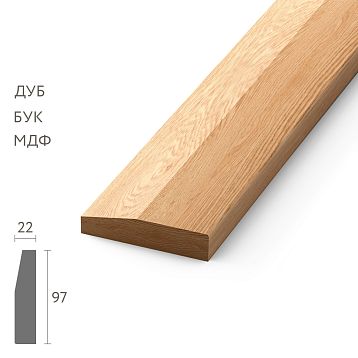
For MDF systems —— is a horizontal element that frames the room at the bottom of the walls where the wall meets the floor. Skirting boards perform several functions: they hide the technological gap between the wall and floor covering (necessary for thermal expansion), protect the lower part of the wall from mechanical damage, create visual completion, and may conceal wiring.in the same RAL: seamless color transition from bottom to top.
Extension slat: organic finishing for non-standard sections
wooden plankmade from the same solid oak for corner transitions, window reveals, door frame trims. Same material, same tint, same production — an inconspicuous extension that completes the system without extraneous accents.
Decorative overlays for classical systems
In modern classic and neoclassical stylesDecorative Insertscreate architectural frames around the slatted field: horizontal and vertical framings turn a beautiful wall into a full-fledged architectural panel system with historical roots.
Cabinet fronts and handles
If kitchen cabinet fronts or built-in furniture with slatted decor are updated simultaneously with wall finishing —Furniture Handlesmade from coordinated material complete the system without random details. Single manufacturing — single quality.
Elements for stairs
In a country house or multi-level apartment, slatted panels in the stairwell create an architectural narrative — a natural theme leading upward.balusters for staircasesmade from the same solid oak enhance this theme: wood guides a person from floor to floor.
Eight styles for which slatted panels are the main tool in interior finishing
Scandinavian style
Light oak with oil or white fumed. Vertical slats, semi-circular profile. Warm light 2700 K. Natural textiles, concrete, unglazed ceramics nearby. Wooden slatted panels in a Scandinavian interior are a natural dialogue of materials, where each speaks its own language without drowning out the others.
Japandi
Oak with gray tint. Horizontal slats — a meditative horizon. Wide spacing. Rectangular profile. Minimal decor. When buying slatted panels for interior finishing in the Japandi style, you choose not decor, but a philosophy of surface.
Minimalism
MDF for painting. Monochrome — panel matching the wall color. Or a tonal accent. Rectangular profile. Side directional lighting. The surface exists only through shadow — this is the highest form of design restraint.
Organic Modern
Oak with semi-circular profile. Monumental natural surfaces. Stone, natural textiles nearby. Minimal decorative elements.
Modern classic
Oak with dark tinting.Wooden molding and cornicearound the perimeter.Decorative Insertsframing the slatted field. An architectural panel system with a historical reference.
Loft with a warm accent
MDF in anthracite or dark oak. Large rectangular profile. Metal details nearby. Wood or MDF in a dark tone — a 'warm' accent in a cold industrial space.
Restaurant and commercial space
Warm-toned oak. Trapezoidal profile. Directional light 2700 K. Acoustic filling in the frame. Slatted panels for interior finishing in a restaurant — managing the guest experience through natural material.
Country house and attic
Oil-finished oak, natural tone. Flexible panels for slopes and pitched areas. Wood next to wood: panels, floor beams, solid wood furniture.
How to correctly calculate the quantity when purchasing
Accurate calculation — protection against reordering with the risk of batch mismatch.
Step 1. Measure each surface to be clad: length × height = area. Subtract openings.
Step 2. Add up the areas of all surfaces.
Step 3. Divide the total by the area of one module. Standard: 0.6 × 2.4 m = 1.44 sq.m. Round up.
Step 4. Add 15% reserve for perimeter trimming and unforeseen losses.
Example: bedroom, wall behind the headboard 3.2 × 2.7 m = 8.64 sq.m. Number of modules: 8.64 / 1.44 = 6 modules. With a 15% reserve: 7 modules. For the system additionally: top molding (3.2 lm), bottom baseboard (3.2 lm).
Lighting: purchase and integrate in advance
Slatted relief without proper lighting is an invisible surface. This is not an exaggeration. With uniform overhead light, the slats look like ordinary texture — no depth, no play of light. To buy slatted panels for interior wall cladding and get the maximum result, lighting must be planned before ordering the panels.
Directional spotlights at 30–45° to the surface. Mounted on the ceiling. The angle to the surface determines the shadow intensity — and the expressiveness of the relief. Warm light 2700 K for living spaces.
LED strip behind the top molding. Downward glow along the slatted surface. The molding needs a 20–30 mm gap for placing the strip — plan this when ordering the linear footage.
LED in the gaps between the slats. The strip is mounted on the backing before fixing to the wall. The panel glows from within. An impressive technique for the bedroom and living room.
Metal halide or COB spotlights for commercial facilities with high decorative intensity.
Nine common mistakes when buying slatted panels for interior finishing.
Mistake 1. Buying without physical samples. Color on screen and in reality are different things. Always request samples.
Mistake 2. Buying without a surplus. Reordering after two months means a different batch, a different shade. Minimum surplus: 15%.
Mistake 3. Cheap MDF without checking density. Below 700 kg/m³ means problems in six months.
Mistake 4. Rigid panels on curved surfaces. Only flexible ones.
Mistake 5. Buying without coordinated linear footage. Molding and baseboard from different sources create visual inconsistency.
Mistake 6. Unstable slat spacing. Joints between modules are visible — irreparable.
Mistake 7. No lighting plan. Relief doesn't work with uniform overhead lighting.
Mistake 8. Solid wood without climate-controlled drying. Slats warp after installation.
Error 9. Unsealed MDF substrate edges without primer. Swelling in humidity — a structural defect.
Buyer's checklist: questions for the manufacturer
Before placing an order, ask these questions:
-
What is the density of the MDF: substrate and slats?
-
Is the slat spacing accuracy guaranteed to be ≤ 0.5 mm?
-
Are the MDF edges sealed during production?
-
Are there climate-controlled drying chambers for solid wood?
-
Is shipping possible from a single piece?
-
Is there coordinated trim (moldings, baseboards, slats)?
-
Is color match guaranteed for reorders after 3–6 months?
-
Do you provide physical samples before ordering?
-
What is the minimum production and shipping time?
About the company STAVROS
The quality of slatted panels for interior wall finishing is not just marketing words in a description. It's the MDF density in the technical data sheet, the step accuracy within production tolerances, the humidity stability of the solid wood in climate chamber data. All of this can be verified — if the manufacturer is willing to talk about it.
STAVROS is a Russian manufacturer of MDF and solid wood products for interior finishing and furniture production. Slatted panels of all structural types: rigid on MDF backing, flexible on fabric backing. All profiles: rectangular, semi-circular, trapezoidal. Two materials: MDF with a density of 750–850 kg/m³ from European suppliers and solid oak with climatic drying to 8–10%.
A fully coordinated finishing system: moldings and cornices, solid wood and MDF skirting boards, extension strips, decorative overlays, stair balusters, furniture handles, classic furniture. Over 4000 models, 20,000 modifications, 39 product groups.
Step accuracy control ≤ 0.5 mm in each production batch. Two-level quality control system (Standard and Prestige). Manual processing of decorative elements. Climate-controlled wood drying chambers. Shipping from a single piece. Delivery across all of Russia. Professional consultation before placing an order: quantity calculation, system selection, recommendations for installation and lighting.
FAQ: Answers to popular questions
How to correctly buy slatted panels for interior wall finishing so you don't regret it?
Request physical samples of several options. Clarify the MDF density and step accuracy. Calculate the quantity with a 15% reserve. Order the coordinated trim simultaneously. Plan the lighting before installation.
Can I buy only panels without molding and skirting board?
Technically, yes. But the result will be incomplete: the top and bottom edges of the slatted field will look random. For an architecturally finished result — trim is mandatory.
Are flexible panels needed if all walls are straight?
No. Flexible panels are only for curved surfaces: columns, arches, radius corners. For straight walls, only rigid modules.
How to choose an oak shade without seeing it in real life?
You can't. Always request physical samples and view them under the real lighting conditions of your space—in daylight and artificial light. The color changes depending on the light source's color temperature.
What is the minimum volume you can purchase from the manufacturer?
STAVROS ships from one piece—this is a key condition for residential projects and private customers.
Can additional panels be ordered a few months later if there aren't enough?
There is a risk of batch mismatch with any reorder. The correct solution: calculate with a 15% surplus and purchase the entire volume at once.
What is the practical difference between MDF with a density of 750 kg/m³ and 650 kg/m³?
At 750 kg/m³—stable fastening, durable edges, minimal expansion with humidity. At 650 kg/m³—loose structure, edges swell, fastening loses reliability over time. Saving 20% in price, losing 100% in quality.