Article Contents:
- Mistake #1: Underestimating the natural variability of wood
- Why two pieces of oak will never be absolutely identical
- What exactly can differ
- How to avoid the mistake
- Mistake #2: Ignoring the cutting method and wood grade
- Radial, tangential, mixed: why it matters
- Wood grades: from Extra to C
- How to avoid the mistake
- Mistake #3: Not accounting for differences in processing and finishing
- Oil, varnish, wax: how the finish changes perception
- Why it's difficult to replicate the finish
- How to avoid the mistake
- Mistake #4: Lack of acclimatization and non-compliance with storage conditions
- Moisture is the enemy of stability
- Mounting Technologies: Professional Solutions
- How to avoid the mistake
- Mistake #5: Neglecting professional installation and fitting
- Why even perfect products can look different
- Fitting is the key to visual unity
- How to avoid the mistake
- Additional recommendations for minimizing differences between batches
- Work with trusted manufacturers
- Use article numbers and labeling
- Order comprehensively
- Create a reserve
- Document your purchases
- Practical case: how to correctly purchase additional skirting boards after a year
- FAQ: answers to common questions
- Can you buy wooden skirting boards and be confident in their identity when purchasing additional ones?
- How do wooden handles from different batches differ?
- How long can reserve skirting boards be stored?
- Do furniture handles need to be acclimatized before installation?
- Can you independently match skirting boards from different batches so that they match?
- Which wood grade to choose to minimize differences between batches?
- If you bought unpainted baseboards, can you buy painted ones later and match the color?
- How to check wood moisture content when purchasing?
- Is it worth buying baseboards and handles from different manufacturers?
- What to do if differences between batches are still noticeable after installation?
- Conclusion: quality begins with understanding the material

Wood is a living material. Every tree is unique, every batch of wood has its own characteristics. And when it comes to buying wooden interior items—baseboards, furniture handles, trim—this uniqueness can be both an advantage and a serious problem. Especially if you plan to buy wooden baseboards in one batch, and then a few months later purchase additional elements. Or decide to buy wooden handles for a kitchen set, and later want to add them to bedroom cabinets.
Color variation, differences in texture, size discrepancies—all of this is a reality when working with natural wood. But most problems can be avoided if you know about typical mistakes and understand the nature of the material. This article is the result of years of experience working with wood, analyzing hundreds of complaints, and consulting with manufacturers. We will examine five key mistakes buyers make when selecting wood from different batches and provide practical recommendations on how to avoid them.




Mistake #1: Underestimating the natural variability of wood




Why two pieces of oak will never be absolutely identical
Let's start with the basics. Wood is an organic material that forms over decades under the influence of many factors: climate, soil, light exposure, competition with neighboring trees. Even two trunks of the same species growing side by side will differ in density, heartwood color, and width of annual rings.
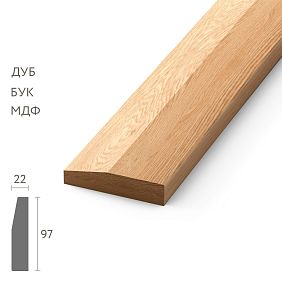
When a manufacturer producesWooden baseboard, they use wood from a specific volume of raw material. This could be several trunks sawn and processed simultaneously. All elements from this batch will have similar characteristics—similar tone, texture, density. But once the batch is finished and new wood enters production, even from the same supplier, the characteristics will change.
The same logic applies towooden furniture handles. Handles from the same production batch will be visually coordinated. Handles from different batches may differ—slightly to a non-professional, but noticeable upon direct comparison.
Our factory also produces:




What exactly can differ
Main parameters by which batches of wooden products differ:
Color. Oak can range from light honey to dark brown depending on growing conditions and harvest time. Beech varies from pale pink to rich reddish. Even when using tinting, the base tone of the wood affects the final result.
Texture. The expressiveness of annual rings, the presence of medullary rays (especially characteristic of oak), the size and frequency of pores—all of this creates a unique pattern for each board. In one batch, the manufacturer tries to select elements with similar textures, but differences between batches are inevitable.
Density. Affects the weight of the product, strength, and ability to hold fasteners. Wood from one region may be denser than from another. This is especially important forfurniture handles, where density affects tactile perception and durability.
Dimensions. Wood is alive. Even after drying to a residual moisture content of 8-10%, it continues to react to changes in air humidity, slightly expanding or contracting. Batches manufactured at different times of the year may differ slightly in size.
Get Consultation
How to avoid the mistake
Order with a surplus. When buyingSolid Wood Skirting Board add 10-15% to the estimated quantity. This compensates for cuttings, possible defects, and, most importantly, creates a reserve in case of future damage to elements.
Record the batch number. Serious manufacturers label products with a batch number. Write it down. If you need to purchase additional baseboards or handles in six months, having the batch number will allow the manufacturer to find raw materials with similar characteristics.
Accept naturalness. Minor variations are not defects but evidence of the material's naturalness. Absolute identity is only possible with plastic. Wood is beautiful in its differences.
Mistake #2: Ignoring the sawing method and wood grade
Radial, tangential, mixed: why it matters
The method of sawing the trunk drastically affects the appearance of the wood. There are three main methods:
Radial sawing—boards are cut perpendicular to the annual rings. Such wood is the most stable, less prone to warping, and has a smooth texture with parallel lines.Oak skirtingRadial sawing — premium segment, expensive but predictable.
Tangential sawing — boards are cut tangent to the annual rings. This wood has a pronounced wavy pattern, a more vibrant texture, but is less geometrically stable. This is the standard option used in most products.
Mixed sawing — a combination of methods, yields maximum wood output from the log, but also maximum texture variability.
If the first batch of baseboards was predominantly radial sawing, and the second — tangential, the visual difference will be obvious. Parallel stripes do not combine with a wavy pattern.
Wood grades: from Extra to C
Wood grade is determined by the presence of natural defects:
Extra grade (Premium) — no knots, uniform color, even texture. Used for elite products. Price is high, availability is limited.
Grade A (First) — small live knots (up to 10 mm) are allowed, minor tone variations. Optimal balance of quality and price for most interior tasks.
Grade B (Second) — live and partially intergrown knots, small resin pockets are allowed, tone variations. Suitable for products intended for painting.
Grade C (Third) — loose knots, sapwood, significant color variations are allowed. Used for technical purposes or under heavy paint coverage.
When you buyWooden handlesIf you initially buy from grade A, and later purchase from grade B, the differences will be significant. The first will be almost perfect, the second — with characteristic knots and tone variations.
Get Consultation
How to avoid the mistake
Clarify when ordering. Ask the seller which sawing method and which wood grade is used in the specific batch. Record this in the documents.
Inspect samples. Before purchasing a large batch, request samples. Evaluate the texture, presence of knots, color uniformity. If you plan to make additional purchases — keep a sample for comparison.
Choose a stable grade. If visual uniformity is critical, buy grade A or Extra. Yes, it's more expensive, but it guarantees minimal variations between batches.
Mistake #3: Not accounting for differences in processing and finishing
Oil, varnish, wax: how the finish changes perception
Even if the wood from two batches is absolutely identical, differences in the final finishing will create a visual difference.wooden skirting board purchasecan be in several finishing options:
Without finish (raw). Pure sanded wood. Color is natural, texture is maximally expressed. Requires subsequent treatment by the owner. Advantage — full control over the finish. Disadvantage — difficulty in achieving an identical result when making additional purchases.
Oil. Penetrates the wood structure, emphasizes the texture, gives a matte or semi-matte sheen. The wood color deepens, becomes more saturated. Different oils (Danish, linseed, tung) give different shades. If one oil was used in the first batch, and another in the second, the baseboards will differ.
Varnish. Creates a protective film on the surface. Can be glossy, semi-gloss, matte. Varnish can emphasize or obscure the texture, depending on the composition. Water-based varnishes change the wood color less, alkyd varnishes impart a yellowish tint. Polyurethane varnishes are the most durable but can give a 'plastic' appearance.
Wax. Gives a soft silky sheen, pleasant to the touch. Protects less than varnish, requires periodic renewal. Wax emphasizes the naturalness of the wood.
Toning + finish. Stains and pigment oils change the wood color, leveling natural variations or creating a radically different shade. Toning is the most complex stage in terms of repeatability.
Why it's difficult to replicate the finish
Professional painting of wooden products is both an art and a science. Dozens of factors influence the result: temperature and humidity in the room, application technique, number of coats, drying time between coats, even the moisture content of the wood itself.
When youbuy wooden handlesin a painted form, they have undergone factory processing under controlled conditions. If in a year you want to purchase more and decide to save money by buying unpainted handles and painting them yourself 'the same color' — the result will almost guaranteed differ.
Even under factory conditions, variations between batches are possible. The dye supplier changed — the shade changed slightly. The equipment was updated — the application technique changed. The wood moisture content varied — the oil was absorbed differently.
Get Consultation
How to avoid the mistake
Buy finished products with a finish. If uniformity is critical, choosefurniture handles with finishfrom the manufacturer. Factory processing is more stable than DIY.
Keep information about the finish. Check with the manufacturer what specific finish was used: brand of oil/varnish, number of coats, application technique. When purchasing additional items, request an identical finish.
Test on samples. If you plan to do the staining yourself, first treat a small sample from the new batch and compare it with the already installed elements under different lighting conditions.
Plan for color tolerance. If you use tintedWooden items, initially choose not solid-color solutions, but ones that allow for natural variations. For example, baseboards with a tone gradient or handles of different shades within the same color palette.
Mistake #4: Lack of acclimatization and failure to comply with storage conditions
Humidity is the enemy of stability
Wood is hygroscopic. It absorbs and releases moisture, reacting to changes in the humidity of the surrounding air. Even properly dried wood with a residual moisture content of 8% will expand in a humid climate and shrink in a dry one.
Imagine a situation: youbuy wooden skirting boardin January, when the heating is at maximum, the humidity in the room is 25-30%. Baseboards from a warehouse (humidity 40-50%) enter a dry environment, begin to release moisture, and shrink slightly. You install them.
Six months pass, summer arrives, the humidity in the room increases to 50-60%. The baseboards absorb moisture and expand. Gaps appear at the joints, corners separate, and the geometry is compromised.
Now you decide to purchase the missing elements. The new batch is delivered in June, the wood is already at equilibrium moisture content with the summer air. You install it immediately. Winter comes, the heating dries the air — the new baseboards shrink more than the old ones, which have already gone through an annual cycle and stabilized.
Result: old and new elements behave differently, visually not matching in width and fit.
Temperature deformations
In addition to humidity, wood reacts to temperature. Storage in a cold warehouse, then a sudden transfer to a warm room — the wood experiences thermal shock. This can lead to micro-cracks, warping, and compromised geometry.
Wooden handles, stored at a temperature of +5°C and then installed on kitchen furniture next to an oven (+40°C), will behave unpredictably. Thermal expansion, change in density, possible cracking of the finish.
Get Consultation
How to avoid the mistake
Acclimatization is mandatory. Any wooden products must lie in the installation room for at least 3-5 days before installation. Ideally, a week. They must reach the same humidity and temperature as the surrounding environment.
Control storage conditions. If you purchase a large batch with a reserve, store the spare elements in the same conditions as the main room. Not on a cold balcony, not in a damp basement — in living rooms.
Use a hygrometer. Measure the air humidity in the room. The optimal range is 40-60%. If the humidity is extreme (below 30% or above 70%), use humidifiers or dehumidifiers. This is beneficial not only for the wood but also for health.
Plan additional purchases considering the season. If possible, make additional purchases in the same season as the main batch. Winter and summer batches, even from the same manufacturer, will have different equilibrium moisture content.
Mistake #5: Neglecting professional installation and fitting
Why even perfect products can look different
Let's say you did everything right: you bought baseboards from one batch with a reserve, ensured acclimatization, checked the grade and finish. But during the installation of the first batch, an experienced craftsman worked, and you decided to install the second batch yourself or hire a cheap contractor.
The result can be disastrous. Corners are cut inaccurately — gaps at the joints. Fastening is too tight — the wood is deformed. Fastening is weak — elements pull away from the wall. The wrong adhesive is used — stains on the wood. The wrong sealant for joints is chosen — contrasting seams.
Evenbuy wooden skirting boardpremium-quality is not enough. Installation precision is crucial. A 1 mm error on a 2-meter long joint is a noticeable gap. An incorrect miter cut — a gap in the corner that no sealant can mask.
The situation is similar withwooden handles. If the first handles are installed on perfectly prepared fronts, with precise hole markings, and the second ones — on hastily drilled holes — visually they will look like products of different quality, even if they are from the same batch.
Fitting is the key to visual unity
A professional craftsman knows: wood requires fitting. Even elements from the same batch are not absolutely identical. The grain can be oriented differently, knots can be in different places, the shade can vary within acceptable limits.
When installing baseboards, the craftsman lays out all the elements, evaluates them, selects them so that the most uniform sections are in visible places, and less presentable ones are in corners and behind furniture. Joins elements so that the grain is coordinated, and the direction of the fibers matches.
When installing furniture handles, a professional pays attention to the direction of the fibers, the orientation of the grain. If the handle is asymmetrical, they ensure that all handles on the front are oriented the same way. This seems like a small detail, but it is precisely from such details that the overall impression is formed.
Get Consultation
How to avoid the mistake
Hire professionals. If the budget allows, entrust installation to specialists with experience working with wood. Saving on installation can negate investments in quality materials.
Instruct the installers. If installing yourself or hiring a contractor, discuss the importance of fitting, precision, and using the correct materials. Show examples of quality installation.
Use the correct fasteners. Forsolid wood skirtinguse nails or screws followed by masking with matching putty. For MDF, clips are suitable. For handles — only use the standard fasteners included in the set.
Seal joints correctly. Acrylic sealant matching the wood tone, carefully applied and smoothed — the key to invisible seams. Silicone sealant is not suitable for wood.
Plan a time buffer. Do not install wooden products in a hurry. Haste is a source of errors. Allocate sufficient time for acclimatization, marking, careful installation, and finishing.
Additional recommendations for minimizing differences between batches
Work with trusted manufacturers
Product quality begins with production quality. Serious wooden product manufacturers invest in process stability: precise equipment, raw material moisture control, standardized processing and coating technologies.
A company with a well-established production can ensure minimal variations between batches. Even if the wood comes from different regions, at the production stage it is sorted, calibrated, and selected so that the finished products are as close as possible in characteristics.
Use article numbers and labeling
Modern manufacturers label products with article numbers that contain information about the material, size, coating, and sometimes even the batch. Record article numbers when purchasing. This will facilitate purchasing identical elements.
For example,Wooden baseboardmay have an article number PLT-001-80-DUB-OIL, where PLT-001 is the profile model, 80 is the height in mm, DUB is oak, OIL is oil coating. When reordering, specifying this article number will get you the closest possible product.
Order comprehensively
If you plan to use several types of wooden products in one room — baseboards, trims, handles, moldings — order them simultaneously. This guarantees that all elements will be from batches of wood with similar characteristics and identical coating.
Solid Wood Itemsproduced within the same order will be visually coordinated. This is especially important for interiors where wooden elements play a key role.
Create a reserve
The best insurance against color variation issues is a reserve from the same batch. When buying baseboard, add 15-20% to the calculation. Part will go to trimmings and fitting, part will become a reserve in case of future damage.
The situation is similar withfurniture handlesthe same logic. You buy 20 handles for the kitchen — take 25. The reserve will be useful if one handle breaks, or you want to add a cabinet.
Document purchases
Keep all documents related to the purchase of wooden products: receipts, invoices, certificates. Photograph labels on the packaging, which may indicate the batch number, production date. This information is critically important when reordering.
Create a folder (physical or electronic) where you store all data about materials used in the interior. This will make life easier during repairs or upgrades.
Practical case: how to correctly reorder baseboard after a year
Let's imagine a real situation. A year ago you renovated an apartment, installedOak baseboardwith oil coating. Now you are renovating another room and need the same baseboard. How to proceed?
Step 1. Find information about the initial purchase. Look for receipts, invoices, photos of the packaging. You need the article number, manufacturer, preferably the batch number.
Step 2. Contact the manufacturer or seller. Inform them that you purchased a year ago, provide all available information. Ask if it is possible to select baseboard from a batch with similar characteristics.
Step 3. Request samples. Ask to send a sample of the new baseboard. Compare it with the installed one under different lighting — daylight, evening, artificial. Assess the difference in color and texture.
Step 4. Make a decision. If the differences are minimal — order. If significant — consider options:
-
Replace the baseboard throughout the entire apartment with new ones (expensive, but guarantees uniformity).
-
Use new baseboards only in a new room, visually separating the spaces (with a door, different floor covering).
-
Create an intentional contrast by using baseboards of a different color/wood species, making it a design decision.
Step 5. Acclimatization and professional installation. If you decide to install, acclimatization and the work of a good craftsman are mandatory.
FAQ: answers to frequently asked questions
Can you buy wooden baseboards and be confident in their identity when purchasing more later?
Absolute identity cannot be guaranteed due to the natural variability of wood. But with reliable manufacturers, differences are minimal and unnoticeable with proper installation. Record the article number and batch number for maximum closeness.
How do wooden handles from different batches differ?
They may differ in wood shade, expressiveness of texture, presence and size of knots (within the declared grade), and coating characteristics. Differences are usually minor when purchasing from the same manufacturer.
How long can you store spare baseboards?
Under proper conditions (room temperature, humidity 40-60%, protection from direct sunlight), wooden products can be stored for decades. The main thing is stable conditions and the absence of mechanical damage.
Do furniture handles need to be acclimatized before installation?
Yes, although due to their small size, handles are less critical to acclimatization than long products (baseboards, trims). 1-2 days in the installation room is sufficient.
Is it possible to independently match baseboards from different batches so that they match?
Difficult without experience. Professionals evaluate many parameters: tone under different lighting, direction of texture, density, even the smell of the wood. It's better to consult with the manufacturer or a specialist.
Which wood grade should you choose to minimize differences between batches?
Grade Extra or A. The higher the grade, the fewer natural variations, the easier it is to ensure visual unity between batches. But the price is also higher.
If you bought unfinished baseboards, can you buy pre-finished ones later and adjust the color to match?
Theoretically yes, but in practice it's difficult. Factory finishing is more stable than DIY. It's better to either have all products unfinished (and paint them yourself) or all with factory finishing.
How to check wood moisture content when purchasing?
Professionally - with a moisture meter (pin-type or non-contact). The device shows the percentage of moisture. The norm for interior products is 8-12%. Some manufacturers indicate moisture content in certificates.
Is it worth buying baseboards and handles from different manufacturers?
Not advisable if you plan for visual unity. Different manufacturers use different raw materials, technologies, and coatings. It's better to make a comprehensive purchase from one.
What to do if differences between batches are still noticeable after installation?
Options: local tinting to even out the color (a job for a professional), using decorative elements for visual separation of zones, complete replacement (radical but effective). Prevention is always better than cure - proper selection from the start.
Conclusion: quality begins with understanding the material
Wood is a noble, living, but demanding material. Buying wooden baseboards or buying wooden handles is just the beginning. It's important to understand the nature of wood, consider its characteristics, work with trusted manufacturers, ensure proper storage conditions, and professional installation.
The five mistakes we've analyzed - underestimating variability, ignoring the cutting method and grade, not accounting for differences in finishing, lack of acclimatization, neglecting quality installation - are the quintessence of problems buyers face. But all of them are solvable with a competent approach.
STAVROS has been working with natural wood for over twenty years, creatingsolid oak and beech products. Every element - frombaseboardstofurniture handles- undergoes strict quality control, is produced on high-precision equipment, and goes through multi-stage drying and processing.
STAVROS understands: product stability is not just about equipment and technology, but also about a systematic approach. Controlling raw material humidity, sorting by shade and texture, standardized coating formulations, batch labeling — all this guarantees that when making additional purchases, the customer will receive a product with maximally similar characteristics.
wooden baseboards STAVROSare made from selected kiln-dried wood with a residual moisture content of 8±2%. This minimizes deformation after installation and guarantees geometric stability.Furniture Handlesare produced using 3D milling, which ensures element uniformity within a batch and minimal variations between batches.
By choosing STAVROS products, you receive not only high-quality items but also professional support. The company's managers will help select elements from similar batches for additional purchases, provide installation consultation, and supply all necessary technical documentation.
buy wooden skirting boardorbuy wooden handlesfrom STAVROS is an investment in durability, beauty, and peace of mind. It's the confidence that in one, two, or five years, you'll be able to purchase missing elements and they will seamlessly integrate into your existing interior.
Wood is a timeless material. With proper care, wooden interior elements last for decades without losing their appeal. Avoid common mistakes, work with professionals, choose trusted manufacturers—and your interior will delight with the harmony of natural wood for many years.