Article Contents:
- Why height matters: standard 710–730 mm
- Carga: the invisible support of the structure
- Fasteners: reliable connection of the tabletop and supports
- Compensation for floor unevenness: stability on any surface
- Materials and their impact on stability
- Support shapes and load distribution
- Number of supports: four, three, or central column?
- Compatibility with tabletop: not everything matches with everything
- Distance between supports and free space
- Floor protection and acoustic comfort
- Painted or unpainted: not just an aesthetic question
- Restoration and replacement: new life for old furniture
- Combination with other furniture elements
- Loads and safety factor
- Specialized solutions for different types of tables
- Seasonal deformations and their compensation
- Restoration of vintage supports
- Custom-made support fabrication
- Installation: sequence of operations
- Operation and Maintenance
- Components and accessories
- Trends and classics: what to choose?
- Psychology of perception: how legs affect the interior
- Safety questions
- Economic Aspects
- FAQ: Answers to Popular Questions
- Integration with storage systems
- Ecological Aspects
- Historical perspective
- The future of furniture legs
- Psychology of choice
- Collaboration with professionals
- Final reflections
- About the Company STAVROS

When it comes to creating or updating furniture, choosing the right supports becomes a task requiring careful attention and deep understanding of structural features. Can you simply take the first elements you find and hope for the best? Unlikely. A table is not just a surface on four legs. It is an engineering structure where every detail plays its role, affecting the stability, durability, and aesthetics of the entire piece.
Imagine: you found the perfect tabletop — a solid oak with noble grain, polished to silky smoothness. Or perhaps it's a modern artificial stone slab, cold and austere. But without properly selected supports, this beauty will remain lying somewhere in the corner of a workshop or store. Because buy legs for a table — it is not simply purchasing four identical elements. It is selecting a base that ensures structural stability, withstands planned loads, and harmoniously integrates into the intended interior.




Why height matters: standard 710–730 mm
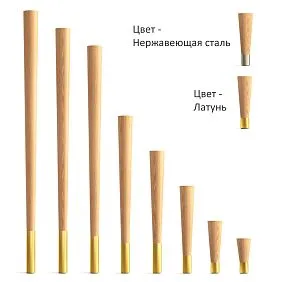
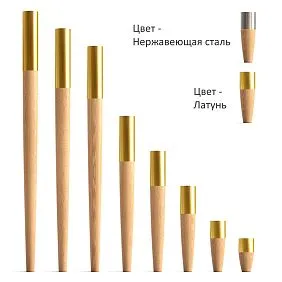
Let’s start with basic parameters often overlooked. Table height is not an arbitrary number invented by manufacturers. It is the result of decades of ergonomic research, taking into account human anatomy, comfort during work and meals. The standard height for a dining or work table is 710–730 mm from the floor to the top surface of the tabletop.
Where did these numbers come from? They are calculated based on the average height of an adult and the optimal hand position when seated. When elbows are bent at a right angle and forearms rest freely on the surface, minimal stress is placed on the shoulder girdle and spine. A table that is too high will force you to raise your shoulders, leading to trapezius muscle strain. A table that is too low will force you to hunch over, overloading the lumbar region.
When you decide buy legs for a tableAlso, it is important to consider the thickness of the future tabletop. If the slab is 40 mm thick, the leg length should be around 670–690 mm. For a 20 mm tabletop, this figure increases to 690–710 mm. It may seem like a minor detail — just a couple of centimeters. But it is precisely these millimeters that determine whether sitting at the table will be comfortable, whether legs will tire from improper positioning, and whether the back and neck will start aching after an hour of work.
Of course, there are exceptions. Bar tables are designed at a height of 1000–1100 mm, coffee tables — 400–500 mm, children’s models — 520–580 mm depending on the child’s age. But for a classic dining or writing table, the 710–730 mm range remains the golden standard, proven by time and confirmed by countless studies.




Carga: the invisible support of the structure
Now let’s talk about something rarely mentioned in product descriptions but critically important for the longevity of the table. Carga — this is a horizontal frame connecting Table legs between each other and serving as the base for attaching the tabletop. Many consider it a decorative element or even ignore it, preferring to attach the tabletop directly to the upper ends of the legs. This is an error that will eventually lead to structural loosening.
The carga performs several functions simultaneously. First, it distributes the load. When you rest your elbows on the edge of the table, the pressure force is not concentrated at the point of leg attachment, but evenly distributed across the entire frame. Second, the carga prevents lateral displacement. Even if the legs are perfectly perpendicular to the floor, without horizontal connection, they will gradually shift under dynamic loads — movement of the table, accidental bumps, uneven pressure.
Third, the carga creates a rigid spatial structure. Imagine a rectangle made of four rods connected at the corners. If you slightly press on one of the corners, the shape deforms into a parallelogram. Add diagonal bracing or attach a plane to this rectangle — and the structure becomes immovable. The carga with the tabletop attached to it creates exactly such a rigid system.
When you choose Furniture legs— pay attention to how the carga is attached. The optimal option is a tongue-and-groove joint with gluing and additional fixation using screws or dowels. Some manufacturers offer ready-made solutions — legs already with an integrated frame mounting system. This is convenient for those who assemble tables themselves and lack experience in carpentry.
Our factory also produces:
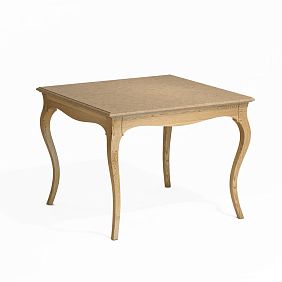
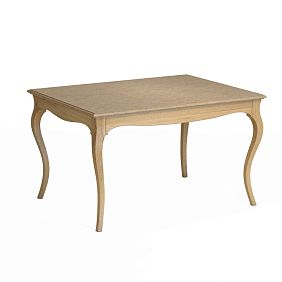


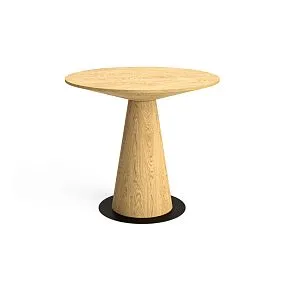
Fastening: reliability of tabletop and leg connection
Let’s move on to the question that causes the most debate among craftsmen and hobbyists: how to properly secure the tabletop to the legs? There are many methods, each with its own advantages and limitations. The choice depends on the tabletop material, type of furniture legs, expected loads, and aesthetic preferences.
Let’s start with the simplest — screwing through the carga. This method is suitable for solid wood tabletops 30 mm thick and plywood 18 mm thick. Screws are screwed from below, through the carga into the tabletop, at a slight angle for better fixation. It is important not to overdo the length of the fasteners — they should not protrude from the front surface. For a 40 mm tabletop, use screws 30–35 mm long. In this case, pre-drilling holes is necessary to avoid cracking the wood.
Second option — metal mounting plates in the shape of the letter Z or Г. One side of the plate is attached to the carga, the other — to the tabletop. This method is good because it allows the solid wood tabletop to "breathe" — expand and contract with changes in air humidity without deforming. Rigid screwing may lead to cracks during seasonal humidity fluctuations, especially if the table is near a radiator.
Third method — bolted connection with built-in nuts. Blind holes are drilled into the tabletop, into which nuts are glued. The bolt passes through the carga and is screwed into the nut. This method ensures maximum strength and allows disassembling the structure without damage if needed. Ideal for heavy stone or thick solid wood tabletops.
There are also specialized fastening systems designed for specific types of furniture legs. For example, some models have built-in threaded bushings at the top, into which matching bolts with wide washers are screwed. This solution simplifies assembly and ensures reliable fixation.
Get Consultation
Compensating for floor unevenness: stability on any surface
Even the strongest and correctly assembled table will wobble if the floor has a slope or local unevenness. Unfortunately, perfectly level floors in real life almost do not exist. Old wooden floors sag, screed cracks and deforms, tiles are laid with tolerances. A height difference of 2–3 mm over a meter — this is normal, not an exception.
How to solve this problem? There are several approaches. The first and simplest — placing various materials under the short leg: cardboard, plastic, coins. This works, but looks unattractive and is not long-lasting. Cardboard quickly compresses, especially if the table is heavy. Coins slide off when moving furniture.
The second option — adjustable legs. These Furniture Legs and Supportshave a threaded mechanism with a support platform at the bottom. By rotating this platform, you can adjust the height of each leg within 10–20 mm, achieving ideal stability. Such systems are especially relevant for kitchen tables, where stability is crucial during food preparation and dough work.
The third approach — felt or rubber caps on the ends of legs. They do not compensate for large height differences, but effectively dampen minor irregularities and protect flooring from scratches. Felt is good for parquet and laminate, rubber — for tiles and linoleum. There are also Teflon caps that not only protect the floor but also make table movement easier.
The fourth method, used in professional furniture — using double support plates with a damping layer between them. This construction allows the lower plate to follow the micro-relief of the floor, ensuring full contact area. This reduces point pressure and prevents legs from sinking into soft flooring.
Materials and their influence on stability
Now let’s address the question: what materials should ideal legs be made of? Wood, metal, plastic, composites — each material has its own characteristics that directly affect the structure’s stability.
Wood — a classic choice for table legsSolid oak, beech, ash, walnut have sufficient strength to withstand significant loads without deformation. Wooden legs are aesthetically universal — they look natural in both classic and modern interiors. Important note: wood must be properly dried to 8–12% moisture. Under-dried wood will shrink over time, causing gaps in joints and disrupting the table’s geometry.
Metal — a choice for those who value maximum strength and industrial aesthetics. Steel pipes with square or round cross-sections, aluminum profile legs can withstand enormous loads with minimal wall thickness. This allows creating visually light structures that are incredibly stable. The drawback of metal legs is that they require corrosion protection: powder coating, chrome plating, or special coatings.
Combined solutions combine the advantages of different materials. For example, wooden legs with internal metal reinforcement combine the warm texture of wood with the strength of steel. Or a metal frame clad with wooden panels — such a construction looks like solid wood but has greater load-bearing capacity.
Plastic and composites are used less often, mainly for lightweight garden or temporary furniture. Modern plastics reinforced with fiberglass are strong enough for small tables, but cannot compete with wood or metal in terms of durability and prestige.
Leg shape and load distribution
Leg geometry — this is not only an aesthetic issue, but an engineering challenge. Round, square, conical, cabriole — each shape distributes load differently and affects the table’s stability.
Cylindrical legs are universal and easy to manufacture. Load is evenly distributed across the entire cross-section, providing good strength with relatively small diameter. For a dining table for four people, legs with a diameter of 60–70 mm are sufficient. For a large table for eight or more people — 80–100 mm.
Square and rectangular legs are visually perceived as heavier and more reliable. They indeed have an advantage under lateral loads — they are harder to displace because the support area is larger. However, sharp corners can be hazardous, especially in rooms where children frequently move around.
legs for furniture to buy buy furniture legs is suitable for heavy stone or thick solid wood tabletops.
Cabriole — curved legs in Baroque and Rococo style — are not only decorative elements but also functional solutions. The S-shaped curve creates additional support points, distributing load in a complex manner and giving the structure unexpected strength despite its apparent fragility.
Number of legs: four, three, or central column?
Traditional scheme — four legs at the corners of the tabletop. This is a time-tested solution ensuring reliability and predictability. But it is not the only option and not always optimal.
Three legs form a stable structure on any, even very uneven surface. Physical law states: three points always lie in one plane. Four points may not lie in one plane if the floor is uneven, causing the table to wobble. Three-legged tables are popular in cafes and restaurants precisely for this reason. But there is a nuance: legs must be positioned so that the tabletop’s center of gravity falls within the triangle formed by the support points. Otherwise, the table may tip over when resting on the edge.
Central column — an elegant solution for round and some rectangular tables. A massive central leg frees up space under the tabletop, allowing chairs to be freely placed around the perimeter. However, the central column must have a wide base — a crossbar or circular platform — to ensure stability. Minimum base radius — half the tabletop radius for round tables.
Six or more legs are used for very large tables — conference tables, banquet tables longer than three meters. Additional intermediate legs prevent the tabletop from sagging under its own weight and the weight of items placed on it.
Compatibility with tabletop: not everything matches with everything
Here we approach a critically important aspect often ignored: not all legs are suitable for any tabletop. Mismatch may lead not only to aesthetic discord, but also to structural problems.
A solid oak tabletop 50 mm thick weighs about 35–40 kg per square meter. Such a slab requires strong, substantial legs with a diameter of at least 80 mm. Thin legs will look comical and, worse, may not withstand the load. On the other hand, it is absurd to install a lightweight plywood or MDF tabletop 20 mm thick on massive legs — resulting in an unproportional structure.
The tabletop material also matters. Glass requires special mounts with soft gaskets to avoid point stress and cracking. Stone — artificial or natural — is very heavy: a granite tabletop 30 mm thick weighs about 80 kg per square meter. It requires reinforced furniture legs and wide apron to distribute weight.
Stylistic compatibility is equally important. Baroque carved legs look absurd under a rough slab countertop with preserved bark. Minimalist metal legs clash with a classic Karelian birch countertop with inlays. Of course, eclecticism has the right to exist, but it requires a refined sense of proportion and understanding of compositional laws.
Distance between legs and freedom of space
How far apart should the legs be? This question determines not only the structural strength but also the usability of the table. Legs placed too close together hinder moving chairs, brushing against seated people's legs. Legs placed too far apart create a risk of countertop sagging.
For a rectangular table, the optimal layout is legs positioned 50–100 mm from the edge along the long side and 100–150 mm along the short side. This ensures a safety margin against tipping when resting on the edge and leaves sufficient space for feet.
For a round table, legs should be placed on a circle with a diameter approximately 70% of the countertop diameter. Thus, for a 1200 mm diameter table, legs are placed on a circle with a diameter of 800–850 mm.
When using a central column, its diameter or crossbar size must be at least 600 mm for a 1000 mm diameter table and at least 800 mm for a 1400 mm diameter table. Smaller dimensions create a risk of tipping.
Floor protection and acoustic comfort
Rigid contact between wood or metal and flooring causes two problems: floor damage and noise when moving furniture. Scratches on parquet, dents on linoleum, chips on tiles — all are results of the absence of protective elements on leg ends.
Felt pads — the simplest and most effective solution. They glide softly over surfaces, leaving no marks, and noticeably reduce noise. The downside — felt wears down over time and accumulates dust, which can act as an abrasive. Pads need to be replaced periodically.
Rubber or silicone pads provide better grip with the floor, preventing table sliding. This is important on smooth surfaces — tiles, polished stone. Rubber does not wear out as quickly as felt, but over time it hardens and loses elasticity.
Teflon pads — premium solution. They practically do not wear out, have minimal friction coefficient, and do not damage even delicate finishes. The downside — high cost.
If you plan to Buy furniture legsPay attention to models with built-in floor protection systems. This will save time on subsequent adjustments and guarantee proper pad installation.
Painted or unpainted: not just an aesthetic question
Can you buy pre-painted legs or purchase raw blanks and finish them yourself? Both options have their advantages.
Pre-painted furniture legs Save time and ensure professional finish quality. Factory paint usually includes multi-layer application of primer, pigment, and protective lacquer with intermediate sanding. Achieving such a result at home is difficult. Moreover, industrial drying in special chambers ensures full polymerization of the coating, guaranteeing its longevity.
Unpainted blanks offer creative freedom. You can choose any stain shade, gloss level of lacquer, apply patina or artificial aging techniques. You can leave the natural wood color, emphasizing its texture with transparent oil only. This is especially relevant if you want to precisely match the leg color with your existing countertop.
There is also a third option — order custom painting. Many manufacturers offer this service, allowing you to get professional finish quality in your desired color.
Restoration and replacement: new life for old furniture
Often, the table as a whole remains sturdy, the countertop is in good condition, but legs have become loose, lost their appearance, or simply have become outdated aesthetically. In this case, replacing legs is an excellent way to refresh furniture without significant expenses.
The replacement process is not complicated if you follow a certain sequence. First, dismantle the old elements, carefully unscrewing the fasteners. It is important to remember or photograph the mounting scheme — this will help correctly install the new parts. Then clean mounting areas from residual glue, burrs, and old hardware.
If the apron is in good condition, it can be reused. If not, you will need to fabricate a new one or purchase a ready-made one. Some manufacturers offer kits including legs, apron, and all necessary fasteners — this simplifies the task.
When installing new legs, it is critically important to ensure perpendicularity. Even a slight tilt — two to three degrees — will cause table instability. Use a square and level for control. Tighten fasteners evenly, gradually, alternating opposite mounting points to avoid misalignment.
After installation, check the table’s stability on a flat surface. If it wobbles, adjust the leg height (if adjustable) or use pads to compensate for unevenness.
Combination with other furniture elements
A table rarely exists in an interior in isolation. Most often, it forms an ensemble with chairs, buffet, and display cases. Table legs must harmonize with chair legscreating visual unity in the space.
If you are furnishing a dining room in a classical style, choose legs with carved elements that match the chairs’ decoration. Grooves, volutes, floral ornaments on table legs should correspond to similar details on chairs. However, full identity is not mandatory — sufficient stylistic affinity is enough.
In modern interiors, contrast is popular: a heavy table on thin metal legs sits alongside plastic chairs on wooden legs. Such eclecticism requires confident compositional sense, but when executed properly, it creates a dynamic, lively space.
For a kitchen table, it is important to consider the height of the bar counter if present. A dining area at a standard height of 730 mm and a bar counter at 1050 mm require different types of supports, yet they must visually form a unified whole. A solution could be using a single material — for example, all supports made of chrome steel or all from solid oak — with different geometries suited to different heights.
For a kitchen table, it is important to consider the height of the bar counter if present. A dining area at a standard height of 730 mm and a bar counter at 1050 mm require different types of supports, yet they must visually form a unified whole. A solution could be using a single material — for example, all supports made of chrome steel or all from solid oak — with different geometries suited to different heights.
Loads and safety factor
How much should the support withstand? This question concerns everyone who is planning to Buy legs for furnitureLet’s examine the numbers and real usage conditions.
A four-person dining table carries a static load of approximately 40–60 kg during use: the weight of dishes, plates, drinks, and occasional elbow rests. The weight of the tabletop itself adds another 20–40 kg depending on the material and size. In total — about 100 kg distributed across four supports, i.e., 25 kg per support.
But these are average values in a calm environment. What if someone decides to sit on the edge of the table? Or a child stands on a chair and leans their hands on the tabletop? Dynamic load may be several times greater than static load. Therefore, supports must have a safety factor of at least three. That is, each support must withstand at least 75 kg without deformation, and preferably — 100 kg.
Wooden supports made of hardwoods with a 60 mm diameter easily withstand loads of 150–200 kg. This is under the condition that the wood fibers run along the axis of the support, without knots or cracks. Metal tubes with a square cross-section of 40×40 mm and 2 mm wall thickness can withstand even more — up to 300 kg per support.
However, the strength of a support is not only its ability to withstand vertical pressure. Resistance to lateral loads is also important. When a table is moved, the supports experience shear forces. When someone leans on the edge of the tabletop, a bending moment is created. That is why a rigid connection of supports through a rail — it distributes lateral loads and prevents individual elements from bending.
Specialized solutions for different types of tables
Kitchen table, desk, coffee table, dining table in the living room — each type has its own characteristics that influence the choice of supports.
A kitchen table is subjected to the most intensive use. It must withstand not only the weight of dishes, but also mechanical impacts during food preparation, dough rolling, accidental impacts, and liquid spills. Therefore, for the kitchen, it is preferable to use legs for a table to buy hardwood with a reliable moisture-resistant finish or metal with anti-corrosion protection. Adjustable supports are especially relevant here, since kitchen floors are rarely perfectly level.
A desk requires maximum stability — any wobbling interferes with writing and working. At the same time, it is important that the supports do not interfere with legs. The optimal scheme is two side supports or a central support with a wide base shifted toward the rear of the tabletop. Console constructions are also popular, where the tabletop is mounted to the wall, and the support is installed only on the front side.
A coffee table differs by its low height (usually 400–500 mm) and decorative function. Here, more daring design solutions are allowed: curved supports, asymmetrical constructions, bright colors. The loads on Legs for coffee tables are small — a few books, a cup of coffee, a TV remote — so strength takes a back seat, yielding to aesthetics.
A dining table in the living room often serves as the centerpiece of the composition. Its supports must not only be functional but also impressive. Carved balusters, precisely shaped elements, inlays, patination — all this is appropriate for a formal table. At the same time, it is important not to overdo it: overly decorated supports may visually weigh down the structure and clash with the tabletop.
Seasonal deformations and their compensation
Wood — a living material that reacts to changes in humidity and temperature. In winter, when heating is turned on, the air in the room becomes drier, and the wood releases moisture, drying out. In summer, especially during rainy periods, humidity increases, and the wood swells.
For massive supports, these processes are not critical — changes in linear dimensions are fractions of a percent and practically imperceptible. But if the supports are rigidly fixed to the rail, and the rail is rigidly screwed to the tabletop, internal stresses may arise, leading to cracking or deformation.
Professional carpenters use several methods to compensate for seasonal deformations. The first — attaching the tabletop to the rail not rigidly, but through special mounting plates that allow the tabletop to shift by several millimeters. The second — using dowels (wooden pins) to connect supports to the rail instead of screws. Dowels allow slight movement of elements without damaging the connection.
The third method — correct orientation of wood fibers. If the tabletop is made from longitudinally cut boards, its width will change in the transverse direction. The rail should be attached so as not to hinder these changes. Ideally, the fibers of the rail should run perpendicular to the fibers of the tabletop.
Restoration of vintage supports
An antique table with original 19th-century supports — a true find for connoisseurs. But often these supports require restoration: the finish has cracked, chips have appeared, connections have loosened. Can they be restored by oneself?
The first stage — assessment of condition. If the support has cracked along the grain, it can be glued. The crack is opened with a fine saw, thoroughly cleaned of dust and old glue, then carpenter’s glue is applied and clamped with clamps. It is important to ensure even pressure along the entire length of the crack and to wait at least one day until the glue fully hardens.
If the support has chips or lost decorative elements, they can be restored using similar wood. A matching insert is cut, shaped to fit, glued in, and after drying, carefully sanded to achieve a smooth transition. Then the new fragments are stained with a dye to match the original wood color and sealed with varnish.
Loosened connections are reinforced by introducing epoxy resin into old holes or by reinforcing with metal pins. If the rail has detached from the support, the connection is completely disassembled, old glue residue is removed, a new tenon or mortise is made if necessary, and then reassembled using modern carpenter’s glue.
Restoration of the finish — the most delicate stage. Old varnish or shellac is carefully removed with mild solvents, trying not to damage the patina — the natural darkening of wood that gives antique furniture its noble appearance. Then a new finish is applied, usually several layers of shellac or oil-based varnish, with intermediate polishing.
Manufacturing supports to order
Sometimes ready-made solutions do not fit: a non-standard height, unique shape, special decor is needed. In this case, consider the option of manufacturing supports to order.
Modern workshops equipped with CNC lathes and milling centers can reproduce almost any shape. You provide a sketch, photo, or even just a verbal description, and within a few weeks, you receive finished items perfectly matching your vision.
The advantage of custom manufacturing is absolute freedom in choosing parameters. You can order supports of exact height according to your tabletop thickness, select any wood species, determine the surface finish level and coating type. You can even request reproductions of supports from an antique table to create an exact replica or replace lost elements.
The downside is a higher price compared to mass-produced items and the need to wait. Manufacturing a set of four supports usually takes from two weeks to a month, depending on the complexity of the shape and the workshop’s workload.
Installation: sequence of operations
Suppose you’ve purchased ideal supports and are ready to assemble the table. Where to start to ensure a flawless result?
Step one: preparation. Lay out all components on a flat surface: supports, apron, tabletop, fasteners. Check the completeness of the set, ensuring all parts match each other in size and style. Inspect the components for defects — cracks, chips, unevenness.
Step two: marking. On the tabletop (underside), mark the mounting points for the supports. Use a tape measure and a square to ensure symmetry. The distance from the edge of the tabletop to the center of the support is usually 80–120 mm, but may vary depending on table size and support design.
Step three: assembling the base. Connect the supports to the apron, forming a frame. If using a dowel joint, apply glue to the mortises and dowels, assemble the structure, and clamp it. Check the frame’s squareness by measuring the diagonals — they must be equal. Leave it for one day for the glue to fully cure.
If using bolted connections, tighten the bolts evenly, moving from one corner to the opposite, to avoid misalignment. Do not tighten immediately to full torque — first, pre-tighten all bolts, check the geometry, and only then fully tighten.
Step four: attaching the tabletop. Turn the assembled base (supports up) over, place the tabletop face down on it. Align it so that overhangs are equal on all sides. Mark the mounting points. Drill pilot holes (slightly smaller than the screw diameter) to prevent wood cracking.
Drive in the screws or install the fastener plates according to the chosen method. If the tabletop is solid wood, use fasteners that allow for seasonal wood deformation compensation.
Step five: final inspection. Turn the table over and place it on a flat surface. Check its stability by gently rocking it. If the table rocks, adjust the support height or install shims. Inspect all connections, ensuring fasteners are securely tightened but not over-tightened.
Operation and Maintenance
Proper care extends the life of furniture for decades. What should you know about maintaining a table?
Regular cleaning. Wipe supports with a damp, soft cloth to remove dust and dirt. Avoid aggressive chemical cleaners — they may damage the finish. For wooden supports, use specialized furniture polishes containing wax or natural oils.
Protection from moisture. Wooden Furniture Legs and Supports fears prolonged contact with water. If liquid spills on the floor, immediately wipe it up. Do not place the table in areas where constant moisture is possible — near an aquarium, humidifier, or running radiator.
Periodic finish renewal. Every few years, wooden supports should be refinished. Lightly sand the surface with fine-grit sandpaper (grit 220–320), remove dust, and apply a new layer of varnish or oil. This restores the protective properties of the finish and refreshes the appearance.
Fastener inspection. Check bolt and screw tightness once a year. Due to vibrations during use and seasonal wood deformation, fasteners may loosen. Tighten any loosened connections.
Floor protection. Monitor the condition of the felt pads on the ends of the supports. Worn felt pads lose protective properties and may scratch the floor. Replace them as needed.
Components and accessories
In addition to the supports, creating a complete table may require additional elements. What should you consider?
Apron. If you purchase only supports, you will need to fabricate or order the apron separately. The optimal cross-section for a dining table apron is 60×40 mm or 70×50 mm. Material — the same wood species as the supports, or contrasting for decorative effect.
Fastening elements. Screws, bolts, nuts, washers, and fastener plates must match the construction and load requirements. For wood, use wood screws with partial threads — the smooth portion under the head allows tight connection of parts. For metal supports — metric bolts.
Angles and brackets. If the design includes additional reinforcement, Decorative brackets for shelves they can also serve a functional role, connecting supports to the apron or tabletop at an angle and adding additional rigidity to the structure.
Adjustable screws. If you plan to install the table on an uneven floor, purchase a set of adjustable support pads. They screw into the lower ends of the supports and allow independent height adjustment of each support.
Protective pads. Felt, rubber, or Teflon pads protect the floor from damage. Choose pad size matching the support diameter — too small will not provide adequate protection, too large will look awkward.
Trends and classics: what to choose?
Fashion changes, but good taste endures. How to avoid mistakes when choosing between a trendy style and proven classic?
Minimalism is currently in trend — thin metal supports, almost invisible, creating a floating tabletop effect. It’s beautiful, modern, but requires perfect proportionality. Even the slightest miscalculation — and the structure looks flimsy or disproportionate.
Geometric shapes are also popular — supports shaped like inverted pyramids, prisms, trapezoids. Such solutions give the table sculptural expressiveness, turning a utilitarian item into an art object. But geometry demands perfect execution — any imperfection becomes obvious.
Classic turned legs never go out of style. Balusters, fluting, spherical elements — all of this has been tested over centuries and guarantees aesthetic success. When you choose buy furniture legs classic forms, you invest in timeless design that will remain relevant for ten and twenty years.
Natural wood with pronounced texture — a trend that is becoming classic. Legs made of solid wood with preserved natural grain, coated with matte oil, look organic in any interior — from Scandinavian minimalism to eco-style.
Perception Psychology: How Legs Affect the Interior
Apparently, legs are a functional element, but they significantly affect the perception of space. Thick, massive legs visually weigh down the table and the room as a whole, creating a sense of stability, but reducing the illusion of space. Thin legs lighten the structure, making it airy, but may create an impression of fragility.
Dark legs against a light floor create contrast, drawing attention to the table and making it a compositional center. Light legs on a light background blend in, allowing the tabletop to be the focal point. These effects should be considered when choosing.
The height at which the leg ends and the tabletop begins also affects perception. If the apron is close to the top edge of the leg, the table appears more unified, monolithic. If there is a gap or noticeable apron between the leg’s end and the tabletop, the structure reads as assembled, which can be an advantage (demonstration of assembly skill) or a disadvantage (feeling of temporariness).
Safety Issues
Safety is an aspect that cannot be ignored, especially if there are children or elderly people in the house.
Sharp corners. Square and rectangular legs have sharp edges, which are easy to bump into. If there are small children in the family, it is better to choose cylindrical legs or models with rounded edges. There are also protective corner caps, but they rarely look aesthetically pleasing.
Stability. The table should not easily tip over. Check this by carefully tilting the table, resting on the edge of the tabletop. If the table easily lifts off the floor with minimal effort, the structure is not sufficiently stable. Perhaps wider leg bases or an additional central leg are needed.
Connection strength. All connections must be secure. A wobbly table is dangerous — it may suddenly collapse or tip over. Regularly check the fasteners and tighten them as needed.
Sliding. The table should not slide across the floor during normal use, but should move easily during cleaning. Properly selected leg caps solve this issue.
Economic Aspects
How much does it cost? buy legs for a tableAnd what factors affect the price?
Material. Legs made of pine or birch are cheaper than those made of oak or ash. Exotic species — wenge, padauk, teak — are significantly more expensive. Metal legs made of ordinary steel with powder coating are affordable, while stainless steel or brass will cost more.
Processing complexity. Simple cylindrical legs made on a lathe are relatively inexpensive. Carved legs with handwork, each unique, may cost tens of times more.
Finish. Unfinished legs are the most affordable. Factory finish increases the price by 20–40%. Complex multi-layer finishes with patina, gilding, or aging effects may double the cost.
Brand and quality. Well-known manufacturers guaranteeing high-quality materials and craftsmanship set higher prices. But this premium is justified — you receive products made from properly dried wood, professionally processed and finished, which will last for decades.
With a limited budget, it is reasonable to choose simple, quality legs made from affordable wood species without complex decoration. Over time, if desired, they can be updated — repainted, decorated, or replaced with more expensive ones. But the base must be reliable from the start.
FAQ: Answers to popular questions
Can legs of different heights be used for a table on a sloped surface?
Theoretically possible, but practically a poor solution. The table must be horizontal regardless of the floor’s slope. It is better to use adjustable legs or compensating caps that allow leveling the table while keeping all legs of equal length.
What is the minimum distance between legs required for stability?
For a rectangular table, the minimum distance between leg centers should be at least 60% of the tabletop’s length and width. For a 1200×800 mm table, legs should be placed at least 720 mm apart along the length and 480 mm apart along the width.
Can wooden legs be replaced with metal ones without changing the tabletop?
Yes, if you plan the mounting method. Metal legs usually have a plate with bolt holes. If the tabletop already has holes from old fasteners, they can be used or new ones drilled. The key is to ensure a secure connection and proper load distribution.
Do uncoated legs need to be treated before installation?
Yes, absolutely. Unprotected wood absorbs moisture and dirt, may darken or stain. Minimum treatment — oil or wax coating. For longevity, apply primer and several layers of varnish or oil finish.
How often should leg fasteners be checked?
Perform the first check one month after assembly — wood may shrink, fasteners may loosen. Then check every six months, especially after the heating season, when room humidity changes. If you notice wobbling or creaking — check immediately.
Can supports crack under load?
High-quality supports made from properly dried hardwood will not crack under normal use. Cracks appear either due to wood defects (knots, spiral grain), or due to overloading, or due to sudden changes in humidity. Follow the load and usage recommendations.
Can a cracked support be repaired?
Yes, if the crack runs along the grain and does not exceed 50% of the cross-section. The crack is opened, filled with glue, clamped, and left to dry completely. After this, the support retains most of its strength. If the crack is deep or transverse, it is better to replace the support.
What diameter of supports is optimal for a round table with a 1000 mm diameter?
For a table on four supports, a diameter of 50–60 mm is sufficient. For a table on a central column, the support diameter should be at least 120–150 mm, or the column should have a wide base-brace with a diameter of 600–700 mm.
Is a crown needed for a lightweight coffee table?
For a coffee table with light loads, a crown is not mandatory — supports can be attached directly to the tabletop. However, a crown adds rigidity and extends service life, especially if the table is frequently moved.
How to choose the color of supports for a dark walnut tabletop?
For a dark walnut tabletop, supports in the same tone as the tabletop create a unified composition. An alternative is contrasting light-colored supports made of maple or birch, which highlight the beauty of the dark wood. Avoid intermediate shades, which create a sense of tonal mismatch.
Can old stair balusters be used as supports for a table?
Yes, if wooden balusters they are strong enough and of the right height. Stair balusters often have attractive turned profiles and can become the basis for a unique table. Check them for cracks and rot before use.
How to protect supports from damage during transport?
Wrap each support with soft material — bubble wrap, corrugated cardboard, or fabric. Pay special attention to carved and turned elements — they are most fragile. Transport supports vertically if possible, or securely fasten them horizontally.
Does the cross-section shape of supports affect their strength?
Yes, at the same cross-sectional area, round and square supports have different bending strength. A square cross-section is slightly stronger when bent diagonally, but the difference is minor. The overall cross-sectional area and wood quality are more important.
Can supports be made from glued laminated timber instead of solid wood?
Yes, and even preferable for large supports. Glued laminated timber is stronger than solid wood, less prone to deformation and cracking. Modern gluing technologies provide joint strength exceeding the strength of the wood itself. The key is quality glue and proper fiber orientation in the layers.
What gap is needed between the support and tabletop when attaching via a crown?
Direct contact should not exist — the support ends at the level of the bottom plane of the crown or slightly above. Between the end of the support and the tabletop, there remains a gap equal to the crown thickness plus 5–10 mm for fastening. This ensures proper load distribution.
Integration with storage systems
Modern tables often combine the functions of a work surface and storage system. How do supports affect this integration?
If installing drawers under the tabletop is planned, the placement of supports is critically important. They should not interfere with drawer movement, yet provide sufficient support. The optimal solution is side supports connected by a crown, to which drawer guides are attached.
For a table with shelves between supports, it is important that the supports themselves have sufficient cross-section for secure shelf fixation. Sometimes slots are milled into the supports, into which shelves are inserted without additional fastening — a simple and elegant solution.
A central cabinet instead of supports — a popular solution for writing desks. The cabinet provides storage and simultaneously serves as a support for the tabletop. It is important to correctly calculate the load — the cabinet must be strong enough to support the weight of the tabletop and items on it, plus the load from the contents of the cabinet itself.
Ecological aspects
In the era of conscious consumption, questions of eco-friendliness take center stage. How does the choice of supports affect the ecological footprint?
Wooden supports from certified forests (FSC or PEFC certificates) — the most eco-friendly choice. Wood is a renewable resource, and when managed properly, its harvesting does not harm nature. After the end of their service life, wooden supports naturally decompose or can be recycled.
Metal supports require energy-intensive production, but they last practically forever and are fully recyclable. From a long-term perspective, metal is also eco-friendly — the same supports can be used for decades, then melted down for new products.
Finishes also matter. Natural oils and waxes are preferable to synthetic lacquers from an ecological standpoint. They do not emit volatile organic compounds, are safe for health, and do not pollute the environment during disposal.
Choosing Furniture SupportsIt is preferable to choose local manufacturers. This reduces transportation costs and associated emissions, supports the local economy, and allows you to personally verify the product quality.
Historical Perspective
It's interesting to trace how approaches to making table legs have evolved over the centuries. In the Middle Ages, tables were massive constructions with thick beam-like legs, often reinforced with diagonal braces. Such tables were assembled without nails, using wooden tenons and wedges.
The Renaissance brought more elegant forms. Precision-cut legs with decorative elements, carved details, and inlays appeared. The table ceased to be merely a utilitarian item and became a work of art.
Baroque and Rococo took decoration to its maximum. Cabriole legs with curved lines, abundant carving, gilding, marble tops — tables became central elements of luxurious interiors.
Neoclassicism restored strictness and symmetry. Legs once again became straight, but retained the elegance of proportions. Fluted columns, geometric ornaments, restrained decoration appeared.
The Industrial Revolution made furniture accessible to broader segments of the population. Standardized parts and mass production emerged. Quality declined, but ordinary people gained the ability to furnish their homes with decent furniture.
The 20th century brought functionalism and minimalism. Bauhaus proclaimed the principle 'form follows function.' Legs became as simple as possible, without ornamentation. New materials — chrome steel, plastic, composites — appeared.
Today we observe a synthesis of all these approaches. You can find ultra-modern metal legs, precise replicas of ancient forms, and avant-garde designer experiments. The choice is vast, and that’s wonderful — everyone can find a solution that suits their taste and needs.
Future of Furniture Legs
Where is this industry, seemingly conservative, heading? Technologies are not standing still, and furniture production is also evolving.
3D Printing. You can already print a leg of complex shape from plastic or composite material. As technology improves and stronger printing materials emerge, this method will become widespread. Imagine: you choose the leg’s shape in an online configurator, adjust it to your needs, and within a few hours receive a ready-made item.
Smart Legs. Integration of electronics into furniture — a reality. Legs with built-in load sensors that track weight on the table. Legs with automatic height adjustment for electric tables. Legs with lighting that changes color depending on the time of day or mood.
Biomaterials. Researchers are exploring the possibility of growing furniture elements from mushroom mycelium, bamboo, and other fast-growing materials. This could revolutionize the industry, making production fully eco-friendly and waste-free.
Modularity. Systems for quick assembly and transformation will allow you to easily change the table’s configuration. Today it’s a four-person dining table, tomorrow a work table with an additional shelf, the day after — a coffee table. All thanks to universal legs with thoughtfully designed connections.
Psychology of Choice
Why does one person choose massive carved oak legs, while another prefers slender metal spikes? Choosing furniture is always a reflection of personality, values, and lifestyle.
People who choose massive legs value stability, reliability, and tradition. They prefer classic styles over trendy fads, prioritize quality and longevity over short-term savings. Such a table is passed down through generations, becoming a family heirloom.
Light, minimalist legs attract those who value freedom, mobility, and modernity. They live in the 'here and now' style, easily change their surroundings, and are not attached to possessions. For them, furniture is a functional tool, not a symbol.
Designers choose unconventional legs to express their creativity. They are willing to sacrifice some practicality for uniqueness and aesthetic pleasure. Their home is a gallery where every item tells a story.
Understanding your own preferences helps make the right choice. Don’t blindly follow trends — listen to yourself. Which table gives you the feeling of 'mine'? That’s the one you should choose.
Collaboration with professionals
When should you consult professionals, and when can you handle it yourself? If you have experience in carpentry, tools, and time — assembling a table from ready-made parts is not difficult. But there are situations when professional help is necessary.
Complex configuration. A table of non-standard shape, with curved elements and many details requires precise calculations and skilled hands. An error may result in irreversible damage to expensive materials.
Valuable materials. If you have purchased rare wood or antique legs, entrust the work to a master. Saving on the specialist’s services may result in losing unique details.
Lack of tools. Quality assembly requires clamps, squares, levels, drills with a set of bits, and impact drivers. If you don’t have all this, renting tools and buying consumables may cost more than paying a professional.
Lack of time. Assembling a table yourself takes 4–6 hours for an experienced person, 8–12 hours for a beginner. If your time is more valuable than the cost of an assembler’s services, the choice is obvious.
A professional not only assembles the table quickly and skillfully, but also advises how to extend its service life, provides care recommendations, and may point out nuances you overlooked.
Final Reflections
buy legs for a table This is not simply purchasing four wooden or metal elements. This is laying the foundation for a piece of furniture that may serve you for decades. Around the table, families gather, important conversations take place, decisions are made, and ideas are born. A table is more than furniture — it is the center of home life.
The choice of legs affects how this center will function. Stability ensures comfort and safety. Compatibility with the tabletop creates harmony and unity. Proper height cares for your health, preventing back and neck pain. Quality materials guarantee longevity. Thoughtful fastening resists loads and deformation.
Don’t rush your choice. Study the options, compare characteristics, imagine how the legs will look with your tabletop in your interior. Consult professionals, read reviews, and look at completed projects.
Remember: cheap is rarely good, but expensive is not always justified. Seek a balance between price and quality, between functionality and aesthetics, between fashion and timeless values. Properly chosen legs will serve you for more than a year, justifying your investment with quality, reliability, and enjoyment of use.
A good table is an investment in quality of life. And good legs are the foundation of this investment. Choose wisely, install with care, and use with pleasure.
About the company STAVROS
When it comes to high-quality furniture elements and interior decor, the company STAVROS holds a special place in the market. For more than two decades, the company has specialized in manufacturing and supplying products made of solid wood and polyurethane, offering a wide range of solutions for professionals and private customers.
not only Furniture legs of all types and styles — from classic turned to modern geometric forms, but also a full range of accompanying elements: aprons, Apronsfastening systems. Here you can find supports for any type of table — dining, writing, coffee, or журнальных.
The company pays special attention to the quality of materials. Only properly dried wood with a moisture content of 8–12% is used, which guarantees the stability of the products and the absence of deformation during use. Oak, beech, ash, birch — each species undergoes strict quality control before entering production.
STAVROS’s production facilities are equipped with modern equipment, including CNC lathes, allowing for the creation of complex-shaped items with high precision. However, traditional handcrafting techniques are preserved — carving, patination, and finishing are performed by masters with years of experience.
In addition to furniture supports, the company offers a full range of decorative interior elements: polyurethane molding, Moldings, Solid wood skirting boards, balusters for staircases, Decorative brackets and much more. This allows for comprehensive interior design while maintaining stylistic unity.
Working with STAVROS is not only about high-quality products but also professional service. Consultants will help you choose the optimal solution for your specific task, calculate the required amount of materials, advise on installation and maintenance. Delivery is arranged to any region, and packaging ensures the safety of the items during transport.
For professionals — interior designers, furniture workshops, construction companies — STAVROS offers special cooperation terms, including wholesale prices and the possibility of manufacturing items according to individual sketches.
Choosing STAVROS means choosing a proven reliable manufacturer, premium materials, professional precision, and confidence in the result. Here, every element is designed to serve for a long time, look flawless, and bring satisfaction from the created interior.