Article Contents:
- Why choose beech door casings?
- Unique physical properties of wood
- Aesthetic value and decorative possibilities
- Ecological safety and impact on microclimate
- Production technology of beech door casings
- From tree to finished product
- Kiln drying and conditioning
- Decorative Possibilities and Finishing Technologies
- Sanding and preparation for finishing
- Variety of profiles and sizes
- Classic Rectangular Profiles
- Decorative and carved profiles
- Non-standard sizes and custom solutions
- Finishing options and coatings
- Natural color with transparent finishes
- Staining and patination
- Enamel finishes
- Choosing the right door casings for different interior styles
- Classic Interiors
- Modern styles
- Vintage and eclectic interiors
- Installation technology for beech door casings
- Preparation stage and measurements
- Ways to join in corners
- Methods of mounting to walls
- Final Finishing After Installation
- Care and maintenance of beech door casings
- Daily care and cleaning
- Prevention and protection against damage
- Recoating and restoration
- Comparison of beech with other wood species
- Beech and oak
- Beech and ash
- Beech and coniferous species
- Economic aspects of purchasing beech door casings
- Factors influencing pricing
- Budget optimization without compromising quality
- Long-Term Economic Efficiency
- Where and how to buy correctly
- Choosing a Reliable Supplier
- Order placement and quantity calculation
- Goods acceptance and quality check
- Comprehensive approach to interior design
- Combination with other elements from beech

Why is it so important to pay attention to details when designing interiors? Because it is precisely the small details that create the overall impression and atmosphere of the space. When it comes to choosing finishing materials for door openings, the question "where %s" becomes crucial for those who value quality, durability, and aesthetics. Beech wood is not just a material; it is the embodiment of reliability and nobility, proven over centuries of use in elite interiors around the world.Buy beech casingNatural wood possesses a special energy capable of transforming any room. Beech occupies a special place among species used for producing %s, thanks to its density, hardness, and remarkable ability to maintain geometry despite changes in humidity. These characteristics make beech door casings an ideal choice for those planning renovations for decades, not just a few years. The density of beech wood reaches 720 kg/m³, significantly exceeding the values of pine or spruce, ensuring exceptional resistance to mechanical damage and deformation.
Natural oak possesses a special energy capable of transforming any room. Oak occupies a special place among species used for production,wood trimdue to its density, hardness, and remarkable ability to retain geometry despite changes in humidity. These characteristics make oak casings an ideal choice for those planning renovations for decades, not just a few years. The density of oak wood reaches 720 kg/m³, significantly exceeding the values of pine or spruce, ensuring exceptional resistance to mechanical damage and deformation.


Why choose beech door casings




Unique physical properties of wood
Beech belongs to hardwood species that formed in European forests over centuries. The fiber structure of this wood is so dense and uniform that it allows creating the thinnest profiles without risk of cracking or chipping. Hardness by Brinell is approximately 3.8-4.0 units, making beech door casings practically immune to household damage. Imagine a material capable of serving your family for several generations, preserving its original beauty and functionality.
The shrinkage coefficient of beech is minimal compared to other species. After proper kiln drying to a moisture content of 8-10%, the products maintain dimensional stability even under conditions of temperature and humidity fluctuations. This is critically important for door casings, which must fit tightly against the door frame without gaps. The modulus of elasticity of beech wood reaches 14000 MPa, ensuring resistance to bending loads and preventing deformation during long-term use.
Our factory also produces:


Aesthetic value and decorative possibilities
The color palette of beech wood ranges from delicate rose-beige to rich reddish-brown tones. This natural palette creates an atmosphere of warmth and coziness in any room. Characteristic medullary rays, visible on longitudinal sections, form a unique decorative pattern that becomes especially pronounced after applying transparent lacquers. Each beech door casing is unique, like a fingerprint, because nature does not create two absolutely identical trees.
The texture of beech is fine-grained and uniform, offering vast possibilities for tinting and finishing. The wood absorbs dyeing agents exceptionally well, allowing any shade—from natural light to deep wenge. At the same time, the natural texture remains visible, which is impossible when working with composite materials. If you want %sBuy beech casingto match a specific interior color, tinting possibilities are virtually limitless.
Get Consultation
Ecological safety and impact on microclimate
In an era of heightened attention to ecology and human health, choosing natural materials becomes not just a trend, but a conscious necessity. Beech wood is completely safe for health, does not emit toxic substances, and has the ability to regulate air humidity in rooms. Wood "breathes," creating a comfortable microclimate, which is especially important in bedrooms and children's rooms. Studies show that the presence of natural wood in interiors reduces stress levels and improves sleep quality.
Beech wood has antibacterial properties known since ancient times. Tannins contained in the fiber structure prevent the development of pathogenic microorganisms and fungi. This makes beech door casings an ideal choice for people suffering from allergies or asthma. Unlike plastic or MDF analogs, natural wood does not accumulate static electricity and does not attract dust, significantly simplifying maintenance and cleanliness.
Technology of producing beech door casings
From wood to finished product
Production of trim elementsThe process begins with careful selection of raw material. Trees are harvested during the optimal season—late autumn or winter, when sap movement is minimal and the wood contains the least moisture. The age of selected beech trees must be at least 80-100 years—only such wood possesses the necessary characteristics of density and structural uniformity. After felling, trunks undergo primary sorting, where defective sections are identified and rejected.
Logs are sawn taking into account the direction of fibers and the position of medullary rays. Radial sawing produces the most stable and decorative boards, used for the front surfaces of door casings. Tangential sawing is applied to less critical areas. Each board is marked and sent for drying, where the most critical stage of production begins. Errors at this stage may lead to cracking or warping of finished products.
Kiln drying and conditioning
The drying process of beech wood requires strict adherence to temperature regimes and air humidity control. Modern drying chambers are equipped with automatic systems that maintain optimal parameters at each stage. Initial temperature is 40-45 degrees with relative humidity of 85-90%. As moisture evaporates from the wood, temperature gradually increases to 65-70 degrees, while air humidity decreases to 40-45%. The entire drying cycle takes 21 to 30 days depending on material thickness.
After reaching the target moisture content of 8-10%, boards undergo conditioning—holding under stable parameters to relieve internal stresses. This process lasts 3-5 days and is critically important to prevent deformation during subsequent mechanical processing. Only after conditioning is the wood ready to be transformed into beautiful and durable door casings. Humidity control is performed using electronic moisture meters at multiple points on each board.
Mechanical processing and profiling
Creating the casing profile is a high-tech process requiring precision down to fractions of a millimeter. Modern four-sided longitudinal milling machines form the desired profile on all four sides of the blank in a single pass. Special cutting heads with carbide inserts ensure clean cuts and minimal surface roughness. Feed rate and spindle speed are calculated based on beech wood density to avoid fiber tearing and burning.
For creating complex decorative profiles, CNC machines with computer control are used. A 3D profile model is loaded into the computer's memory, which controls the movement of cutters along the specified trajectory. This allows creating carved elements, geometric patterns, and complex curved surfaces with perfect repeatability. Each casing undergoes size and surface quality control before being sent for final finishing.
Sanding and surface preparation for finishing
Final sanding is an art requiring experience and sensitivity to the material. The process begins with abrasive grit 100-120 for removing milling marks and leveling micro-irregularities. Gradually, grit increases to 180-220 to achieve a perfectly smooth surface. Special attention is paid to corners and profile transitions, where special sanding pads replicating the relief shape are used. After each sanding stage, the surface is thoroughly dusted with compressed air.
Ends of casings require special treatment, as it is through end surfaces that wood absorbs moisture most intensely. End-graining is performed on special machines ensuring perfectly perpendicular cuts without fiber tearing. After this, ends are additionally sanded with fine abrasive and treated with end-grain sealant, which seals wood capillaries and prevents cracking. Only after completing all these operations are casings ready for application of protective-decorative coatings.
Variety of profiles and sizes
Classic rectangular profiles
Simplicity of form is not a sign of primitiveness, but an embodiment of the philosophy of minimalism and functionality. Rectangular casings with a cross-section of 93×18 mm represent a universal solution suitable for most standard door openings. These proportions have been tested over decades of use and provide an optimal balance between visible width and sufficient area for secure mounting. Standard length of 2400 mm corresponds to the height of most interior doors, taking into account allowance for trimming and fitting.
Rectangular profiles fit perfectly into modern interiors in minimalist, Scandinavian, loft, or high-tech styles. Clear lines and the absence of decorative elements create a sense of order and simplicity. At the same time, the natural texture of beech wood adds warmth and coziness, compensating for the possible coldness of technological materials. Such door casings combine beautifully with smooth door panels and modern hardware made of stainless steel or matte chrome.
Carved and decorative profiles
For lovers of classic aesthetics and rich interiorsBuy beech casingWith a decorative profile - this is the opportunity to add aristocracy and elegance to the interior. Semi-circular coves, grooves, bevels, and moldings create a play of light and shadow on the surface, making the door frame a striking accent. The depth of relief can vary from 3-5 mm for restrained profiles to 15-20 mm for more pronounced decorative elements.
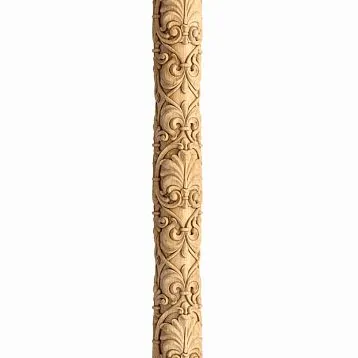
Carved door casings are the pinnacle of wood processing craftsmanship. Floral ornaments, geometric patterns, grapevine entwining, or classical Greek meanders transform a functional element into a work of art. The density and uniformity of beech wood allow carving of delicate details without risk of chipping. Such items are produced on CNC machines according to individual sketches or reproduce historical samples from palace interiors. Each carved casing is unique and requires dozens of hours of work by highly skilled specialists.
Non-standard sizes and individual solutions
Architectural projects often require non-standard door opening sizes, necessitating the manufacture of casings according to individual parameters. Wide profiles up to 120-150 mm are used in rooms with high ceilings or to create a grand exterior appearance. Narrow casings 50-60 mm wide are used in compact spaces where space-saving is important. The length of the items can reach 3000 mm for non-standardly high openings or panoramic doors.
Combined profiles combine several types of processing - for example, a flat front surface with decorative edges or carved inserts in a smooth frame. Such solutions allow creating a unique design that cannot be replicated with ready-made standard items. Production of non-standard casings requires an individual approach at every stage - from material selection to final finishing, but the result justifies the effort, creating the interior of your dreams.
Variants of final finishing and coatings
Natural color with transparent coatings
The natural beauty of beech wood does not require masking - it only needs to be emphasized and protected. Transparent polyurethane varnishes create a durable film on the surface, repelling moisture, preventing dirt, and protecting against mechanical damage. Matte varnishes preserve the natural appearance of wood, creating a tactilely pleasant surface. Semi-matte variants add a slight silk-like sheen, while glossy coatings maximize the decorative texture and depth of color.
Oil-based coatings deeply penetrate the wood structure without forming a surface film. Such treatment highlights the naturalness of the material and preserves the wood's ability to "breathe". Oil-wax blends combine the protective properties of oils with the water-repellent characteristics of wax, creating a silky surface with a slight satin sheen. The advantage of oil-based coatings is the ease of local repair and renewal without the need for full re-coating.
Staining and Patination
Staining with water or alcohol-based dyes allows changing the color of wood while preserving the visibility of the texture. Popular shades - walnut, mahogany, wenge, whitewashed oak - allow harmoniously integrating beech casings into any color scheme of the interior. Multi-layer staining creates an effect of depth and volume, when the base shade is visible through darker or lighter upper layers. This technique is especially effective on decorative profiles, where recesses acquire a more saturated color.
Patina treatment is a technique of artificial aging, giving casings a noble aged appearance. After applying the base color, recesses and edges of the profile are treated with contrasting patina - gold, silver, bronze, or white. Excess patina is removed from protruding parts, creating an effect of natural wear and highlighting the relief. This treatment is ideal for classic and vintage interiors, adding historical depth and aristocracy to the space.
Enamel Coatings
Opaque enamels completely hide the wood texture, creating a perfectly smooth colored surface. White casings - a classic of the genre, universally compatible with any wall and door colors. Cream, ivory, pearl shades add warmth and softness. Bright colored enamels - blue, green, red - are used to create accents in modern eclectic interiors or children's rooms.
Multi-layer painting technique involves applying 3-5 layers of enamel with intermediate sanding. The first layer is a primer, ensuring adhesion and covering the porosity of the wood. Subsequent layers form the color and thickness of the coating. The final layer can be matte, semi-matte, or glossy depending on the designer's intent. High-quality enamels form a durable film resistant to abrasion and easy to clean.
Correct selection of casings for different interior styles
Classic Interiors
Classic never goes out of fashion because it is based on timeless principles of harmony and proportion. For interiors in the classical, baroque, or empire styles, wide casings with pronounced relief and decorative elements are suitable. Decorative profiles with grooves, corner rosettes, and cornices at the top create a majestic appearance of the door opening. The color palette tends toward natural wood tones or white enamels with gold patina.
English classic prefers restraint and elegance. Casings of medium width with soft relief, painted in dark noble tones - walnut, mahogany, wenge. Important is the combination withwooden trimand othermouldings- all elements must be executed in a unified style and color palette to create a harmonious ensemble.
Modern Styles
Minimalism and high-tech require clean lines and absence of decorative excesses. Rectangular beech casings with natural finish or painted in neutral colors perfectly match this aesthetic. Precision of geometry and quality of execution are crucial - any irregularities or defects will be noticeable in a minimalist space. Profile width is usually minimal - 60-80 mm, so the casing does not attract unnecessary attention.
Scandinavian style values naturalness and simplicity. Light beech casings with transparent matte finish or whitewashed create a sense of lightness and purity of space. Slight texture is allowed - brushed surface emphasizes the natural origin of the material. Combination with white walls and light parquet creates the characteristic atmosphere of calmness and harmony typical of Scandinavian interiors.
Vintage and eclectic interiors
Provence, shabby chic, country - styles where artificial aging of casings becomes an important element of styling. Patinated surfaces, worn edges, effect of peeling paint create the impression that these casings have been serving the house for many years. The color palette tends toward pastel shades - lavender, mint, peach, milk. If you decideBuy beech casingfor such an interior, it is important to correctly choose the final finishing technique.
Loft combines the roughness of industrial materials with the nobility of natural wood. Dark beech casings with contrasting tinting highlight the texture of brick walls and concrete surfaces. Intentionally rough processing is possible - saw marks, uneven tinting, combination with metallic elements. Such an approach creates the characteristic feeling of a repurposed industrial space typical of lofts.
Installation technology for beech casings
Preparation stage and measurements
Quality installation begins with careful preparation. After installing the door frame, a pause of 24-48 hours is required for the mounting foam to set and the structure to stabilize. During this time, excess foam is trimmed flush with the wall surface, surfaces are cleaned of dirt and dust. The verticality and horizontal alignment of the frame are checked - deviations exceeding 2 mm per meter may require adjustments or use of compensating pads.
Measurements are performed with precision to the millimeter. The height of the opening is measured from both sides - often dimensions differ due to the non-ideal geometry of the room. The width of the frame determines the required allowance for the top casing. It is important to account for the distance from the edge of the frame to the hinges - usually a 3-5 mm gap is left to ensure the door panel opens freely without touching the casing. All dimensions are recorded in a diagram to avoid errors during cutting.
Corner Joint Methods
A classic 45-degree miter joint provides the most aesthetically pleasing appearance and even load distribution on the joint. For precise marking, a miter box or a fixed-angle circular saw is used. Working with beech requires high-density wood, which demands the use of sharp, fine-toothed saws with slow feed to avoid chipping. The quality of the cut is critical — even minor deviations will be noticeable once assembled.
Wall Mounting Methods
Wall Mounting Methods
Traditional finishing nails remain the most common method due to reliability and speed of installation. Use 40-50 mm nails with small cylindrical heads that easily sink into wood. Spacing between fastening points at 350-500 mm ensures even wall pressure. Nails are driven at a slight angle to the surface for better fixation. A pneumatic nail gun speeds up the process and ensures uniform sinking depth.
Wall Mounting Methods
Finishing After Installation
Gaps between the trim and wall are sealed to prevent moisture and drafts from entering. Acrylic sealant is applied as a continuous thin bead around the entire perimeter. Excess is wiped away with a damp cloth before it dries, forming a neat seam. After installation, the entire surface is wiped with a soft cloth to remove fingerprints and dust. It is recommended to avoid heavy door use for 24 hours to allow all elements to fully settle.
Gaps between the casing and the wall are sealed to prevent moisture and drafts from entering. Acrylic sealant is applied as a continuous thin bead along the entire perimeter of the junction. Excess is wiped away with a damp cloth before it dries, forming a neat seam. After installation, the entire surface is wiped with a soft cloth to remove fingerprints and dust. It is recommended to avoid intensive door use for 24 hours to allow all elements to fully set.
Care and Maintenance of Beech Trim
Daily care and cleaning
Cleanings are performed using specialized furniture care products containing wax or silicone. These compounds not only clean but also create a protective film that repels dust and dirt. Application is done with a soft cloth in circular motions, followed by polishing with a dry cloth. Frequency of treatment is every 2-3 months depending on usage intensity. It is important to use products compatible with the finish type of your trim.
Stains are removed using special furniture care products containing wax or silicone. These compounds not only clean but also create a protective film that repels dust and dirt. Application is performed using a soft cloth in circular motions, followed by polishing with a dry cloth. Treatment frequency is every 2-3 months depending on usage intensity. It is important to use products compatible with the type of finish on your casings.
Prevention and Damage Avoidance
Air humidity control is critical for maintaining the geometry of the items. Optimal range is 45-60% relative humidity at 18-25 degrees Celsius. During heating seasons, air in rooms dries out, which may cause wood to crack. Using humidifiers or regular ventilation helps maintain comfortable conditions. Direct sunlight causes finish degradation — it is recommended to use blinds or curtains on south-facing windows.
Controlling air humidity is critically important for preserving the geometry of the items. The optimal range is 45-60% relative humidity at a temperature of 18-25 degrees. During the heating season, air in rooms dries out, which may lead to wood cracking. Using humidifiers or regular ventilation helps maintain comfortable conditions. Direct sunlight causes finish degradation — it is recommended to use blinds or curtains on south-facing windows.
Finish Refresh and Restoration
Local repair of minor damage is entirely feasible on your own. Minor scratches on lacquered finishes are masked with a wood-colored touch-up marker or polishing paste. Deep scratches or dents require filling, sanding, and local repainting. For oil-based finishes, simply apply an additional layer of oil to the damaged area with blending into the surrounding area. It is important to use identical or compatible materials to avoid color and texture discrepancies.
Minor damage can be repaired yourself. Minor scratches on lacquered surfaces are masked with a touch-up marker in wood color or polishing paste. Deep scratches or dents require filling, sanding, and local repainting. For oil-based finishes, simply apply an additional layer of oil to the damaged area with blending into the surrounding area. It is important to use identical or compatible materials to avoid color and texture discrepancies.
Comparison of Beech with Other Wood Species
Beech and Oak
requires more powerful equipment and skilled craftsmen.oak trimThe advantage of beech over oak is its more uniform structure, allowing for the creation of thin profile details without risk of chipping. Beech is better suited for staining, ensuring even dye penetration. Meanwhile, the strength characteristics of both species are comparable, and beech costs 25-40% less. For most interior applications, beech trim offers the optimal balance of price, quality, and aesthetic properties.
The advantage of oak over walnut is its more uniform structure, allowing for the creation of thin profile details without the risk of chipping. Oak is easier to stain, ensuring even dye penetration. Meanwhile, the strength characteristics of both species are comparable, and oak costs 25-40% less. For most interior applications, oak casings provide an optimal balance of price, quality, and aesthetic properties.
Beech and Ash
Ash has comparable cost to beech, but availability is lower due to smaller log volumes. Processing ash requires sharp tools and specific skills due to its tendency to splinter fibers. Beech is more predictable and technologically convenient in this regard. Choosing between beech and ash for trim is more a matter of personal preference in texture and tone than fundamental differences in performance characteristics.
The cost of beech is comparable to oak, but availability is lower due to smaller volumes of raw material. Processing beech requires sharp tools and specific skills due to its tendency to develop wood grain splits. Oak is more predictable and technologically convenient in this regard. Choosing between oak and beech for casings is more a matter of personal preference in texture and tone than fundamental differences in performance characteristics.
Beech and Coniferous Species
Beech and Coniferous Specieswooden trimConiferous species have the advantage of low cost, 2-3 times less than beech equivalents. This makes them a suitable choice for budget repairs or temporary housing. However, for long-term use in living spaces, beech is preferable due to its durability and aesthetic qualities. The price difference is offset by the long service life and the absence of replacement or restoration needs. The decision
is an investment in quality for decades.Buy beech casingBeech and Coniferous Species
Economic aspects of purchasing beech trim
Factors forming the price
The cost of ready-made trim consists of several components. The price of raw material depends on the region of harvesting, wood quality, and market conditions. European beech is traditionally more expensive but superior in quality compared to domestic analogs. Transportation costs for delivering raw material from the harvesting site to the production facility may amount to 15-20% of the material's cost. Drying costs include equipment depreciation, energy resources, and staff salaries - this stage may take up to a month and requires significant investment.
Budget optimization without compromising quality
A reasonable approach to purchasing implies balancing desired and feasible options. Standard profiles are significantly cheaper than custom ones, as they are produced in large batches with minimal equipment setup. If the design project allows, selecting standard sizes and shapes can save 30-50% of the budget without compromising quality. The length of the trim also affects the price - standard 2400 mm is optimal in terms of price-to-practicality ratio.
Choosing the type of finish is another opportunity for cost optimization. Trim intended for self-finishing is cheaper than ready-made items with a final finish. If you have experience working with wood and the necessary tools, you can purchase sanded trim and perform staining and varnishing yourself. This can reduce costs by 25-35%, although it will require time and specific skills. It is important to realistically assess your capabilities - poor self-finishing will damage expensive material.
The initial cost of beech trim is higher than budget alternatives, but calculating the total cost of ownership changes the picture. The service life of quality beech products is 30-50 years with proper use, whereas cheaper materials require replacement every 10-15 years. The possibility of multiple restorations and re-finishing allows maintaining an attractive appearance throughout the entire service life without full replacement.
Long-term economic efficiency
The initial cost of oak casings is higher than budget alternatives, but calculating the total cost of ownership changes the picture. The service life of quality oak casings is 30-50 years with proper use, whereas cheaper materials require replacement every 10-15 years. The possibility of multiple restorations and finish renewals allows maintaining an attractive appearance throughout the entire service life without full replacement.
Investments in high-qualityBuy wooden profiled productswhich increase the market value of real estate. Buyers and tenants value natural materials and quality finishing, willing to pay a premium for such housing. The difference in sale or rental price may be several times higher than additional costs for beech trim. This is especially relevant for luxury real estate, where every detail affects the overall impression.
Where and how to buy correctly
Choosing a supplier
The construction materials market is saturated with offers, but product quality varies significantly. A reliable supplier is primarily a manufacturer with its own production facilities and quality control at all stages. Brokers and resellers inevitably increase the final cost without adding value to the product. Research the company's history, customer reviews, presence of quality certificates and compliance with standards.
The opportunity to inspect samples before purchase is critically important. Catalog photos do not convey the real texture, color, and quality of processing. Visit a showroom or warehouse, evaluate surface flatness, profile clarity, and sanding quality. Pay attention to ends - they should be flat, without chips or cracks. Request to see product certificates and wood documentation confirming legal harvesting.
Ordering and calculating quantities
Accurate calculation of required material quantity eliminates shortages or excess stock. For each opening, two vertical trim pieces are required, each with height equal to the opening height plus 100-150 mm for trimming and fitting. One horizontal trim is calculated by the opening width plus twice the trim width plus 100 mm reserve. Standard kits include 2.5 boards - two full 2400 mm boards and one halved for the upper part of two openings.
Clarify delivery, return, and warranty conditions when placing an order. Serious manufacturers provide a warranty against hidden defects for 6 to 12 months. Storage conditions until installation must be specified - trim must be stored in a heated room in a horizontal position. Failure to comply with storage conditions may result in warping and loss of warranty.
Goods acceptance and quality inspection
Carefully inspect the trim batch upon receipt. Check if the quantity and dimensions match the order. Examine each board for mechanical damage incurred during transportation. Cracks, chips, deep scratches - grounds for complaint and replacement. Measure geometric dimensions - width, thickness, length. Deviations exceeding 2 mm from stated values are unacceptable.
Assess the quality of the final finish. The surface should be smooth, without lacquer drips, bubbles, or foreign inclusions. The color should be uniform along the entire length and match the sample. If defects are found, immediately prepare an act with the transport company or supplier representative. Delayed complaints are often rejected due to inability to prove defects occurred before delivery.
Comprehensive approach to interior design
Combining with other beech elements
A harmonious interior is the consistency of all elements in style, color, and material.wooden skirting board purchaseMade from the same species and with the same finish as the trim - a basic design rule. Matching texture and tone creates visual unity in the space. If staining is used, it is important that all elements are treated with the same dye batch to avoid color variations.
Wooden moldingson walls,Furniture made of oak complements the interior picture, especially if the furniture is also made of solid oak. Unity of material and finish creates a sense of completeness and stylistic coherence.on the kitchen,Decorative Planksfor zoning - all these beech elements create a cohesive composition. It is important to coordinate profile widths - too different sizes create