Article Contents:
- Step one: define your 'classic style'
- Create a folder of visual references
- Step two: measure the space professionally
- Consider movement ergonomics
- Step three: define the budget realistically
- Hidden costs that are often forgotten
- Step four: choose a collection, not individual pieces
- How to read a catalog correctly
- Step five: calculate the amount of decor precisely
- Baseboards
- Ceiling Cornices
- Moldings
- Carved Inlays
- Step six: assemble the bedroom set correctly
- Checking scale and proportions
- Step seven: assemble the living room set considering scenarios
- Dining area in the living room
- Step eight: integrate decor into the furniture composition
- Ceiling decor: when it is appropriate
- Step nine: checklist before final order
- Step ten: work with the manufacturer, not a reseller
- Frequently Asked Questions
- Conclusion: classic that serves generations
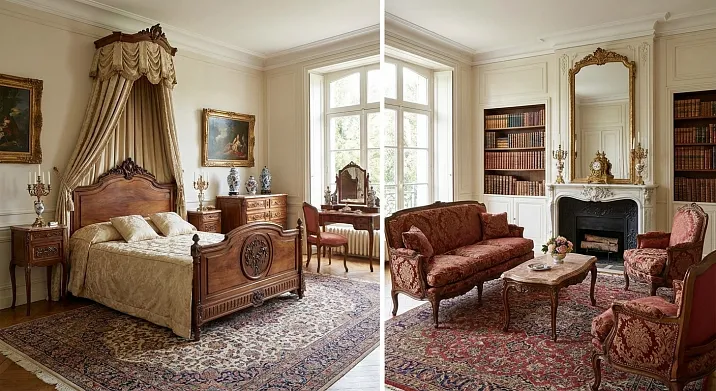
Solutionbuy classic furniture— is the moment when only the technology of action remains between the dream of a perfect interior and its realization. But it is here that most buyers make critical mistakes that cost dearly — financially, emotionally, aesthetically. The room fills with beautiful items that do not form a harmonious ensemble. There is either too much decor or catastrophically little. The scale of the furniture does not match the size of the room. This text is a step-by-step guide for those who want to avoid typical pitfalls and create a classic interior that looks thoughtful, holistic, professional.


Step one: define your 'classic style'
Classic is not a monolith. It is a whole universe of styles, each with its own rules, proportions, decorative codes. Before opening catalogs and visiting showrooms, you must clearly understand which specific direction of classic appeals to you. Everything depends on this: the choice of furniture, the amount of decor, the color palette, the budget.
Strict classic (classicism) — is symmetry, restraint, antique motifs. Straight lines, columns, pilasters, stucco rosettes, but all in moderation, without excess. Noble colors — white, cream, gray, gold only as an accent. Furniture
is respectable, but not flashy. Ideal for people who value order, clarity, discipline of forms.
Baroque — the complete opposite of restraint. Abundance of carving, gilding, curved lines, opulence of forms. Furniture is massive, decor is rich, colors are deep — burgundy, emerald, royal blue. This style is for those who are not afraid of luxury, who want the interior to make an impression.
Neoclassicism — a modern interpretation of classic. Proportions, symmetry, classical motifs are preserved, but decor becomes more laconic, forms more elegant, colors lighter. Gold is replaced by satin bronze or absent altogether. This is a compromise between tradition and modernity, ideal for those who want classic without heaviness.
Empire — imperial style, dominated by military symbolism, eagles, laurel wreaths, heavy drapery. Furniture is large, forms are rectilinear, decor is pompous. Colors — red, green, gold. A style for strong personalities with large-scale thinking.
Choose a direction based on temperament, lifestyle, room size. In a small apartment, Baroque will be overwhelming. In a huge mansion, minimalist neoclassicism will get lost. Be honest with yourself.




Create a visual references folder
Gather 20-30 interior photos you genuinely like. Not just 'pretty', but 'I want exactly this'. Analyze: what unites them? Furniture color? Amount of decor? Furniture density? Type of textiles? These recurring elements are your visual code, a matrix for future decisions.
Show this folder to a designer or consultant at a showroom. This will save hours of explanations. Instead of the abstract 'I want classic', you show specific images, and the specialist immediately understands your request.
Our factory also produces:


Step two: measure the space professionally
Amateur measurements with a tape measure are a path to disaster. Furniture is ordered, delivered, but it doesn't fit through the doorway. Or it fits, but the distance to the window turns out to be 10 centimeters less, and the wardrobe blocks the window from opening. Professional measurement accounts for dozens of details a non-professional will miss.
What needs to be recorded:
-
Length and width of the room accurate to the centimeter
-
Ceiling height at several points (ceilings are often uneven)
-
Location of windows and doors indicating the opening direction
-
Distance from floor to windowsill
-
Location of radiators, sockets, switches
-
Protrusions, niches, columns, beams — any architectural irregularities
-
Width of doorways through which furniture will be carried
-
Elevator dimensions (if you don't live on the first floor)
Create a scaled floor plan. This can be done on graph paper or in free programs like Sweet Home 3D. On this plan, you will arrange furniture virtually, before purchase, which will help avoid mistakes.
Get Consultation
Consider movement ergonomics
Classic FurnitureClassical furniture is often bulky, and there must be enough space between items for comfortable movement. Minimum passage width — 60 centimeters, comfortable — 80-90 centimeters. In front of a chest of drawers or wardrobe where drawers or doors open, 100-120 centimeters of free space is needed. In front of a bed for making and cleaning — at least 70 centimeters.
Mark these zones on the plan. If they overlap or furniture blocks them — the configuration is incorrect, you need to find another solution.
Step three: determine the budget realistically
Classical solid wood furniture is an investment. Trying to create a classic interior on an IKEA budget is a doomed endeavor. Either you'll get an imitation made of MDF with glued plastic 'carved elements', or you'll buy a couple of genuine pieces that will get lost among cheap surroundings.
Form a budget from three parts:
Furniture — 60-70% of the budget. Bed, wardrobe, chests of drawers, cabinets, sofa, armchairs, tables. This is the foundation, you can't skimp here. A quality solid oak bed costs from 150 thousand rubles, a wardrobe — from 200 thousand, a chest of drawers — from 80 thousand. A full bedroom set — 600-900 thousand rubles. Living room — 500-800 thousand.
Decor — 20-25% of the budget.buy interior decorClassical decor is necessary in sufficient quantity: moldings, cornices, baseboards, carved overlays, columns. Decor is cheaper than furniture, but you need a lot of it. For a 20-square-meter room — 80-120 thousand rubles.
Textiles and accessories — 10-15% of the budget. Curtains, bedspreads, pillows, rugs, lamps, mirrors, paintings. These elements complete the interior, make it lived-in.
If your budget doesn't allow buying everything at once — proceed in stages. First furniture, then decor, then textiles. But buy furniture from one collection at once, so it doesn't happen that by the time you buy the second part, the collection is discontinued.
Hidden costs that are forgotten
Delivery of bulky furniture — 5-15 thousand rubles depending on distance and floor. Carrying up floors without an elevator — 500-1000 rubles per floor per item. Professional assembly — 10-20% of the furniture cost. If molding adjustments, baseboard trimming are needed — carpenter services 3-5 thousand rubles per day. Allocate 10-15% on top of the furniture and decor cost for these expenses.
Step four: choose a collection, not individual pieces
The main mistake of amateurs is buying furniture on the principle of 'I liked it'. A beautiful bed from one showroom, a chest of drawers from another, nightstands from the market. The result is a set of disparate items that do not form an ensemble.
Professional approach: choosethe Classic collectionor another collection from a single manufacturer where all items are stylistically connected. One wood species, one color tint, identical carved motifs, matching hardware. Such furniture is guaranteed to create harmony.
Reputable manufacturers offer modular collections. You select the necessary elements from it for your room. Need a 180x200 bed, two nightstands, a five-drawer dresser, a three-door wardrobe — all of this is available within one collection. If the standard size doesn't fit — many manufacturers offer custom adaptation.
How to read a catalog correctly
In the catalog or on the manufacturer's website, study not only photos but also technical specifications. Material (solid wood or veneer? if solid wood — what species?). Dimensions (exact measurements: height, width, depth). Type of finish (varnish, oil, wax?). Hardware (manufacturer, presence of soft-close mechanisms). Weight (heavy furniture is more stable but harder to transport).
Pay attention to carving details. Hand carving and machine carving look different. Hand carving has slight variations, liveliness, depth. Machine carving repeats perfectly but often looks flat. The best option is hybrid technology: a machine creates the base, a craftsman refines the details by hand.
Step five: calculate the amount of decor precisely
Furniture decor— this is not decoration added 'to taste'. It is an architectural system that must be calculated precisely. Too little — the interior looks unfinished, bare. Too much — overloaded, tasteless.
Baseboards
Baseboard height in a classic interior is 10-15 centimeters. In rooms with high ceilings (over 3.5 meters) — up to 20 centimeters. The higher the ceiling, the higher the baseboard should be, otherwise it will get lost.
To calculate the quantity: measure the room's perimeter, subtract the width of door openings, add 10% for cutting and possible defects. Baseboards are usually sold in strips of 2-3 meters. Round up the number of strips.
Ceiling Cornices
Cornice width is 8-15 centimeters in standard apartments, 15-25 centimeters in rooms with high ceilings. A cornice visually separates the wall from the ceiling, creating an architectural boundary. Without a cornice, the ceiling looks 'stuck on'; with a cornice — like an independent structure.
Calculation is similar to baseboard: room perimeter plus 10% for cutting. Cornice corners are cut at 45 degrees and joined, which requires precision and experience. If you're not confident in your skills — hire a professional.
Moldings are linear profiles used to create framed compositions, zone walls, and frame openings. They come in various widths (from 20 to 150 mm) and relief complexity — from smooth to richly decorated.
Moldings create a panel structure on the walls. Classic scheme: a lower panel 80-100 centimeters high from the floor, framed by a horizontal molding at the top. Above — the middle part of the wall, which can be divided by vertical and horizontal moldings into rectangular sections. The upper frieze — 20-30 centimeters below the ceiling.
Draw this structure on the wall plan. Calculate the linear meters of moldings for each wall. Sum them up, add 15% for cutting and possible errors. Moldings are usually sold in strips of 2-2.4 meters.
Carved Appliqués
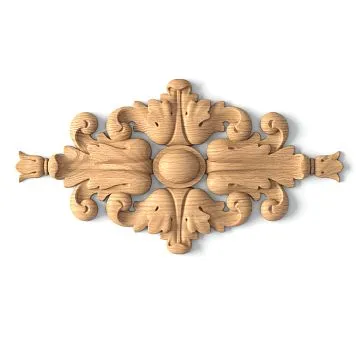
Carved decorative overlays are placed as accents: above doors, in the center of panels created by moldings, on frame corners. They shouldn't cover everything indiscriminately. Principle: one or two accents per wall. For a 20-square-meter room, 4-6 carved overlays are sufficient.
The size of overlays depends on the scale of the room. In a room with 2.7-meter ceilings, overlays of 30x40 centimeters. In a room with 3.5-meter ceilings — 50x60 centimeters. Overlays that are too small get lost in a large room; overlays that are too large overwhelm a small room.
Step six: assemble the bedroom set correctly
A bedroom in classic style is built around the bed as the semantic and compositional center. Everything else depends on the bed.
Bed. Sleeping area size: 160x200 (full for one person or a couple of average height), 180x200 (queen standard for a couple), 200x200 (for tall people or those who love spaciousness). Headboard height: 120-140 centimeters for low ceilings, 160-180 centimeters for standard ceilings, 180-220 centimeters for high ceilings. A massive high headboard makes the bed dominant but requires a corresponding room scale.
Nightstands. Two pieces, identical, placed symmetrically on both sides of the bed. Nightstand height — at or slightly below mattress level (50-60 centimeters). Width — 40-60 centimeters, depth — 35-45 centimeters. A nightstand should accommodate a table lamp, a book, a glass of water, an alarm clock. Inside — a drawer for small items.
Dresser. Wide (100-140 centimeters), with four to six drawers, usually placed opposite the bed or against a side wall. Height — 80-100 centimeters. The dresser top is a platform for decorative compositions: mirror, vases, boxes, framed photographs.
Wardrobe. If space allows — a two-door or three-door wardrobe. Height — up to the ceiling (240-270 centimeters) to maximize space usage. Width — 120-180 centimeters depending on the number of doors. Depth — 60 centimeters (standard for clothes on hangers).
Vanity table (optional). If the bedroom area is over 18 square meters, you can add a vanity table with a mirror and a pouf. This is a feminine territory, a place for beauty rituals. Usually placed by the window or against a wall with good lighting.
Bench or armchair (optional). At the foot of the bed or in a corner of the room. A place to sit to put on shoes or lay out clothes for the night.
Checking scale and proportions
Draw all the furniture on the room plan to scale. Check:
-
Passages between furniture at least 60 centimeters
-
Distance in front of the wardrobe for opening doors — minimum 100 centimeters
-
The bed does not block the door or window
-
Symmetry: nightstands placed equidistant from the bed, dresser centered relative to the bed or wall.
If something doesn't align — adjust the configuration or furniture dimensions while still on paper. It's free. Changing already purchased furniture is expensive and often impossible.
Step seven: assemble the living room set considering usage scenarios.
The living room is a multifunctional space, and furniture should support different scenarios: hosting guests, watching movies, reading, working, and sometimes sleeping (if the sofa is a sleeper).
Sofa. The central element of the living room. A three-seater (length 200-240 cm) for standard living rooms, a two-seater or armchairs for small ones. A classic sofa has a solid wood frame, high-quality upholstery (jacquard, velour, genuine leather), curved armrests, and carved legs.
Armchairs. One or two, depending on the area. Placed opposite or to the side of the sofa, creating a conversation area. In classic interiors, symmetry is important, so if there's an armchair, there should be two identical ones, placed mirroring each other.
Coffee table. In front of the sofa, at a distance of 40-50 cm. Size: 100x60 cm for a standard living room, 120x80 for a large one. Height — 40-50 cm, slightly lower than the sofa seat. The tabletop can be wood, marble, or glass. Under the tabletop — a shelf for magazines, books, remotes.
Console or dresser. Against a wall, between windows, or behind the sofa. Narrow (35-45 cm deep), long (120-180 cm). Decorative compositions are placed on the console: lamps, vases, photographs, books. Inside — drawers or shelves for storage.
Display cabinet or sideboard (optional). If the living room is combined with a dining area. Behind glass — dishes, collections, decorative objects. The cabinet should have internal lighting, turning it into a glowing object in the evening.
Bookshelf (optional). For libraries, collections. Open or with glass doors. Height up to the ceiling, width depends on the wall size.
Dining area in the living room.
If the living room is combined with a dining room, a dining table and chairs are needed. Table: extendable, for 6-8 people when extended, 120x80 cm when folded. A round table for 4-6 people — diameter 120-140 cm. Classic chairs with high backs, carved details, and soft seats.
Step eight: integrate decor into the furniture composition.
Furniture and decor in a classic interior should work as a unified system. Decor is not applied chaotically but is integrated into the logic of the space.
Wall behind the bed headboard. The accent zone of the bedroom. A panel structure made of moldings is appropriate here — a large rectangular frame, inside which is a contrasting color, wallpaper, or fabric. If the bed headboard is high and decorative — additional wall decor is not needed; the headboard itself is decor.
Wall behind the sofa in the living room. Similar to the bedroom — a panel structure, inside which can be paintings, mirrors, decorative compositions. Or simply a contrasting paint color.
Wall sections between windows. Vertical zones where consoles, tall mirrors, decorative columns can be placed. Symmetry is important: if there's a console at one section, there should be an identical one at the other.
Door and window openings. Framed with wooden casings, width 8-12 cm. Casings create an architectural frame, linking doors and windows into a unified system with baseboards and cornices.
Ceiling decor: when it is appropriate.
In rooms with high ceilings (from 3.2 meters), coffered ceilings can be used — wooden beams dividing the ceiling into sections. Inside the sections — painting, plaster rosettes, contrasting colors. This creates volume, richness, but requires height, otherwise it feels oppressive.
Central rosette under the chandelier — a classic element. Diameter 60-100 cm, plaster or carved wood. The rosette can be white (blending with the ceiling, creating volume through shadows) or contrasting (gold, wood-tone finish).
Step nine: checklist before final order.
Before clicking the 'buy' button or signing a contract with the manufacturer, go through this list. Each point is critical.
Sizes
-
Have all furniture dimensions been checked against the room plan?
-
Will the furniture fit through doorways and the elevator?
-
Is there enough space for passage between furniture pieces?
-
Does the furniture not block the opening of doors, windows, or access to outlets?
Stylistic unity.
-
Is all furniture from the same collection or stylistically coordinated?
-
Is the color and wood finish the same for all items?
-
Hardware (handles, hinges) identical or coordinated?
-
Do carved elements repeat the same motifs?
Materials and quality
-
Solid wood furniture, not veneer or MDF?
-
Eco-friendly finish (water-based varnish or oil)?
-
Quality hardware with soft-close mechanisms?
-
Drawer runners telescopic, full extension?
Decor
-
Quantity of moldings, cornices, baseboards calculated with a surplus?
-
Does the decorative profile match the scale of the room?
-
Is the decorative color coordinated with the furniture and walls?
-
Carved overlays present but not excessive?
Logistics and installation
-
Are production timelines realistic?
-
Is delivery included in the cost or paid separately?
-
Is floor delivery included?
-
Are assembly and installation included or do you need to find craftsmen?
-
Is there a furniture warranty, are its terms clear?
Budget
-
Does the final amount with delivery, assembly, decor fit the budget?
-
Is there a 10-15% reserve for unforeseen expenses?
If at least one point raises doubt — do not order until clarified. Haste is the enemy here.
Step ten: work with the manufacturer, not a reseller
Classic solid wood furniture is a product better purchased directly from the manufacturer, bypassing retail reseller showrooms. Why?
Price. The manufacturer sells cheaper because there is no showroom markup (30-50%).
Customization. The manufacturer can adjust size, color, hardware type per your order. Showrooms work with ready-made inventory.
Quality control. Buying from the manufacturer, you can visit production, see the process, check quality before shipping. Showrooms display samples, but what gets delivered is unknown.
Timelines. The manufacturer gives realistic deadlines; showrooms often promise quickly but delay.
Warranty. The manufacturer is directly responsible for their product. If an issue arises, you contact the source, not an intermediary who redirects requests.
How to find a manufacturer? Search not for 'buy furniture' but for 'classic furniture production', 'classic furniture factory'. Study websites, view portfolios, read reviews not on the company's site (they're always positive) but on independent platforms.
Frequently asked questions
How long does custom classic furniture production take?
Standard lead time is 6-10 weeks for catalog furniture. If customization is required (non-standard size, color, carving) — 10-14 weeks. Exclusive furniture with hand carving, inlay — 4-6 months. Don't believe promises of 'we'll make it in two weeks' — quality production requires time for drying, gluing, multi-layer finishing.
Can furniture from different collections be combined?
Yes, but it's difficult. If the wood species, tinting, and carving style are similar — combination is possible. But it's better to avoid it. Even a slight difference in shade or type of carving creates dissonance. If you really need to combine — do it in different rooms, not in the same one.
Is it mandatory to use moldings and cornices or is furniture alone sufficient?
Without architectural decor, classic furniture looks like beautiful objects in an empty box. Moldings, cornices, baseboards create an architectural context, linking the furniture with the space. Minimum: a high baseboard (12-15 cm) and a ceiling cornice. This is enough to create a classic look.
What is the correct baseboard height for classic style?
Depends on the ceiling height. Ceiling 2.7 meters — baseboard 10-12 centimeters. Ceiling 3.0 meters — 12-15 centimeters. Ceiling 3.5 meters and above — 15-20 centimeters. A too low baseboard gets lost, a too high one in a low room looks grotesque.
Is it worth buying ready-made suites or assembling pieces separately?
A suite (ready-made set) is cheaper than buying items separately, usually by 10-15%. But a suite is a fixed configuration that may not suit your room. Modular collections are a compromise: you assemble the needed elements, but all from one line, with a volume discount.
How to check the quality of carving when purchasing?
Run your hand over the carving — it should be smooth, without burrs, chips. The carving depth should be even. If it's hand finishing — slight variations are acceptable and even desirable (a sign of live work). If the carving is perfectly identical but flat, with sharp edges — it's stamping, a cheap technology.
Can classic furniture be used in a small apartment?
Yes, by choosing restrained options — neoclassicism instead of baroque, light tones instead of dark, laconic carving instead of lush. The main thing is to observe scale: the furniture must correspond to the room size. In a 12 square meter room, a three-meter bed would be absurd.
Do you need a designer to buy classic furniture?
If you have a good sense of proportion, are attentive to details, willing to spend time studying the subject — you can manage on your own, using checklists like this one. If in doubt — a designer will pay for themselves. They will help avoid costly mistakes, select correct proportions, calculate decor, negotiate with manufacturers. Designer service cost — 3-5% of the furniture and finishing budget.
How to care for classic solid wood furniture?
Dry cleaning with a soft cloth once a week. Wet cleaning with a slightly damp (not wet!) cloth once a month. Using special wood care products (wax, polish) every 3-6 months. Avoid direct sunlight (fading), heat sources (cracking), excessive moisture. With such care, furniture lasts for decades.
How much does a full set of classic furniture for a bedroom and living room cost?
Bedroom (bed, wardrobe, chest of drawers, 2 nightstands): 600-900 thousand rubles from mid-range solid oak/beech. Premium with hand carving — 1.2-2 million. Living room (sofa, 2 armchairs, coffee table, console, display cabinet): 500-800 thousand mid-range, 1-1.5 million premium. Decor (moldings, cornices, baseboards) for two rooms: 150-250 thousand. Total: 1.25-2 million mid-range, 2.5-4 million premium.
Conclusion: Classic that serves for generations
buy classic furniture— is not a one-time purchase, but the creation of a long-term material foundation for life. QualityClassic Furnituresolid wood furniture serves 30-50 years without losing functionality and appearance. It doesn't go out of fashion because classic is timeless. It is passed down through inheritance, becoming part of family history.
But this durability and value are achieved only with the right approach to purchase. Spontaneous decisions, saving on materials, ignoring proportions and scale lead to the interior becoming irritating after a year or two, and a desire to redo everything arises. A systematic approach — measurements, planning, collection selection, decor calculation, checklist verification — requires time and discipline, but guarantees a result you will live with for decades with pleasure.
The company STAVROS specializes in the production of classic furniture and interior decor from natural oak and beech solid wood. Over more than two decades of work, STAVROS has created a system that allows clients to assemble bedroom and living room sets as simply and reliably as possible.Classic CollectionSTAVROS includes all necessary elements — from beds and wardrobes to consoles and display cabinets — executed in a unified style, with identical tinting, repeating carved motifs. This guarantees stylistic unity without the need to source furniture from different places. Simultaneously, STAVROS produces a full range of architectural decor: moldings, cornices, baseboards, carved overlays, columns, balusters. All this is made from the same solid wood as the furniture, with the same meticulous processing. By buying furniture and decor from STAVROS, you get not a set of disparate items, but a ready-made system whose elements are perfectly coordinated with each other. STAVROS professional consultants will help calculate the amount of decor, select the correct scale, avoid typical mistakes. With STAVROS, the path from the decision to create a classic interior to its realization becomes transparent, predictable, leading to a result you will be proud of for many years.