Article Contents:
- Digital revolution in architectural decoration
- New era of the buyer experience
- Advantages of online purchasing decorative elements
- Polyurethane: the material that changed the rules of the game
- Chemical foundations of modern decoration
- Technological superiority of production
- Operational advantages of polyurethane products
- Catalog of possibilities: variety of decorative solutions
- Applied Elements: Universality of Use
- Linear elements: architecture of space
- Central compositions: focal points of interior
- Bio-tech: Organic forms of the future
- Neoclassical Elegance
- Baroque luxury in modern interpretation
- Modern minimalism: beauty of simplicity
- Technical Aspects of Selection and Application
- Calculating required material quantities
- Compatibility with various surface types
- Tools and Materials for Installation
- Economic Aspects and Cost Optimization
- Comparative analysis of costs of various materials
- Budget optimization strategies for projects
- Return on investment through increased property value
- Practical tips for choosing and purchasing
- Needs analysis and project planning
- Criteria for evaluating product quality
- Logistical aspects of delivery and storage
- Market Development Trends and Prospects
- Technological innovations in production
- Environmental Requirements and Sustainable Development
- Personalization and customization of solutions
- Integration of "smart" technologies
- Russian traditions of wooden architecture
- Adaptation to Russian realities
- Northern regions: challenges and solutions
- Southern regions: adaptation to hot climate
- Professional secrets of installation
- Preparatory work
- Technology of installation operations
- Final Finishing and Protection
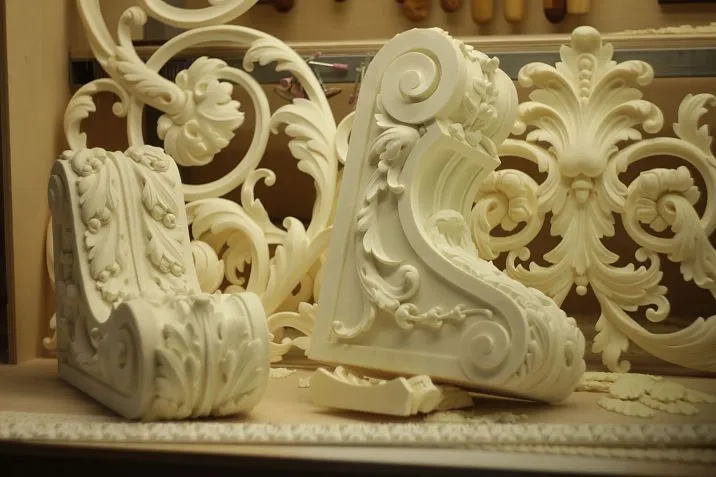
What turns an ordinary apartment into a dream home? What makes your heart beat faster as you step into your own dwelling? The answer lies in the details — those very elements invisible at first glance, which create an atmosphere of coziness, luxury, and individuality. Today, everyone can buy polyurethane moldings online and turn their home into a work of art, without leaving home and without spending a fortune.
The times when decorative moldings were a privilege of only aristocratic mansions have passed. The polymer technology revolution has given the world a unique opportunity — to recreate the grandeur of palace interiors in a modern apartment. And this is not just imitation — it's a new word in architectural decoration, where traditions meet innovations.
Imagine: just a few clicks of the mouse, and your home begins to transform. No more exhausting trips to hardware stores, no more disappointments from limited selection, no more compromises between dream and reality. The digital age opens up boundless possibilities for choice, where each decorative element can be examined in the finest details, compared with dozens of alternatives, and chosen exactly what resonates with your soul.




Digital Revolution in Architectural Decoration




New Era of Shopping Experience
Why settle for little when a whole universe of decorative possibilities lies before you? Online trade in architectural decoration has become a true blessing for anyone striving for beauty and perfection. Now, you no longer need to limit your imagination to the meager assortment that can fit on the shelves of an ordinary store.
Virtual catalogs offer thousands of decorative elements — from classic baroque ornaments to ultra-modern minimalist solutions. Each item is presented in high resolution with multiple angles, detailed descriptions of dimensions, technical specifications, and application recommendations. This enables informed decisions based on complete product information.
Comparison tables, filters by size, style, and price category turn the selection process into an exciting journey through the world of design possibilities. Recommendation systems suggest perfectly matching combinations of elements, creating harmonious compositions even for those without professional design skills.
Interactive planning tools allow you to virtually "try on" selected elements onto photos of your interior. This eliminates the risk of disappointment and guarantees that the final result will match your expectations.
Our factory also produces:


Advantages of Online Purchasing Decorative Elements
Time-saving has become one of the main factors in choosing online shopping. Instead of spending weekends visiting stores, just one evening is sufficient to explore the entire available assortment and make a final decision. The 24/7 availability of online catalogs allows you to choose decor at your convenience, without having to adjust to store operating hours.
Price transparency is another indisputable advantage. All prices are clearly and understandably indicated, without hidden markups or unexpected additional charges. Price comparison systems help select the optimal offer, while loyalty programs and seasonal discounts make purchases even more advantageous.
Home delivery frees you from having to handle logistics yourself. Professional courier services ensure safe transportation of even the most fragile and bulky items. Order tracking systems allow you to monitor the delivery process in real time.
Technical support and specialist consultations are available at any time via chat, phone, or email. This is especially important when selecting complex decorative compositions, where each detail must ideally match with the other elements.
Get Consultation
Polyurethane: a material that changed the game
Chemical Foundations of Modern Decoration
What makes polyurethane such a revolutionary material for producing decorative elements? The answer lies in its unique molecular structure, which combines the best properties of various polymers. This high-tech material is the result of a reaction between polyols and isocyanates, creating a three-dimensional network structure with unique characteristics.
The density of quality polyurethane ranges from 0.6 to 0.9 g/cm³, which is several times less than the density of traditional plaster or natural stone. At the same time, its strength characteristics remain at the highest level — the material withstands significant bending and impact loads without cracking or chipping.
The elasticity of polyurethane allows it to adapt to minor deformations of the base without damage. This is especially important in new buildings, where natural processes of shrinkage and thermal expansion of structures occur.
The chemical inertness of the material ensures resistance to household cleaning agents, atmospheric moisture, and most aggressive substances. This makes polyurethane products an ideal choice for spaces with high hygiene requirements — kitchens, bathrooms, medical facilities.
Technological Advantages of Production
Modern injection molding technologies allow reproducing the finest ornament details with jewel-like precision. The pressure in the molds reaches 100–150 bar, ensuring perfect filling of all recesses and protrusions, creating sharp edges and smooth transitions.
Computer modeling during the master model development stage guarantees mathematical accuracy of proportions and conformity to historical prototypes. CAD technologies allow creating the most complex three-dimensional ornaments that would be impossible to produce manually.
Temperature control system during the polymerization process ensures uniform curing of the material throughout the entire volume of the product. This eliminates the appearance of internal stresses and deformations that could manifest during operation.
Multi-stage quality control includes checking each batch of products for compliance with technical requirements. Linear dimensions are measured with precision to tenths of a millimeter, surface quality is checked, and material strength and elasticity are tested.
Operational Advantages of Polyurethane Products
The longevity of polyurethane decorative elements is measured in decades. Unlike plaster moldings, which require periodic repair and restoration, polyurethane products retain their original appearance throughout the entire service life of the building.
Moisture resistance opens up new possibilities for applying decorative elements. Now, you can create luxurious interiors in bathrooms, saunas, and swimming pools, without fearing deformation or destruction of the decor under the influence of steam and condensation.
Freeze resistance allows using polyurethane elements for exterior finishing in any climatic conditions. The material retains elasticity even at temperatures as low as -40°C, preventing cracks during winter.
Resistance to ultraviolet radiation is ensured by special stabilizing additives. Even under prolonged exposure to direct sunlight, the products do not fade or lose their mechanical properties.
Catalog of Possibilities: Variety of Decorative Solutions
Applied elements: versatility of use
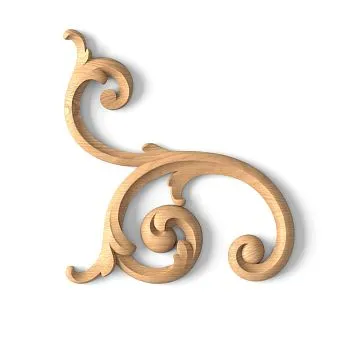
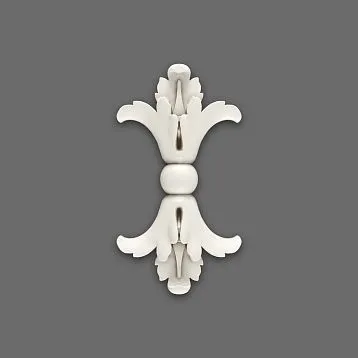
Polyurethane Appliqués represent the most versatile category of decorative elements, offering limitless opportunities for creative self-expression. These compact works of art can dramatically transform any surface — from furniture facades to architectural details of facades.
The size range of appliqués varies from miniature elements measuring 50×50 mm to large compositions exceeding one square meter. This variety allows selecting ideal proportions for any project — from decorating boxes to embellishing grand entrances.
The thematic diversity of ornaments is breathtaking. Classic botanical motifs coexist with geometric abstractions, historical replicas are complemented by original modern interpretations. Everyone will find elements resonating with their aesthetic preferences.
The functional versatility of appliqués allows their use not only as decorative elements but also as functional components. Appliqués on door handles, decorative switch plates, ornamental inserts in furniture facades — application possibilities are limited only by the designer's imagination.
Linear elements: architecture of space
Polyurethane moldings Form the architectural framework of interiors, creating clear lines and defining the proportions of space. These elements serve a dual function — aesthetic and practical — concealing technological joints and creating visual accents.
Ceiling cornices radically change the perception of room height. A properly chosen profile can visually raise the ceiling or, conversely, create a sense of intimacy and coziness. Multi-level cornice systems allow creating complex lighting compositions with concealed backlighting.
Wall moldings structure vertical surfaces, creating panel systems in the spirit of classical interiors. Horizontal divisions visually expand space, vertical ones increase ceiling height. Diagonal compositions add dynamism and modernity to classical forms.
Baseboards complete the architectural composition, creating a smooth transition between walls and floor. High baseboards impart a sense of grandeur, low ones emphasize modernity and minimalism. Complex profiles with cable channels solve practical tasks of communication routing.
Central compositions: focal points of interior
Ceiling rose fixtures serve as compositional centers, attracting attention and creating focal points in the interior. These elements are especially effective when combined with central lighting — chandeliers, pendant lights, decorative lanterns.
The size gradation of rose fixtures allows selecting optimal proportions for any room. Miniature fixtures with a diameter of 300–400 mm are ideal for compact spaces, monumental compositions with a diameter over one meter create impressive accents in large halls.
Stylistic diversity encompasses all historical epochs and modern directions. Strict neoclassical medallions, lavish baroque compositions, refined Empire rose fixtures, modern geometric abstractions — each style is represented in numerous variations.
Functional capabilities of modern rose fixtures go far beyond simple decoration. Built-in ventilation systems, concealed speakers, "smart home" elements are integrated into decorative compositions, creating technological solutions in classical forms.
Stylistic Directions: From Classic to Avant-Garde
Neo-classical elegance
Neoclassical style is experiencing a true renaissance in modern interior design. This direction successfully combines classical proportions and ornaments with modern materials and technologies. Polyurethane molding allows recreating all canonical neoclassical elements with mathematical precision.
Symmetry and proportionality are the foundations of neoclassical aesthetics. Each element must be strictly aligned with other details of the composition. The central axis of symmetry determines the placement of all decorative elements, creating a sense of harmony and order.
Neoclassical vegetal ornaments are characterized by stylization and graphic quality. Laurel wreaths, oak garlands, rosettes, and palmettes are reproduced with the characteristic restraint and nobility of this style. Excessive baroque opulence is avoided in favor of refined elegance.
Color solutions tend toward monochromaticity. White, cream, bone — traditional colors of neoclassical molding. Gold is applied sparingly, only to highlight the most important elements of the composition.
Baroque luxury in modern interpretation
Baroque remains unmatched in richness and expressiveness of decorative forms. Modern technologies allow recreating the entire complexity of baroque ornaments, preserving their emotional intensity and theatricality.
Asymmetrical compositions are a hallmark of baroque decoration. Each element seems to flow into the next, creating a sense of movement and dynamism. Spirals, scrolls, volutes intertwine into complex ornamental compositions full of hidden energy.
Multi-planar relief creates rich chiaroscuro effects, animating surfaces. Deep recesses, high protrusions, complex transitions between planes require virtuoso craftsmanship in producing master models.
Natural motifs in baroque interpretation acquire a fantastical character. Realistic leaves and flowers intertwine with mythological creatures, creating fairy-tale compositions full of symbolism and allegory.
Modern minimalism: beauty of simplicity
Minimalism imposes special requirements on the quality of decorative elements' execution. In the absence of complex ornaments, the purity of lines, precision of proportions, and flawless surfaces come to the fore.
Geometric forms dominate in minimalist aesthetics. Straight lines, perfect circles, sharp angles create a sense of order and calm. Each element must be mathematically precise and perfectly executed.
Functionality becomes the primary criterion for evaluating decorative elements. Each detail must have a practical justification — concealing technical communications, ensuring transitions between materials, creating visual accents.
Color restraint is characteristic of minimalist interiors. White, gray, black — the primary palette, supplemented by natural tones of wood and stone. Molding is usually painted to match wall color, creating monochromatic compositions.
Technical aspects of selection and application
Calculation of required materials
Accurate calculation of decorative elements quantity is the key to successful project implementation. Errors in calculations may lead to material shortages at the most inconvenient moment or unnecessary expenses on unused products.
Room measurements must be performed with maximum accuracy. Tape measure, laser distance meter, protractor — essential tools for professional measurements. All wall irregularities, protrusions, niches must be accounted for when creating element placement schematics.
Layout planning begins with determining central symmetry axes. From these, dimensions of repeating elements are marked, accounting for technological gaps and compensatory joints. Corner connections require special attention — here, standard elements often require trimming.
The material reserve should be 10-15% of the calculated amount. This compensates for possible errors during installation, damage during transportation, and the need to replace damaged elements during operation.
Compatibility with various types of surfaces
The adhesion of polyurethane elements depends on the type and condition of the substrate. Different materials require specific surface preparation and selection of appropriate adhesive compositions.
Gypsum board surfaces are the most favorable base for mounting decorative elements. A flat surface, good adhesion, and the ability to use various types of fasteners make gypsum board an ideal choice for modern interiors.
Concrete and brick walls require careful preparation. The surface must be cleaned of dust, old coatings, and efflorescence. Priming with strengthening compositions ensures strong adhesion of the adhesive to the base.
Wooden surfaces are subject to natural deformation, requiring the use of elastic adhesives. Wood must be treated with antiseptic to prevent biological damage.
Metallic bases require special preparation to ensure adhesion. Degreasing, sandblasting, and applying adhesive primers are necessary steps for preparing metallic surfaces.
Tools and materials for installation
Professional tools are a guarantee of quality installation of decorative elements. Saving on tools often results in additional costs for correcting defects and redoing work.
Measuring tools include rulers of various lengths, laser levels, squares, compasses. Measurement accuracy is critically important for creating symmetrical compositions and correctly placing elements.
Cutting tools must provide clean cuts without chips or burrs. Circular saws with fine-toothed blades, jigsaws with appropriate blades, and sharp knives are the main tools for trimming elements.
Adhesive compositions are selected based on the type of base and operating conditions. Polyurethane adhesives provide maximum joint strength, acrylic adhesives are suitable for indoor use, and silicone adhesives are for high-humidity areas.
Auxiliary materials include primers, sealants, and joint compounds. The quality of these materials directly affects the durability and appearance of decorative elements.
Economic Aspects and Cost Optimization
Comparative analysis of the cost of different materials
The economic efficiency of polyurethane decorative elements becomes evident when analyzing the total cost of ownership. Initial investments, operating expenses, and maintenance costs — all these factors must be considered when choosing materials.
The initial cost of polyurethane items is significantly lower than similar elements made of natural stone, carved wood, or wrought metal. At the same time, the quality of detail work and aesthetic characteristics remain at the highest level.
Transportation costs are minimized due to the low weight of polyurethane items. The cost of delivering one cubic meter of polyurethane elements is several times less than transporting an equivalent volume of stone or metal items.
Installation work does not require hiring highly skilled specialists or using complex equipment. This significantly reduces the overall project cost and shortens the time required to complete the work.
Operating expenses are practically nonexistent. Polyurethane elements require no special care, regular painting, or protective treatment. The service life is measured in decades without loss of original qualities.
Budget optimization strategies for the project
Phased implementation of the project allows distributing financial load over time. Starting with the most noticeable elements — ceiling moldings, central rosettes — you can create striking accents even with a limited budget.
Combining elements of different price categories allows creating rich compositions at reasonable costs. Expensive custom overlays can be combined with budget standard profiles, creating the impression of a unified design concept.
Seasonal sales and special offers allow purchasing quality products at significant discounts. Planning purchases with consideration of market seasonality can result in savings of up to 30-40% compared to regular prices.
Bulk purchases when implementing large-scale projects provide access to special prices and individual cooperation terms. Coordinating with neighbors during simultaneous repairs in a multi-apartment building can provide bulk discounts even for small orders.
Return on investment through increased property value
Quality decorative finishing significantly increases the market value of real estate. Expert appraisals show that investments in architectural decoration are recouped when selling the property at a premium.
Uniqueness and individuality of interior design become important competitive advantages in the real estate market. In an era of standard layouts and uniform finishes, original design solutions attract special attention from buyers.
The prestige and status of well-finished housing ensure higher liquidity of the property. Time spent on the market is reduced, and the number of potential buyers increases.
The durability of polyurethane decor guarantees maintaining an attractive appearance for many years. This is especially important for investment real estate, where the appearance must remain impeccable for a long time.
Practical tips for choosing and purchasing
Analysis of needs and project planning
Defining the stylistic concept is the first and most important stage of planning decorative finishes. Mixing different styles without a thought-out concept leads to eclectic chaos rather than a harmonious interior.
Studying examples of completed projects helps form an understanding of the possibilities of various decorative elements. Professional designers' portfolios, specialized publications, and online galleries are sources of inspiration and practical ideas.
Creating a detailed specification of required elements helps avoid impulsive purchases and ensures a systematic approach to decoration. Each element must have a clear functional purpose and seamlessly integrate into the overall composition.
Budget planning includes not only the cost of decorative elements but also associated expenses — adhesives, tools, installation work, finishing materials. A reserve for unforeseen expenses should be at least 15-20% of the main budget.
Criteria for evaluating product quality
Manufacturer's reputation is the first indicator of product quality. Companies with long-standing history, positive customer reviews, and quality certifications deserve greater trust than new market entrants with questionable reputations.
Material quality determines the durability and aesthetic characteristics of finished products. European polyurethane systems certified to international standards guarantee stable properties and safe application.
Accuracy of geometric parameters is critically important for creating quality compositions. Deviations in size exceeding 1-2 mm may result in visible gaps at joints and disruption of the overall composition harmony.
Surface quality must be flawless — free of pits, inclusions, or irregularities. Minor surface defects will be especially noticeable after painting, so their presence is unacceptable in quality products.
Ornament detailing indicates the quality of master models and manufacturing technology. Sharp edges, smooth transitions, absence of underfilling — signs of professional production.
Logistical aspects of delivery and storage
Packaging of decorative elements must provide reliable protection during transportation. Special inserts, shock-absorbing materials, sturdy packaging — mandatory features of professional packaging.
Transportation conditions affect the preservation of items. Avoiding sudden impacts, temperature fluctuations, and moisture exposure — key requirements for the logistical process.
Goods acceptance must be conducted immediately after delivery. All identified defects must be documented in the presence of the transport company's representative to enable claims.
Storage prior to installation requires adherence to certain conditions. Horizontal storage of long elements, protection against mechanical damage, maintaining stable temperature — key warehouse storage rules.
The order of material usage should be planned in advance. Elements requiring prolonged acclimatization must be delivered in advance. Fragile components should be unpacked immediately before installation.
Trends and prospects of the market
Technological innovations in production
Digital design technologies open new possibilities for creating unique decorative elements. 3D modeling allows virtually creating and testing complex ornaments before their physical realization.
Additive technologies — 3D printing of master models and even finished products — revolutionize manufacturing processes. The ability to quickly prototype reduces the time required to develop new products and lowers costs for creating unique elements.
Automation of production processes improves product quality and stability of characteristics. Robotic complexes ensure perfect repeatability of operations and eliminate human factor influence.
New material solutions expand designers' possibilities. Composite materials, integrated functional elements, smart coatings — directions of active research and development.
Environmental requirements and sustainable development
Material eco-friendliness has become a mandatory requirement of the modern market. Safety for human health, absence of harmful emissions, recyclability — criteria for evaluating modern decorative materials.
Energy efficiency of production affects the overall ecological safety of products. Use of renewable energy sources, optimization of technological processes, minimization of waste — priorities for responsible manufacturers.
A product's carbon footprint is considered when selecting suppliers by environmentally conscious consumers. Local production, optimization of logistics routes, use of eco-friendly transport — factors reducing environmental impact.
Circular economy implies the possibility of reusing materials after the end of their service life. Development of technologies for recycling polyurethane products — an important direction of scientific research.
Personalization and individualization of solutions
Customization of products has become a key trend in the modern market. Consumers seek uniqueness and are willing to pay extra for individual solutions reflecting their personality and individuality. Digital production technologies make it possible to create unique ornaments for a specific project without significant cost increases.
Interactive catalogs allow customers to participate in the creation process of decorative elements. Changing ornament parameters, combining different motifs, adapting sizes to specific conditions — capabilities of modern online configurators.
Virtual reality opens new horizons for project visualization. The ability to "walk through" a future interior, evaluate the impact of various decorative elements on the overall perception of space revolutionizes the design process.
Artificial intelligence helps create optimal compositions. Analysis of thousands of successful projects allows AI to suggest the most harmonious combinations of elements and color solutions for specific interiors.
Integration of "smart" technologies
The concept of "smart home" is reflected in decorative elements as well. Modern moldings can integrate various technological solutions while remaining aesthetically appealing.
Hidden lighting systems transform decorative elements into functional lighting solutions. LED strips embedded in moldings create striking contour lighting. Spotlights in sockets provide accent lighting.
Climate systems are integrated into architectural decor unnoticed by the eye. Ventilation grilles, masked by ornamental overlays, ensure air exchange without compromising interior aesthetics.
Multimedia solutions find a place even in classic interiors. Hidden speakers embedded in decorative elements provide high-quality sound accompaniment without disrupting the visual harmony of the space.
Security systems are integrated into decorative compositions. Motion sensors, hidden cameras, and access control elements are camouflaged within ornamental details, ensuring protection without compromising design.
Regional characteristics and cultural traditions
Adaptation to Russian realities
The Russian market for decorative materials has its own characteristics, linked to climatic conditions, cultural traditions, and the country's architectural heritage. Severe winters require special attention to material frost resistance and fastener reliability.
Traditions of Russian architecture are reflected in modern decorative solutions. Elements stylized as wood carving, church architecture imitations, and folk art motifs enjoy steady demand among Russian consumers.
The scale of Russian interiors requires corresponding solutions. High ceilings, spacious rooms, large window openings — all this dictates the need for large-format decorative elements with expressive proportions.
Economic efficiency remains the most important criterion for Russian consumers. Optimal price-to-quality ratio, durability, minimal operating costs — these are priorities when making purchasing decisions.
Northern regions: challenges and solutions
Extreme climatic conditions in the North impose special requirements on decorative materials. Temperatures down to -60°C, prolonged heating seasons, sharp humidity fluctuations — factors that must be considered when selecting decor.
Polyurethane elements demonstrate exceptional resistance to northern climates. Maintaining elasticity even at extremely low temperatures prevents cracking and deformation during winter.
Energy-saving properties of decorative elements gain special importance under prolonged heating seasons. Additional thermal insulation provided by polyurethane elements helps reduce heating costs.
Logistical features of northern regions require a special approach to planning deliveries. Seasonal delivery, limited transportation accessibility, need to create long-term reserves — factors complicating supply to remote sites.
Southern regions: adaptation to hot climate
High temperatures and intense solar radiation in southern regions require the use of special UV-stabilized compositions. Modern polyurethane systems maintain property stability even when heated to +80°C.
Humidity in subtropical regions creates favorable conditions for microbial growth. Biocidal additives in polyurethane compositions prevent mold and fungal growth on the surface of decorative elements.
Architectural traditions of Southern Russia are reflected in demand for corresponding decorative elements. Eastern motifs, elements of Caucasian architecture, Mediterranean styles find expression in modern polyurethane products.
The resort industry creates a special segment of demand for decorative materials. Hotels, restaurants, entertainment complexes require striking decorative solutions capable of creating a unique atmosphere and attracting tourists.
Professional installation secrets
Preparation Work
The quality of installing decorative elements largely depends on the thoroughness of preparatory work. Saving time at this stage inevitably affects the final result and the longevity of the decorative finish.
Foundation diagnostics include checking strength, moisture content, and surface flatness. Weak spots must be reinforced, unevenness leveled, and moisture adjusted to normative values. Ignoring these requirements may lead to element detachment during operation.
Marking symmetry axes is performed using professional tools. Laser levels, string lines, metal rulers ensure the required accuracy. All dimensions are checked twice — errors at this stage are practically impossible to correct.
Material acclimatization in the installation room must continue for at least 24 hours. This allows temperature equilibrium between elements and room, avoiding deformations during installation.
Tool and material preparation includes checking functionality, sharpening cutting edges, preparing adhesive compositions. Everything must be ready at the start of work — interruptions during installation are unacceptable.
Installation technology
Installation sequence is determined by the architectural logic of the composition. Start with main elements — cornices, frames, then proceed to overlay details. Disrupting the sequence may require redoing the work.
Adhesive is applied evenly across the entire contact surface. A notched trowel ensures the required thickness and uniformity of the adhesive layer. Open time is limited — work must be done quickly and confidently.
Positioning elements requires maximum precision. After pressing against the base, elements must not be moved — this compromises the integrity of the adhesive joint. Correct positioning must be achieved on the first attempt.
Excess adhesive must be removed immediately while the composition is still uncured. Removing hardened adhesive without damaging the surface is extremely difficult. A clean, damp cloth is the best tool for this operation.
Quality control is performed at every stage of work. Geometry of installation, joint quality, absence of defects — all must meet technical requirements.
Finishing and protection
Joint sealing ensures the monolithic integrity of the decorative composition. Acrylic sealants are matched to the base material's tone or colored after polymerization. The quality of sealing determines the overall impression of the work.
Surface priming prepares it for final coatings. Primer must ensure good adhesion with polyurethane and compatibility with the planned paint system. Cutting corners on primers is unacceptable.
Filling small defects is performed using special