












































































Article Contents:
- Psychology of choice: why wood?
- Subconscious attraction to natural materials
- Wood's energy and sleep quality
- Technical Specifications: What to Pay Attention To
- Wood moisture and structural stability
- Types of joints and frame strength
- Surface treatment and ecological safety
- Wood species: characteristics and features
- Oak: the king of trees in your bedroom
- Beech: European quality classic
- Ash: flexibility and strength in perfect harmony
- Spruce: accessibility and eco-friendliness
- Sizes and configurations: choosing according to your needs
- Standard size grid for wooden beds
- Non-standard solutions and custom orders
- Stylistic directions: from classic to modern
- Classic beds: timeless elegance
- Scandinavian minimalism: functionality and coziness
- Rustic and country: naturalness and individuality
- Ergonomics and comfort: a scientific approach to rest
- Bed height and ease of use
- Bed base and mattress support
- Storage space and functionality
- Raw Material Preparation and Forming
- Modern Wood Processing Methods
- Quality Control and Production Standards
- Care and maintenance: preserving beauty for decades
- Daily care for a wooden bed
- Protection Against Damage and Restoration
- Economic aspects: investment in the future
- Cost of owning a wooden bed
- Factors affecting the price
- Comparison with alternative materials
- Interior psychology: how a wooden bed affects the bedroom atmosphere
- Color psychology of natural wood
- Textures and tactile sensations
- Trends and innovations in wooden bed design
- Eco-trend and sustainable consumption
- Integration of modern technologies
- Personalization and customization
- Conclusion: the choice that will change your life
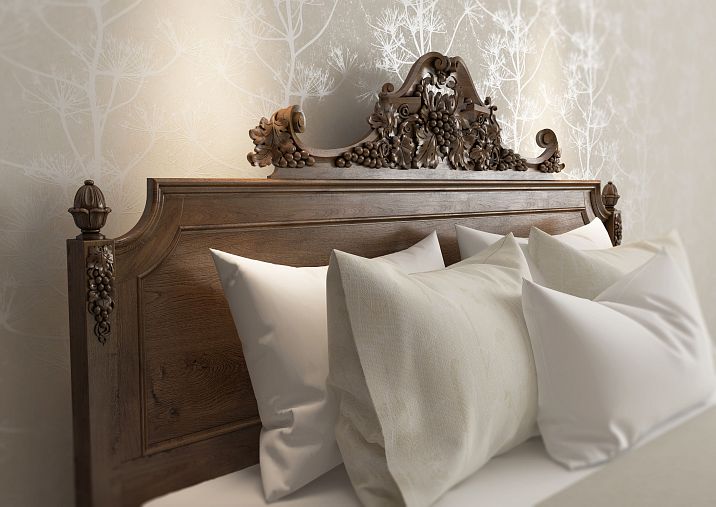
Have you ever thought about how many hours of your life you spend in bed? One-third of a human's existence is linked to sleep, and our well-being, productivity, and health depend on the quality of this rest. That is why choosing a bed becomes one of the most important decisions when furnishing a home. And if you decided to buy a bed made of natural wood, you are already on the right path to creating the perfect place for recovery.
Natural wood in the bedroom is not just a fashion statement or aesthetic preference. It is a conscious choice made by someone who understands the value of quality sleep and cares about their health. Every wooden bed holds the energy of living wood, its ability to create a special microclimate and an atmosphere of tranquility.


Psychology of choice: why wood?




Subconscious attraction to natural materials
Humans are genetically linked to nature. For thousands of years, our ancestors lived surrounded by natural materials, and this memory is passed down from generation to generation. When we are near wooden objects, our subconscious perceives this as returning home.
Modern neuro-psychological research confirms: the presence of natural wood in the bedroom activates the parasympathetic nervous system, responsible for relaxation and recovery. Touching a wooden surface reduces cortisol levels — the stress hormone — and the natural scent of wood promotes serotonin production.
Our factory also produces:


Wood's energy and sleep quality
Different types of wood have unique energetic properties. Oak emits strength and stability, helping to gain confidence and inner balance. Beech creates an atmosphere of warmth and coziness, promoting deep relaxation. Pine fills the room with freshness and purity, as if you are falling asleep in a forest glade.
These features are not mysticism — they have a fully scientific explanation. Wood continues to "breathe" even after processing, regulating air humidity and enriching it with phytoncides — natural antiseptics.
Get Consultation
Technical Specifications: What to Pay Attention To
Wood moisture and structural stability
The quality of a wooden bed largely depends on the proper preparation of the material. The moisture content of wood should be 8-12% — this is the optimal indicator for furniture used in living spaces. Exceeding this parameter may lead to deformation, cracking, and squeaking.
The process of drying wood is a whole science. Kiln drying at controlled temperature and humidity allows excess moisture to be removed while preserving all valuable properties of the material. Quality manufacturers use multi-stage drying regimes that eliminate internal stresses.
Types of joints and frame strength
Modern wooden beds use various types of joints, each with its own advantages:
Dowel joints — a classic method tested over centuries. Wooden dowels fit into grooves with a tight fit, creating an exceptionally strong connection without using metal fasteners.
Laminated joints — a modern interpretation of traditional techniques. Thin wooden plates (lamellae) are glued into special grooves, providing high strength while retaining some flexibility in the joint.
Dowel-type fasteners — round wooden rods glued with a special compound. This method allows the bed to be disassembled and reassembled without losing strength.
Surface treatment and ecological safety
The final finish of a wooden bed affects not only its appearance but also its ecological characteristics. Natural oils and waxes preserve the wood's ability to "breathe," highlight its natural texture, and provide tactile comfort.
Coatings provide stronger protection, but it is important to ensure their safety. Modern water-based varnishes do not contain volatile organic compounds and are completely safe for health.
Wood species: characteristics and features
Oak: the king of trees in your bedroom
Oak beds are synonymous with prestige and durability. The density of oak wood reaches 700 kg/m³, providing exceptional structural strength. The characteristic coarse texture with pronounced growth rings creates a unique decorative effect.
Oak contains a high concentration of tannins — natural preservatives that protect wood from rot, insects, and fungal damage. This makes oak beds virtually eternal with proper care.
The color palette of oak ranges from light yellow to dark brown tones. Over time, the wood develops a noble patina, becoming even more beautiful.
Book: European Quality Classics
Beech beds have a uniform structure and a beautiful wood grain pattern. Beech density is 650-680 kg/m³, providing excellent strength at a more affordable price compared to oak.
Beech's natural color is light pinkish-red. The wood takes staining well, allowing for virtually any desired shade.
Beech's unique feature is its ability to be steamed, which changes the wood's color to a richer red-brown. This material is called 'red beech' and is especially prized in furniture manufacturing.
Ash: flexibility and strength in perfect harmony
Ash beds combine the strength of oak with a lighter tone and striking grain pattern. Ash wood has high impact resistance, making it ideal for crafting furniture with complex shapes.
Ash's light color with clearly defined growth rings creates a sense of lightness and airiness. This species is ideal for modern Scandinavian-style interiors.
Pine: accessibility and eco-friendliness
Pine beds — an excellent choice for those who want to buy a bed made of natural wood at a reasonable price. Pine's soft wood is easy to work with, allowing for the creation of complex shapes with decorative elements.
Pine's high resin content provides natural protection against pests and creates a distinctive pine aroma, which many find soothing and beneficial to health.
Sizes and configurations: choose according to your needs
Standard size grid for wooden beds
Single beds (80-90 cm wide) are ideal for children's rooms, guest bedrooms, or small spaces. Despite their compactness, a quality wooden single bed ensures full, comfortable rest.
Queen-sized models (120-140 cm) represent a compromise between space-saving and comfort. This width allows free movement during sleep without feeling cramped.
King-sized beds (160-200 cm) — the choice for couples and those preferring maximum sleeping space. A 180 cm width is considered optimal for comfortable sleep for two people.
Non-standard solutions and custom orders
Modern production allows manufacturing beds in non-standard sizes to meet specific customer needs. This is especially relevant for rooms with non-standard layouts or for people of non-standard height.
The ability to order a bed of exact size is one of the advantages of working with manufacturers of high-quality solid wood furniture.
Stylistic Directions: From Classic to Modern
Classic beds: timeless elegance
Classic wooden beds are characterized by strict proportions, symmetrical composition, and use of traditional decorative elements. High carved backs, turned legs, noble patina — all of this creates an atmosphere of aristocratic luxury.
For classic interiors, dark wood species — oak, walnut, mahogany — are preferred. Carved elements should be executed with high craftsmanship, demonstrating traditional woodworking techniques.
Scandinavian minimalism: functionality and coziness
Scandinavian style in wooden beds implies simple forms, light wood tones, and absence of excessive decoration. Emphasis is placed on material quality and craftsmanship excellence.
Scandinavian beds feature low backs, rounded corners, and use of contrasting materials — wood and textile, wood and metal. The goal is to create a sense of spaciousness, light, and naturalness.
Rustic and country: naturalness and individuality
Rustic style in wooden beds implies preserving the natural wood texture, using unplaned boards, and retaining traces of handwork. Such beds create a sense of closeness to nature and rustic coziness.
For country-style beds, local wood species with minimal processing are often used. Wrought iron elements, coarse textiles, and natural materials are welcomed.
Ergonomics and comfort: a scientific approach to rest
Bed height and ease of use
Correct bed height is critically important for comfortable use. Standard height is 50-60 cm from floor to top of mattress. At this height, a person of average height can sit on the bed without straining muscles, and their thighs will be parallel to the floor.
For elderly individuals or those with mobility issues, raising the bed height may be necessary to facilitate getting in and out of bed.
Bed base and mattress support
Modern wooden beds use various types of bases:
A solid base made of plywood or MDF provides even support across the entire mattress surface. Suitable for mattresses of any firmness, but does not allow ventilation.
A slatted base consists of wooden or metal slats mounted on a frame. Provides excellent mattress ventilation and additional cushioning.
An orthopedic base with adjustable firmness in individual zones allows customization of support to match the person's anatomical features.
Storage space and functionality
Modern solid wood beds may include additional functional elements:
- Drawers in the bed base for storing bedding
- Lift mechanism for access to space under the mattress
- Built-in bedside tables
- Shelves in the headboard for books and personal items
Manufacturing technologies: from raw material to finished product
Modern wood processing methods
The production of high-quality wooden beds begins with proper preparation and processing of the material. Modern technologies allow for the full potential of natural wood to be realized:
Vacuum drying accelerates the moisture removal process and allows for more precise control of the final wood parameters.
Thermal treatment alters the wood structure at the molecular level, increasing its stability and resistance to external influences.
Pressure-impregnation with protective compounds ensures deep penetration of protective substances into the wood structure.
Quality control and production standards
Serious solid wood furniture manufacturers implement a multi-level quality control system:
- Incoming inspection of raw materials for compliance with requirements
- Intermediate inspection at each stage of production
- Final inspection of finished products
- Testing for strength and durability
Modern standards impose strict requirements for ecological safety, formaldehyde emissions, and furniture strength characteristics.
Care and maintenance: preserving beauty for decades
Daily care of a wooden bed
Natural wood requires gentle but simple care. Regular cleaning with dry or slightly damp cloth removes dust and dirt without damaging the finish.
It is important to avoid using aggressive cleaning agents, abrasive materials, or excessive moisture. Natural wood is a 'living' material that reacts to changes in humidity and temperature.
Protection from damage and restoration
Using coasters under glasses, protective pads, and proper placement relative to heat sources and direct sunlight extends the life of wooden furniture.
Minor scratches and scuffs on natural wood can be removed using special waxes and polishing compounds. More serious damage requires professional intervention, but even in such cases, wooden furniture can be fully restored.
Economic aspects: investment in the future
Cost of owning a wooden bed
When considering the cost of a wooden bed, it is important to take into account not only the initial price but also the total cost of ownership. A quality solid wood bed can serve for decades without losing functionality or aesthetic appeal.
If the cost of a quality wooden bed is divided by the number of years of use, it turns out that annual expenses are comparable to the price of budget furniture, which must be replaced every few years.
Factors affecting price
The cost of a wooden bed depends on many factors:
- Wood species (oak and exotic species are more expensive than pine and birch)
- Complexity of construction and presence of decorative elements
- Quality of processing and final finish
- Size of the item
- Manufacturer's Reputation
- Additional options (drawers, lift mechanisms)
Comparison with alternative materials
Compared to beds made of MDF, particleboard, or metal, wooden models have several advantages:
- Ecological safety
- Durability and Repairability
- Uniqueness of each item
- Ability to improve over time
- High residual value
Psychology of interior: how a wooden bed affects the atmosphere of the bedroom
Color psychology of natural wood
Natural wood tones have a beneficial effect on a person's mental state. Warm tones of oak and beech create a sense of coziness and security, while light tones of ash and birch evoke feelings of lightness and freshness.
Natural wood colors do not cause eye strain or irritate the nervous system. On the contrary, they promote relaxation and encourage healthy sleep.
Textures and tactile sensations
Touching a natural wooden surface activates tactile receptors and creates positive emotional associations. A smooth, yet non-slippery surface of well-processed wood is pleasant to the touch.
Natural wood texture creates visual interest, offering the eye numerous details to examine. Unlike the monotonous surfaces of artificial materials, wood never appears dull or boring.
Trends and innovations in wooden bed design
Ecological trend and sustainable consumption
Growing consumer ecological awareness makes wooden furniture especially relevant. People increasingly choose quality, durable items over cheap, disposable alternatives.
Manufacturers respond to this demand by adopting environmentally responsible practices: using wood from managed forests, safe finishes, and minimizing production waste.
Integration of Modern Technologies
Modern wooden beds can integrate technological innovations without compromising the aesthetics of natural material:
- Built-in USB charging ports in the headboard
- Dimmable lighting systems
- Wireless charging devices integrated into bedside tables
- Mattress climate control systems
Personalization and Customization
Modern consumers value uniqueness and the ability to customize furniture to their needs. Manufacturers offer wide customization options:
- Choice of wood species and shade
- Custom sizing for specific room
- Additional functional elements
- Custom carving or engraving
If you decided to buy a bed made of natural woodIt is important to find a manufacturer who offers exactly this level of service and attention to detail.
Conclusion: a choice that will change your life
Solution to buy a bed made of natural wood This is not just buying furniture, it is an investment in quality of life, health, and well-being. Natural wood creates a unique atmosphere in the bedroom, promoting quality sleep and recovery.
Each wooden bed is unique due to the natural wood grain. It becomes part of the family's history, witnessing important life moments. Quality solid wood furniture can be passed down from generation to generation, preserving and even increasing its value.
Modern manufacturing technologies make wooden beds not only beautiful but also exceptionally functional. Integration of additional storage systems, use of advanced wood processing methods, application of eco-friendly finishes — all of this makes natural wood a material of the future.
When choosing a wooden bed, it is important to pay attention to the manufacturer's reputation, quality of materials used, and production technologies. Do not cut corners on what will serve you for decades.
STAVROS embodies the best traditions of furniture craftsmanship in modern realities. Long experience working with natural wood, use of only premium materials, modern production technologies, and individual approach to each order — all of this makes STAVROS a reliable partner in creating the perfect sleeping space.
Choosing STAVROS, you get not just furniture, but a work of art created by masters of their craft. Each bed is made with attention to the smallest details and with an understanding that it will become the central element of your bedroom for many years.
Natural wood, craftsmanship, modern technologies, and individual approach — these are exactly the principles underlying the philosophy of STAVROS. Choose quality, eco-friendliness, and beauty — choose a bed made of natural wood from Stavros.


