












































































Article Contents:
- History of the development of furniture curtain rods
- From ancient temples to modern interiors
- Industrial Revolution and evolution of production
- Choice of materials and wood species
- Oak - king of wood species
- Beech - embodiment of European elegance
- Ash - balance of beauty and practicality
- Technical specifications and quality standards
- Humidity and geometric stability
- Requirements for Surface Quality
- Geometric accuracy
- Modern manufacturing technologies
- Raw material preparation and sorting
- Milling complex profiles
- Quality of processing and finishing operations
- Types and classification of curtain rods
- Classification by Purpose
- Classification by profile complexity
- Classification by installation method
- Style directions in curtain rod design
- Classic style and its interpretations
- Modern Stylistic Solutions
- Eclecticism and custom solutions
- Application in various interior types
- Residential interiors
- Commercial interiors
- Specialized Applications
- Installation and mounting of curtain rods
- Preparatory work
- Cutting and Fitting Elements
- Mounting methods
- Final processing of joints
- Care and maintenance of wooden curtain rods
- Daily Maintenance
- Seasonal maintenance
- Repair and Restoration
- Supplier selection criteria
- Assessment of production capabilities
- Quality of raw materials and components
- Service and technical support
- Logistics and delivery conditions
- Economic Aspects and Pricing
- Factors Affecting Cost
- Cost Optimization
- Total cost of ownership
- Industry development trends
- Technological Innovations
- Ecological requirements
- Personalization and customization
- Frequently Asked Questions (FAQ)
- Which wood species to choose for curtain rods?
- How to calculate the required amount of curtain rod?
- Can curtain rods be installed by oneself?
- How to care for wooden curtain rods?
- How long do wooden curtain rods last?
- Can a damaged crown be restored?
- Do crowns affect furniture cost?
- What tools are needed for installation?
- Can crowns be used in humid areas?
- How to choose a reliable supplier?
- Conclusion
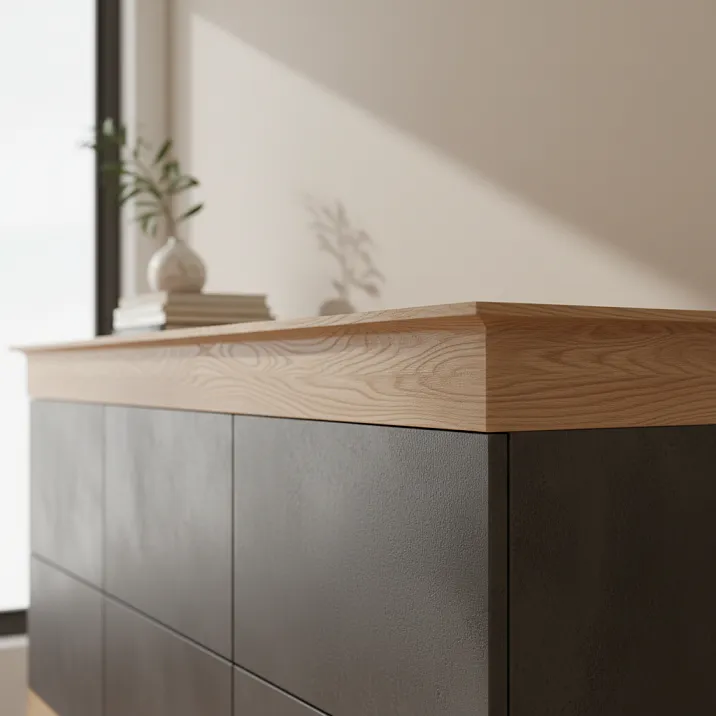
wherebuy wooden cornice for furnitureof the highest quality, it is important to understand not only the aesthetic value of these elements, but also their functional significance in creating a finished interior.
ModernTrimming Itemsmade from natural wood are miniature architectural elements, where every line and curve creates a unique play of light and shadow. Choosingbuy wooden cornice for furniturebecomes an investment in the longevity and prestige of the interior, demonstrating impeccable taste and understanding of the value of natural materials. These elements do not merely decorate—they create an atmosphere of refinement and respectability, which distinguishes truly quality furniture from mass-produced items.


History of Furniture Crowns Development




From Ancient Temples to Modern Interiors
The history of furniture crowns is inseparably linked to the development of architecture and decorative arts. The earliest examples of crown elements can be found in ancient Greek and Roman buildings, where they served not only an aesthetic but also a protective function. Classical architectural orders—Doric, Ionic, Corinthian—laid the foundations of proportions and forms that are still considered benchmarks in design.
In this periodWooden trimbecomes an indispensable part of elite furniture.
The Baroque era brought theatricality and opulence to furniture decoration. Crowns became increasingly complex and expressive, incorporating carved elements, gilding, and inlays. Masters of that time understood: a quality crown can radically change the perception of the entire piece of furniture. The Classicism of the 18th century organized these forms, creating strict canons that remain relevant today.
Our factory also produces:


Industrial Revolution and Evolution of Production
The 19th century radically changed approaches to producing furniture crowns. The advent of steam engines and mechanized lathes allowed for the mass production of decorative elements, but this threatened traditional craftsmanship and the individuality of each item.
The 'Arts and Crafts' movement, which emerged in England as a reaction to industrialization, advocated for the value of handcrafted work and the quality of natural materials. Its ideologues understood: it is impossible to replace a carpenter's craftsmanship with machine production without losing quality and uniqueness. This movement had a tremendous impact on productionmolding productsaround the world.
The 20th century brought new styles and technologies. Modernism transformed crowns into smooth, organic forms; Art Deco added geometric clarity; functionalism reduced decoration to strict minimalism. Each style interpreted the role of decorative elements differently, but one thing remained unchanged: a quality wooden crown has always been a hallmark of elite furniture.
Get Consultation
Material Selection and Wood Species
Oak - the King of Wood Species
Oak is rightfully considered the benchmark material for manufacturing premium furniture crowns. Its unique physical and mechanical properties make it the ideal choice for creating durable and beautiful items. The density of oak wood reaches 700 kg/m³, ensuring exceptional strength and durability of finished products.
The tangential shrinkage of oak is only 8.6%, guaranteeing the stability of crown geometry even under significant fluctuations in humidity and temperature. This is especially important for furniture used in various climatic conditions.oak trim buyThis means investing in longevity and prestige.
The color palette of oak wood is strikingly diverse—ranging from light yellow to dark brown depending on growing conditions, tree age, and processing method. Young oak has light, almost white sapwood tones; mature oak features rich brown heartwood tones. Especially prized is the ‘black oak’ that has lain for centuries in water and acquired a noble black-gray hue.
The texture of oak wood creates unique decorative effects. Large pores form a characteristic pattern, especially pronounced on tangential cuts. Heartwood rays create beautiful radial stripes on radial cuts, adding depth and dimension to the crown’s surface.
Beech - Embodiment of European Elegance
Beech occupies a special place among materials for premium furniture crowns due to its uniform structure and noble pinkish hue. The density of beech wood is 680 kg/m³, ensuring excellent workability with high strength and durability of finished products.
Beech skirting boardsIt features exceptional clean milling. The material practically does not chip during processing, allowing for the creation of crowns with the most complex profiles, fine details, and smooth transitions. This makes beech an ideal choice for classic interiors, where precise reproduction of architectural elements is crucial.
The natural color of freshly cut beech ranges from cream-white to soft pink. Under the influence of light and air, the wood gradually darkens, acquiring a noble reddish-brown hue. This natural 'ripening' process occurs evenly and adds particular appeal to beech crowns.
Beech wood has natural antibacterial properties, making it especially suitable for use in children's rooms and areas with high hygiene requirements. Modern processing technologies allow these beneficial properties to be preserved regardless of the type of finish applied.
Ash - the balance of beauty and practicality
Ash represents an ideal combination of aesthetic and functional qualities. This species is especially popular in modern interior design due to its light color and distinctive texture. The density of ash wood is 650-700 kg/m³, providing high strength relative to its relatively low weight.
Ash is distinguished by exceptionally high impact toughness - 108 kJ/m², making ash-made cornices resistant to mechanical damage. This is especially important during transportation and installation of products. The bending strength coefficient is 124 MPa, allowing the creation of large-sized cornices without the risk of deformation.
The color range of ash includes a wide spectrum of shades from cream-white to light brown. The contrasting texture with clearly defined growth rings creates an attractive pattern, especially effective on radial cuts. This natural decorative quality makes ash cornices self-sufficient even without additional staining.
Ash wood readily accepts all types of finishing treatments. It easily stains and is suitable for any desired shade from white to dark brown. The species absorbs dyes well, ensuring uniform coloring across the entire cornice surface.
Technical Specifications and Quality Standards
Moisture and geometric stability
The quality of wooden cornices largely depends on proper preparation of raw material. The moisture content of wood for premium products should not exceed 8-12%. This parameter is critically important for ensuring the geometric stability of finished cornices during operation.
Kiln-drying of wood is carried out according to specially developed regimes with gradual reduction of moisture and controlled temperature increase. For oak, a gentle regime with a maximum temperature of 55°C is used, for beech and ash - up to 65°C. The drying process takes 15 to 30 days depending on the material thickness and wood species.
After drying, wood undergoes a conditioning period - stabilization of moisture throughout the board's cross-section. This process may take up to 7 days and allows internal stresses developed during drying to be relieved. Only after conditioning is the material ready for mechanical processing.
Moisture control is performed using high-precision electronic moisture meters. Measurements are taken at several points on each board at a depth of 1/4 of its thickness. The variation in readings should not exceed 2%, ensuring uniform drying of finished products.
Requirements for surface quality
The surface of premium wooden cornices must meet the highest quality standards. The roughness class should not exceed Ra 1.6 microns for items under transparent finish and Ra 3.2 microns for cornices under opaque finish. Achieving such surface cleanliness requires the use of specialized high-precision equipment.
Profile milling is performed on CNC machines using carbide tools. The cutting edges of the milling cutters are sharpened with micron precision, and the angles are individually selected for each wood species. The cutting speed for oak is 40-60 m/min, for beech and ash - 60-80 m/min.
Multi-pass processing allows achieving ideal surface quality without additional sanding. The rough pass removes the bulk of the material, while the finishing passes form the final profile. Spindle runout does not exceed 0.002 mm, eliminating the appearance of scratches or waviness on the surface.
Surface quality control is performed both visually and instrumentally. Profilometers are used to measure roughness, and optical systems detect the smallest defects. Each batch of products undergoes selective control using statistical methods.
Geometric accuracy
The accuracy of wooden cornice manufacturing determines the quality of their installation and the appearance of the finished product. Deviations from nominal dimensions should not exceed ±0.2 mm for overall dimensions and ±0.1 mm for profile elements. Such precision is achievable only with the use of modern high-precision equipment.
Geometry control is performed using coordinate measuring machines and special templates. Each profile has a standard sample against which all manufactured items are compared. Automated control systems allow detecting deviations in real-time and adjusting processing parameters.
The straightness of cornices should not deviate more than 1 mm over a 2-meter length. Control is performed using inspection rulers and optical systems. Warping of blanks is not permitted - this is achieved by proper orientation of growth rings and control of stresses in the wood.
The quality of angles and joints is especially important for the appearance of the finished product. Angles must be exactly 90° or match project values with a tolerance of ±5'. Radiuses of fillets are controlled using special templates with precision ±0.05 mm.
Modern manufacturing technologies
Raw material preparation and sorting
Production of trim elementsIt begins with careful selection and preparation of wood. Each board undergoes visual inspection for defects: knots, cracks, sapwood, rot, insect damage. Only first-grade wood without visible defects is used for manufacturing premium cornices.
Sorting is performed not only by quality but also by color and texture. Boards with similar characteristics are grouped into batches, ensuring uniform color of finished products. Special attention is paid to grain direction - all blanks for a single cornice must have the same orientation of growth rings.
Board cutting is performed taking into account grain direction and defect placement. Modern optimization systems allow maximum efficient use of raw material, minimizing waste. Computer programs calculate the optimal cutting layout considering all technical requirements.
Blanks are glued along length and width using water-resistant polyurethane adhesives. Micro-dowel joints ensure joint strength exceeding the strength of the wood itself. Pressing pressure is 1.2-1.5 MPa, and holding time under pressure is at least 4 hours.
Milling of complex profiles
Creating complex cornice profiles requires specialized equipment and tools. Modern CNC machining centers allow manufacturing products of any complexity with high precision and productivity. The CNC system ensures perfect geometric repeatability and eliminates human factor influence.
Tools for milling cornices are individually manufactured for each profile. Carbide inserts with coatings are used, ensuring durability and processing quality. The geometry of cutting edges is calculated based on the properties of the processed wood and required surface quality.
Cooling and chip removal systems prevent overheating of blanks and tools. Air cooling with forced circulation is used. Effective aspiration removes chips from the cutting zone, preventing scratches and chips on the surface.
Dimensional control during processing is automated. Laser measurement systems monitor blank dimensions and adjust tool movement trajectory. This ensures stable product quality and minimizes scrap.
Quality of processing and finishing operations
After milling, cornices undergo quality control and, if necessary, additional processing. Sanding is applied only in exceptional cases, as quality milling does not require additional surface treatment. Special sanding machines with copying devices are used if necessary.
Calibration ensures precise dimensions of finished products. Modern calibration machines allow maintaining tolerances of ±0.05 mm in thickness. The automatic feed system ensures uniform processing speed and prevents step formation on the surface.
End milling of valances to size is performed on high-precision end milling machines with laser positioning systems. The quality of the end cut is critically important for the appearance of joints. Carbide-tipped saws are used, ensuring a clean cut without chipping.
Packaging of finished products is performed using protective materials that prevent mechanical damage during transportation. Valances are placed in special containers with soft padding. Each packaging unit is marked with the profile, dimensions, wood species, and manufacturing date.
Types and classification of valances
Classification by purpose
Furniture corniceare classified according to various criteria, the main one being the intended use. Kitchen valances must have increased moisture resistance and temperature stability. They often integrate lighting and ventilation systems, which impose special requirements on construction and materials.
Valances for living room furniture feature a wide variety of profiles and decorative elements. Here, complex multi-level forms, carved details, and contrasting material combinations are appropriate. The dimensions of such valances can be significantly larger — from 80 to 150 mm in height to create a monumental effect.
Bedroom valances tend toward calmer, soothing forms. Soft lines, natural wood tones, and minimal decorative elements create an atmosphere of peace and relaxation. The height of such valances usually does not exceed 80 mm, creating a delicate accent without visual heaviness.
Office furniture requires strict, functional solutions. Valances must match the corporate style and create a professional atmosphere. Simple geometric forms, neutral colors, emphasis on material quality and precision — these are the main design principles of office valances.
Classification by profile complexity
Simple rectangular profiles are the most universal and economical to produce. They suit modern minimalist interiors where clean lines and material quality are important. Such valances may have slight rounded corners to soften the geometry.
Profiled valances include various architectural elements: quarter-rounds, moldings, grooves, bevels. Each element has specific proportions and purpose. Quarter-rounds create stepped profiles, moldings add plasticity, grooves provide classic rigidity.
Complex multi-level profiles reproduce classical architectural forms. They may include up to 5-7 different elements, creating rich play of light and shadow. Manufacturing such valances requires special tools and high operator skill.
Carved valances are works of art. Hand carving allows creating unique decorative elements: rosettes, leaves, geometric ornaments. Such items are made individually according to custom sketches.
Classification by installation method
Surface-mounted valances are attached over the furniture frame and are the most common type. They are easy to install and can be replaced without damaging the main structure. Mounting is done with self-tapping screws or special clips.
Recessed valances are installed into specially milled grooves in the furniture frame. This solution creates a more integrated appearance but requires precise matching of groove and valance dimensions. Recessed valances are often used in premium furniture.
Suspended valances are attached to the ceiling and create a "floating" cabinet effect. This solution visually increases space and adds lightness to the composition. The suspension system construction must ensure secure mounting with minimal visible elements.
Modular valances consist of separate sections connected by special elements. This allows creating compositions of any complexity and easily adapting them to different furniture sizes.
Style directions in valance design
Classic style and its interpretations
Classic valances are based on the canons of architectural orders developed in antiquity and refined during the Renaissance.Wooden moldingsIn the classic style, they are characterized by strict proportions and clear hierarchy of elements.
Doric order is distinguished by severe simplicity of forms. Valances in the Doric style have minimal decorative elements, with emphasis on correct proportions and execution quality. The color palette tends toward natural wood tones or noble white.
Ionic order is more decorative and elegant. Characteristic elements — volutes, ovals, beads — create rich surface plasticity. Valances in the Ionic style suit formal interiors where representation and grandeur are important.
Corinthian order is the most decorative and luxurious. Valances include plant motifs, complex carved elements, rich profiling. Such items require the highest level of craftsmanship and suit exclusive interiors.
Modern stylistic solutions
Minimalist valances reflect the philosophy "less is more". Simple geometric forms, perfect surface quality, emphasis on material beauty — these are the main principles of minimalism.Wooden profileThe profile in such valances may be practically invisible, creating only a subtle shadow.
Scandinavian style embodies connection with nature and eco-friendliness. Valances made of light wood species with natural finish create an atmosphere of northern restraint and coziness. Forms are simple, without excessive decoration, colors are natural.
Loft and industrial style introduce the aesthetics of industrial spaces. Valances may imitate metal structures, have an aged effect, rough texture. Combination of wood with metal elements creates the characteristic atmosphere of the style.
Ecological style emphasizes natural materials. Valances retain the natural wood texture and color, with minimal coatings. Forms may be deliberately "irregular," mimicking natural curves.
Eclecticism and original solutions
Modern design often combines elements of various styles, creating unique original compositions. Classic profiles can be complemented by modern materials, traditional forms by unexpected color solutions.
Ethnic styles bring the flavor of various cultures. Asian motifs are characterized by simplicity of forms and naturalness of materials. African elements add expressiveness and contrast. American country creates the atmosphere of a farmhouse.
Futuristic solutions experiment with form and technology. Use of curved surfaces, integration of modern materials, unusual color effects create the facades of the future.
Retro styles revive the aesthetics of past eras. Art Deco with its geometric forms and contrasting combinations, modernism with its smooth organic lines, Soviet modernism with its monumentality — each style requires its own approach to designing cornices.
Application in Various Interior Types
Residential interiors
In modern apartments and housesbuy wooden cornice for furnituremeans investing in the long-term beauty of the interior. Living rooms require a special approach — here, cornices often become the main decorative accent. Bookcases, display cases, and wall panels with cornices create a sense of solidity and respectability.
Bedrooms require more delicate solutions. Cornices should create an atmosphere of calm and comfort, without overloading the space with unnecessary details. Wardrobes with properly chosen cornices look like built-in furniture, visually expanding the space.
Children's rooms require special attention to the safety of materials. All finishes must be eco-friendly, and constructions — safe for children. Bright color solutions can become accent elements, but balance is important.
Hallways and corridors often have limited space, so cornices here should be compact but expressive. Built-in wardrobes with quality cornices create an impression of thoughtful and complete design.
Commercial interiors
Office spaces require strict, functional solutions. Cornices must match the corporate style and create a business atmosphere.Wooden profiles priceof which the quality justifies, become an investment in the company's image.
Hotels and restaurants use cornices as an element to create a specific atmosphere. Classic interiors require corresponding cornices with rich profiles, modern ones — minimalist solutions. Beauty is important, but so is practicality — items must be easy to clean and retain their appearance.
Medical facilities have special requirements for materials and finishes. All elements must be hygienic, easy to disinfect, and not accumulate dust or bacteria. Wooden cornices with special antibacterial coatings meet these requirements.
Educational institutions require durable and long-lasting solutions. Cornices must withstand intensive use, be resistant to mechanical damage, and be easy to repair when necessary.
Specialized Applications
Museums and exhibition halls use cornices to create the appropriate exhibition atmosphere. Display cases with classic cornices emphasize the value of exhibits, creating a sense of solemnity and significance. Aesthetics are important, but so is preservation — materials must not emit harmful substances.
Private collections and home offices require an individual approach. Cornices can be made according to special sketches reflecting the owner's interests and tastes. Such items often become family heirlooms, passed down from generation to generation.
Yachts and water-based homes have special requirements for moisture resistance and material stability. Special wood species and coatings that withstand marine climate are used. Cornices must retain their beauty and functionality under extreme conditions.
Yachts and floating homes require special requirements for moisture resistance and material stability. Special wood species and coatings resistant to marine climate are used. Eaves must retain their beauty and functionality under extreme conditions.
Installation and mounting of cornices
Preparation Work
Quality installation of wooden cornices begins with careful preparation of the work area and checking all dimensions. Surfaces of furniture must be absolutely clean, degreased, and level. Any irregularities in the base will result in gaps and a deterioration of the finished product's appearance.
The mounting tool must be in good condition and sharp. The basic set includes a circular saw with a fine-toothed blade, a drill with a set of drill bits, screwdrivers or a drill driver, measuring tools, and a level. Special tools may be required for complex profiles.
Marking the installation locations is done with great care. Laser levels, rulers, and squares are used. The accuracy of marking determines the quality of the final result. All dimensions are checked twice before starting work.
Climate conditions in the room must be stable. Temperature 18-22°C, humidity 45-65% — optimal parameters for installing wooden items. Sudden changes in temperature and humidity may cause deformation of cornices during installation.
Cutting and fitting of elements
Precise cutting of cornices is the foundation of quality installation. Measurements are performed to the millimeter, taking into account all protrusions, niches, wall and ceiling irregularities. For complex configurations, cardboard templates are made to check dimensions before cutting the material.
Cornices are cut using circular saws with fine-toothed blades for wood. The number of teeth must be at least 60 to achieve a clean cut. Feed speed is adjusted depending on the hardness of the wood — slower for oak, faster for coniferous species.
Corner joints are made at a 45-degree angle and then fitted to the location. The quality of the corner joint determines the overall appearance of the structure. Additional fitting may be performed with a file or a sander if needed.
Straight joints must be perfectly fitted together. The gap should not exceed 0.2 mm. To ensure tight fitting, the ends of the cornices are sanded with fine-grit sandpaper. Inspection is done by looking through the joint — no light should pass through.
Methods of mounting
Mechanical fastening with self-tapping screws or dowels ensures maximum connection reliability. Fasteners must be made of stainless steel or have an anti-corrosion coating. Screw diameter 3.5-4 mm, length 2.5-3 times the thickness of the cornice.
Pre-drilling holes for fasteners is mandatory to prevent wood cracking. The hole diameter should be 70-80% of the screw diameter. Drill depth is controlled by a depth stop or marking on the drill bit.
Adhesive connection is used as an addition to mechanical fastening or for light cornices of small dimensions. Polyurethane adhesives are used, providing strength and moisture resistance. Setting time is 10-15 minutes, full curing after 24 hours.
Combined fastening combines the advantages of mechanical and adhesive connections. The adhesive ensures even load distribution over the entire contact area, while mechanical fastening provides reliability and the possibility of disassembly if necessary.
Final processing of joints
After installing cornices, all joints and fastening points require finishing treatment. Screw heads are countersunk to a depth of 2-3 mm and covered with wooden plugs or filled with special compounds. The color of the filler must exactly match the wood color.
Gaps at joints are filled with acrylic sealant or wood putty. Sealant is applied with a special gun, excess is removed with a damp cloth before it dries. After drying, the surface is sanded with fine-grit abrasive.
Touch-up of damaged areas is performed using special repair compounds. Wax pencils, felt-tip pens, and brushes with paint are used. The color is chosen as accurately as possible, and application is done in thin layers.
Final cleaning of cornices from dust and dirt completes the installation process. Soft cloths and special compounds for wooden surfaces are used. It is important not to use aggressive solvents that may damage the finish.
Care and operation of wooden cornices
Daily maintenance
Proper care of wooden cornices begins with regular dust removal. Daily dry cleaning with a soft, lint-free cloth prevents the accumulation of dirt in the profile's relief. For hard-to-reach areas, brushes with medium-stiffness natural bristles are used.
Wet cleaning is performed no more than 1-2 times per week with slightly damp cloth. The cloth must be well wrung out — excess moisture may penetrate the wood and cause deformation or peeling of the finish. After wet cleaning, the surface must be wiped dry with a clean cloth.
The temperature regime in the room should be stable. Optimal temperature is 18-24°C, relative humidity 45-65%. Sudden changes in temperature and humidity may cause wood cracking or finish peeling.
Protection from direct sunlight is achieved using curtains, blinds, or protective films on windows. Ultraviolet radiation causes fading and destruction of protective coatings, especially nitrocellulose-based lacquers.
Seasonal maintenance
Spring inspection includes examining all cornices for cracks, chips, or finish peeling. Minor defects are immediately addressed to prevent their development. Wax pencils, repair lacquers, and polishes are used.
The summer period is characterized by increased humidity and temperature. Adequate room ventilation is required, and direct sunlight on cornices should be avoided. Dehumidifiers may be used if necessary.
Autumn preparation includes thorough cleaning of cornices and application of protective compounds. Special care products for wooden surfaces, containing waxes and polymers, are used. These compounds create an additional protective layer for winter.
The winter period requires special attention to air humidity. Heating system operation may excessively dry the air, leading to wood cracking. Use of humidifiers or regular room ventilation is recommended.
Repair and restoration
Minor scratches and scuffs are removed using polishing pastes and wax pencils. Paste is applied with a soft cloth in circular motions, excess is wiped off with a clean cloth. Wax pencils are used to fill deeper scratches.
Chips and dents require the use of special repair compounds. Wood putties allow restoration of the profile shape. After drying, the repair area is sanded with fine-grit abrasive and covered with a protective compound.
Peeling of finishes is removed by sanding the damaged area and applying a new finish. It is important to use materials compatible with the existing finish. Edges of the repair area must be carefully processed to ensure a smooth transition.
Severe damage may require replacement of individual cornice sections. New elements must exactly match the existing ones in profile, wood species, and finish. Custom manufacturing is often required.
Supplier selection criteria
Assessment of production capabilities
When selecting a supplier of wooden cornices, it is important to evaluate their production capacity and technical capabilities. Modern high-precision equipment is the foundation of quality products. CNC machines, automated lines, and quality control systems all influence the stability of finished product characteristics.
Staff qualification is no less important than equipment. Experienced operators, technicians, and quality control personnel ensure compliance with all technological requirements. Employee training and qualification systems indicate the manufacturer's serious approach to quality.
Certification of production according to international standards ISO 9001, ISO 14001 confirms process stability and environmental responsibility. Having an in-house quality control laboratory allows for prompt detection and elimination of deviations.
The ability to manufacture non-standard profiles is important for implementing individual projects. Flexible production systems allow manufacturing small batches of unique items without significant cost increases.
Quality of raw materials and components
Sources of wood supply determine the quality of the finished product. Preference should be given to suppliers working with managed forests and holding FSC certification. This guarantees ecological responsibility and sustainable forestry.
The raw material quality control system should include checks for moisture content, density, and presence of defects. Modern non-destructive testing methods allow identifying hidden defects before processing begins. This reduces scrap rates and improves the quality of the finished product.
Storage conditions for wood affect its quality. Closed warehouses with controlled microclimate, inventory rotation systems, and protection against pests are all necessary to preserve material properties.
Variety of wood species in the product range allows selecting the optimal solution for each project. Availability of exotic species expands design possibilities but requires special knowledge of their processing.
Service and technical support
Consultation services help make the right choice of profile and material. Qualified specialists should be able to calculate material requirements, provide installation recommendations, and select complementary materials.
The ability to produce samples allows evaluating product quality before placing the main order. This is especially important for large projects, where an error in selection may lead to significant losses.
Warranty obligations must be clearly formulated and documented. The standard warranty period for wooden cornices is 12-24 months depending on usage conditions.
After-sales service includes advice on care, supply of repair materials, restoration services. Long-term relationships with suppliers benefit both parties.
Logistics and delivery conditions
Delivery organization affects product preservation and order completion times. The supplier's own fleet provides greater control over the delivery process. Climate-controlled specialized transport is required for delicate items.
Packaging must provide full protection for cornices against mechanical damage and moisture. Modern packaging materials, proper stacking, and secure fastening all affect the quality of delivered products.
Flexibility in delivery planning is important for construction and furniture projects. The ability to adjust deadlines, partial deliveries, and urgent orders must be provided for in the supply contract.
Payment terms must correspond to the buyer's capabilities. Payment deferrals, installment plans, and working with factoring companies expand cooperation opportunities. Volume discounts and advance payment can significantly reduce project costs.
Economic aspects and pricing
Factors Affecting Cost
The cost of wooden cornices is formed by multiple components, the main ones being raw material price, processing complexity, finish type, and order volume.Buy wooden trimPremium quality means investing in materials that have undergone multi-stage processing and quality control.
The wood species determines the basic cost of the item. Oak, being the most prestigious species, costs more than beech or ash. Exotic species require special transportation and storage conditions, increasing their cost. Wood prices are subject to seasonal fluctuations and depend on market conditions.
Profile complexity directly affects labor and tool costs. Simple rectangular profiles are 2-3 times cheaper than complex multi-level forms. Handcrafted carved elements may increase cornice cost by 5-10 times.
The type of finish also affects the price. Natural oil or wax finish is cheaper than multi-layer lacquer systems. Special effects — patina, brushing, artificial aging — require additional operations and materials.
Cost Optimization
Order volume significantly affects the unit cost of items. Large batches allow reducing cost through savings on equipment setup, bulk material purchase, and logistics optimization. The economically justified minimum order is usually 100-200 linear meters.
Standardizing profiles within a project reduces overall cost. Using 2-3 basic profiles instead of multiple unique forms allows discounts and faster production. Design variations can be achieved through different wood species or finishes.
Planning orders according to the supplier's production cycle avoids additional charges for urgency. The standard manufacturing time for cornices is 2-3 weeks; urgent orders may increase cost by 20-30%.
Direct deliveries from the manufacturer eliminate intermediary markups. Working directly with the factory can save up to 15-25% compared to purchasing through distributors.
Total cost of ownership
Analysis of total cost of ownership must consider not only initial purchase costs but also installation, maintenance, and potential repair expenses. High-quality wooden cornices can last 20-30 years with proper care, while cheaper alternatives require replacement every 5-7 years.
Impact on property value is an important factor for residential properties. Quality furniture with wooden cornices increases apartment or house value by 3-5%. This is especially relevant for premium real estate segments.
The ability to restore and refresh wooden cornices extends their service life. Unlike MDF or plastic items, wooden cornices can be restored, repainted, and re-finished. This reduces overall operating costs.
The ecological advantages of natural wood can be monetized through "green" building certification systems. Using certified materials provides additional points in LEED, BREEAM systems, increasing the property's value.
Industry development trends
Technological Innovations
Digitalization of cornice production fundamentally changes the industry. CAD/CAM systems allow creating complex profiles and optimizing production processes. 3D modeling enables visualizing the future product even during the design stage.
Internet of Things (IoT) in production equipment ensures continuous monitoring of process parameters. Sensors control temperature, humidity, vibration, and tool wear. This allows preventing breakdowns and maintaining stable product quality.
Artificial intelligence optimizes material cutting, production planning, and inventory management. Machine learning analyzes large data sets to identify hidden patterns and improve efficiency.
Robotization of individual operations increases productivity and quality. Robotic manipulators can perform grinding, painting, and packaging operations with high precision and stability. This is especially important for mass production of standard profiles.
Ecological Requirements
Stricter environmental standards stimulate the development of "green" technologies in woodworking. Water-based coatings replace traditional organic solvent-based compositions. Biodegradable materials become alternatives to synthetic ones.
FSC certification is becoming a mandatory requirement for many projects. Consumers increasingly pay attention to wood origin and sustainable forestry practices. The supply chain must be transparent and certified.
Waste utilization is developing toward creating closed cycles. Sawdust is used to produce fuel briquettes, shavings — for making panels, offcuts — for producing small architectural forms.
Renewable energy sources reduce the production's carbon footprint. Solar panels, biogas installations, and using wood waste as fuel make production more environmentally friendly.
Personalization and Customization
Modern consumers seek uniqueness and individuality. Flexible production systems allow manufacturing valances according to custom designs without significant cost increase. CNC machines easily adapt to new profiles.
Online configurators allow customers to create valance designs themselves. An intuitive interface enables selection of profile, material, finish, and dimensions. The system automatically calculates cost and production time.
Small-batch production becomes economically justified due to the flexibility of modern equipment. Runs of 10–50 units can be produced with minimal additional costs.
Modularity of structures allows creating unique compositions from standard elements. Base profiles are supplemented with various decorative elements, creating endless design variations.
Frequently Asked Questions (FAQ)
Which wood species to choose for valances?
Wood species selection depends on interior style, budget, and usage conditions. Oak is a universal choice for classic and modern interiors, distinguished by high strength and prestige. Beech suits modern styles due to uniform structure and pleasant tone. Ash is ideal for Scandinavian design due to its light color and expressive texture.
How to calculate the required amount of crown molding?
Calculation is performed based on the perimeter of all surfaces where valances are planned to be installed. An additional 10–15% is added for trimming and possible defects. For complex configurations with many angles, the reserve increases to 20%. Corner elements and connectors are calculated separately.
Can valances be installed by oneself?
Installation of simple surface-mounted valances is accessible to home craftsmen with basic tool sets and woodworking skills. For complex profiles, integration of lighting, or critical tasks, it is recommended to involve professionals. Incorrect installation may damage the furniture’s appearance.
How to care for wooden valances?
Regular dust removal with dry cloth, wet cleaning no more than twice a week with slightly damp cloth, avoiding direct sunlight and sharp temperature changes. For valances with oil finish, periodic renewal of protective layer with special compounds is recommended.
How long do wooden valances last?
With proper use, quality wooden valances can last 20–30 years or more. Service life depends on wood species, finish quality, and usage conditions. Hardwoods (oak, beech) are more durable than softwoods. Quality lacquered finishes last longer than oil-based ones.
Can a damaged valance be restored?
Yes, one of the main advantages of wooden valances is the possibility of restoration. Minor defects are removed by polishing and touch-up. Serious damage requires sanding and reapplication of finish. In some cases, replacement of individual sections is possible. Quality restoration can restore the valance to its original appearance.
Do crown moldings affect the cost of furniture?
They significantly influence. Quality wooden valances may constitute 5–15% of furniture cost, but their impact on perception is much greater. Furniture with valances appears more prestigious and expensive. Such furniture retains value better upon resale.
What tools are needed for installation?
Basic set: circular saw or miter saw, drill with bits, screwdrivers or drill, level, tape measure, pencil for marking. Additional tools may include: wood glue, screws, putty, sandpaper, brushes for touch-up.
Can valances be used in humid rooms?
Wooden valances can be used in rooms with high humidity provided they receive quality protective treatment. Use moisture-resistant finishes, ensure good ventilation, carefully seal all joints and ends. Some species (teak, oak) are more resistant to moisture.
How to choose a reliable supplier?
Pay attention to: company experience, presence of own production, equipment quality, product certification, customer reviews, ability to produce samples, warranty obligations, service support. It is advisable to visit the production facility personally to assess manufacturing and storage conditions.
Conclusion
in modern interior design, every detail matters, and the decisionbuy wooden cornice for furniturebecomes an investment in lasting beauty and prestige of the interior. These elegant elements do not merely complete furniture composition — they create the very atmosphere of sophistication and respectability that distinguishes truly quality interiors from mass solutions.
Modern production technologies open boundless opportunities for realizing the boldest design ideas. High-precision CNC equipment, innovative finishes, eco-friendly materials — all this allows creating valances that combine traditional beauty of natural wood with requirements of modern life.Buy wooden profiled productstoday means accessing global standards of quality and design.
Ecological aspects are becoming increasingly important in today’s consumer world. Choosing in favor ofwooden trimis not only an aesthetic, but also an ethical decision. Natural wood from managed forests, water-based safe finishes, full recyclability make such products a responsible choice for future generations.
Personalization and customization are becoming key industry trends. Modern production technologies allow creating unique items reflecting each client’s individuality. Flexible design and production systems make individual approach accessible and economically justified.
Investments in quality wooden valances pay off not only through longevity and beauty, but also through adaptability to changing stylistic preferences. Unlike synthetic materials, wood 'lives' and 'breathes', creating a favorable microclimate in rooms and positively affecting people’s well-being.
Choosing a reliable manufacturer is the guarantee of receiving top-quality products. Important are not only modern technologies and quality materials, but also long experience, understanding of woodworking nuances, attention to every detail.Production of trim elementsRequires deep knowledge of wood properties, characteristics of different species, and nuances of finishing treatments.
The industry's future lies in the further development of digital technologies, ecological responsibility, and product personalization. Integration of artificial intelligence, production automation, development of new eco-friendly materials and coatings — all this opens new horizons for creating even more sophisticated products.
The company STAVROS embodies the best traditions of furniture production and innovative approaches to creatingmolding productsDecades of experience working with natural wood, use of advanced processing technologies, strict quality control at every stage of production allow us to create products that exceed the expectations of even the most demanding clients. The combination of traditional woodworking methods with modern production solutions, use of only eco-friendly materials and coatings, and individual approach to each order make STAVROS a reliable partner for creating dream interiors, where every detail embodies perfection, impeccable taste, and deep understanding of the beauty of natural materials.


