Article Contents:
- Classification of Furniture Cornices: From Simple to Complex
- Carved Cornices: The Synthesis of Profiling and Sculpture
- Choosing a Profile to Match the Interior Style: Stylistic Canons
- Baroque and Rococo: Maximum Decorativeness
- Proportions and Scale: Coordination with Furniture Dimensions
- Coordination with the Architectural Cornices of the Room
- Installation of Furniture Cornices: Mounting Techniques
- Corner Joints: Mitering and Joining
- Finishing: From Natural to Decorative
- Patination and Decorative Techniques
- Restoration and Repair of Furniture Cornices
- Conclusion: The Cornice as a Style Identifier

A furniture cornice is the finishing element of case furniture, crowning a wardrobe, chest of drawers, sideboard, or cabinet, transforming a utilitarian storage item into an architectural object with a distinct style. Without a cornice, a furniture case is perceived as truncated, unfinished, lacking visual integrity—like a column without a capital or a facade without a pediment.buy wooden cornice for furniture— means not just purchasing a decorative strip, but choosing an element that defines the stylistic affiliation of the entire piece of furniture, creating a visual connection between the furnishing and the room's architecture, and shaping the character of the interior. The profile of a cornice—its geometric shape, complexity, and proportions of its elements—is a stylistic marker: a simple rectangular profile identifies modern aesthetics; a multi-element profile with beads and coves identifies classicism; a carved profile with floral motifs identifies Baroque. The choicemolding for furniturerequires an understanding of stylistic canons, knowledge of proportions, a sense of scale, and coordination with other architectural elements of the room.
wooden cornices for furnituremade from solid oak, beech, or ash have advantages over alternative materials like polyurethane, MDF, or plastic. Natural wood creates a pleasant tactile feel, warmth to the touch, and a natural, barely perceptible aroma that shapes the atmosphere. The wood grain—annual rings, medullary rays, natural shade variations—adds vitality, organic quality, and uniqueness to each element. A solid wood cornice maintains the crispness of its profile for decades without warping, withstands mechanical impacts, can be restored if damaged, and ages nobly, acquiring a patina of time. It is an investment in durability, quality, and aesthetics that is not subject to fashion, remaining timeless and relevant beyond stylistic trends.


Classification of Furniture Cornices: From Simple to Complex
A simple straight cornice—a rectangular cross-section without profiling or with minimal edge treatment—is a strip 40-80 millimeters wide, 12-20 millimeters thick, attached to the top of the case with an outward overhang. The edges can be sharp, creating the geometric rigidity of modern design; chamfered at a 45-degree angle, softening the transition from the vertical facade to the horizontal cornice; or rounded with a 3-5 millimeter radius, creating the smoothness characteristic of Scandinavian aesthetics. A simple cornice does not distract from the overall form of the furniture, does not compete with the wood grain, allowing the material to be the main decorative element. This is the choice for minimalism, contemporary, Scandinavian style, where restraint, clean lines, and the absence of ornamental overload are valued.
A profiled classical cornice—a multi-element composition of two to four geometric elements alternating convexities and concavities—creates a play of light and shadow that emphasizes volume. A typical medium-complexity profile includes, from bottom to top: a cove—a concave semicircular section with a radius of 15-20 millimeters, connecting the vertical facade to the cornice; a bead—a convex cylinder 12-18 millimeters in diameter, creating the main visual accent; a fillet—a horizontal projection 8-15 millimeters wide, forming a plane for light play; and an upper cavetto—a concave transition to the case top. The overhang width of such a cornice is 50-90 millimeters, thickness 18-30 millimeters. This profile is characteristic of classicism, neoclassicism, English classic, Empire—styles that value a balance of decorativeness and strictness, where architectural elements follow classical proportions, and each element is functionally justified.
A complex multi-tiered cornice—a composition of five to seven elements of varying diameters and radii, creating rich plasticity—demonstrates craftsmanship, material luxury, and adherence to the traditions of palace interiors. The profile includes alternating beads of various diameters (from 8 to 25 millimeters), coves of various radii (from 10 to 30 millimeters), ogees—reverse coves with outward convexity—fillets of varying widths, creating a tiered structure. The overhang width is 80-150 millimeters, thickness 30-50 millimeters. Such a cornice creates an expressive play of light and shadow that changes depending on the lighting angle—in the morning with side light, the relief is maximally contrasted; during the day with diffused light, it softens; in the evening with artificial light from below, it becomes dramatic. Complex cornices are characteristic of Baroque, Rococo, Victorian style, where architectural decoration is saturated to the limit, every surface is articulated, and luxury is openly displayed.




Carved Cornices: The Synthesis of Profiling and Sculpture
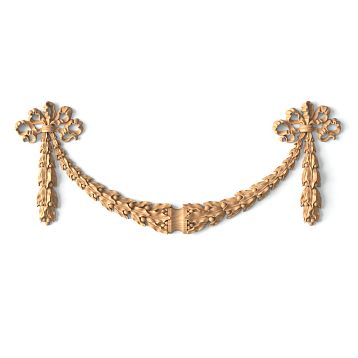
A carved furniture cornice—a profiled base with applied or integrated carved elements—represents the highest levelof furniture decorwhere joinery craftsmanship combines with carving art. The cornice base is formed by milling—a classical profile of medium or high complexity—then, on specific sections, three-dimensional carving is performed. Typical carving motifs include: acanthus leaves—stylized leaves of a Mediterranean plant with characteristic serrated edges radiating from a central vein—a symbol of classical decoration; grapevines with clusters and leaves, creating an organic composition; rosettes—stylized flowers inscribed in a circle or square; meanders—geometric patterns of broken lines, originating from Greek ornamentation; garlands—stylized ribbons with flowers and fruits, imitating festive decorations.
Carving can be machine-made—performed on CNC routers using a digital model—ensuring perfect repeatability, precision of details, and affordable cost; or hand-carved—created by a carver manually—adding uniqueness, vitality, and barely noticeable variations that distinguish handmade from machine-made. Hand carving is 3-5 times more expensive than machine carving, but for exclusive projects—restoring antique furniture, creating custom pieces, palace-level interiors—it is the only way. Machine carving has achieved high quality thanks to modern 5-axis routers capable of reproducing complex three-dimensional forms with minute details.
Carved cornices concentrate the carving on the corners—where vertical and horizontal sections meet—or in the center of long sections, creating visual accents. Continuous carving along the entire length of the cornice is characteristic of Baroque and Rococo, where emptiness is perceived as a deficiency, and every centimeter of surface must demonstrate craftsmanship. Moderate carving—accents on corners and in the center with smooth sections between them—is characteristic of classicism and neoclassicism, where a balance between ornamented and neutral is valued, and carving emphasizes structure rather than filling space uncontrollably.
Our factory also produces:


Choosing a Profile to Match the Interior Style: Stylistic Canons
Minimalism and modern styles—contemporary, high-tech, Scandinavian—require simple cornices without profiling or with minimal treatment. A rectangular strip 50-70 millimeters wide, 12-18 millimeters thick, with sharp or slightly rounded edges creates a visual completion of the case without decorative excess. Material—natural light-colored wood (ash, birch, maple) with a transparent matte finish that emphasizes the grain without color distortion, or painted white, gray, black with opaque enamel, hiding the wood species and accentuating geometric purity. For minimalism, the precision of execution is more important than the cornice's form—perfectly straight edges, perpendicular angles, a smooth surface without the slightest defects. The cornice should not dominate, attract attention, or distract from the overall form of the furniture—it is a delicate finishing touch, barely noticeable but necessary.
Neoclassicism and modern classicism use medium-complexity cornices—two to three profile elements creating moderate plasticity. A bead 15-20 millimeters in diameter combined with a cove of 15 millimeters radius and a fillet 10 millimeters wide forms a recognizable classical profile, adapted to modern furniture scales. An overhang width of 60-80 millimeters corresponds to cases 400-500 millimeters deep—typical for modern wardrobes. Material—oak or ash with toning in natural shades (light brown, gray-beige) or patination, creating an effect of noble aging. Neoclassicism values a balance of traditional forms and modern restraint—the cornice is recognizably classical but without Baroque excess, the elements are clear, the proportions are precise, and the finish is restrained.
Classicism, Empire, and English classicism require cornices of high complexity—four to five profile elements creating a rich yet orderly composition. A large torus with a diameter of 20-25 millimeters dominates, supported by scotias, fillets, and smaller tori, forming a hierarchical structure—the main element is surrounded by auxiliary ones, each in its place. The projection width of 80-120 millimeters corresponds to massive cases with a depth of 500-600 millimeters—cabinets, buffets, sideboards on estate and palace scales. The material is oak, preferably with a pronounced grain, stained in rich shades (dark brown, reddish-brown) or with moderate patination, emphasizing the profile relief.Classic FurnitureFurniture with such a cornice demonstrates adherence to traditions, where architectural grammar is strictly regulated, and each element has a prototype in ancient architecture.
Get Consultation
Baroque and Rococo: maximum decorativeness
Baroque—the style of palaces, luxury, and wealth display—uses cornices of maximum complexity with carved elements. A profiled base of six to seven elements is complemented by carvings—acanthus leaves at the corners, rosettes in the center of long sections, garlands framing the tori. The projection width is 100-150 millimeters, thickness 40-60 millimeters—the cornice is massive, dominant, and eye-catching. The material is oak or walnut with rich dark staining, possibly with gilding on the carved elements—gold powder rubbed into the recesses of the carving, creating a contrast of gold and dark wood. A Baroque cornice does not merely finish the furniture but transforms it into an architectural object, comparable in significance to the room's architecture.
Rococo—the style of lightness, playfulness, and asymmetrical forms—uses cornices with curved lines, absence of right angles, and an abundance of plant motif carvings. The profile does not contain strict tori and scotias but represents a smooth, wavy line overlaid with carvings—stylized shells, scrolls, flowers, leaves. The cornice can be asymmetrical—the left side differs from the right—which is characteristic of Rococo, rejecting the symmetry of classicism. The material is light woods (linden, birch) painted in pastel tones (cream, bluish, pinkish) with gilding on carved elements. Rococo is the style of boudoirs, intimate spaces where luxury is not heavy but airy, playful, and coquettish.
Provence and country—styles of rural aesthetics, naturalness, and visible aging—use simple or medium-complexity cornices with textured treatment. The profile may contain one or two elements—a scotia and a torus—but the geometry is less important than the surface texture. Brushing—removing soft fibers with metal brushes, creating the relief of annual rings—emphasizes the naturalness of the wood. Patination—applying dark or white pigment into the recesses of the texture and profile—imitates natural aging, as if the cornice had served for decades, undergone repainting, and worn in the recesses. The material is pine, oak, ash painted in light tones (white, cream, gray) with patination creating a vintage effect. Provence values imperfection, traces of time, authenticity—a new cornice, artificially aged, looks more valuable than a perfectly smooth modern one.
Proportions and scale: coordination with furniture dimensions
The height of the furniture case determines the scale of the cornice. Low items—chests of drawers 80-100 centimeters high, cabinets, consoles—receive cornices with a projection width of 40-60 millimeters, thickness 15-25 millimeters, with a simple or moderate profile. A massive, complexly profiled cornice on a low chest of drawers looks disproportionate, overwhelms the main volume, and creates a visual imbalance. Medium cases—cabinets 1.8-2.2 meters high, buffets, sideboards—require cornices of 60-90 millimeters with a medium-complexity profile. Tall cabinets 2.3-2.7 meters, especially built-in ones reaching the ceiling, receive cornices of 80-120 millimeters with a complex profile, proportionate to the furniture scale.
The depth of the case also influences the choice of cornice. Narrow cases with a depth of 300-350 millimeters—shoe racks, bookshelves—cannot support strongly projecting cornices that create a visual predominance of the horizontal over the vertical. The cornice for narrow cases has a projection of 30-50 millimeters, balanced with the depth. Deep cases of 500-600 millimeters—wardrobes, buffets—harmonize with cornices of 70-100 millimeters, where the proportion of projection to depth maintains balance.
The width of the furniture case determines the need for cornice segmentation. Narrow items up to 80 centimeters wide receive a cornice from a single plank without joints. Medium cases 100-180 centimeters wide require joining two planks in the center with a 90-degree miter cut or connection via a corner element. Wide cabinets and wall units 200-400 centimeters wide require three to four planks with joints masked by carved overlays or placed above the vertical divisions of the facade—above the door boundaries—where the joint is less noticeable.
Coordination with the architectural cornices of the room
Furniture corniceThe furniture cornice must be coordinated with the ceiling cornice of the room in terms of wood species, profile style, and treatment method. An oak ceiling cornice requires oak furniture cornices—material unity is critical for visual harmony. The profile of the furniture cornice does not have to be identical to the ceiling one but should contain related elements—if the ceiling cornice has a torus with a diameter of 25 millimeters, the furniture cornice contains a torus of 15-18 millimeters, preserving proportions while reducing scale. Staining, patination, and type of finish must match—matte oil on the ceiling cornice and glossy varnish on the furniture cornice create a visual conflict.
Stylistic coordination is critical—a Baroque ceiling cornice with carving and gilding requires Baroque furniture cornices of similar aesthetics. A minimalist ceiling cornice—a simple plank without profiling—pairs with simple furniture cornices. Mixing styles—a classic ceiling cornice and minimalist furniture—is possible in eclectic interiors but requires designer boldness and careful balance, otherwise it appears chaotic.
Color coordination is achieved by staining all wooden elements with the same composition. If the ceiling cornice is stained dark brown, furniture cornices, baseboards, and trims are treated with the same stain, ensuring identical shade. Patination is performed with one pigment of the same intensity—light patina on the ceiling cornice and intense on the furniture cornice creates disharmony.
Mounting furniture cornices: fastening technique
Adhesive mounting—the most common method of attaching furniture cornices to the top lid of the case. Polyurethane glue or carpenter's PVA is applied to the back surface of the cornice in a zigzag line, the cornice is pressed against the lid, fixed with clamps during curing—2-4 hours for PVA, 6-12 hours for polyurethane. Adhesive bonding ensures a clean look without visible fasteners but requires a flat lid surface—variations over 1 millimeter create gaps, weakening the bond. Before gluing, surfaces are degreased, dust is removed, and tight fit is ensured.
Combined fastening—adhesive plus mechanical fasteners—ensures maximum reliability for heavy, massive cornices. After applying adhesive and pressing the cornice, finishing nails with a diameter of 1.5 millimeters and length of 30-40 millimeters are driven in at intervals of 200-300 millimeters. Nails are driven at a 45-degree angle, heads are countersunk 2-3 millimeters, recesses are filled with wood putty to match the tone, sanded, and the finish is restored. Mechanical fasteners prevent the cornice from sliding under its own weight before the adhesive cures, ensuring long-term connection strength.
Concealed mechanical fastening—screws inserted from below through the lid into the cornice—is used for disassemblable furniture or cases where adhesive bonding is undesirable. Blind holes with a diameter of 8 millimeters and depth of 40 millimeters are drilled in the lid, countersunk for the screw head, screws 50-60 millimeters long are inserted from below, capturing the cornice installed on top. Screw heads are hidden inside the case, fasteners are invisible from the outside. This method requires precise marking—holes must be located strictly under the cornice; misalignment leads to screws missing the cornice or piercing its front surface.
Corner joints: mitering and joining
Corners of furniture cornices—where horizontal sections meet on corner cases—require precise 45-degree miter cuts for tight fit. A miter saw with adjustable angle ensures cutting accuracy, critical for profiled cornices where all profile elements must align at the joint. Before mitering, the cornice is placed on the saw table at the angle at which it is mounted on the furniture—usually horizontally if the cornice is installed flat, or at an angle corresponding to the profile slope. The saw is set to 45 degrees, the cut is made in one motion without stopping—stopping creates a step on the cut surface.
Joining mitered elements is done by applying adhesive to the ends, elements are pressed together, fixed with a corner clamp until the adhesive cures. For additional strength, wooden dowels with a diameter of 6-8 millimeters can be installed—holes 20 millimeters deep are drilled in the ends, the dowel is coated with adhesive, inserted into one hole, the second element is placed over the protruding part, and the joint is compressed. Dowels prevent corner joints from opening due to humidity fluctuations when wood changes dimensions.
For carved cornices, corner joints can be hidden with decorative overlays—carved corner elements covering the connection point, turning a structural node into a decorative accent. The corner overlay can be square with carving extending beyond the cornice profile, or triangular, filling the corner. This solution is characteristic of Baroque and classicism, where corners are perceived as important points requiring emphasis.
Finishing: from natural to decorative
Oil-wax finishes—natural oils with added beeswax or carnauba wax—create a semi-matte surface that emphasizes wood grain, is tactilely pleasant, and aromatic. Oil penetrates the wood, fills pores, and protects from moisture without forming a surface film. Application is done with a soft cloth—generous rubbing, holding for 10-15 minutes, removing excess, repeating after 24 hours for saturation. Oil finish enhances the natural wood tone, deepens color, and creates a silky surface. For modern and Scandinavian interiors where material naturalness is valued, oil is optimal.
Varnish finishes—polyurethane or acrylic varnishes—create a hard protective film resistant to abrasion, moisture, and mechanical impacts. Matte varnishes with 10-20 percent gloss retain the natural look of wood, semi-matte 30-40 percent add a noble sheen, glossy 70-90 percent create a mirror-like surface characteristic of Art Deco and Eastern styles. Spray application ensures even coverage, absence of brush marks, and perfect smoothness. For profiled cornices, even coverage of all profile elements—protrusions and recesses—is important, without drips in the grooves or missed spots on the protrusions.
Staining with wood stains—alcohol-based, water-based, oil-based compositions—changes the wood color without completely hiding the grain. Light staining—bleaching—lightens the natural shade, creates a sun-bleached effect characteristic of coastal and Scandinavian aesthetics. Dark staining—stains in walnut, wenge, mahogany shades—turns light beech or ash wood into an imitation of exotic species, creating richness, solidity, and monumentality. Staining followed by varnishing or oil treatment fixes the color and protects against fading.
Patination and decorative techniques
Patination—applying contrasting pigment into the recesses of the profile with partial removal from the protrusions—creates an aging effect, emphasizes relief, and adds depth. Light patina—white or cream pigment in the recesses of dark wood—is characteristic of Provence and country styles, where vintage appeal is valued. Dark patina—brown or black pigment in the recesses of light or medium-toned wood—emphasizes the classic profile, enhances element contrast. Patina intensity is regulated by the degree of pigment removal—minimal removal creates a saturated effect, complete wiping from protrusions and partial retention in recesses—a delicate vintage look.
Gilding—applying gold powder or gold leaf to carved elements—turnswooden cornices for furniturefurniture into luxurious palace-level items. Traditional technique—levkas (chalk ground) is applied to the carving, sanded smooth, coated with poliment (adhesive composition), onto which gold leaf sheets a few microns thick are laid, polished to a shine with an agate burnisher. Modern technique—gold acrylic powder is rubbed into the recesses of the carving with a brush or cloth, excess is removed, creating a contrast of gold and wood. Full gilding—all carved elements covered in gold—is characteristic of Baroque; partial—gold in deep recesses of the carving—for classicism.
Combined techniques — toning plus patination, oil plus wax, varnish plus gilding — create multi-layered finishes, visual complexity, and depth.Classic Furniturewith a cornice toned dark brown, patinated black in recesses, and coated with matte varnish, has a rich finish where each profile element is clearly defined thanks to patina, color depth is emphasized by toning, and protection is ensured by varnish.
Restoration and repair of furniture cornices
Mechanical damage — chips, cracks, broken fragments of carving — are restored with wood epoxy putty or fragments cut from the same wood species. Small chips are filled with color-matched putty, sanded, and the coating is restored. Major defects require gluing in a wooden insert — a fragment of suitable size is shaped to fit, glued with wood glue, and after curing, it is processed with chisels or a router to restore the profile, sanded, toned to match the surrounding wood, and coated.
Detachment of the cornice from the cabinet is resolved by re-gluing. The cornice is carefully removed, the back surface and cabinet top are cleaned of old adhesive with a scraper or sandpaper, degreased, fresh glue is applied, the cornice is positioned in place, and clamped. If a corner joint is damaged — the seam has opened — the elements are separated, the ends are cleaned, glue is applied, possibly reinforced with dowels, and the joint is clamped until cured.
Coating restoration — oil, varnish — is performed after cleaning the surface of dirt and old coating. Oil finish is restored by applying fresh oil of the same type. Varnished surfaces require sanding with fine abrasive P220-P320 to create roughness for new varnish adhesion, degreasing, and applying one or two coats of varnish by spray or brush. Patinated surfaces are restored by re-patination after the base coating is renewed.
Conclusion: cornice as a style identifier
buy wooden cornice for furniture— a solution that defines the stylistic affiliation of all furniture, creating a visual connection between furnishings and room architecture. The cornice profile — its geometry, complexity, proportions — serves as a stylistic marker: simple for minimalism, profiled for classic, carved for Baroque.Furniture cornicemade from solid oak, beech, ash offers advantages of durability, naturalness, restorability, and noble aging, making it an investment in timeless quality and aesthetics.
STAVROS offers a full range ofwooden cornices for furnituremade from solid noble woods with profiles ranging from simple rectangular to complex carved. Production on modern European equipment ensures perfect profile geometry; kiln drying to 8-10% moisture guarantees stability. The catalog includes dozens of standard profiles for various styles — minimalism, neoclassicism, classicism, Baroque — with the possibility of custom profile manufacturing based on designer sketches.
Finishing options — natural oil, toning in a wide palette of shades, patination of varying intensity, matte or glossy varnishing, gilding of carved elements — are performed in production with quality control. It is possible to manufacture cornices with coordinated profiles for various furniture pieces in one interior — cabinets, dressers, sideboards — ensuring stylistic unity. STAVROS specialists consult on selecting profiles to match interior style, coordinating with architectural cornices, calculating required material quantities, and recommending installation and finishing methods.
Productionclassic furniturewith cornices from the STAVROS catalog provides a comprehensive solution — furniture cabinets and their finishing cornices from a single source, guaranteeing material and stylistic unity.Furniture decor— cornices, overlays, carved elements, moldings — from STAVROS transforms utilitarian furniture into works of applied art, where each element is crafted with skill, serves for decades, and is passed down to future generations as a family heirloom. Entrust the completion of your furniture to STAVROS — we understand that a cornice is not a trifle, but a detail that defines the style, character, and quality of the entire piece, making furniture not just functional, but beautiful.