Article Contents:
- Revolution of consciousness: why the right material choice determines 80% of success
- Consumer mindset vs. creator philosophy
- Hidden quality criteria that sellers never mention
- Material energy: myths or reality?
- Wood geography: where the best blanks come from
- Climate zones and wood character
- Impact of blank processing technologies on quality
- Blank typology: choosing format based on task
- Sheet materials: when stability is needed
- Ready-made items: solutions for saving time
- Blanks for special purposes
- Technical selection criteria: what to pay attention to
- Moisture: Critical Parameter of Stability
- Grade: quality classification
- Geometric Accuracy: Foundation of Quality Assembly
- Buying psychology: avoiding typical mistakes
- The "cheap shopper" syndrome
- The "any will do" error
- The allure of exoticism
- Market seasonality: when to buy more affordably
- Demand and supply cycles
- Procurement strategies
- Storage and preparation: preserving quality until use
- Creating a microclimate
- Correct stacking and separation
- Acclimatization before use
- Modern trends: what the market offers
- Technological Innovations
- Ecological trends
- Customization and personalization
- Globalization and localization: geography of the modern market
- International shipments
- Revival of local production
- Education and development: how to become an expert in materials
- Theoretical Foundations
- Practical Training
- Informational Resources
- STAVROS: The Standard of Quality in the World of Wooden Materials
Stop! Before you flip through this article in search of a quick answer to the question, where is buy wooden blanks for creativitylet me tell you a story that will change your perception of working with wood forever.
I remember that autumn evening when a young man with glowing eyes came into my workshop. In his hands he held a sketch of a future gift for his beloved girl — an intricately carved box. "Where can I find suitable material?" he asked. And then I realized: most people think of buying wooden blanks as a simple commercial transaction. But this is a tremendous misconception! Choosing material for creativity is the first and most important step toward creating a masterpiece.
Wood does not forgive mistakes at the selection stage. An incorrectly chosen species can turn an inspiring work into a painful struggle with the material. A quality blank becomes a compliant tool in the master's hands, revealing the full beauty of the design without resistance or capriciousness.


Revolution of Consciousness: Why the Right Material Choice Determines 80% of Success




Consumer Mindset vs. Creator Philosophy
Most people approach purchasing creative materials with consumer logic: "cheaper means better", "as long as it looks like wood", "I'll paint it anyway later". This is a dead-end path, a road of disappointments and ruined ideas.
The creator's philosophy is fundamentally different. Here, each blank is considered a potential partner in creating something beautiful. Every piece of wood has its character, preferences, hidden potential. The master's task is to find exactly the right partner who will help realize the design in the best possible way.
Imagine an artist choosing paints for a painting. Would he take the first available tubes just to save money? Of course not! He will carefully select each shade, considering the intended image, technique, and display conditions. Similarly, anyone who takes their creativity seriously must choose their material with the same care.
Our factory also produces:


Hidden Quality Criteria That Sellers Keep Silent
When you come to a regular hardware store for wooden blanks, the salesperson will tell you about the size, grade, and price. But he will remain silent about dozens of parameters that are critically important for creative use.
Grain direction — seemingly a minor detail. But it is precisely this that determines whether your carving will be sharp or blurred, whether a delicate detail will withstand stress or break at the most inappropriate moment. Professional suppliers of solid wood always indicate the grain orientation in the blanks.
Internal stresses in wood are invisible to the eye, but manifest themselves at the most unexpected moment. A board may split upon the first stroke of the chisel, or a finished item may deform a month after completion. Quality blanks undergo special processing to relieve internal stresses.
The storage microclimate affects material stability. Wood stored under inappropriate conditions may "behave" unpredictably even years after purchase. Serious suppliers invest in climate-controlled warehouses that maintain optimal temperature and humidity.
Get Consultation
Material Energy: Myth or Reality?
Skeptics may laugh, but every experienced master will confirm: wood has energy. Some blanks literally beg to be worked on, easily yield to tools, reveal their beauty. Others resist every movement, as if protecting their secrets.
The scientific explanation of this phenomenon lies in the wood's microstructure, density distribution, grain orientation, and content of extractives. But for a practicing master, theory is less important than the result: with "right" material, work flows smoothly, while with "wrong" material, it becomes a torment.
Wood Geography: Where the Best Blanks Come From
Climate Zones and Wood Characteristics
Not everyone knows that the geographical origin of wood significantly affects its properties. Northern forests provide dense, fine-grained wood with high strength characteristics, but more difficult to process. Southern regions supply material with pronounced texture, but less stable.
Arkhangelsk Pine — the standard among coniferous species. Slow growth in harsh climates creates wood of exceptional density and strength. Annual rings are so thin that they can only be counted under a magnifying glass.
Karelian Birch — a unique natural phenomenon. Wavy fibers create an incomparable pattern reminiscent of marble or malachite. Every item made from Karelian birch is absolutely unique.
Caucasian Walnut differs with special oiliness and silky texture. High content of natural oils makes this wood practically impervious to moisture and time.
Influence of Processing Technologies on Quality
Modern logging technologies allow obtaining material of quality unattainable by traditional methods. But here it is important to understand: advanced technologies are applied only when working with premium raw materials. Mass blanks are processed using a simplified scheme.
Winter felling provides wood with minimal moisture and nutrient content. Such material is less susceptible to fungi and insects, and more stable during drying.
Controlled drying in special chambers allows obtaining material with specified humidity characteristics and minimal internal stresses. The process may take weeks, but the result is worth it.
Stabilization treatment with polymer compositions transforms ordinary wood into material with unique properties. Dimensional stability increases dramatically, and resistance to moisture and biological damage appears.
Log types: choose format according to task
Sheet Materials: When Stability is Needed
High-grade plywood is an indispensable material for projects requiring dimensional stability. The cross-layer structure prevents warping even in large items. Birch plywood FC combines eco-friendliness with high surface quality.
Solid wood furniture panels offer a compromise between the beauty of solid wood and the practicality of composite materials. Glued laminates work as a single unit, compensating for mutual deformations.
Solid wood panels with a core of boards and veneer of premium species — an economical solution for large projects. Stable base and beautiful surface at reasonable prices.
Trimming items: ready-made solutions for time savings
Moldings, cornices, baseboards These are not just decorative elements, but ready-made solutions that save hours of work. Modern CNC centers create profiles of complexity unattainable by hand methods.
Standard profiles cover most needs for decorative elements. But true potential emerges when using exclusive profiles created according to custom drawings.
Machine-made carved elements impress with precision and repeatability of details. What a master carver would take weeks to create, a CNC machine reproduces in hours with perfect accuracy.
Special-purpose blanks
Turned blanks — cylinders, cones, spheres of various diameters — form the basis for creating balusters, furniture legs, decorative elements. High dimensional accuracy saves time on rough processing.
Carving blanks — carefully selected blanks without knots or other defects. Uniform structure allows creating delicate details without risk of chipping or breaking.
Slabs — whole cross-sections of tree trunks — open unique opportunities for creating countertops, panels, art objects. Each slab is unique, like a fingerprint.
Technical criteria for selection: what to pay attention to
Moisture: critical parameter of stability
Wood moisture — a parameter that determines material behavior at all stages of work and use. Freshly cut wood contains up to 60-80% moisture, making it completely unsuitable for creative work.
Equilibrium moisture for indoor conditions is 8-12%. Material with such moisture is stable, does not shrink, does not crack. But achieving uniform moisture throughout the entire blank is a complex technical task.
Moisture gradient — the difference in moisture between surface and inner layers — should not exceed 2-3%. A larger gradient leads to internal stresses and deformations.
Moisture control is performed using special instruments — moisture meters. But accurate measurements are possible only when material integrity is compromised. Therefore, one must rely on the supplier's reputation and their quality control system.
Grade: quality classification
The wood grading system was developed for construction purposes, but creative applications require different criteria. What is considered a defect in construction may become an artistic feature of a decorative item.
Healthy knots do not reduce material strength and can create interesting decorative effects. But they complicate processing and may disrupt the symmetry of the pattern.
Wavy grain — fiber curvature — creates unique decorative effects but reduces material strength. For carving, wavy-grained wood is unsuitable, but for decorative panels — ideal.
Resin pockets in coniferous species may cause problems during finishing, but they impart the material with a distinctive aroma and natural protection against biological damage.
Geometric accuracy: foundation of quality assembly
Modern woodworking items require high dimensional accuracy. Deviations of several millimeters may make quality assembly of the structure impossible.
Calibrated blanks undergo additional processing to achieve specified dimensions with accuracy ±0.5 mm. This increases material cost but greatly simplifies work.
Sawn surfaces are ready for coating without additional processing. The quality of sawing is determined by surface cleanliness and absence of tool marks.
Straightness of blanks is critical for frame structures. Curved elements create internal stresses and may lead to deformation of the entire item.
Buying psychology: avoid typical mistakes
The "budget buyer" syndrome
The desire to save is ingrained in human nature, but in creativity, saving is not always justified. Cheap materials often cost more than expensive ones when all hidden expenses are considered.
Time is money. Poor-quality material requires additional processing, multiple corrections, and sometimes even a complete redo. The cost of lost time often exceeds the price difference of the material.
Nerves are also money. Struggling with fussy material poisons the joy of creativity and may lead to abandoning the project. The price of disappointment is immeasurably higher than any saving.
Reputation is the most expensive. A product made from poor-quality material quickly loses its appearance, negatively affecting the craftsman's reputation. Especially critical for those planning to sell their work.
The "any material will do" mistake
Many beginners believe that any material will do for their first projects, and high-quality blanks are a luxury for professionals. This misconception destroys countless creative endeavors from the start.
A beginner needs high-quality material even more than a professional. An experienced craftsman can extract maximum value from mediocre material, but a beginner will inevitably ruin even a good blank if it has hidden defects.
First projects shape one's relationship to creativity for years to come. A successful debut inspires further achievements, while a failure may permanently extinguish the desire to create.
The temptation of exoticism
Bright exotic species captivate novice craftsmen. Veneer, zebrawood, amaranth — these names sound magical, and the appearance of the materials dazzles the imagination. But exotic materials require a special approach.
Special tools. Many tropical species are so hard that ordinary tools simply cannot handle their processing. Hard alloy cutters, powerful equipment, and special techniques are required.
Allergic reactions. Dust from exotic species may cause serious allergic reactions. Special respiratory and skin protection equipment is required.
Unpredictable behavior. Exotic species often contain oils, resins, and mineral inclusions that may unpredictably affect processing and finishing.
Seasonality of the market: when to buy more advantageously
Cycles of demand and supply
The market for wood materials is subject to pronounced seasonal fluctuations, linked to cycles of construction activity, harvesting, and processing of raw materials.
Winter minimum (December–February) — the time of maximum opportunities for buyers. Construction activity is at its lowest, warehouses are overflowing, and manufacturers are ready for significant discounts. This is the best time to build strategic material reserves.
Spring awakening (March–May) is characterized by gradual price increases while maintaining a wide selection. Time to purchase materials for summer projects.
Summer peak (June–August) — period of maximum prices and minimum selection. Construction activity is at its peak, and quality materials are immediately sold out. Purchases during this period are justified only in cases of extreme necessity.
Autumn stabilization (September–November) — prices decrease, selection expands. Good time to purchase materials for winter projects.
Procurement strategies
Creating reserves of high-quality materials during low-price periods allows significant savings and independence from market fluctuations. But requires suitable storage facilities.
Pre-orders from manufacturers allow fixing prices and securing priority in deliveries. Many manufacturers offer discounts for advance payment.
Group purchases through creative associations allow obtaining wholesale prices when buying small quantities. Often organized through online communities of craftsmen.
Storage and preparation: preserving quality until use
Creating a microclimate
Wood blanks require special storage conditions to preserve their qualities. Violating storage conditions may ruin even the most expensive materials.
Temperature stability is the foundation of proper storage. Sudden temperature fluctuations cause internal stresses in wood, potentially leading to cracking. Optimal storage temperature is 18–22°C.
Humidity control is equally important. Relative air humidity should be 45–65%. Lower humidity causes drying and cracking, while higher humidity leads to swelling and mold growth.
Air circulation prevents stagnant zones where mold may develop. However, direct airflows from air conditioners or heaters are unacceptable — they cause uneven drying.
Proper stacking and separation
Spacers between material layers ensure air circulation and prevent deformation due to self-weight. Spacer thickness should be at least 20 mm, spacing no more than 600 mm.
Even load distribution on material stacks prevents warping. The load must be evenly distributed across the entire stack surface.
Protection from light prevents fading and uneven color changes. Especially important for light-sensitive species such as cherry and walnut.
Acclimatization before use
The stabilization period in workshop conditions should be at least 72 hours for materials up to 25 mm thick and up to two weeks for thicker blanks.
Monitoring geometric changes allows identifying problematic blanks before work begins. Materials showing significant deformation during acclimatization are unsuitable for critical projects.
Final preparation includes light sanding to remove surface contaminants and oxidized layers.
Modern trends: what the market offers
Technological Innovations
Technological advancements have fundamentally changed the market for wooden blanks for creative projects. Modern materials significantly surpass traditional ones in many parameters.
Thermally modified wood is obtained by processing at 160–220°C in a steam environment. The process alters the wood’s structure at the molecular level, improving stability and biostability.
Stabilized wood is impregnated with polymer compounds under pressure. The result is a material combining the beauty of wood with the strength and stability of plastic.
Laminated wood from thin veneer layers allows creating large-sized elements with specified properties. This technology is especially popular in musical instrument manufacturing.
Ecological Trends
Growing consumer environmental awareness is changing material requirements.
FSC certification guarantees that wood originates from sustainably managed forests. Products with this certification enjoy increased demand on international markets.
Local species are becoming increasingly popular as alternatives to exotic ones. They have a smaller carbon footprint, support local economies, and often do not fall short of tropical species in quality.
Secondary processing allows creating unique materials from main production waste. Wood waste composites sometimes surpass solid wood in individual characteristics.
Customization and personalization
Modern technologies enable manufacturing blanks according to customer-specific requirements.
Custom fabrication of profiled elements of any complexity has become accessible thanks to CNC machines. Unique profiles can become a craftsman’s signature.
Sample-based selection allows obtaining materials with specified color, texture, and size characteristics. Computer scanning and sorting ensure high selection accuracy.
Pre-processing blanks according to customer requirements saves the craftsman’s time and guarantees the quality of the result.
Globalization and localization: geography of the modern market
International shipments
Globalization has made materials available from around the world, but has created new challenges for buyers.
Supply chains have become more complex and vulnerable. Supply disruptions can paralyze production for months. Supplier diversification has become critically important.
Customs procedures complicate the import of wooden materials. Origin certificates, phytosanitary documents, and CITES permits are required for rare species.
Currency risks make long-term planning more complex. Exchange rate fluctuations can drastically alter project economics.
Revival of local production
Simultaneously, there is a renewed interest in local materials and manufacturers.
Short supply chains provide greater reliability and control. The ability to personally communicate with the manufacturer is invaluable when working on complex projects.
Unique local species can become a competitive advantage. Karelian birch, Arkhangelsk pine, Caucasian walnut have a global reputation.
Supporting the local economy is becoming an increasingly important factor for socially responsible business.
Education and Development: How to Become an Expert in Materials
Theoretical Foundations
Wood anatomy is a basic discipline for anyone seriously working with wood. Understanding cellular structure helps predict material behavior under various conditions.
The physics and mechanics of wood explain why the material behaves exactly as it does, not otherwise. Knowledge of swelling coefficients, elastic moduli, and strength limits turns material selection from a lottery into an exact science.
Woodworking technology includes understanding modern methods of log preparation, drying, and stabilization. This helps assess the quality of offered materials.
Practical Training
Working with samples is the best way to study the properties of different materials. The sample collection should be continuously updated with new interesting materials.
Experiments and testing allow verifying theoretical knowledge in practice. Simple tests for workability, adhesion, and finishing properties provide valuable information.
Communication with experts — suppliers, technologists, experienced craftsmen — is a source of knowledge that cannot be found in textbooks.
Information Resources
Specialized literature on wood science is constantly updated with new research and developments.
Industry exhibitions allow seeing material and technology novelties firsthand, and interacting with manufacturers and suppliers.
Online communities of craftsmen are an inexhaustible source of practical experience and advice.
STAVROS: The benchmark of quality in the world of wooden materials
In a world where buy wooden blanks for creativity you can find thousands of places, STAVROS stands out as a true beacon of quality and professionalism. These are not empty words — this is recognition from thousands of craftsmen who entrusted their creative projects to STAVROS materials and never regretted their choice.
What makes STAVROS special? First and foremost — the company’s philosophy, which considers every log not as a commodity, but as the foundation for a future work of art. Here, they understand that behind every purchase is a person with a dream, an idea, a desire to create something beautiful. And this responsibility defines the approach to every aspect of activity.
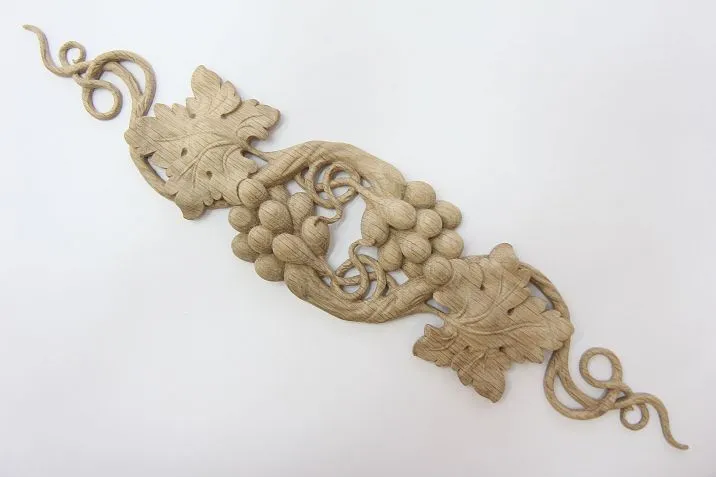
STAVROS’s assortment impresses with its thoughtfulness. Here you’ll find everything — from simple planed boards for beginner craftsmen to exclusive slabs of rare species for original projects. carved appliqués Machine-made products coexist with hand-carved blanks, modern composite materials — with traditional wood species.
But STAVROS’s greatest wealth is the knowledge and experience of its team. Here work people who understand wood not as an abstract material, but as a living substance with its own character and peculiarities. They can tell the story of each blank — where the tree grew, under what conditions it was harvested, how it was processed.
STAVROS’s quality control system has no analogs in the industry. Each batch of materials undergoes multi-stage inspection — from incoming raw material control to final inspection of finished products. Modern equipment allows detecting defects invisible to the naked eye.
STAVROS’s customer service is built on understanding the specifics of creative work. Here they know that an artist may need material with unique characteristics, that a master carpenter is not looking for just a board, but a partner to realize their vision. STAVROS consultants are experts capable of finding the optimal solution for any creative task.
The company’s logistics network covers the entire country and neighboring countries. Specialized warehouses maintain an ideal microclimate for wood storage. The company’s own transportation service ensures careful delivery even of the most delicate materials.
Choosing STAVROS, you are choosing not just a supplier of materials. You are choosing a partner who shares your passion for creativity, understands the importance of every detail, and is ready to support you at every stage of project implementation. This is an investment in the success of your creative ideas, a guarantee that the material will become a reliable foundation for realizing the boldest ideas.