Article Contents:
- Philosophy of unified material in interior
- Advantages of a Comprehensive Approach
- Wooden handles: point of contact with furniture
- Material matters
- Shapes and functionality
- Finishing coatings: aesthetics and protection
- Wooden skirting: floor architecture
- Functions of floor skirting
- Size chart and proportions
- Profiles: from minimalism to classic
- Materials: solid wood vs MDF
- Kitchen and living room: unified space or contrast?
- Unity concept
- Zoning concept
- Role of additional elements
- Technical aspects of configuration
- Calculation of furniture handles
- Calculation of skirting linear footage
- Installation: sequence and technology
- Installing baseboards
- Installing Furniture Handles
- Maintenance and Durability
- Regular Cleaning
- Updating Finishes
- Protection against damage
- Logistics and delivery
- Packaging and transportation
- Delivery geography
- Product acceptance
- Economics of single order
- Direct savings
- Hidden savings
- Frequently Asked Questions
- Conclusion: quality from STAVROS

Interior renovation or update always begins with details. Paradoxically, it's the finishing touches — those very elements installed last — that shape spatial integrity and define its perception. Wooden furniture handles and wooden skirting aren't just functional hardware, but key components that unite disparate interior elements into a harmonious composition.
Why does it make sense to buy wooden skirting and furniture handles as part of a single order? Because coordinated materials, shades, and textures create visual unity that transforms a collection of objects into a thoughtful design project. Let's examine in detail how to properly select and combine wooden products to create a cohesive interior.




Philosophy of unified material in interior
Modern design is moving toward intentionality in every decision. The era of chaotic mixing of styles, materials, and textures is fading. It's being replaced by a conceptual approach where every element serves the overarching idea, working to create a holistic image.
Wood is a universal material capable of unifying different functional zones. Whenwooden furniture handleson kitchen fronts echo in wood species and tone withwooden baseboardin the living room, a nonverbal connection emerges, a visual rhythm that's subconsciously perceived and creates a sense of thoughtful spatial design.




Advantages of the comprehensive approach
A single order for wooden furniture hardware and millwork solves several tasks simultaneously:
Guarantee of material identity. Wood batch, tinting, finishing coating — all are executed within a single production cycle, eliminating discrepancies in color and texture. When wooden handles and skirting are made from the same wood species with unified processing, they form a visual continuum.
Time and logistics savings. Instead of multiple orders from different suppliers — one kit, one delivery, one invoice. This simplifies repair organization, reduces transportation costs, and speeds up the process.
Professional consultation. Manufacturer specialists will help calculate the required number of handles and skirting board length, select optimal profiles and sizes, and suggest combinations you might not have considered.
Stylistic consistency. When all wooden elements are selected simultaneously, it's easier to maintain a unified style — from classic to minimalist, from Scandinavian hygge to brutalist loft.
Our factory also produces:




Wooden handles: the point of contact with furniture
A furniture handle is not just an opening mechanism. It's the point of tactile contact with an object, the furniture's business card, an element that ends up in your hands dozens of times a day. How pleasant the handle feels to the touch and how visually harmonious it is determines the overall impression of the furniture.
Get Consultation
Material matters
Why specifically wooden handles? The answer lies on the surface — both literally and figuratively. Wood possesses unique tactile qualities: it's warm (unlike metal), pleasantly rough (unlike plastic), and naturally variable (unlike synthetics).
Touching a wooden surface activates deep perception mechanisms, creates a connection with nature, and calms the nervous system. This isn't esotericism but a scientifically confirmed fact — materials of natural origin affect humans more positively than artificial ones.
Oak — the king among wood species for furniture hardware. Density of 720-880 kg/m³, Brinell hardness of 3.7-4.0 HB ensures practical indestructibility. The characteristic expressive texture with large pores and annual rings creates a noble visual effect.
Tannins in oak wood are a natural antiseptic. Oak handles don't absorb odors (critically important for kitchens), are moisture-resistant with proper treatment, and aren't afraid of temperature fluctuations.
Beech — an alternative for those who value uniformity and neutrality. The fine-pored structure with a density of 680-770 kg/m³ creates a smooth, silky surface. The natural pinkish tone of beech is lighter than oak, which is ideal for Scandinavian and minimalist interiors.
Beech wood takes stains excellently, accepting any shades without losing uniformity. This makes beechFurniture Handlesa universal tool for coloristic harmonization of interiors.
Shapes and functionality
Handle geometry determines not only visual effect but also usage ergonomics. Modern collections include dozens of options — from laconic geometric forms to complex sculptural volumes.
Large-diameter round handles (60-100 mm) create an expressive accent, suitable for large cabinets and dressers. Their full-palm grip is natural and reliable, which is important for heavy doors.
U-shaped pull handles — timeless classics. Length varies from 96 to 320 mm, allowing selection for any facade. They can be installed horizontally, vertically, or at an angle — creating various visual rhythms.
Compact knob handles (diameter 30-50 mm) are designed for light doors and small drawers. Their delicacy emphasizes furniture elegance without creating visual noise.
Oval and rectangular forms (length 100-300 mm) are universal, fitting into most stylistic concepts. They can be distinctly modern or classically restrained depending on form detailing.
Finish coatings: aesthetics and protection
Quality finish coating is a guarantee of durability and visual stability for wooden hardware.
Clear oil preserves and emphasizes the natural wood texture. Oil penetrates the wood structure, protects from within, while not forming a surface film. Wood under oil retains tactility, "breathes," and ages nobly.
Colored enamels — white, black, gray, brown — hide the texture, creating a perfectly smooth colored surface. This is the choice for modern interiors where purity of geometry and color is important.
Varnish coating creates a durable protective film resistant to moisture and dirt. Polyurethane varnishes ensure durability up to 5-7 years without renewal.
Wooden skirting board: floor architecture
If handles are the point of tactile contact, then skirting board is the architectural frame that borders the floor and determines spatial perception. This isn't just a technical detail for masking the gap between wall and floor. It's a full-fledged design element influencing room proportions.
Functions of floor skirting board
Buying wooden skirting board makes sense for several reasons:
Wall protection from damage. The lower part of the wall is a risk zone. Accidental impacts from vacuum cleaners, mops, furniture legs during rearrangement — all leave marks. Skirting board takes the hits, preserving wall finishes.
Masking technological gaps. Modern floor coverings — laminate, engineered wood flooring, engineered board — require an 8-15 mm expansion gap around the perimeter for temperature and humidity changes. Wooden skirting board elegantly conceals this technological gap.
Visual completion of space. An unclosed joint between floor and wall creates a sense of incompleteness, like a painting without a frame. Skirting board forms a clear boundary, structuring the space.
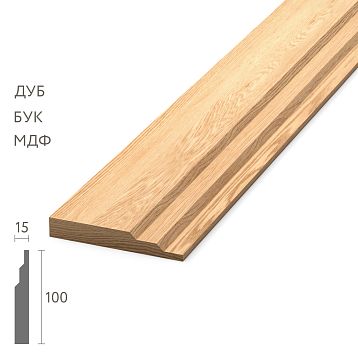
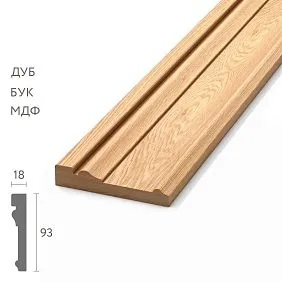
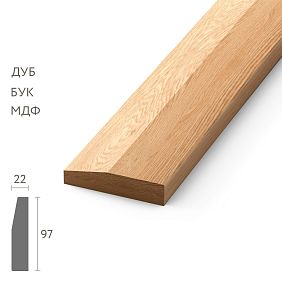
Creating architectural accents. Tall massiveSkirting(100-120 mm) in a classic interior is not just a technical detail, but a full-fledged architectural element that sets the scale and respectability.
Size chart and proportions
Choosing the height of the baseboard is a matter of proportions and style. There is a direct relationship between ceiling height and optimal baseboard height.
60-70 mm baseboards — for rooms with ceilings up to 2.7 meters. They create a restrained outline, do not visually overload compact spaces. This is a choice for modern apartments with standard layouts, minimalist interiors.
80 mm baseboards — a universal size for most living spaces with ceilings 2.6-2.9 meters. The golden mean between functionality and visual expressiveness. The optimal choice for medium-sized kitchens and living rooms.
100 mm baseboards — for interiors with high ceilings from 2.8 meters. They emphasize the volume of space, create a sense of solidity. Appropriate in classic living rooms, dining rooms, studies.
120 mm baseboards — for representative rooms with ceilings from 3.0 meters. This is a choice for status interiors where monumentality and architectural expressiveness are important.
Proportional rule: the height of the baseboard should be 1/25-1/30 of the ceiling height for modern interiors and 1/20-1/25 for classic ones.
Profiles: from minimalism to classicism
The shape of the profile determines the stylistic character of the baseboard.
Straight profile — pure geometry without rounding and bevels. This is a manifesto of minimalism, modernity, functionality. Straight lines create a graphic effect, emphasize the architecture of the space.
Profile with a bevel — a rounded or beveled upper edge softens the geometry, creates a smooth transition from the baseboard to the wall. This is a compromise between minimalism and classic, suitable for most interiors.
Figurative profile — a complex shape with protrusions, recesses, beads refers to classical architecture. Such baseboards are characteristic of neoclassical, baroque, empire interiors.
Materials: solid wood vs MDF
The choice between a solid wood baseboard and MDF is a matter of priorities.
Solid oak or beech baseboard — this is naturalness, tactility, environmental friendliness. Each element is unique due to the individual texture of the wood. Solid wood "breathes," regulates humidity in the room, ages nobly.
The disadvantage of solid wood is sensitivity to humidity fluctuations. In rooms with an unstable microclimate (entrances with access to the street, country houses with periodic heating) solid wood can deform.
MDF baseboard — this is dimensional stability, uniformity of structure, the possibility of perfectly smooth painting. MDF does not react to humidity fluctuations, does not warp, does not crack. This is the optimal choice for painted interiors, where absolute geometric accuracy and pure color without texture are required.
Kitchen and living room: a single space or contrast?
Modern layouts often combine the kitchen and living room into a single space. How to work with wooden elements in this situation?
Unity concept
The first approach is maximum unity of materials. Oak handles on kitchen fronts + oak baseboard around the entire perimeter of the kitchen-living room + oakMoldingson the walls of the living room = a solid space united by the commonality of the material.
In this case, it is important to maintain tonal unity. All oak elements should be either natural (under transparent oil or varnish) or tinted in one shade. A discrepancy of even half a tone will create visual dissonance.
The advantage of the approach — the space is perceived as a single whole, visually expands, gains integrity. The disadvantage — with a large area, monotony can cause monotony.
Zoning concept
An alternative approach is deliberate contrast for zoning. Light beech handles and baseboards in the living room + dark oak handles and baseboards in the kitchen = visual separation of functional zones while maintaining the commonality of the material (wood).
The contrast can be not only color, but also textural. Smooth enameled handles in the kitchen (practicality, ease of cleaning) + textured oiled handles in the living room (tactility, naturalness).
It is important to maintain balance: the contrast should be sufficient for zoning, but not so strong as to destroy the unity of the space. The golden rule: commonality of material (wood) + difference in shade/treatment.
The role of additional elements
Harmony is created not only by handles and baseboards, but also by other wooden elements.Wooden beamsunder the ceiling echo the baseboards, forming an architectural frame for the space.
Wooden railson the accent wall in the living room pick up the material of the handles, developing the wood theme in the vertical dimension.Casingson doorways tie all wooden elements together.
Technical aspects of configuration
How to calculate the required number of handles and baseboard length for the kitchen and living room?
Calculation of furniture handles
The calculation is simple: number of fronts (doors and drawers) = number of handles. But there are nuances.
Large cabinet doors (width over 600 mm, height over 1200 mm) may require two handles for ease of opening and visual harmony. One long pull handle in the center of a large front may look disproportionate.
Wide pull-out drawers (width over 800 mm) are also often equipped with two handles for even load distribution when pulling out.
Symmetric sets require identical handles on symmetrically placed fronts. Order 2-3 spare handles in case of damage or need for replacement — finding the exact same model several years later may be problematic.
Calculation of baseboard length
Basic formula: room perimeter - width of door openings = required length.
But professional calculation takes details into account:
Internal corners (wall junctions) require baseboards to be cut at 45° with a small allowance for fitting. Add 3-5% to the calculated length for corner trimming.
External corners (bay windows, columns, protrusions) also require precise cutting. For complex rooms with many corners, the reserve increases to 7-10%.
Door openings are usually not edged with baseboard — door casings are installed here. Subtract the width of each opening from the total perimeter.
Built-in furniture (sliding wardrobes, floor-to-ceiling kitchen units) also does not require baseboard at the points of contact. Precisely measure these sections and exclude them from the calculation.
Technological reserve — always order 10-15% more than the calculated length. This will cover offcuts, possible installation errors, future repairs (if a damaged section needs to be replaced, finding the exact same baseboard years later may be impossible).
Installation: sequence and technology
The correct sequence of installing wooden elements is critically important for a quality result.
Installation of baseboards
Baseboard is installed after all finishing work is completed — when the floor is laid, walls are painted/wallpapered, and doors are installed.
Preparation. Walls at the baseboard attachment points must be even. Irregularities over 3-5 mm will create gaps between the baseboard and the wall. If necessary, walls are leveled with filler.
Acclimatization. Wooden baseboards should lie in the installation room for 48-72 hours in a horizontal position. This equalizes the wood's moisture content with the room's humidity, preventing subsequent deformations.
Marking. Start with the longest wall without openings. Mark the position of the baseboard, taking into account a 1-2 mm technological gap from the floor (for floating coverings like laminate).
Fastening. For wooden baseboards, use a combined method — adhesive + mechanical fasteners. Polyurethane adhesive is applied in a zigzag pattern on the back side, the baseboard is pressed against the wall and additionally secured with screws or finishing nails at 50-70 cm intervals.
Corner treatment. Internal and external corners are cut at 45° with a miter saw. Joints are coated with wood glue, excess is removed with a damp sponge. After drying, joints are filled with wood-toned filler and sanded.
Installing furniture handles
Handles are installed after complete assembly and installation of the furniture.
Marking. For uniformity, use a template — a piece of thick cardboard or thin plywood with holes corresponding to the handle's mounting holes. This ensures identical positioning of all handles.
Installation height. For upper cabinets, handles are usually placed in the lower part of the front (convenience for opening from top to bottom). For lower cabinets — in the upper part (opening from bottom to top). For drawers — strictly in the center.
Drilling. Use a drill bit with a diameter 0.5-1 mm larger than the diameter of the screw's threaded part. For double bracket handles, hole parallelism is critical — the slightest misalignment will make installation impossible.
Fastening. Screws are tightened with moderate force — excessive force can split the wooden handle. Use a screwdriver, not a power drill (unless it's a professional model with precise torque adjustment).
Care and longevity
With proper care, wooden interior elements last for decades, maintaining functionality and aesthetics.
Regular cleaning
Wooden surfaces are cleaned weekly with a dry, soft cloth. This removes dust and prevents it from being ground into the wood pores.
Monthly wet cleaning is performed with a well-wrung sponge without detergents. Excessive moisture is harmful to wood — it can cause fiber swelling and darkening.
The use of abrasive agents, aggressive chemical cleaners, and solvents is strictly prohibited. They destroy the protective coating and the wood itself.
Coating renewal
Oil finishes require periodic renewal every 12-18 months. Signs of need include the appearance of dry spots, loss of shine, and roughness.
Renewal is simple: the surface is lightly sanded with P320-P400 grit abrasive, a new layer of oil is applied with a soft cloth, and excess is removed after 15-20 minutes.
Varnish finishes are more durable and typically do not require renewal throughout their service life. If scratches appear, local restoration is possible.
Protection against damage
Baseboards protect walls but can themselves suffer from mechanical impact. Be careful when cleaning — a vacuum cleaner with a hard attachment can leave dents on softwoods (like beech).
Furniture handles experience constant loads. Periodically check the tightness of the mounting screws — they can loosen from vibrations during opening/closing.
Logistics and delivery
One of the key arguments for a single order is logistics optimization.
Packaging and transportation
Wooden products require careful transportation. Handles are individually packaged in protective film or cardboard boxes. Baseboards are bundled in packs, with ends protected by cardboard corners.
A professional manufacturer uses shrink wrap to protect against moisture and contamination during transport. Long items (baseboards, cornices) are placed on special pallets or in rigid containers.
Delivery Geography
Quality wooden products should be available throughout Russia — from Kaliningrad to Vladivostok. Organizing delivery through reliable transport companies with experience handling fragile and long goods is critically important.
Delivery times depend on the region's remoteness. Stock items are delivered to Moscow and St. Petersburg in 1-3 days. To regional centers — 3-7 days. To remote settlements — up to 14 days.
Goods Receipt
Upon receiving the shipment, be sure to check the completeness and integrity of the packaging in the presence of the transport company representative. Open the packaging and visually inspect the items for damage.
Any claims regarding transport damage must be recorded in the handover report immediately. Claims made after signing the acceptance documents without remarks are not considered.
Economics of a Single Order
The financial feasibility of a comprehensive order is evident upon detailed calculation.
Direct Savings
Wholesale discounts. When ordering a set of items (handles + baseboards + additional elements), the manufacturer often provides a 5-15% discount off the retail price.
Single delivery. Instead of two or three separate deliveries — one. Savings on transport costs can amount to 30-50%.
Waste minimization. With a comprehensive order, the manufacturer optimizes material cutting, using offcuts from long items (baseboards) for short ones (handles). This reduces the cost.
Hidden Savings
Time savings. Time is money. A comprehensive order saves hours spent searching for different suppliers, comparing offers, and processing documents.
Guaranteed compatibility. When all elements are from one manufacturer, problems with mismatched shades, textures, or sizes are eliminated. No need to redo or purchase additional items.
Professional consultation. Assistance from specialists in calculating quantities, selecting combinations, and choosing optimal sizes saves money that would otherwise be spent correcting mistakes.
Frequently asked questions
Can oak handles be combined with beech baseboards?
Yes, if the shades are close. The best option is to tint both wood species to a uniform color, which neutralizes texture differences. An alternative is to apply enamel coating of one color on handles and baseboards.
Which finish is better for a kitchen — oil or varnish?
For kitchens, varnish is preferable — it creates a waterproof film, is easy to clean, and does not absorb grease or odors. Oil requires periodic renewal and is less resistant to aggressive environments.
Is it necessary to paint oak baseboards?
Not necessarily. Natural oak under clear oil or varnish retains its expressive texture and noble hue. Painting is advisable if precise matching to a specific interior color is required.
How to calculate the number of handles for a kitchen set?
Count all fronts — hinged doors and pull-out drawers. Each front gets one handle. Wide doors (over 600 mm) and drawers (over 800 mm) may require two handles. Add 2-3 spare ones.
What baseboard height to choose for 2.7-meter ceilings?
Optimally 70-80 mm. A 70 mm baseboard creates a restrained contour, 80 mm — a more pronounced one. For a classic interior, consider 100 mm.
Can MDF baseboards be used in a bathroom?
Not recommended. The bathroom is an area of constant high humidity and direct contact with water. Even moisture-resistant MDF can swell over time. For wet areas, it's better to use solid oak baseboards with multi-layer polyurethane varnish or specialized moisture-resistant materials.
How long does it take to manufacture a complex order?
Stock items are shipped within 1-3 business days. Custom-made items (non-standard sizes, individual tinting) are produced in 7-14 business days depending on volume and complexity.
How to properly store wooden items before installation?
In a dry, heated room at a temperature of 18-24°C and humidity of 45-65%. Baseboards are stored horizontally on a flat surface. Handles — in factory packaging. Avoid storage near heating appliances and under direct sunlight.
What to do if one handle gets damaged after several years?
Contact the manufacturer — many companies maintain product archives and can produce an exact copy. If the model is discontinued, production from a sample may be possible. This is precisely why it's recommended to order several spare handles immediately.
How to care for enameled wooden elements?
Wipe with a dry or slightly damp soft cloth. Do not use abrasives or aggressive chemicals. Enamel coating is more resistant to impacts than oil, but is less amenable to restoration if damaged.
Conclusion: quality from STAVROS
Creating a harmonious interior requires attention to detail and a comprehensive approach. WhenWooden handleson furniture echo withwooden baseboardon the floor, when all wooden elements are maintained in a unified style and tonality, the space gains integrity and character.
A single order for furniture and wood trim decor is not just a logistical convenience. It's a guarantee of material identity, color coordination, and a professional approach to kit assembly. It saves time, money, and nerves at all stages — from selection to installation.
For over two decades, STAVROS has been crafting solid wood products for interiors of any complexity. Our own production facility, equipped with modern high-precision equipment, ensures consistent European-level quality.
The STAVROS range features over 32 modelsfurniture handlesand dozens of optionsbaseboardsmade from select oak, beech, and MDF. Each product is manufactured using high-precision processing followed by thorough sanding and professional finishing.
The wide size range of baseboards — from compact 60 mm to representative 120 mm — allows selecting the optimal option for rooms with any ceiling height. The variety of profiles — from laconic straight to classic shaped — ensures compatibility with any style.
STAVROS furniture handles feature modern ergonomic design, ideal proportions, and impeccable surface finishing. All products are available in four basic finish options: under clear coating, white, black, and brown enamels. Custom color manufacturing is available upon request.
The STAVROS stock program guarantees availability of popular items and prompt shipping from one day. For large projects and non-standard solutions, custom manufacturing with individual parameters is provided.
Professional consulting support helps calculate the required number of items, select harmonious combinations of handles and skirting boards, choose optimal sizes and profiles considering the specifics of the room.
The STAVROS logistics network ensures delivery across all of Russia — from Moscow and Saint Petersburg to the most remote regions. Each item is carefully packaged to protect against damage during transportation. Working with reliable transport companies guarantees cargo safety.
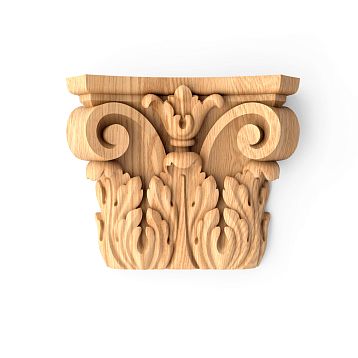
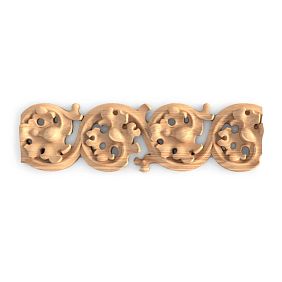
In addition to handles and skirting boards, STAVROS offers a full range of molding products for creating comprehensive interior solutions. Wooden beamscomplete the ceiling space,Moldings form decorative panels, rails create modern accent walls.
By choosing STAVROS wooden products, you invest in durability, eco-friendliness, and aesthetic perfection. Natural wood, impeccable processing quality, thoughtful design, professional service — everything for creating interiors that delight for decades.
Create spaces with character, form interiors with individuality, invest in quality that is felt every day. A comprehensive approach to selecting wooden elements — handles, skirting boards, moldings — is the key to a harmonious result. Entrust beauty and reliability to STAVROS professionals — craftsmen for whom working with wood is an art, a calling, and a responsibility to every client.