Article Contents:
- Upholstered headboard with wooden frame: comfort and structure
- Upholstery materials: from linen to velvet
- Construction of an upholstered headboard with a frame
- Carved wooden panels: sculpturality and monumentality
- Making a carved headboard: from sketch to installation
- Overlays on a smooth surface: flexible decorativeness
- Technique for installing overlays on a headboard
- Rules of scale and height: proportions as harmony
- How a headboard sets the tone for the entire bedroom
- Color coordination of headboard and bedroom
- Bedroom set: headboard as part of an ensemble
- STAVROS Company: masters of bedroom ensembles
- Custom headboard design
- Frequently asked questions about bed headboards

The bedroom is the only room in the house where functionality gives way to emotionality, where the ability of the space to calm, lull, immerse in a state of security, intimacy, and peace is more important than the practicality of storage or the convenience of cooking. The center of this space is Classic Bed, not just a functional object for sleeping, but an emotional anchor that sets the mood, style, and character of the entire room. And if the bed is the center of the bedroom, then the headboard is the center of the bed, the vertical element that first catches the eye upon entering, last before sleep, and first upon waking. A tall carved headboard made of dark oak creates an atmosphere of solemnity, security, aristocratic detachment—characteristic of palace bedrooms. An upholstered headboard with tufting, covered in velvet, exudes sensuality, luxury, and the decadent softness of Rococo and Victorian styles. A minimalist headboard-panel without decoration, painted white or gray, conveys modern asceticism, functional purity, and a rejection of sentimentality.
A headboard is not just a decorative panel—it is an architectural element that connects the horizontal of the bed with the vertical of the wall, the scale of the furniture with the scale of the room. A headboard that is too low (below 100 centimeters from the floor) gets lost against the wall; the bed looks squat, unfinished, as if its top part has been cut off. One that is too high (above 180-200 centimeters in a standard bedroom with ceilings of 270-300) overwhelms the space, creates disproportion, and visually shrinks the room. The optimal headboard height is 120-160 centimeters from the floor for bedrooms with ceilings of 270-300, which is half or slightly less than the height of the wall—enough to dominate but not overwhelm.
Designing the headboard of a classic bed—is a task that is both aesthetic and constructive. The headboard must be beautiful—matching the interior style, demonstrating craftsmanship, and evoking an emotional response. Simultaneously, it must be sturdy—withstanding leaning back while reading in bed, accidental bumps from pillows, and the weight of wall sconces or shelves. Technologically well-thought-out—attached to the bed frame or wall securely but disassemblable for transport. This article is a guide to creating a headboard that turns Bed into a work of art, and the bedroom into a space where one wants not just to sleep, but to be, to contemplate, to experience beauty.



Upholstered headboard with wooden frame: comfort and structure
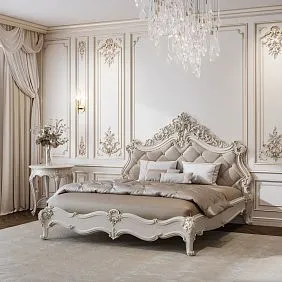
The combination of soft upholstery and a wooden frame is a classic solution that blends the tactile comfort of softness with the visual structure of wood. The solid wood frame, made of oak, walnut, or beech—whether rectangular, arched, or shaped—forms the headboard outline, defines proportions, and creates architectural clarity. Inside the frame, a soft panel is covered with fabric or leather and padded with foam or synthetic padding 50–100 millimeters thick. The panel provides comfortable back support, softens the coolness of the wood, and adds textile warmth and coziness.
The frame can be simple—four bars joined into a rectangle, without decoration, with a natural oil finish—characteristic of Scandinavian, minimalist style. Or complex—carved moldings along the perimeter, corner rosette overlays, capitals at the top, volutes at the bottom—for Baroque, Empire, Neoclassical styles. The frame width—from 50 to 150 millimeters—determines the visual power: a narrow frame is elegant, light, almost unnoticeable; a wide one is monumental, dominant, creating a sense of portality, as if the bed is an entrance to another space.
The upholstery inside the frame varies in texture, color, and tufting method. Smooth upholstery without tufting—simple, modern, suitable for minimalism, contemporary. Tufted upholstery (capitonné)—a diamond or square pattern formed by buttons recessed into the upholstery, creating relief—characteristic of Victorian, Baroque, glamorous style. Channel tufting—vertical or horizontal parallel folds, stitched through—for Art Deco, Modern, modern classic. The choice of tufting is determined by style: capitonné is excessively decorative for minimalism, smooth upholstery is boring for Baroque.




Upholstery materials: from linen to velvet
Natural linen—coarse texture, matte surface, light natural tones (beige, gray, cream)—suits eco, Scandinavian, country, Provence styles. Linen is pleasant to the touch, breathable, eco-friendly, but wrinkles, gets dirty quickly, and requires frequent washing or dry cleaning. Linen upholstery creates a sense of simplicity, naturalness, and democratic appeal—the opposite of luxury.
Cotton velour—a soft, plush fabric with a matte sheen, available in a wide color palette—a compromise between affordability and visual luxury. Velour is soft to the touch, cozy, but the pile eventually flattens and wears out, especially in areas of frequent contact—the center of the headboard where one leans back. Suitable for Neoclassical, contemporary, modern classic styles, where softness without excessive luxury is important.
Velvet is a dense fabric with a thick, short pile that creates a deep color and a play of light and shadow when viewed from different angles—a luxurious material characteristic of Baroque, Rococo, Victorian, and glamour styles. Velvet in rich tones—emerald, sapphire, burgundy, dark blue—conveys an impression of wealth, drama, and theatricality. Velvet requires careful handling—the pile flattens easily, collects dust, and stains are clearly visible. Upholstery with tufted (carriage-style) stitching is the pinnacle of decorativeness, suitable for formal bedrooms in classic interiors.
Genuine leather is an expensive, durable material with a distinctive texture, warm to the touch, and developing a patina over time—suitable for men's bedrooms, studies, English style, and loft interiors. Leather is practical—easy to clean with a damp cloth, does not absorb odors, and does not fade. Colors are traditionally dark brown, black, and rarely light (beige, cream). Upholstery with tufted (carriage-style) stitching is a classic of English clubs and studies, creating an atmosphere of masculinity, solidity, and tradition.
Our factory also produces:


Construction of a soft headboard with a frame
The frame is made from solid wood with cross-sections of 60x40, 80x60, or 100x80 millimeters, depending on the headboard size. Four beams are joined with straight tenons and glue, reinforced with wooden dowels or internal metal brackets. The frame is attached to the bed frame with bolts through hidden metal plates or hung on the wall independently of the bed—the latter option is preferable for heavy headboards, relieving stress on the bed frame.
A soft panel is formed inside the frame. The base is plywood or MDF, 10-15 millimeters thick, cut to the inner dimensions of the frame with a 3-5 millimeter gap. Furniture foam with a density of 25-35 kg/m³ and a thickness of 50-80 millimeters is glued onto the base. Upholstery fabric is stretched over the foam, wrapped around the back of the base, and secured with a furniture stapler every 30-50 millimeters. Tension is critical—too loose creates wrinkles and folds; too tight deforms the foam and may tear the fabric.
For tufted (carriage-style) stitching, a grid of diamonds or squares with a spacing of 100-150 millimeters is marked on the foam. Holes are drilled through the foam and base at the intersection points. The upholstery is stretched, and a strong thread is passed through each hole; on the front side, the thread is threaded through a button covered in the same fabric, while on the back, the thread is pulled tight and secured with a stapler. The button is recessed into the foam by 20-30 millimeters, creating a characteristic relief, with fabric folds between the buttons forming diamonds.
The finished soft panel is inserted into the frame from the inside and secured with battens (thin strips) nailed with small nails. The battens conceal the edges of the upholstery and create a neat transition from fabric to wood. The assembled headboard is attached to the wall or bed frame, and vertical alignment is checked with a level.
Get Consultation
Carved wooden panels: sculptural and monumental
A carved wooden headboard is a tradition dating back to medieval chest-beds, Renaissance cassoni, and Baroque canopies. A carved panel made of solid oak, walnut, or mahogany, 120-180 centimeters high, 160-200 centimeters wide (for a standard double bed of 160-180 cm), and 30-50 millimeters thick, is adorned with three-dimensional carvings—floral motifs, geometric patterns, or narrative scenes. The carving creates a play of light and shadow, tactile texture, and visual complexity, transforming the headboard into a sculptural object.
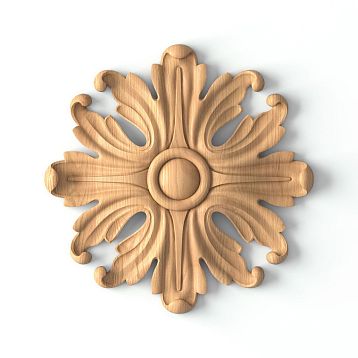
Carving themes are traditional. Acanthus leaves—large stylized leaves with curved edges, referencing antiquity—are characteristic of Classicism, Empire, and Neoclassicism. Grapevines—shoots with leaves and clusters—are typical of Baroque, Rococo, and Renaissance, symbolizing fertility and the joy of life. Cartouches—decorative shields with scrollwork edges—are used in Baroque and Empire styles, often containing a coat of arms or the owner's monogram. Rosettes—round or polygonal floral motifs—are found in Classicism and Empire, placed at corners or the center of the panel.
Carving depth varies from shallow relief (5-10 millimeters)—characteristic of Renaissance and Neoclassicism, creating refined detail—to deep relief (30-50 millimeters)—typical of Baroque, producing dramatic shadows and sculptural volume. Deep carving is labor-intensive, requires thick stock and an experienced craftsman, but creates a powerful impression of monumentality, craftsmanship, and uniqueness.
Making a carved headboard: from sketch to installation
The process begins with a sketch—a scaled drawing of the ornament, approved by the client. The sketch is transferred onto the panel—a solid board or a panel glued from several boards for width. Transfer is done using tracing paper, carbon paper, or drawing with a template. The outlines of the ornament are traced with a pencil and refined with a carving knife.
Carving is done by hand using a set of chisels of various shapes—straight, gouges, V-tools, and bent gouges (with curved blades for deep areas). The craftsman sequentially removes wood around the ornament elements, shapes volumes, and details—leaf veins, flower petals, scroll curves. The work takes from several days to weeks, depending on size and complexity. Modern technology—CNC milling—speeds up the process, but final finishing is still done by hand—machines cannot feel the wood grain and may cause chips or inaccuracies requiring correction by the carver.
After carving, the panel is sanded with a fine abrasive (P320-P400) to remove burrs while preserving relief clarity. It is tinted with colored oil or stain—dark walnut, wenge, mahogany for classic styles; natural oak, beech, or bleached wood for Neoclassical or Scandinavian styles. It is coated with matte or semi-matte varnish, emphasizing the grain and protecting against moisture and dirt. Sometimes the carving is additionally patinated—with gold, silver, or bronze paint applied with a brush into the recesses and wiped from the raised areas, creating an antique gilding effect.
The finished panel is attached to the wall with hidden mounting—metal Z-shaped brackets screwed to the back of the panel and the wall, allowing the headboard to be hung and removed if needed. An alternative is attaching it to the bed frame with bolts through metal plates, but this complicates bed assembly and disassembly during moves.
Overlays on a smooth surface: flexible decorativeness
A headboard made from a smooth panel—plywood, MDF, or solid wood without carving, painted a solid color or veneered—is minimalist, modern, and budget-friendly but risks looking dull and generic.furniture appliquésOverlays are carved wooden elements glued onto a smooth surface—transforming a simple headboard into a decorated one, adding a stylistic accent, visual interest, and adaptability to different interiors without changing the base.
Overlay types are varied. Corner overlays—elements placed at the four corners of the panel, forming a frame—suit classic and Neoclassical styles, creating an architectural structure. Central overlay—a large element placed at the center of the headboard—becomes a focal point, functioning as a medallion, coat of arms, or rosette. Vertical overlays—pilasters, columns placed on the sides of the panel—create verticality, rhythm, and reference architectural columns. Horizontal overlays—moldings, friezes placed at the top or bottom of the panel—establish horizontality, framing, and emphasize boundaries.
Overlay materials include solid wood (oak, beech, ash, linden for fine carving) and polyurethane (lightweight, inexpensive, imitating wood but cold to the touch and less noble). Wooden overlays are preferable—they are tactilely warm, visually authentic, and can be tinted to match the headboard or in contrast. Polyurethane suits budget projects where decorativeness is key with minimal cost.
Technique for installing overlays on a headboard
The headboard base is prepared—the surface must be smooth, clean, and degreased. If painted, the paint must be completely dry (24-48 hours). Overlays are laid out on the headboard without glue—a trial fit to check symmetry and proportions. Corner overlays are placed precisely at the corners, central overlay—exactly at the center (measured and marked with a pencil cross). Vertical and horizontal overlays are spaced evenly and parallel to the edges. The layout is photographed or traced with a pencil to fix positions.
Glue is applied to the back of the overlay—PVA wood glue for wood-to-wood, polyurethane glue for wood to MDF or painted surfaces. The overlay is pressed onto the headboard in the marked position and held for 1-2 minutes for the glue to set. Excess glue squeezed out at the edges is immediately wiped off with a damp cloth. For heavy overlays, small headless finishing nails are additionally used—driven into inconspicuous areas (carving recesses), countersunk flush, and concealed with a wax pencil matching the wood tone.
After all overlays are glued, the headboard is left for 24 hours for the glue to fully cure. Then, if needed, overlays are tinted with colored oil or patinated with gold or silver paint to create accent or contrast with the base. The finish—applying one coat of varnish over the entire headboard surface, including overlays—unifies the elements and creates a single protective film.
The advantage of overlays is flexibility. If the current decor becomes tiresome—overlays are removed (cut with a thin knife, separated), the surface is sanded, and new overlays of a different style are glued. A smooth panel with Baroque overlays can transform in a day into a minimalist one with geometric overlays or none at all. This allows adapting the headboard to interior changes without replacing the bed itself.
Rules of scale and height: proportions as harmony
The headboard should be proportional to the bed and bedroom. Headboard width equals or slightly exceeds bed width—for a 160 cm bed, headboard 160-180 cm; for 180 cm, 180-200 cm; for 200 cm, 200-220 cm. A headboard narrower than the bed looks stunted, as if parts were cut off. A headboard significantly wider (by 40+ cm) creates a portal effect—the bed as an entrance to a niche or alcove—works in large bedrooms where the portal is proportionate to the space. In small bedrooms, a wide headboard overwhelms and visually shrinks the room.
Headboard height relates to ceiling height and wall size. For standard ceilings of 270-300 cm, optimal headboard height from the floor is 120-160 cm—half or slightly less than the wall height. A 120 cm height suits minimalist, modern bedrooms where restraint is key. 140-160 cm suits classic styles where the headboard should dominate and be a noticeable accent. Heights over 160 cm in a standard bedroom are excessive, creating vertical overload—except for canopies that extend to the ceiling, but that is a separate typology.
For high ceilings of 320-400 cm (typical of Stalin-era, pre-revolutionary apartments, and country houses), headboards can reach 180-220 cm, maintaining a proportion of about half the wall height. Here, visual connection between the headboard and ceiling cornice or wall molding is important—a 200 cm headboard looks harmonious if there is a horizontal molding on the wall at 220-250 cm, creating a visual boundary above which a different zone begins—painted, wallpapered with a different pattern, or trim under the cornice.
Headboard thickness is also critical. A thin, flat headboard measuring 20-30 millimeters looks like a back panel, a decoration lacking volume. A headboard thickness of 50-80 mm is the optimum, creating a sense of materiality and sturdiness. A soft headboard with a frame is usually thicker — 100-120 millimeters (frame 60 + foam 50), which adds visual weight and tactile comfort. A carved headboard can be thinner — 30-40 millimeters is sufficient to create relief, but the frame around the carved panel increases the overall thickness to 80-100.
How the headboard sets the tone for the entire bedroom
The headboard is the first element a person sees upon entering the bedroom, if the bed is placed with its headboard against the wall farthest from the entrance — a classic layout. The shape, color, and style of the headboard are instantly processed by the brain, forming the first impression and setting the emotional tone. A tall, carved headboard made of dark oak with gilded details shouts classic, luxury, tradition — the rest of the bedroom furniture must correspond: nightstands with carved legs, a chest of drawers with moldings, a wardrobe with pilasters. Contradiction — minimalist nightstands on metal legs — destroys the integrity.
A soft headboard in a pastel tone with tufting creates a romantic, cozy atmosphere — other textiles should support it: a bedspread with ruffles, decorative pillows, curtains with draperies. Rigid minimalism in textiles — a strict bedspread without decor, roller blinds — conflicts with the softness of the headboard, creating stylistic confusion.
A simple, smooth headboard in white or gray without decor dictates minimalism for the entire bedroom: laconic nightstands, a chest of drawers without decor, a built-in wardrobe without pilasters, neutral textiles. Adding carved furniture, abundant textile decor against the backdrop of a minimalist headboard creates eclecticism, which can work in the hands of a professional but more often looks ill-conceived.
Color coordination of the headboard and bedroom
The color of the headboard is coordinated with the bedroom's color palette. A wooden headboard in a natural tone (light beech, medium oak, dark walnut) becomes a warm accent around which the palette is built: textiles in warm beige, brown, terracotta tones, neutral cream walls, wooden flooring or wood-look flooring. Cold gray, blue tones conflict with warm wood, creating a temperature dissonance.
A painted headboard — white, black, gray, colored — dictates the palette. A white headboard requires a light bedroom with accents in textiles, accessories — colored pillows, a contrasting throw, bright bedside lamps. A black headboard is dramatic, suitable for contrasting interiors with white walls, black-and-white graphic prints, metallic accents. A colored headboard (emerald, sapphire, burgundy) becomes the dominant feature; other surfaces are neutral — white, gray, beige — so as not to overload the space with color.
A soft headboard upholstered in fabric offers endless variations. Neutral upholstery (beige linen, gray velvet) is universal, allowing you to change the surrounding textiles without reupholstering the headboard. Bright upholstery (emerald velvet, dark blue leather) becomes a color accent; the surrounding textiles should support the color — curtains of the same tone, decorative pillows in the same palette, a rug incorporating this color.
Bedroom suite: the headboard as part of the ensemble
Bedroom suite— a set of furniture for the bedroom, including a bed, nightstands, a chest of drawers, a wardrobe, sometimes a dressing table, an ottoman — must be stylistically coordinated. The bed headboard sets the style; the other pieces follow. A carved headboard requires carved elements on the nightstands (legs, fronts), chest of drawers (overlays, moldings), wardrobe (pilasters, cornices). A soft headboard with tufting harmonizes with a soft ottoman upholstered in the same fabric, soft panels on the wardrobe fronts.
The headboard material should be repeated in the suite. A headboard made of oak — bed, nightstands, chest of drawers, wardrobe made of the same oak with the same finish. A combined wood + fabric headboard — furniture carcasses are wooden, but the textile is repeated in the ottoman upholstery, soft inserts on the fronts, decorative pillows on the bed.
Headboard proportions set the proportions for the rest of the furniture. A tall, monumental headboard of 160 centimeters requires correspondingly large nightstands with a height of 60-70 cm, a chest of drawers with a height of 90-100 cm, a wardrobe with a height of 220-240 cm. Miniature nightstands with a height of 40 cm, a low chest of drawers of 70 cm against the backdrop of a tall headboard look toy-like, disproportionate. A low headboard of 100-120 cm harmonizes with low nightstands of 50-60 cm, a chest of drawers of 80-90 cm, creating a horizontal, relaxed composition.
Company STAVROS: masters of bedroom ensembles
STAVROS is a St. Petersburg company with over twenty years of experience in creatingclassic furniturefrom solid oak, beech, ash, specializing inclassic bedswith headboards of all types: carved from solid wood, soft with a wooden frame, combined withfurniture overlays, minimalist smooth ones. The catalog includes over 30 bed models in sizes from single 90x200 to king-size 200x200, with the possibility of individual adaptation of headboard height, upholstery type, and carving decor to suit a specific interior.
Production technology ensures durability, eco-friendliness, and aesthetic perfection. Wood is purchased from European suppliers with FSC certification, undergoes chamber drying to a moisture content of 8-10 percent. Bed frames are made from solid wood with mortise and tenon joints glued and reinforced with metal brackets, supporting loads of up to 250 kilograms. Headboard carving is done by hand by master carvers who have undergone years of training in traditional techniques at an art academy.
Soft headboards are upholstered with premium-class fabrics from European manufacturers — Belgian linen, Italian velvet, Spanish leather — with a guarantee of color fastness and wear resistance. Tufting is done by hand using buttons covered in the same fabric, recessed to a precisely calculated depth to create perfect relief. The client is offered a choice from 50+ fabric samples, 20+ wood finish options, creating thousands of combinations for a unique headboard.
Custom headboard design
In addition to catalog models, STAVROS offers custom headboard design based on a client's sketch, a photograph of a historical prototype, or joint development with the company's designer. The process begins with a consultation: interior style, bed and bedroom size, ceiling height, color palette, and budget are discussed. The designer creates a 3D visualization of the headboard in the client's interior using photos of the room, allowing them to see the future result before production begins.
After concept approval, drawings are developed, wood, upholstery fabric, and carving details are selected. A sample carving fragment or upholstery sample is made; the client evaluates it in person and makes adjustments. After final approval, production is launched — from 4 to 8 weeks depending on the complexity of the carving and headboard size. The finished product is delivered and installed by company specialists, adhering to mounting technology and checking reliability.
A custom headboard costs 50-80 percent more than a catalog one due to the uniqueness of the carving and development, but the result justifies the investment for designer interiors, where the headboard becomes a work of art, the centerpiece of the bedroom, and a source of pride for the owner.
Frequently asked questions about bed headboards
Can a headboard be added to an existing bed without one?
Yes, a headboard can be autonomous — attached to the wall independently of the bed. This is a universal solution suitable for any bed. The headboard is hung on the wall using hidden brackets, and the bed is pushed up against it. The advantage is that when replacing the bed, the headboard remains. STAVROS manufactures custom autonomous headboards, selecting the size to match the bed width.
What headboard height is comfortable for reading in bed?
For comfortable back support while reading in a semi-sitting position, the top edge of the headboard should be at a height of 90-110 centimeters from the mattress level. Considering that the mattress is usually 50-60 centimeters from the floor, the headboard should be 140-170 centimeters from the floor. A soft headboard is more comfortable than a hard one for prolonged leaning.
Can you update the headboard without changing the bed?
Yes, the headboard is a removable element that can be replaced or updated. A carved headboard can be refinished in a different color, with patination or gilding added. A soft headboard can be reupholstered with a different fabric, changing the color and texture. A smooth headboard can be decoratedoverlay panels, transforming a minimalist one into a classic. STAVROS offers headboard update services — reupholstering, refinishing, adding decoration.
How long does a wooden carved headboard last?
A carved headboard made from solid oak or beech, with proper care (avoiding direct sunlight, extreme humidity), lasts for decades and can be passed down through generations. A finish of varnish or oil protects against moisture and dirt. Refinishing the coating every 10-15 years maintains its appearance. The carving does not wear away — it is not subject to mechanical impact and retains the clarity of its relief for centuries.
Does the headboard have to be attached to the wall?
Not necessarily. The headboard can be attached to the bed frame with bolts through metal plates — this is the classic method for beds where the headboard is an integral part of the structure. However, wall mounting is preferable for tall, heavy headboards — it relieves stress on the bed frame, increases stability, and simplifies bed assembly and disassembly when moving.
Classic Bed with a well-designed headboard transforms the bedroom from a utilitarian sleeping space into an area where one experiences beauty, comfort, and emotional security. The headboard is not a decorative addition, but a central element that sets the tone, style, and character of the entire room. The correct choice of headboard type — carved, soft, with overlays — material, height, and color creates harmony between the scale of the furniture and the space, between function and aesthetics, between tradition and modernity. The company STAVROS offersBeds with headboards of all types,furniture appliqués for decoration,classic furnitureforbedroom sets, custom design, and specialist consultations. Create bedrooms where the central element is not just a bed, but a work of art, where the headboard is not a background, but a face, where every morning begins with the contemplation of beauty, and every evening ends with a touch of the nobility of wood, the warmth of fabric, and the craftsmanship of carving.