Article Contents:
- Classic Furniture: Why a Solid Wood Armchair is the Foundation of a Nook
- The Armchair Archetype: A Throne for Everyday Life
- Classic Armchair: A Form Perfected Over Centuries
- Upholstery: The Material that Interacts with the Body
- Nook Composition: Rules for Creating an Intimate Space
- Principle 1: Center and Surroundings
- Principle 2: Scale and Proportions
- Principle 3: Color Harmony
- Principle 4: Visual Framing
- Floor Lamp: The Right Light for Reading
- Height and placement of the floor lamp
- Lampshade Type and Light Direction
- Light Temperature: The Warmth of Evening
- Coffee Table: Function and Aesthetics
- Size and Height
- Material: Wood, Metal, Stone
- Shape: Round or Square
- Wall Panels Behind the Armchair: Interior Decor as Framing
- Panel System: Versailles Classic in Your Home
- STAVROS Moldings: From Simple to Carved
- Carved Overlays: Accents Within Panels
- Textiles: The Softness and Warmth of the Final Layer
- Throw Blanket: An Invitation to Cozy Up
- Cushion: Support and Decor
- Rug: Grounding the Zone
- Scenarios: Three Nooks for Three Styles
- Scenario 1: Classic English Nook
- Scenario 2: Scandinavian Light Nook
- Scenario 3: Velvet Luxury
- Mistakes when creating a nook: what to avoid
- Conclusion: the nook as a microcosm of the home

Every home has a nook where the world stops. Where you don't work, don't cook, don't solve problems—you simply sit with a book, a cup of tea, your own thoughts.Solid wood armchairs—are the perfect foundation for such a nook, but the armchair alone is not enough. You need a floor lamp providing the right light for reading. A coffee table to place a book, set down tea. Wall panels behind the armchair, creating a visual frame, an architectural backdrop. Textiles—a throw blanket, a pillow—adding warmth, softness, coziness. This article is about how to create an intimate space from a single armchair within a large room, a microcosm of comfort you'll want to return to every evening.



Classic Furniture: why a solid wood armchair is the foundation of a nook
A sofa is for family, for guests, for watching TV. An armchair is for yourself, for one person, for focused activity (reading, contemplation, reflection).Solid wood armchairscreate a sense of solidity and security, which is psychologically important for relaxation.




The archetype of the armchair: a throne for everyday life
In culture, the armchair is a symbol of power, status, importance (a king's throne, a judge's chair, the head of the family's armchair). When you sit in an armchair (and not on a sofa, chair, or stool), you assume a position that is subconsciously perceived as more significant, more intimate. The armchair embraces (high armrests), supports (the back), creates a personal zone.
A massive wooden frame enhances this effect. An oak armchair weighs 15-25 kg—it doesn't move when you sit down, doesn't creak, doesn't wobble. It stands like a rock, like a tree (literally—it is wood that grew for 100 years, now serving you). This feeling of reliability, stability is something a plastic or particleboard armchair will never provide.
Our factory also produces:


Classic armchair: a form refined over centuries
Classic Furniture—is not fashion, but time-tested proportions that work for the human body. Seat height 42-45 cm (knees bent 90°, feet on the floor, thighs parallel to the floor—a physiological position). Seat depth 50-55 cm (back rests against the backrest, lumbar region is supported). Backrest angle 100-105° (not vertical like a chair, but with a slight backward tilt, relaxing). Armrests 20-25 cm high from the seat (elbows rest freely, shoulders don't rise).
These parameters are not accidental—they evolved over centuries. The Louis XV armchair (Baroque, 18th century), the Chippendale armchair (English classic, 18th century), the Biedermeier armchair (German classic, 19th century)—all of them, despite different decor, have similar proportions, because proportions are dictated by the body, and the body hasn't changed.
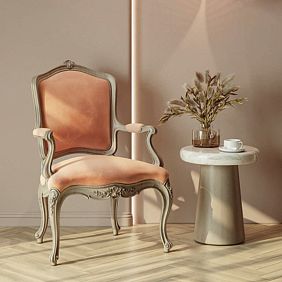
Versailles armchairfrom STAVROS—is a modern interpretation of this classic. Frame solid oak, carved armrests (acanthus leaves), cabriole legs (curved, ending in scrolls), high back with a cartouche (carved shield) at the top. Upholstery—velour, velvet, leather, linen (customer's choice, any color). Proportions are precise: you sit—comfortable for hours, but it looks—like a throne from a palace.
Get Consultation
Upholstery: the material that interacts with the body
The wooden frame is the structure, but the upholstery is what the body contacts. The upholstery material affects comfort, tactility, aesthetics.
Velour—a fabric with short pile, soft, warm, silky to the touch. Velour is pleasant to the body (you feel its softness even through clothing), doesn't slip (you sit stably), looks luxurious (shimmers in the light, creates color depth). Minus—collects dust (needs regular vacuuming), on dark colors, marks are visible (from hands, body—the pile gets flattened). Suitable for a relaxation zone where the armchair is used in the evenings, not intensively all day.
Velvet—a fabric with long, dense pile, even more luxurious than velour. Velvet historically—the fabric of kings, churches, theaters. It is heavy, draping, with deep color (velvet blue, emerald, burgundy—colors other fabrics don't have). Tactility is maximal—you run your hand over velvet, feel how the pile lies in one direction, shimmers. Same minuses: dust collector, shows marks. But if the armchair is the centerpiece of the interior, an object of contemplation, not just for use, velvet is justified.
Natural leather—a classic for study, masculine, serious armchairs. Leather is cooler than fabric (uncomfortable for the first minutes in winter, then warms from body heat), but more durable (velour wears out in 5-7 years, leather lasts 20-30 years, ages beautifully—patina, light wear adds character). Leather is easier to care for (spilled coffee doesn't soak in, wipes off with a cloth), doesn't collect dust. The smell of leather (tannins, fats used in tanning) creates an atmosphere of a library, an English club, a study. Perfectly suited for a reading armchair.
Linen—a natural, somewhat coarse fabric, cool, matte, with an uneven texture. Linen is the choice for Scandinavian, Provençal, eco-friendly interiors. It is not luxurious, but modest, yet honest. Linen breathes (in summer, it's not hot in a linen armchair), hypoallergenic, doesn't accumulate static electricity. Minus—wrinkles (creases on the upholstery after sitting), but this is part of the aesthetic—linen is not perfect, it's alive.
Nook composition: rules for creating an intimate space
An armchair by itself is just furniture. An armchair + the right surroundings—a nook, a space, a zone. Creating such a zone is a composition where each element has a function and a visual role.
Principle 1: Center and surroundings
The armchair is the center. Everything else (floor lamp, table, panels, textiles)—the surroundings, which enhance the center, create a halo around it. The surroundings should not compete with the center (the floor lamp shouldn't be brighter than the armchair, the table more massive), but also shouldn't be unnoticeable (too small a table, too dim a floor lamp). Balance: the surroundings are noticeable, but subordinate to the center.
Principle 2: Scale and proportions
All elements must correspond to each other in scale. A large armchair (width 80 cm, back height 110 cm) requires a large floor lamp (height 150-170 cm), a medium table (diameter 50-60 cm). A small armchair (60 cm width, 90 cm height)—more delicate elements.
If the armchair is Baroque, lush, with carving, the floor lamp should have decorativeness (wrought iron base, lampshade with tassels, gilding). If the armchair is minimalist, the floor lamp—simple lines, matte metal, textile lampshade without ornament.
Principle 3: Color harmony
Three approaches to color:
Monochromatic: Gray armchair, a gray wall behind it (in a lighter or darker shade), a gray-toned wooden side table (whitewashed oak), a gray metal floor lamp, gray linen textiles. This creates calmness, unity, minimalism. Suitable for modern, Scandinavian interiors.
Analogous: Blue velour armchair, a blue-green wall behind it (adjacent colors on the color wheel), a wooden side table with a cool tone (ash), a brass floor lamp (gold is warm but works as an accent), blue-green textiles. This creates harmony with slight variety.
Contrast: Dark armchair (black leather, dark green velvet), a light wall (white, cream), a light wood or marble side table, a black metal floor lamp + white lampshade, dark throw + light pillow textiles. This creates drama, graphic quality, clear boundaries. Suitable for classic, dramatic, high-contrast interiors.
Principle 4: Visual Framing
An armchair in an empty corner looks lost, random. An armchair against a wall where the wall is decorated (paneling, molding, wallpaper, a painting) looks integrated, planned. The wall behind the armchair is a frame that highlights the armchair, emphasizing its significance.
Visual framing can be:
-
Architectural: Wall panels made of moldings, creating a rectangle behind the armchair.
-
Color: The wall behind the armchair is painted in a contrasting color (the other walls are white, this one is dark blue).
-
Textural: Wallpaper with texture (fabric-like, wood-look, patterned) only on this wall.
-
Artistic: A painting or a series of paintings above the armchair.
The framing doesn't have to be complex. Even a simple rectangle of white molding on a white wall creates relief, chiaroscuro, structure.
Floor lamp: proper lighting for reading
Reading requires specific lighting: sufficient brightness (eyes don't strain), directionality (light falls on the page, not in the eyes), warm color temperature (2700-3000K, not cold 4000K, which is invigorating but tiring).
Height and placement of the floor lamp
The floor lamp is placed to the side of the armchair (left if you are right-handed — book in the right hand, light falls from the left over the shoulder onto the page; right if left-handed). Distance from the armchair to the floor lamp — 30-50 cm (close enough for the light to be effective, but not right next to it to avoid hitting it with your elbow).
Floor lamp height — 150-170 cm from the floor. The lampshade at or slightly above the head level of the seated person (approximately 120-140 cm from the floor, if sitting in an armchair with a seat height of 45 cm, head is approximately 110-120 cm from the floor). This provides light falling from above and to the side, like natural daylight from a window — the most comfortable for the eyes.
Type of lampshade and light direction
A closed lampshade (fabric, paper, completely covering the bulb) provides soft, diffused light, comfortable for the eyes, creating a cozy atmosphere. But it's insufficient for reading — additional brightness is needed. The bulb in the lampshade should be 15-20 W (LED, equivalent to a 100-150 W incandescent bulb).
A lampshade open at the bottom (cone, bowl, directed downward) provides directed light onto the armchair area, side table, book. This is more effective for reading but can be somewhat harsh (the contrast between the lit area and dark surroundings tires the eyes). Solution — a dimmer (brightness regulator) to adjust the intensity.
An adjustable lampshade (on a flexible stem, on a swivel) — optimal. You direct the light exactly where needed (onto the book, knitting, tablet), change the angle as necessary. Floor lamps with adjustable heads (like 'architect', 'industrial') are practical but aesthetically somewhat cold — suitable for modern, loft interiors, not for classic ones.
Light temperature: the warmth of evening
For evening reading (when most people read) warm light is needed — 2700-3000K. This is the color of sunset, candles, old incandescent bulbs. It relaxes, prepares the brain for sleep (doesn't suppress melatonin production like cold light 4000-5000K), creates coziness.
Cold light (4000K+) invigorates, increases concentration, but tires with prolonged exposure, interferes with falling asleep (if reading before bed). Cold light — for work zones (study, kitchen), warm — for relaxation.
Color Rendering Index (CRI) should be high — 90+ (indicates how accurately the light renders colors). Low CRI (70-80, typical for cheap LEDs) distorts colors, makes the interior look faded, unpleasant. Quality LEDs (Philips, Osram, IKEA Trådfri) have CRI 90-95.
Side table: function and aesthetics
A small table next to an armchair is not a luxury, but a necessity. Where to place a cup of tea, put a book (when you get up for tea), phone, glasses, remote. Without a table, all this ends up on the floor (inconvenient, unsightly) or on the armrest (rolls off, stains the upholstery).
Size and height
The table should be slightly lower than the armrest of the armchair or at its level. The armrest is usually 62-67 cm from the floor (seat 45 cm + 17-22 cm armrest height). A table 55-65 cm high is convenient: the hand reaches for the cup naturally, no need to lean over, no need to reach up.
The diameter or width of the table — 40-60 cm. Less than 40 cm — too little space (a cup + a book don't fit). More than 60 cm — bulky, visually competes with the armchair, takes up too much space in the corner, which should be compact.
Material: wood, metal, stone
Solid wood is a logical choice if the chair is made of solid wood. An oak table next to an oak armchair creates material unity. The tabletop can be round (classic, softness, no sharp corners) or square (modern, geometric). Legs: three or four (stability), carved or simple (style). Finish: oil (natural texture, matte) or varnish (shine, protection from spilled tea).
Metal + wood/glass is a modern classic. Metal frame (golden brass, black steel, copper) + wooden or glass tabletop. Visually lighter than solid wood, fits into modern, eclectic, loft interiors. Brass is especially good — warm, noble, pairs with velour, velvet.
Marble/stone — luxury, monumentality. A marble tabletop (white with gray veins, green, black) on a metal leg or wooden base. Marble is cold (a cup of tea cools faster on it), heavy (a 40 cm diameter marble table weighs 10-15 kg), requires coasters (hot items can leave marks). But beauty, status, eternity.
Shape: round or square
Round table — classic, safe (no sharp corners to bump into), visually soft. A circle creates fluidity, flow, fits into classic, traditional, feminine interiors. Diameter 45-55 cm is optimal.
Square/rectangular table — modern, graphic, structural. A square creates order, geometry, fits into modern, minimalist, masculine interiors. Size 40x40 cm or 50x50 cm.
Wall panels behind the armchair:interior decorationas a frame
A bare wall behind the armchair is a missed opportunity. The wall is a background, a canvas on which the armchair becomes a painting.Furniture decor(moldings, panels, overlays) transforms the wall from a neutral plane into an architectural element.
Panel system: the classic Versailles style in your home
Panel system (boiserie, from French boiserie) — dividing the wall into rectangles using moldings. Classic scheme: three horizontal tiers. Lower (plinth) — 30-50 cm from the floor, often painted darker or clad in wood. Middle (main) — 100-150 cm, divided by vertical moldings into 2-4 rectangles. Upper (frieze) — from the top of the middle tier to the ceiling or to the cornice.
For an armchair corner, one rectangle behind the armchair is enough — size 100x150 cm (width approximately the armchair width + 20 cm on each side, height from the armchair seat level to 30 cm above the back). Molding — simple classic profile, width 5-8 cm. Molding is glued to the wall (polyurethane glue or liquid nails), painted the same color as the wall (if you want subtle play of light and shadow — wall and molding the same color, relief creates the effect) or contrasting (wall white, molding gold or black).
Inside the rectangle, the wall can be:
-
Painted the same color (monochrome, play of relief).
-
Painted contrastingly (walls light, inside the panel dark color — accent).
-
Wallpapered (textured, with a pattern — wallpaper inside the panel, paint outside).
-
Clad in wood (veneered panels, wooden paneling — expensive, luxurious).
STAVROS moldings: from simple to carved
The company STAVROS produces moldings from solid oak and beech, as well as polyurethane (lightweight, inexpensive, easy to install). Wooden moldings — for projects where naturalness, tactility, durability are important. Polyurethane — for budget, quick projects.
STAVROS molding profiles: from simple rectangular (for minimalism, modernity) to complex classic (ogee + bead + fluting — for Baroque, neoclassicism). Width from 3 cm (thin, elegant) to 15 cm (massive, monumental). Strip length 2-3 meters (cut to size, joined at corners at 45°).
Carved overlays: accents inside panels
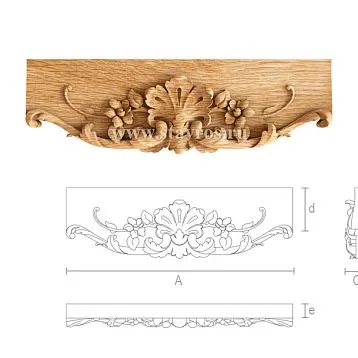
If the panel is large (150x200 cm), the center may look empty.interior decorationA carved overlay (cartouche, rosette, floral ornament) in the center of the panel creates a focal point, richness, completeness.
Overlay size 20-30 cm is glued to the geometric center of the panel, painted to match the wall color (if you want a subtle effect — the overlay stands out in relief, but the color is the same) or contrastingly (gold overlay on a white wall — luxury, white overlay on a dark wall — graphic).
STAVROS offers hundreds of overlay models: from simple rosettes (round, symmetrical — neoclassical, art deco) to complex cartouches (asymmetrical, with scrolls, leaves — Baroque, Rococo). All overlays are solid wood, CNC-cut, hand-sanded, supplied unpainted or ready-made (white, gold, patinated).
Textiles: softness and warmth of the final layer
Wood, metal, stone — hard materials that create structure. Textiles — soft, creating comfort, tactility, coziness.
Throw: an invitation to snuggle up
A throw blanket draped over the arm of a chair or lying on its back is not just functional (to cover up when it's cold), but also a visual signal: here you can relax, here it's warm, here it's cozy. A throw adds color, texture, and softness to a composition that might otherwise be too austere (wood + metal + stone = a bit chilly).
Throw blanket material:
Wool (merino, alpaca) – warm, breathable, natural. A wool throw is ideal for winter evenings when you want to snuggle up while reading. Downside – it can be itchy (if the wool is coarse; merino is not itchy), requires dry cleaning or delicate washing.
Cashmere – luxury, softness, lightness. A cashmere throw is thin yet warm, silky, never itchy. Expensive (a 130x180 cm throw costs 15-30 thousand rubles), requires careful handling. A status choice.
Cotton – a summer option. A cotton throw (waffle, muslin) is lightweight, cool, suitable for warm seasons when wool is too hot, but you want something to drape over yourself. Easy to wash, inexpensive.
Faux fur – visually luxurious, tactilely soft, but not breathable (synthetic), can be hot. Suitable as a decorative element (lies on the chair, creates an appearance, but is not actively used).
Throw blanket color and size:
A throw can match the chair's upholstery (monochrome, calm) or be a contrast (accent). If the chair is dark, a light throw adds lightness. If the chair is light, a dark throw adds graphic contrast.
Size 130x180 cm (standard) is sufficient to cover yourself while sitting in the chair. A larger throw (150x200 cm) is suitable for lying down (if the chair has an ottoman where you can stretch your legs).
Pillow: support and decor
A decorative pillow 40x40 cm or 50x50 cm on a chair serves two functions: lumbar support (if the chair back is straight, the pillow creates lordotic support, comfortable for long sitting) and a visual accent (color, texture, pattern).
Pillow cover material:
Velvet – if the chair upholstery is velvet, a pillow made of the same material (but a different color) creates unity. Or a contrast: a leather chair with a velvet pillow (softness vs. smoothness).
Linen – deliberately rustic, natural, eco-friendly. A linen pillow on a leather or velvet chair adds textural variety.
Embroidery, appliqué – a pillow with an embroidered monochrome pattern (geometric, botanical motifs) is a decorative accent that elevates the status of the nook.
Pillow color:
If the throw and chair upholstery are neutral (gray chair, beige throw), the pillow can be an accent – a bright color (mustard, emerald, terracotta) that enlivens the composition. If the chair is already colorful (blue velvet), the pillow is neutral (white, gray, beige) to avoid overloading.
Rug: grounding the zone
If the floor is wooden or stone (cold), a small rug under the chair and side table (size 150x200 cm or round with a diameter of 150-180 cm) creates a warm zone, visually separates the nook from the rest of the space, and adds sound absorption (footsteps, the clink of a cup on the table sound softer).
Rug material:
Wool – a classic. A hand-woven wool rug (Persian, Turkish, Indian) – luxury, status, durability (lasts 50-100 years). A machine-made wool rug is cheaper but also of good quality.
Cotton – a budget alternative. A cotton rug (Indian kilim, Moroccan Beni Ourain) is lightweight, machine-washable, inexpensive. Suitable for summer, light, Scandinavian interiors.
Synthetic (polypropylene, polyester) – practical (doesn't absorb stains, easy to clean), cheap, but lifeless (lacks the tactility of wool, not breathable). Suitable for utilitarian zones, not for a relaxation nook where tactility is important.
Rug color and pattern:
If the floor is dark, a light rug adds contrast, visually expands the zone. If the floor is light, the rug can be dark (grounds the space, creates a border) or patterned (adds decorative appeal).
The rug pattern should resonate with the style of the chair. A classic chair + a Persian rug with a medallion – traditional harmony. A modern chair + a geometric kilim – eclecticism, works if the colors coordinate.
Scenarios: three nooks for three styles
Scenario 1: Classic English nook
Chair:Versailles armchair STAVROS, frame in oak stained walnut, upholstery in dark green leather, cabriole legs, carved armrests.
Wall: Panel behind the chair 100x150 cm, molding in oak stained walnut (same color as the chair frame), inside the panel the wall is painted dark green (matching the upholstery tone). The remaining walls are cream.
Floor lamp: Antique brass floor lamp (patinated to look aged) height 160 cm, shade in dark green textile with a gold border, 15W LED bulb 2700K. Positioned to the left of the chair, 40 cm from the armrest.
Table: Round table with a 50 cm diameter, walnut-toned oak tabletop, three cabriole legs (matching the chair for stylistic unity), height 60 cm. Positioned to the right of the chair.
Textiles: Mustard-colored woolen throw (merino wool) (contrasts with the green chair but within a warm palette), size 130x180 cm, draped over the left armrest. Pillow 50x50 cm, cream linen cover with dark green embroidered botanical pattern.
Rug: Handmade Persian rug 150x200 cm, red-blue medallion on a cream background, wool. Placed under the chair and table.
Atmosphere: English gentlemen's club, ancestral estate library, evening with whiskey and a volume of Dickens. Dark, noble colors, leather, wood, brass, wool — materials that age beautifully.
Scenario 2: Scandinavian Light Corner
Chair: Simple classic armchair, light ash frame (untinted, natural color), light gray linen upholstery, soft armrests, straight tapered legs.
Wall: White wall behind the chair, white molding panel (simple rectangular profile, 5 cm width) size 90x140 cm. Inside the panel, the wall is the same white (monochrome). Corner carved appliqué (simple rosette, 10 cm diameter, white) in each corner of the panel.
Floor Lamp: Matte white metal floor lamp, height 155 cm, light gray textile lampshade, 12W LED 3000K bulb. Positioned to the left of the chair, 35 cm from the armrest.
Table: Round table with a 45 cm diameter, white marble tabletop with gray veining, white metal leg, height 58 cm. Positioned to the right of the chair.
Textiles: Light beige waffle cotton throw, size 130x180 cm, placed on the back of the chair. Pillow 40x40 cm, white linen cover with gray geometric embroidery (triangles).
Rug: Moroccan Beni Ourain round rug, 150 cm diameter, white cotton with black geometric lines. Placed under the chair.
Atmosphere: Scandinavian lightness, minimalism, light, air. White + gray + natural wood — the palette of Northern Europe, where light is scarce, so interiors are light, reflecting every ray.
Scenario 3: Velvet Luxury
Chair: Baroque armchair, beech frame, painted white enamel with gold patina (gold in the recesses of the carving), deep blue velvet upholstery, cabriole legs with gilding, high back with a carved cartouche at the top.
Wall: Panel behind the chair 110x160 cm, white polyurethane molding (wide 8 cm profile, classic ogee + bead), inside the panel, textured dark blue wallpaper (silk imitation). Remaining walls are white. Carved cartouche appliqué (size 25 cm, white with gold patina) in the center of the panel.
Floor Lamp: Forged gold (brass) floor lamp, height 165 cm, blue velvet lampshade with gold tassels, 18W LED 2700K bulb. Positioned to the left of the chair, 45 cm from the armrest.
Table: Square table 50x50 cm, black marble tabletop with gold veining, gold (brass) metal legs, height 62 cm. Positioned to the right of the chair.
Textiles: Cream-colored cashmere throw (contrasts with the blue), size 130x180 cm, neatly folded on the armrest. Pillow 50x50 cm, gold velvet cover with blue embroidery (monogram).
Rug: Handmade Persian silk rug (maximum luxury) 150x200 cm, blue background with gold botanical pattern. Placed under the chair and table.
Atmosphere: Versailles boudoir, palace luxury, evening with champagne and memoirs. Blue + gold + white — the classic luxurious triad, velvet + marble + cashmere — materials of kings.
Mistakes to Avoid When Creating a Corner
Mistake 1: Too bright light. A floor lamp with a 4000K bulb (cool white) or one that is too bright (25W LED = 200W incandescent equivalent) creates an operating room feel, not coziness. A relaxation corner requires soft, warm, subdued light.
Mistake 2: Too small a table. A table with a 30 cm diameter cannot hold a cup + book, forcing you to place the cup on the floor or hold it. Minimum 40 cm.
Mistake 3: Lack of wall framing. A chair against a bare wall looks random. Even minimal framing (a single rectangle of molding, a contrasting wall color) creates a sense of integration.
Mistake 4: Overloading with decor. Too many pillows (3-4 on one chair), too bright a rug, too ornate a floor lamp — all together creates chaos. Rule: no more than three decorative accents (e.g., carved chair + patterned rug + carved wall appliqué = three accents, sufficient).
Mistake 5: Mismatched scales. A large Baroque armchair + a tiny 30 cm table + a slender floor lamp — imbalance. All elements should correspond to the scale of the chair.
Conclusion: The Corner as a Microcosm of the Home
A reading and relaxation corner is not just a chair in a corner. It is a carefully designed intimate space where every element (chair, floor lamp, table, panels, textiles) works to create an atmosphere of peace, focus, and comfort.Solid wood armchairs— is the foundation of this space, the archetype of a throne that says: this is your place, here you are protected, here you can pause.
Company STAVROS has been creatingclassic furnitureandinterior decoration, which transform houses into spaces for living, not just for functions. STAVROS armchairs are made from solid oak and beech, frames are assembled with mortise and tenon joints and glue (a connection that lasts centuries), carving is done by CNC with manual finishing (precision + soul), upholstery — natural fabrics and leather from European suppliers.
Versailles armchair— The flagship model STAVROS, embodying classical aesthetics. Frame made of solid oak, cabriole legs with hand-carved acanthus leaves, high backrest with a cartouche (carved ornamental shield), curved armrests ending in volutes (scrolls). Upholstery options: velour (30+ colors), velvet (20+ colors), genuine leather (15+ colors), linen (10+ colors). Frame finish: natural oak with oil, tinting (walnut, wenge, gray), enamel (white, cream, graphite) with or without patina.
To create a complete STAVROS corner, we offerFurniture decorand interior elements: moldings (wooden and polyurethane, dozens of profiles), carved overlays (hundreds of models — rosettes, cartouches, floral ornaments, geometric patterns), panels (ready-made wall panels or molding kits for self-assembly), solid wood coffee tables (round, square, with carved or simple legs).
All STAVROS products are manufactured in Russia from wood kiln-dried to 8-10% moisture content, ensuring stability for decades. Seven levels of quality control (from incoming raw material inspection to final product inspection) guarantee the perfection of every armchair, every overlay, every molding.
With STAVROS, creating a reading and relaxation corner ceases to be a task and becomes a pleasure — a process where you choose an armchair, select decor for it, and see how the space transforms, gains character, becomes yours. Where every evening with a book in the armchair is not just reading, but a ritual of returning to yourself, to silence, to peace that the modern world takes away, and a properly created corner restores.