












































































Article Contents:
- Philosophy of reliable connection in wooden construction
- Historical heritage in modern technologies
- Anatomy of loads: understanding mechanics of staircase structures
- Concentration of stresses at connection nodes
- Classification of fastening methods by structural features
- Through connections: maximum reliability
- Blind connections: aesthetics and functionality
- Combined methods: synthesis of technologies
- Fastener materials science
- Wooden fasteners
- Metallic fastening systems
- Technological processes for preparation and installation
- Preparation operations
- Drilling quality control
- Specifics of fastening to different types of steps
- Solid wooden steps
- Glued steps
- Steps made of engineered board
- Features of fastening to different staircase constructions
- Staircases on stringers
- Staircases on treads
- Helical staircases
- Tools and equipment for quality installation
- Measuring Tools
- Drilling Equipment
- Assembly tools
- Quality Control and Work Acceptance
- Visual inspection
- Functional tests
- Documentation of results
- Typical Errors and Ways to Prevent Them
- Design errors
- Technological mistakes
- Operational errors
- Modern Trends and Innovations
- New materials for fastening
- Innovative adhesive systems
- Digital technologies in design
- Economic aspects of quality fastening
- Cost of various methods
- Long-Term Economic Efficiency
- Conclusion
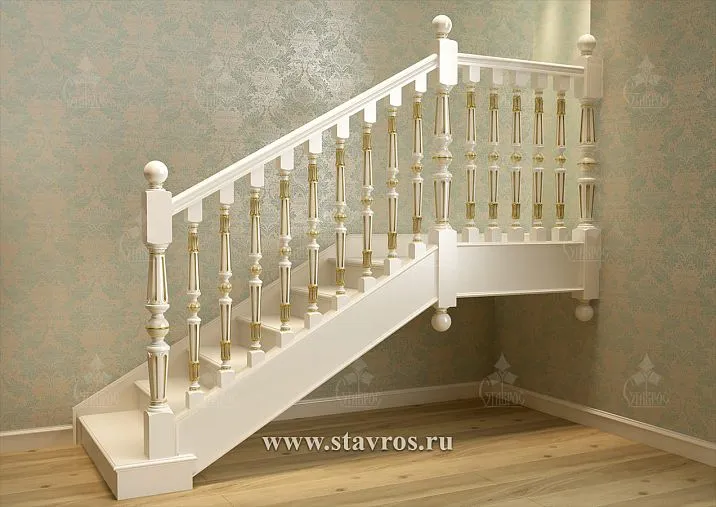
Each staircase tells its story through details, and among them, a special place is held by attaching wooden balusters to treads — a technological process that determines not only the safety of the structure but also its durability. It is an art of joining, where every millimeter matters, and each method of fastening carries the philosophy of craftsmanship, and the result becomes the foundation for safe and comfortable movement between floors.
Imagine the moment when your hand glides over a smooth handrail, and each step on the treads is accompanied by confidence in the reliability of the railing. Behind this feeling lie hours of meticulous work, precise calculations, and a deep understanding of how wood behaves under load. Quality baluster fastening transforms a staircase from a simple structure into a work of engineering art, where beauty is inseparably linked with functionality.
In the modern world of construction technologies, there are numerous ways to join wooden elements, but baluster fastening remains an area where traditional craftsmanship meets innovative solutions. Each method has its advantages, specific applications, and requires a deep understanding of load mechanics, material properties, and the intricacies of the technological process.


Philosophy of reliable joining in wooden architecture
Wood is a living material that continues to change even after processing. Air humidity, temperature fluctuations, natural shrinkage — all these factors influence the behavior of wooden elements in a structure. That is why baluster fastening requires not just mechanical joining, but the creation of a system capable of adapting to material changes.
The principle of mutual complementarity lies at the foundation of quality fastening. Each element of the system — baluster, tread, fastening components — must work in harmony with the others, compensating for weaknesses and enhancing the strengths of partners. This creates a synergistic effect, where the strength of the whole exceeds the sum of the strengths of individual parts.
The aesthetics of joining are no less important than its strength. Visible fastening elements must organically fit into the overall staircase design, while hidden elements ensure clean lines and forms. Mastery lies in creating a connection that is invisible to the eye but perceptible in the reliability of the structure.




Historical heritage in modern technologies
Traditional fastening methods, developed by generations of craftsmen, remain relevant today. Dowel joints were used even in ancient Egypt to create furniture for pharaohs. "Swallowtail" joints adorned the palaces of European nobility. These methods have passed the test of time and proven their effectiveness.
Modern technologies do not reject tradition but develop it. The accuracy of processing has reached the micrometer level thanks to CNC machines. New fastening materials provide corrosion resistance and longevity. New-generation adhesive compositions create joints stronger than the wood itself.
Our factory also produces:


Anatomy of loads: understanding the mechanics of staircase structures
Balusters in staircase railings operate under complex loading conditions. Vertical loads from the structure's own weight are relatively small, but horizontal loads from people leaning on the handrails can be significant. Regulations require railings to withstand horizontal loads of at least 100 kg per linear meter.
Dynamic loads arise when people move along the staircase. Each step creates vibration, which is transmitted through the treads to the balusters. Resonance phenomena can amplify these vibrations, so the fastening must provide not only static strength but also vibration damping.
Temperature deformations of wood create additional stresses at the fastening joints. The linear expansion coefficient of wood across the grain is 10-20 times greater than along the grain, which must be considered when designing joints.
Get Consultation
Concentration of stresses at fastening joints
The points where balusters connect to treads are stress concentration zones. Sharp angles and abrupt changes in cross-section create peak loads that may lead to failure. Proper joint design implies smooth transitions and even load distribution over the contact area.
Wood's anisotropy — the difference in mechanical properties along and across the grain — requires special attention to the orientation of fastening elements. Loads directed across the grain can cause wood splitting at significantly lower forces.
Classification of fastening methods by structural features
Through joints: maximum reliability
Through joints provide the highest strength due to the full passage of the fastening element through the connected parts. Bolted joints with washers and nuts allow creating pre-tension, compensating for wood shrinkage. The bolt diameter should be at least 8 mm to ensure sufficient load-bearing capacity.
Threaded rods with a diameter of 10-12 mm provide even greater joint strength. They are screwed into the baluster to a depth of at least 60 mm and pass completely through the tread. The lower part of the rod is secured with a nut and a wide washer, distributing the load over a larger area.
Advantages of through joints include high strength, the ability to tighten during operation, and simplicity of quality control during installation. Disadvantages — visibility of fastening elements from the back of the tread, need for access for installation from below.
Blind joints: aesthetics and functionality
Blind joints do not pass completely through the tread, ensuring a clean underside of the staircase. Dowel joints use wooden cylindrical rods with a diameter of 8-12 mm, which are glued into corresponding holes in the baluster and tread.
The depth of dowel insertion should be at least 40 mm into each part. The hole diameter is made 0.1-0.2 mm smaller than the dowel diameter to ensure a tight fit. The adhesive — carpentry PVA or polyurethane glue — adds additional strength to the joint.
Threaded inserts (fittings) allow creating a disassemblable blind joint. A metal sleeve with internal threads is screwed into the tread, and a corresponding bolt is inserted into the baluster. Such a joint can be repeatedly disassembled and reassembled without loss of strength.
Combined methods: synthesis of technologies
Modern practice often uses a combination of different fastening methods to achieve optimal results. Dowel-glued joints combine the mechanical strength of the dowel with the chemical strength of the glue. Bolt-glued joints use glue for sealing and additional reinforcement of bolted connections.
The technology of attaching wooden balusters may include pre-treatment of surfaces with special compositions that enhance adhesive bonding and protect wood from moisture. The material science of fastening elements
Wooden fastening elements
Shanks are made from hardwoods — oak, beech, ash. The material moisture content should not exceed 8–10% to prevent shrinkage deformations. The grain direction in the shank should align with its longitudinal axis to ensure maximum bending strength.
Dowel pins for "birdsmouth" joints are made from the same wood species as the main components. This ensures identical deformation characteristics and prevents stresses caused by uneven shrinkage.
Wooden dowels with a diameter of 20–25 mm are used for particularly critical connections. They are made from the base part of the trunk, where the wood has the highest density and strength.
Stainless steel grades AISI 304 or 316 provide corrosion resistance in any operating conditions. Galvanized steel with hot-dip coating is suitable for internal structures. Brass elements combine corrosion resistance with decorative qualities.
Modern metal fastening systems offer high reliability and the possibility of concealed installation. Threaded rods with a diameter of 8-10 mm provide exceptional joint strength and allow for disassembly of elements without damaging the main structure. Installing balusters on stairs using metal fasteners requires precise adherence to drilling and installation technology.
Threaded rods are manufactured from steel with a strength class not lower than 5.8. The thread diameter is selected based on load: M8 for light structures, M10–M12 for standard, M16 for heavily loaded joints.
Special wood screws have coarse threads and self-tapping tips. The recessed head allows the fastener to be flush with the surface. Anti-corrosion coating ensures the longevity of the connection.
Technological processes for preparation and installation
The quality of fastening is established during the material preparation stage. Wood acclimatization in the installation room should last at least 7 days. This allows the material to reach equilibrium moisture content and minimizes subsequent deformations.
Preparation operations
Marking fastening locations is performed with millimeter precision. Laser levels, marking templates, and coordinate-measuring tools are used. The centers of holes must precisely align in the connected parts.
Drilling holes requires special tools and fixtures. Guide bushings ensure hole perpendicularity to the surface. Depth limiters prevent drilling through when making blind holes.
Drilling quality control
Hole diameters are controlled using gauges. Deviations must not exceed ±0.1 mm for dowel joints and ±0.2 mm for bolted joints. Surface roughness of the hole affects bonding quality — it must not exceed Ra 6.3 μm.
Hole alignment in connected parts is checked using control rods. Perpendicularity to the surface is checked with try squares and special instruments. Hole cleanliness — absence of chips and dust — is ensured by compressed air blowing.
Specifics of fastening to different types of stair treads
Solid wooden stair treads
Solid stair treads made from solid wood with a thickness of 40–60 mm provide the best conditions for baluster fastening. Sufficient thickness allows using any type of fastener. Material homogeneity ensures even load distribution.
Grain direction in the tread must be considered when selecting fastening location. Fastening along the grain provides maximum pull-out strength. Fastening across the grain may lead to splitting under heavy loads.
The distance from the tread edge to the fastening axis should be at least 50 mm to prevent chipping. Pre-drilling is mandatory for hardwoods.
Glued stair treads
Glued stair treads made from laminates have increased dimensional stability but require special fastening approaches. Glue joints between laminates may become weak points if fasteners are improperly positioned.
Laminate orientation affects fastening method selection. When glue joints are oriented vertically, fasteners may land in the joint, reducing connection strength. Horizontal orientation is preferable for baluster fastening.
The quality of laminate bonding must meet requirements for load-bearing structures. Water-resistant glue ensures longevity under variable humidity conditions.
Stair treads made from engineered wood
Engineered wood is a multi-layered construction with different properties in each layer. The top layer made of premium wood provides aesthetics, the middle layer made of coniferous species ensures stability, and the bottom layer adds additional strength.
The thickness of the top layer limits fastener embedment depth. Typically, it is 3–6 mm, which is insufficient for secure fastening. Fasteners must penetrate through the top layer into the middle or bottom layer.
Grain direction in different layers may not align, creating complex loading conditions. Special fastening elements with increased bearing area help resolve this issue.
The grain direction in different layers may not align, creating complex loading conditions. Special fastening elements with increased bearing area help resolve this issue.
Features of attaching to various staircase structures
Stairs with Stringers
Stringer staircases provide the best opportunities for baluster mounting. The open construction allows access to mounting points from both sides. Heavy stringers can serve as additional support for mounting.
Mounting to the tread is the primary method for stringer staircases. Balusters are installed 50-70 mm from the front edge of the tread. Additional mounting to the stringer increases the overall system stiffness.
The baluster installation angle must be strictly vertical, requiring precise marking and control during installation. The staircase slope compensation is achieved by beveling the top part of the balusters at the corresponding angle.
Stairs with Stringers
Stringer staircases create additional difficulties for baluster mounting. The closed construction limits access to mounting points. The inclined surface of the stringer requires special preparation of the lower part of the balusters.
Mounting to the stringer is done through the lower part of the baluster pre-cut at an angle. The bevel angle must exactly match the staircase slope angle. The contact area must be maximized to ensure strength.
Using a baluster spacer — an intermediate strip between the stringer and balusters — simplifies installation and increases mounting reliability. Installing balusters on wooden treads Mounting through a baluster spacer ensures even load distribution.
Helical staircases
Curved staircases present special complexity due to variable curvature radius and complex tread geometry. Tread steps have a trapezoidal shape, affecting baluster placement.
Radial baluster placement requires individual calculation for each position. The distance between balusters is measured along the inner radius and must be constant to ensure safety.
Mounting to the central post can serve as additional support for inner balusters. Special fastening elements allow compensating angular deviations and ensuring baluster verticality.
Tools and Equipment for Quality Installation
Measuring Tools
Laser level ensures precise marking of horizontal and vertical lines. Modern instruments have an accuracy of ±1 mm per 10 m, which is sufficient for staircase work. Rotational lasers create marking planes for complex structures.
Templates and guides are custom-made for each project. They ensure repeatability of operations and eliminate marking errors. Template material — 15-20 mm thick plywood or MDF.
Templates and guides are custom-made for each project. They ensure repeatability of operations and eliminate marking errors. Template material is 15-20 mm thick plywood or MDF.
Drilling Equipment
Drills with adjustable speed allow selecting optimal modes for different wood species. Torque must be sufficient for drilling large-diameter holes. Chuck — quick-release or key-type with maximum clamp diameter of 13 mm.
Various types of wood drill bits: spiral for through holes, twist for large diameters, Forstner for blind holes with flat bottoms. Bit sharpening quality critically affects hole cleanliness.
Drill presses ensure hole perpendicularity and drilling depth accuracy. Guide bushings prevent drill deviation. Depth limiters prevent over-drilling.
Assembly tools
Impact drivers with adjustable torque prevent over-tightening threaded connections. Various bit types — cross, hex, star — must precisely match fasteners. Magnetic holders prevent fastener drop.
Clamps of various sizes are necessary to fix parts during assembly. Quick-release clamps speed up the installation process. Corner clamps ensure precise assembly at right angles.
Hammers with various heads: wooden for delicate operations, rubber for assembly without damage, steel for driving dowels. Mallets allow driving fasteners flush with the surface.
Quality control and acceptance of work
Visual inspection
Visual inspection of joints reveals visible defects: wood cracks, chipping around holes, loose connections. Wood color at mounting points should not change, which may indicate overheating during drilling.
Installation geometry is controlled visually and instrumentally. Baluster verticality is checked with a plumb bob or level. Uniformity of distances between balusters is checked with a tape measure. Element alignment is assessed using a taut string.
Surface quality at connection points must match the overall finish level. Glue marks must be completely removed. Tool scratches and dents are not permitted.
Functional tests
Static loads are applied to each baluster to check mounting strength. Horizontal load of 50 kg is applied at a height of 900 mm above the tread. Holding time — at least 1 minute.
Dynamic tests simulate real operating conditions. Cyclic loading with 25 kg amplitude and 1 Hz frequency is performed for 100 cycles. Absence of play and creaking indicates quality mounting.
Pull-out tests are conducted on connection samples. Failure load must exceed calculated load by at least 2.5 times. Failure mode — wood, not glue joint.
Document the results
Quality control protocol records all performed checks and their results. Photodocumentation of connection nodes creates visual documentation. Product passport contains information on materials, manufacturing technology, and test results.
Warranty obligations apply to all mounting elements. Warranty period is at least 5 years for internal structures. Operating conditions must comply with design parameters.
Typical errors and ways to prevent them
Design errors
Incorrect selection of fastening method for specific operating conditions leads to premature failure. Underestimating loads may result in connection failure. Ignoring the deformation characteristics of wood causes cracking and weakening of fastening.
Failure to account for wood grain direction when placing fasteners reduces connection strength by several times. Insufficient fastener dimensions do not provide the required load-bearing capacity. Absence of compensatory gaps leads to stress development during humidity changes.
Technological errors
Violation of operational sequence may result in inability to achieve quality assembly. Inaccurate marking causes misalignment of holes in connected parts. Incorrect drilling parameters lead to wood overheating and deterioration of hole quality.
Use of dull tools causes surface chips and scratches. Incorrect glue application — insufficient quantity or uneven distribution — reduces connection strength. Violation of glue joint curing time prevents achieving maximum strength.
Errors in Operation
Exceeding calculated loads may lead to fastener failure. Exposure of unprotected joints to moisture causes corrosion of metal elements and weakening of glued joints. Lack of regular maintenance leads to accumulation of defects.
Self-repair without understanding structural features may worsen problems. Use of inappropriate materials during repair compromises structural integrity. Ignoring signs of wear may lead to hazardous situations.
Modern trends and innovations
New fastening materials
Composite fasteners combine lightness with high strength. Carbon fiber rods are corrosion-resistant and have a modulus of elasticity close to wood. Glass fiber elements provide chemical resistance and dielectric properties.
Bimetallic fasteners combine different metals to optimize properties. Titanium alloys provide maximum corrosion resistance at minimal weight. Special coatings enhance adhesion to adhesive compositions.
Innovative adhesive systems
New-generation polyurethane adhesives provide high strength and elasticity of joints. Epoxy compositions with nanomodifiers have improved deformation characteristics. Silicone sealants ensure joint mobility while maintaining airtightness.
Structural adhesives create joints stronger than wood itself. Fast-curing compositions reduce technological operation time. Reversible adhesives allow disassembly for repair purposes.
Digital Technologies in Design
3D modeling allows optimizing joint design during the planning stage. Finite element analysis identifies stress concentration zones and enables their elimination. Virtual testing reduces development time for new solutions.
Parametric design automates drawing creation for various staircase sizes. Material databases contain up-to-date information on wood and fastener properties. Automated design systems integrate all stages from concept to production.
Economic aspects of quality fastening
Cost of various methods
Dowel joints have minimal material cost but require high installer skill. Bolted joints are more expensive in materials but easier to install. Special fastening systems have high cost but ensure maximum quality.
Labor costs constitute a significant portion of total cost. Installer skill directly affects work quality and speed. Use of specialized tools increases productivity and quality.
Cost of errors may be many times greater than savings on materials and labor. Repairing poor joints requires dismantling and re-manufacturing. Damage from accidents may be incomparably greater than the cost of quality fastening.
Long-term economic efficiency
Quality fastening ensures staircase lifespan of 50-100 years. Minimal maintenance costs pay for initial quality investment. High residual value of quality staircases supports property value.
Energy efficiency of wooden structures reduces heating costs. Ecological value of natural materials becomes increasingly valuable. Prestige of quality staircases enhances owner status.
Conclusion
The art of quality fastening wooden balusters to treads combines deep knowledge of materials, precise engineering calculations, and craftsmanship skill. Fastening balusters to wooden treads becomes the foundation of safety, durability, and beauty of staircase construction.
Each fastening method has its advantages and area of application. Selection of the optimal method depends on multiple factors: type of staircase, wood species, operating conditions, aesthetic requirements. The key is understanding that quality connection is created not only by correct technology choice but also by careful adherence to all process stages.
Modern materials and technologies open new possibilities for creating reliable and durable connections. However, the foundation of quality remains the professionalism of installers, their understanding of woodworking specifics, and responsibility for results. Mounting wooden balusters on treads requires not only technical skills but also artistic sense, enabling creation of harmonious composition.
Investments in quality fastening pay off multiple times through construction longevity, operational safety, and aesthetic satisfaction. Properly executed connection becomes invisible to the user, yet its quality is felt in every touch of handrails and in confidence of each step on the staircase.
Future of fastening technologies is linked to development of new materials, refinement of calculation methods, and adoption of digital technologies. However, no matter how advanced the methods, the foundation will remain understanding of wood nature, respect for craftsmanship traditions, and pursuit of perfection in every detail.
STAVROS company has specialized for many years in creating high-quality staircase structures, where each connection is executed with maximum attention to detail. Combining traditional carpentry craftsmanship with modern technologies, STAVROS ensures reliability and longevity of every staircase element. Experience and professionalism of STAVROS masters guarantee that baluster fastening will be executed at the highest level, ensuring safety and beauty of staircase structures for many years.


