












































































Article Contents:
- Console functionality: more than just a table
- Place for essential small items
- Stand for decor
- Base for a mirror composition
- Covering Defects
- Accent that sets the tone for the entire interior
- Console dimensions: how to choose the right proportions
- Tabletop depth
- Console width
- Console height
- Console style: classic for the hallway
- Neoclassicism
- Classicism
- Baroque and Rococo
- Provence
- Material and finish: wood as the foundation of quality
- Oak
- Oak
- Ash
- MDF with veneer finish
- Finishing
- Mirror above the console: selection rules
- Mirror size relative to the console
- Distance between the console and the mirror
- Mirror frame style
- Frameless mirror
- Lighting: light that creates atmosphere
- Wall sconces on the sides of the mirror
- Mirror backlighting
- Table lamps on the console
- Ceiling lighting
- Decorating the console: the art of composition
- Rule of three
- Symmetry vs asymmetry
- Flowers
- Books
- Candles
- Sculptures and art objects
- Interior decoration
- Console placement in the hallway: layout options
- Against the wall opposite the entrance door
- Along the long wall of the corridor
- In the corner of the hallway
- Against the wall next to the entrance door
- Console in a small hallway: how not to overload the space
- Choose a narrow model
- Light finish
- Elegant legs
- Full-wall mirror
- Minimal decoration
- Console in a large hallway: creating a grand entrance
- Wide console
- Luxurious finish
- Large framed mirror
- Pair of lamps or candelabra
- Additional elements
- Console care: preserving beauty
- Frequently asked questions about consoles
- Is a mirror above the console mandatory?
- Can a console be placed in a very narrow corridor?
- What color console to choose for a dark hallway?
- How much decor can be placed on a console?
- Solid wood or MDF console?
- Is a console needed if there is a wardrobe in the hallway?
- How to secure a mirror above a console?
- Conclusion: the console as a symbol of a home with character

The hallway is not just a transit space between the street and the home. It is the calling card of your dwelling, the first impression formed in seconds. Guests haven't yet seen your living room with a designer sofa, haven't appreciated the kitchen with marble countertops, but have already formed an opinion about the owners' taste simply by crossing the threshold. And what they see in the first moments will determine that opinion.Classical ConsoleA console in the hallway is not a luxury or an excess. It is an elegant solution that transforms a narrow corridor into a space with style, character, and atmosphere.
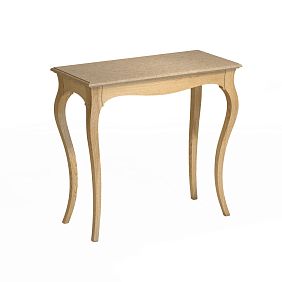
What is a console? A narrow, elegant table on high legs that presses against the wall and takes up minimal space. But despite its compactness, the console performs many functions: keys, bags, gloves are placed on it, decorative items are set on it, and a mirror is placed above it, which visually enlarges the space and serves as a final check before leaving. A console is functionality plus aesthetics, practicality plus beauty. And it is precisely the classic solid wood console with carved legs, elegant proportions, and noble finish that creates that atmosphere of aristocratic refinement that no modern coat rack or bland shelf can replace.
In this article, we will analyze all aspects of using a console in the hallway: from choosing the size and style to the rules for selecting a mirror and lighting. You will learn how to turn even the narrowest corridor into an elegant gallery, how to save space while creating the impression of a rich interior, and how to make guests freeze in admiration as soon as they enter.


Console functionality: more than just a table
At first glance, the console table appears to be a decorative element, an ornament with no practical use. But this is a misconception. A properly chosen and placed console solves a dozen tasks simultaneously.




A place for necessary small items
Keys, phone, gloves, sunglasses, wallet, masks, hand sanitizer — dozens of small items needed when leaving the house. Without a designated place for them, chaos ensues: keys get lost in the bag, the phone is left in the bedroom, gloves are only discovered after you've already stepped out. The console becomes the organizing center of the entryway. A beautiful bowl or tray is placed on its tabletop to hold everything needed. This isn't just a pile of things on a surface — it's organized storage where every item has its place.
If the console has a drawer (many models come with one or two small drawers), documents, receipts, spare keys, business cards, and small stationery can be stored there. The drawer hides the contents, keeping the tabletop tidy.
Our factory also produces:


A base for decor
The hallway is often devoid of decor—there's no room for large compositions, paintings, or sculptures. But an empty corridor looks cold and unwelcoming. A console table solves this problem: its surface becomes a stage for beautiful objects. This could be a vase with flowers (real or artificial), a sculpture, a stack of beautiful art books, candles in holders, a decorative box, or a photo frame. Decor on the console immediately adds personality to the hallway, transforming it from a purely utilitarian space into a part of the home with its own character.
Important nuance: decor on the console should not be excessive. It's a narrow surface, and overloading it will create a sense of clutter. A few large, expressive items are better than a dozen small trinkets.
Get Consultation
A foundation for a mirror composition
A mirror in the entryway is a must-have. But a large mirror hanging on an empty wall looks lonely and unbalanced. A console under the mirror creates a finished composition: the horizontal plane of the tabletop balances the vertical of the mirror, and the decor on the console adds depth and interest. Mirror + console = a cohesive ensemble that looks thoughtful and expensive.
Visual space expansion
Entryways are often narrow, dark, and cramped. ButEntrance Hall Furnitureit should not clutter, but rather enhance the space. The console, thanks to its narrow tabletop (usually 25-40 cm deep) and high legs, looks airy. It doesn't weigh down the space, doesn't consume it, and doesn't create a feeling of tightness. On the contrary: the elegant silhouette of the console, especially a classic one with carved legs, adds lightness and elegance to the entryway.
And in combination with a mirror above it, the console works to visually expand the space: the reflection in the mirror doubles the perceived depth of the hallway, creating an illusion of spaciousness.
An accent that sets the tone for the entire interior
Classic Furniturein the entryway is a statement of quality. Guests, seeing an elegant console made of solid oak with turned legs and carved elements, immediately understand: here, quality, style, and noble materials are valued. The console sets the tone for the entire home, hinting that what lies beyond is an equally thoughtful and beautiful interior.
This is especially important if the rest of the entryway is modest in size and doesn't allow for much furniture. A single console can create the impression of a rich interior, even if all around it are just painted walls and a couple of coat hooks.
Console dimensions: how to choose the right proportions
Consoles come in various sizes, and the choice depends on the parameters of your entryway.
Tabletop depth
The standard depth of a console is 25-40 cm. This is the optimal range for an entryway: the tabletop is deep enough to hold decor and necessary small items, but not so wide as to obstruct the passage.
25-30 cm — the minimum depth suitable for very narrow hallways (corridor width less than 1 meter). A vase, a bowl for keys, and a pair of candlesticks will fit on such a tabletop. This is sufficient for basic functionality.
35-40 cm — a comfortable depth for hallways of medium width (1-1.5 meters). Allows for creating a more complex decorative composition, placing several items at different levels.
More than 40 cm — this is no longer a console, but a dresser or a table. For an entryway, such depth is excessive, unless you have a huge foyer.
How to check if the depth is suitable? Measure the width of the hallway. From the wall where you plan to place the console, step back the depth of the console plus 10 cm (for the legs and overhang). Will there be enough space left for comfortable passage (minimum 80-90 cm)? If yes — the size is suitable. If not — choose a narrower model.
Console width
The length of the console tabletop ranges from 80 cm to 150 cm and more. The choice depends on the length of the wall where the console will stand and the proportions of the mirror above it (more on that below).
80-100 cm — a compact console for small entryways or for placement in a corner, by the door.
110-130 cm — the standard width, suitable for most hallways. Long enough to look significant, but not so long as to appear bulky.
140-160 cm and more — for spacious entryways and foyers. Such a console becomes the central element around which the entire composition of the entrance area is built.
The console should not occupy the entire length of the wall — that looks heavy. It's better if there is 20-40 cm of free wall space on each side of the console. This creates air, a visual pause.
Console height
The standard console height is 75-85 cm. This is a comfortable height for placing items without bending or reaching. Above 85 cm, the console becomes a bar counter, which is not very convenient for an entryway. Below 75 cm is too low, and the silhouette loses its elegance.
Console height is important for selecting a mirror: the bottom edge of the mirror should be 10-20 cm above the console tabletop to create a visual gap and space for decor on the tabletop.
Console style: classic for the entryway
Consoles come in various styles: from strict minimalist to lavishly decorated Baroque. For the entryway, where elegance without overload is important, classic models with moderate decorativeness are ideal.
Neoclassicism
Clean lines, symmetry, restrained decor. Legs are turned but without excessive carving. The tabletop is rectangular or with smoothly rounded corners. The apron (the plank under the tabletop connecting the legs) may be adorned with a carved rosette or frieze but not overloaded with ornaments. Colors: natural wood, bleached oak, gray, white, black.
A neoclassical console is versatile: it will fit into a classic interior, a modern one, and a Scandinavian one. It's a fail-safe choice for those who value elegance without pretentiousness.
Classicism
A more strict, architectural style. Legs can be straight with a square cross-section and fluting (vertical grooves) or tapered. Decor is geometric: meanders, rosettes, garlands. Proportions are precise, symmetrical. Color is often natural (oak, walnut) or dark (stained oak).
A console in the classicism style suits interiors that lean towards strictness, order, and architectural logic.
Baroque and Rococo
Luxurious, decorative styles. Legs are curved (cabriole), with carvings in the form of scrolls, acanthus leaves. The apron is adorned with lush ornaments, cartouches. The tabletop may have a shaped edge. Finishes: gilding, patination, complex multi-color painting.
A Baroque console is a choice for those who love luxury and are not afraid of bold accents. But it's important that the rest of the entryway doesn't compete with it: if the console is lavish, the walls should be calm, otherwise, it will create an overload.
Provence
A romantic French style. A console made of light wood (often painted white, cream, lavender) with a slight distressed, patinated effect. Legs are turned, delicate. Decor is restrained: floral motifs, smooth curves. Often features drawers with porcelain or metal handles.
A console in the Provence style creates a cozy, homely atmosphere. It is less formal than Baroque but warmer and more individual than strict neoclassicism.
Material and finish: wood as the foundation of quality
A high-quality console is made from solid wood. This is the foundation of durability and a noble appearance.
Oak
The king of furniture woods. An oak console is strong, heavy, with a pronounced grain. Color ranges from light honey to dark brown depending on the treatment. Oak will last for decades, is not afraid of loads, scratches. This is the choice for those who value reliability and status.
Beech
Light, uniform wood. A beech console is lighter than oak, cheaper, but still strong and durable. Beech takes well to painting—its smooth grain gives an even coating without pronounced wood patterns.
Ash
Beautiful grain, similar to oak but less contrasting. A light warm shade. An ash console is the golden mean between oak and beech: more beautiful than beech, cheaper than oak.
MDF with veneer overlay
A budget option. An MDF frame overlaid with a thin layer of natural veneer from valuable woods. Externally similar to solid wood but less durable, cannot withstand serious loads. For an entryway where the console doesn't experience strong mechanical impacts, it's acceptable, but solid wood is still preferable.
Finishing
Natural wood with oil or varnish—emphasizes the wood's grain and color. A warm, noble look.
Staining—toning the wood to darker shades (stained oak, wenge, walnut) while preserving the grain. Adds drama, solidity.
Bleaching—light, almost white wood with preserved grain. Scandinavian, Provence style.
Painting—solid color that hides the grain. White, black, gray, colored. The console becomes more graphic, modern.
Patination—artificial aging. A base color (light) with dark patina in the recesses of carvings. Creates a vintage, antique effect.
Gilding/silvering—coating carved elements with gold or silver paint, gold leaf. A luxurious, palatial look. Suitable for Baroque and Rococo styles.
Mirror above the console: selection rules
A mirror is an essential companion to a console in the entryway. But how to choose it so that the console and mirror form a harmonious ensemble?
Mirror size relative to the console
The main rule: the width of the mirror should be less than or equal to the width of the console. If the mirror is wider than the console, the composition looks unbalanced, top-heavy. The ideal proportion: the mirror is 60-80% of the console's width.
For example, if the console is 120 cm, the mirror should be 70-95 cm wide. This creates visual balance: the console is the base, the mirror is the upper part of the composition, which is supported by the base but does not overwhelm it.
Mirror height: for an entryway, a mirror 80-120 cm tall is optimal. This is sufficient to see yourself full-length (if the mirror doesn't start too high from the floor) or at least from the waist up plus the head (if the mirror is higher). A mirror that is too tall (150 cm or more) can visually overwhelm the console, especially if it is compact.
Distance between the console and the mirror
The bottom edge of the mirror should be 10-20 cm above the console tabletop. This gap is critically important: it provides space for decor on the console (vases, lamps), allows the mirror and console to exist as separate but connected elements, rather than merging into one.
If the mirror is hung flush with the tabletop, the composition will look heavy, monolithic, and lacking air. If hung too high (more than 30 cm), the connection between the mirror and console is lost; they exist separately from each other.
Mirror frame style
The mirror frame should match the style of the console. If the console is classic, with carved legs, the mirror should have a frame in the same style: carved, wooden, possibly with gilding or patina.
Mirrors with framesmade of solid oak or beech are an ideal choice. The frame can echo the decorative motifs of the console (if the console has carved rosettes, the mirror frame can have similar elements), creating unity in the ensemble.
Frame color: can match the color of the console (tone-on-tone for calm harmony) or be contrasting (dark console + light mirror frame or vice versa for a more dynamic composition).
Mirror shape: for a classic console, vertical rectangular mirrors are best. They elongate the space upward, creating a sense of ceiling height. Square mirrors are also acceptable, but they are more static. Round or oval mirrors in classic frames work for Provence and Rococo styles, adding softness and romance.
Frameless mirror
If the console is very decorative, with lush carving, you can choose a frameless mirror or one with a minimal bevel around the perimeter. This creates contrast: luxury below, strict simplicity above. The composition will be balanced, not overloaded with details.
But for most classic interiors, a framed mirror is preferable—it completes the look and adds nobility.
Lighting: light that creates atmosphere
Entryways often lack natural light—there are no windows here. Proper artificial lighting is critical, and the console plays a key role in this.
Wall sconces on either side of the mirror
Classic option: two symmetrical sconces, placed on either side of the mirror at a height of 160-180 cm from the floor (approximately at the level of the upper third of the mirror). Sconces provide soft side light that evenly illuminates the face of a person standing in front of the mirror, without creating harsh shadows.
The style of the sconces should match the style of the console and mirror. For a classic console—sconces with fabric shades, crystal pendants, metal bases with patina or gilding. For neoclassical—more laconic sconces with simple shapes but noble materials.
Mirror backlighting
Modern option: a mirror with built-in LED backlighting around the perimeter or behind the mirror surface. This provides even, bright light, convenient for makeup and hairstyling. But stylistically, such a mirror is more modern and may not pair with a classic console. Suitable for interiors where classic style is mixed with modern elements.
Table lamps on the console
Another option: a pair of symmetrical table lamps (torchères, candelabra), placed on the console tabletop at the edges. They provide soft lower light, create a cozy atmosphere, and illuminate the tabletop and decor.
Important: lamps on the console should not be too tall (maximum 40-50 cm), otherwise they will clutter the composition and interfere with the reflection in the mirror.
Ceiling lighting
In addition to local lighting at the console, the entryway should have general ceiling lighting: a chandelier or recessed lights. The chandelier can stylistically echo the console and sconces, creating a unified ensemble.
Decorating the console: the art of composition
An empty console tabletop is a missed opportunity. Properly chosen decor turns the console into an art object.
Rule of three
Classic decorating technique: a composition of three items of different heights. For example:
-
Tall element (vase with flowers, tall candlestick, sculpture) — 40-60 cm.
-
Medium element (stack of books, box, low vase) — 20-30 cm.
-
Low element (key bowl, candle in a flat candlestick) — 5-15 cm.
Three items of different heights create a dynamic, interesting composition that is neither boring nor overloaded.
Symmetry vs asymmetry
For a classic console, symmetry is natural: two identical candlesticks at the edges of the tabletop, a vase in the center. This is a calm, orderly composition that emphasizes the classic style.
Asymmetric composition is more modern and dynamic: all items are shifted to one edge or distributed unevenly. This approach works if you want to add modern lightness to a classic console.
Flowers
Live or artificial flowers in a vase are a foolproof option. They add color, life, and freshness. For a classic console, traditional bouquets are suitable: roses, peonies, hydrangeas. For more modern interiors — minimalist compositions: branches, tropical leaves, dried flowers.
Bouquet height: approximately 2/3 of the height of the mirror above the console. This way the bouquet does not compete with the mirror but is still noticeable enough.
Books
A stack of 3-5 beautiful books (art albums, photo books) adds intellectuality, making the console not just decorative but also a meaningful element. Books can be stacked horizontally on top of each other or placed vertically using bookends.
Candles
Candles in candlesticks are a classic decoration. They create atmosphere and add romance. Even if you don't light the candles (rarely done in the hallway), the candlesticks themselves as objects are beautiful and decorative.
Sculptures and art objects
A small sculpture (bust, figurine, abstract object) makes the console a center of attention, an art point in the hallway. Choose items that resonate with your taste and interior style.
interior decoration
If you want to enhance the decorativeness of the console itself, you can add applied carved elements: rosettes on the aprons, corner overlays. This will turn even a simple console into a luxurious piece of furniture.
Placing a console in the hallway: layout options
Where exactly in the hallway to place the console so that it works most effectively?
Against the wall opposite the entrance door
If the layout allows, this is the ideal place. Upon entering, the guest immediately sees the console with a mirror and decor — this is the first impression, the calling card of the house. A mirror opposite the door also visually expands the space, creating an illusion of depth.
Important: a mirror opposite the door may be undesirable from a feng shui perspective (it is believed that energy immediately reflects and leaves), but this is a matter of personal beliefs.
Along the long wall of the corridor
If the hallway is a long narrow corridor, the console is placed along one of the long walls. This breaks the monotony of the corridor, creating a point of interest. The mirror above the console visually expands the narrow space.
In the corner of the hallway
If the hallway has a free corner, you can place a corner console or a regular console turned at an angle there. This utilizes 'dead' space, making it functional and beautiful.
Against the wall next to the entrance door
The console can be placed right by the door so that it is convenient to put keys and a bag upon entering. This is practical but less visually impressive — guests will not see the console immediately upon entering, only when they turn around.
Console in a small hallway: how not to overload the space
A small hallway is not a sentence. A properly chosen console will not clutter it but will enhance it.
Choose a narrow model
Depth 25-30 cm — the minimum that won't eat up precious centimeters. Width 80-100 cm — compact but sufficient for functionality.
Light finish
A console in light tones (white, cream, whitewashed oak) is visually lighter and doesn't weigh down the space. A dark console in a small hallway can look heavy, unless the entire hallway is decorated in a dark color scheme.
Elegant legs
A console on thin, high legs looks airy and creates a sense of space under the tabletop. Massive legs or a solid apron (with no gap between the legs) make the console visually heavier.
Full-wall mirror
If you hang a large mirror (or several mirrors forming a mirror wall) above the console, a small hallway will visually double in size. The reflection creates an illusion of extended space.
Minimal decor
In a small hallway, one or two items on the console are enough: a bowl for keys and a vase with flowers. Or just a beautiful lamp. Excess decor will create visual noise.
Console in a large hallway: creating a grand entrance
If you're lucky with the size of the hallway (hall, spacious entry area), the console becomes the central element of a grand composition.
Wide console
You can choose a console 140-160 cm wide — it will look grand and significant. The depth can also be increased to 40-45 cm, allowing for complex multi-level decorative compositions on the tabletop.
Luxurious finish
A console with gilding, patina, intricate carving — in a large hallway, this is appropriate and not overwhelming. You can choose a Baroque or Rococo
model that will become a true work of art.
Large framed mirror
A mirror 120-150 cm high in a massive carved frame that matches the style of the console. Such a composition (console + mirror) creates a sense of palatial splendor.
Pair of lamps or candelabra
On a wide console, you can place two tall lamps or candelabra at the edges of the tabletop. They will add solemnity, light, and grandeur.
Additional elements
In a large hallway, you can place an armchair or pouf (for convenience when putting on shoes), a tall floor vase, or a statue on a pedestal next to the console. This creates a cohesive entry composition that impresses.
Console care: preserving beauty
The console in the hallway comes into contact with dust brought in from outside, and sometimes with moisture. Proper care will preserve its beauty for a long time.
Regular cleaning: wipe the tabletop with a dry or slightly damp soft cloth at least once a week. Dust accumulates quickly on a console in the hallway.
Protection from moisture: if you place a wet umbrella on the console, remove it immediately or place a tray underneath to prevent water from getting on the wood. Use coasters for wet items.
Refinishing: if the console is oiled, refresh the oil coating every 1-2 years — this will restore the protective layer and refresh the color.
Caring for carvings: dust accumulates in the recesses of carved elements. Use a soft brush to remove dust from the carvings.
Protection from scratches: do not drag heavy or sharp objects across the tabletop. Use coasters for decor with sharp edges.
Frequently asked questions about consoles
Is a mirror above the console mandatory?
Not mandatory, but highly desirable. A mirror in the hallway is a functional necessity, and a console + mirror is a complete composition. If you don't want a mirror, you can hang a painting or panel above the console, but a mirror is more practical.
Can a console be placed in a very narrow hallway?
Yes, if the hallway is at least 1 meter wide. Choose a console with a depth of 25-30 cm, and 70 cm will remain for passage — enough for comfortable movement.
What color console should I choose for a dark hallway?
Light colors: white, cream, whitewashed oak, light gray. A light console reflects light, making the hallway visually brighter and more spacious.
How much decor can be placed on a console?
For a narrow console (25-30 cm deep) — 2-3 items. For a wider one (35-40 cm) — up to 5 items, but avoid overloading. Less is more, but choose larger and more expressive pieces.
Solid wood or MDF console?
Solid wood is more expensive but more durable, noble, and sturdy. MDF is a budget option but less prestigious and durable. If your budget allows, choose solid wood — a console in the hallway works as a calling card, it's not worth skimping on.
Is a console needed if there is a wardrobe in the hallway?
Yes. A wardrobe is for storing clothes. A console is a decorative and functional element for small items, a mirror, a stylish accent. They do not replace each other but complement each other.
How to mount a mirror above a console?
The mirror is hung on the wall using special mounts (D-rings on the back of the frame + hooks in the wall, or a hanging system). It is important that the mount is reliable — the mirror is heavy. The bottom edge of the mirror should be 10-20 cm above the console tabletop, not touching it.
Conclusion: The console as a symbol of a home with character
The hallway is not a storage room for shoes and jackets. It is a space that sets the tone for the entire home, that speaks about you even before guests see the other rooms. And a classic solid wood console is the element that transforms the hallway from a utilitarian corridor into an elegant entry zone with atmosphere, style, and character.
The console saves space thanks to its narrow tabletop, yet creates the impression of a rich, well-thought-out interior. It solves a dozen practical tasks: storing small items, serving as a base for decor, a foundation for a mirror. But most importantly — it creates a mood. Carved oak legs, noble patina, elegant proportions — all this speaks of a place that values quality, beauty, and tradition.
In combination with a properly chosen mirror and lighting, the console becomes the centerpiece of the composition, around which the entire hallway is built. The mirror doubles the space, lighting adds coziness, decor on the tabletop adds individuality. And all of this — not a luxury available only to palace owners, but a reasonable investment in quality of life, in the beauty of everyday life.
The company STAVROS offers a wide selection of classic consoles made of solid oak and beech — from laconic neoclassical to luxurious baroque. Each console is handmade in their own production using professional equipment and traditional joinery techniques. STAVROS controls quality at all stages: from wood selection to finishing, guaranteeing that each console will be flawless.
In addition to consoles, STAVROS produces mirrors in solid wood frames, decorative overlays for additional furniture embellishment, lighting fixtures, and accessories that will help create a cohesive ensemble in your hallway. Professional STAVROS consultants will help you choose a console to fit the dimensions and style of your hallway, recommend a mirror and lighting, and organize delivery and installation.
By choosing STAVROS, you are investing not just in furniture, but in the atmosphere of your home, in the first impression it makes, in the beauty that greets you every day. Let your hallway become not just a corridor, but a space that takes your breath away. With a classic console from STAVROS, it's possible!


