Article Contents:
- What's Included in Staircase Components: Complete List of Elements
- Load-Bearing Structural Elements
- Step Elements
- Railing Elements
- Decorative and Auxiliary Elements
- Balusters, Posts, Handrails, Steps — Detailed Technical Specifications
- Balusters: Shape, Size, Wood Species
- Support Posts: Construction and Loads
- Handrails: Profile, Width, Hand Feel
- Steps: Tread and Riser
- How to Calculate the Number of Elements: Error-Free Methodology
- Calculating Treads
- Baluster Calculation
- Support Post Calculation
- Handrail Calculation
- Step Calculation by Footage
- Buy Staircase Components: Wholesale and Retail — What's the Difference
- Retail Purchase: For a Single Project
- Wholesale Purchase: For Construction Companies and Designers
- What to Look for When Buying Online
- Oak, Pine, Birch — Comparison of Wood Species for Staircase Components
- Oak: The Standard for Load-Bearing and Decorative Elements
- Beech: Turned Beauty for Balusters and Decor
- Pine: Affordability and Its Price
- Birch: Rare, but Worth Considering
- Summary Table: Choosing Wood Species for Each Staircase Element
- Additional Elements: What's Often Forgotten When Ordering
- Handrail Turning Elements
- Decorative Post Finials ('Caps')
- Fastening Systems
- Wall-mounted handrail: a separate story
- Popular questions: FAQ about stair components
- STAVROS: stair components from the manufacturer

A staircase in a house is perhaps the only structure where every detail operates simultaneously on three levels: functional, structural, and aesthetic. Remove any of these levels—and the staircase ceases to be a staircase. It becomes either dangerous, or unattractive, or simply inconvenient. And that is precisely why the question of choosing stair components is not a routine purchase of consumables, but a design decision that determines the outcome for decades to come.
staircase componentsSolid wood is that market segment where the cost of a mistake is particularly high. An incorrectly chosen wood species—deformation in three years. An MDF baluster masquerading as solid wood—peeling coating in two years. A cheap handrail without the proper profile—discomfort with every ascent. This article is written for those who want to do it right the first time: a complete list of elements, technical specifications, calculation methodology, wood species comparison, and a clear answer to where and how to buy.


What is included in stair components: complete list of elements
Before moving on to the details, let's create a complete map. A wooden staircase is a system, and each of its elements has its own role. Let's try to sort everything out—literally.




Load-bearing structural elements
Stringer—an inclined side beam into which the treads are side-cut. A staircase on stringers is a classic design with a closed side view: the treads are "recessed" into the stringer's groove. A solid oak stringer with a thickness of 50–80 mm and a width of 200–300 mm is the standard format for residential houses.
Carriage—a load-bearing beam under the treads, on which the treads are laid. Unlike a stringer, the carriage is visible from below: the treads rest on top of it. The carriage can be solid or "comb-shaped" (with triangular teeth cut out for each tread).
Bolts—metal rod-fixators that attach treads directly to the wall or to a load-bearing post in "floating" structures. A staircase on bolts is a modern solution without visible load-bearing beams.
Our factory also produces:


Tread elements
Tread—the horizontal plane of a step on which the foot steps. Thickness—35–50 mm, width—270–300 mm for residential staircases (optimum 280–290 mm). Wood species—oak, beech, ash, pine.
Riser—the vertical plane between two steps. It encloses the under-stair space. Does not bear load—serves a decorative and dust-protective function. Thickness—15–20 mm. On open staircases, the riser is absent—this is an architectural solution for lightweight, visually "transparent" structures.
Winder tread—a trapezoidal or triangular-shaped step on staircase turns. Used instead of a landing to save space when turning 90° or 180°.
Landing—a horizontal section between flights. Provides convenience when turning and reduces the load on a person during ascent. A landing is the preferred solution for floor heights from 3 m.
Get Consultation
Railing elements
balusters and support postsBalusters—vertical load-bearing and decorative railing elements. A detailed breakdown—in the next section.
Handrail—a horizontal or inclined profile for hand grip. Cross-section—oval, D-shaped, rectangular with rounded corners. Width 55–80 mm.
Baluster rail—a horizontal bottom rail that receives the lower ends of balusters. Used when mounting balusters not into the tread, but onto the baluster rail—simplifies alignment and conceals fasteners.
Decorative and auxiliary elements
-
Casing for staircase opening slopes
-
Riser finishing strip
-
Decorative stringer aprons
-
Corner transition overlays
-
Wall-mounted handrail with brackets
-
"Gooseneck"—a handrail turning element on a landing
-
Caps and finials for support posts ("caps")
-
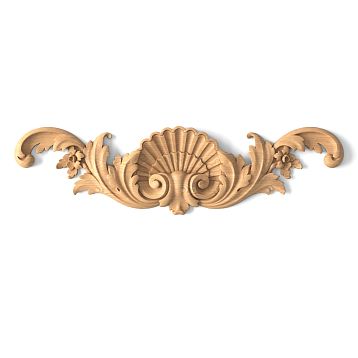
Rosettes for casing and handrail joint locations
Full catalogstaircase componentsSTAVROS covers all listed positions — from load-bearing elements to decorative overlays.
Balusters, posts, handrails, treads — technical specifications in detail
Now let's go through the key elements in detail. This is the part often overlooked when choosing — and then people are surprised by the result.
Balusters: shape, size, wood species
A baluster is a vertical intermediate post of a railing. Installed with a spacing of 140–160 mm (center-to-center), providing a clear gap of no more than 120 mm according to safety standards.
Classification by shape:
-
Turned classic — profile with a "body" of variable diameter: base, necks, barrels, ball elements. Produced by turning. Shape — strictly symmetrical. "Body" diameter — 45–80 mm.
-
Square (faceted) — rectangular cross-section with chamfers. Modern style, pairs well with straight-line staircases in minimalist interiors. Cross-section 45×45 mm, 50×50 mm, 60×60 mm.
-
Carved — hand or milled carving on a turned base. Leaves, volutes, geometric motifs. For classical and baroque interiors.
-
Twisted (figured) — profile with a twisted or S-shaped element in the baluster body. Creates a dynamic visual rhythm for the railing.
Standard baluster sizes according to the STAVROS catalog:
-
Height — 900, 1000, 1100 mm (for handrail including base)
-
Base cross-section — 45×45, 50×50, 60×60, 80×80 mm
-
Lower and upper base — square or rectangular, for mounting on a dowel or threaded rod
AllSTAVROS balustersare supplied with white acrylic primer — ready for final painting or varnishing without additional processing.
Support posts: construction and loads
A support post is not a "large baluster." It is a load-bearing element with fundamentally different requirements for cross-section and mounting method.
Minimum support post cross-section — 100×100 mm. In classical and heavy constructions — 120×120 mm, 150×150 mm. Post height exceeds baluster height by a decorative finishing element ("cap" or "finial").
Support posts are installed:
-
At the beginning of each flight of stairs
-
At the end of each flight of stairs
-
On landing platforms (at each corner)
-
If flight length exceeds 3 m — an additional intermediate post
Post mounting — exclusively via metal fasteners: M12–M16 or M20 threaded rod into the tread or floor slab. No "glue and screws" — a load-bearing post, taking a horizontal load of 100 kgf, must be rigidly secured.
Handrails: profile, width, hand feel
The handrail is the only staircase element that comes into contact with the hand. And it is here that the subjective sense of quality is formed instantly: the correct profile fits in the palm effortlessly, the hand doesn't slip, the grip is confident.
Handrail profiles by cross-section:
| Profile | Width | Height | Application |
|---|---|---|---|
| Oval | 55–70 mm | 40–50 mm | Universal, classic |
| D-shaped | 60–80 mm | 45–55 mm | Modern, minimalism |
| Rounded rectangle | 65–90 mm | 40–50 mm | Neoclassical |
| Round | Ø40–50 mm | — | Metal staircases, wall-mounted handrails |
Handrail width 55–70 mm is optimal for most adult hands. A handrail wider than 80 mm cannot be gripped by the palm — it becomes a decorative element rather than a functional one.
Solid oak handrail is the standard for quality staircases. Beech handrail is slightly lighter and takes stain more evenly.
Steps: tread and riser
The tread is the most heavily loaded element of a staircase. Steps endure variable impact loads from footsteps and static loads from a standing person. Material requirements: density, hardness, wear resistance.
Tread thickness: 35 mm — minimum for spans up to 900 mm; 40 mm — for spans 900–1100 mm; 50 mm — for wide grand staircases.
Important detail: the front edge of the tread ('step nosing') overhangs the riser by 20–30 mm. This is not just aesthetic — it ensures safety during descent: the foot 'catches' the nosing even with an imprecise step.
The step surface is coated with varnish containing anti-slip additives or fitted with an anti-slip insert. On wooden staircases in high-traffic areas (entrance, hallway), an anti-slip insert made of aluminum with a rubber inlay is a necessary safety element.
How to calculate the number of elements: a methodology without errors
Calculating staircase components is a task where an error in a single item leads to installation stoppage and an additional order with waiting. Let's examine the methodology for each group of elements.
Stair Step Calculation
Number of steps (N) is determined by the formula:
N = H / h
where H is the floor height (from the finished floor of the first floor to the finished floor of the second), h is the riser height.
Optimal riser height for residential staircases is 160–180 mm. A riser height over 200 mm results in a steep staircase, tiring to climb. Less than 150 mm results in a shallow staircase, requiring a longer flight.
Example: floor height 2800 mm, riser height 175 mm. N = 2800 / 175 = 16 steps.
Number of treads = number of risers minus 1 (the top step is the second floor's floor). That is, 16 risers and 15 treads (if the design includes risers) or 16 treads (if without).
Baluster calculation
The 'per step' method: 1 or 2 balusters per step. One baluster per step — minimalist, gap about 120–150 mm. Two balusters per step — dense railing, gap 60–80 mm, a good option for homes with children.
Formula: K_balusters = N_steps × 1 (or × 2)
The 'by spacing' method: a baluster spacing is set (e.g., 150 mm on center). The horizontal projection length of the flight is divided by the spacing:
K = L / t
where L is the horizontal length of the flight, t is the spacing step (along the axis).
Example: flight length 3200 mm, step 150 mm. K = 3200 / 150 ≈ 21 balusters.
Add 5–10% to the calculated quantity for trimming and possible defects.
Calculation of support posts
Number of support posts = (number of flights × 2) + number of landing platforms + number of additional intermediate posts on long flights.
Standard two-flight straight ascent with a platform: 2 + 2 + 1 = 5 posts minimum (or 4 if the posts at the platform are combined).
Calculation of handrail
Handrail length = length of flight along the incline × number of flights + length of handrail on platforms + 10% allowance for end fitting and turning elements.
Length of inclined flight = √(H_flight² + L_flight²)
Example: horizontal flight length 3200 mm, vertical 2800 mm. Length along the incline = √(3200² + 2800²) = √(10240000 + 7840000) = √18080000 ≈ 4252 mm.
Add turning elements (gooseneck, handrail turn) to this — they are accounted for separately.
Calculation of steps by footage
If steps are ordered from solid panels or laminated solid wood according to non-standard sizes, the calculation is done in square meters:
S = W_step × L_step × N_steps
where W is the width of the step (across the staircase), L is the depth of the tread, N is the number of treads.
Buying staircase components: wholesale and retail — what's the difference
The question of 'where to buy' is not just about price. It's a question of guarantees, deadlines, and the match between stated characteristics and reality.
Retail purchase: for a single project
In a retail purchasestaircase componentsthree things are critically important:
1. Single batch. All balusters must be from the same production batch — one wood species, one tone, one size tolerance. If balusters are ordered twice with a break, the wood tone may differ, even if the species is the same.
2. 10% reserve. The standard recommendation during installation is to order 10% more than the calculated quantity. Trimming, incorrect measurement, chipping during installation — these are all real losses.
3. Documentation. Certificate of conformity and product passport are not formalities. They confirm the wood species, moisture content (norm 8–12%), and coating.
Wholesale purchase: for construction companies and designers
STAVROS works with wholesale buyers under special conditions. Wholesale discounts are relevant for construction companies specializing in staircase installation, design studios working on multi-unit projects, and private individuals ordering a full set for several staircases (house + guest house + cottage).
Advantages of wholesale ordering from the manufacturer:
-
Ability to manufacture custom profiles according to drawings
-
Single batch of material for the entire project
-
Individual terms for deadlines and logistics
-
Possibility of coating customization (tinting to a specific shade)
-
Personal order support manager
What to look for when buying online
Photo of the actual product, not a 3D render. Oak and beech textures are alive and unique. A render cannot convey this.
Indication of wood moisture content. Normal moisture content for solid wood interior products is 8–12%. Wet wood (over 15%) will shrink and crack after installation.
Coating: primer or finished coating. A product in white acrylic primer requires final painting or varnishing on site. A product with a ready-made varnish coating is installed immediately — but any cuts damage the coating and require touch-up.
Dimensional tolerances. A professional manufacturer indicates a tolerance of ±0.2–0.5 mm. Artisanal production can have a variation of ±2–3 mm — balusters 'dance' in height.
Oak, pine, birch — comparison of wood species for stair components
This is one of the most frequent questions — and one of the most underestimated when choosing. The wood species determines not only the price but also the service life, feel, and behavior of the product during use.
Oak: the benchmark for load-bearing and decorative elements
Oak density — 650–750 kg/m³. Brinell hardness — 3.7–4.0 HB. These numbers have a practical consequence: an oak tread does not dent from a stiletto heel. An oak baluster withstands accidental impact when moving furniture. An oak handrail does not show dents from rings and watches during long-term use.
Oak contains natural tannins that suppress the development of fungus and mold. This makes it the only choice for open and semi-open stairs, porches, and verandas with variable humidity.
Oak texture — alive and expressive. Radial cut gives characteristic 'mirrors' of medullary rays — a unique pattern that cannot be reproduced in any other material.
Disadvantage — price. Oak is 2–3 times more expensive than pine. But the price-to-resource ratio (50 years of use vs. 10–15 for pine) makes oak an economically justified choice.
Beech: turned beauty for balusters and decor
Beech — a species with a density of 630–720 kg/m³, very close to oak, but with a fundamentally different texture. Beech is homogeneous: fine-pored, without pronounced annual rings in cross-section. This is what makes it ideal for turning: a beech baluster comes off the lathe with a perfectly smooth surface without chips or fuzz.
Beech accepts staining more evenly than oak: there is no 'spotting' from different densities of earlywood and latewood zones. If balusters are planned to be painted white, gray, or any neutral color — beech is optimal.
Beech limitation: higher hygroscopicity than oak. With significant humidity fluctuations (dacha with seasonal heating, unheated entrance areas) beech may crack. For rooms with stable humidity of 40–60% — a flawless material.
Pine: affordability and its price
Pine — the most common and affordable species. Density — 380–550 kg/m³. Brinell hardness — 1.6–2.0 HB. This is a soft species, and this is a fundamental limitation for stair components.
Pine treads: after 3–5 years of intensive use, dents appear in areas of constant contact (at the edge of the step). This is not a manufacturing defect — it's physics.
Pine balusters: they hold the load as long as the structure is rigid, but under impact loads they chip and crack significantly faster than oak or beech.
Where pine is justified: risers (do not bear direct load), decorative stringer aprons, auxiliary elements, stairs in country houses with limited budget and minimal load.
Birch: a rarity, but worth attention
Birch — a species with a density of 500–700 kg/m³, significantly harder than pine, but softer than oak. A homogeneous texture, similar to beech, makes birch a good material for balusters and turned elements. Birch takes paint and stain well.
Limitation: birch is hygroscopic and unstable with changes in humidity. In normally heated rooms — a workable option. For stairs leading to a hallway or outdoors — no.
Summary table: choosing a wood species for each stair element
| Element | Oak | Beech | Pine | Birch |
|---|---|---|---|---|
| Tread (step) | ✅ Optimal | ✅ Good | ⚠️ Acceptable | ⚠️ Acceptable |
| Riser | ✅ | ✅ | ✅ | ✅ |
| Baluster | ✅ | ✅ Perfect | ⚠️ | ✅ |
| Newel post | ✅ Optimal | ✅ | ❌ | ⚠️ |
| Handrail | ✅ | ✅ | ⚠️ | ⚠️ |
| Stringer | ✅ | ✅ | ⚠️ | ❌ |
| Open-riser stairs | ✅ | ❌ | ❌ | ❌ |
Additional elements: what is often forgotten when ordering
An experienced builder knows: 'small details' add 15–25% to the estimate. Let's list what is most often forgotten when calculating components.
Handrail turnings
'Gooseneck' — a vertically curved handrail transition that raises it from the sloped flight to the horizontal landing. On each landing — two 'goosenecks': one down, one up. These are custom-made elements for a specific angle — they must be ordered together with the handrail, specifying the flight's angle of inclination.
'Turnout' — a horizontal handrail transition at a staircase turn (90° or 180°). Used on turning landings instead of a 'gooseneck' when the landing railing is horizontal.
End caps — decorative elements that cover the handrail ends at newel posts.
Decorative post finials ('caps')
Newel post finial — a removable or adhesive element that covers the post's top end and creates a decorative finish. Types: pyramidal, hemispherical, figured (with carving). In classic staircases, a finial with a complex profile is a mandatory accent.
Fastening systems
-
Stainless steel studs M8 and M10 — for balusters and posts
-
Chemical anchors — for fastening into concrete and stone
-
Reinforced mounting brackets — for treads
-
Confirmat screws 7×80 mm — for handrail
-
Decorative chrome and brass overlays — for concealing screws in visible areas
When calculating fasteners: for each baluster — 1 stud (bottom); for a newel post — 2 studs or 1 anchor; for each tread — 4–6 screws or bolts.
Wall-mounted handrail: a separate story
If the staircase adjoins a wall, a wall-mounted handrail on brackets is a mandatory safety element, especially when the flight width exceeds 1000 mm. Brackets for wall-mounted handrails — metal or wooden with a wooden overlay, installed at 500–700 mm intervals. The handrail on brackets is the same profile as the main handrail.
Frequently asked questions: FAQ about staircase components
Is it possible to mix wood species in one staircase?
Acceptable, but only with uniform staining. Oak treads + beech balusters, painted the same tone — a workable solution. Oak treads with open grain + pine balusters with open grain — visual mismatch: the grains and color are fundamentally different.
What is the correct spacing between balusters?
Maximum clear gap — 120 mm. With a baluster cross-section of 45 mm, the center-to-center spacing is 165 mm. With a 60 mm baluster — 180 mm. If there are children in the house — a gap of 80–90 mm (2 balusters per tread).
Are certificates required for staircase components?
For residential houses — not mandatory by law. For objects with a building permit, officially commissioned (apartment buildings, public buildings) — mandatory. STAVROS provides certificates and product data sheets for all catalog items.
How long does it take to manufacture custom balusters from a drawing?
Standard catalog items are in stock. Custom profiles according to customer drawings — from 2 to 4 weeks for volumes from 50 linear meters or from 50 pieces.
Can I buy only part of a set — for example, only balusters?
Yes, STAVROS sells all catalog items both as sets and individually. Minimum order — from 1 item.
How to calculate the number of balusters for a staircase with winder steps?
On winder steps, balusters are installed based on the length of the 'outer' edge of the step. Calculation is done practically: lay out balusters on the steps with the required spacing and count the quantity. Winder steps often have unequal lengths — at the narrow end (near the turning axis) balusters may be absent.
What is better — laminated panel or solid wood for stair treads?
Laminated panel made of oak or beech is more stable than solid wood: the laminated construction reacts less to humidity changes. Solid oak board is more beautiful texturally but carries a greater risk of warping under unstable humidity. For interior staircases with normal climate — both options are acceptable.
STAVROS: staircase components from the manufacturer
Building a staircase means making several decisions that will stay with the house for fifty years. These are decisions about wood species, baluster shape, handrail profile, and fastening method. And the best thing you can do when making these decisions is to work with a manufacturer who fully understands the task, rather than selling individual items 'blindly'.
STAVROS is a Russian manufacturer of solid wood products made from oak and beech, with its own production, full technological cycle, and a catalog covering all needs instaircase components: from treads and risers to handrail turning elements and decorative post finials.
In STAVROS's production program — not only staircase components. For complete finishing of the staircase area:Wooden moldings for wall decoration of the flight,solid wood floor skirting boards for landings,Wooden cornices for transition to the hall ceiling,Mirror Frames in the staircase space andclassic furniture for hall arrangement.
All products are supplied with white acrylic primer. Manufacturing of custom profiles — from 50 units. Delivery across Russia and CIS. Technologist consultation for calculation and component selection — free with order placement.
A staircase assembled from correct elements correctly does not creak, wobble, or age. STAVROS makes these elements.