Article Contents:
- Linear elements as the basis of furniture facades
- Moldings around kitchen modules
- Furniture molding and its functional role
- Panels as forming louvered frames
- Rails and blocks for decorative inserts
- Beadboard — finishing the outer perimeter
- Applicability of oak and beech in kitchen zones
- Complete system for modular kitchen
- Practical aspects of installing molding on kitchen
- FAQ: Kitchen trim configuration
- Conclusion: STAVROS system for professional kitchens

Kitchen furniture is not a set of boxes with doors, but an architectural system where each element performs both constructive and decorative roles.Wooden moldings, Decorative wooden moldings, Furniture molding, Wooden molding, wooden plank, wooden boards and beams, Oak veneer, Furniture molding, Wooden baseboardandwooden molding by the meter— these are components of professional trim, which transform standard modules into individual furniture with character and status.



Linear elements as the basis of furniture facades
What determines the character of kitchen furniture — the material of the carcass or the facade design? The carcass is hidden; it is only visible when the doors are open. The facade is the face of the furniture, the first thing perceived by the eye upon entering the kitchen.Furniture molding— these are linear elements from which facades are constructed: moldings, panels, rails, profiles, beadboards. They create geometry, relief, and surface tectonics.
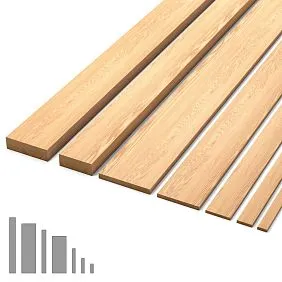
A linear element is a plank of constant cross-section that can be installed vertically, horizontally, or at an angle. From a set of such planks, a facade composition is assembled: frames, panels, borders, decorative inserts. The principle of modularity allows creating an infinite variety of solutions from a limited set of basic profiles.
The basis of a furniture facade is a frame. Four planksWooden molding, connected by a tongue-and-groove joint or on a 'tenon' (diagonal cut at 45 degrees), form a rectangular frame. Inside the frame, a panel — a thin panel made of solid wood, plywood, MDF with veneer, glass, or mirror — is inserted. The panel can be flat, creating a minimalist facade, or relief (milled or carved), adding decorative detail.
Frame-panel construction — a classic of furniture production, known for centuries. Why does it dominate? Because it solves the problem of wood's thermal expansion. A solid door made from a single panel deforms, bows, and cracks when humidity changes. A frame made from narrow planks deforms minimally, and the panel, freely inserted into the frame's groove, can expand and contract without damaging the structure.
Linear elements set the visual rhythm of the kitchen. If all facades have vertical panels dividing the door into three sections, a vertical rhythm is created, visually increasing the room's height. Horizontal panels form a horizontal rhythm, expanding the space. A combination of vertical and horizontal elements creates a grid, characteristic of neoclassical interiors.
Furniture molding— determines the facade style. A simple rectangular profile is characteristic of modern minimalist furniture. A profile with a beveled or rounded edge (convex) creates a transition to classic styles. A complex multi-step profile with carved elements is a sign of luxurious furniture in Baroque, Rococo, and Empire styles.
Linear elements work not only on facades, but also on the carcass.wooden cornice, installed along the upper perimeter of wall-mounted cabinets, creates an architectural finish, transforming utilitarian boxes into elements of interior architecture.Wooden baseboard— (baseboard), covering the lower part of floor-mounted modules, forms the base line of the kitchen set, connecting it to the floor.




Moldings around kitchen modules
Wooden moldings— on the kitchen perform a decorative framing role, transforming functional boxes into furniture with character. Where are moldings applied in kitchen modules? On door and drawer facades, around the perimeter of carcasses, on open shelves, around built-in appliances, on range hood casings.
Facade moldings create a relief composition on a flat door. A rectangular door measuring 60×70 centimeters, clad with MDF veneer, looks like a utilitarian element. The same door with moldings installed around the perimeterdecorative wooden moldingswidth of 40–60 millimeters transforms into a framed composition that attracts attention and sets the style.
Moldings are installed in two ways. Surface-mounted installation — the molding is glued onto the door surface, protruding above the plane by the thickness of the profile (usually 8–15 millimeters). This method creates an expressive relief, suitable for classic interiors. Inset installation — the molding is inserted into a routed groove on the door surface, lying flush with the plane. This method creates a restrained graphic composition, characteristic of modern styles.
Cabinet trim — moldings installed along the top and bottom perimeters of cabinets — create an architectural finish. The top molding (cornice) on wall-mounted cabinets forms a horizontal line under the ceiling, visually uniting separate modules into a single composition. If the cornice has a complex profile with rounded edges and molding, the kitchen acquires monumentality characteristic of classic interiors.
The bottom molding (baseboard, decorative skirting) on floor-mounted modules covers the space between the bottom of the cabinets and the floor, where adjustable legs are placed. The height of the baseboard is usually 100–150 millimeters.Wooden baseboardwith a profiled surface creates a visual support on which the kitchen set 'stands'. Without this element, the furniture appears to be suspended on legs, which destroys the impression of solidity.
Open shelves — a fashionable element of modern kitchens — require framing to avoid looking unfinished.Molding for furnitureis installed along the front edge of the shelf, creating a lip 20–40 millimeters high. This is not only a decorative element but also functional — the lip prevents items from sliding off the shelf.
Framing built-in appliances — ovens, microwaves, dishwashers — is done using decorative moldings that cover the technological gap between the appliance body and the furniture. Without framing, a gap of 10–15 millimeters is visible, which destroys visual integrity. A molding installed around the niche under the appliance creates a neat frame, integrating the appliance into the kitchen composition.
Exhaust hood above the stove — often the most noticeable element of the kitchen, which requires decorative treatment.Wooden moldingsinstalled at the corners of the hood, along the top and bottom perimeters, transform the technical structure into an architectural element that harmonizes with the rest of the furniture. The hood shape may be rectangular, trapezoidal, or domed — moldings emphasize the geometry and add volume.
Our factory also produces:


Furniture trim and its functional role
Furniture molding— these are not only decorative elements but also functional components that solve structural problems. What functions does trim perform in kitchen furniture? Structural reinforcement, covering joints and ends, protecting corners from damage, creating guides for pull-out elements, forming ventilation gaps.
Structural reinforcement —wooden strips and battensare used as internal frame elements that increase the rigidity of the cabinet body. Vertical battens with a cross-section of 40×40 or 50×50 millimeters, installed at the corners of the cabinet, prevent warping during transport and installation. Horizontal braces between side walls strengthen the structure, allowing it to support the weight of a heavy stone or solid wood countertop.
When two MDF or plywood sheets are joined edge-to-edge, a visible seam of 0.5–1 millimeter is formed.Wooden moldingGlued onto the joints, they transform a technical defect into a decorative element. Vertical strips on the side walls of tall cabinets create visual segmentation, hiding seams between panels.
Corner protection — outer corners of cabinet bodies are susceptible to mechanical damage: impacts from dishes, scratches during movement of objects, wear from frequent contact. A corner strip (angle) made of hardwood, installed on the cabinet frame edges, protects the cladding from chips and scratches. Oak trim has high density and wear resistance, maintaining its appearance for decades.
Guides for pull-out elements — classic wooden drawers slide along guide strips installed on the internal walls of the cabinet.wooden plankwith a cross-section of 15×15 or 20×20 millimeters, mounted horizontally, create runners along which the drawer bottom slides. Hardwood species — oak, beech, ash — ensure smooth sliding and minimal wear.
Ventilation gaps — in modules with built-in appliances (ovens, microwaves), air circulation is necessary to dissipate heat.wooden boards and beamswith a cross-section of 20×20 millimeters, installed around the rear wall of the niche, create a gap between the appliance and the wall, ensuring ventilation. Without a gap, the appliance overheats and its service life is shortened.
Forming dados — a groove on the inner side of the front frame of a door, into which the panel is inserted, is called a dado.Furniture moldingWith a pre-formed dado, the production of fronts is accelerated — there is no need to rout the groove; it is sufficient to cut the profile to size, assemble the frame, and insert the panel. The depth of the dado is usually 8–12 millimeters, and the width is 6–10 millimeters.
The mounting plate made ofwooden battenwith a thickness of 20–25 millimeters, glued to the end, creates a strong base for hardware, preventing screw pull-out.
Get Consultation
Laminated panels as forming framed facades
Wooden moldingWhy does this construction dominate in mid- and high-end kitchen furniture?
The framed-laminated construction compensates for deformations. The frame posts have a width of 60–80 millimeters — their expansion will be only 3–6 millimeters, which is not critical. The laminate is inserted into the frame's rebate with a 2–3 millimeter clearance around the perimeter, without rigid fastening. When expanding, the laminate goes deeper into the rebate; when contracting, it comes out, but the frame retains its geometry and functionality.
Aesthetic expressiveness. A framed-laminated facade has a relief structure — the frame protrudes above the laminate by 3–8 millimeters, creating a play of light and shadow. The laminate can be flat, creating a restrained composition, or relief (with milling or carving), adding decorative elements. Possible combinations: a dark oak frame, a light beech or glass laminate — material contrast enhances visual impact.
Classic choice for kitchen furniture. Oak has high density (about 700 kg per cubic meter), hardness, resistance to moisture and abrasion. An oak panel retains its shape for decades, does not deform under temperature fluctuations (important for kitchens with stoves and ovens), and easily withstands wet cleaning.
Oak veneerOak is a classic choice for kitchen furniture. Oak has high density (about 700 kilograms per cubic meter), hardness, resistance to moisture and wear. Oak veneer retains its shape for decades, does not deform with temperature fluctuations (important for kitchens with stoves and ovens), and easily withstands wet cleaning.
Oak's texture — distinct annual rings, medullary rays, natural tones from golden to chocolate — creates natural decorative appeal. Even a simple oak frame without additional decoration looks prestigious due to the material's texture. Staining oak allows creating a wide range of shades — from whitewashed (Scandinavian style) to stained (classic dark interior).
Mortise-and-tenon joint — a tenon (projection) is milled on one panel's end, and a mortise (recess) on the other's. The tenon fits into the mortise, creating a strong mechanical connection reinforced by glue. This method is traditional, ensures maximum strength, but requires precise equipment.
The panel profile determines the facade style. A simple rectangular panel with a 60×20 mm cross-section creates a minimalist frame suitable for modern interiors. A panel with a beveled edge (45-degree angled face) adds graphic appeal. A panel with a rounded convex edge creates a soft classic character. A decorative panel with a complex profile (bosses, grooves, rounded corners) is typical for luxurious classic kitchens.
The profile of the veneer determines the style of the facade. A simple rectangular veneer with a cross-section of 60×20 millimeters creates a minimalist frame suitable for modern interiors. A beveled veneer (with a 45-degree angled edge) adds graphic detail. A rounded veneer (with a convex rounded edge) creates a soft classic character. Ornamental veneers with complex profiles (bosses, grooves, rounded edges) are characteristic of luxurious classic kitchens.
Racks and battens for decorative inserts
Used to create decorative facades and casings that add visual lightness and modernity. Where are racks applied in kitchen furniture? In glazed upper cabinet facades, on open shelves, in ventilated lower module facades, on side walls of islands and peninsulas.
wooden plankandwooden boards and beamsGlazed facades — upper hanging cabinets with transparent doors through which the contents are visible. Instead of solid glass, a grid of wooden racks is often used, into which glass panels are inserted. Racks with a 20×30 or 25×40 mm cross-section form a rectangular grid, creating a classic lattice typical of traditional kitchens.
Glazed facades — upper wall-mounted cabinets with transparent doors through which the contents are visible. Instead of solid glass, a lattice of wooden slats is often used, into which glass panels are inserted. Slats with a cross-section of 20×30 or 25×40 millimeters form a rectangular grid, creating a classic mullion pattern characteristic of traditional kitchens.
Lattice facades are not only decorative but also functional. They provide visual connection with the cabinet contents, allowing assessment of dish presence without opening the door. Racks add additional rigidity to glass, preventing its destruction upon impact. If glass cracks, fragments remain held by racks, not falling out. In terms of composition, lattice facades are easier to perceive in interiors than solid mirrored glass, which reflects surroundings and may create visual chaos.
A panel framed with a 30×30 or 40×40 mm cross-section rack acquires completeness and status. The rack can be installed flush with the shelf surface or protrude 5–10 mm, creating a lip.wooden battenDecorative lattice from racks — an alternative to solid facades, applied on lower modules to create ventilated facades. Vertical racks are installed with 10–20 mm gaps, ensuring air circulation inside the cabinet. This is useful for modules storing vegetables and fruits requiring ventilation. Lattice from
Decorative slat grid — an alternative to solid facades, used on lower modules to create ventilated facades. Vertical slats are installed with 10–20 millimeter gaps, ensuring air circulation inside the cabinet. This is useful for modules where vegetables and fruits, requiring ventilation, are stored. Slat grid ofoak racksStained oak racks create a modern graphic facade that allows air passage while concealing contents due to the dense rhythm of verticals.
Square-section battens (30×30, 40×40, 50×50 mm) create a more substantial rhythm compared to flat rectangular racks. Battens are used to create volumetric decorative inserts that protrude above the facade plane by 20–40 mm. Three vertical 40×40 mm battens installed on a 600 mm wide facade with equal spacing create a relief composition that attracts attention and establishes a vertical rhythm.
wooden boards and beamssquare cross-section (30×30, 40×40, 50×50 millimeters) creates a more substantial rhythm compared to flat rectangular slats. These beams are used to create three-dimensional decorative inserts that protrude from the facade surface by 20–40 millimeters. Three vertical beams with a 40×40 millimeter cross-section, installed on a 600-millimeter wide facade with equal spacing, create a relief composition that attracts attention and establishes a vertical rhythm.
The spacing of rack installation determines visual impression. Dense spacing (rack 30 mm, gap 30 mm) creates a compact structure where material predominates. Sparse spacing (rack 30 mm, gap 60–80 mm) forms a light composition where rhythm is more important than mass. Variable spacing (alternating narrow and wide gaps) creates a dynamic, uneven structure typical of avant-garde interiors.
Racks are attached to the base using glue (woodworker's PVA, polyurethane adhesive) or finish nails 30–40 mm long without heads. Gluing is suitable for thin racks on flat bases. Mechanical fastening is necessary for heavy battens that create significant pull-out load. Combined method (glue + nails) ensures maximum strength.
Bead — perimeter trim
wooden molding by the meterUpper crown —
installed along the upper perimeter of hanging cabinets, performs several functions. Visual — creates a horizontal line under the ceiling, unifying separate modules into a single composition. Structural — covers the technological gap between cabinet tops and ceiling, hiding fasteners and utilities. Decorative — the profiled surface of the bead creates a play of light and shadow, adding volume.Wooden Picture FrameCrown height varies from 60 to 150 mm depending on ceiling height and kitchen scale. For standard ceilings 2.5–2.7 meters, a 80–100 mm crown is suitable. For high ceilings (from 3 meters), a 120–150 mm crown is used, which does not disappear against the backdrop of a large room volume. Crown profile can be simple (one rounded corner or bevel) or complex (multi-step with carved elements), determining kitchen style — from minimalism to classic.
The height of the valance varies from 60 to 150 millimeters depending on ceiling height and kitchen scale. For standard ceilings of 2.5–2.7 meters, a valance height of 80–100 millimeters is suitable. For high ceilings (from 3 meters), a 120–150 millimeter valance is used, which does not disappear against the backdrop of a large room volume. The valance profile can be simple (one rounded edge or bevel) or complex (multi-step with carved elements), which determines the kitchen style — from minimalism to classic.
Baseboard (plinth) —wooden molding by the meterThe baseboard installed along the lower perimeter of floor units covers the 100–150 mm space between the bottom of the cabinets and the floor. This space accommodates adjustable legs that level the furniture on uneven floors. Without a baseboard, legs are visible and dust accumulates under cabinets, creating an untidy appearance.
The baseboard can be simple (a flat MDF strip painted to match cabinet colors) or decorative (profiled baseboard made of oak or beech wood). A decorative baseboard transforms a technical detail into a compositional element that connects kitchen furniture with the floor covering. The baseboard profile can match the upper crown profile, creating a visual frame — the top and bottom of the kitchen are finished with the same baseboard, enhancing overall cohesion.
Frame for open shelves —Wooden Picture FrameInstalled along the front edge of the shelf, it creates a decorative lip that prevents items from sliding off and completes the composition. A 40×50 or 50×60 mm baseboard is installed vertically (the high edge facing up), creating a lip 40–50 mm high. The profiled top edge of the baseboard (bevel or chamfer) creates a visual accent.
Exhaust hood trim — the most noticeable element above the stove requires careful finishing.wooden molding by the meterIt is installed along all edges of the hood — along the lower perimeter (where the hood meets the wall), along vertical corners, and along the upper perimeter (if the hood does not reach the ceiling). The baseboard conceals panel joints, from which the hood is assembled, and creates architectural detailing.
The baseboard shape for the exhaust hood depends on the configuration. A rectangular hood is framed with a baseboard featuring straight angles joined on a 'tongue-and-groove' system. A trapezoidal hood (wider at the bottom) requires a baseboard with variable angles — the upper angles are sharper than the lower ones. A dome-shaped hood (semicircular or elliptical) requires a flexible baseboard that bends along a radius. Such a baseboard is made from thin strips (6–8 mm thick), pre-soaked in water and bent on a template.
Baseboard installation along the perimeter is done using adhesive and finishing nails. Corners are joined using the 'tongue-and-groove' method — a 45-degree diagonal cut followed by gluing the ends. The accuracy of the cut is critical — even a 1-degree deviation creates a visible gap at the corner. After installation, the baseboard is sanded with 220–320 grit sandpaper, then finished with oil, varnish, or paint according to the finish of the rest of the furniture.
Applicability of oak and beech in kitchen zones
The choice of wood species for kitchen furniture is determined not only by aesthetics but also by performance characteristics. A kitchen is an aggressive environment with temperature fluctuations, high humidity, exposure to oils and acids, and mechanical loads. Oak and beech are two main species that combine beauty and functionality under kitchen conditions.
Oak has a density of about 700 kg/m³, a Brinell hardness of 3.7–3.9 units, and low hygroscopicity (slowly absorbs moisture). Tannins in the wood structure provide natural antiseptic protection — oak is resistant to mold and mildew even in humid conditions. These properties make oak an ideal material for kitchen cabinet fronts, work surfaces, and elements near the sink and stove.
Oak veneerFor kitchen cabinet fronts — a classic choice, proven over centuries. An oak frame with an MDF panel veneered with oak creates a front that retains its aesthetic qualities for 30–50 years. Even with frequent contact with hands, moisture, and oils, an oak surface protected by oil or varnish maintains its integrity. Scratches and abrasions on oak are less noticeable due to its pronounced texture — minor defects blend into the annual ring pattern.
Beech has a density of about 680 kg/m³, a Brinell hardness of 3.8 units (slightly higher than oak), but higher hygroscopicity — it absorbs moisture from the air more actively. This requires careful protection of beech elements with moisture-resistant finishes. The advantage of beech is its fine, uniform grain without sharp contrasts, creating a calm visual surface.
Beech elements are used in kitchen furniture where there is no direct contact with water and steam.oak planksFor decorative inserts on fronts, beech baseboard for upper cabinet crowns, beech panels for framing open shelves — these elements are located in relatively dry zones and last long if properly finished.
Combining oak and beech in one kitchen creates a contrasting composition. Fronts of floor units (near the sink, stove, dishwasher) are made of oak, providing maximum moisture resistance. Fronts of upper cabinets (in relatively dry zones) are made of beech, creating a lighter and more airy composition. This contrast visually lightens the upper part of the kitchen, which is important for small spaces.
Final finishing is critical for longevity. Oil with hard wax is the optimal choice for oak kitchen elements. Oil penetrates the wood structure, highlights the texture, and creates a hydrophobic barrier. Wax seals pores, preventing absorption of oils and contaminants. The surface is easy to restore — scratches are sanded, and the area is re-treated with oil.
Varnish is an alternative finish that creates a film on the wood surface. Varnish provides maximum protection against moisture and contaminants, but changes the tactile feel — the surface becomes smooth and does not convey the wood grain. For kitchens, suitable are polyurethane or acrylic varnishes with high resistance to abrasion and chemicals. Matte varnish preserves the natural wood appearance, while glossy varnish creates a mirror-like sheen.
Paint is used when it is necessary to hide the texture and create a uniform colored surface.Wooden moldingsIn kitchens, paint is often applied in white, gray, or beige colors, matching the overall interior color scheme. Paint is applied in 2–3 layers on a primed surface, creating a covering layer that protects the wood and forms the desired shade.
Complete system for modular kitchen
Modular kitchen — a set of standardized cabinets (modules) ranging from 300 to 900 mm in width, combined according to room layout. Each module — floor cabinet, wall cabinet, or drawer — has a basic construction of MDF or laminate. The individuality of the kitchen is created through fronts, which are made offurniture molding.
Complete system of accessories includes all types of linear elements.Wooden moldingsFor framing fronts and cabinets.Wooden moldingFor framed-panel fronts.Wooden planksFor decorative inserts and lattice fronts.wooden boards and beamsFor three-dimensional decorative elements.Oak veneerAnd beech paneling for creating contrasting compositions.Furniture moldingWith a folded edge for faster front manufacturing.Wooden baseboardFor baseboard sections.wooden molding by the meterConsistency system — all elements are made from the same wood species (oak or beech), from the same batch, with identical finish. This ensures color and texture matching, critical for kitchen visual integrity. Even within the same species, color variations may occur due to growing conditions and cutting location (heartwood is lighter than sapwood). A single batch minimizes such differences.
Modularity of application — each type of molding has its designated purpose but can be used in combination.
Used for facade frames, for framing open shelves, for decorative inserts on island sides.Oak veneerApplied in glazed facades, on ventilated panels, as a shelf edge. This multifunctional use creates visual continuity between different kitchen parts.wooden plankis used in glazed facades, on ventilated panels, as a lip on shelves. This multifunctional use creates visual continuity between different parts of the kitchen.
The technology for manufacturing facades from molding is accessible not only to professional furniture makers but also to home craftsmen. Basic toolset: a miter saw for cutting moldings at 45 degrees, a router for cutting dados (if using molding without pre-cut dados), a sander for surface finishing, clamps for gluing frames. Materials: moldings of the required profile, panels (MDF with veneer, glass, solid wood), carpentry glue, finishing nails, finish (oil or varnish).
Manufacturing process of framed-panel facades: measure the opening (door width and height), calculate frame dimensions with allowances (typically 2–3 mm around the perimeter), cut four moldings at 45 degrees on a miter saw, cut dados on the inner side of moldings (if not factory-cut), glue the frame on a flat surface using clamps and check diagonals (they must be equal), let the glue dry completely (24 hours), insert the panel into the dado with a 2–3 mm gap, fix the panel with dowels or silicone, sand the entire surface, apply finish in 2–3 coats.
Economics of DIY manufacturing. A ready-made framed-panel facade of 600×700 mm from oak costs from 8,000 to 15,000 rubles depending on profile complexity and panel type. A DIY kit for the same facade (4 pieces totaling about 3 meters) costs 1,500–3,000 rubles. MDF veneer panel — 1,000–2,000 rubles. Total materials — 2,500–5,000 rubles, saving 40–70%. When manufacturing a full set of facades for a kitchen with 15–20 doors, savings amount to 80,000–150,000 rubles.
Practical aspects of installing molding on kitchen furniture
Installationwooden decorative moldingsand other linear elements on kitchen furniture requires precision and understanding of the technology.
Surface preparation. Molding and moldings are glued to a smooth, degreased surface. If the cabinet is covered with laminate film (MDF), the surface is wiped with a solvent to remove grease stains. If the cabinet is MDF for painting, the surface is sanded with 180–220 grit sandpaper to create roughness, improving adhesive bond.
Marking. Axes of future elements are marked on the cabinet or facade surface using a pencil and ruler. Vertical lines are checked with a square, horizontal lines with a level. Marking accuracy determines visual symmetry of the composition — even a 2–3 mm deviation is noticeable to the eye.
Cutting elements. Moldings and moldings are cut to length using a miter saw. For straight joints — cut perpendicular to the plank axis. For corner joints — cut at 45 degrees. Angle accuracy is critical — a 1-degree deviation on a 600 mm length results in a 10 mm misalignment at the joint. Professional miter saws have laser guidance showing the cut line.
Gluing. Carpentry glue PVA is applied to the back of the molding with a thin, even layer using a brush or putty knife. The molding is placed on the marked surface, pressed by hand, then secured with clamps or weights until the glue dries (2–4 hours). Excess glue is wiped off with a damp cloth before it sets. After full drying (24 hours), the glued joint withstands a pull load of 50 kg per square decimeter.
Mechanical fastening. To strengthen the glued joint or when mounting on vertical surfaces (where clamps are not applicable), use finishing nails 30–40 mm long. Nails are driven through the molding into the cabinet with a 200–300 mm spacing. Nail heads are pressed 1–2 mm below the surface using a nail set. Holes are filled with wood putty matching the material color, then sanded after drying.
Joint finishing. Corner joints of moldings cut on a bevel are glued at the ends. Glue is applied to both ends, elements are joined and clamped with wooden washers (to avoid damaging the surface). If a microgap forms at the joint (inevitable with manual work), it is filled with putty, which is sanded and stained to match the wood color after drying.
Final finishing. After installing all elements, the entire facade surface is sanded with 220–320 grit sandpaper to remove glue, putty, and burrs. Then a finish — oil, varnish, or paint — is applied according to the chosen finish. The finish is applied in 2–3 coats with intermediate drying and light sanding between coats. The first coat often lifts wood fibers — small fibers that are sanded before applying the second coat, ensuring smoothness.
Questions and Answers: Kitchen Molding Kit
Can oak molding be used on a kitchen without special treatment?
No, untreated wood on a kitchen quickly darkens from moisture, absorbs grease and odors, and develops stains. Protective treatment is mandatory — at least two coats of oil with hard wax or three coats of polyurethane varnish. Treatment creates a hydrophobic barrier preventing absorption of contaminants and simplifying cleaning.
What width of molding is optimal for a 600 mm wide facade?
For a 600 mm facade, optimal molding width is 60–80 mm. This creates a frame occupying about 20–25% of the facade area, leaving 50–60% for the panel. Too narrow molding (40 mm) disappears against the large door. Too wide (100 mm) overloads the composition, making the panel disproportionately small.
How to connect oak molding with glass panel?
Glass is inserted into the molding dado with a 2–3 mm gap around the perimeter (to compensate for wood expansion). Fixation is achieved with thin dowels pressing the glass or silicone sealant filling the gap and elastically holding the glass. Rigid fastening (nails through glass) is unacceptable — glass will crack when wood expands.
Is acclimatization of molding required before installation on a kitchen?
Yes, mandatory. Molding is stored on the warehouse at one humidity level, while the kitchen has another. Elements are unpacked and left on the kitchen for 3–5 days in horizontal position to equalize humidity with the surrounding environment. Installation without acclimatization leads to deformations — moldings will bow, joints will separate, gaps will appear.
Can oak molding be painted white?
Yes, but it will hide oak texture. If the goal is a white kitchen, it is more economical to use molding from more affordable species (pine, ash), as after covering paint, texture differences are not visible. Oak makes sense when texture remains visible — under transparent oil, varnish, or tinting stain.
How to care for kitchen facades made of oak molding?
Daily cleaning — wipe with a damp microfiber cloth using neutral detergent, then dry with a cloth. Avoid abrasive sponges that scratch the finish. Annual maintenance for oil finish — lightly sand surface with 320 grit sandpaper, apply fresh oil coat. Varnish finish does not require renewal, only regular cleaning.
Conclusion: STAVROS system for professional kitchens
full range offurniture moldingfor creating individual kitchens:Wooden moldings, Decorative wooden moldings, Wooden molding, Wooden planks, wooden boards and beams, Oak veneerand beech veneer layout,Furniture moldingwith pre-pressed edge,Wooden baseboardfor base section,wooden molding by the meterConsistency system — all elements are made from the same wood species (oak or beech), from the same batch, with identical finish. This ensures color and texture matching, critical for kitchen visual integrity. Even within the same species, color variations may occur due to growing conditions and cutting location (heartwood is lighter than sapwood). A single batch minimizes such differences.
Production of trim elementsSTAVROS ensures geometric stability — a critical parameter for furniture facades, where a 1 mm deviation leads to misaligned joints. Each element is manufactured on CNC machines with precision up to 0.3 mm.Manufacturer of trimcontrols the entire cycle — from wood selection to final sanding.
Furniture molding for purchasecan be delivered to Moscow and St. Petersburg. STAVROS offers consultation from specialists on profile selection for a specific kitchen style, material calculation for a complete set of facades, installation and finishing recommendations. Custom profiles can be manufactured according to individual sketches — for projects requiring unique solutions.
Buy wooden veneer layoutsAt STAVROS — means obtaining material from a single batch of wood with coordinated tone and texture. This is critical for kitchen furniture, where 15–20 facades must appear as a single set. The wood undergoes kiln drying to a moisture content of 10–12%, minimizing deformation after installation.
Buy molding for furniturecan be supplied with final finish (oil, lacquer) or without it — for subsequent finishing according to the project. STAVROS supplies standard-length molding (2.1–3 meters) and manufactures custom lengths up to 6 meters for large-format elements.
Kitchen made offurniture molding— is an investment in longevity and individuality. Oak veneer facades last 30–50 years, preserving functionality and aesthetics. Standard modular kitchens become outdated morally within 7–10 years, requiring replacement. A kitchen made of quality molding becomes the foundation of the interior, around which the ambiance is formed. STAVROS creates materials for such kitchens, transformingwood trim itemsinto tools of furniture art.