












































































Article Contents:
- Difference Between Columns and Pilasters: When Volume Meets Plane
- Column: Solid Vertical Element
- Pilaster: Vertical Element on a Wall
- Half-Columns: A Compromise Between Volume and Plane
- Structure: Base, Shaft, Capital — Three Parts of a Single Whole
- Base: The Foundation of the Vertical
- Shaft: The Main Vertical Element
- Capital: The Crown of the Column
- Half-Columns for Wall Decoration: When the Vertical Doesn't Occupy Space
- Rhythmic Division of a Long Wall
- Zoning accents
- Masking Utilities and Defects
- Creating an Illusion of Architectural Depth
- Use in Doorways and Arches: When an Entrance Becomes a Portal
- Classical Door Portal
- Arched Portals
- Portals for Passages Without Doors
- Double and Triple Portals
- Creating Porticos and Portals: The Grandeur of an Entrance
- Portico at the Main Entrance
- Fireplace Portal
- Portal for a Television or Library
- Order System: Doric, Ionic, Corinthian Styles
- Doric Order: Strength and Simplicity
- Ionic Order: Elegance and Grace
- Corinthian Order: Luxury and Abundance
- Composite and Tuscan Orders
- Choosing an Order for a Specific Interior
- Installation of Polyurethane Columns and Pilasters: From Idea to Implementation
- Surface Preparation
- Marking and Planning
- Base Installation
- Shaft Installation
- Capital Installation
- Sealing Joints and Final Finishing
- Application of Columns in Various Interior Styles
- Classicism and neoclassicism
- Art Deco
- Colonial Style
- Eclecticism and Fusion
- Care and Use: How to Preserve Beauty for Decades
- Regular Cleaning
- Protection against damage
- Recoating
- Frequently Asked Questions about Polyurethane Columns and Pilasters
- Can Polyurethane Columns Bear Load?
- Can They Be Used Outdoors, on Facades?
- How Much Do Polyurethane Columns Cost?
- Can Columns Be Made to Order, in Non-Standard Sizes?
- How to Match Columns to an Existing Interior?
- Do Polyurethane Columns Look Different from Plaster or Stone Ones?
- Can They Be Installed Independently or Are Professionals Needed?
- How to Combine Columns with Other Decorative Elements?
- Conclusion: Verticals That Create Space

Columns have pierced millennia of human history, remaining symbols of grandeur, durability, and architectural beauty. From ancient temples to Renaissance palace halls, these vertical elements shaped space, set rhythm, and affirmed monumentality. But what if today you could bring this architectural power into your own home, without breaking walls or overloading structures with tons of stone or plaster?Polyurethane columns— is a revolution that makes classical architecture accessible to everyone who strives for expressiveness in interior design.
Polyurethane columns weigh dozens of times less than their stone or plaster counterparts, are installed in hours rather than days, and last for decades without cracks or deformations. They reproduce any complexity of historical orders—from strict Doric to lavish Corinthian opulence. And at the same time, they cost many times less, opening the door to a classical interior without an astronomical budget.


The Difference Between Columns and Pilasters: When Volume Meets Plane
These terms are often confused and used as synonyms. But the difference is fundamental, and understanding it is critical for proper application in interior design.




Column: A Solid Vertical
A column is a three-dimensional cylindrical or polygonal element that stands separately from the wall. It has a circular cross-section (most commonly) or a polygonal one (less often). A column is perceived from all sides, creates spatial rhythm, can bear functional loads (concealing utilities, masking load-bearing supports) or be purely decorative.
Polyurethane columns are manufactured hollow—this is a shell 8-15 millimeters thick. The interior is empty, which radically reduces weight. A column 2.5-3 meters high and 25-35 centimeters in diameter weighs only 4-8 kilograms. For comparison: a similar plaster column would weigh 80-120 kilograms, a marble one—half a ton.
The hollow construction allows the column to be used as a decorative casing for real load-bearing elements. Inside, you can hide a metal post, concrete pillar, facade drainpipe, or electrical wiring. On the outside—noble classicism; inside—functional filling.
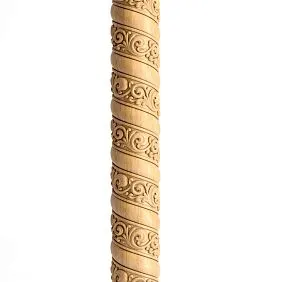
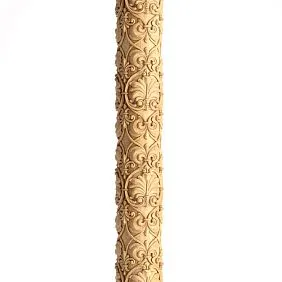
Our factory also produces:




Pilaster: A Vertical on the Wall
Polyurethane Pilaster— is a flat relief element that imitates a column but adjoins the wall. It is not a freestanding object but forms a single whole with the vertical surface.
The structure of a pilaster is identical to a column: base, shaft, capital. But its execution is planar. The projection from the wall is minimal—usually 15-30 millimeters for the shaft and 30-60 millimeters for the base and capital. The width of a pilaster varies from 60 to 250 millimeters depending on the scale of the room.
Pilasters work as vertical space dividers. They create rhythm on a long wall, frame door and window openings, highlight functional zones, and visually raise ceilings. In small spaces, pilasters are preferable to columns—they don't steal space but provide the same architectural effect.
Get Consultation
Half-Columns: A Compromise Between Volume and Plane
Polyurethane half-columns— are an intermediate option. They project from the wall by half or one-third of the diameter of a full column. The cross-section is a semicircle or a circular segment.
Half-columns are used where a column is too massive (consumes space) and a pilaster is not expressive enough (gets lost in the background). They are good for framing portals, creating facade decor on small areas, and decorating room corners.
Visually, a half-column creates more volume than a pilaster but takes up less space than a full column. It is the golden mean for medium-scale spaces.
Structure: base, shaft, capital — three parts of a single whole.
A classical column or pilaster consists of three mandatory elements. Each performs its own function in the composition and carries a certain aesthetic load.
Base: the foundation of the vertical.
The base is the lower part of the column, widened relative to the shaft. It creates a visual support, stability, a transition from the horizontal floor to the vertical shaft. Without a base, a column looks unfinished, as if it lacks a foundation.
The height of the base is typically 12-18% of the column's height. For a column 2.5 meters high, the base will be 30-45 centimeters. The diameter of the base exceeds the shaft diameter by 15-25%, creating a smooth downward expansion.
The base can be simple (one or two profiles) or complex (a multi-tiered structure of tori, scotias, and fillets). The higher the status of the interior, the richer the base. In minimalist spaces, the base is sometimes simplified to a minimum or even omitted, leaving only the shaft and capital.
Polyurethane bases are supplied as separate elements or integrated into the shaft — depending on the manufacturer and model. A separate construction is more convenient for installation and allows combining bases of different styles with one shaft.
Shaft: the main vertical.
The shaft is the main part of the column, its vertical extension. It is the shaft that sets the scale, rhythm, and character of the element.
Shafts can be smooth or fluted (with vertical grooves). A smooth shaft is laconic, calm, and universal. It suits modern interiors, neoclassical styles, and spaces where excessive decorativeness is not needed.
A fluted shaft is classic in its pure form. Vertical grooves (flutes) create a play of light and shadow, enhance verticality, and add dynamism. The number of flutes varies from 16 to 24 depending on the shaft diameter and the order style.
Shafts can have entasis — a slight swelling in the middle third of the height with a smooth taper towards the top and bottom. This creates an optical correction: a straight cylinder appears concave from a distance, while a shaft with entasis is perceived as perfectly straight. Ancient architects knew this two and a half thousand years ago.
Polyurethane shafts for tall columns (above 2.5-3 meters) are supplied in sections that are joined during installation. The joint is concealed in the middle part of the shaft, where there are no decorative elements, and becomes completely invisible after painting.
Capital: the crown of the column.
Polyurethane capitalsThe capital is the upper part of the column, its decorative completion. If the base is the foundation, then the capital is the crown. It is the capital that determines the column's belonging to a particular order, and it concentrates the maximum decoration.
The height of the capital is 12-20% of the column's height, sometimes more for particularly rich orders. The diameter of the capital exceeds the shaft diameter by 20-40%, creating a visual completion of the vertical and a transition to the horizontal entablature.
Capitals vary in complexity from strict Doric to lush Corinthian. The simplest capital is a cushion (echinus) and a square slab (abacus) on top. The most complex is a multi-level composition of plant motifs, volutes, acanthus leaves, and rosettes.
Polyurethane is ideal for reproducing even the most complex capitals. Pressure casting captures the finest relief details; every curl, every leaf comes out clear, as if hand-carved in stone.
Half-columns for wall decoration: when the vertical does not occupy space.
Walls in interiors often remain flat and boring. Half-columns solve this problem by adding volume, rhythm, and architectural expressiveness without losing usable space.
Rhythmic division of a long wall.
Imagine a long wall in a living room or hallway — 5, 6, 8 meters of continuous plane. Monotony tires the eye. Half-columns, installed at regular intervals, break the monotony, create rhythm, and turn the wall into an architectural composition.
The spacing between half-columns is chosen based on the proportions of the room. A classic rule: the distance between the axes of half-columns should be 2-3 times their diameter. For half-columns with a diameter of 20 centimeters, the optimal spacing would be 120-180 centimeters (center to center).
Too frequent installation creates a sense of overload; the wall seems cramped and oppressive. Too sparse — the half-columns get lost and fail to create the desired rhythm. Balance is critical.
Framing functional zones
Half-columns work as zone markers. Two half-columns on either side of a fireplace turn it into a portal, a focal point of the living room. Half-columns framing a built-in wardrobe visually highlight this area, making the wardrobe resemble an architectural niche rather than a utilitarian piece of furniture.
In a kitchen-living room, half-columns can mark the boundary between zones without physically dividing the space. A half-column at the corner of a bar counter, half-columns framing the passage from the kitchen to the living room — such solutions zone the space while preserving openness, light, and air.
Concealing utilities and defects.
Walls are not always perfectly even. Utilities are not always possible to hide in chases. A half-column can cover a vertical heating riser, mask a wall protrusion, or conceal a cable channel.
In such applications, a half-column is not just decor but a functional element solving a practical problem. Pipes and wires are laid inside the hollow half-column, after which it is mounted to the wall. On the outside — elegant classicism; on the inside — engineering systems.
Creating the illusion of architectural depth
Half-columns, especially when combined withmoldings and cornices, create the illusion of a complex architectural structure. The wall ceases to be perceived as a flat surface. Layering, depth, and interplay of projecting and recessed elements emerge.
This works especially effectively with proper lighting. Oblique light from wall sconces or hidden accent lighting emphasizes the relief of the half-columns, deepens shadows, and makes the decor three-dimensional and vibrant.
Use in doorways and arches: when an entrance becomes a portal
A doorway is not just a hole in the wall. It is a transition from one space to another, a boundary, a moment of changing mood. And if the opening is framed byan architectural portal with polyurethane elements, it transforms into an accent, a focal point.
Classical door portal
A classical portal consists of two vertical elements on the sides of the opening (pilasters or half-columns) and a horizontal crowning element at the top (entablature or cornice).
Pilasters are installed flush with the door frame or at a distance of 10-20 centimeters from it, creating an expanded frame. The base of the pilaster rests on the floor, the shaft runs vertically along the opening, and the capital crowns the structure at the level of the top edge of the door or slightly above.
A horizontal element is placed on top of the capitals — the architrave (a smooth beam), the frieze (a decorative strip, often with an ornament), and the cornice (a projecting profile). This three-part structure is called an entablature and is essential for the classical order.
The height of the entablature is 15-25% of the opening's height. For a standard door 2 meters high, the entablature will be 30-50 centimeters. This adds solemnity, monumentality, and transforms an ordinary door into an architectural portal.
Arched portals
An arch is a curved completion of an opening. It can be semicircular (Roman arch), pointed (Gothic), segmental (a shallow arc), or three-centered (a complex curve).
For framing arches, flexible polyurethane moldings are used, which bend along the radius, following the shape of the arch. Alternatively, the arch is assembled from short straight segments, forming a broken line that approximates a curve.
Pilasters or half-columns are installed on the sides of the arch, visually supporting it and creating a sense of load-bearing structure. The capitals of the pilasters are positioned at the level where the arch's curve begins (the springing of the arch).
An arched portal is especially effective in spacious rooms with high ceilings. It emphasizes verticality, creates a sense of grandeur, and evokes the classical architecture of temples and palaces.
Portals for doorless passages
Not all openings are closed with doors. Often, they are simply passages between rooms, especially in modern studio apartments and open-plan spaces. But the absence of a door does not mean the absence of framing.
Framing a doorless openingwith pilasters or half-columns transforms it into a portal, which visually zones the space without physically dividing it. You pass through the portal — and feel you have entered a different zone, even though there is no wall or door.
Such portals are especially good for separating the kitchen and living room, the hallway and foyer, the bedroom and dressing room. They create a boundary while preserving openness, light, and a sense of spaciousness.
Double and triple portals
In very large rooms or with wide openings, not two, but four or six pilasters are used. Two at the edges of the opening and two (or four) in the middle, dividing the wide passage into several narrower spans.
Such a structure is called a colonnade or portico (if it's a facade) and creates monumentality, characteristic of public buildings, museums, and theaters. In private interiors, this solution is for truly large spaces — ballrooms, halls of country mansions, winter gardens.
Creating porticos and portals: the grandeur of the entrance
A portico is a covered gallery supported by columns, located in front of a building's entrance. In interiors, the term is used more broadly — to denote any columnar composition framing an entrance, opening, or functional zone.
Portico at the main entrance
The front door is the first impression. It is here that a guest forms an opinion about the house and its owner. A portico at the entrance door transforms it into a ceremonial entrance, declaring status, taste, and adherence to classical values.
Twodecorative columnsFlanking the door sides with an entablature on top transforms an ordinary entrance door into a grand portal. Columns can be full (if the hallway space allows) or half-columns attached to the wall.
The height of the portico columns should correspond to the room's height. In a standard hallway with a ceiling of 2.6-2.7 meters, columns 2.2-2.4 meters high (from floor to the bottom of the entablature) will be optimal. In high-ceilinged halls, full-height columns from floor to ceiling can be used.
Fireplace portal
The fireplace is the heart of the living room, a family gathering point, a symbol of the hearth.Fireplace portal with columns or pilastersmade of polyurethane transforms it into the architectural centerpiece of the room.
Two pilasters or half-columns are installed on the sides of the fireplace insert. A mantelpiece (made of wood, stone, polyurethane) is laid on top of their capitals. Above the mantel, a frieze or a mirror framed by moldings can be placed.
The height of fireplace portal pilasters is typically 1.2-1.8 meters depending on the insert size. Width is 10-20 centimeters. The style of capitals is chosen to match the overall interior style: Corinthian for luxurious classicism, Doric for restrained, Ionic for elegant.
Portal for a TV or library
Modern technology in a classic interior is an eternal problem. The black rectangle of a flat-screen TV poorly harmonizes with moldings and columns. But if you integrate the TV into an architectural composition, the contradiction disappears.
A portal with pilasters and an entablature creates a frame around the TV. You can add side niches, framed by the same pilasters, to place speakers, decor, books. The result is a built-in library or multimedia center designed as a classic architectural element.
Such portals are especially effective when executed in a contrasting color to the walls. A white portal on a dark blue or graphite wall, a dark portal on a light wall — such solutions make the composition a focal point of the room.
Order system: Doric, Ionic, Corinthian styles
Ancient architecture developed a system of orders — standardized types of columns with clear proportions and decoration. Knowledge of the orders allows for informed selection of columns and pilasters, avoidance of stylistic errors, and creation of historically accurate interiors.
Doric order: strength and simplicity
Doric is the oldest and strictest order. The column is massive, powerful, without a base (the shaft starts directly from the floor). The shaft is always fluted with 16-20 grooves. The capital is extremely simple: a round cushion (echinus) and a square slab (abacus) on top. No scrolls, leaves, ornaments.
The Doric order expresses strength, masculinity, severity. It is suitable for spaces where monumentality without decorativeness is needed: studies, libraries, men's rooms, public spaces.
The proportions of a Doric column are stocky: height is usually 4-6 times the diameter (for comparison, in other orders the ratio is 8-10). This creates a sense of squatness, reliability, stability.
In modern interiors, Doric is often simplified even further: a base is added for practicality, fluting is removed for minimalism. Only the silhouette and proportions remain, which create the order's recognizability.
Ionic order: elegance and refinement
Ionic is the middle order in terms of emergence time and decorativeness. The column is more slender than Doric (height 8-9 times the diameter). A base is mandatory, complex, multi-tiered. The shaft is fluted with 24 grooves, more frequent and finer than in Doric.
The main feature is the capital with volutes (spiral scrolls). Two scrolls are positioned symmetrically on the front and back of the capital, creating a recognizable silhouette. Between the volutes, an ornamental frieze with plant or geometric motifs is often placed.
The Ionic order expresses elegance, lightness, femininity. It is suitable for living rooms, bedrooms, boudoirs, spaces where elegance without excessive opulence is important.
In interiors, Ionic is popular due to its balance between decorativeness and restraint. It is not as bare as Doric, but not as overloaded as Corinthian. A golden mean for mostclassical interiors.
Corinthian order: luxury and abundance
Corinthian is the latest, most complex, most decorative order. The column is slender (height 10 times the diameter), the shaft is fluted, the base is multi-tiered.
The capital is a work of art. It has the shape of an inverted bell, covered with two or three rows of acanthus leaves. From the leaves grow volutes, between which a rosette or palmette is placed. The complexity of the relief is striking.
The Corinthian order expresses wealth, luxury, abundance. It is suitable for formal spaces: reception halls, dining rooms, theater halls, foyers. Where an impression needs to be made, status shown, taste demonstrated.
In private interiors, Corinthian requires caution. Too many Corinthian columns — and the room turns into a museum or hotel. It's better to use them sparingly, for main accents, combining them with simpler elements.
Composite and Tuscan orders
In addition to the three main orders, there are two additional orders.
Composite is a hybrid of Ionic and Corinthian. The capital combines acanthus leaves of the Corinthian order with Ionic volutes. Even more decorative, even more luxurious. Used by the Romans for triumphal arches and imperial buildings.
Tuscan is a simplified Doric. Completely without decoration, with a smooth shaft, simplest capital and base. This is a folk, rustic variant suitable for country, Provence, and Mediterranean interiors.
Choosing an order for a specific interior
How to choose? Start from the overall style of the room.
Strict classic, English style, masculine spaces - Doric or Tuscan. French neoclassicism, living rooms, feminine rooms - Ionic. Palace style, Baroque, formal halls - Corinthian or Composite.
The scale of the room also matters. In small rooms, massive Corinthian capitals will overwhelm the space. It's better to choose laconic Doric or Ionic. In spacious halls, simple Doric may get lost - here expressive Corinthian is appropriate.
Color and finish affect perception. White columns of any order look lighter and more neutral. Gilded or patinated ones - heavier and richer. Matte - more modern, glossy - more traditional.
Installation of polyurethane columns and pilasters: from idea to implementation
The beauty of columns in photos is one thing. The reality in your home is another. And the quality of installation determines whether the result will meet expectations.
Surface preparation
Before installationcolumns and pilasters made of polyurethaneSurfaces must be prepared. Floor, walls, ceiling - everything to which elements will be attached must be level, clean, dry, and sturdy.
Irregularities over 5 millimeters are unacceptable. The column or pilaster does not fit tightly, gaps form, the element is held unreliably. If the wall is uneven, it needs to be leveled with putty or drywall.
The surface is cleaned of dust, grease, old paint, wallpaper. Primed with deep penetration primer. Primer improves adhesive bonding, prevents peeling.
Marking and Planning
Before installation, precise marking is done. Locations for column installation, symmetry axes, height marks are determined. Level, plumb bob, laser level are used.
If installing several columns, their parallelism and uniform spacing are critical. A deviation of 1-2 centimeters is immediately noticeable. Therefore, marking is done especially carefully, with multiple checks.
For portals, not only the position of pilasters is marked, but also horizontal elements. The entablature must be strictly horizontal. Even a slight tilt is visible and spoils the composition.
Base installation
The base is installed first. If it is separate, polymer adhesive (liquid nails, mounting adhesive like Tytan or Moment) is applied to the back side. Adhesive is applied in dots or a snake pattern, not a continuous layer.
The base is applied to the floor and wall (for pilaster) or placed on the floor (for column) according to markings. Pressed firmly. Adhesive sets in 30-60 seconds.
For heavy bases, additional fixation with dowels or screws through the base body into the wall or floor may be required. Holes are later filled with putty and painted.
Shaft installation
The shaft is mounted after the base. If the shaft is solid (height up to 2.5-3 meters), it is installed at once. If composite, the lower section is mounted first, then the upper. The joint is located in the middle third of the height where there is no decoration.
Adhesive is applied to the back side of the shaft. The shaft is applied to the wall (for pilaster) or placed vertically (for column) using a plumb line. Verticality is checked with a level. Deviation is unacceptable.
For tall columns, temporary fixation with braces or ties may be required until the adhesive fully cures (24-48 hours).
Capital installation
The capital is installed last. This is the most decorative and fragile element, so it requires careful handling.
Adhesive is applied to the joint plane of the capital with the shaft. The capital is placed on the shaft, aligned, pressed firmly. It's important not to shift the capital after placement - adhesive sets quickly, and repositioning may weaken it.
The capital must be strictly horizontal (the abacus plane parallel to the floor). Checked with a level. Adjusted if necessary before adhesive sets.
Joint sealing and final finishing
After the adhesive fully cures (24-48 hours), joints between elements are sealed. Acrylic sealant or putty is used. Filler is pressed into the gap, smoothed, excess is removed.
After drying, the joints are sanded with fine sandpaper (grit 240-320) until smooth. A properly filled joint becomes invisible after painting.
The final stage is painting. Polyurethane columns are supplied primed with white primer. They can be left white or painted any color with acrylic or latex paint.
Painting is done with a brush (for detailing the capital) and a roller (for smooth surfaces of the shaft and base). Usually, two coats are sufficient. For particularly decorative capitals, patination, gilding, or multicolored painting can be used.
Application of columns in various interior styles
Columns are associated with classicism. However, polyurethane columns are so versatile that they find application in a wide variety of styles.
Classicism and neoclassicism
Here, columns and pilasters are in their native element. Strict orders, correct proportions, symmetry, balance.Classical furniture and decorare complemented by columns, creating a cohesive composition.
In neoclassicism, columns are simplified. Excessive ornamentation is removed, leaving the silhouette and proportions. Capitals become more laconic, shafts are more often smooth than fluted. Colors are neutral: white, gray, beige.
Art Deco
A style born in the 1920s-1930s, Art Deco actively used columns but reinterpreted them. Proportions became more elongated, ornamentation became geometric, colors became contrasting.
Art Deco columns are often painted black, dark blue, burgundy with gilded capital details. Or conversely—white columns with black or gold bands on the shaft.
Colonial style
American, English, and Dutch colonial styles used columns on verandas, porticos, and in interiors. These were simplified Doric or Tuscan orders, often made of wood.
Polyurethane columns perfectly imitate wood. They can be painted to resemble wood or patinated to create the effect of aged, bleached wood. Such columns are excellent for country houses in colonial style, for verandas, terraces, and winter gardens.
Eclecticism and fusion
In modern eclectic interiors, classical columns coexist with contemporary furniture, industrial lighting, and abstract art. This is a bold mix of eras and styles that works if there is a unifying idea.
Here, columns play the role of an architectural accent that connects disparate elements. They provide the space with a foundation, a structure around which everything else is organized.
Care and operation: how to preserve beauty for decades
Polyurethane is an undemanding material. However, basic care will extend its service life and preserve its original appearance.
Regular cleaning
Dust settles on all surfaces, including columns and pilasters. Regularly (every 2-4 weeks) wipe them with a soft brush or duster. Capitals with their complex relief require special attention—dust accumulates in the recesses of the ornament.
For wet cleaning, use a soft cloth dampened with water and a small amount of mild detergent. Wring out the cloth well—excess water is not needed. After wet wiping, dry thoroughly.
Protection against damage
Polyurethane is durable but not indestructible. A strong impact can leave a dent, a sharp object can cause a scratch. Be careful when moving furniture or performing repair work near columns.
If damage does occur, it can be repaired. Small scratches are painted over with a matching tone of paint. Dents are filled with acrylic putty, sanded, and painted. After proper repair, the damage is unnoticeable.
Recoating
Over time, the painted surface may fade, especially in areas of intense exposure (if columns are located in a passageway, they may be brushed against). Refreshing the coating is simple: clean from dust, lightly sand with fine sandpaper, apply a new coat of paint.
Polyurethane withstands multiple repaintings. You can change the color of the columns when updating the interior, adapting them to a new palette.
Frequently asked questions about polyurethane columns and pilasters
Can polyurethane columns bear load?
Decorative polyurethane columns are not designed for load-bearing functions. They are hollow and cannot bear the weight of floors. If a load-bearing support is needed, a steel or concrete post is placed inside the polyurethane column, and the polyurethane serves as a decorative casing.
However, polyurethane pilasters and half-columns, glued to the wall, hold very firmly. Quality installation ensures reliability for decades.
Can they be used outdoors, on facades?
Yes, but only special facade-grade polyurethane. It contains UV stabilizers that protect against sun fading and frost-resistant additives.Facade columns and half-columnslast 20-30 years without deterioration.
Interior polyurethane on the facade will yellow in a year and crack in two. Don't skimp, buy the right material.
How much do polyurethane columns cost?
The price depends on size, complexity of decoration, manufacturer. A simple pilaster 2 meters high and 10 centimeters wide costs 2000-4000 rubles. A full column 2.5 meters high and 25 centimeters in diameter with a rich Corinthian capital — 12000-20000 rubles.
This is 5-10 times cheaper than plaster and 10-20 times cheaper than stone columns of similar quality.
Can a column be made to order, in a non-standard size?
Most manufacturers offer standard sizes. But custom manufacturing is possible. It is more expensive and takes longer, but allows you to get a column exactly to your dimensions and sketch.
How to choose columns to match an existing interior?
Start from the style of furniture and decor. If you have classic furniture with carvings — choose Corinthian or Ionic columns. If modern furniture with clean lines — Doric or simplified columns without fluting.
The color of the columns should harmonize with the overall palette. White is universal, but you can paint it to match the color of the walls, furniture, or decor.
Do polyurethane columns differ in appearance from plaster or stone ones?
With quality execution — practically no difference. Modern polyurethane reproduces the finest relief details as clearly as plaster or stone. After painting, the materials are visually identical.
The differences are in weight (polyurethane is 10-20 times lighter), cost (5-20 times cheaper), installation (glued in hours, not days).
Can they be installed independently or are professionals needed?
Installing polyurethane columns does not require special skills. If you can hold a level and a knife, you can manage. The main things are precise marking, care, and following the instructions.
For simple pilasters and half-columns, installation is indeed accessible to an amateur. For full columns, especially tall ones, it's better to involve an assistant or a professional — working alone is more difficult.
How to combine columns with other decorative elements?
Columns and pilasters combine well with moldings, cornices, rosettes, arches made of the same material. Create a unified system where all elements harmonize in style, proportions, and color.
Combining pilasters and stuccorequires a sense of proportion. Don't overload the space. Less is more.
Conclusion: Verticals that create space
Columns and pilasters are not just decor. This is an architectural language that speaks of proportions, rhythm, scale. It is a way to organize space, divide it into zones, create hierarchy, and place accents.
For millennia, columns were the privilege of temples, palaces, public buildings. Today, thanks to polyurethane, they are accessible to everyone. Lightweight, durable, moisture-resistant, inexpensive — polyurethane columns have preserved the aesthetics of classicism, discarding its drawbacks: monstrous weight, fragility, astronomical price.
You can create an entrance portal worthy of a palace. Frame a fireplace as the architectural center of a living room. Divide a long wall with the rhythm of pilasters. Turn an ordinary doorway into a triumphal arch. All this is real, accessible, achievable over a weekend.
The main thing is to understand the language of orders, observe proportions, and not overload the space. Columns demand respect. They are not just planks that can be stuck anywhere. These are elements of a system, and the system must be competent.
Study classical examples. Look at how columns were used in historical interiors. Adapt these solutions to modern realities. And don't be afraid to experiment — polyurethane forgives mistakes, is easily dismantled, and allows redoing if the result is unsatisfactory.
The company STAVROS is your guide to the world of classical architecture. We offer a full range of polyurethane columns, pilasters, half-columns, capitals, bases of all historical orders. From strict Doric to luxurious Corinthian. From standard sizes to custom orders.
Our products are made from high-density polyurethane with a density of 280-350 kg/m³, ensuring strength and durability. Elements are supplied primed, ready for installation and painting. Clarity of relief, geometric precision, perfect joining of elements — the quality standards of STAVROS.
We work with both professionals — designers, architects, construction companies — and private clients. We advise on element selection, help calculate the required quantity, select combinations to create harmonious compositions. We deliver throughout Russia, guarantee quality, and support at all stages from purchase to installation.
With STAVROS products, classic design ceases to be a luxury for the select few. It becomes an accessible reality for everyone who values beauty, proportions, and architectural perfection. Begin transforming your home with vertical elements that create space. Start with columns from STAVROS.


